Blog
Custom Wood Finish: How to Choose the Right Look


For homeowners in Dyer, Crown Point, and across Northwest Indiana, a new dining table or cabinet can look right from across the showroom and still feel off the moment the finish changes the surface. That's the point where a custom wood finish stops being a style detail and becomes a real durability choice. In a family-owned showroom serving NWI since 1983, we've learned that people don't just want a pretty surface, they want a finish that fits daily life, cleans easily, and ages well in a busy home.
A finish can make a piece feel warmer, sharper, softer, or more formal. It can also change how a tabletop handles spills, sun exposure, and repeated wiping. That's why the best finish conversation starts with how the furniture will live in the home, not just how it photographs under bright lights.
What Happens When You Find the Perfect Piece
A homeowner can walk into the showroom in Dyer or Crown Point and know within seconds that the table shape is right, the wood is right, and the scale is right. Then the finish enters the conversation, and the confidence wobbles. The same piece can read as relaxed, polished, rustic, or custom depending on that final layer.
That hesitation makes sense. Finish changes more than color, it changes the way the wood behaves in the home. A dining table for a young family, for example, needs a different surface strategy than a formal accent cabinet in a quiet room.
Why the finish decision matters so much
Wood finishing has been evolving for centuries, from ancient China using linseed oil and tung oil, to French polish and varnishes becoming prominent in the 17th century, to wax's popularity in the mid-1700s to 1800s, and shellac giving way to lacquer in many markets by the 1920s–1930s source. That history matters because finish has always been about more than looks. It has always balanced protection, sheen, and repairability.
Practical rule: if a finish sounds “more custom” but makes daily care harder, it may not be the better choice for a real household.
That's where honest showroom guidance helps. Our family's job isn't to push the fanciest sheen. It's to help a buyer choose the finish that fits the room, the routine, and the long view. For readers who want an extra layer of practical protection advice, our guide on protecting wood furniture from scratches and stains pairs well with this decision.
What a Custom Wood Finish Actually Does
A custom wood finish has two jobs. It protects the wood from moisture, spills, handling, and light exposure, and it changes how the piece looks and feels in the room. If a buyer only thinks about color, they're missing half the decision.
Penetrating and film-forming finishes do different jobs
A penetrating finish soaks into the wood fibers and keeps more of the natural touch. That's why it often feels less coated and more like wood itself. A film-forming finish builds a layer on top of the surface, which usually gives stronger resistance to abrasion, spills, and repeated cleaning source.
That difference is the key to avoiding disappointment later. A hand-rubbed oil can be beautiful, but it may not behave like a tougher varnish in a busy dining room. A higher-protection topcoat can be a smarter fit if the table sees regular meals, homework, and wipe-downs.
The U.S. Forest Service notes that finish selection affects performance, and that high-quality opaque finishes applied in the recommended number of coats provide the best overall performance and protection for wood. Its summary also says three-coat systems, one primer plus two topcoats, provide the best overall performance and the greatest degree of protection source. That's a useful benchmark for any homeowner who's weighing beauty against real-life wear.
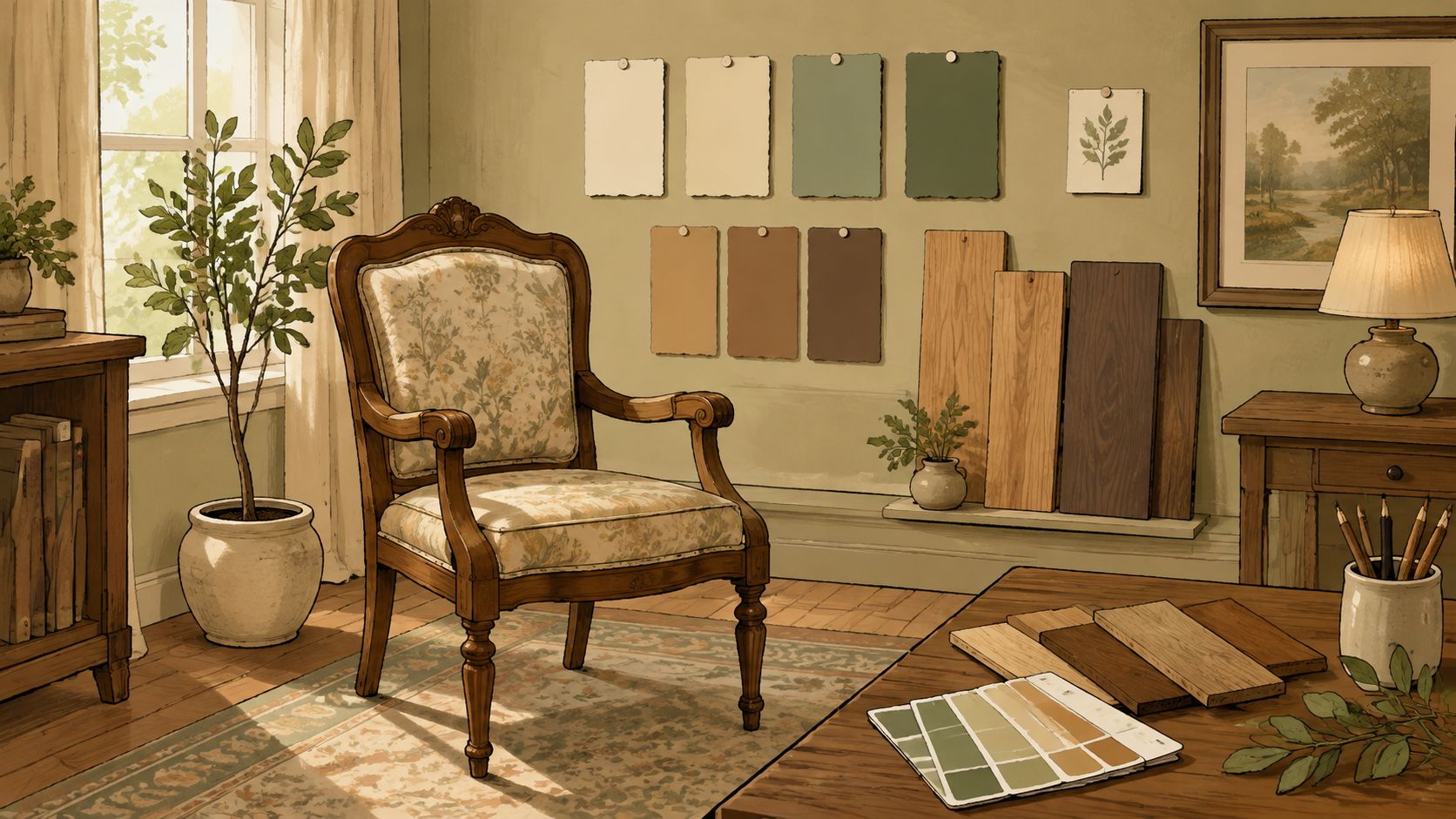
A simple way to think about it is this. Penetrating finishes tend to keep the surface feeling more natural. Film-forming finishes tend to give more surface protection and more of a sealed look.
For a broader look at the finishing process and the care that goes into it, craftsmanship in Newmarket painting offers a helpful parallel in how surface prep and finish choice shape the final result.
Common Custom Wood Finish Types and How They Compare
The finish family matters because each type solves a different problem. Some finishes are chosen for natural feel. Others are chosen for cleanability, shine, or surface protection. A buyer who understands those trade-offs makes a better decision than someone chasing a look alone.
The main finish families in plain language
Stains change color more than they change protection. They're often used to deepen tone, warm up a species, or make one wood read more like another. Oils usually emphasize grain and keep the surface feeling closer to raw wood, which appeals to buyers who want a softer, more organic look. Varnishes and lacquers build more of a protective film, which usually improves resistance in active rooms. Paints cover grain and create the most opaque look, while waxes can give a soft sheen but usually ask more of the owner in day-to-day upkeep.
That's why a “custom” finish isn't automatically a better finish. In a home with kids or pets, a highly specialized look can create more touch-up work than a simpler, sturdier choice. The right finish is the one that matches how the piece will be used.
Custom Wood Finish Types at a Glance
| Finish Type | Durability | Appearance | Maintenance |
|---|---|---|---|
| Stain | Depends on the topcoat used | Changes color while showing grain | Moderate, because protection usually comes from the clear finish above it |
| Oil | Moderate for many settings | Natural, warm, low-build look | Regular care may be needed to keep the surface looking even |
| Varnish | Strong surface protection | Clearer, more sealed appearance | Lower day-to-day attention than softer finishes |
| Lacquer | Strong in many furniture applications | Smooth and refined | Needs careful matching if touch-up is ever needed |
| Paint | Strong opaque coverage | Solid color with no visible grain | Easy to coordinate visually, but chips can be noticeable |
| Wax | Softer protection | Low-sheen, traditional feel | More upkeep in active spaces |
For readers who want to see how a finish is applied and built up in practice, how to apply wood finishes is a useful reference point. Our dining-room guide on table finishes can also help when the choice centers on mealtime durability.
A buyer doesn't need the most dramatic finish. The better question is whether the finish will still look good after the first year of real use.
How to Match or Customize a Finish for Your Space
A finish looks different once it's inside a home with wall color, flooring, trim, fabrics, and natural light. That's why matching a piece starts with the room, not the sample chip. A finish that feels too bold in the showroom can become perfect once it sits beside a rug or paint color.
Finish decisions that depend on the room
A Canadel custom dining table often works well when the buyer wants to coordinate the tabletop with chairs, flooring, and nearby cabinetry. A solid wood Amish bedroom piece may need a warmer finish if the rest of the room already leans soft and earthy. In both cases, the goal isn't perfect sameness, it's balance.
Sheen is part of that balance too. Lower sheen usually reads quieter and more relaxed, while a higher sheen brings more reflection and a more formal edge. Grain visibility also matters. A deeper finish can mute grain a bit, while a lighter or more transparent finish keeps the wood character more visible.
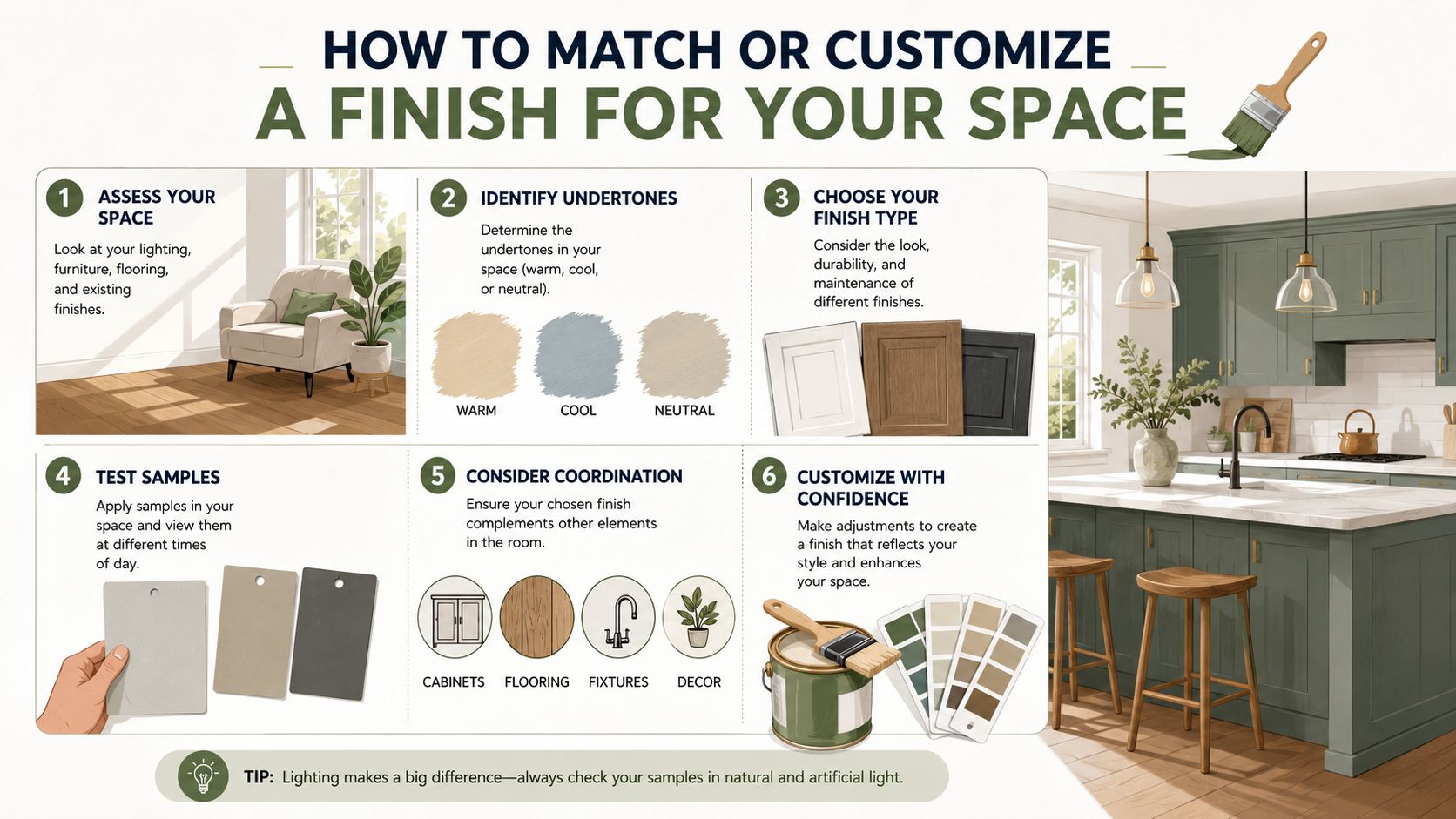
That kind of room-by-room thinking also shows up in paint decisions, where sheen changes how color reads. A helpful overview of choose the right paint finish can make the wood-finish conversation easier because the same visual rules often apply across surfaces.
One practical habit helps a lot. Place the finish sample beside the room's existing materials, then look at it in morning light and evening light. That simple step catches mismatches before they become regrets.
For shoppers ordering from home, our guide on avoiding color mismatch when ordering online gives another useful check. In person, our interior design team can help compare finish depth, grain visibility, and sheen against the rest of the room.
Questions to Ask When Ordering a Custom Finish
The smartest finish order starts with a few direct questions. Buyers often think they need to know the “right” finish before they walk in. They usually don't. They need a clear conversation about use, care, and expectations.
The questions that prevent surprises
How long is the lead time, and is the finish done in the factory or after the order is placed? Can samples be viewed under different lighting? How will the finish hold up on a dining table, bedroom set, or accent piece that gets daily contact? Those questions matter because a finish that looks beautiful on paper may not suit the intended room.
What happens if the surface gets marked or worn? Can it be repaired or refinished later? What does the warranty cover, and what doesn't it cover? A buyer should ask these plainly, because long-term ownership matters more than the first day on the showroom floor.
That's especially true with made-to-order dining and bedroom pieces. Canadel custom dining and Amish solid wood options both let buyers shape the final piece more closely, so the finish choice becomes part of the order, not an afterthought. For shoppers who want a guided starting point, the custom order process can help frame the conversation before a purchase.
Good questions sound simple. If the finish is for a family table, ask how it handles daily wiping, cup rings, and seasonal light changes.
Special financing is also available, subject to credit approval, which can help a buyer fit quality into the budget without rushing the decision. That matters because a strong finish choice is part of the furniture's value, not just its appearance.
Pricing Considerations for Custom Wood Finishes
Price in custom finishing isn't just about color. It's about process, labor, materials, and how much care the final surface needs to perform well over time. A buyer who focuses only on the number can miss where the value sits.
What actually drives the finish cost
Wood species affects how a finish takes color and how much prep it needs. The number of coats matters because structured coating systems generally take more work than a single quick pass. Sheen level can also affect the process, since some surfaces need more careful prep to look even and clean. Factory-applied finishes and hand-applied finishes don't carry the same labor profile either.
Complexity adds another layer. Distressing, glazing, layered color work, and specialty effects usually require more steps and more skill. A simpler finish can sometimes deliver better everyday results, especially if the furniture lives in a room that sees constant use.
That's why custom finishing should be understood as part of a broader furniture investment. A well-chosen finish can support durable, American-made furniture and reduce the need for earlier refinishing. It's not only about what the piece costs today, it's about how long it stays attractive and usable.
A useful side note from the market helps explain why this trade remains meaningful. The U.S. Bureau of Labor Statistics reported 16,220 furniture finishers with a mean annual wage of $34,350 and a median annual wage of $32,480 in 2019, showing that finishing is a specialized trade, not a minor add-on source. The same broader industry data said U.S. custom woodwork manufacturing generated $8.9 billion in sales in 2024, with about 1,921 companies, average productivity of $200,914 per employee, growth at 2.6% annually over the previous three years, and an estimated $340 million tariff cost source. Those figures underline the scale and pressure behind the craft.
Groen's approach stays practical. Special financing can help fit a quality purchase into the budget, and a value-focused conversation keeps the finish decision tied to long-term performance instead of short-term sticker shock.
Next Steps for Choosing Your Custom Finish
The best way to choose a finish is still to see it in person. Lighting changes everything. A tone that feels soft in a bright showroom can read darker at home, and sheen can look more reflective once it's sitting near windows or lamps.
What to bring to the showroom
Bring photos of the room, paint swatches, flooring samples, and any fabric pieces that will live near the furniture. Those items make the finish conversation faster and more accurate because the team can compare real materials instead of guessing from memory. That's especially helpful for buyers deciding between blending a piece into the room or making it the focal point.
A showroom visit also gives space to test comfort and craftsmanship at the same time. A table finish that looks right still needs to fit the way the family gathers, and a bedroom finish still needs to support the mood the room is meant to create. That's where a family-owned store in Dyer or Crown Point can be useful, because the guidance feels local and personal instead of rushed.
Our team can help compare custom order services, White-Glove Delivery, and finish options for pieces that need to suit a specific room. The custom order page is a useful starting point before a visit, especially for buyers considering a bespoke dining set or a solid wood statement piece. Across NWI, that kind of hands-on help is often what turns uncertainty into confidence.
Visit with a clear room goal, not just a color preference. The right finish should support the way the home is lived in.
Bring the questions, bring the samples, and let the team walk through the finish choice step by step. A careful conversation now saves a lot of second-guessing later.
Visit Groen's Fine Furniture in Dyer or Crown Point to explore custom wood finish options, compare samples in person, and ask about special financing available subject to credit approval. Our family can help match the look you want with the durability your home needs, so you can choose a finish that fits your life and your budget.