Office Furniture for Small Spaces: A Buyer’s Guide

A lot of Northwest Indiana homes have the same quiet problem. A laptop lands on the end of the dining table, papers slide onto a kitchen counter, and a “temporary” work corner starts taking over the room. The space may be small, but the workday isn't. That's where thoughtful office furniture for small spaces makes a real difference.
For households in Dyer, Crown Point, St. John, Schererville, Munster, and across NWI, the goal usually isn't to build a grand home office. It's to carve out a spot that works every day, looks like it belongs in the home, and doesn't leave someone sore by lunch. A small office can absolutely do that. It just needs better planning than is often expected.
Table of Contents
- Creating Your Perfect Home Office in Northwest Indiana
- The Foundation Planning and Measuring Your Small Space
- Smart Furniture For Maximizing Your Small Office
- Ergonomics Why Comfort Is Non-Negotiable
- Quality Materials and Lasting Craftsmanship
- Design It Your Way Custom Orders and Financing
- Your Small Office Checklist and Showroom Visit
Creating Your Perfect Home Office in Northwest Indiana
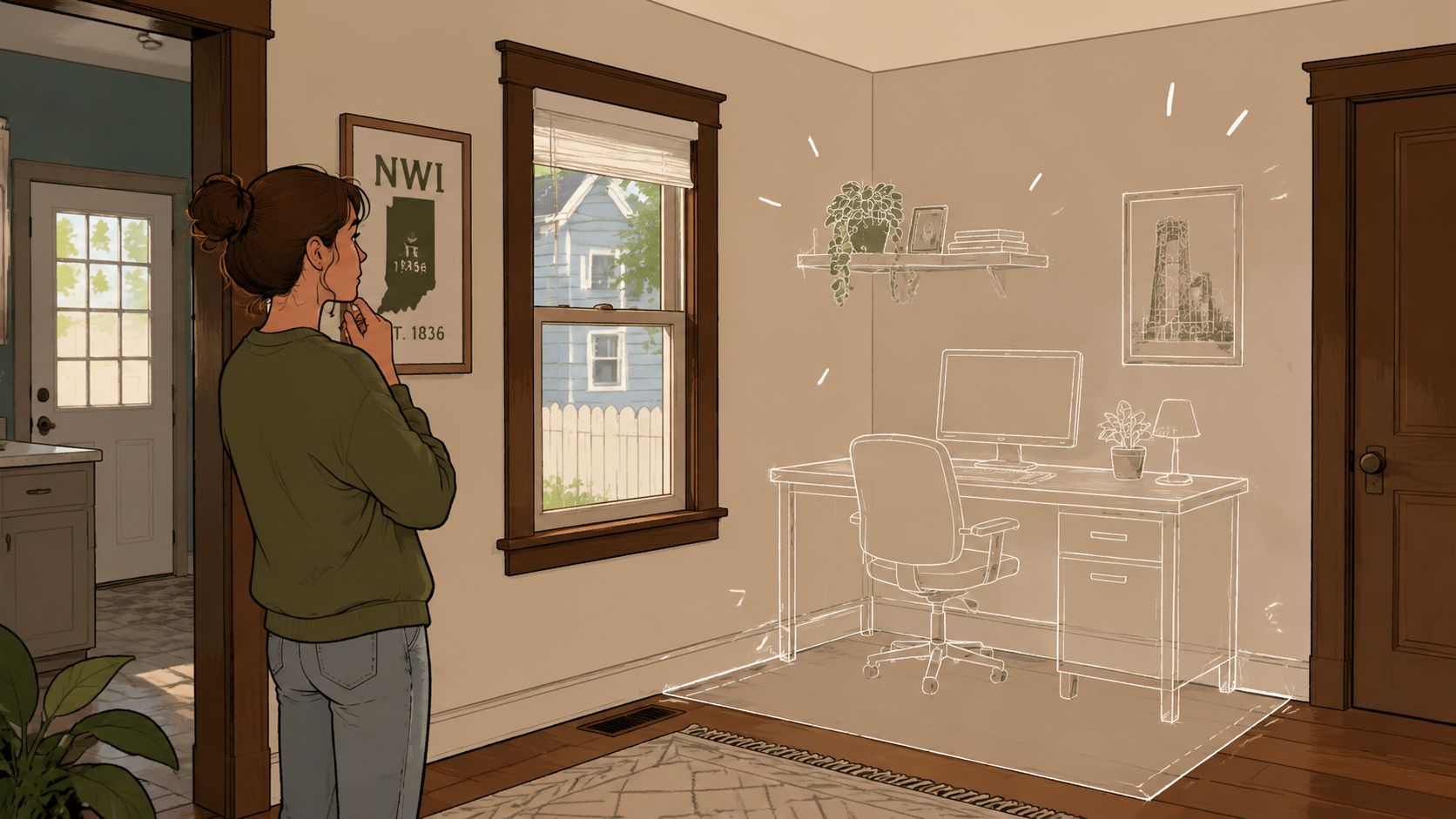
In many homes around Dyer and Crown Point, the home office isn't a separate room. It's a guest bedroom wall, a landing at the top of the stairs, or the open corner of a living room. Families need that spot to work hard during the day, then blend back into the home once the laptop closes.
That challenge is common enough that furniture makers are paying close attention to it. The global office furniture market was valued at $107.26 billion in 2024 according to this office furniture market overview. For homeowners, that matters because compact desks, modular storage, and flexible work pieces aren't fringe products anymore. They're part of a large, active category with more choices in style, finish, and function.
A small office should still feel like home
A work corner doesn't need to look cold or temporary. A slim desk in a bedroom can echo the finish of nearby case goods. A compact writing desk in a living room can feel more like furniture and less like equipment. Small-space planning works better when the office area respects the room around it.
For households that want the work zone to feel calmer, even simple styling choices help. Adding texture, better lighting, and a few living elements can soften a tight setup, and this guide on how to improve workspace with plants offers practical ideas that fit naturally into home offices.
Small doesn't mean makeshift. A compact office should support real work, real comfort, and the look of the home all at once.
Local homes need practical answers
In Northwest Indiana, many buyers aren't starting from a blank slate. They're fitting a desk beside a window, leaving room for a closet door, or sharing square footage with a bed, sofa, or kids' homework station. That's why broad inspiration only goes so far. The better approach starts with the room itself and the daily routine inside it.
Readers who want more layout inspiration for real homes can browse these home office design ideas before choosing furniture dimensions.
The Foundation Planning and Measuring Your Small Space
Most mistakes happen before anyone buys a desk. People measure one wall, assume the chair will “probably fit,” and forget that doors open, drawers pull out, and people still need to move through the room without twisting sideways.
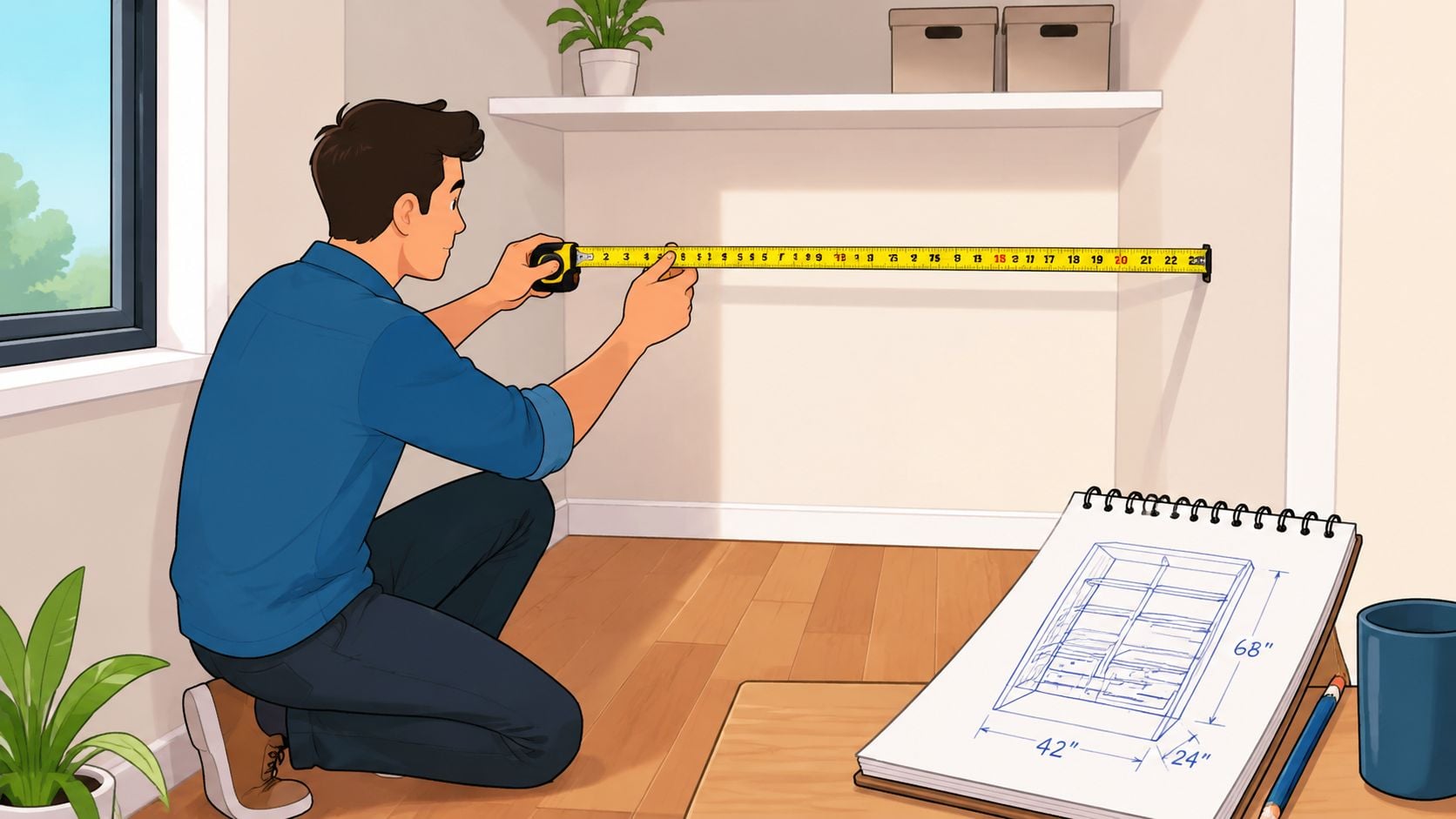
Professional designers commonly recommend 30–36 inches of clearance behind and around a desk for circulation and chair movement, as noted in this guide on desk clearance for small spaces. In a compact room, that clearance is what keeps a workspace usable instead of irritating.
Start with the room, not the desk
A practical measuring routine is simple:
- Measure the full wall width where the desk might go.
- Measure the usable depth from the wall outward, not forgetting baseboards, radiators, vents, or window trim.
- Check door swings so a desk corner doesn't block entry.
- Mark outlet locations so cords don't stretch across a walkway.
- Map chair space behind the desk before settling on desk size.
A bedroom office is a good example. The desk may fit against the wall on paper, but if the chair backs into the bed every time someone stands up, the setup will feel cramped every single day.
Draw simple zones on paper
It helps to divide the area into three zones instead of thinking about one furniture piece.
- Work zone: The desk surface, monitor, lamp, and everyday items.
- Chair zone: The area needed to sit down, roll back slightly, and stand up without bumping into other furniture.
- Movement zone: The path to the door, closet, file storage, or shelf.
Practical rule: If a space only fits the desk and not the person using it, it doesn't fit.
Many apartment planning ideas overlap with home office planning too. Readers working with especially tight layouts may find useful visual strategies in this piece on decorating small efficiency apartments, especially when a workspace has to share a room with daily living.
A few measuring mistakes show up again and again
Some are easy to miss:
- Ignoring baseboards: A desk may sit farther into the room than expected.
- Forgetting drawer reach: Storage needs open space in front of it.
- Measuring an empty room only: Existing furniture changes traffic flow.
- Skipping chair width: A compact desk paired with a bulky chair often creates a tight fit.
For households that want a cleaner measuring process, this furniture measuring guide gives a good framework to bring into the shopping stage.
Smart Furniture For Maximizing Your Small Office
Good small-space furniture doesn't only save floor area. It also reduces visual clutter, supports daily tasks, and makes the room feel calmer. The strongest layouts usually rely on pieces that do more than one job.
Modern guides consistently recommend multiuse and vertical storage, including wall-mounted desks, corner units, and desks with integrated shelving, because those forms free up floor area while preserving function, as explained in this guide to desks for small spaces.
Choosing the desk shape first
Desk shape often solves more problems than desk style.
A narrow rectangular desk works well when the office needs to sit unobtrusively against a wall. If the room is shallow, a desk depth below 24 inches is a practical threshold for a small office because it fits tighter spaces while still providing a usable work surface, according to this guide to narrow-depth desks.
A corner or L-shaped desk uses awkward square footage that often goes wasted. That can be helpful in a bedroom corner, under a window return, or in a loft nook where a straight desk leaves dead space on both sides.
A wall-mounted or fold-down desk is useful when the office must be put away. These options can make sense in guest rooms, hall landings, or shared family areas where open floor space matters.
Looking up instead of out
When floor area is limited, storage has to climb upward.
A small office tends to work better when the desktop holds only what gets used every day. Shelving above the desk, a compact bookcase nearby, or a hutch-style design helps move papers and supplies out of the way without stealing chair clearance.
Common space-saving choices include:
- Desks with integrated shelving: Better for people who need books, notebooks, or bins close at hand.
- Floating shelves above the surface: Good for keeping the floor open.
- Storage cabinets that match nearby furniture: Helpful in living rooms or bedrooms where the office shouldn't look too industrial.
- Mobile pieces: Useful when the room serves more than one purpose through the day.
For readers comparing layouts and features, this multifunctional home office furniture guide covers additional ways to combine storage, workspace, and flexible use.
Choosing Your Space-Saving Desk
| Desk Type | Best For | Space-Saving Feature |
|---|---|---|
| Narrow straight desk | Bedrooms, hall walls, living room edges | Keeps footprint shallow and visually lighter |
| Corner desk | Unused corners and awkward nooks | Turns hard-to-use square footage into working space |
| Wall-mounted desk | Shared rooms and multipurpose spaces | Frees floor area and can feel less bulky |
| Desk with shelving | Paper-heavy work or school needs | Adds vertical storage without extra furniture |
| Fold-down desk | Guest rooms and flexible-use rooms | Can be closed or minimized when work is done |
The right desk isn't the one that simply fits the wall. It's the one that fits the work, the chair, and the room around it.
Ergonomics Why Comfort Is Non-Negotiable
A lot of small-office advice stops too early. It says to go vertical, buy something slim, and use every corner. That's useful, but it leaves out the part people feel in their shoulders, wrists, neck, and lower back after a full workweek.
One overlooked issue is the tradeoff between size and comfort. Even compact setups still need correct chair height, monitor position, and roughly 30–36 inches of pathway space, because an ultra-small setup can backfire if it hurts posture or movement, as described in this guidance on small office ergonomics.
What comfort actually means
Ergonomics doesn't have to sound technical. In a home office, it usually comes down to a few plain questions.
Can the user sit with support instead of perching on the edge of the seat?
Can the monitor sit at a comfortable height instead of forcing the head downward all day?
Can the chair move in and out without hitting the wall, bed, or cabinet every time?
If the answer to those questions is no, the furniture may be space-saving, but it isn't working.
Where small setups go wrong
The most common problem is buying a desk that's compact but pairing it with whatever chair happens to be in the house. Dining chairs, accent chairs, and stools may tuck in neatly, yet they usually don't support a long work session well.
Another problem is shrinking the desktop so much that the screen ends up too close, the keyboard sits awkwardly, or paperwork spills into the lap. A small desk should reduce excess, not force the body into cramped positions.
A more comfortable setup usually includes:
- A chair that fits under the desk without crowding the knees
- A work surface large enough for the actual tasks done each day
- Screen placement at or just below eye level
- Enough room to get in and out without twisting
Key takeaway: Space-saving furniture should protect the body, not just the floor plan.
Readers trying to sort out chair comfort for longer work sessions can review this office chair guide for long hours before choosing a final setup.
Quality Materials and Lasting Craftsmanship
Small rooms put furniture on display. In a dedicated office, people may tolerate flimsy materials longer than they should. In a bedroom or living room office, the furniture becomes part of the home's everyday look. That makes material choice much more important.
Why material choice matters in a small room
Lower-grade composite pieces can solve a short-term space problem, but they often show wear faster at the very edges people notice first. Corners chip. Surfaces mark up. Drawer action becomes rough. In a compact room, those issues are hard to hide because the office furniture sits close to the eye and often shares space with the rest of the home.
Solid wood changes that experience. It offers a steadier feel, more repair potential, and a more settled appearance over time. For homeowners who want the office to age well with the room, that matters more than trend-driven styling.
A quality piece also tends to feel better in daily use. Drawers glide more smoothly. The desk doesn't wobble when someone types. Shelving handles normal use without the uneasy feeling that it's only meant for light duty.
Why custom solid wood solves more problems
Small spaces often need exact answers. A standard-width desk might be too wide by a few inches. A shelf may need to stop below a window trim. A file cabinet may need to align with an existing bed, dresser, or built-in.
That's where custom furniture becomes practical, not indulgent. Amish solid wood furniture is especially relevant here because it can be built to order with dimensions, wood species, and finishes that suit the room instead of forcing the room to adapt to the furniture. A made-to-order desk can be shallower, narrower, or better proportioned for the user's needs while still looking substantial and lasting for years.
This is also where one factual shopping advantage matters. Groen's Fine Furniture carries desks of different sizes and office storage options for home workspaces, including compact settings that need to fit into a corner or shared room. That kind of range helps buyers compare standard pieces against custom possibilities with clearer eyes.
Design It Your Way Custom Orders and Financing
A small office rarely forgives “close enough.” If a desk is slightly too deep, the room feels pinched. If it's a bit too short, the user may run out of working surface every day. Custom ordering solves that exact problem because the piece can answer the room instead of the other way around.
Why made to order fits small spaces better
A made-to-order desk or storage piece gives the buyer more control over the dimensions that matter most. That might mean a shallower top for a narrow wall, a specific width between two windows, or shelving sized to the household's actual mix of files, devices, and décor.
For many families, the bigger benefit is visual harmony. A custom piece can be built in a wood tone and style that relates to nearby bedroom or living room furniture, which helps the office blend in instead of interrupting the room.
“Design it your way” matters most when the space doesn't match standard dimensions.
Some shoppers also like to preview layouts before ordering. Visual planning tools can help people think through scale, finish, and placement, and this guide for e-commerce furniture visualization gives a useful overview of how digital previews support furniture decisions.
Making quality more reachable
Custom and solid wood pieces are often associated with a bigger upfront commitment. That's exactly why special financing matters for many households. It gives buyers more buying power and more room to choose for long-term comfort instead of settling for the quickest fix.
For a small home office, that can mean choosing the desk that fits, the chair that supports real work, or the storage piece that keeps a shared room organized. Buyers who want to understand available options can review these furniture financing options before heading into the showroom. Financing is subject to credit approval.
Your Small Office Checklist and Showroom Visit
By the time someone shops for office furniture for small spaces, a little preparation saves a lot of frustration. The most confident buyers usually arrive with a short list of facts, not just a photo of a desk they liked online.
Bring this checklist when shopping
A practical shopping list can be very simple:
- Room measurements: Wall width, usable depth, and note of any trim, vents, or window obstacles.
- A few phone photos: Wide shots help show traffic flow and nearby furniture.
- Door and drawer notes: Closet doors, room doors, and cabinet swing space matter.
- Top ergonomic needs: Better back support, more legroom, space for a monitor, or a chair that tucks in cleanly.
- Storage priorities: Files, printers, books, baskets, or hidden cable clutter.
- Style direction: Warm wood, painted finish, modern lines, or something that blends with existing pieces.
That checklist turns a vague shopping trip into a useful conversation.
What to test in person
Once in the showroom, the most important thing isn't color first. It's feel.
Sit at the desk. Check whether the knees have room. Notice whether the chair pulls in naturally. Picture where the monitor would sit, where papers would go, and whether the piece would still make sense after a long workday instead of just a quick glance online.
For many shoppers in Northwest Indiana, that in-person step matters because compact furniture can look right in a photo and still feel wrong at home. Testing proportions, finish, and comfort side by side helps prevent that mistake.
Visit Groen's Fine Furniture in Dyer or Crown Point today to explore custom options for small home offices and ask about special financing plans. The family-owned team has served Northwest Indiana since 1983 with multigenerational care, honest guidance, and white-glove attention that helps shoppers test drive comfort before bringing a piece home. Let their family help create a home office that fits the room, supports daily work, and feels right for the long run.