Blog
Bed No Headboard: A Guide for NWI Homeowners

A lot of bedroom updates start the same way. You stand in the doorway, look at the bed, and realize the room feels heavier than you want. Maybe the headboard looks bulky. Maybe it never quite matched the space. Maybe you're moving into a new home in Northwest Indiana and want the bedroom to feel calmer from day one.
That’s where the idea of a bed no headboard starts to make sense.
For homeowners in Dyer, Crown Point, St. John, Schererville, Munster, and across NWI, this look can be more than a passing trend. It can be a practical, thoughtful choice for a room that needs to feel restful, easy to live in, and personal. A headboard-free setup often reads cleaner, lighter, and more flexible, especially when you want your bedding, wall color, art, and lighting to do more of the talking.
Our family has helped local homeowners furnish their spaces since 1983, and one thing we've learned is simple. A bedroom works best when it reflects how you live. Some people want a grand focal point. Others want quiet lines, open space, and less visual noise. Both can be right.
If you're in the middle of a bedroom refresh, this guide pairs well with these simple ways to transform your bedroom. The goal isn't to convince you that every bed needs to be minimal. It's to help you understand when a no-headboard bed works beautifully, where it needs support, and how to make it feel finished.
A New Look for Your Northwest Indiana Bedroom
Many bedrooms in Northwest Indiana have to do a lot. They need to be comfortable at night, peaceful in the morning, and organized enough to keep daily life from spilling into every corner. In that kind of room, a bed without a headboard can feel like a reset button.
A no-headboard bed doesn't have to look unfinished. In the right setting, it feels intentional. The frame becomes quieter, the room breathes a little more, and your eye can settle on the parts of the space that matter most, like soft bedding, warm wood tones, or a favorite lamp on the nightstand.
Some readers worry this choice means giving something up. Usually, the opposite is true. You're gaining flexibility. You can place art above the bed, try a painted accent wall, lean into layered pillows, or keep the whole room pared back and serene.
A personal sanctuary doesn't always come from adding more furniture. Often, it comes from removing what the room doesn't need.
That idea resonates with many homeowners who want a bedroom that feels easier to care for and easier to enjoy. If you've ever looked at a tall, heavy headboard and felt like it dominated the room, you're not imagining it. A simpler frame can shift the whole mood.
The Enduring Appeal of Simplicity
The appeal of a bed no headboard goes deeper than style. It also makes sense historically.
For centuries, headboards had a practical job. They acted as a barrier between the sleeper and a cold wall in homes that lacked proper insulation. According to Casper’s explanation of whether you need a headboard, modern building codes now require R-13 to R-19 wall insulation, which makes that old function obsolete in over 99% of bedrooms. That change began in the early twentieth century as central heating became common.
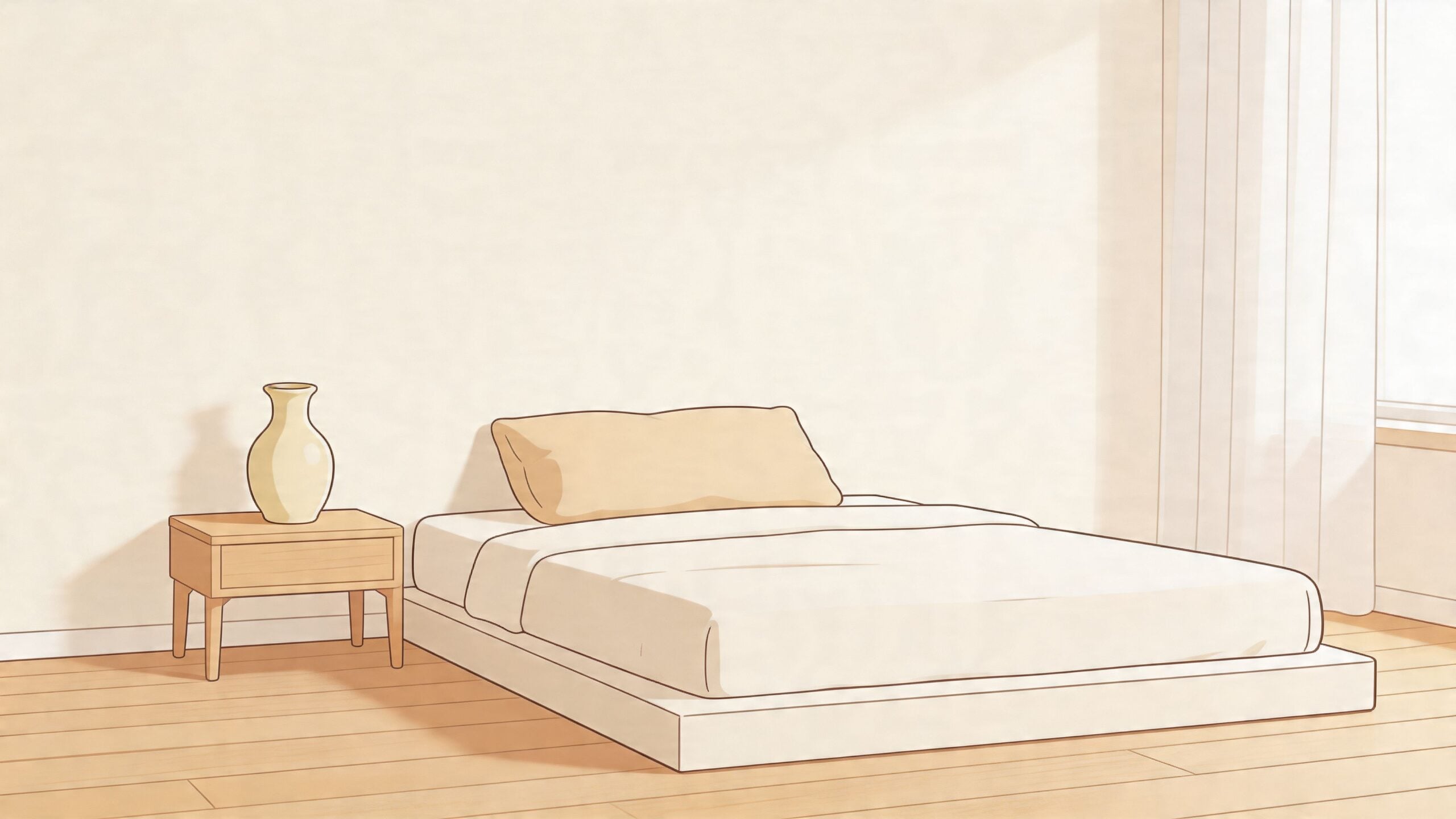
Once you understand that, the modern no-headboard look feels less like something is missing and more like a design choice that finally had room to emerge.
Why the look feels calm
A headboard creates a visual stop. Sometimes that’s useful. Sometimes it’s the very thing that makes a room feel crowded.
Without that vertical mass, the bed sits lower in the room visually. That can make the ceiling feel taller and the overall layout feel more open. Homeowners often respond to this effect even if they can't quite explain it. The room just feels quieter.
This is one reason minimalist and Scandinavian-inspired rooms often embrace simpler bed silhouettes. They let texture do the work. Linen bedding, a wool throw, white oak or walnut nightstands, a soft rug underfoot. The room becomes layered without becoming busy.
If you're drawn to very low, pared-back sleep setups, this guide to the bed on floor sleep method offers another useful perspective on simplified bedroom design.
Simple doesn't mean plain
Minimal doesn't mean empty. It means intentional.
A headboard-free bed can suit many styles:
- Modern spaces that rely on clean lines and low profiles
- Traditional rooms that need one quieter piece to balance richer furniture
- Family homes where easy upkeep matters as much as appearance
- Guest rooms where flexibility helps the room serve more than one purpose
For readers who like the idea of less clutter but don't want their home to feel stark, this article on personalizing your space without feeling cluttered is a helpful next step.
The bed doesn't need a tall frame behind it to feel grounded. It needs the room around it to feel coherent.
That’s the primary appeal of simplicity. It leaves space for the rest of your sanctuary to come together.
Weighing Your Options Practical and Aesthetic Trade-Offs
A no-headboard bed can look beautiful, but it still has to work in daily life. An honest evaluation is thus important. Some households love the freedom of the look. Others quickly discover they miss the support of a built-in backrest.
The good news is that most of the trade-offs are easy to identify before you commit.
Where a no-headboard bed shines
The strongest argument for this style is often visual. According to a 2024 ASID report discussed here, 90% of interior designers say headboards are now primarily decorative. The same source notes that skipping one can reduce visual clutter by up to 40% in rooms under 200 square feet and deliver an average 30% cost savings on the bed frame.
That matters in real bedrooms, especially when square footage feels tight or the room already includes a dresser, chest, bench, or desk.
A simpler frame can also give you more freedom with style changes. If your bedding changes from crisp white to patterned quilts, or your walls move from soft greige to deep green, the bed doesn't fight those updates.
You can see many of these frame styles in collections of wood bed frames, where the structure itself carries the design without needing an attached headboard.
Where people hesitate
The drawbacks are usually practical, not structural.
Here’s a side-by-side look:
| Consideration | Bed with no headboard | What to think about |
|---|---|---|
| Room feel | Lighter and more open | Especially helpful in smaller bedrooms |
| Budget | Often lower frame cost | Savings may be redirected into better bedding or wall treatment |
| Styling flexibility | Very adaptable | You’ll need to create a focal point another way |
| Reading in bed | Less built-in support | Pillows, bolsters, or wedges may be needed |
| Wall contact | More likely | Paint, wallpaper, or scuffs may need protection |
| Pillow control | Can slip backward | Easier to manage with layered bedding |
The choice depends on how you use the room
A couple who mostly sleeps and gets dressed in the room may never miss a headboard. A reader who spends evenings propped up with tea and a novel probably will.
Families also think differently about bedroom furniture than single adults do. If children climb into bed for story time, if pets jump up and down from the side, or if the room needs to feel soft rather than formal, then practical details matter more than trend language.
Practical rule: If you sit up in bed often, plan your comfort solution before you choose your frame.
That small decision saves a lot of frustration later. The bed no headboard look works best when the room supports it instead of expecting the frame to do every job.
Creative Styling Solutions for Your Headboard-Free Bed
Removing a headboard isn't the difficult part. The challenge lies in what comes next. The goal is for the bed to feel finished, comfortable, and anchored in the room.
That’s completely reasonable. A bare wall behind the mattress can look crisp in one home and incomplete in another. The difference usually comes down to layering.
Build comfort first
This is the most common issue, and it's where many readers get tripped up. If you read, scroll, or watch shows in bed, your pillows matter more in a headboard-free setup.
A 2023 National Sleep Foundation study summarized here found that 68% of adults read or use devices in bed. The same source notes that ergonomic reviews found wedge pillows can reduce strain by 40% compared with standard pillows, but they can also scuff the wall. That’s why low-profile guards, protective wall finishes, or textured wall coverings can make a real difference.
Good comfort options include:
- Euro shams for soft height. Large square pillows create a broad cushion and make the bed look more intentional.
- A wedge pillow for support. This helps if you sit up frequently, especially for reading.
- A long bolster. It gives the bed a finished look and can help hold standard pillows in place.
- A washable wall layer. If the bed sits close to the wall, a durable painted finish or textile treatment can be a smart addition.
Give the wall a job
Once comfort is handled, think about what anchors the bed visually. The wall behind it needs purpose.
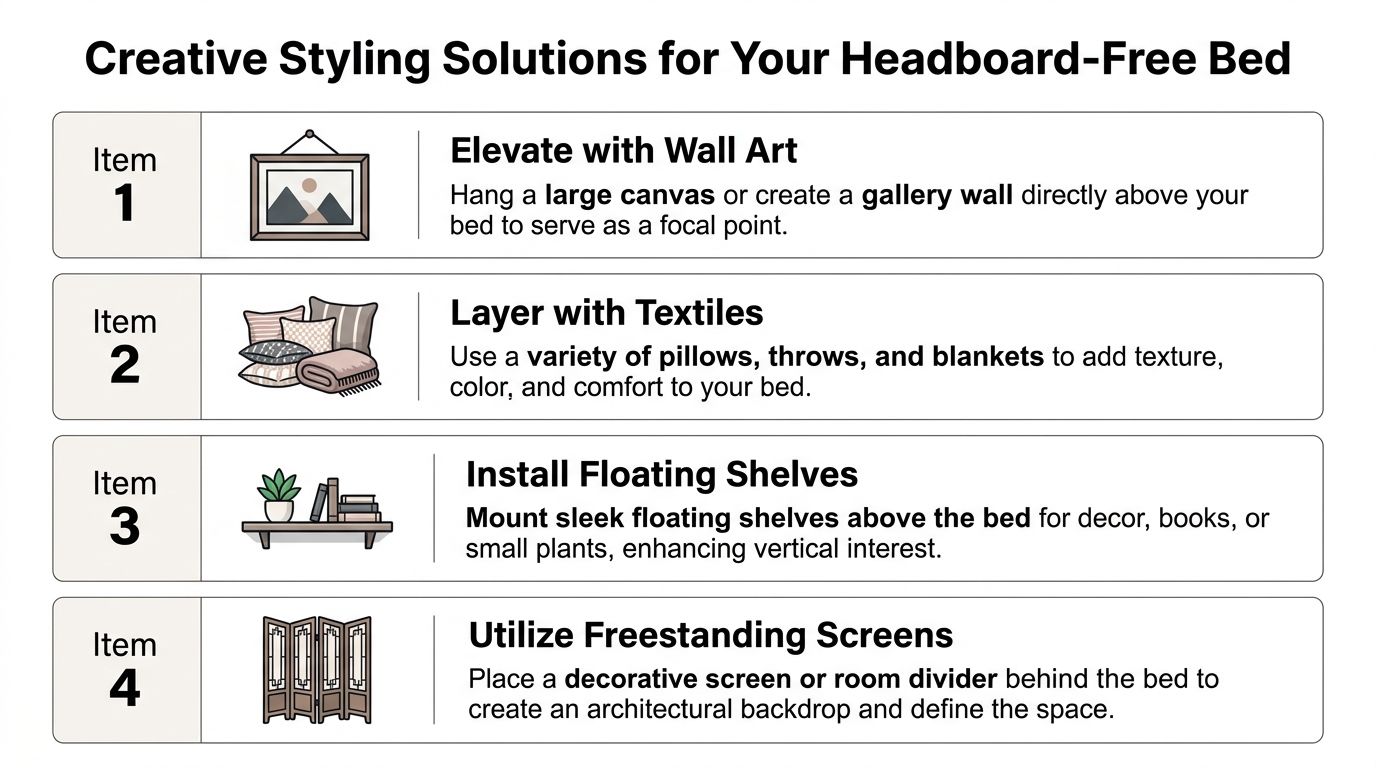
A few strong approaches work well:
Paint the bed wall a different color
A contrasting or deeper tone creates a built-in backdrop without adding furniture bulk.Hang one oversized artwork piece
This keeps the look calm and avoids the busy feel of too many small objects.Use a quilt or textile as art
A fabric piece adds softness that pairs beautifully with a low-profile bed. If you like that idea, this guide on how to hang quilts for a flawless display is especially useful.Add sconces or pendant lights
Lighting can frame the bed and make the wall feel architectural.
For homeowners exploring color and texture options, these ideas for a perfectly balanced accent wall can help you decide what belongs behind the bed and what doesn't.
Borrow structure from other elements
A headboard normally tells the eye where the bed begins and ends. Without one, nearby pieces can take over that role.
Try these combinations:
- Nightstands with presence. Slightly taller or more substantial nightstands can visually ground the bed.
- A bench at the foot. This creates balance and makes the whole bed feel dressed.
- Floating shelves above. Done carefully, they add vertical interest without heaviness.
- A decorative screen behind the bed. This works well in larger rooms or guest spaces.
Soft goods do a lot of heavy lifting in a headboard-free bedroom. Bedding isn't just for comfort here. It's part of the architecture.
Keep it edited
One caution is worth mentioning. Because the bed itself is visually simple, it's easy to overcompensate with too many pillows, too much wall decor, or too many patterns. The best rooms usually choose one feature to lead.
If the bedding is dramatic, keep the wall treatment quieter. If the wall is bold, let the bed remain restrained. That balance is what keeps a no-headboard setup feeling thoughtful instead of unfinished.
Ensuring Safety and Durability for Your Family
Style gets attention first, but durability is what determines whether a bed remains a good choice year after year. In family homes, that matters even more.
A well-made no-headboard bed isn't weaker because it lacks an upper panel. The quality comes from the frame design itself, including the slat system, center support, joinery, and overall sturdiness of the materials.

Stability starts below the mattress
Platform beds without headboards can be excellent long-term pieces when they are built correctly. Solid hardwood slats and center support rails help distribute weight evenly, and that matters whether you're using a traditional mattress, a hybrid, or a heavier natural latex model.
The practical benefit is simple. The bed supports the mattress where it needs support most. That helps the sleep surface stay more consistent over time and reduces the problems that come from uneven foundations.
For families, this also supports peace of mind. A lower-profile frame can be easier to get in and out of, and the absence of a bulky headboard can remove one more hard element from the room.
Why material choice matters
At this point, quality quickly distinguishes itself.
A mass-market frame can look appealing online and still disappoint in a year or two if the slats flex, hardware loosens, or finish wear becomes obvious. By contrast, a solid wood frame with careful construction tends to age in a very different way. It can become part of the home rather than something temporary.
That’s one reason many families lean toward Amish furniture, solid wood, and American-made construction when they want a bed to last. They aren't just buying a style. They're buying steadiness.
What families should look for
If children or grandchildren spend time in the bedroom, think beyond appearance.
- Low profile for easier access. A bed that sits lower can feel more approachable for kids and simpler for everyday use.
- Smooth edges and simple lines. Fewer protruding parts can make the room easier to move through.
- Strong joinery and center support. This matters more than decorative add-ons.
- A finish that can handle real life. Bedrooms see skin oils, lotion, books, pets, and all the small wear of daily living.
For added visual inspiration, these examples of stunning bedroom wall decor show how a simple bed setup can still feel layered and complete without relying on oversized furniture.
When a family chooses bedroom furniture, they're not just selecting a look for this season. They're deciding what they'll live with every night.
That’s why heirloom quality matters. The best no-headboard beds aren't minimalist because they're less. They're minimalist because they're built to focus on what counts.
Design Your Perfect Bed The Groen’s Custom Approach
A bed no headboard works best when it fits your room and your habits. That sounds obvious, but it’s the part many shoppers get wrong. They buy a frame that almost suits the space, then spend months trying to fix the details with extra pillows, awkward wall art, or compromises that never feel settled.
Customization changes that.
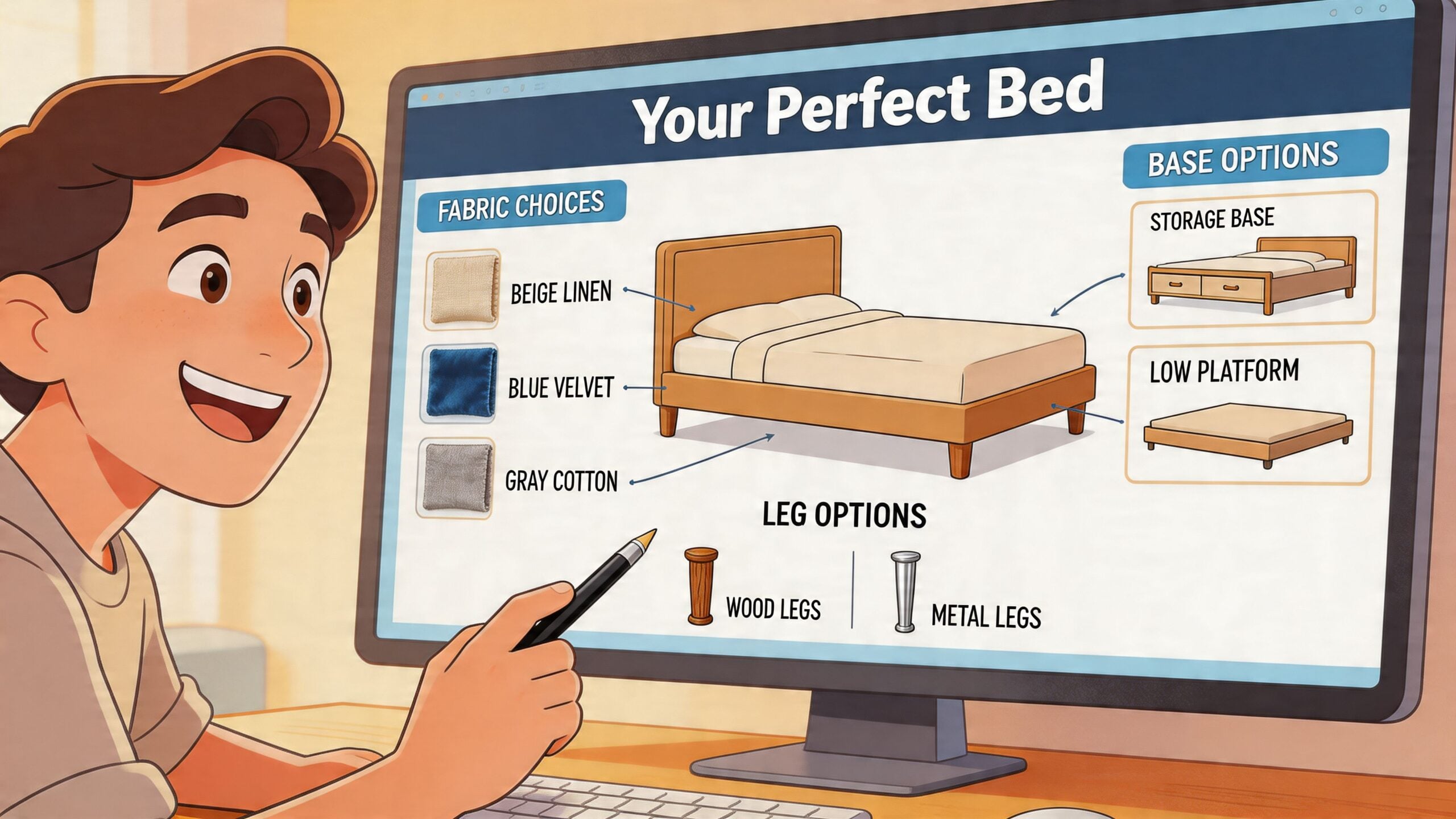
Design it your way
A no-headboard bed may look simple, but there are still meaningful decisions to make.
The right questions include:
- How high should the bed sit from the floor?
- Do you want a warmer wood tone or a cleaner painted finish?
- Should the frame feel modern and low, or more classic and substantial?
- Do you need under-bed openness for visual lightness?
- Will the room benefit from a platform style or a more traditional rail setup?
For these needs, bespoke and made to order furniture shines. Instead of settling for whatever is boxed and ready to ship, you can match the bed to the scale of the room and to the daily rhythm of the household.
For readers who want to understand how that process works without feeling overwhelmed, this guide on custom furniture made simple breaks it down clearly.
Good brands solve different problems
Not every shopper wants the same answer, and that's a good thing.
Some households are drawn to Amish solid wood because craftsmanship and heirloom durability matter most. Others may prefer Bassett for style flexibility. Some shoppers furnishing the whole bedroom also want to think about Serta or Beautyrest mattresses through the lens of sleep wellness and long-term comfort. In other rooms of the home, they may already trust Flexsteel for durability or Canadel for custom dining, so a customized bedroom approach feels natural.
The larger point is this. Furniture should fit your life, not force your life to work around it.
Affordable luxury can still be practical
People sometimes hear the words custom or heirloom and assume the result won't fit the budget. That doesn't have to be true.
Special Financing available, subject to credit approval, can give homeowners more buying power when they want to choose quality that lasts rather than replacing a weaker frame later. That makes room for better decisions. It can help a family choose solid wood, a better mattress pairing, or white-glove delivery that simplifies setup.
Custom doesn't have to mean complicated. Often it means fewer regrets because the piece fits from the start.
That’s especially important in the bedroom. When a bed is right, the room feels settled. You notice it every night, even if you stop thinking about why.
Create a Bedroom You Love for Years to Come
A headboard-free bed can be stylish, but style isn't the whole story. The better reason to consider it is that it can make a bedroom feel calmer, lighter, and easier to shape around the life you live.
For some homeowners, that means a cleaner modern look. For others, it means more room to work with, a softer family-friendly setup, or a chance to invest in a solid wood frame that supports the mattress well and stays dependable over time. The key is making the choice on purpose.
If you love to read in bed, plan for comfort. If you want the room to feel finished, give the wall behind the bed a clear role. If your home is busy with kids, pets, or guests, focus on frame quality and stability first. Those are the decisions that turn a simple bed into a lasting sanctuary.
The best bedrooms don't come from copying a showroom photo exactly. They come from understanding what helps you rest, what keeps the room practical, and what feels right when the day is over.
That’s why many Northwest Indiana homeowners are drawn to this approach. A bed no headboard can feel open without feeling cold, simple without feeling bare, and personal without trying too hard. Done well, it doesn't look like a compromise at all. It looks like confidence.
Visit Groen’s Fine Furniture in Dyer or Crown Point today to explore custom options and ask about special financing plans. Our family has served Northwest Indiana since 1983 with multigenerational ownership, honest guidance, white-glove delivery, and five-star service. Whether you're furnishing a primary bedroom, guest room, or a whole-home refresh, we’d love to help you test drive the comfort, compare solid wood and American-made choices, and create a home you love.