Blog
Black and White Dining Room Sets: Find Your Perfect Style

You’re probably standing in your dining room right now, or scrolling on your phone in the evening, trying to answer a simple question that turns out not to be simple at all. Do you go bold with black? Keep it light with white? Try to mix both without making the room feel cold?
That’s where many homeowners in Dyer, Crown Point, St. John, Schererville, Munster, and across Northwest Indiana get stuck. Black and white dining room sets look timeless in photos, but real life adds complications. Kids drag chairs. Winter light can make dark finishes feel heavier. Open layouts need furniture that looks strong without taking over the whole room.
A good black and white set solves more than style. It can anchor family dinners, holiday gatherings, homework sessions, and the everyday rhythm of home. The key is knowing how to choose the right look, the right size, and the right materials so the room feels warm and lasting, not stark or trendy.
The Enduring Appeal of a Black and White Dining Room
Some color pairings come and go. Black and white stays.
That staying power comes from history as much as style. The idea of a dedicated dining room reaches back to Thomas Jefferson’s Monticello in 1772, and as dining rooms evolved through the Victorian era, dark woods were often paired with white linens or painted elements. That contrast helped shape the look we still recognize today, and the color scheme appeared in 32% of U.S. dining room redesigns in the 2022 NKBA survey discussed here.

Why the contrast still works
Black gives a dining room structure. White brings relief and brightness. Together, they create balance.
That balance is what makes these sets so flexible in real homes. A black base can ground a room with high ceilings or an open floor plan. White upholstery, a light tabletop, or pale walls can keep the same room from feeling too heavy during gray Northwest Indiana winters.
Practical rule: A black and white dining set works best when one color leads and the other supports. If both fight for attention, the room feels sharp instead of settled.
There’s also a reason people often describe this look as “finished.” Black outlines shapes clearly. White shows form and texture. Even simple furniture looks intentional in this palette.
It fits more than one design era
This color story has moved comfortably across centuries because it isn’t tied to one furniture shape. It can feel formal, relaxed, modern, or traditional depending on the details.
Here’s how that plays out:
- Georgian-inspired spaces often pair dark wood with pale walls and crisp trim.
- Victorian influence brings more ornament, storage pieces, and a richer sense of ceremony.
- Mid-century rooms strip things down and let the contrast speak through cleaner lines.
- Current homes use black and white as a base, then soften it with wood, woven textures, or upholstery.
That’s why this choice rarely feels like a gamble. You’re not locking yourself into one fad. You’re choosing a combination that has already proven it can adapt.
Why families keep coming back to it
A dining room has to do emotional work. It hosts birthdays, late-night talks, rushed school mornings, and the first big holiday after a move. Black and white helps because it’s visually calm once it’s balanced correctly.
It also leaves room for your personality. Seasonal centerpieces look good against it. Wood floors warm it up. Brass, iron, glass, and linen all pair naturally with it. If your tastes shift over time, you can update the room with rugs, lighting, art, or chairs without replacing everything.
For homeowners who want furniture to last in style as well as construction, that matters. A black and white dining room doesn’t demand constant redecorating. It gives you a steady backdrop for family life.
Finding Your Perfect Black and White Style
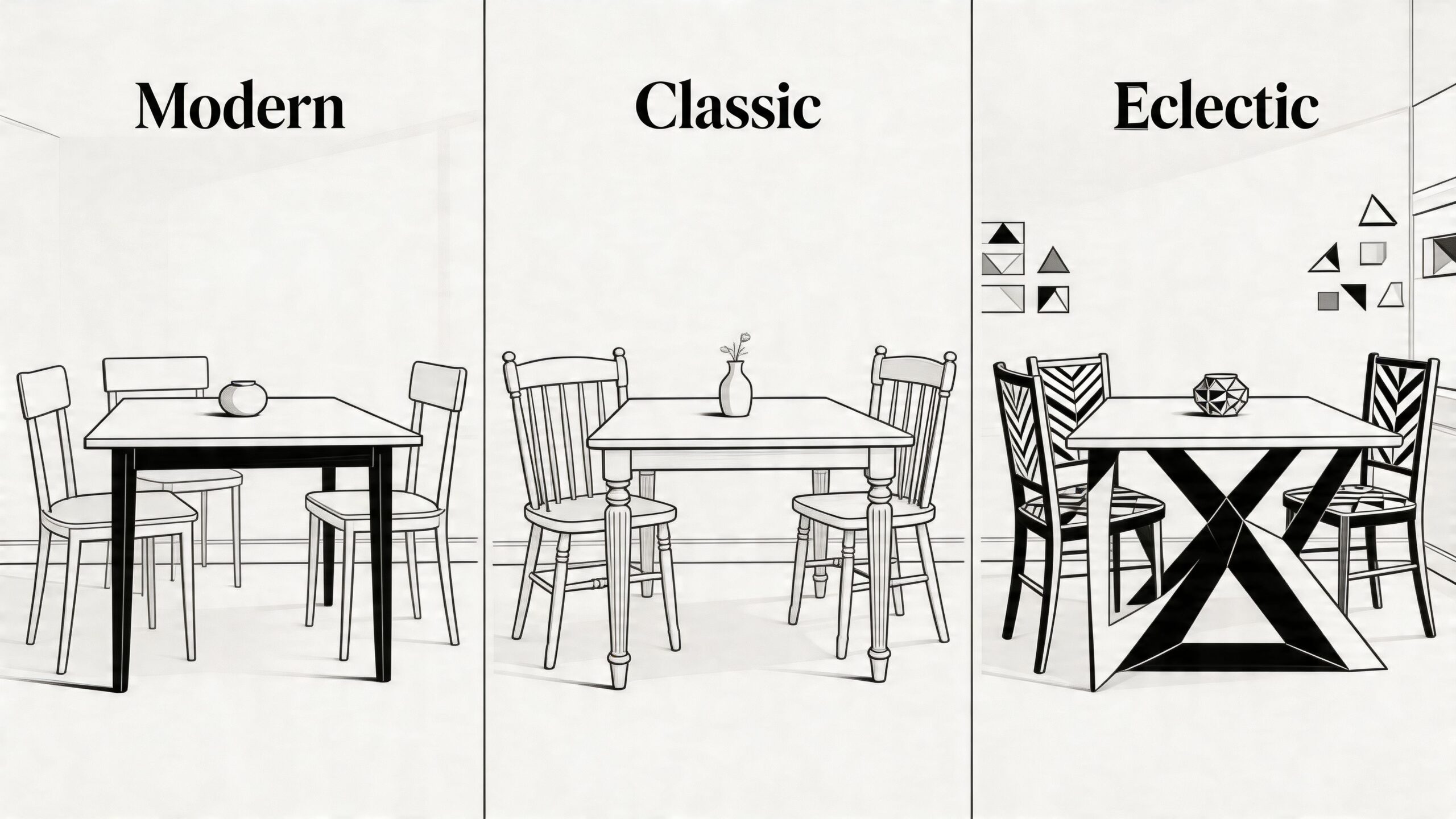
“Black and white” sounds like one look until you start shopping. Then you realize it can mean glossy and dramatic, soft and farmhouse-inspired, or refined and classic.
That’s good news. It means you don’t have to force your home into one narrow aesthetic. You can shape the contrast to fit the architecture you already have and the mood you want at the table.
Modern glam
This version is for the homeowner who likes a little polish. Think black lacquer or a deep black painted finish, white upholstered chairs, and reflective accents like chrome, glass, or polished hardware.
The room usually feels more formal, but it doesn’t have to feel stiff. A pedestal table, a structured chair back, or a simple linear chandelier can keep it refined instead of flashy.
What often confuses shoppers here is the difference between “elegant” and “hard.” The trick is to break up shine with something softer. Upholstery, drapery, or a textured rug keeps the room from feeling too slick.
Modern farmhouse
This look is warmer and more forgiving. You might see a black trestle table with a wood top, white slipcovered or ladder-back chairs, and a matte finish instead of a glossy one.
It works especially well in homes that already have natural materials. Oak floors, woven baskets, linen curtains, and aged metal lighting all help this style feel lived-in. The black adds definition. The white keeps things fresh.
If you like this direction, flooring matters more than people expect. Pattern can either support the furniture or compete with it. For a helpful visual reference, this guide to black and white floor tiles shows how contrast on the floor changes the mood of the whole room.
Classic transitional
This is often the safest choice for families who want long-term flexibility. Transitional style blends traditional shapes with cleaner lines, so the set feels current without looking ultra-modern.
A good example would be a black table base paired with a lighter top, or a fully black table with white upholstered seats in a simple silhouette. Nothing is overly ornate, but nothing feels flat either.
The best transitional dining rooms don’t chase attention. They earn it by getting the proportions right.
This style also plays nicely with nearby rooms. If your kitchen leans classic and your living room feels more contemporary, transitional furniture can connect the two without making the house feel mismatched.
Eclectic and collected
Some homes need less matching and more personality. In that case, black and white becomes a framework, not a formula.
You might combine a black table with mixed white and wood chairs. Or use a white table with black Windsor chairs and a vintage-style rug. Art, lighting, and side storage can push the room in a more collected direction.
A simple way to test your instincts is to identify the broader style your house already leans toward. This guide to dining room styles for different homes can help you put a label on what you’re seeing.
A quick way to narrow your choice
If you’re stuck between styles, ask these three questions:
- How formal is daily life at your table? If the room hosts frequent guests and you like a polished look, glam may fit.
- Do you want the room to feel relaxed? Farmhouse and softer transitional looks usually win here.
- Will your taste likely change over time? Transitional gives you the easiest path for future updates.
Most families don’t need the “most stylish” option. They need the one that still feels right on a Tuesday night in February. That’s usually the best test.
Choosing Materials and Finishes That Last Generations
A black and white dining set earns its keep after the first holiday, the hundredth weeknight dinner, and the winter when boots, salt, and damp air keep getting tracked through the house. In Northwest Indiana, that matters. Our homes work hard, and dining furniture has to do the same.
A table can look sharp under showroom lights and still frustrate you six months later if the top scratches too easily, the chairs wobble, or the finish shows every fingerprint. Color sets the mood. Materials decide whether the set still feels like a good purchase years from now.
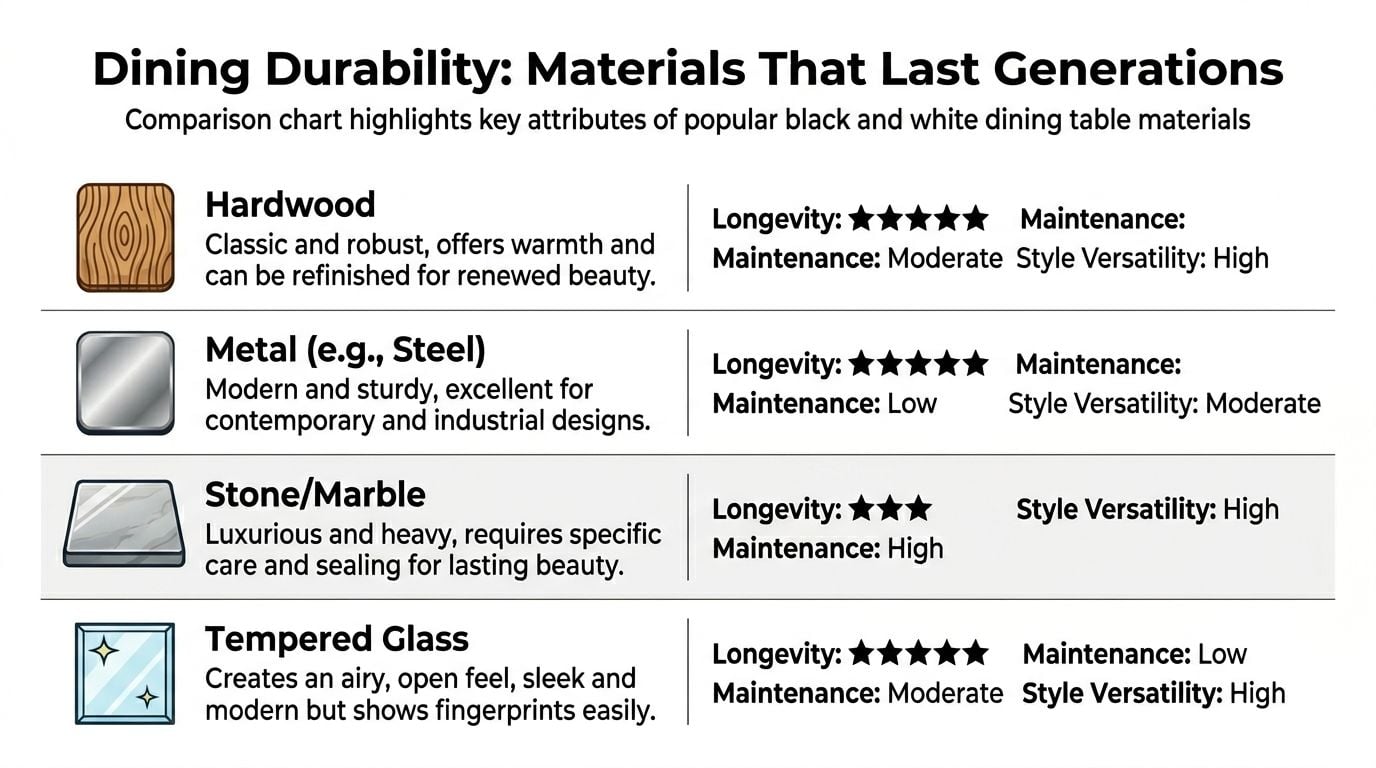
Solid wood, veneer, and the question behind both
Families often ask whether solid wood is always the best choice. The better question is how the table will be used.
Solid wood has the kind of staying power people notice right away. It feels substantial, carries warmth into a black and white room, and can age with character instead of looking tired at the first sign of wear. In a family home, that matters. A few small marks on real wood often read like history, not damage.
Veneer and engineered construction can also make sense, especially if you want a certain style, a lower price point, or a lighter piece that is easier to move. But they are not the same product wearing a different label. They behave differently over time, and that difference shows up fastest in busy homes where the dining room also serves as homework station, buffet line, and weekend project table.
A simple way to sort it out is this. If the table will be part of daily life, stronger construction and a forgiving finish usually pay off. If the room is used mainly for occasional gatherings, you may be comfortable with a different balance of cost, weight, and long-term wear.
Why mixed-material tables make so much sense
Black and white dining sets often look best when they combine materials instead of relying on one alone.
A black metal base with a wood top is a good example. The wood gives the room warmth where your family sees and touches the piece most. The metal base adds steady support and usually handles everyday bumps, chair contact, and seasonal humidity changes with less fuss than many all-wood designs. That combination fits a lot of Northwest Indiana homes, especially in open layouts where the dining area has to feel stylish but still live like part of the kitchen.
Custom builders such as Canadel and many Amish furniture makers do this especially well. They let you pair painted finishes, hardwood species, edge details, and base styles in ways that solve real household problems, not just decorating questions. If you need a softer white that hides dust better, a hand-applied black finish with depth, or a tougher top for constant family use, custom construction gives you options a one-size-fits-all set usually cannot.
A strong dining table should stay steady through ordinary life. No rocking. No loosening at the joints. No finish that makes you nervous every time someone sets down a cold glass.
Comparing common table materials
| Material | Best quality | Watch for |
|---|---|---|
| Solid wood | Warm, substantial, often refinishable | Needs a finish that matches daily use |
| Powder-coated metal | Stable, low maintenance, great for bases | Can look cold without wood or upholstery nearby |
| Stone or marble | Striking surface, high-end look | Heavy, costly, and less forgiving in family use |
| Tempered glass | Keeps the room visually open | Shows smudges and needs frequent cleaning |
Each material changes the feel of a black and white room. Wood softens contrast. Metal sharpens it. Stone adds drama. Glass lightens the visual weight.
That is why the best choice is usually the one that balances appearance with the way your family lives.
Floor wear deserves attention too. Heavy tables and constant chair movement can leave marks long before the tabletop shows age. If you are updating the whole room, these scratch-resistant flooring options are worth reviewing alongside your furniture choices.
Chairs do more of the daily work
The chairs take more abuse than shoppers expect. They get pulled, turned, leaned back in, and wiped down over and over. If the table is the anchor, the chairs are the moving parts.
Look closely at a few details before you decide:
- Seat construction so the chair stays firm and square over time
- Finish sheen because lower-sheen finishes often disguise everyday wear better than high gloss
- Chair weight so they feel sturdy without being awkward for kids or grandparents to move
- Upholstery choice if you want white or cream seating without constant worry
Fabric selection matters even more in homes with children, pets, or frequent guests. Performance fabrics, easy-clean weaves, and forgiving textures can help a lighter chair stay inviting instead of high maintenance. If you want a clearer breakdown, this guide to upholstery materials for everyday living explains what holds up best in real family use.
For many Northwest Indiana households, the longest-lasting black and white dining set is not the flashiest one. It is the set with a durable top, a finish you can live with comfortably, and chairs that still feel good after dessert. That is the kind of furniture families keep, repair, and pass along.
Sizing Your Set for Northwest Indiana Homes
A lot of Northwest Indiana shoppers stand beside a black table in the showroom, love the contrast, then ask the same practical question. Will it crowd the room once it gets home?
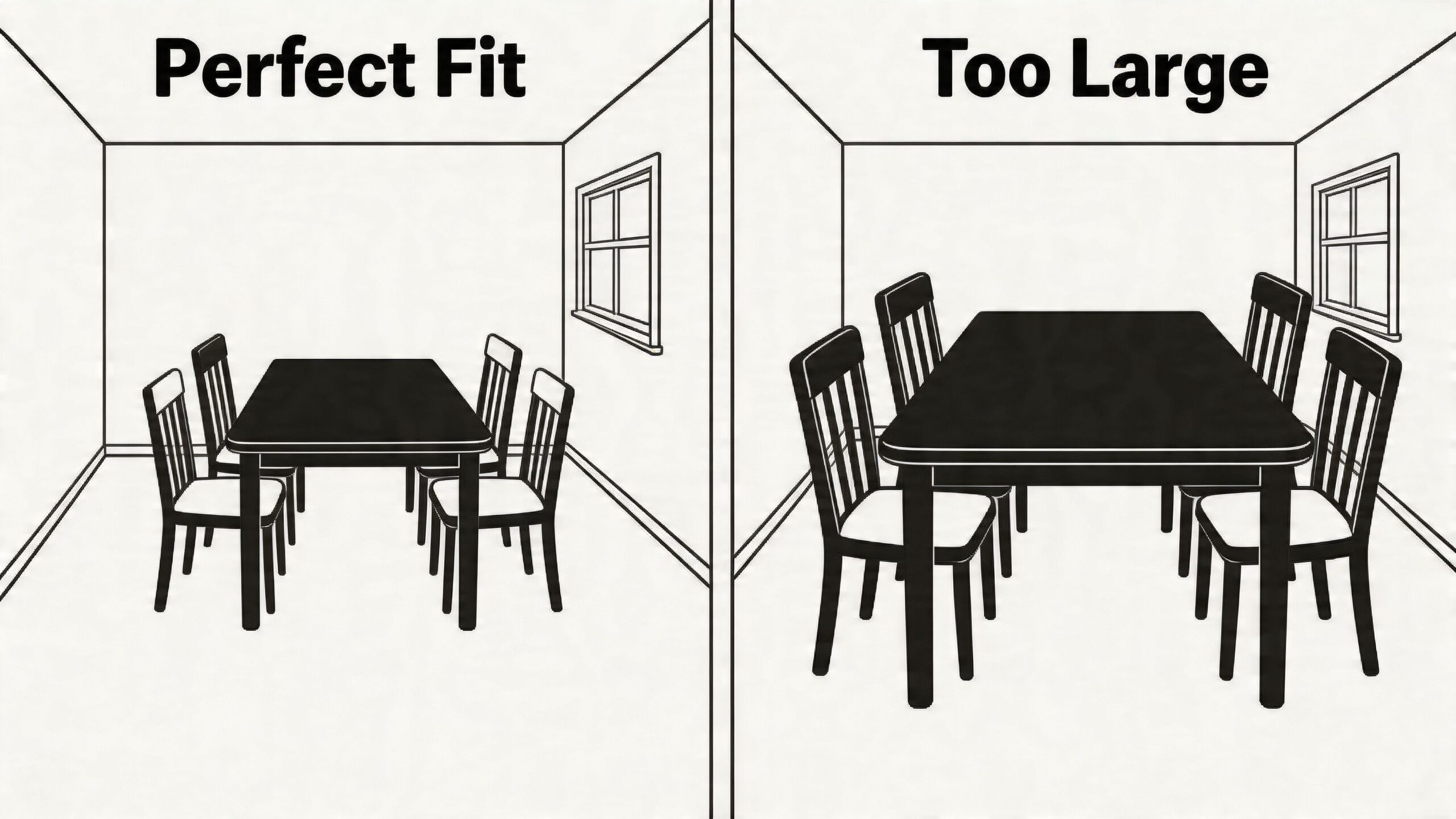
Usually, the main issue is size and traffic flow, not the black and white color story itself. A well-sized black and white set can make a dining room feel settled and purposeful, much like a properly fitted area rug makes a room feel finished instead of cramped.
Start with how people move through the room
In real homes, chairs need space to pull out, people need room to pass behind them, and nearby pieces often take up more floor area than expected. That matters in older Northwest Indiana houses with separate dining rooms, where radiators, trim, and doorway placement can limit usable space. It also matters in newer open layouts, where the dining area often doubles as a pathway between the kitchen, island, and family room.
Guidance from Povison’s dining room layout article points to two helpful rules. Leave about 90 cm around the table for chair movement, and let the room size guide the table shape. Round tables tend to suit tighter rooms more comfortably, while rectangular tables usually make better use of larger spaces and support more seating.
That gives you a more useful way to shop. Measure the empty space first, then choose the table that fits your daily routine.
Shape changes the way a room feels
Table shape works like traffic planning. A round table helps people flow around it, which is why it often solves problems in breakfast nooks, narrower dining rooms, and compact eat-in kitchens around Northwest Indiana. If your room is modest in size, a black round pedestal table with white upholstered chairs can still give you the contrast you want without filling every visual inch with corners and legs.
Rectangular tables earn their keep in larger rooms and in homes that host Sunday dinners, graduation parties, or holiday meals with extra leaves in place. In open-concept homes, they also help define the dining zone so the space feels organized instead of floating.
If black and white feels too sharp, soften the lines before you give up on the look. Rounded corners, a pedestal base, slat-back chairs, or a lighter seat fabric can make the set feel friendlier and more at home.
Common sizing mistakes we see in the showroom
Shoppers often measure wall to wall and stop there. That number helps, but it is only the beginning.
You also need to account for:
- Door swings that cut into chair space
- Buffets, hutches, or cabinets that reduce usable depth
- Traffic lanes to the kitchen, patio door, or hallway
- Chair width, especially with arms
- Table leaves, if you plan to expand for guests
This is one reason custom dining matters so much in our area. A standard table may be close, but close does not always work in a room with a radiator on one wall, a patio slider on another, and a walkway everyone uses after dinner. Brands such as Canadel, along with Amish-built options, let families choose dimensions, shapes, and extensions that fit the house instead of forcing the house to fit the furniture.
For a more detailed measuring method, our dining table size guide for choosing the right dimensions walks through the numbers step by step.
A properly sized black and white set does more than fit. It gives the room a center point that feels welcoming on a Tuesday night and ready for company on a holiday weekend.
Design It Your Way with Custom Dining Options
Most frustration in dining furniture comes from almost. The table is almost the right length. The finish is almost the right black. The chairs are almost comfortable enough. The white fabric is almost the right shade.
That “close enough” feeling is exactly why custom dining matters.
A family’s dining habits aren’t generic. Some homes need space for weeknight dinners plus occasional holiday overflow. Others need a compact round table now, with a plan to host more people later. Some buyers want the crispness of black and white but need softer edges, a warmer undertone, or a specific wood species so the room doesn’t feel flat.
Why standard sets often fall short
Mass-produced dining sets work best for average rooms and average needs. Real homes rarely cooperate.
A narrow dining area may need a particular width so chairs can move comfortably. An open-concept home may need a base style that keeps the room visually open. A growing family may want a finish that hides wear better, or chairs that are easier to clean after everyday meals.
The broader history of dining rooms points in the same direction. The White House State Dining Room now seats 140 guests, and its evolution reflects how dining spaces have adapted over time. That same historical overview notes that sales of 8 to 10 person dining sets grew by 45% post-WWII, showing how American households increasingly looked for furniture that could support larger gatherings, as discussed by the White House Historical Association.
That doesn’t mean every home needs a grand table. It means families have long adjusted dining furniture to fit the way they gather.
Two strong custom paths
For many buyers, customization falls into two practical categories.
Canadel for flexible design choices
Canadel is a strong fit if you want a lot of control over the finished look. It allows you to combine table shapes, sizes, finishes, chair styles, and upholstery options in a way that feels personal instead of pieced together.
That matters with black and white because small decisions change the mood dramatically. A matte black reads differently than a richer painted black. A white upholstered seat can feel casual, formal, bright, or warm depending on texture and tone.
Amish solid wood for heirloom character
Amish furniture suits buyers who prioritize construction, solid wood, and made-to-order dimensions. It’s especially appealing when you want a dining set to feel rooted in the home, not just matched to current trends.
This route also helps solve very specific layout issues. If your room needs a custom length, a certain edge profile, or a base style that softens the contrast, made-to-order craftsmanship gives you more room to get it right.
Custom furniture isn’t about making things fancy. It’s about removing compromises that you’d notice every day.
Where custom helps most in black and white dining room sets
Here are the situations where custom usually makes the biggest difference:
- You need exact sizing because the room is unusually narrow, open, or multipurpose.
- You want a softer version of contrast through matte finishes, wood accents, or gentler shapes.
- You host often and need a set that expands or seats more people comfortably.
- You want the chairs to feel right for both quick weekday meals and longer gatherings.
- You’re planning for years, not seasons and want something that still feels appropriate later.
If you’ve only shopped ready-made furniture before, this overview of how custom furniture works in practice helps make the process feel more approachable.
Custom dining isn’t about excess. It’s often the most practical route for people who know their home, know their family, and don’t want to spend years wishing the table had been just a little different.
Making Your Dream Dining Room an Affordable Reality
A lasting dining set is an investment. That part is real. But “investment” doesn’t have to mean out of reach.
For many families, the smarter approach is to buy the right piece once and use financing carefully so the purchase fits the household budget. Special financing, subject to credit approval, can give you buying power to choose better materials, better comfort, and a better fit for your room instead of settling for something temporary.
What adds value beyond the furniture itself
Price matters, but so does the shopping experience. Dining furniture is one of those categories where guidance can save expensive mistakes.
Helpful in-store support often makes the difference when you’re trying to answer questions like these:
- Will this shape fit our room?
- Will this black finish feel too dark with our floors?
- Should we choose upholstered chairs or all wood?
- Does this table work better for daily use or occasional hosting?
White-glove delivery also deserves more credit than it gets. A dining set is rarely a simple drop-off purchase. Placement, setup, and careful handling all reduce stress and help protect both the furniture and the home.
Budgeting without losing quality
A practical way to think about the purchase is to separate needs from preferences.
Start with the essentials. Size, construction quality, and everyday comfort come first. Then layer in the finish details, chair style, and decorative elements that complete the room.
If you’re trying to stretch your budget wisely, this article on dining room decorating ideas on a budget offers useful ways to prioritize where your money has the most impact.
The most affordable dining room isn’t the one with the lowest upfront number. It’s the one you won’t need to replace because it was the wrong fit.
A black and white dining room can feel elevated without feeling untouchable. With thoughtful choices, honest guidance, and a plan for payment, it becomes much easier to create a room that serves your family well for years.
Visit Groen's Fine Furniture in Dyer or Crown Point today to explore custom Canadel dining, Amish solid wood options, and stylish black and white dining room sets built for real Northwest Indiana homes. Ask about special financing, subject to credit approval, and let our family’s multigenerational team help you create a home you love with personal guidance, honest pricing, and 5-star service.