Blog
Corner Sofa Chair: A Buyer’s Guide for NWI Homes

For a lot of homeowners in Dyer, Crown Point, and across Northwest Indiana, the problem isn’t finding a sofa. It’s finding a sofa that works with the room. Maybe there’s a tight corner by the window, a doorway that cuts into the wall space, or a traffic path that turns a standard couch into an obstacle.
Our family has helped neighbors think through layouts like that since 1983, and one piece comes up again and again: the corner sofa chair, or, as it's known today, a corner sofa or sectional. It solves two problems at once. It uses hard-to-furnish space well, and it creates a comfortable gathering spot for real family life.
The tricky part is that shoppers often get stuck in two places. First, measuring. A corner sofa can look perfect online and still be wrong for an older home or an awkward room. Second, durability. Modular designs are flexible, but families naturally wonder how they’ll hold up over time.
That’s where a little guidance helps. If you understand what the term means, how the main configurations differ, how to measure properly, and what construction details matter, you can shop with confidence and avoid expensive mistakes.
Introduction The Perfect Solution for Your Northwest Indiana Home
A lot of living rooms in Northwest Indiana weren’t built around modern furniture. Homes in St. John, Schererville, Munster, and older parts of Crown Point often have alcoves, tighter wall runs, or layouts that ask more from a sofa than a simple straight line.
That’s why the corner sofa chair has become such a practical answer. It can anchor a family room, make better use of a corner, and often give everyone a proper seat without making the room feel chopped up. In smaller spaces, that matters. In larger open layouts, it matters too, because the sofa helps define where people gather.
A good corner sofa also fits how families live. One person stretches out with a book, kids pile in for movie night, and guests don’t have to drag dining chairs into the living room. The best pieces feel welcoming without looking oversized.
Practical rule: If a room has one awkward corner and one busy traffic path, a corner sofa is often easier to live with than separate seating pieces.
The key is choosing one intentionally. Shape, orientation, depth, fabric, frame strength, and delivery access all matter. Once you break those down into simple decisions, the process gets a lot less intimidating.
What Is a Corner Sofa Chair From Historic Charm to Modern Comfort
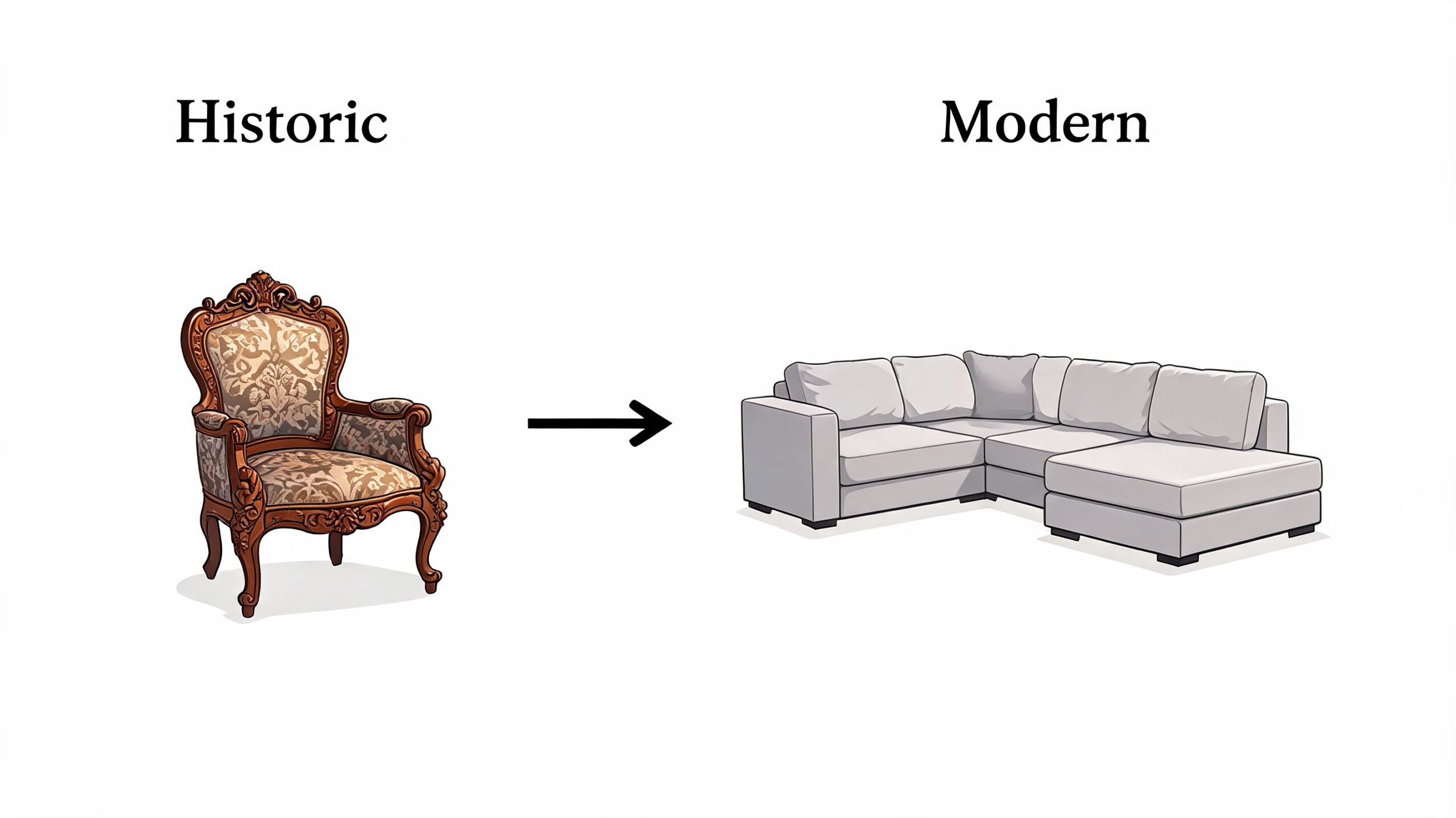
The phrase corner sofa chair can sound a little odd because it points to two related ideas from different eras. Historically, it meant one thing. Today, it commonly refers to something much larger and more flexible.
The original corner chair
The first version was a single seat, not a sectional. The original corner chair appeared in England around 1700-1710 and was also called a roundabout chair, with a diagonal seat and curved back designed to fit neatly into room corners, as described by the Newport Historical Society article on the New England corner chair.
It was clever furniture. Instead of wasting a corner, the chair turned it into useful seating. That made it a natural fit for dressing rooms, libraries, and other spaces where floor area mattered and placement had to be efficient.
How the idea became a living room staple
The modern version took that same corner-friendly logic and expanded it into a full seating system. The modular corner sofa was pioneered in 1944 by American designer Harvey Probber, whose customizable L-shaped concept could increase seating capacity by up to 50% compared with traditional sofas, according to this history of the corner sofa from The Independent.
That shift matters because it explains why modern sectionals feel so practical. They weren’t created just to look stylish. They were created to solve everyday layout problems and seat more people in a smarter footprint.
Why the term still confuses people
When someone searches for “corner sofa chair,” they may mean:
- A historic corner chair that fits into one corner by itself
- A compact chaise or sectional for a smaller room
- A full modular corner sofa for family seating
All three share the same design instinct. They make a corner useful instead of awkward.
The shape may have changed over the centuries, but the purpose stayed the same. Use the room better, and make the seat more comfortable.
That’s why the term still works, even if the furniture looks very different today. At its core, a corner sofa chair is about fitting real homes in a practical, comfortable way.
Finding Your Perfect Fit Corner Sofa Configurations
Once you know what a corner sofa chair is, the next decision is shape. Shoppers often become confused by the options, especially upon encountering terms such as left-hand facing, right-hand facing, chaise, or modular.
The easiest way to think about it is this: every configuration changes how people sit, move through the room, and use the open floor around the sofa.

The classic L shape
The L-shaped corner sofa is the most common option. One side is longer, and the return creates that familiar corner wrap. It works well in family rooms, open-concept homes, and rooms where you want the seating to hug the perimeter instead of floating in the center.
A left-hand or right-hand version refers to which side the shorter chaise or return sits on when you’re facing the sofa. If that sounds confusing, it helps to stand where the TV or coffee table would be and picture the sofa from there.
The chaise style
A chaise version is often the easiest transition for someone moving up from a standard sofa. It gives one seat a stretched-out lounging area without creating the more enclosed feeling of a larger sectional.
This can be a smart choice for smaller homes or for anyone who wants the comfort of a corner piece without committing to a room-dominating arrangement.
The U shape for gathering spaces
A U-shaped sectional is built for conversation and company. It surrounds the seating area more fully, which makes it ideal for larger rooms where the sofa itself acts as the center of the space.
For families who host often, this shape can feel more natural than scattering multiple sofas and chairs around the room.
The modular approach
Modular designs are the most flexible. Because they’re built in pieces, they can adapt to layout changes, moves, or changing family needs. That flexibility traces back to Harvey Probber’s modular idea from 1944, which made customizable L-shaped seating a defining part of modern furniture history.
Here’s a simple comparison:
| Configuration | Best for | Watch for |
|---|---|---|
| L-shape | Everyday family use, corners, open plans | Need correct left/right orientation |
| Chaise | Lounging, smaller rooms, simpler layouts | Can block a walkway if the chaise points the wrong way |
| U-shape | Large rooms, entertaining, conversation | Needs breathing room around it |
| Modular | Flexibility, moves, custom layouts | Quality of connectors and frame matters |
If you’re still deciding, this expert guide for sectional owners does a nice job explaining how reversible and sectional layouts affect day-to-day use. For more room-planning inspiration, these sectional sofa layout ideas can help you picture what works in a real home.
The Most Important Step Measuring for Your Corner Sofa
People usually focus first on color or style. That’s understandable, but the most important decision is measurement. A beautiful corner sofa chair that doesn’t fit the room, blocks a walkway, or can’t make it through the front door stops being beautiful in a hurry.
The good news is that measuring doesn’t have to be complicated if you do it in the right order.

Start with the room, not the sofa
Measure the wall space where the sofa will sit. Then measure the adjoining wall that forms the corner. Corner sofas live across two planes, so one wall measurement isn’t enough.
After that, note anything that affects placement:
- Windows and trim that could interfere with the back height
- Radiators or floor vents that need clearance
- Door swings that could hit an arm or chaise
- Outlets and lamps that you still want to access
If your room has an alcove, angled wall, or odd bump-out, sketch it. It doesn’t have to be fancy. A hand-drawn room outline is often enough to stop a costly mistake.
Understand the three depth measurements
Many shoppers get tripped up by the three critical depth measurements of a corner sofa: overall depth of 80-103 cm, seat depth of 50-60 cm, and full recline depth up to 152 cm, as outlined in this corner sofa measuring guide from Tech Sofa.
Each one answers a different question.
- Overall depth tells you how far the sofa projects into the room
- Seat depth tells you how the sofa will feel when you sit in it
- Full recline depth matters if any seat extends outward and needs extra clearance
People often assume “depth” is one number. It isn’t. That’s why a sofa can fit on paper and still feel wrong in real life.
A seat can be comfortable but still leave too little space for traffic. That’s why footprint and comfort have to be measured separately.
Mark the footprint on the floor
Painter’s tape is one of the simplest tools you can use. Tape out the full shape of the sofa on the floor, including the long side, short side, and any chaise extension. Then walk around it as if it were already there.
Look at how you move through the room when carrying laundry, greeting guests, or heading to another space. A layout that works when the room is empty can feel cramped once the sofa is in place.
Don’t forget delivery access
A corner sofa that fits the living room still has to get there. Measure:
- Front door openings
- Hallways and turns
- Stair width and ceiling clearance
- Interior doorways
- Any tight entry points near railings or walls
This is especially important in older Northwest Indiana homes where entry geometry can be tighter than expected. If you want a more detailed checklist, this guide on how to measure furniture is a practical resource to keep handy.
What to do with irregular rooms
If the room isn’t a clean rectangle, don’t guess. Measure every unusual angle and identify the point where the sofa would start and stop. In tricky spaces, modular or custom options often make more sense because they let you work around the architecture instead of fighting it.
That little bit of prep gives you confidence. Beyond that, it helps you choose a sofa that feels intentional the moment it arrives.
Built for Family Life Materials, Durability, and Care
A corner sofa chair does a lot of work. It handles movie nights, naps, pets, kids, guests, and the daily habit of everybody choosing the same favorite spot. That means durability isn’t a luxury issue. It’s a practical one.
If you want a sofa that holds up, start with what’s underneath the fabric.

The frame matters most where the sofa turns
In an L-shaped design, the corner isn’t just a visual feature. It’s a structural challenge. The 90-degree corner wedge is a critical load-bearing point, and the joint there has to distribute angular stress properly to avoid separation or sagging, as explained by Dimensions.com in its sectional sofa reference.
That’s one reason quality brands and well-built American-made pieces stand out. The frame and connection hardware have to be engineered for repeated use, especially in households where people sit on the corner section, lean into the angle, or shift the modular pieces over time.
A quick way to judge construction
When you’re shopping, ask about these things directly:
- Frame material. Solid wood and well-built engineered support components generally inspire more confidence than a vague answer about “wood construction.”
- Corner connection hardware. On modular sofas, this is what helps sections stay aligned.
- Seat support system. A comfortable top cushion can hide weak support underneath.
- Cushion filling. Softer isn’t always better if the fill loses shape too quickly.
Flexsteel is a name many families recognize because durability is part of why people seek it out. Amish-made furniture also appeals to buyers who want solid wood craftsmanship and a more heirloom-minded build.
Fabric, leather, and real-life maintenance
The best upholstery depends on how your home functions. For active family rooms, performance fabrics are popular because they tend to feel approachable and easier to live with. Leather has a different appeal. It’s classic, easy to wipe down, and develops character over time.
The question to ask isn’t “Which is best?” It’s “Which is best for us?”
A few common scenarios:
| Household need | Often worth considering |
|---|---|
| Kids and everyday spills | Performance fabric |
| Pets that claim the sofa | Tighter weaves or easy-clean surfaces |
| Formal look with easy wipe-down care | Leather |
| Soft layered styling | Textured fabric upholstery |
For cleaning and upkeep, routine vacuuming, rotating cushions when possible, and addressing spills promptly all help. If you’re dealing with specialty care for delicate textiles, this article on reviving delicate furniture fabrics offers useful general guidance on upholstery cleaning approaches. For a broader material overview, this resource on upholstery materials can help you compare feel, appearance, and care expectations.
Buy the inside of the sofa first. The fabric and color catch your eye, but the frame, support, and corner joinery decide how it lives after the first year.
That’s the difference between a piece that merely looks good on delivery day and one that still feels dependable after years of family use.
Your Vision Our Craft The Groen's Custom Order Advantage
A lot of furniture shopping frustration comes from trying to force a standard piece into a non-standard room. The sofa is almost right. The length works, but the return is wrong. The scale fits, but the fabric doesn’t. The style is close, but not close enough for the home you’ve put together.
That’s where custom order becomes more than a luxury. It becomes a practical solution.
When custom makes more sense
Custom furniture is especially helpful when the room has unusual dimensions or the household has specific needs. Maybe you need a left-hand facing layout in one exact size. Maybe you want performance fabric with a cleaner, dressier silhouette. Maybe your family wants the sturdiness of a more substantial frame rather than a lighter modular look.
Instead of settling, you can design it your way. That means choosing configuration, scale, arm style, cushion feel, leg finish, and upholstery with much more intention.
Bespoke options for different priorities
Not every custom order is the same. Some buyers want a semi-custom path through trusted upholstery brands like Bassett, where you can personalize the look while staying within an established collection. Others want something more bespoke, especially if they value solid wood, American-made construction, or Amish craftsmanship built around long-term ownership.
That’s a very different experience from picking the least-wrong sofa off a showroom floor.
A strong custom process can help with:
- Awkward layouts that don’t suit standard dimensions
- Material preferences like leather, performance fabric, or a specific texture
- Lifestyle needs involving kids, pets, guests, or multigenerational use
- Design continuity so the new sofa works with the rest of the room
Why guidance matters
The biggest benefit isn’t just more options. It’s better decision-making. Someone who understands furniture construction, room flow, and fabric behavior can help narrow choices before expensive mistakes happen.
That’s especially valuable when you’re balancing appearance with daily use. A gorgeous sofa that doesn’t fit your delivery path, doesn’t support how your family sits, or doesn’t wear well in your room isn’t really the right piece.
If you’re curious how the process typically works, this overview on getting started with custom order furniture is a helpful place to begin. It gives you a clearer picture of how custom choices turn an idea into a finished piece that feels made for your home, because it is.
Making It All Work Room Layouts and Styling Your Sofa
Once the corner sofa chair is in place, the room usually gets easier to finish. The sofa does a lot of the layout work for you because it defines the seating zone and gives the eye a clear anchor.
The trick is to support that anchor without crowding it.
Let the sofa lead the room
A corner sofa naturally creates a conversation area. In many rooms, that means the coffee table belongs inside that zone, not pushed too far out. Side tables should be easy to reach from the main seats, and lighting should support both relaxing and reading.
If the room feels off after the sofa arrives, the issue often isn’t the sofa. It’s that the surrounding pieces are too small, too scattered, or placed without reference to the sofa’s shape.
A few styling moves that work well
- Use a rug to define the zone. The rug should visually connect the seating area instead of looking like a postage stamp in front of it.
- Balance the long side with a floor lamp, art, or a side table so one arm doesn’t feel visually heavier than the other.
- Keep the walkway obvious. A corner sofa works best when people can tell, at a glance, where to walk.
- Add softness where life happens. Throws and pillows make the sectional feel finished and lived in, not stiff.
For pet-friendly homes, many families like adding washable layers to the spots where dogs or cats naturally settle. If that’s part of your routine, these Pandemonium Millinery pet blankets are a stylish example of how protective layers can also look intentional.
Can a corner sofa work in a smaller room
Yes, often surprisingly well.
A corner layout can use perimeter space more efficiently than a sofa-plus-loveseat setup, which may leave awkward dead zones between pieces. In smaller rooms, the best results usually come from cleaner arms, lighter visual lines, and careful spacing around the coffee table and walkway.
Smaller rooms don’t always need smaller thinking. They need furniture that uses every inch more wisely.
If your sofa also has to work with a media wall, this guide to the best placement for your sofa and television can help you fine-tune the arrangement so comfort and viewing angles stay in sync.
Conclusion Your Home Your Comfort Made Possible
Choosing the right corner sofa chair is a big decision, but it becomes much more manageable once you break it into the right questions. What shape fits the room? Have you measured the full footprint and delivery path? Do the materials and construction match how your family really lives?
Those answers lead you toward a sofa that does more than fill a corner. It supports movie nights, conversations, quiet evenings, and the everyday rhythms that make a house feel like home.
For families across Northwest Indiana, that kind of purchase deserves honest guidance, quality options, and the chance to tailor the result to the space instead of settling for almost right. That’s also why custom furniture, American-made craftsmanship, and durable brands continue to matter. They give homeowners more control over comfort, fit, and longevity.
And when budget matters, flexibility matters too. Special financing, subject to credit approval, can make it easier to invest in lasting quality now while fitting the purchase into your household plans.
Visit Groen's Fine Furniture in Dyer or Crown Point today to explore custom furniture options, test drive comfort in person, and ask about special financing plans. Our multigenerational family team is proud to serve Northwest Indiana with personal guidance, white-glove delivery, and the kind of 5-star service that helps you create a home you love.