Blog
Cottage Style Couch: A Guide to Cozy Living Room Comfort

A lot of Northwest Indiana living rooms have to do more than look nice. They host movie nights, homework sessions, quick naps, holiday visits, and those ordinary evenings when everybody ends up in the same room without planning it. If your sofa feels too stiff, too formal, or too trendy to live with comfortably, the whole room can feel a little off.
That’s why so many homeowners are drawn to the cottage style couch. It has a softer presence. It invites people in. And it brings a sense of ease that works especially well in family homes across Dyer, Crown Point, St. John, Schererville, and Munster, where comfort matters just as much as appearance.
Our family has helped local homeowners furnish their spaces since 1983, and we’ve seen one truth hold up year after year. The best furniture choices aren’t the flashiest ones. They’re the pieces that make daily life feel better, look welcoming in every season, and still feel right after the latest trend fades.
Creating a Cozy Retreat in Your Northwest Indiana Home
A cozy room usually starts with one main piece that sets the tone. In many homes, that piece is the sofa. If it feels hard-edged or oversized in the wrong way, the room can seem cold or awkward. If it feels relaxed, supportive, and approachable, the whole space gets easier to use.
A cottage style couch works well because it balances comfort and charm. It doesn’t ask your family to sit carefully. It welcomes people to settle in, lean back, and stay awhile. That matters in Northwest Indiana, where living rooms often need to handle both everyday routines and weekend gatherings.
For many homeowners, the challenge isn’t liking the look. It’s knowing whether the style will work in a real house with kids, pets, changing seasons, and mixed décor. The answer is yes, if you focus on the right things first.
Start with how you want the room to feel
Before choosing fabric or color, ask a simpler question. Do you want your living room to feel formal, refined, airy, or lived-in?
A cottage room usually leans toward these qualities:
- Welcoming comfort that encourages people to sit down and relax
- Soft shapes that make the room feel less rigid
- Collected character rather than a showroom-perfect look
- Practical warmth that fits daily family life
That last point matters most. Cozy doesn’t mean cluttered. It means your room supports how you live.
If you’re thinking through layout, scale, and what pieces belong together, a good place to start is this guide to living room essentials. It helps narrow down what your room needs before you shop by style alone.
A cozy retreat isn’t built by adding more furniture. It’s built by choosing the right furniture first.
Why this style fits local homes so well
Many Northwest Indiana homes mix traditional architecture with updated finishes. You might have classic trim, newer flooring, an open-concept layout, or a family room that connects to the kitchen. A cottage style couch bridges those combinations nicely because it feels familiar without being stuffy.
It also works across seasons. In winter, it pairs beautifully with layered throws and warm textures. In spring and summer, lighter fabrics and painted wood accents help it feel fresh and airy. That flexibility is part of its staying power.
The Enduring Charm of the Cottage Style Couch
The cottage style couch has a gentle, inviting personality. You’ll usually notice it right away in the silhouette. Softer lines, rolled or rounded arms, deeper seats, and details that feel relaxed instead of severe all play a role.
This style isn’t just about looking quaint. It has roots in comfort and accessibility. Cottage furniture, including couches, first became popular on the East Coast from 1830 to 1890, and it was praised for affordability. In 1850, A.J. Downing noted that a complete bedroom suite in the cottage style cost the same as a single mahogany wardrobe, which helped make the look accessible to the growing middle class, as described in this history of cottage furniture.
What people usually mean by cottage style
Readers often get tripped up here because “cottage” can mean several things. It doesn’t always mean floral prints, distressed paint, or a beach-house theme. It means furniture that feels easy to live with.
Look for these cues:
- Soft arm shapes such as rolled arms or gently sloped arms
- Comfort-first seating that feels generous and relaxed
- Approachable finishes like painted wood, washed tones, or casual upholstery
- Lighter visual weight than a heavily formal or highly modern sofa
Some cottage sofas have skirts. Others stand on turned wood legs. Some lean more English cottage, while others feel more coastal or farmhouse-inspired. The common thread is warmth.
Why the style still feels current
A good cottage style couch doesn’t force your room into a costume. That’s one reason it still works today. It can sit beside painted end tables, a rustic coffee table, or even cleaner-lined pieces and still feel right.
Here’s the simple way to consider this:
| Design element | What it adds to the room |
|---|---|
| Rounded arms | A softer, friendlier look |
| Deep cushions | Better lounging comfort |
| Skirted base or turned legs | Traditional character |
| Light or muted upholstery | An airy, relaxed mood |
Practical rule: If a sofa looks like you’d hesitate to actually use it, it probably won’t deliver the cottage feeling you want.
The charm comes from the mix of beauty and ease. It feels rooted in tradition, but it supports modern living better than many formal furniture styles ever did.
Choosing Fabrics for Comfort and Durability
Fabric is where many shoppers get stuck. They find a couch shape they love, then worry that the prettiest upholstery won’t survive real life. That concern is fair. A cottage style couch should feel soft and relaxed, but it also has to handle everyday use.
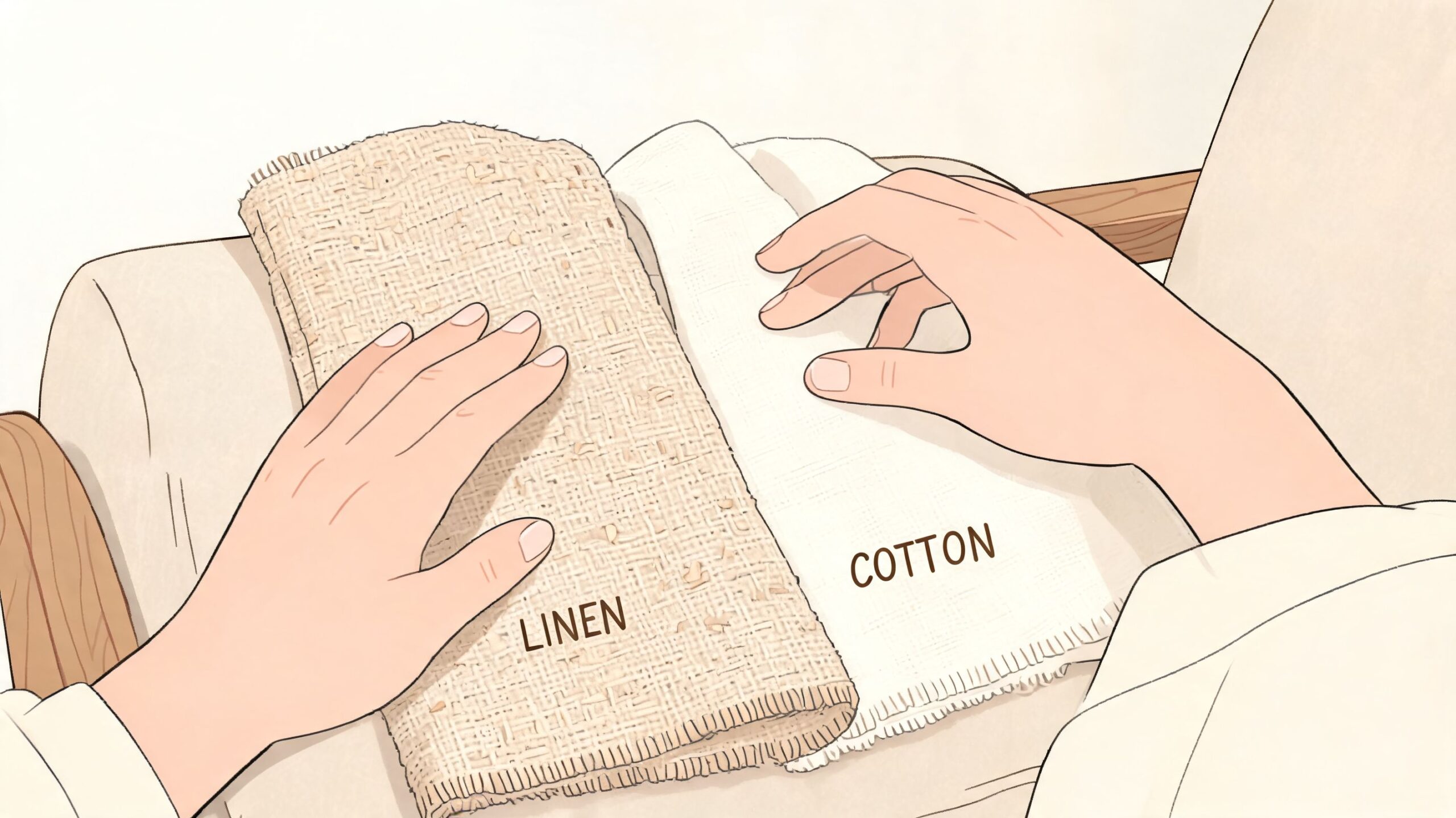
Traditional cottage looks often lean toward linen-like textures, cottons, and soft neutrals. Those choices can be beautiful. They also ask for more care in some homes. If you have children, pets, frequent guests, or a room with strong sun exposure, performance fabric deserves serious consideration.

The look you want versus the life you live
A lot of people assume performance fabric looks synthetic or stiff. That used to be more common. Today, many options offer the soft hand and woven texture people want for cottage interiors, while being more forgiving in daily life.
If you’re comparing materials, this guide to upholstery materials is useful because it breaks down how different fabrics behave, not just how they look.
A helpful way to decide is to match fabric to the room’s actual job.
- For busy family rooms, performance fabrics usually make the most sense because they’re easier to maintain and less stressful to own.
- For quieter sitting rooms, linen blends or softer natural-feeling fabrics may be worth the extra care.
- For bright rooms, fade resistance matters more than many people realize.
- For pet households, texture matters. Some weaves hide wear and hair better than others.
Color choices that support the style
Cottage style doesn’t require everything to be white. In fact, many of the best rooms use soft variation. Cream, flax, beige, pale blue, sage, and muted gray all work well. The goal is a palette that feels calm and layered rather than sharp and high-contrast.
Try thinking in terms of mood:
| Fabric color family | Best for |
|---|---|
| Cream and warm white | Brightening a darker room |
| Beige and flax | Hiding everyday life a bit better |
| Soft blue | Creating an airy, relaxed look |
| Gentle green | Adding freshness without feeling loud |
Choose a fabric you won’t be afraid to use. A sofa should lower stress in your home, not raise it.
If you love the cottage look but worry about stains, this is often the best compromise. Pick a family-friendly fabric in a soft, classic color. You keep the charm without treating the sofa like a museum piece.
Design It Your Way Custom Cottage Furniture
A cottage style couch should fit the way your family lives. In many Northwest Indiana homes, that means one sofa may need to handle movie nights, weekend guests, after-school sprawl, and quiet mornings with coffee. The best version of this style supports all of that while still bringing the warmth people love in a cottage room.
That practical flexibility is one reason custom furniture matters so much. Bassett’s discussion of cottage style furniture points out that cottage pieces can be adapted in ways that keep the character of the style while making them work in a more current home. That is especially helpful for NWI families who want softness and charm without making the room feel overly themed or old-fashioned.

The best version is the one shaped around your home
Custom furniture changes the question. Instead of asking whether cottage style fits your house, ask which parts of cottage style belong in your house.
For one family, that may mean soft rolled arms and a relaxed seat. For another, it may mean a cleaner silhouette with cottage-style fabric and turned legs. The frame is the foundation, much like choosing the right floor plan before decorating a house. Once that shape is right, the rest of the details start to make sense.
You might choose:
- a cottage silhouette with simpler legs for a more current room
- a traditional arm shape with well-fitted cushions for a neater look
- a bench seat for a quieter, less broken-up appearance
- firmer cushions for easier sitting and standing
- a deeper seat for lounging, reading, or afternoon naps
Those choices matter because comfort is personal. A sofa that feels wonderful to one household can feel awkward to another. Custom ordering helps you get the welcoming cottage look without forcing your family into a one-size-fits-all design.
If you want to see how those choices work together, our guide to designing your own sofa explains the key decisions in plain language.
Good construction keeps the style from becoming temporary
Cottage style often looks gentle, but the furniture itself should be sturdy. That is where long-term value is built. A well-made sofa keeps its comfort and shape better through years of real use, which matters a lot more than a pretty showroom first impression.
Frame joinery, suspension, cushion quality, and fabric tailoring all affect how the piece performs. Better cushions usually spring back more reliably after daily sitting. Better support underneath helps the seat feel stable instead of saggy. Good tailoring keeps skirts, welting, and cushions looking tidy instead of rumpled after a short time.
For families furnishing a forever home, or at least a home they want to enjoy for many years, that difference is important. Cottage style should feel relaxed, not flimsy.
Custom can be the smarter buy
Custom furniture is often more practical than people expect. When you choose the size, seat feel, arm style, and fabric up front, you are less likely to settle for a sofa that is only partly right. That matters in homes where room sizes vary, open-concept layouts need balance, or one piece has to connect newer finishes with older, well-loved furniture.
We help NWI families work through those choices every day. Sometimes the right answer is a softer cottage profile that warms up a newer space. Sometimes it is a more structured version that brings order to a busy family room. Either way, customization turns cottage style from a trend into a lasting part of the home.
Good customization adds comfort, fit, and staying power. It gives your family a couch that feels right on the first day and still feels right years later.
A made-to-order cottage sofa can be one of the most satisfying purchases in the house because it reflects how you live, not just what was sitting on the showroom floor.
Styling Your Couch for a Perfect Cottage Look
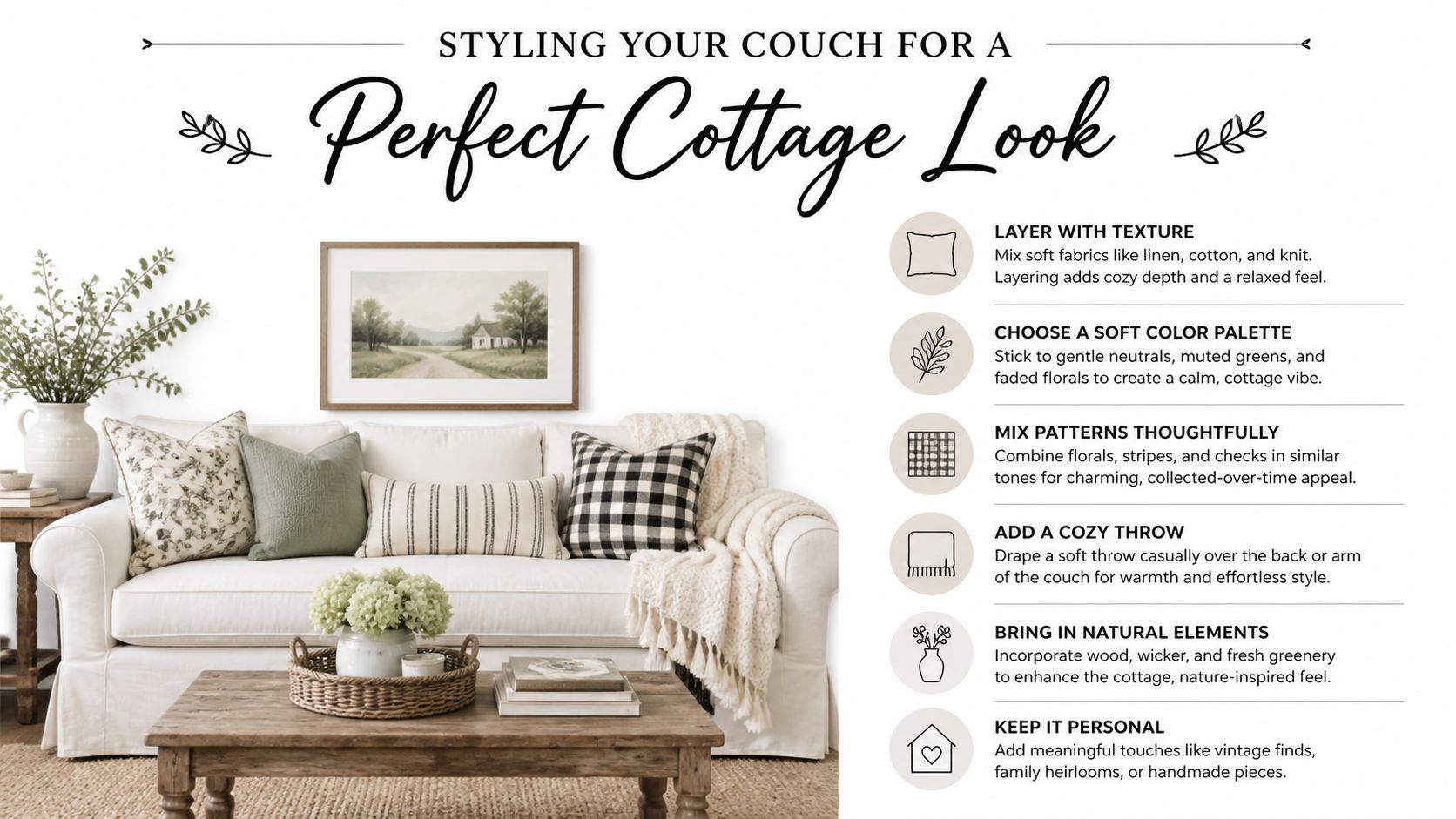
A cottage style couch works best when the rest of the room supports its mood. That doesn’t mean every piece has to match. It means the room should feel layered, useful, and comfortable.
Start with placement. In many NWI homes, the sofa faces the television, fireplace, or both. Keep enough space around it for easy movement, but don’t push every piece against the walls by default. Pulling the couch slightly into the room can make the seating area feel more intentional.
Build the room in soft layers
Once the sofa is in place, add layers that echo its relaxed personality.
A few combinations work especially well:
- Patterned pillows with a solid sofa keep the room interesting without overwhelming it
- A knit or woven throw softens the seating area and makes the couch feel lived in
- A grounded area rug helps anchor the arrangement and adds warmth underfoot
- Wood tables with character balance upholstered softness with natural texture
If you’re unsure how to combine florals, plaids, stripes, or checks without making the room feel busy, this guide to mixing and matching patterns is a helpful reference.
What complements cottage style well
Not every companion piece has to be strictly cottage. In fact, the room often feels better when you mix in contrast.
Try pairings like these:
| Pairing | Why it works |
|---|---|
| Cottage couch with rustic coffee table | Adds warmth and grounding |
| Cottage couch with painted end tables | Keeps the room light and collected |
| Cottage couch with cleaner lamps | Prevents the look from getting too sweet |
| Cottage couch with woven baskets | Adds storage and texture |
A common mistake is overdoing themed accessories. Too many signs, too many distressed finishes, or too much matching décor can make the room feel staged instead of natural.
Leave some breathing room. Cottage style feels best when it looks gathered over time, not bought all at once in one matching set.
A simple styling formula
If you want a straightforward starting point, use this order:
- Place the couch for conversation and comfort.
- Add a rug that’s soft but grounded in tone.
- Bring in two or three pillows with varied texture.
- Add one throw blanket.
- Finish with wood, woven, or painted accents.
That mix creates a room that feels calm, personal, and easy to maintain.
Maintaining the Beauty of Your Cottage Couch
A cottage style couch should feel lived in, not worn out. For many Northwest Indiana families, that means a sofa has to handle real life gracefully. Kids pile on after school, guests gather during the holidays, and pets often claim a favorite corner. Good maintenance keeps that everyday comfort from turning into early sagging, fading, or dingy fabric.
Start with steady, simple care. Vacuum the upholstery with a soft brush attachment and slow down around seams, under cushions, and along the arms, where dust and crumbs collect first. If your house seems to need constant dusting, this guide on Phoenix area dust control offers useful housekeeping habits that can help in any home.
Small habits matter more than occasional big cleanups.
Protect the fabric before wear shows up
Cottage style often uses relaxed fabrics and softer shapes, which is part of the charm. It also means a little prevention goes a long way.
Use these habits regularly:
- Rotate seat cushions if the cushions are reversible, so daily use spreads out more evenly.
- Fluff loose back cushions to help them keep their shape and avoid that tired, slumped look.
- Blot spills quickly using the care instructions for your fabric. Rubbing pushes moisture and residue deeper into the fibers.
- Limit direct sunlight in bright rooms, especially near large windows, to help slow fading.
Seasonal check-ins help too. Our fall furniture maintenance checklist gives homeowners a practical routine for keeping upholstery, wood, and cushions in better condition year after year.
Quality construction makes upkeep easier
A well-made couch responds better to regular care. Stronger cushions hold their shape longer, better upholstery tailoring keeps the sofa looking neat, and durable fabric choices give you more room for everyday family use. As noted earlier, higher-quality cushion materials resist premature wear, which makes routine steps like rotating, fluffing, and prompt spill care more effective.
That matters in modern cottage homes. Northwest Indiana families often want the warmth of cottage style without treating the living room like a museum. Custom construction helps bridge that gap. You get the welcoming look people love, along with fabric and cushion choices that fit how your household lives.
If one seat gets the most use, add a washable throw or arm cover. Keep the couch a few inches away from heat sources. Clean spots promptly, before they set. Those are simple steps, but they protect both comfort and appearance over time.
At Groen’s, we help NWI families choose cottage style seating that is easy to live with and built to last, so the beauty you bring home still feels inviting years later.