Blog
18 Inch Pantry Cabinet: Storage Solutions for Your Kitchen

If you're looking around your kitchen and wondering where all the food, small appliances, and baking supplies are supposed to go, you're not alone. A lot of Northwest Indiana homes have kitchens that work hard but don't always offer enough organized storage. That's especially true in older homes around Dyer, Crown Point, St. John, Schererville, and Munster, where every inch matters and odd corners can make planning harder than it should be.
An 18 inch pantry cabinet often solves that problem better than people expect. It's narrow enough to fit into places a wider cabinet can't, but tall enough to turn wasted vertical space into everyday storage. Instead of stuffing cereal above the fridge or stacking cans three rows deep in a base cabinet, you get one dedicated place that makes the whole kitchen feel calmer and more functional.
Why an 18-Inch Pantry is a Kitchen Game-Changer
Most kitchen clutter doesn't start with too much stuff. It starts with poor storage. A narrow gap beside the refrigerator, an empty wall near the breakfast nook, or a corner that never quite works can leave families piling pantry items wherever they fit.
That's where the 18 inch pantry cabinet earns its keep. It feels small on paper, but in a real kitchen it often lands in the sweet spot. It gives you meaningful storage without making the room feel crowded or forcing a major remodel.

Why this size works so well
In many NWI homes, the kitchen has to do several jobs at once. It's where groceries land, lunches get packed, coffee gets made, and everyone gathers in the evening. A full walk-in pantry isn't always possible. A slim, tall cabinet often is.
An 18 inch pantry cabinet can help you store:
- Everyday food staples like cereal, pasta, canned goods, snacks, and baking items
- Overflow kitchenware such as mixing bowls, serving trays, and paper products
- Small appliances if the shelves are planned with enough height between them
- Kid-friendly snacks at lower levels so little ones can reach what they need
Practical rule: When counters feel crowded, the problem is often vertical storage, not kitchen size.
A lot of homeowners also like this width because it doesn't overwhelm the room visually. You gain storage, but the kitchen still feels open. That balance matters in galley kitchens and L-shaped layouts, where walkway space is precious.
For more ideas on making a compact kitchen work harder, Northpoint Construction's guide to functional kitchens is a useful companion read. You can also browse these ways to make your kitchen more efficient if you're trying to improve flow as well as storage.
Getting the Perfect Fit A Pantry Measurement Guide
Buying the right cabinet starts with measurement. This is the step that saves the most frustration later. Many people measure the obvious opening and forget about trim, door swing, outlet placement, or the way a nearby refrigerator handle can interfere.
The typical size for an 18-inch wide tall pantry cabinet is 18"W x 84-96"H x 24"D, and that 24-inch depth aligns with standard base cabinet depths, which helps it sit neatly with surrounding counters and appliances, according to ZC Building Supply's Athens 18 inch pantry cabinet listing. That same source notes this kind of sizing goes back to the post-WWII housing boom, with 18-inch widths becoming common by the 1980s for utility storage.
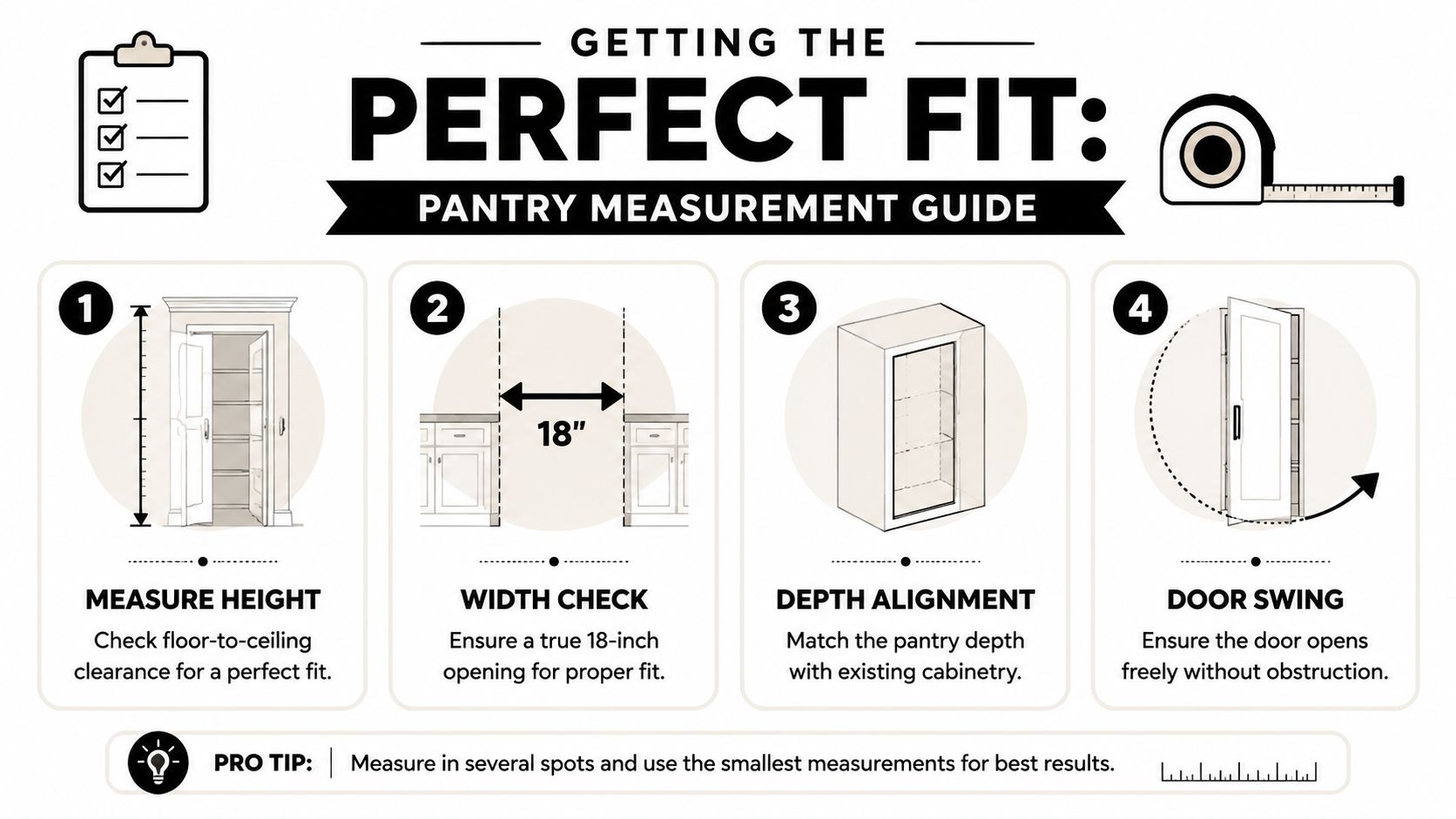
The four measurements that matter most
Start with a tape measure, a notepad, and a level if you have one. Don't trust old builder drawings. Measure the actual room.
Measure height from floor to ceiling
Take this measurement in more than one spot. Older homes can be slightly out of level, and that matters when you're choosing between an 84-inch, 90-inch, or taller cabinet.Measure the clear width
Don't just measure wall to wall. Check for trim, uneven plaster, and outlets. If the opening looks tight, measure at the floor, middle, and top.Check depth against nearby cabinets
A standard 24-inch-deep pantry usually lines up cleanly with surrounding cabinetry. That's one reason it looks built-in instead of added later.Test the door swing
This is the step people skip. If the cabinet sits beside a refrigerator, dishwasher, or corner wall, make sure the pantry doors can open comfortably.
Common fit mistakes in real kitchens
A pantry cabinet can technically fit and still function badly. That happens when a door opens into another door, when shelves are too deep for the walkway, or when crown molding and soffits get ignored.
Here's a quick check before you buy:
| What to check | Why it matters |
|---|---|
| Ceiling height | Prevents install-day surprises |
| Nearby appliance handles | Helps avoid blocked doors |
| Trim and baseboards | Affects whether the cabinet sits flush |
| Floor slope | Changes how square the cabinet looks |
| Traffic path | Keeps the kitchen comfortable to use |
Measure the cabinet's future behavior, not just its footprint.
If you want a more detailed measuring walkthrough before making a final decision, this guide on how to measure furniture is a helpful next step.
Built to Last Choosing Your Cabinet's Material and Style
Two pantry cabinets can look almost the same online and perform very differently over time. That difference usually comes down to materials. In a kitchen, shelves carry real weight, doors get opened constantly, and humidity can slowly expose weak construction.
For homeowners who want a cabinet that still feels solid years from now, frame and panel materials matter more than fancy finish names.
What the better-built cabinets have in common
Pantry cabinets with 3/4-inch solid hardwood frames and 1/2-inch plywood panels support up to 75 lbs per shelf under ANSI/KCMA A161.1 standards, according to the PC1890 pantry cabinet product details. That same source notes that specifying plywood cores over particleboard can minimize shelf sag by 15-20% over the cabinet's lifetime in humid Northwest Indiana conditions.
That matters more than many people realize. Pantry shelves don't just hold boxes of crackers. They hold canned goods, stand mixers, bulk bags of flour, and the heavy items that stress a cabinet year after year.
Plywood versus particleboard
Here's the practical difference:
- Plywood handles long-term use better, especially when shelves carry heavier pantry items.
- Particleboard can work in lighter-duty applications, but it's usually not the first choice for a heavily used tall pantry.
- Solid hardwood face frames help the cabinet feel sturdy at the door opening, where daily wear shows up first.
If you're pairing a new pantry with a countertop update, material durability matters across the whole project. This overview of most durable countertop materials is worth reading while you're making finish decisions.
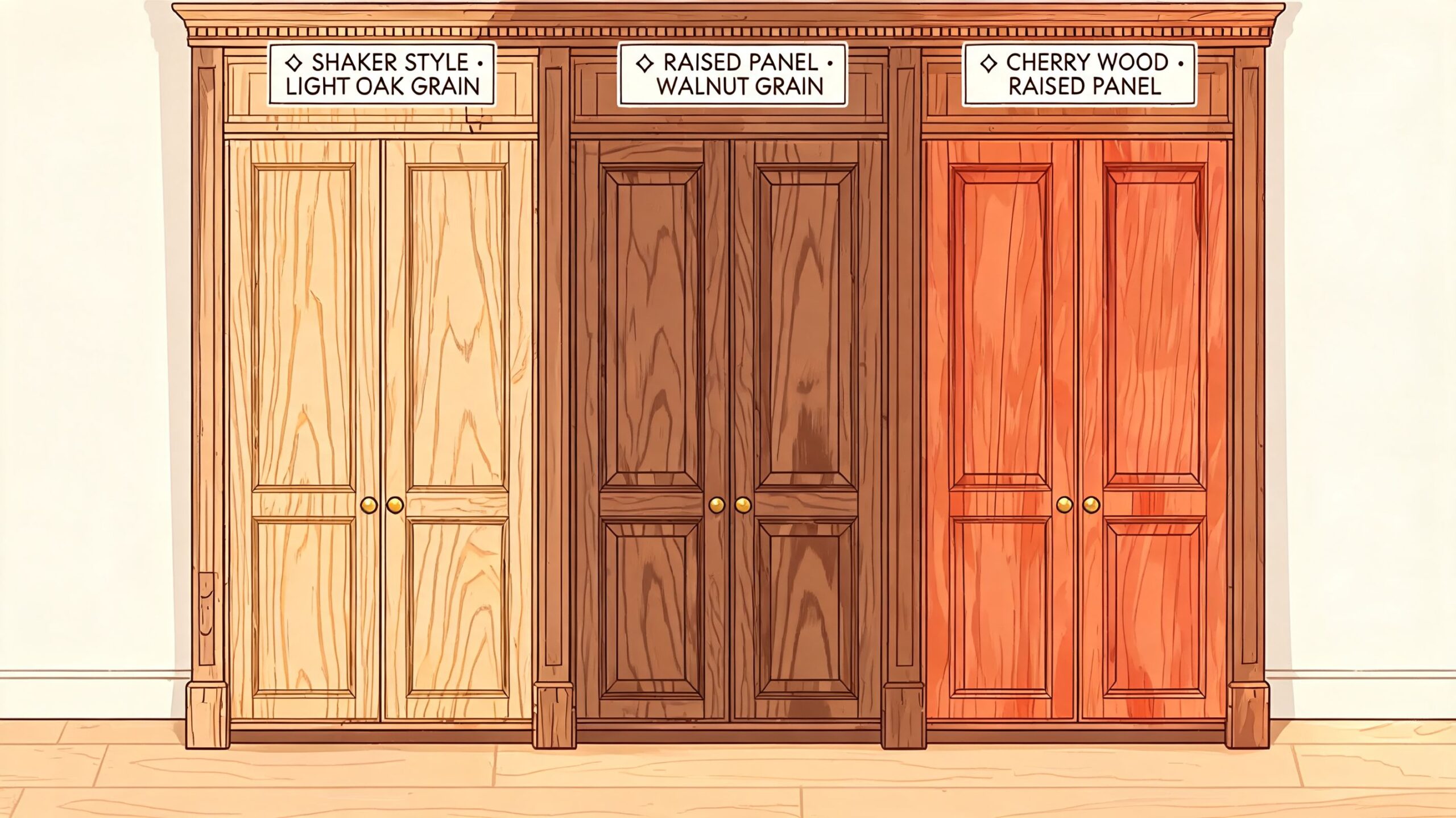
Choosing a style that fits your home
Style is the part people enjoy most, but it should still serve the room.
- Shaker doors work well in transitional kitchens and many updated older homes.
- Raised panel fronts feel more traditional and can suit classic cabinetry.
- Slab doors give a cleaner, simpler look for modern spaces.
A pantry cabinet should look like it belongs in the room, not like it was squeezed in afterward.
For a broader checklist on cabinet quality, construction, and long-term value, this article on 5 things to look for when buying chests dressers and cabinets offers solid guidance.
Smart Storage Ideas for Your Pantry Cabinet
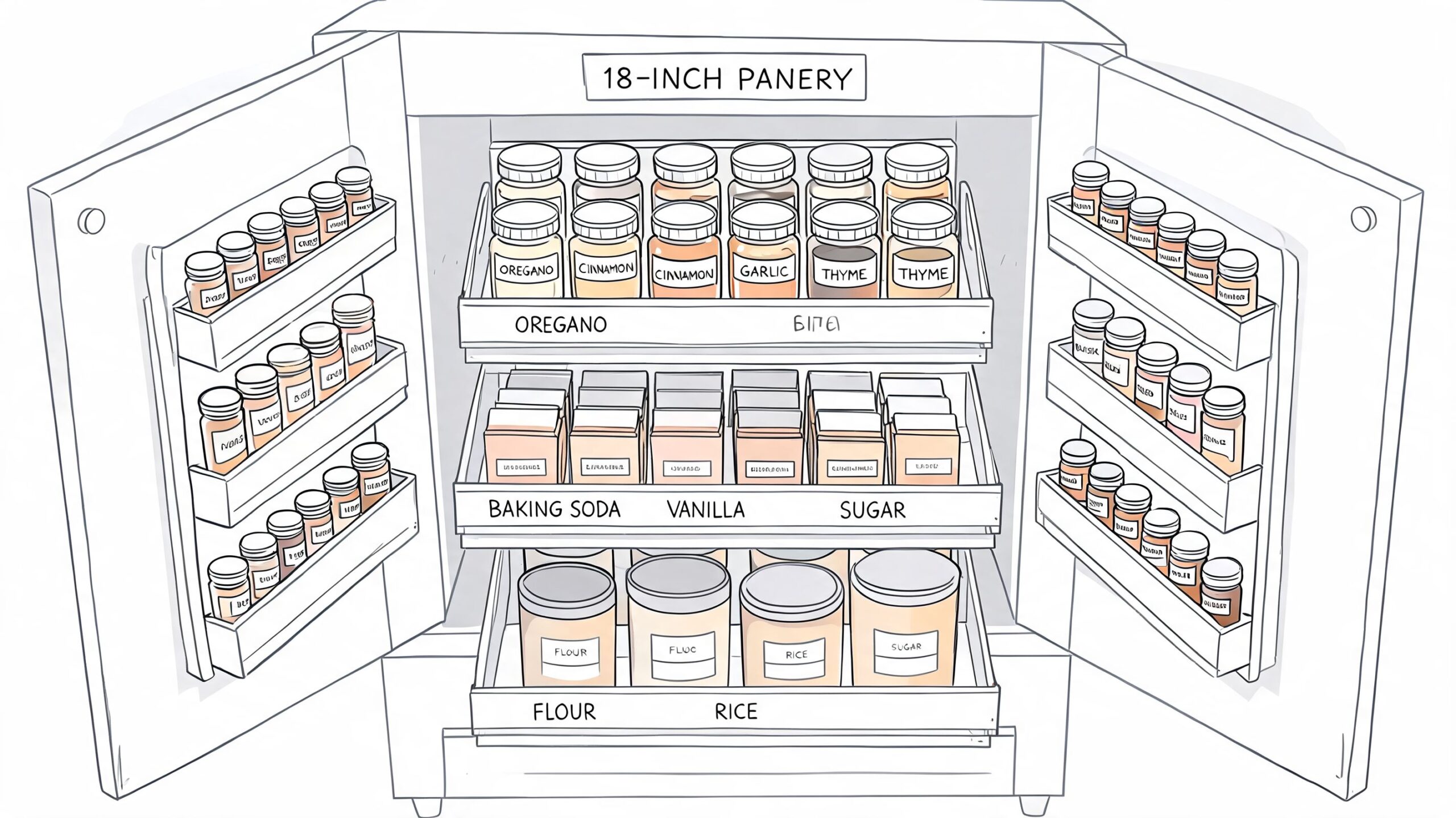
The best pantry cabinet isn't just a tall box. It's a plan. Once the doors open, every shelf should support the way your household cooks, snacks, and stores things.
A family with school-age kids needs different access than a couple who loves to bake. Someone who buys in bulk organizes differently than someone who shops for a few fresh meals at a time. The cabinet works best when it reflects those routines.
Use the height wisely
A standard 90-inch height cabinet with 5 adjustable shelves can offer up to 28 cubic feet of storage, with 40-50% greater volumetric efficiency than shorter 84-inch models, according to ZC Building Supply's tall 18 inch pantry cabinet listing. That same source notes that two-door configurations on 18-inch widths reduce hinge stress by 30% compared to a single tall door, which helps prevent warping over time.
That gives you two advantages. First, you can separate daily-use items from seasonal or backup supplies. Second, the cabinet tends to wear more evenly when the doors aren't fighting gravity as one tall, heavy panel.
Real-world organization setups
Here are a few pantry arrangements that work well:
Breakfast zone on the middle shelves
Keep cereal, oatmeal, mugs, and grab-and-go snacks at eye level for busy mornings.Baking station below
Store flour, sugar, mixing bowls, parchment paper, and measuring cups together so everything is in one place.Top shelf for backstock
Use the highest shelf for less-used items like extra paper towels, holiday platters, or reserve groceries.Lower section for heavier pieces
Put canned goods, small appliances, or bulk items near the bottom where lifting feels safer and the shelves carry the load more naturally.
For more layout inspiration, Trademaster Construction's pantry insights include ideas that translate well to both compact and larger kitchens.
If you have to kneel and dig for an ingredient, the shelf plan needs work.
Accessible storage also deserves attention. Pull-out shelves, lower storage zones, and easy-grip hardware can make an 18 inch pantry cabinet more comfortable for older adults, kids, and anyone who wants less bending and reaching. If your home is short on square footage, these best storage solutions for small spaces can help you think beyond the pantry itself.
Customization The Groen's Difference
Standard sizes solve many kitchens. They don't solve all of them. That's where homeowners often get stuck, especially in older homes where walls aren't perfectly square, appliance spacing is awkward, and trim details eat up valuable room.
A fixed-size cabinet from a big-box store can be close and still be wrong. Close might mean the filler looks clumsy. It might mean the door can't open fully. It might mean the cabinet technically fits, but the kitchen never feels finished.
Why custom sizing matters in older NWI homes
A 2025 Houzz survey showed 42% of homeowners struggle with integrating narrow cabinets in remodels, especially in older homes with non-standard layouts, and custom options from local Amish craftsmen can be built in 1/4-inch increments to address those fit challenges, as noted in this Hampton Bay pantry cabinet reference and related survey summary.
That kind of flexibility changes the whole conversation. Instead of asking, “What can I force into this space?” you get to ask, “What would make this kitchen work better every day?”
What customization can improve
Custom planning helps with more than width. It can also help you fine-tune the cabinet for the way you live.
- Shelf spacing for cereal boxes, mixers, or tall oil bottles
- Door style and wood species so the pantry blends with existing cabinetry
- Interior accessories such as pull-outs, trays, or divided storage
- Height details that account for soffits, trim, or visual balance in the room
A bespoke cabinet also tends to age better aesthetically. It looks intentional. In a room you use every day, that matters.
Making a better cabinet fit the budget
Quality cabinetry is an investment, and families have to balance that with everything else a home needs. That's why financing options matter. They give homeowners buying power so they can choose lasting materials and a better fit without feeling pushed toward a short-term compromise.
If you're comparing standard retail options with made-to-order pieces, it helps to understand what custom work really means. This explanation of what is bespoke furniture lays it out clearly in plain language.
Bring Your Vision to Our Showroom
A good pantry cabinet does three jobs at once. It fits the room, it holds up to daily use, and it makes your kitchen easier to live in. When all three come together, the space feels less crowded and more comfortable.
That's why it helps to move beyond online browsing at some point. Photos and product listings can tell you the basic size. They can't show you how a wood finish feels in person, how sturdy a shelf seems when you open the door, or how a custom option could solve an awkward corner in your own kitchen.
What to bring with you
If you're ready to shop in person, bring a few simple things:
- Your measurements from floor to ceiling, side to side, and front to back
- A few kitchen photos including nearby appliances and trim
- A short wish list of what you want to store inside
- Any finish samples if you're trying to coordinate with existing cabinetry
The right pantry cabinet should make the room easier to use every single day, not just fill an empty gap.
Northwest Indiana homeowners often need more than a stock answer. They need someone to look at the whole room and help them think through fit, function, and long-term value. That kind of guidance is still one of the best reasons to visit a showroom instead of guessing from a screen.
Visit Groen's Fine Furniture in Dyer or Crown Point today to explore custom options, including heirloom-quality Amish furniture, and ask about special financing available, subject to credit approval. Our family has served Northwest Indiana since 1983 with multigenerational ownership, five-star service, and a personal approach that helps you create a comfortable, functional home you'll love for years to come.