Blog
Family Owned Furniture Stores in Northwest Indiana

A lot of people in Northwest Indiana start the same way. They move into a new house in Dyer, update a dining room in Crown Point, or finally decide that the sofa in the family room has done its time. Then the search begins, and it usually gets frustrating fast.
One store shows polished photos but little substance. Another has a floor full of pieces that look fine until you sit down, open a drawer, or ask what the top is made from. Online, everything looks easy until the boxes arrive, the assembly starts, and the room still doesn't feel finished.
That's why family owned furniture stores still matter. They slow the process down in the right places. They help you judge quality with your hands, not just your screen. They give you options when standard sizes, standard fabrics, and standard service aren't enough. In a home, the furniture that works hardest is rarely the furniture you bought in a rush.
Your Home Deserves More Than a Cardboard Box
For homeowners in Dyer, Crown Point, and across Northwest Indiana, furnishing a house isn't just about filling empty corners. You're choosing where birthdays happen, where kids do homework, where guests gather after dinner, and where you land at the end of a long workday.
That is why shopping for furniture in a cardboard box leaves so many people disappointed. The product may arrive quickly, but quick and right are not the same thing. A dining table can be flat-packed and still fail the ultimate test, which is whether it becomes the place your family returns to year after year.
We see this a lot with new movers. They start with urgency, which makes sense. They need beds, seating, and a table now. But once the first rush passes, they realize they don't just want “something that fits.” They want a room that feels settled and personal. If you're planning a move and want to avoid damage before that furniture ever reaches the house, this hiring a Central Coast removalist guide is a useful reminder that the move itself affects how well good furniture holds up.
A home feels finished when the furniture matches the way your family actually lives, not the way a warehouse ships.
Family owned furniture stores tend to understand that better because we've watched customers come back through life stages. First apartment. First house. Growing family. Downsizing. Guest room refresh. The needs change, but the goal doesn't. People want furniture that feels honest, comfortable, and built for real living.
The Enduring Appeal of Shopping with Neighbors

The difference with family owned furniture stores isn't just that the name on the building belongs to a family. The difference is accountability. When the owners live and work in the same region, reputation isn't abstract. It follows them to church, to local restaurants, to school events, and into conversations with neighbors in Schererville, Munster, St. John, and beyond.
Local roots change how decisions get made
A family business with a long history in one area usually buys inventory differently than a store built around fast turns and disposable trends. The question isn't only, “Will this sell this month?” It's also, “Will this hold up, and will we still be proud to stand behind it later?”
That matters in an industry with real scale and change. The U.S. furniture market was valued at over $180 billion in 2025, and retail sales at furniture stores rose 2.2% month on month in March 2026, which was the strongest growth since late 2024, according to IBISWorld furniture store industry data. Growth like that tells you demand is still there. It also means shoppers have no shortage of places to spend. The stores that keep earning trust usually do it through service and consistency, not noise.
If you want a broader look at why local buying matters beyond furniture, this guide on how to support local businesses lays out the ripple effect well.
Three things neighbors usually do better
Not every local store is automatically better. Some are excellent. Some coast on nostalgia. The good ones usually share a few habits.
- They answer specific questions clearly. Ask what wood a table is made from, whether cushions are reversible, or what happens if a special order arrives with an issue. A serious store won't dodge.
- They edit their floor with intention. You won't see every trend under the sun. You'll see collections chosen because they solve common needs well.
- They stay involved after the invoice. Delivery, fit, care, and problem-solving still matter once the sale is done.
Practical rule: If a store talks more about promotions than construction, slow down.
Curated beats crowded
A packed showroom can feel impressive, but volume isn't the same as judgment. A well-run family store usually curates around durability, comfort, service history, and whether a line works for local homes.
That's especially important in Northwest Indiana, where people often furnish for long winters, busy households, and rooms that need to feel welcoming every day, not just styled for a photo. Good retail isn't only about what looks fresh on the floor. It's about what still looks right after years of use.
How to Evaluate True Craftsmanship and Quality

Most shoppers know quality when they feel it, but they can't always explain why one piece feels dependable and another feels short-lived. A showroom visit gets easier when you know what to test.
What to look for in wood furniture
Start with the case goods. Dressers, dining tables, nightstands, and entertainment pieces reveal a lot.
Look closely at the joinery. Drawers with dovetail joints usually signal more careful construction than drawers held together with the bare minimum. Open and close them several times. They should move smoothly and feel aligned. Wiggle the piece gently from the side. A strong piece shouldn't feel loose or top-heavy.
For shoppers comparing solid wood to look-alikes, this guide on what is Amish furniture helps explain why material and build method matter so much over time.
Here's a simple showroom checklist:
- Check the back and underside. Hidden areas tell the truth faster than the polished front.
- Ask what is solid wood and what is veneer. Veneer isn't automatically bad, but you should know what you're paying for.
- Inspect the finish by touch. A good finish feels even and intentional, not thick, sticky, or rushed.
How to test upholstered furniture
Sofas and chairs need more than a quick sit. Do the full sit test. Sit upright, lean back, and shift positions. Then stand up and look at the cushion. Does it recover well, or does it stay compressed?
Flexsteel is a useful example because shoppers often notice frame stability and seat support when they compare it side by side with lighter-built upholstery. You don't need jargon to judge that. You need a few honest minutes in the seat.
Ask questions that many people skip:
| What to ask | Why it matters |
|---|---|
| What supports the seat? | Support affects comfort and how quickly a sofa sags |
| Are the cushions reversible? | Reversible cushions can wear more evenly |
| What fabric fits a busy home? | Performance fabrics are practical for kids, guests, and pets |
Good furniture should answer pressure with stability, not wobble.
Honest pricing starts with real job costing
Custom work adds another layer. You're not just buying a piece. You're paying for material, labor, timing, and skill. Industry benchmarks suggest material costs should be 30% or less of the sale price in custom furniture work, because the rest has to cover labor, overhead, and margin. The same trade discussion also notes that many businesses fail because they don't track labor time carefully, which is one reason pricing can be inconsistent in custom work, as explained in this job-costing discussion for custom furniture operations.
That's one reason experienced stores tend to price custom pieces more accurately. They've learned that if labor isn't tracked, somebody pays for that mistake later. Usually the customer, or the quality.
Design It Your Way with Custom Furniture Programs
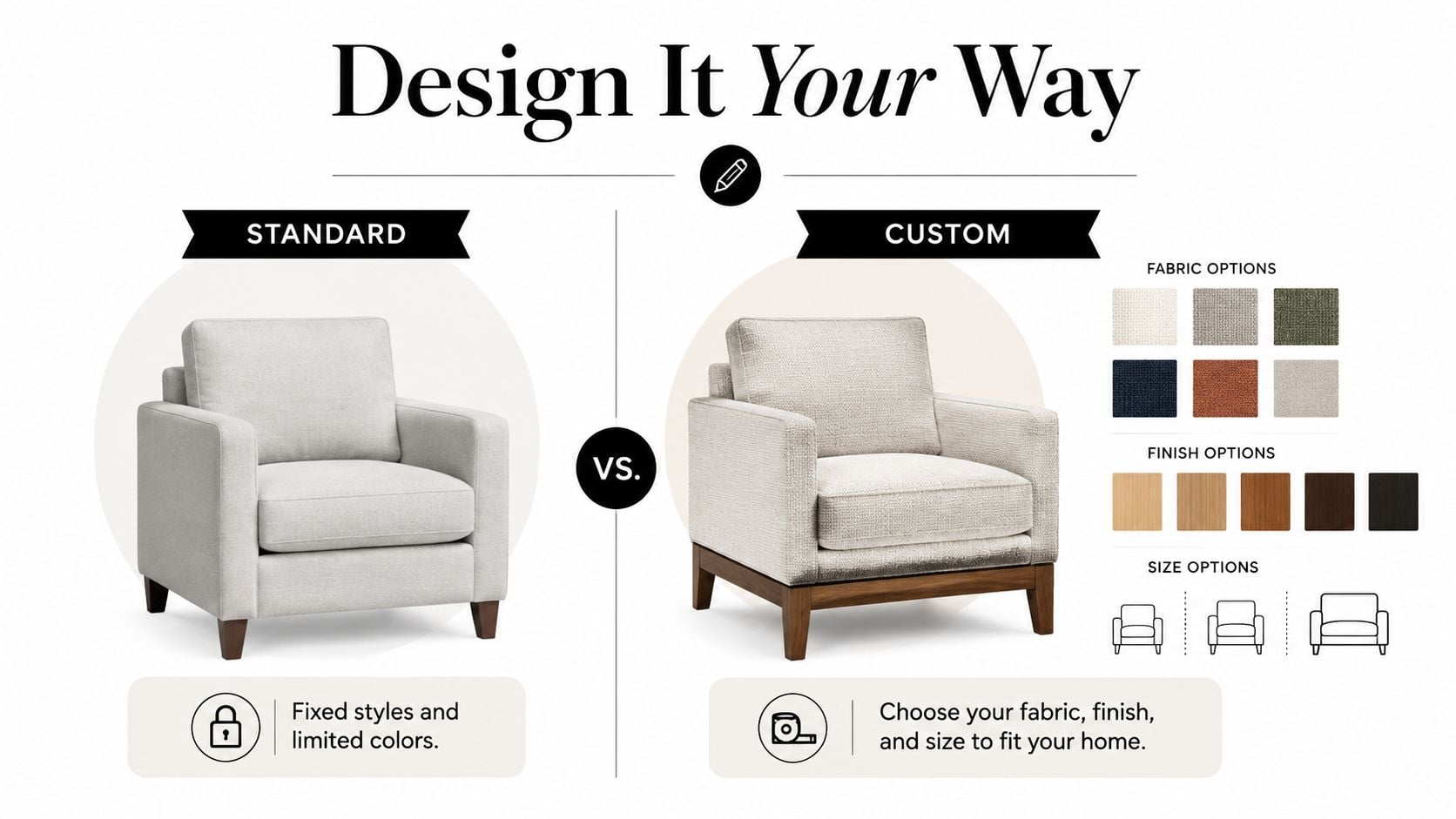
Customization is where family owned furniture stores often separate themselves from national chains. This isn't about changing a throw pillow and calling it personal. It's about getting the scale, finish, wood species, fabric, and function right so the piece belongs in your home.
Standard furniture asks you to adapt
A lot of off-the-floor furniture asks the customer to compromise. The table is too long, the finish is too dark, the chair seat is too formal, or the sofa shape works but the fabric doesn't. Big retailers often solve that by narrowing your choices.
Custom programs reverse that. The room sets the terms. The furniture follows.
A useful way to compare the two looks like this:
- Standard pieces give you speed and predictability, but often in fixed sizes and limited coverings.
- Custom furniture gives you better fit, stronger personality, and more control over how the room comes together.
- Made-to-order solid wood gives you something even better for many homes. Long-term usefulness, not just immediate convenience.
Where custom becomes practical
Canadel is a strong example in dining because it lets shoppers design around the way they gather. A breakfast nook, a formal dining room, or an open-concept kitchen all call for different proportions. The same goes for chair comfort, wood tone, and edge profile.
Amish furniture answers a different need. It appeals to people who care less about fast turnover and more about permanence. A solid wood bedroom or dining piece can become the furniture your children remember always being there.
If you're comparing terminology before you shop, this explanation of what is bespoke furniture is a helpful starting point.
When furniture is custom, “close enough” stops being the default.
Why this matters in the Midwest
A 2025 report found that 68% of Midwest consumers prioritize custom furniture for longevity, while only 22% found suitable options at national chains. The same report says family stores fill that gap and see 40% higher customer retention rates by offering bespoke options mass-market retailers can't match, according to this report on local furniture shopping and custom demand.
That lines up with what shoppers tell us in this region. They don't necessarily want endless choice. They want meaningful choice. The right stain. The right seat height. The right scale for a narrower dining room in an older home. The right wood top for a family that uses the table every day.
One local option for shoppers who want that kind of flexibility is Groen's Fine Furniture, which offers custom programs including Canadel dining and Amish solid wood pieces in its Northwest Indiana showrooms.
Finding Your Furniture Partner in Northwest Indiana
Northwest Indiana has plenty of places to buy furniture. The hard part isn't finding a store. It's finding one that fits the way you want to shop and the level of quality you expect.
What to check before you commit
Start with local reputation. Read reviews, but read them like a neighbor, not like a scorekeeper. Look for comments about communication, delivery follow-through, product knowledge, and how problems were handled.
Then visit in person. A showroom tells you things a website can't.
- Watch how staff listen. Do they ask how you live, or do they push the nearest set on the floor?
- Check product range with purpose. A good mix might include Flexsteel for durability, Bassett for style, solid wood Amish pieces for craftsmanship, and sleep brands like Serta or Beautyrest.
- Ask about services early. Financing, delivery, and design help are part of the value, not afterthoughts.
The market is large enough that this kind of filtering matters. In 2025, furniture and home furnishings stores in the U.S. generated over $135 billion in sales, and that came through over 55,000 furniture stores nationwide, many of them family-owned and helped by a strong preference for shopping local, according to Grand View Research on the U.S. furniture market.
Questions worth asking in the showroom
Some questions immediately separate a thoughtful store from a transactional one.
- What can I customize? The answer should be clear, not vague.
- How do you handle delivery and setup? This affects your experience more than many customers expect.
- What financing options are available? If budget matters, ask early instead of waiting until you've already fallen in love with a piece.
For shoppers in Dyer, Crown Point, St. John, Schererville, and Munster, it also helps to review furniture financing options before you shop so you can think clearly about fit, not just sticker shock.
The right store doesn't just sell you a room. It helps you avoid a mistake.
A dependable furniture partner should make the process feel more informed at every step. Less pressure. Better questions. Clearer answers.
The Groens Difference Service Beyond the Sale

The sale is only one part of the experience. For most households, primary friction points come later. How do you fit better furniture into the budget? Who brings it in safely? Who puts it where it belongs? Who helps you choose a mattress based on how you sleep, not just on a tag?
Financing can create breathing room
High-quality furniture costs more up front because better frames, better materials, and better construction cost more to produce. That doesn't mean it has to be out of reach.
Data from the Home Furnishings Association says that family-owned retailers offering transparent financing options, including 0% APR plans, can reduce the effective cost for customers by 15% to 20% compared with other payment methods, helping drive repeat business and loyalty in regional markets, as summarized here on family furniture financing and affordability.
That matters for shoppers looking at durable upholstery, solid wood dining, or a new mattress set. Special financing, subject to credit approval, creates buying power. It lets families choose the piece they want instead of settling for the piece that only works this month.
Delivery and setup change the whole experience
White-glove delivery sounds like a luxury until you've wrestled a sofa through a doorway or spent half a Saturday assembling a bed that still sits crooked. Professional delivery protects the furniture, the house, and your back.
A good delivery team handles placement, assembly, and room readiness. That's a practical service, not fluff. If you want a sense of what goes into that work, this breakdown of furniture assembly service cost gives helpful context.
Sleep guidance matters more than mattress specs alone
Mattress shopping is where many customers feel the most overloaded. Foam types, coil counts, comfort labels, cooling claims. Shoppers typically do not need a lecture. They need guidance that connects the mattress to sleep position, comfort preferences, and daily aches.
That's where a helpful mattress guide and in-store testing make a difference. Brands like Serta and Beautyrest give shoppers recognizable options, but the true value comes from matching the person to the bed. Better rest isn't just a product category. It affects how you feel every morning.
Let Our Family Help You Create a Home You Love
A well-furnished home doesn't come from rushing. It comes from choosing pieces with staying power, getting honest guidance, and working with people who treat your home like it matters. That's why family owned furniture stores still have a place in Northwest Indiana.
For many homeowners, furniture choices also connect to the home as a whole. If you're improving rooms with resale in mind, this guide on how to maximize property value with hardwood floors is worth reading alongside your furniture planning. Good rooms work best when the surfaces, layout, and furnishings support each other.
Visit Groen's Fine Furniture in Dyer or Crown Point today to explore our custom options and ask about our special financing plans. Let our family help you create a home you love.