Blog
Find Your Perfect 3 Seat Recliner in NWI


You know the moment. Someone in the house claims the corner cushion, someone else piles up throw pillows for back support, and one person ends up saying, “This sofa used to be comfortable.” In homes across Northwest Indiana, that little negotiation happens every evening.
A 3 seat recliner solves a very practical problem. It keeps everyone together on one sofa, but it gives each person a better shot at personal comfort. For families in older homes around Dyer, Crown Point, St. John, Schererville, and Munster, that matters. Living rooms often need furniture that feels generous without taking over the whole room.
The Search for Living Room Comfort in Northwest Indiana
A lot of living rooms in NWI do double duty. They’re where kids sprawl out after school, where guests gather during holidays, and where adults try to unwind at the end of a long workday. That’s why the old idea of a sofa as “just seating” doesn’t hold up very well anymore.
We’ve watched shoppers come in with the same concern in different words. They want one piece that feels welcoming for the whole family, but they don’t want to sacrifice the comfort of a recliner just to keep the room looking tidy. A 3 seat recliner sits right in that sweet spot.
The broader furniture market reflects that shift. The global recliner sofa market, including 3-seater styles, was projected to reach USD 33 billion by 2024, driven by demand for multifunctional furniture, according to this recliner market overview. That trend feels familiar here at home because local families want the same thing. One piece that works harder and feels better.
The right living room seat doesn’t just hold people. It supports how a family spends time together.
Comfort also depends on what surrounds the sofa. If you’re refreshing the whole room, a helpful companion read is this guide on choosing custom shades for your home, especially if glare, privacy, or afternoon sun affects how you use the space.
For many households, the search isn’t really about finding a fancier couch. It’s about ending the nightly shuffle for the “good seat” and creating a room where everyone can settle in.
What Exactly Is a Triple Reclining Sofa
A triple reclining sofa is a single sofa built to seat three people, with reclining function built into one, two, or all three seat positions. That’s what sets it apart from a standard sofa. A regular sofa stays fixed. A 3 seat recliner adds motion and support while keeping the look of one unified piece.
That distinction matters because people often confuse it with “three recliners pushed together.” It isn’t that. The frame, spacing, arm style, and seat layout are designed as one sofa, so it usually looks cleaner and more intentional in a living room.
How it differs from other seating
Here’s the plain-language version:
- Standard sofa gives you shared seating, but everyone gets the same fixed posture.
- Individual recliners give strong personal comfort, but they can make a room feel chopped up.
- 3 seat recliner blends both ideas. You sit together, but you still get reclining comfort where it’s built in.
That combination is why it works well for couples, families, and people who entertain often. Guests see a sofa. The people using it feel the extra support.
Why shoppers like this format
The biggest appeal isn’t the mechanism itself. It’s what the mechanism lets you do.
- Stay connected because everyone sits on one piece
- Relax more naturally with reclining support for reading, watching TV, or resting
- Use floor space more efficiently than you might with multiple standalone recliners
Some models lean more traditional. Others add cleaner lines that fit updated homes. If you want a broader overview of styles, mechanisms, and comfort features, our team often recommends starting with the ultimate recliner buying guide.
A simple way to think about it is this. A standard sofa is built mainly for seating. A 3 seat recliner is built for seating and recovery.
Measuring for a Perfect Fit in Your Room
Often, good furniture decisions go sideways. People measure width, stop there, and assume they’re done. Reclining furniture asks for a little more attention than that.
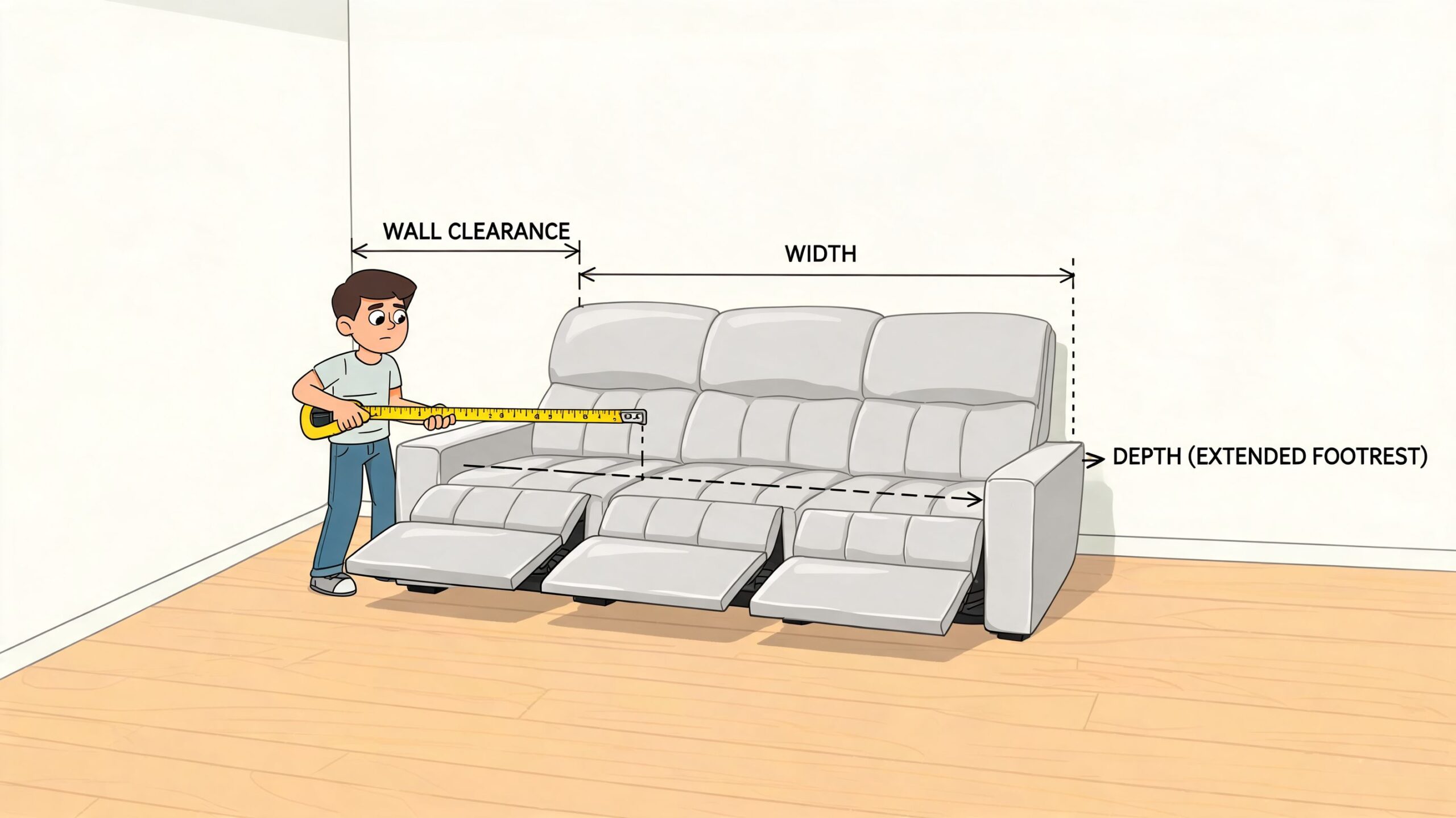
Before you fall in love with a style, measure the room, the walkways, and the path into the home. A sofa can fit the room on paper and still be a headache if it blocks traffic or can’t make it through a doorway.
What to measure first
Start with these basics:
Overall wall space
Measure the width of the area where the sofa will sit. Don’t forget trim, floor vents, radiators, and side tables.Room depth
Reclining furniture changes depth when opened. You need enough space for the footrest and enough remaining walkway so the room still functions.Height concerns
Window sills, artwork placement, and low ledges can all affect how a taller reclining back fits visually.
Practical rule: Measure for the sofa you’ll use when it’s fully open, not just when it’s closed.
Why wall clearance matters
Many modern 3-seat recliners are much easier to place than older models. Some need as little as 7 inches of wall clearance to fully recline, while older designs often needed 12 to 18 inches, as described in this wall-hugger recliner example. That’s a big help in tighter rooms.
If your living room is cozy, ask specifically about wall-hugger or space-saving motion designs. Those mechanisms move the seat forward as it reclines, instead of pushing far back into the wall.
Don’t forget the delivery path
A sofa that fits the room still has to get there. Check:
- Front door openings
- Stairway turns
- Hallway width
- Ceiling height on tight angles
- Basement entries, if the room is downstairs
Our team often tells shoppers to sketch the room and jot every measurement in one place before they visit stores. If you want a more detailed checklist, this guide on how to measure furniture is worth keeping open on your phone.
A good fit should feel easy once the sofa is in place. You shouldn’t have to squeeze past it, rearrange the whole room, or keep it half-reclined because there isn’t enough clearance.
Exploring Recliner Types and Power Options
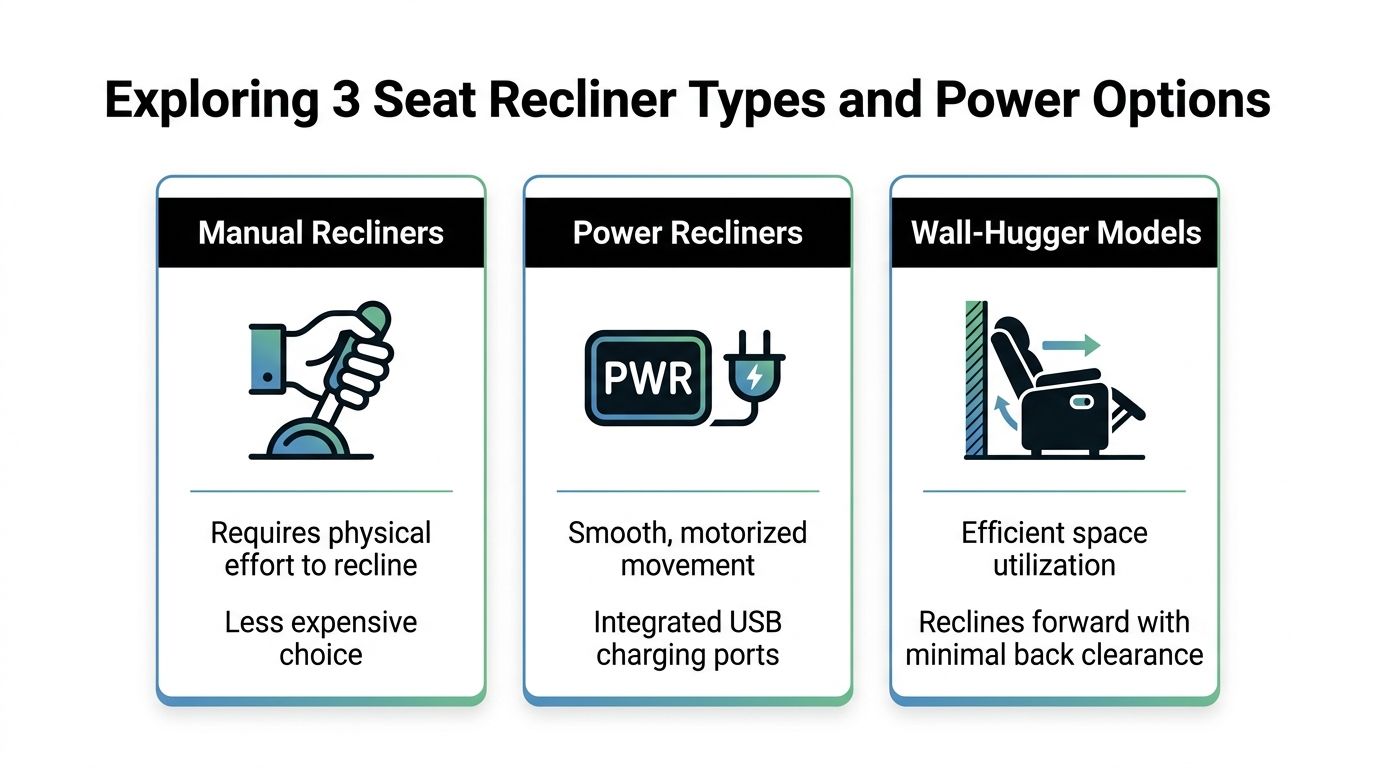
A lot of couples and families reach this stage and realize the main decision is not size anymore. It is daily use. One person wants a simple seat that works every time. Another wants to recline with a button, adjust the headrest for TV, and sit back down without a hard push from the legs.
Manual vs power
The easiest way to sort through the options is to start with how the sofa feels in real life, not just how it looks on a tag.
| Type | What it feels like to use | Good fit for |
|---|---|---|
| Manual recliner | You use a latch, handle, or body pressure to recline | Shoppers who want simplicity and fewer electronic components |
| Power recliner | You press a button and stop where it feels right | People who want smoother motion and easier position changes |
| Wall-hugger power model | Reclines with less rear clearance | Smaller rooms and tighter layouts |
Manual recliners still have a place. They are familiar, straightforward, and often appeal to shoppers who want fewer parts to think about.
Power reclining feels different right away. Instead of moving from upright to fully back in one motion, you can stop at the spot that feels good for your knees, lower back, or shoulders. That finer control matters more than many shoppers expect, especially in homes where the sofa gets used for reading, napping, and evening TV every day.
Features that can change how the sofa feels
A recliner mechanism is a little like the adjustment on a good car seat. Two sofas can look similar across the room, yet feel very different after twenty minutes.
- Power headrest supports your neck while you read or watch TV
- Power lumbar adds lower-back support where many people need it most
- USB charging keeps a phone or tablet close without adding another table
- Center console options can add storage and cupholders in some layouts
- Zero-gravity positioning shifts weight in a way that some people find especially relaxing
If you want to compare those features in plain language, this guide to types of power reclining seating is a useful place to start.
Mobility, comfort, and aging at home
For some Northwest Indiana households, the big question is not luxury. It is ease. A seat that opens smoothly and lets you stop at a comfortable angle can make everyday sitting and standing less tiring for older adults and for anyone dealing with stiffness, back pain, or limited mobility. The U.S. Census Bureau reports that a meaningful share of Indiana residents are age 65 and older, which helps explain why motion furniture often becomes a practical family decision, not just a style choice.
If you want a clear example of how advanced mobility-focused reclining works, the infinite position Cloud recliner shows the broader idea well, even though it is a single-chair format rather than a three-seat sofa.
This is also where a local store can be more helpful than a big-box floor set. At Groen's, shoppers can sit in different mechanisms, compare button placement, test headrest support, and ask how a Flexsteel power sofa will feel after years of family use. That kind of hands-on comparison is hard to replace with a product photo, especially if your home has specific needs, your room is used heavily, or you want something that fits the way your family relaxes.
If getting in and out of the seat matters, judge the sofa by how easy it is to use every day, not just by how far back it reclines.
Upholstery and Construction for Lasting Durability
A 3 seat recliner earns its keep the hard way. In a busy Northwest Indiana home, it may handle movie nights, afternoon naps, kids climbing across the middle seat, and years of repeated reclining. That kind of use puts stress on the frame, cushions, upholstery, and mechanism every single day.
Good durability starts inside the sofa.
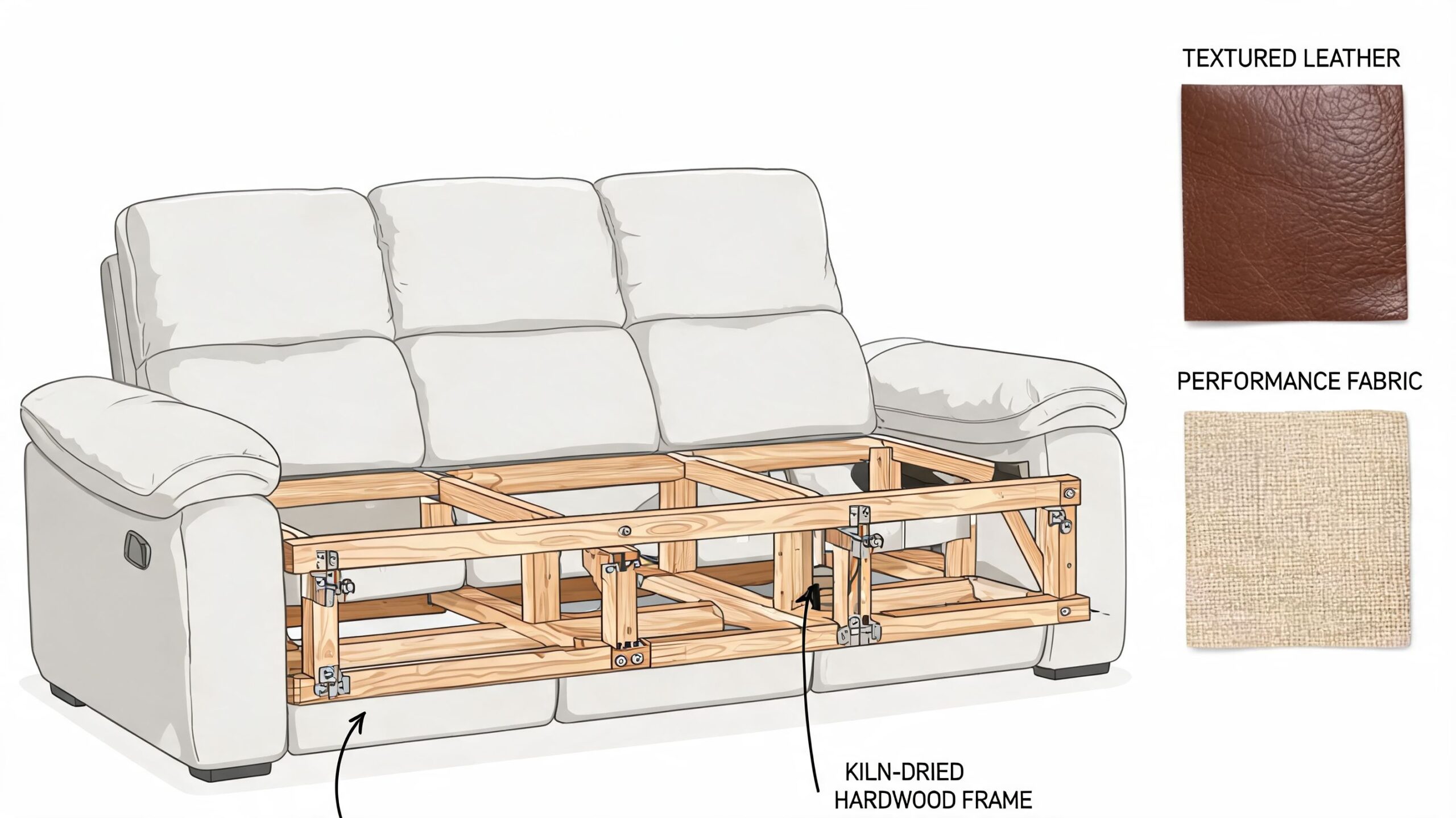
Industry testing standards give shoppers one useful way to judge that hidden quality. For example, furniture performance standards from organizations such as ANSI/BIFMA are built around repeated cycle testing for moving components and heavy-use performance. A recliner sofa for home use is not the same product category as office seating, but the principle is helpful. Repeated motion tests matter because reclining furniture wears out at the joints, hardware, and support points long before the color of the fabric tells the story.
What to look for inside the sofa
The outside gets your attention first, but the inside decides whether the sofa will still feel solid a few years from now.
Look for:
A stable frame
Hardwood and well-made engineered components usually hold their shape better than lighter, weaker framing. That matters in homes where the sofa gets used every evening, not just on holidays.Consistent seat support
Support under the cushions is a big part of why some sofas stay comfortable longer. Shoppers often ask about Flexsteel for this reason. Its Blue Steel Spring system has a long-standing reputation for giving seats a more uniform feel over time.Cushions that recover their shape
High-resiliency foam helps prevent that hammock effect where one favorite seat sinks faster than the others.A mechanism that feels controlled
Open and close the recliner more than once. The motion should feel steady, not jerky, loose, or noisy.
That last point gets overlooked. A reclining sofa works like a front door in your house. If the hinges, frame, and latch are off even a little, you feel it every time you use it.
Choosing the right upholstery
Upholstery should match the room and the people using it.
| Upholstery type | Why people choose it | Best for |
|---|---|---|
| Performance fabric | Soft feel and easier day-to-day cleanup | Kids, pets, casual family rooms |
| Leather | Wipes down easily and develops character with age | Long-term buyers, mixed formal-casual spaces |
| Textured woven fabrics | Adds warmth and visible texture | Design-focused rooms that still need comfort |
A family with pets and school-age kids usually shops differently than a retired couple furnishing a quieter living room. That is one reason local guidance matters. In a family-owned store, you can talk through whether you need easy-clean fabric, thicker leather, tighter tailoring, or a seat that hides wear better over time. Big-box showrooms often stop at broad categories. A store that knows the brands well can explain how one fabric grade or cushion build may hold up better in your specific room.
The fabric that looks beautiful under showroom lights should also make sense on a Sunday evening with snacks, blankets, and a dog claiming one end of the sofa.
If you want a clearer breakdown of fabric, leather, and wear patterns, everything you need to know about upholstery materials explains the tradeoffs in plain language.
Long-term value often comes from buying one piece that fits your household well, instead of replacing a cheaper one sooner. That is where better-built brands, including Flexsteel and well-made Amish furniture, tend to stand apart. For many Northwest Indiana families, that local legacy matters just as much as the look of the sofa. You want something that suits your home now and still feels dependable years later.
Before you buy, sit in every seat. Shift your weight. Rest your arms. Recline fully. If the frame flexes, the cushions flatten too quickly, or the motion feels strained on the showroom floor, daily use will not improve it.
Design It Your Way With Custom Orders
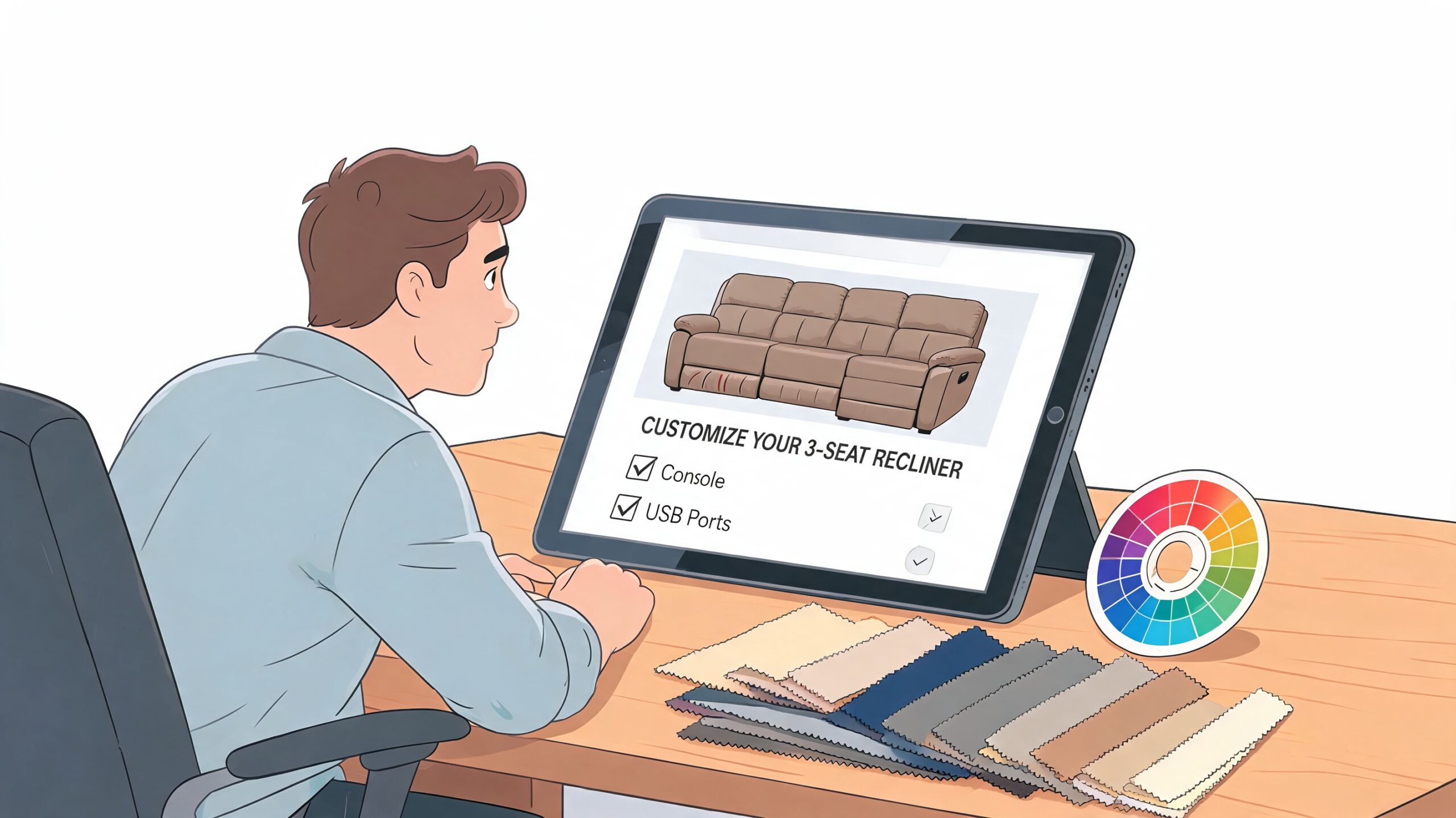
A floor model is a starting point, not the whole story. For many families, the right 3 seat recliner is the one that fits their room the way a jacket perfectly fits a person. The basic shape may be the same, but the comfort, scale, and finish need to suit the home that will use it every day.
That matters around Northwest Indiana. A Crown Point family with an open great room needs something different from a Valparaiso homeowner working with narrower walls, older doorways, or a fireplace that limits placement. Big-box stores often steer shoppers toward whatever is stocked in the warehouse. A local store can slow the process down and ask better questions, such as how the room is used, who sits there most, and what kind of wear the sofa will need to handle over the next ten years.
Where custom really helps
Online buyer guides often treat a recliner like a fixed product. Real shopping is rarely that simple. In the store, the questions are usually more practical:
- Will this scale look too bulky in our room?
- Can we choose a cover that stands up better to kids, pets, or daily use?
- Is there a power setup that feels comfortable for both a taller adult and a shorter one?
- Can we match the recliner to pieces we already own instead of rebuilding the whole room around one sofa?
Those are the places where custom ordering earns its keep. It gives you room to adjust the piece instead of forcing your room and routine to adjust to the piece.
What you can often customize
The options depend on the brand and model, but a custom order often lets you choose details such as:
- Cover options in fabric or leather
- Color and pattern that work with the rest of the room
- Power features such as upgraded headrest or lumbar support
- Seat feel on certain model lines
- Style details including arm shape, back design, and silhouette
That flexibility is one reason well-known brands such as Flexsteel continue to appeal to shoppers who care about long-term value. The frame and motion matter, of course, but the right cover, seat comfort, and profile can make the sofa feel like it belongs in your home instead of looking borrowed from a showroom.
Long-term value and buying confidence
Custom furniture can sound expensive until you compare it with the cost of settling. A sofa that is too deep for the room, too firm for everyday use, or covered in a material that shows wear too quickly can become an expensive compromise. A better fit tends to stay in service longer and feel right longer.
That approach also lines up with what many local families want from a family-owned store. They are not only buying a seat. They are buying advice, better brand knowledge, and a chance to order something that suits their house and household. At Groen's, that often means helping shoppers compare custom options from established makers, including Flexsteel, and connecting that choice to the same long-view mindset that draws people to quality Amish furniture.
If you want to see how the process usually works, learn what to expect with a custom furniture order. Special financing is available, subject to credit approval, which can make a better-fit configuration easier to plan for without rushing the decision.
Comparing Alternatives for Your Living Room
A 3 seat recliner isn’t automatically the right answer for every room. It’s a strong choice when your priority is shared seating with individual comfort, but it helps to compare it with the usual alternatives.
A sectional can offer a lot of seating and can anchor a larger room nicely. It’s often a good pick when you host often or want to define an open living area. The tradeoff is that some sectionals can dominate the room, and not every seat feels equally good for lounging.
A sofa and loveseat combination gives flexibility in arranging the room. It can work well if you want separate conversation zones or if your space has awkward corners. The downside is that comfort can feel less uniform, especially if neither piece reclines.
A 3 seat recliner works especially well when your household wants a single focal piece with everyday comfort built in. It keeps people together, usually reads cleaner than a cluster of recliners, and often gives a better “favorite seat” experience across more than one position.
Here’s the simplest way to decide:
- Choose a sectional if seating capacity and room definition matter most.
- Choose a sofa and loveseat if layout flexibility matters most.
- Choose a 3 seat recliner if daily comfort and shared use matter most.
The best furniture choice isn’t the one with the longest feature list. It’s the one that suits how your household spends time in the room.
Experience the Comfort for Yourself at Groen’s
Reading about reclining comfort helps. Sitting in it tells you much more. You’ll notice quickly whether the seat depth feels right, whether the back supports you well, and whether the mechanism feels natural for how you relax at home.
Our family has served Northwest Indiana since 1983, and we still believe furniture shopping should feel personal. In Dyer and Crown Point, people want honest guidance, quality that lasts, and service that respects their home and budget. A 3 seat recliner can offer shared comfort, better support, and a cleaner answer to the old “who gets the good spot” problem.
Come test drive the feel for yourself. Compare fabrics, try power options, and see what kind of fit makes sense for your room and your routine.
Visit Groen’s Fine Furniture in Dyer or Crown Point today to explore our custom options and ask about our special financing plans. Let our family help you create a home you love.