Blog
36 in High Table: A Guide for NWI Homes

If you're standing in your kitchen in Dyer or Crown Point, looking from the island to the dining area and wondering why one table feels right and another feels awkward, you're not alone. A lot of Northwest Indiana homeowners run into the same question when they shop for a 36 in high table. It looks familiar, but it doesn't behave like a standard dining table.
That confusion usually starts in open-concept homes. You want a table that works for weeknight meals, homework, coffee with neighbors, and maybe even laptop time during the day. A taller table can be a smart answer, but only if the height, seating, and room proportions all work together.
Our family has helped NWI households think through these choices since 1983. The goal isn't to push one table height over another. It's to help you understand what a 36-inch table does well, where it can be tricky, and how to choose one that fits the people who live in your home.
Finding the Perfect Table for Your Northwest Indiana Home
A common situation goes like this. A homeowner in St. John or Schererville updates the kitchen, opens a wall, and suddenly the old dining set feels too formal or too low for the new space. They start searching online, see a 36 in high table, and ask the question we hear all the time: is this a dining table, a pub table, or something in between?
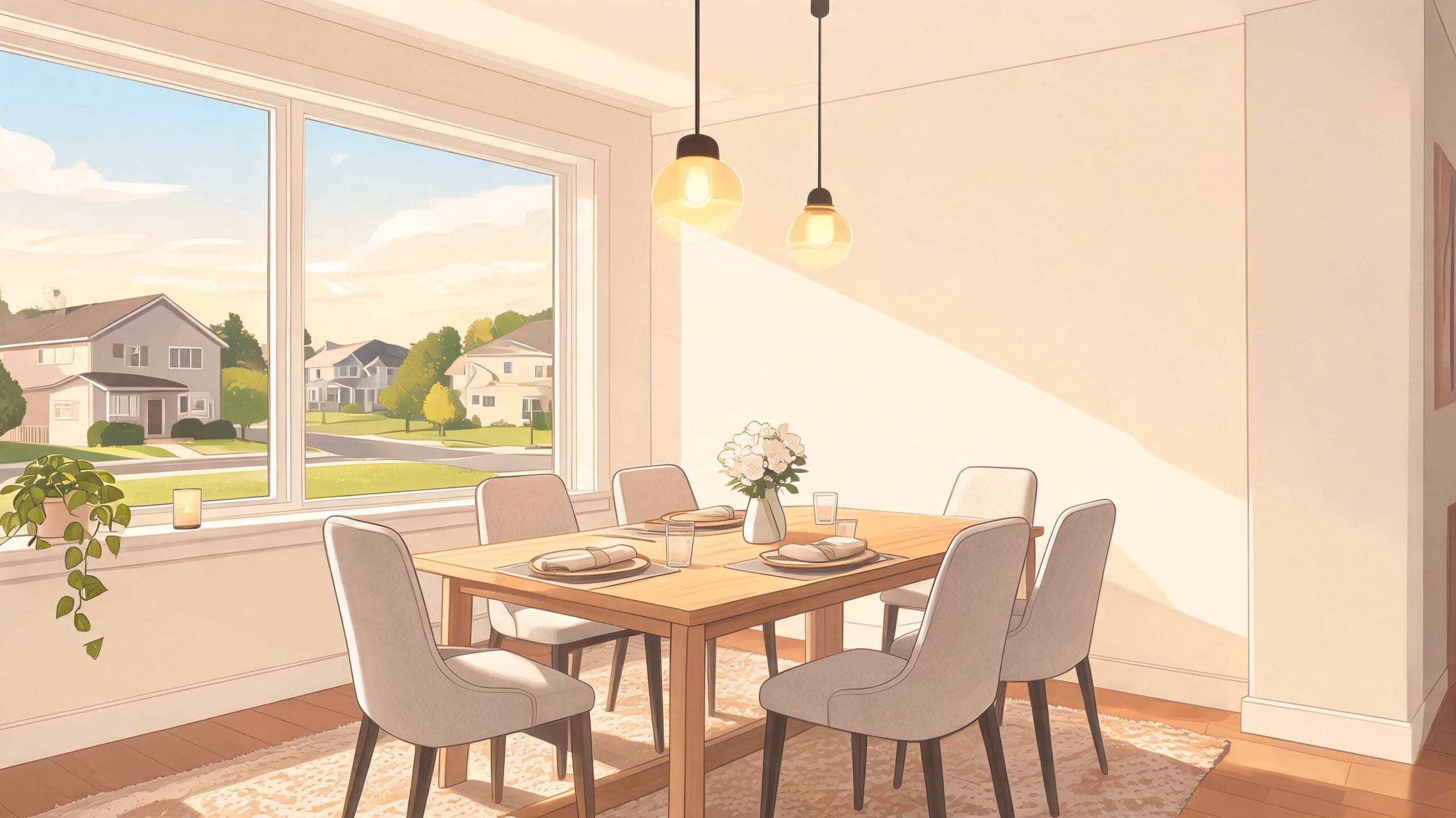
That question matters because height changes everything. It affects how the room feels, what kind of seating you need, how easy it is for grandparents or kids to use, and whether the table becomes a true gathering spot or just a piece that looks good in photos.
Why shoppers get stuck
Functionality, rather than style, is the primary hurdle for the majority of individuals.
- The room changed: A remodeled kitchen often needs a table that connects visually with counters and islands.
- Daily life changed: Families now use dining spaces for more than meals. Schoolwork, bills, crafting, and casual work all compete for the same surface.
- Online listings blur categories: A shopper sees “bar table,” “counter table,” and “high dining” used loosely, which makes matching chairs or stools harder than it should be.
A table can be beautiful and still be wrong for the way your household moves through a day.
If you're still sorting out proportions, a practical next step is a dining table size guide for real rooms. Size and height work together, and one without the other can throw the whole setup off.
What confidence looks like
By the end of the process, you should know three things without guessing:
| Question | What you need to know |
|---|---|
| What is it called | Whether you're looking at standard, counter, or bar height |
| What goes with it | The right chair or stool height |
| Will it fit your life | Whether it suits your room, routines, and family mix |
Once those pieces click, shopping gets much easier.
What Exactly Is a 36-Inch High Table
A 36-inch high table is generally known as a counter-height table. In the furniture world, that label isn't casual shorthand. It's tied to how the table is meant to function in a home.
A 36-inch table lines up with the height people already know from their kitchen work surfaces. According to this explanation of a 36-inch table classification, a 36-inch high table is universally recognized as a counter-height table, aligning with typical kitchen countertops. That standard became especially common as open-concept homes gained popularity after the 1980s.
Why that height exists
This wasn't an arbitrary design trend. Home layouts changed, and furniture followed.
When kitchens became more open to family rooms and dining spaces, homeowners wanted surfaces that felt connected instead of chopped into separate zones. A counter-height table created that bridge. It could sit near the kitchen without feeling lower and disconnected, and it could handle casual use more naturally than a formal dining table.
Think about how people use these tables:
- morning coffee before work
- quick breakfasts
- a place for a child to spread out school papers
- extra prep space when company comes over
- a perch for conversation while someone cooks
Why the name confuses people
The phrase “36 in high table” sounds simple, but shoppers often assume any taller table must be bar height. That's where mistakes happen. A counter-height table sits in the middle ground. It's taller than a traditional dining table, but not as tall as a true bar table.
Plain-language definition: If a table is built to match kitchen counter height, you're usually looking at a counter-height table.
If you want to see how that category appears in actual furniture shopping, a counter-height dining table overview can help you connect the measurement to real table styles and room settings.
The short version is this. A 36-inch table isn't just “a tall table.” It's a purpose-built height designed for homes where dining, gathering, and everyday life often happen in the same shared space.
Counter Height vs Standard and Bar Height Tables
Height categories sound technical until you see them side by side. Then the differences become obvious. Most confusion comes from mixing up counter height and bar height, especially when retailers use casual wording.
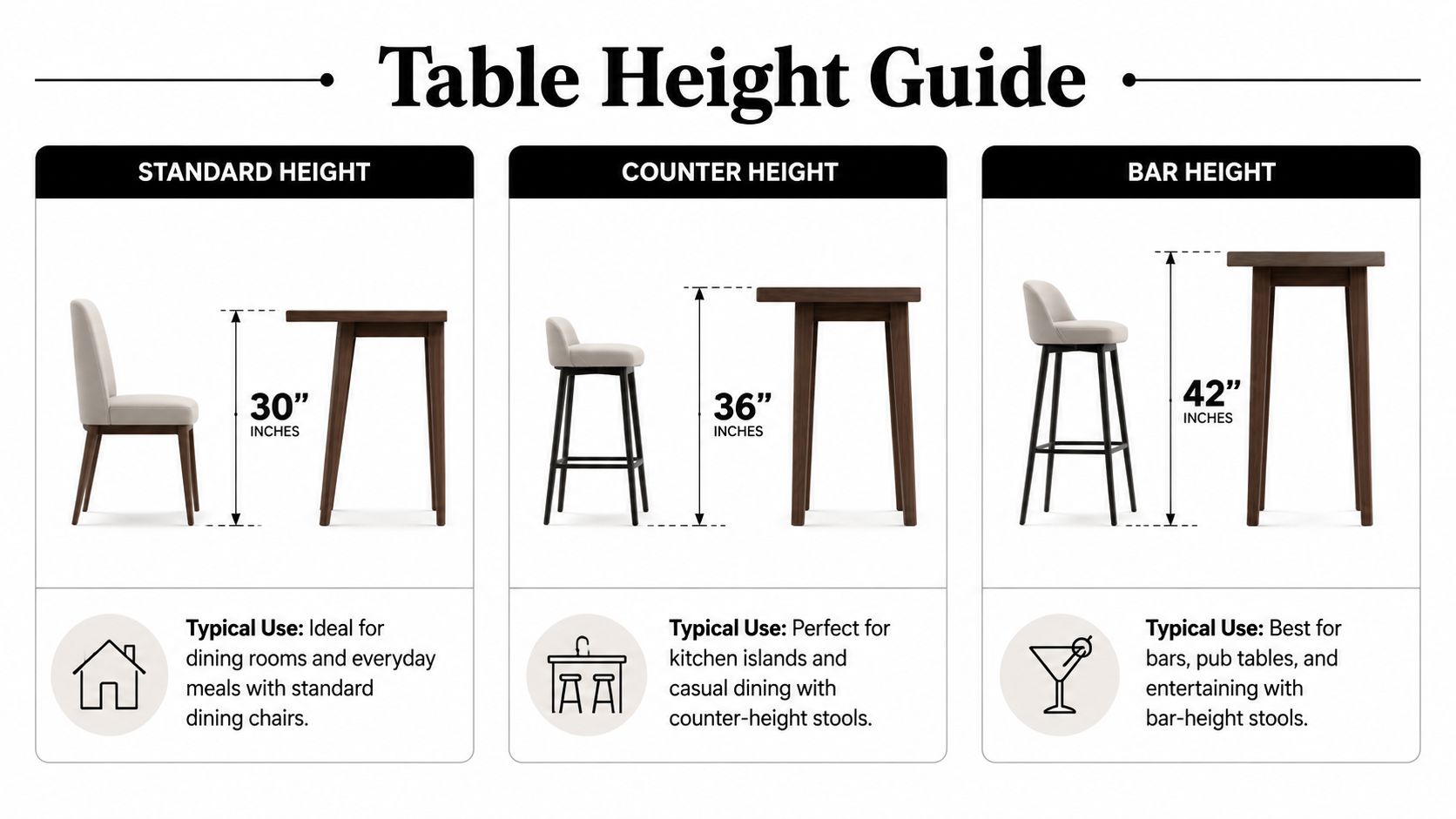
The quick comparison
| Table type | Typical height | Typical seating | Best fit |
|---|---|---|---|
| Standard dining | 28 to 30 inches | Dining chairs | Traditional meals, longer sitting |
| Counter height | 34 to 36 inches | Counter stools | Casual dining, open kitchens, mixed-use spaces |
| Bar height | 40 to 42 inches | Bar stools | Pub-style seating, entertaining zones |
According to this counter-height versus bar-height reference, industry standards distinguish between bar-height tables at 40 to 42 inches and counter-height tables at 34 to 36 inches. The same guidance notes that seating should preserve a 10- to 12-inch distance between the seat and tabletop.
How each height feels in real life
Standard height feels grounded and familiar. It's the classic dining experience. You sit back in a regular chair, plant your feet easily, and stay awhile. For long dinners, card games, or households with older adults, this can feel more natural.
Counter height feels more upright and casual. People tend to gather around it the way they gather around a kitchen island. It often works well in homes where the dining area blends into the kitchen and family room.
Bar height creates a different mood entirely. It feels taller, more social, and a little more like a lounge or pub setup. Some homeowners love that energy, but it isn't interchangeable with counter height.
Where people make mistakes
The biggest error is buying stools by appearance instead of measurement.
A 36 in high table may look close to a bar table in photos, but the seating needs are different. If you pair a counter-height table with bar stools, the whole setup feels cramped and uncomfortable. If you pair it with standard dining chairs, the seat will be too low.
If you're designing around a kitchen zone, this expert guide to custom islands is useful because it shows how table and island heights affect flow, sightlines, and everyday use.
Some households also compare a 36-inch counter-height table against a taller entertainment setup before deciding. If you're weighing that option, this look at reasons to consider bar-height dining can help you separate the two categories before you buy.
Choosing the Perfect Stools and Seating
Once you've chosen a 36 in high table, seating becomes the make-or-break detail. Many otherwise good purchases go sideways at this stage. The table is right, the stools are stylish, and yet no one enjoys sitting there for long.
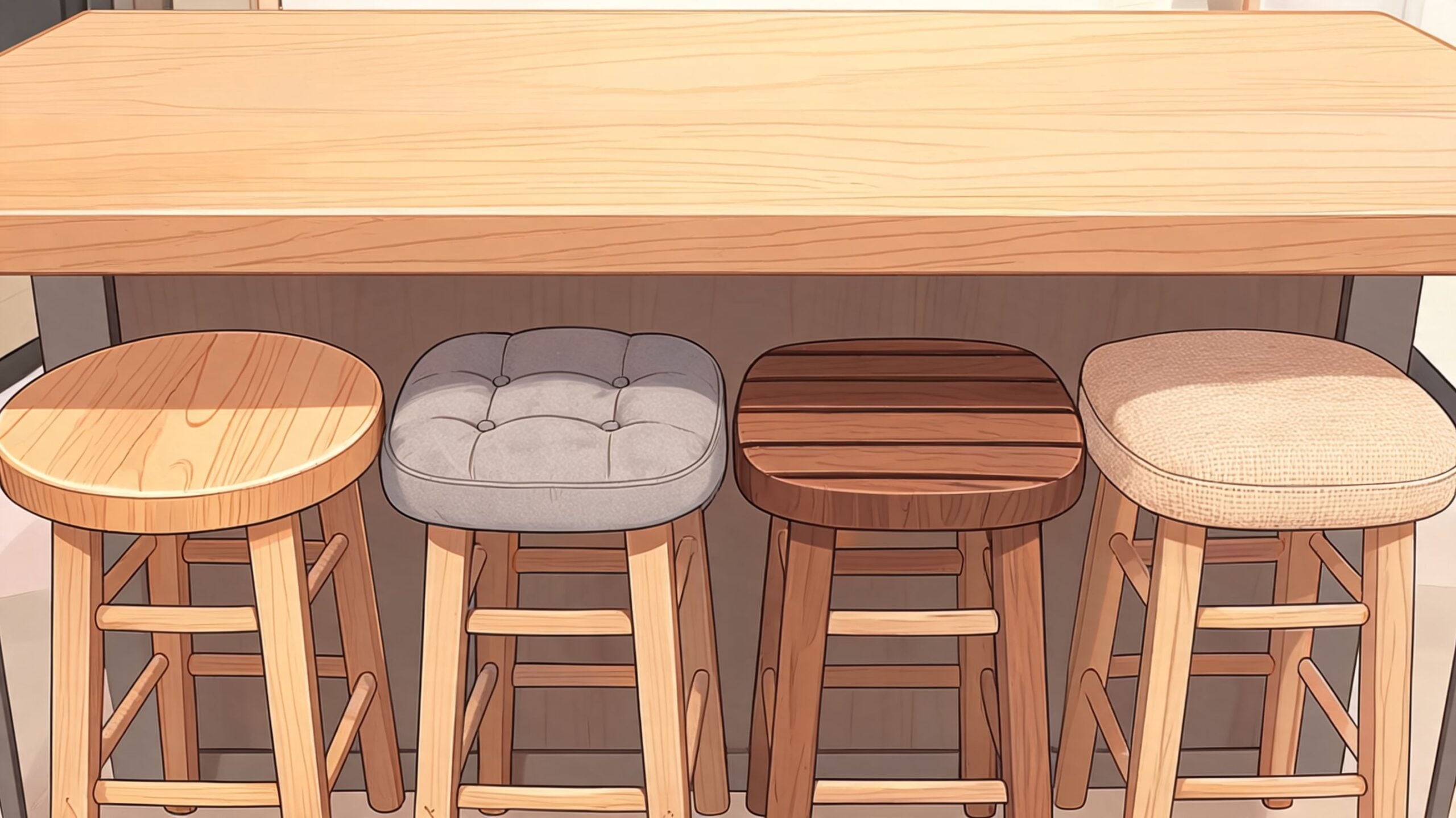
The rule that keeps you comfortable
For a counter-height table, you want 10 to 12 inches of space between the seat and the tabletop. For a 36-inch table, that usually means a 24- to 26-inch seat height.
That spacing matters because it gives your legs room to move without forcing your shoulders up or your knees into the underside of the table.
Practical rule: For a 36-inch counter-height table, start by shopping for stools with seats in the 24- to 26-inch range.
Which stool style fits your home
Not every counter stool solves the same problem.
- Backless stools tuck away neatly. They work well when floor space is tight or you want a cleaner look.
- Swivel stools make conversation easier. They're helpful in open kitchens where people turn between the table and the room.
- Upholstered stools with backs feel more like dining chairs. They're often the better choice when your family spends real time at the table instead of just passing through.
What to check before you buy
A stool can have the right listed height and still feel wrong if the details are off. Look at:
- Seat shape. A thick cushion can slightly change how high you sit.
- Foot support. A proper footrest matters more on taller seating than many shoppers expect.
- Arms and apron clearance. Arms can bump the tabletop, and bulky table aprons can steal knee room.
If you're comparing stools and chairs side by side, this guide on how to choose dining room chairs can help you think through comfort, support, and daily use. The same logic applies even when the seating sits higher off the floor.
Is a Counter-Height Table Right for Your Family
A counter-height table can be a great fit, but it isn't automatically the right answer for every household. This is the part big-box displays rarely show well. A table doesn't live in a showroom. It lives with your routines, your age mix, your room size, and your habits.

When it works beautifully
Counter height often shines in homes where the kitchen is the center of activity. If your family grabs quick meals, gathers while someone cooks, or uses one surface for several tasks, the extra height can feel natural.
It can also suit households that want a casual tone instead of a formal dining-room feeling. In many open-concept Northwest Indiana homes, a counter-height table visually relates well to nearby countertops and islands, so the room feels more unified.
When you should pause and think harder
There are practical tradeoffs. A 2023 ergonomic study summary for adults 55 and older found that adults aged 55+ reported 30% more difficulty sitting and standing at counter-height versus standard 28 to 30 inch tables. If your home includes grandparents, aging parents, or anyone with mobility concerns, that matters.
Young children can also find counter-height seating less forgiving. Climbing up and down takes more effort, and some parents feel the taller surface creates a stronger visual barrier during meals or homework time.
A table can match your kitchen perfectly and still miss your family's comfort needs.
Questions worth asking at home
Before you commit, walk through these everyday scenarios:
- Who uses the table most often: Is it mainly adults, or do kids and older relatives use it daily too?
- How long do people sit there: Quick breakfasts and coffee are different from lingering dinners.
- What else happens there: Homework, puzzles, bill paying, and crafts often reveal comfort issues faster than meals do.
- How large is the room: Taller furniture changes visual weight. In compact spaces, stool bulk matters just as much as table height.
If you're also trying to judge how much room people need around the table, this MODERN LYFE table spacing advice is a useful companion for thinking through movement and clearances.
For many families, the best answer isn't “always counter height” or “never counter height.” It's choosing the height that suits the people in the house today, and the way they want to live in it for years.
Design Your Dream Table with Groen's Fine Furniture
A 36 in high table makes the most sense when it fits your room, your routines, and your taste. That's why custom ordering matters. Height is only one piece of the puzzle. Shape, wood species, finish, base style, edge profile, and seating all change how the final table lives in your home.
For shoppers who don't want to settle for a near match, build your own dining table options make a real difference. Groen's Fine Furniture offers custom dining through Canadel along with Amish solid wood furniture, which gives homeowners a way to choose proportions and details more intentionally rather than trying to force a stock table into the wrong room.
What to look for in lasting construction
If you want heirloom quality, construction matters more than trendy styling. According to this furniture construction benchmark, look for solid wood construction and a tabletop thickness of at least 1 3/16 inches. The same source notes that materials like solid birch or teak offer strong durability and resistance to warping, which is especially relevant in Northwest Indiana's humid climate.
That gives you a better checklist when you shop:
- Top thickness matters: A thicker top generally feels more substantial and resists movement better over time.
- Solid wood earns its keep: Birch and teak are worth attention when longevity is the goal.
- Climate matters locally: Seasonal humidity swings in NWI can punish weaker construction.
Design it your way
In this scenario, custom furniture gets practical, not fancy for the sake of it.
Some households need a round counter-height table to soften a tight breakfast area. Others need a rectangular top that doubles as dining space and a standing-friendly work surface. Some want a lighter finish for a Crown Point remodel, while others want a darker, more traditional wood tone for a Munster or St. John home with classic trim.
A made-to-order approach lets you line up the details so the table feels intentional. Not close. Not almost right.
Quality and budget can work together
Buying a better table doesn't have to mean rushing the decision or compromising on materials. Special financing, subject to credit approval, can give families more buying power so they can choose the construction and customization they want while fitting the purchase into their budget.
That matters with dining furniture because this isn't a throwaway piece. It's one of the hardest-working surfaces in the house.
Visit Groen's Fine Furniture in Dyer or Crown Point today to explore custom options, compare table heights in person, and ask about special financing plans. Let our family help you create a home you love.