Blog
Find Your Perfect Bed With Box Spring Solution


Many shoppers arrive at the same stage during the bedroom buying journey. They have found a mattress they like, they can already imagine the room coming together, and then the practical question arrives: what should go under the bed?
That question comes up every day for homeowners across Dyer, Crown Point, St. John, Schererville, and Munster. A bed with box spring still makes perfect sense in some homes, but it isn't the automatic answer it once was. Mattress types changed. Bed frames changed. Even the way families want a bedroom to look and feel has changed.
The confusing part is that many online guides lump every base into one category. They call a foundation a box spring, call a platform the same thing, or skip over whether your frame can support the whole setup properly. For a homeowner trying to make a smart purchase, that leaves too much guesswork.
We've seen that uncertainty firsthand with Northwest Indiana families since 1983. Our family has always believed bedroom furniture should support more than sleep. It should support comfort, longevity, and everyday ease. If you're sorting through options now, a good starting point is understanding how your bedroom pieces work together, from the mattress to the support underneath it to the frame around it. Our guide on how to choose bedroom furniture is a helpful companion if you're planning the full room.
Your Guide to Bedroom Foundations in Northwest Indiana
A family comes into a showroom, tries a few mattresses, and narrows it down to a Serta or Beautyrest they really like. Then someone asks, “Do we need a box spring too?” That's usually the moment when bedroom shopping shifts from fun to technical.
It's an honest question, and it matters because the wrong support under a mattress can change how the bed feels, how long it lasts, and whether the full setup looks right in the room. A mattress alone isn't the whole bed. The support system underneath does part of the work every night.
Why this feels more confusing now
Years ago, the answer was simpler. Most homes used traditional innerspring mattresses, and most of those beds sat on box springs. Today, shoppers are choosing between innerspring, hybrid, memory foam, latex, platform beds, slatted frames, and foundations that look similar from the outside but behave very differently.
That's why one family may want a taller bed that's easier to get in and out of, while another wants a lower, cleaner look for a smaller room. Neither choice is wrong. The key is matching the support system to the mattress and the frame.
A bedroom works best when every layer supports the next one. Mattress, base, and frame should be treated like one system, not three separate purchases.
What Northwest Indiana homeowners usually want
Around Northwest Indiana, most shoppers aren't looking for jargon. They want clear answers to practical questions:
- Will this setup feel sturdy
- Will it sit too high or too low
- Will it help the mattress last
- Will it fit the style of the room
- Will it hold up through humid summers and everyday family use
Those are the right questions. A bed with box spring can be a great solution in the right setting, especially with a traditional innerspring mattress. In other rooms, a solid foundation or platform bed may be the better fit.
The simple way to think about it
If you remember one thing, remember this. The support under your mattress isn't just filler. It changes comfort, height, airflow, motion, and wear over time.
Once you understand what a box spring does, the rest of the decision gets much easier.
The Purpose of a Box Spring
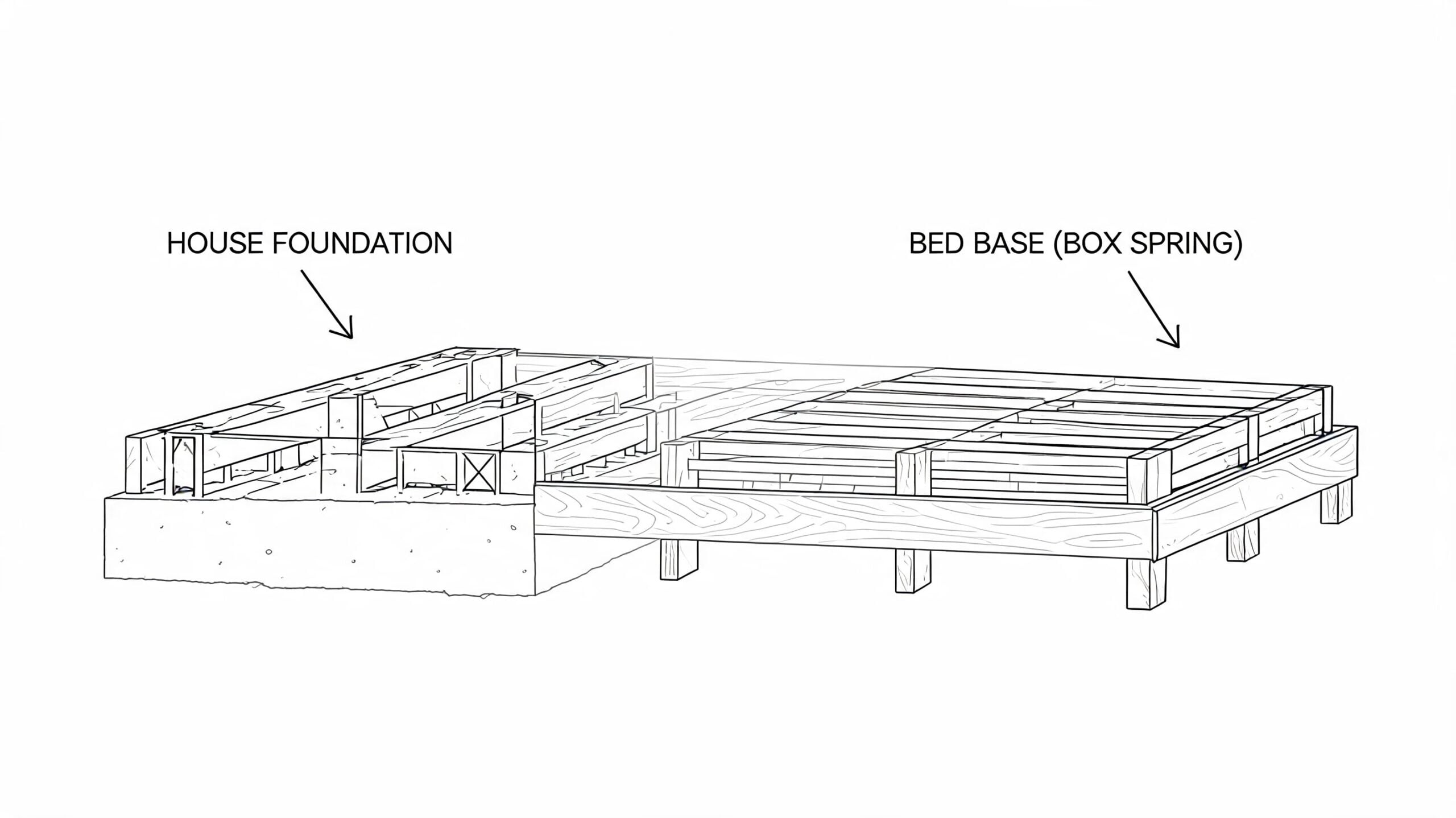
A box spring is easiest to understand as the foundation under a house. You may notice the paint color or the headboard first, but the support underneath determines how well the whole thing performs over time.
The modern version has deep roots in American bedrooms. According to Casper's history of platform beds and box springs, the modern box spring was patented by William A. Lawrence in 1882. That design placed steel coils inside a wooden frame and covered it with fabric. By the 1950s, over 85% of innerspring mattress owners used one, largely because it helped extend mattress life by absorbing 20-30% of body weight impacts.
What it actually does under your mattress
A box spring isn't there to fill empty space. It has a job.
- It absorbs shock: Traditional coil construction takes some of the force when you sit down, lie down, or move during the night.
- It supports the mattress evenly: That matters most with innerspring models that are designed to work with some give underneath.
- It adds height: Many people prefer a bed that sits higher off the floor.
Those three jobs explain why box springs stayed popular for so long. They helped older innerspring mattresses perform better, and they gave beds the raised look many people still like today.
Why height matters more than people expect
A bed that feels too low can be inconvenient. A bed that feels too high can look oversized in the room or feel awkward for kids and shorter adults. A box spring changes that equation in a visible way.
If you've ever sat on a mattress in a store and thought, “This feels right,” part of that feeling may have come from the complete setup, not just the mattress itself. A bed with box spring often feels more traditional, a little taller, and slightly more buoyant than a mattress placed on a rigid base.
Practical rule: If you're buying a traditional innerspring mattress, the support underneath should complement the way that mattress is built to respond.
Where people get mixed up
Many shoppers use “box spring” as a catch-all term for any base under a mattress. That's understandable, but it leads to mistakes. Some products sold today look like box springs from the outside and are rigid foundations inside. Others still use coils and flex more like the original design.
That difference affects feel, durability, and mattress compatibility. It also affects whether your bed setup is helping your mattress or working against it.
Box Spring vs Platform Bed vs Foundation
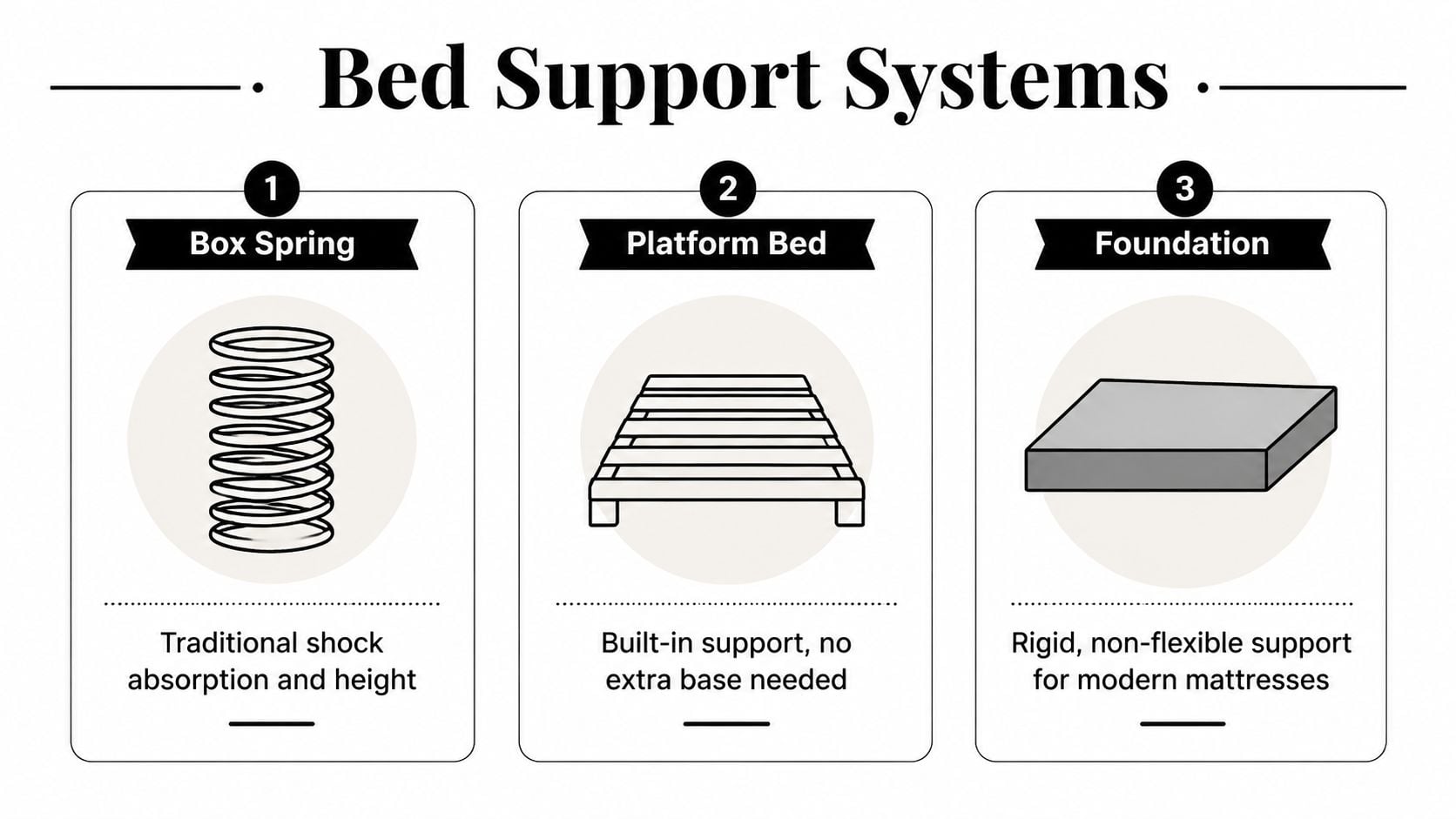
The decision usually gets clearer at this point. Most homeowners are choosing among three basic support styles: a traditional box spring, a solid foundation, or a platform bed with built-in support.
They can look similar once the sheets and comforter are on. They do not behave the same way.
How each support system feels
Traditional box springs use a coil-based structure. According to US-Mattress on what a box spring is, zero-deflection foundations use supportive wooden slats instead of coils and offer better longevity, while traditional coil box springs provide dynamic support and better airflow for innerspring mattresses but can degrade over 7-10 years. That's the heart of the difference.
A platform bed is usually the simplest setup. The support is built into the bed itself, often through closely spaced slats or a solid surface. There's no separate box spring needed.
Choosing Your Bed's Support System
| Feature | Traditional Box Spring | Solid Foundation | Platform Bed |
|---|---|---|---|
| Support feel | More flexible and springy | Firm and steady | Firm, depending on slat design |
| Best mattress match | Traditional innerspring | Memory foam, latex, many hybrids, some innerspring | Depends on construction and mattress requirements |
| Airflow | Strong airflow from open construction | Varies by design | Varies by design |
| Longevity | Coils wear over time | Better long-term structural consistency | Depends heavily on frame quality |
| Overall look | Taller, more traditional | Can be standard or lower profile | Often more streamlined |
| Separate base needed | Yes | Yes | No |
When a box spring is the smart choice
A box spring still shines in a specific lane. If you have a traditional innerspring mattress and like a little bounce, a taller bed, and an old-school feel, it can be a very sensible choice.
This is also where the term bed with box spring still matters in real life. It describes a setup many households already know and like. For some people, that extra lift makes the bedroom feel finished. For others, it feels easier on the knees when getting in and out of bed.
When a foundation or platform makes more sense
If your mattress is memory foam or latex, a rigid support surface is usually the safer choice. Those materials generally perform best with steady, even support rather than flex.
A solid foundation gives you that support while still allowing you to use a separate bed frame. A platform bed gives you the support and frame in one piece, which appeals to shoppers who want a cleaner, simpler setup.
Some shoppers focus only on style. The better question is whether the support underneath matches the mattress on top.
Protecting mattress performance
One mistake we see often is assuming any flat surface is good enough. It isn't. Mattress makers often have specific support requirements, and that's one reason many shoppers look for more detailed guidance like better than a box spring. The best support system is the one that fits your mattress design, your preferred bed height, and the frame you plan to use.
If you get those three parts right, your bed feels better from the first night and tends to age more gracefully.
Matching Your Frame Box Spring and Mattress
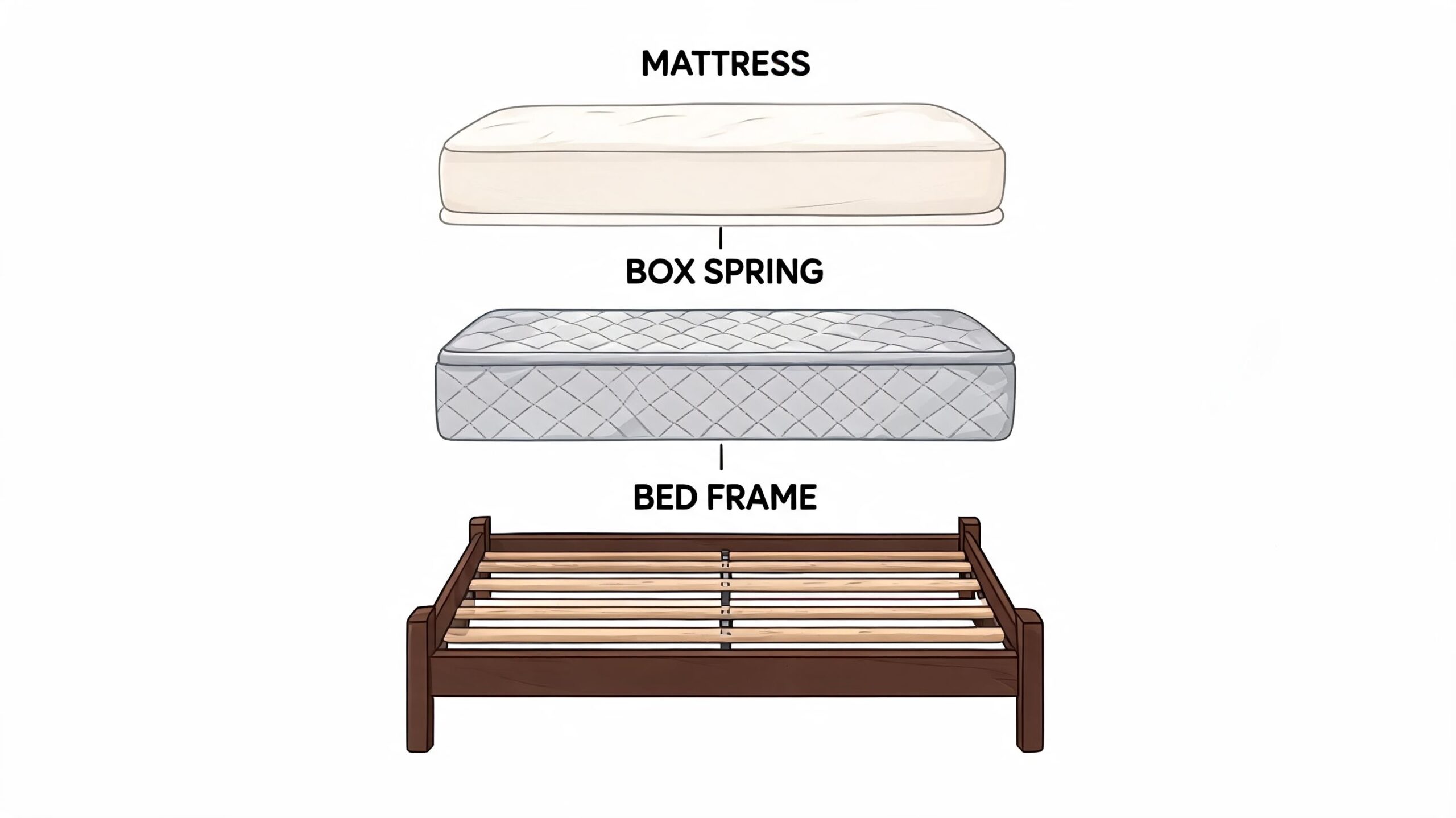
A mattress can be excellent. A box spring can be well made. A bed frame can look beautiful. If they don't work together, the whole setup can still fail.
That's the part many online guides skip. They tell you whether a mattress “works with a box spring,” but they don't spend enough time on the frame that has to carry everything.
The frame matters more than people think
According to Lowe's reference to bed support requirements, many contemporary bed frames lack proper center support beams or use slats spaced more than 3 inches apart, which can lead to sagging. The same source cites a 2024 Consumer Reports study finding that 62% of those hybrid setups failed stability tests within 18 months, often resulting in warranty problems.
That tells you something important. A support system isn't just about what sits under the mattress. It's also about what sits under that support system.
Standard profile or low profile
One decision homeowners can make early is bed height. A standard box spring is taller. A low-profile version gives you a similar look with a lower final silhouette.
That choice affects more than style:
- A taller setup can feel easier to enter and exit.
- A lower setup can visually calm down a room, especially if the headboard is large.
- The wrong height can make a room feel top-heavy or make the bed awkward to use every day.
Why stronger construction pays off
Quality frame construction really earns its keep in this regard. Well-built solid wood frames, including many Amish-made and Vaughan-Bassett styles, tend to take support seriously. They're built with structure in mind, not just appearance. Strong center support, thoughtful rail design, and better materials help the mattress and foundation do their job correctly.
If you're the kind of homeowner who wants furniture to last, this is one place not to cut corners. The frame is easy to ignore because it's partly hidden. It's also one of the first things to expose weakness in the whole bed.
Worth checking in person: Push lightly on the center of the bed setup. If the middle feels unsupported before anyone even sleeps on it, the design likely isn't robust enough.
A few practical checks before setup
Before bringing a new mattress home, it helps to confirm a few details:
- Measure the full stack height. Don't just measure the mattress.
- Check center support. Larger beds especially need it.
- Look at slat spacing. Wide gaps can cause problems.
- Ask about compatibility. Mattress type, box spring type, and frame design should match.
If you're refreshing a bedroom from top to bottom, our ultimate guide for choosing a mattress helps connect mattress feel with the right support underneath.
And while you're inspecting an existing frame or older foundation, it's also wise to review bed bug inspection steps before reusing any upholstered bedroom piece. That's especially helpful when a guest room setup has been stored, moved, or brought in from another home.
Affordable Luxury and Custom Sleep Systems
A comfortable bedroom doesn't have to mean settling for a one-size-fits-all setup. Some families want a classic bed with box spring and an upholstered headboard. Others want a lower, cleaner silhouette with a solid wood frame and a rigid foundation. Both can feel polished and lasting if the pieces are chosen with intention.
That's where custom options become valuable. The best bedroom furniture isn't just attractive in a showroom. It fits your room size, your mattress type, your preferred height, and the way you live at home.

Design it your way
Bespoke bedroom planning often starts with questions that sound small but affect daily comfort. Do you like to sit upright and read in bed? Do you want a higher sleep surface? Do you need a frame that feels substantial and timeless, or one that keeps the room visually open?
Those answers shape the final system. A custom-height headboard from Bassett, an American-made solid wood frame, or a carefully chosen support base can turn a bedroom from “fine” into comfortable.
A few examples of how customization helps:
- Room scale: A tall headboard can anchor a larger primary bedroom without overwhelming the walls.
- Lifestyle fit: Solid wood construction is a strong match for families who value durability over quick trends.
- Sleep preference: Some sleepers still prefer the more buoyant feel associated with an innerspring mattress and matching box spring.
Value isn't only about the ticket price
Buying a bed is one of those home decisions where value shows up over time. A setup that fits the room, supports the mattress correctly, and holds up well tends to feel like money well spent. A mismatched setup often costs more in frustration.
For shoppers exploring ways to spread out a larger bedroom investment, furniture financing options can provide the buying power to choose quality pieces that fit the home and the budget. Special financing is available, subject to credit approval.
Modern comfort can include alternatives
Some households start with a box spring conversation and then realize they may want a different support style altogether. That happens often, especially when comfort needs change over time. If you're comparing support systems for health, mobility, or reading-in-bed comfort, this overview of improving sleep with adjustable bed bases is a useful resource.
The right answer isn't always the most traditional one. It's the one that supports your body, your room, and your long-term use of the furniture.
A well-designed sleep system feels intentional. You notice it when the bed height is right, the support feels steady, and the room finally comes together.
Caring For Your Box Spring in the NWI Climate
Northwest Indiana homes deal with real seasonal swings. Summer humidity can linger. Winter heating dries out rooms. That combination matters more than many people expect, especially for upholstered bedroom components.
A box spring often includes a fabric-covered wood frame. In humid conditions, that construction can hold moisture longer than homeowners realize. According to Sleep Outfitters on modern foundations and climate concerns, Northwest Indiana-style humid climates can average 70-80% RH in summer, and a 2025 survey found mold in 28% of standard units in those climates, compared with 5% for ventilated metal platforms or modern foundations with breathable mesh.
Simple maintenance that helps
A little routine care goes a long way.
- Keep air moving: Avoid stuffing storage tightly under the bed if it blocks ventilation.
- Inspect the fabric cover: Look for discoloration, musty odor, or signs of moisture.
- Vacuum around the base: Dust buildup can hold moisture and make the area feel stale.
- Check for noise or leaning: New squeaks, tilt, or soft spots can signal internal wear.
What homeowners in NWI should watch for
In this region, basements, lake-effect weather, and summer humidity can all influence bedroom conditions. If the room feels damp, the bed may feel the effects before other furniture does.
That's one reason protective bedding and moisture awareness matter. A good mattress protector helps the top of the sleep set, while airflow and support choice help the underside. If you're already thinking about complete sleep protection, this guide to the hidden benefits of a mattress protector is worth reading.
Signs it may be time to replace the base
Watch for these clues:
- Persistent creaking: Normal aging can sound different from structural fatigue.
- Visible bowing: Any dip in the middle deserves attention.
- Musty smell: Moisture problems rarely improve on their own.
- Uneven mattress feel: If the mattress suddenly feels different from one side to the other, the support below may be the cause.
Caring for a bed with box spring is mostly about staying observant. Dry conditions, airflow, and proper support do more for longevity than is widely recognized.
Your Bedroom Questions Answered by Our Family
Shoppers usually ask the best questions right at the end, when they're picturing the bed in their own home. These are the same questions we hear from families across Dyer, Crown Point, and the surrounding Northwest Indiana communities.
Can I put a new mattress on my old box spring
Sometimes, but it depends on the condition and compatibility of the old base. If the box spring is worn, noisy, sagging, or not designed for the new mattress type, reusing it can undermine the feel and life of the mattress. A new mattress deserves support that matches it properly.
Do I need a box spring if I already have a platform bed
Usually not. A platform bed is typically designed to support the mattress directly. Adding a box spring on top can create the wrong height and, in some cases, the wrong kind of support.
What's the difference between standard and low-profile box springs
According to Mattress Miracle's guide to box spring dimensions, a standard box spring is 9 inches high, while low-profile models are 4-5.5 inches. That difference is engineered to help create a total bed height of 21-29 inches, which changes both accessibility and the look of the room.
Is a bed with box spring better for everyone
No. It's often a strong choice for traditional innerspring mattresses and for homeowners who want more height and a little responsiveness. Foam and latex mattresses usually do better on more rigid support.
What should I expect from white-glove delivery
White-glove delivery generally means more than doorstep drop-off. It usually includes bringing the furniture into the room, placing it properly, and handling setup with care. That matters with larger bed systems because proper assembly helps protect both the frame and the mattress support.
Is custom ordering worth it for a bedroom
If you want the bed height, wood finish, scale, or style to fit your room instead of forcing your room to fit the furniture, yes. Custom Furniture and made-to-order options are especially helpful when you're trying to create a bedroom that feels settled for the long run, not just filled in for now.
Final thought
The best bedroom setup is the one that feels comfortable the first night and still feels right years later. That usually comes from asking practical questions before you buy, not after something starts to sag or squeak.
Visit Groen's Fine Furniture in Dyer or Crown Point today to explore custom options, test drive the comfort of trusted brands like Serta, Beautyrest, Bassett, and solid wood Amish furniture, and ask about special financing plans. Our family has proudly served Northwest Indiana with multigenerational ownership, 5-star service, and honest guidance since 1983. Let our family help you create a home you love.