Blog
Best Power Lift Recliner Guide for NWI Homes


If you're reading this, there's a good chance someone in your home is doing that familiar little rock forward before they stand up. They plant their feet, push on the armrests, pause, and try again. Maybe it's your mom after knee surgery. Maybe it's your husband who's started avoiding his favorite chair because getting out of it is harder than sitting down in it. Maybe it's you.
That moment is why people start searching for the best power lift recliner. They aren't just shopping for a chair. They're trying to make daily life easier, safer, and more independent without making home feel clinical.
For families in Dyer, Crown Point, St. John, Schererville, Munster, and across Northwest Indiana, this purchase usually comes with a lot of questions. What type of lift is right? How much recline do you need? Is a bigger chair safer, or does that make it harder to use? And one of the biggest questions of all: should you buy online, or do you need to sit in one first?
More Than Just a Recliner A Guide for NWI Families
A power lift recliner changes one of the most repeated movements in the day. Sitting down. Standing up. Resting with support. Turning TV time, reading time, and recovery time into something less stressful.
Our family has served Northwest Indiana since 1983, and we've seen how often this decision starts with concern, not convenience. A daughter notices her dad no longer gets up from the sofa without help. A spouse realizes nighttime trips from the living room to bed are becoming slower and less steady. A son wants his mother to keep her independence at home, but with less risk and less strain.
Why this category has grown so quickly
This isn't a niche furniture category anymore. The market has grown with the need for mobility support. Pride Mobility introduced its first commercial lift recliner in 1983, and by 2025 top models could support up to 600 lbs, while 92% of participants in a Consumer Reports study reported easier standing transitions compared with standard recliners, according to Consumer Reports' lift chair evaluation.
That matters because the value of a lift recliner isn't just in the full recline. It's in the first few seconds when the chair gently tilts and raises the user to a more stable standing position. For many people, that's the difference between needing help and moving on their own.
A well-chosen lift recliner supports dignity as much as comfort.
What families often misunderstand
Many shoppers assume all lift chairs work about the same. They don't. Some are better for short rest periods and TV watching. Others are better for extended lounging, pressure relief, or sleeping. Some fit petite users properly. Others are built for taller or heavier body types.
That's why broad online lists of the "best" chair can only take you so far. A better approach is learning how lift recliners differ, then matching the chair to the person. If you'd like a broader overview of recliner styles before narrowing down to lift models, our ultimate recliner buying guide is a helpful starting point.
When you look at a lift recliner through that lens, it stops being a specialty item and starts looking like what it really is. A daily-use comfort chair with a built-in assist for safer living.
How Power Lift Systems Actually Work
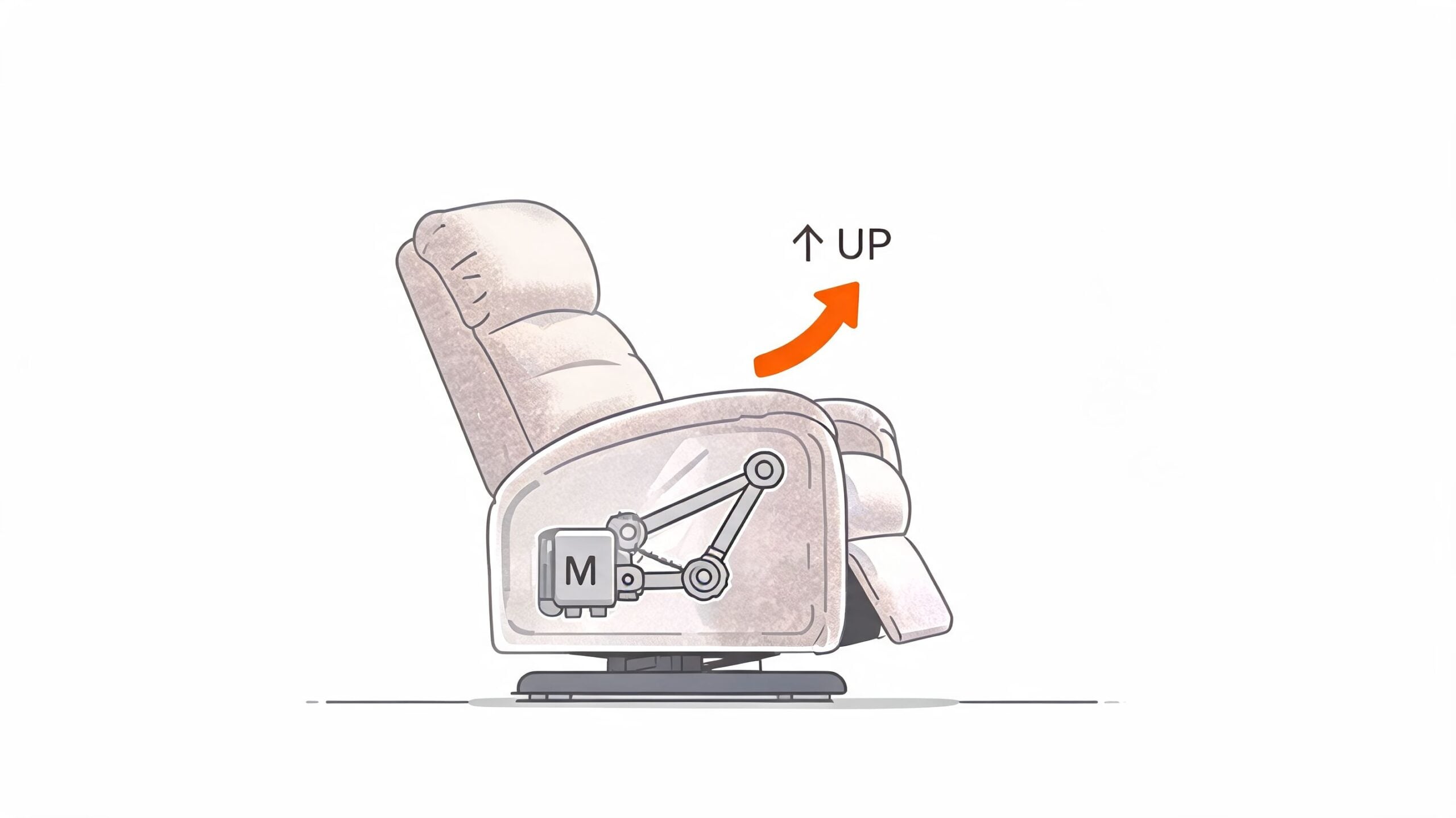
The simplest way to think about a lift recliner is this. It acts like a mechanical helping hand built into a comfortable chair.
Instead of you forcing yourself up from a deep seated position, the chair uses a motorized base to tilt and raise the seat forward. That motion brings your hips and knees into a better position for standing.
The three main parts that matter
Most power lift recliners rely on a few core components working together.
- The frame: This is the structure underneath everything. A strong frame keeps the chair steady during the lift motion and while fully reclined.
- The motor: The motor drives the lifting and reclining action. What you want to feel is smooth movement, not jerky starts and stops.
- The hand control: This is the part you touch every day. If the remote is confusing, the chair will be frustrating to use no matter how nice it looks.
What the lift motion should feel like
A good lift chair doesn't throw you forward. It should rise gradually and predictably. Your feet should stay planted, your body should feel supported, and the chair should give you time to move naturally into a standing position.
That's one reason many shoppers benefit from learning the different types of power reclining seating before they buy. The term "power recliner" sounds simple, but the experience can vary a lot depending on how the chair is engineered and how many positions it offers.
Practical rule: If the lift motion feels rushed or awkward in the showroom, it won't feel better at home after a long day.
The reclining side works the same way. The motor adjusts the back and footrest to place your body in a more comfortable position. In basic models, those movements are more limited. In more advanced models, you get finer control over your resting angle.
For first-time buyers, understanding that simple sequence helps remove a lot of uncertainty. You're not buying mysterious technology. You're buying a chair with a stable frame, a powered movement system, and controls that should make daily use easier.
Key Features to Compare for Lasting Comfort
A lift recliner can feel pleasant in the first five minutes and still be the wrong chair for daily life. Lasting comfort comes from matching the chair's features to the person's routine, body, and mobility needs.
Motor positions change how the chair feels hour after hour
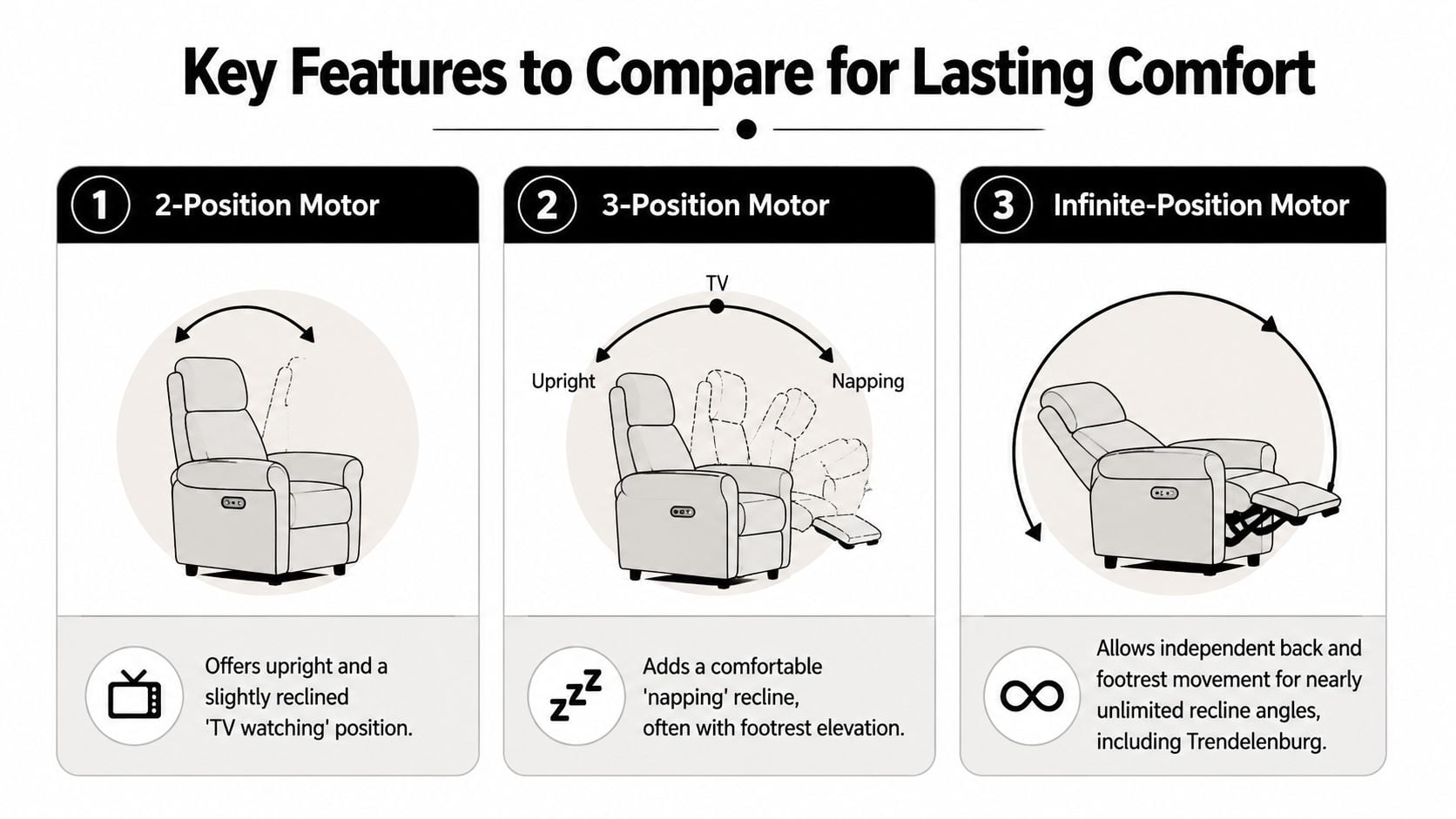
Shoppers often focus on fabric color first. The motor setup usually has a bigger effect on comfort.
| Motor Type | Recline Function | Best For |
|---|---|---|
| 2-position | Upright and slight recline | Reading, conversation, TV watching |
| 3-position | Upright, deeper recline, footrest support | Lounging, light napping |
| Infinite-position | Independent adjustment for back and footrest with many angles | Extended sitting, customized comfort, sleeping in the chair |
A two-position chair is a little like a porch swing with only a couple stopping points. It does the basics well, but it does not give you much room to fine-tune your posture. A three-position chair adds more range, which helps if the user likes to rest for longer stretches.
Infinite-position models give the most flexibility because the back and footrest can be adjusted more precisely. That matters for someone who shifts often, naps in the chair, or needs to change positions through the day to stay comfortable. The best choice depends less on the spec sheet and more on how the chair will be used at home.
Match the feature set to the daily routine
A better question than "Which model has more features?" is "What problem should this chair solve every day?"
- Mostly sitting upright: Simpler models may work well for reading, visiting, or watching television.
- Frequent napping: A deeper recline and better leg support usually make a noticeable difference.
- Long daily sitting periods: Independent adjustment helps the user change pressure points instead of staying stuck in one posture.
- Recovery after surgery or ongoing mobility concerns: Easy-to-read controls, supportive cushioning, and predictable motion often matter more than decorative extras.
Families also need to think about transfers. If a caregiver helps someone in and out of the chair, arm height, seat firmness, and the lift timing all affect how safe that process feels. Resources on preventing falls for caregivers can help families ask better safety questions before they buy.
Cushioning and upholstery affect support more than many shoppers expect
The lift mechanism does part of the work. The seat does the rest.
If the cushion is too soft, the user may sink low before the chair even starts to rise. That can make standing feel harder, not easier. Firmer support is often more helpful for people who need a steady push to standing, while a softer sit may appeal to someone using the chair mainly for relaxation.
Upholstery deserves the same practical thinking. Performance fabrics are easier to live with in homes with pets, snacks, or everyday wear. Leather and leather-match options can be easier to wipe clean, but the surface feel is different, especially for shoppers who sit for long periods. This is one more reason in-person testing matters. Two chairs can look nearly identical online and feel completely different once you sit down.
Weight capacity, scale, and room fit all work together
Weight capacity affects durability and stability, but it should not be reviewed by itself. A taller person may need a higher back and longer footrest. A broader user may need more seat width without losing arm support. A smaller user can have the opposite problem and feel swallowed by an oversized chair.
Room planning matters too. A lift recliner needs space to recline and space to rise safely. Before you shop, it helps to review how to measure furniture for your room and pathways so the chair fits the space as well as the person.
That is where local fitting has real value. In a showroom, you can compare seat firmness, arm height, leg support, and control layout in one visit. You can also catch problems an online photo will never show, like a footrest that stops too short for the user or a headrest that pushes the neck forward. For a chair that may be used every day, that hands-on comparison often makes the difference between short-term satisfaction and long-term comfort.
Why Proper Sizing Is a Critical Safety Feature
Many people assume a roomier chair is a safer chair. In lift recliners, that can be exactly wrong.
A chair that's too deep makes the user slide back too far. A chair that's too wide can reduce support through the hips and arms. A seat that's too high or too low changes how the knees and feet line up during the lift. Those aren't small comfort issues. They affect posture, stability, and how confidently someone can get in and out of the chair.

Why online buying gets this wrong
One of the biggest gaps in online recliner guides is sizing advice for different body types. Industry feedback suggests fit problems are a leading cause of returns, with some estimates as high as 20% to 30%, according to this overview of power recliner buying gaps.
That makes sense. A lift recliner isn't like ordering a lamp or end table. It's a personal fit item. If the seat depth is wrong, your lower back may lose support. If the footrest doesn't meet your legs correctly, you may feel pressure where you shouldn't. If the lift angle doesn't meet your body in the right place, standing can feel less secure instead of more secure.
What a proper fit looks like
Bring these basics with you when you shop:
- Seat height: Sit so your feet rest flat on the floor.
- Seat depth: Your back should reach the back cushion without the front edge pressing hard behind your knees.
- Seat width: You want support at the hips and arms without feeling pinched.
- Arm height: Your shoulders should stay relaxed while your forearms rest naturally.
- Lift comfort: The chair should bring you forward into standing without making you feel like you're climbing out of a hole.
A tape measure helps, and so does a simple room plan. If you haven't measured your space yet, our guide on how to measure furniture can help you avoid sizing mistakes before delivery day.
Buy for the body first, then the room. If the chair looks perfect but fits poorly, it isn't the right chair.
Why in-person fitting matters so much
A showroom visit becomes a safety step, not just a shopping trip. You can sit, recline, stand, test the hand control, and notice details a product page can't tell you.
If fall prevention is part of the larger family conversation, this practical guide on preventing falls for caregivers is worth reading alongside your furniture search. A stable chair, clear walking paths, and good transfer habits all work together.
For first-time buyers, that hands-on fit test often changes everything. The chair that looked best online may not be the one that feels safest when using it.
Health Considerations Warranty and Maintenance
Once the right chair is in the home, the next question is simple. Will it keep doing its job well over time?
A lift recliner is a comfort purchase, but it's also a daily-use mobility tool. That means health-minded features, a sensible warranty, and straightforward upkeep all matter.

Features that support easier daily living
Some users need a chair mainly for standing support. Others spend many hours in it, so pressure relief and position changes become important too.
Features worth asking about include:
- Battery backup: Helpful during a power outage, especially if the chair is in a reclined position.
- Adjustable positioning: Useful for users who need to shift their posture during the day.
- Supportive head and lumbar options: These can improve long sitting sessions for some users.
- Easy-clean upholstery: A practical choice for everyday living and simpler maintenance.
If back comfort is part of your decision, our article on the best recliner for back pain offers a useful comfort-focused perspective.
What to ask about the warranty
Warranty language can feel dry until something needs service. Then it matters a lot.
Ask these questions clearly:
- What covers the frame?
- What covers the lift mechanism?
- What covers the motor and electronics?
- What counts as normal wear versus a defect?
- Who handles service if a problem comes up?
A good warranty gives peace of mind, but clear local support matters too. Knowing who to call and what happens next can be just as important as the written coverage.
Maintenance is usually simple. Keep the chair clean, follow the operating instructions, and don't ignore unusual noises or delayed movement.
Keep the chair part of a safer home setup
A lift recliner works best as part of a larger safety plan. Place it where the user has enough room to enter and exit comfortably. Keep cords managed. Make sure rugs, tables, and other furniture don't crowd the path.
For families thinking more broadly about home safety, this article on Stillwaters Healing & Massage senior safety offers practical reminders that pair well with furniture choices.
The long-term goal is simple. Choose a chair that's easy to live with, easy to maintain, and ready for the routines of real life.
The Groens Advantage Custom Orders and Financing
The biggest problem with online-only lift recliner shopping is that it encourages people to settle. Settle for the closest size. Settle for whatever fabric is in stock. Settle for a chair that looks good in photos but doesn't feel right in person.
That doesn't work well for a product that needs to fit both the user's body and the home's style.
Design it your way
Customization matters because no two households use these chairs the same way. One buyer wants a lift recliner that blends into a formal living room. Another needs durable fabric for everyday use in a family room. Another needs a specific seat feel or scale that works better for their height.
At Groen's Fine Furniture, families in Dyer, Crown Point, and nearby Northwest Indiana communities can look at lift recliners alongside other custom furniture options and discuss fabric, feel, and fit in person. That includes options from brands known for durability, such as Flexsteel, and a broader made-to-order approach many customers already know from our Canadel dining and Amish solid wood programs.
Why custom ordering helps
Custom ordering isn't just about appearance.
- Better fit for the user: A chair that's scaled properly is easier to use every day.
- Better fit for the room: You can coordinate upholstery with existing sofas, sectionals, or accent pieces.
- Better long-term satisfaction: People are less likely to regret a purchase when they haven't been forced into a one-size-fits-all option.
That same idea guides our whole business. Our family has served NWI with multigenerational ownership and personal service since 1983, and buyers often come to us because they want more than a carton dropped at the door.
Financing can make quality more reachable
A power lift recliner is an important purchase. It makes sense to think carefully about budget.
Special financing can provide more buying power when you want the right chair now instead of waiting and compromising. If you'd like to review the basics before visiting, our furniture financing options page explains how to start that conversation.
For many households, that's what affordable luxury really means. Not cutting corners. Choosing lasting comfort, honest value, and a payment approach that fits the budget.
Your In-Store Testing Checklist and Next Steps
When you visit a showroom, don't just sit in a lift recliner for ten seconds and call it good. Test it like you'll use it at home.
What to check while you're seated
- Feet placement: Do your feet rest comfortably on the floor in the seated position?
- Back support: Does your lower back feel supported without scooting or slouching?
- Arm comfort: Can your arms rest naturally, or do your shoulders tense up?
- Remote use: Is the control easy to understand and easy to hold?
What to check during motion
Try every function slowly.
- Lift action: Does the chair raise you smoothly into a standing position?
- Recline comfort: Do you feel supported through your legs, back, and neck?
- Entry and exit: Can you get in and out of the chair without twisting awkwardly?
- Overall confidence: Do you feel secure, or do you feel like you're adapting to the chair?
If you're shopping for someone else, bring them with you. A chair that seems perfect to a caregiver may feel completely wrong to the person using it.
For many first-time buyers, that test drive is the final step that turns confusion into confidence. You don't need the most expensive chair. You need the right one.
Visit Groen's Fine Furniture in Dyer or Crown Point today to test drive power lift recliners in person, explore custom options, and ask about our special financing plans. Let our family help you create a home that supports comfort, independence, and lasting peace of mind.