Blog
American Made Bedroom Furniture: A Buyer’s Guide


You know the feeling. A bedroom set arrives looking sharp in the photo, goes together well enough on delivery day, and for a little while it seems like you made a smart buy. Then a drawer starts catching. The finish on the top shows wear faster than expected. A side panel loosens. Before long, you’re thinking about replacing furniture that never should have felt temporary in the first place.
That’s the point where many families in Dyer, Crown Point, and across Northwest Indiana start looking at american made bedroom furniture differently. It stops being about a label and starts being about relief. Relief that the next dresser won’t wobble, the next bed won’t squeak, and the next nightstand won’t look tired long before the room does.
Our family has served Northwest Indiana since 1983, and we’ve seen this pattern for decades. People don’t usually come in asking for “specs.” They want a bedroom that feels settled, personal, and built for real life. They want furniture that can move with them, age well, and still feel right years from now.
A New Chapter for Your Northwest Indiana Home
For a lot of homeowners, the bedroom becomes the last room to get the attention it deserves. The sofa gets replaced first. The dining set matters for holidays. The mattress gets handled when sleep gets bad enough. Meanwhile, the bedroom furniture often becomes a patchwork of “good enough” pieces that never quite work together.
That usually changes after one disappointing purchase.

A family in Northwest Indiana might start with an online dresser because the photos look clean and the price feels manageable. A year or two later, they’re trying to ignore sticking drawers and chipped corners. Then they add a bed from somewhere else, and the stains don’t match. Then the nightstands are too small for the room, but replacing them again feels wasteful.
That cycle gets exhausting.
Why the bedroom deserves better
A bedroom should do two jobs well. It should support your daily routine, and it should help your home feel calm. Furniture that’s poorly built usually fails at both. It creates little annoyances that pile up, from drawers that don’t open smoothly to surfaces that show wear before the rest of the room is even finished.
Quality pieces change the experience in a practical way:
- They feel stable every day. You notice it when you open drawers, lean against the bed, or move around the room.
- They hold their appearance better. A room looks settled when the furniture still looks intentional years later.
- They reduce replacement stress. You’re not shopping again every few years for the same category.
Your bedroom furniture shouldn’t feel like a placeholder in your own home.
Families across the region are already investing thoughtfully in their homes, and local shoppers often begin by exploring furniture stores in Northwest Indiana to compare what looks good online with what feels solid in person.
That’s where american made bedroom furniture starts to make sense. Not as a trend, but as a long-term answer.
What American Made Furniture Truly Represents
“American-made” gets thrown around loosely, so it helps to slow down and ask what it should mean when you’re shopping for a bedroom. At its best, it means more than final assembly in the U.S. It points to a different way of building furniture, sourcing materials, and standing behind workmanship.
For many buyers, that matters because the bedroom is personal. You’re not buying a throwaway accent piece. You’re buying the bed frame your family will live with every day, the dresser that handles real use, and the nightstands that become part of your routine.
It should mean skilled hands and traceable choices
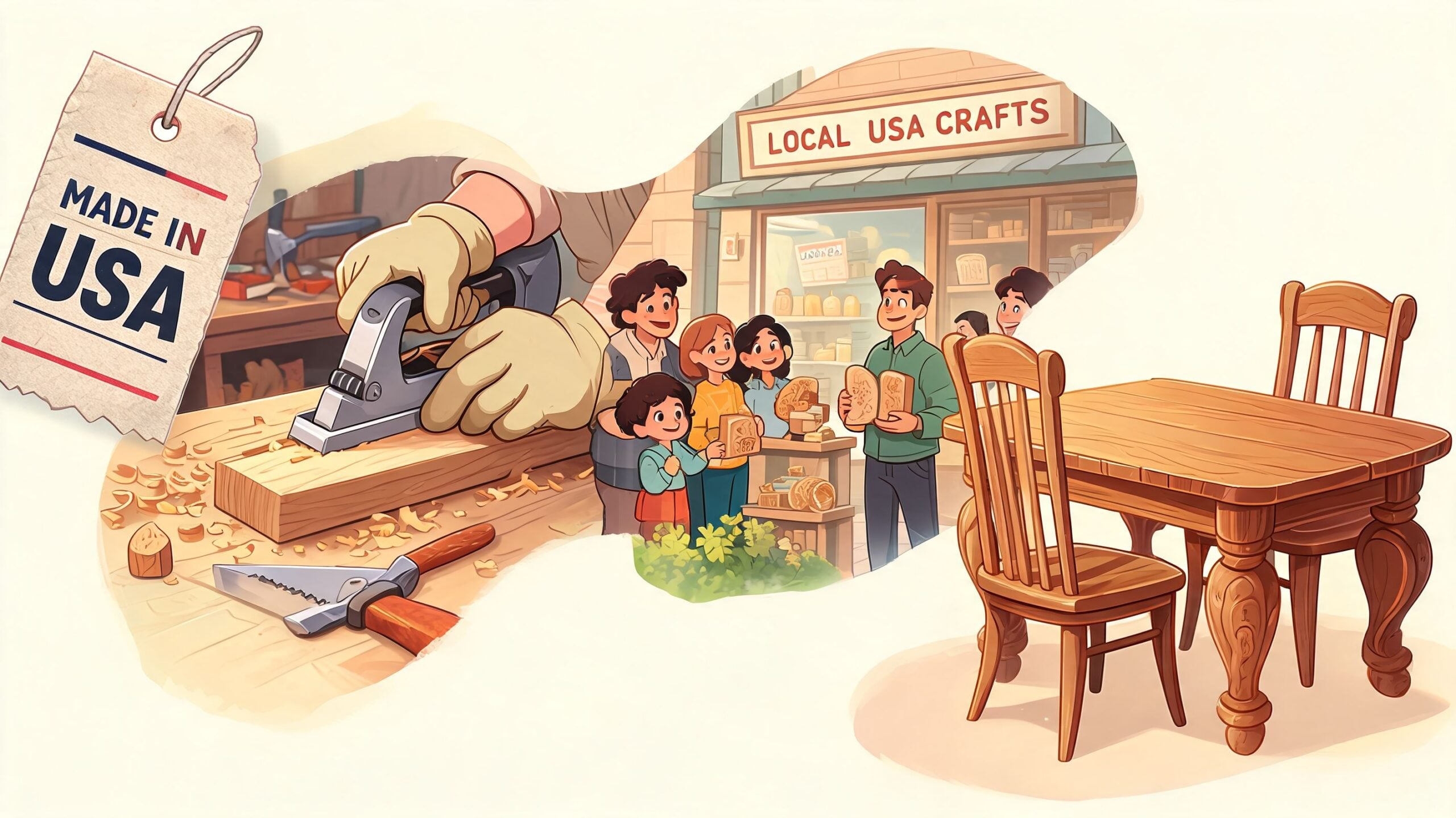
One of the strongest reasons people choose american made bedroom furniture is that the story is often easier to follow. Current content around furniture frequently mentions ethical sourcing, but often stops short of details. The need for more supply chain transparency, including stories about makers, wood sourcing, and finish certifications, is clearly noted by Urban Natural’s bedroom furniture collection page.
That matters because shoppers ask smart questions now. Where was this built? What kind of wood is it? Who made it? What’s in the finish? Those aren’t niche concerns anymore. They’re part of how families decide whether a piece belongs in their home.
It should mean your purchase supports real communities
Buying domestic furniture also keeps skilled craftsmanship in circulation. That includes workshops, finishers, woodworkers, delivery teams, and family businesses that still believe furniture should be made with care, not speed alone.
For many Northwest Indiana households, that local-and-regional connection feels natural. If you’re already comparing bedroom sets with a close eye on health and home comfort, it also helps to view available sleep brands so you can think about furniture and sleep support together, not as separate purchases.
A lot of shoppers who are drawn to that craftsmanship also want to understand the construction traditions behind it. If you want a clear breakdown of what sets that category apart, this guide to what Amish furniture is is a helpful place to start.
Good american made bedroom furniture carries a paper trail, a materials story, and a workmanship standard that you can actually talk through with someone.
That’s the difference. A label alone doesn’t create value. Clear sourcing, honest construction, and accountable makers do.
The Hallmarks of Quality Solid Wood and Master Craftsmanship
A bedroom set proves itself on an ordinary Tuesday night, not under showroom lights. The drawer is full of jeans, a kid leans on the bed rail, and the top of the dresser collects the usual mix of lamps, books, and laundry baskets. That daily use is where quality construction earns its keep.
American-made bedroom furniture tends to show its value in the parts you do not notice right away. Solid hardwood cases, properly fitted drawer boxes, and joinery that holds under repeated stress give a piece a longer service life and a lower cost over time. For Northwest Indiana families, that matters. Replacing a shaky dresser in five years usually costs more than buying the better one once.
What solid wood feels like in real life
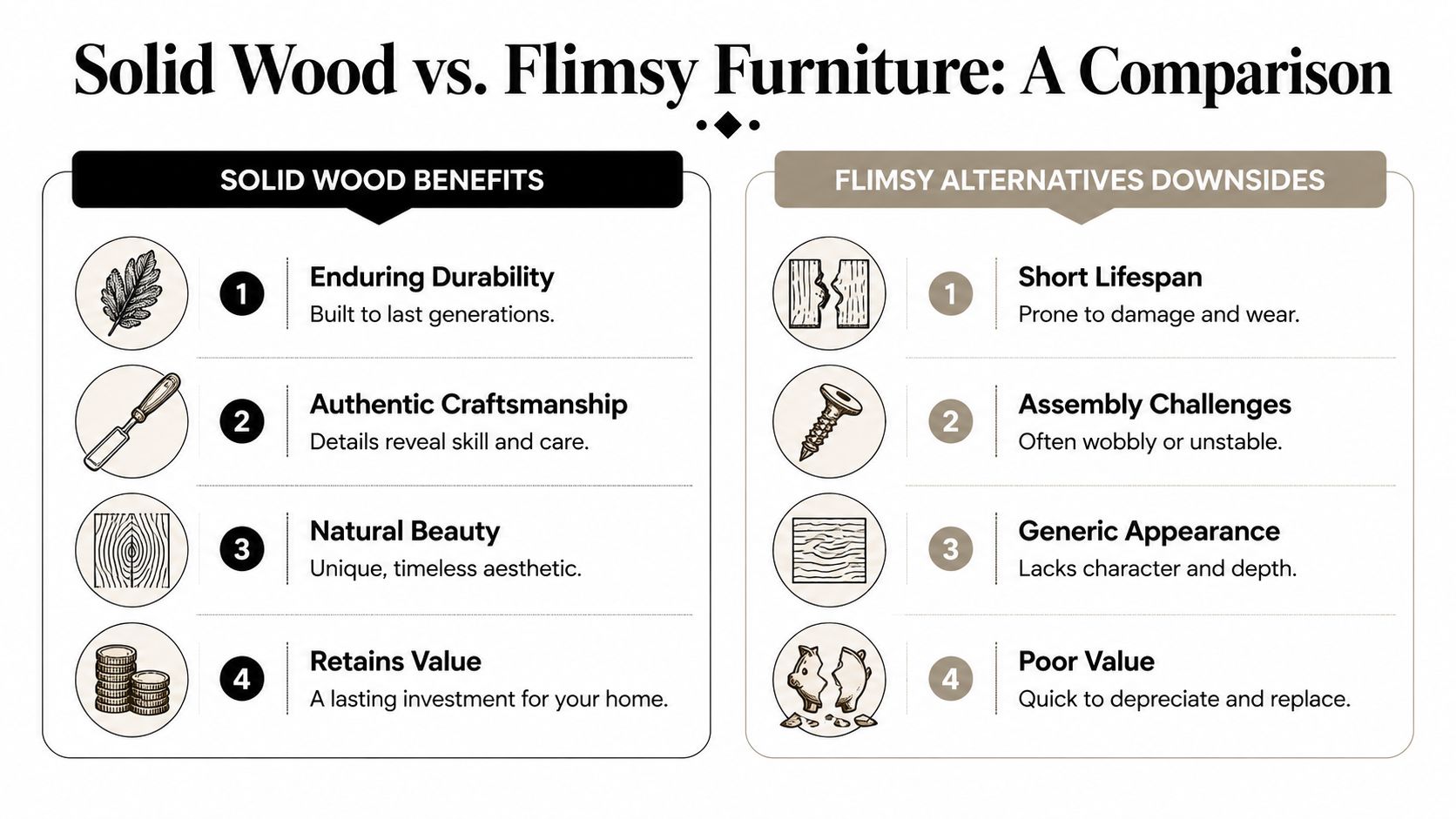
Solid wood has weight, steadiness, and repair potential. A maple or oak dresser can handle years of opening, closing, and seasonal humidity changes with fewer problems than furniture built from particleboard or thin veneer over composite cores. If the finish gets tired, it can often be cleaned up, touched up, or refinished instead of sent to the curb.
That repairability is a real cost advantage, not a romantic idea about heirlooms.
Families comparing species can get a clearer sense of durability, grain, and maintenance in this guide to choosing the right hardwood for longevity and style.
Here is what I tell customers to check before they fall in love with the look:
| Construction detail | What it means for daily use |
|---|---|
| Solid hardwood panels | Better long-term stability and a substantial feel |
| Dovetailed drawers | Drawer corners stay tighter under repeated opening and closing |
| Full-extension drawer slides | Easier access to the back of the drawer and smoother operation |
| Particleboard with staples | More prone to loosening, chipping, and short repair life |
Why joinery matters more than showroom shine
Good joinery carries the load. Dovetails, mortise-and-tenon connections, and well-fitted frame construction spread stress through the wood instead of asking a few staples or cam locks to do all the work. The Forest Products Laboratory of the U.S. Department of Agriculture explains in its Wood Handbook that wood strength and connection performance depend heavily on species, grain direction, moisture conditions, and joint design. In plain terms, a well-built joint gives furniture a better chance of staying square and serviceable for the long haul.
You can usually spot the difference in a minute or two.
- A loaded drawer opens without racking
- The case feels tight when you press on a corner
- The back panel adds structure instead of acting like thin cover stock
- The hardware feels anchored, not strained
Practical rule: If the outside looks polished but the drawer box is thin, rough, or stapled together, the piece is selling appearance harder than durability.
Craftsmanship you can see without a sales pitch
Quality leaves visible clues. Grain patterns look natural rather than repeated. The finish has depth and feels smooth without looking plastic. Drawer interiors are sanded. The underside and back are handled with care because the maker expected the piece to stay in use for years.
That is also why well-built furniture works so well in homes that change over time. A solid wood chest can move from a child’s room to a guest room to a first apartment and still have years left. If you are pairing better furniture with smarter storage habits, simple DIY bedroom organization projects can help you get more use out of the space you already have.
Heirloom quality is not a marketing label to me. It means the piece still functions, still looks right, and still feels worth keeping after a decade or two. That is the standard that protects total cost of ownership.
Design Your Dream Bedroom with Custom Options
One of the biggest frustrations in furniture shopping is settling for almost right. The dresser is close, but too wide. The stain is good, but not with your flooring. The bed is handsome, but the headboard height fights the window trim. That’s where custom order becomes less of a luxury and more of a practical solution.
Made-to-order furniture gives families room to stop compromising.

A good custom process starts with the room you already have. Maybe you’re working with a narrow wall in a Crown Point primary bedroom. Maybe you need deeper storage in a Dyer guest room. Maybe you want a warmer stain because your existing floors read cool. Those aren’t fussy details. They’re the difference between furniture that fits and furniture that always feels a little off.
Design it your way, instead of making it work
Custom order manufacturing gives buyers meaningful flexibility across wood species, finish choices, and dimensions. Some programs support more than 5,000 size, shape, and finish combinations from a single design family, according to Amish Direct Furniture. The same source notes that 60% to 70% of furniture purchases reportedly result in buyer’s remorse because of size or style mismatches.
That tracks with what families experience in real homes. Most regret doesn’t come from dramatic mistakes. It comes from inches, tones, and proportions.
A custom bedroom plan helps you adjust details like:
- Wood selection so the piece matches your taste and the room’s character
- Finish color to work with flooring, trim, and nearby furniture
- Dimensions for awkward walls, tighter walkways, or extra storage needs
- Hardware choices that push the look more classic, modern, or transitional
A real-world custom path
A shopper might come in wanting “a simple dresser.” After a short conversation, the actual need is clearer. They want six usable drawers, not shallow top drawers that waste space. They want the case width adjusted so the bedroom door clears comfortably. They want a stain that ties into existing nightstands instead of fighting them.
That’s where a custom order process earns its keep. Groen’s Fine Furniture offers custom-order guidance for shoppers comparing those kinds of choices, including Amish solid wood options and other made-to-order programs.
A bedroom feels finished when the furniture fits the room on purpose, not by accident.
If you’re also trying to make the most of your storage, these DIY bedroom organization projects can help you think through what you need your furniture to do before you place an order.
What works and what doesn’t
What works is taking measurements, bringing finish samples if you have them, and being honest about how you use the room. What doesn’t work is choosing only from a thumbnail image and hoping the scale feels right once it arrives.
Custom furniture asks for patience. The payoff is that the room fits better, looks more cohesive, and usually feels more satisfying for much longer.
Investing in a Legacy Cost Value and Longevity
A Northwest Indiana family buys a low-priced dresser for a child’s room, then replaces it after a move, a drawer failure, or a style that never quite felt right in the first place. Ten or fifteen years later, they have spent more than they planned and still do not have a piece they want to keep.
That is the true cost question.
American-made bedroom furniture usually asks for more up front. In return, it often gives families longer service life, repairable construction, steadier drawer function, and a piece that can move from a first home to a larger house without feeling temporary. For households that plan to stay in the region and build a home over time, that long view matters more than the price tag on delivery day.
The better comparison is cost over years of use
Shoppers often compare furniture by purchase price because that number is easy to see. Total cost of ownership is the better measure. It includes how long the piece lasts, how well it holds up under daily use, whether it can be repaired, and whether you will need to shop again in a few years.
A lower-priced import can still make sense for a short-term need, a guest room, or a temporary apartment. I would not pretend otherwise. But for a primary bedroom, where drawers open every day and the bed gets used every night, replacing weak furniture is expensive in ways families feel fast. You pay again in delivery fees, disposal, time off, and the aggravation of starting over.
| Purchase approach | Long-term outcome |
|---|---|
| Lower upfront price | Lower cost today, but a higher chance of replacement, repairs, or frustration |
| Higher upfront quality | Higher initial spend, but often fewer replacements and better use over many years |
The practical goal is simple. Buy once, buy less often, and live with it happily longer.
Why long-term value shows up in real family budgets
Bedroom furniture is not like a trendy accent piece you swap out on a whim. A solid bed, chest, or dresser becomes part of the routine of the house. Kids grow up with it. Parents move it from room to room. In some families, it gets handed down.
That changes the math.
The National Center for Healthy Housing notes that durable goods in the home should be maintained and kept in service when practical because repeated replacement adds cost and waste over time. The same logic applies to furniture ownership. A well-built wood case piece that stays useful for decades usually costs less per year of use than a cheaper piece bought two or three times.
There is also resale and refinishing value. Solid wood pieces can often be touched up, repaired, or refinished. Veneer over particleboard usually has fewer good options once corners swell, joints loosen, or drawer bottoms sag.
A sensible way to buy quality without overreaching
Families do not need to furnish the whole room at once to make a smart long-term decision. Start with the piece that carries the most daily wear. For many households, that is the bed or the main dresser.
A practical buying plan often looks like this:
- Choose the anchor piece first. Put the budget toward the item you use most and would least want to replace.
- Phase the room in over time. Add the chest, mirror, or nightstands later if needed.
- Pay attention to fit before purchase. Good furniture only pays off if it works in the room and through the house. Use this local guide on how to measure furniture before delivery and this partner resource on how to measure furniture for your home.
- Use financing carefully. Subject to credit approval, financing can spread out the upfront cost while letting you buy the better-built piece now instead of settling for a replacement-cycle piece.
That is how I explain value on the showroom floor. The upfront number matters. The years after that matter more.
Bringing It All Home Style Measurement and Care
Bedroom furniture works best when the practical details are handled before delivery day. That means measuring carefully, choosing a style that fits your home instead of fighting it, and knowing how to care for solid wood once it’s in place.
That attention makes a bigger difference now because more households are treating the home as a long-term investment. The U.S. bedroom furniture market was valued at US$53.5 billion in 2026, driven by housing activity, rising incomes, and a shift toward premium furniture, according to Persistence Market Research.
Measure before you fall in love with the piece
A beautiful dresser that blocks a doorway is still the wrong dresser. Before ordering anything, measure the wall, the walking space around the bed, and the path into the room. Don’t forget stair turns, hallway width, and ceiling height if the headboard is tall.
If you want a simple walkthrough, this guide on how to measure furniture for your home gives a useful overview. It also helps to compare that advice with this local measuring resource on how to measure furniture, especially when you’re planning for delivery in an existing NWI home.
A few measurement habits save a lot of frustration:
- Leave breathing room. Bedrooms feel calmer when furniture isn’t packed wall to wall.
- Check drawer clearance. A dresser may fit the wall and still fail the room if drawers can’t open comfortably.
- Map traffic flow. You should be able to move around the bed without squeezing past corners.
Match the room, not just the trend
Style decisions go better when you look at the whole room. A Bassett bedroom piece, for example, can help a homeowner bridge classic and current design if the rest of the space already mixes old and new. The right choice depends on your trim, flooring tone, wall color, and how formal or relaxed you want the room to feel.
If you feel stuck, interior design help is useful because it narrows the field. Sometimes the smartest recommendation isn’t more decoration. It’s one cleaner silhouette, one warmer stain, or one better-scaled chest.
Care is simpler than people think
Solid wood furniture doesn’t need complicated treatment. It needs consistency. Keep it out of harsh direct sunlight when possible, wipe dust with a soft cloth, and clean spills promptly instead of letting moisture sit.
What doesn’t help is overusing harsh sprays or treating every mark like damage. Good wood furniture is meant to live in a home. Part of its appeal is that it can age with character while still staying structurally sound.
Your Northwest Indiana Partner in Quality Furniture
Northwest Indiana families have plenty of furniture choices. The key question isn’t whether you can find a bedroom set. It’s whether you can find one that feels right in your home now and still feels right years from now.
That’s where a family business tends to approach things differently. We’ve served Dyer, Crown Point, St. John, Schererville, Munster, and surrounding communities for decades, and multigenerational ownership changes how you think about furniture. You stop chasing quick wins. You pay attention to how a piece is built, how it will be used, and whether the buyer will still be happy with it long after delivery day.
What families usually remember
Every specification is rarely remembered. What remains is whether the room finally felt finished, whether the drawers worked well, whether the bed felt sturdy, and whether the process was honest and clear.
They also remember service. White-glove delivery matters. So does having someone in the showroom who will tell you when a piece is too large, too shallow, or not the best fit for your room.
Why this category is worth seeing in person
American made bedroom furniture is one of those categories that makes more sense face to face than on a screen. You can feel the weight difference. You can test the drawer movement. You can compare wood species side by side. You can see whether a finish has warmth or whether it just photographs well.
That’s especially valuable if you’re considering Amish furniture, Vaughan-Bassett, or a custom program where the choices affect how the piece will live in your home for a long time.
The best bedroom furniture purchase usually feels less exciting than an impulse buy and more reassuring. That’s a good sign.
A calm, informed decision is usually the one that lasts. And when you’re choosing for a family home, lasting is the whole point.
Visit Groen's Fine Furniture in Dyer or Crown Point today to explore custom options, experience solid wood craftsmanship in person, and ask about special financing plans. Let our family help you create a home you love.