Coverlet vs Quilt: Which Is Right for Your Bedroom?

You’re standing in your bedroom with a cart full of tabs open, trying to answer what sounds like a simple question: coverlet vs quilt. Then the confusion starts. One looks light. One looks cozy. Some stores use the words loosely. And if you live in Northwest Indiana, the choice matters more than it might in a milder climate.
Around Dyer, Crown Point, St. John, and the rest of NWI, bedding has to do more than look pretty for a catalog photo. It has to feel right on a cold winter night, wash well after real family life, and still make the room feel finished in July. That’s where people often get stuck.
The easiest way to think about it is this. A quilt is usually built for warmth and softness. A coverlet is usually built for lightweight style and layering. But that’s only the start. The details of construction, size, care, and everyday use make a bigger difference than most shoppers expect.
Here’s a simple side-by-side view before we go deeper:
| Feature | Quilt | Coverlet |
|---|---|---|
| Basic build | Three layers stitched together | Single woven or lightly constructed layer |
| Feel | Cozier, plusher | Lighter, flatter |
| Warmth | Better for colder bedrooms | Better for layering or warmer weather |
| Look on the bed | Often fuller and more relaxed | More tailored and neat |
| Best for | Winter comfort, standalone use, traditional layered beds | Summer use, decorative texture, easy layering |
| Care style | May need gentler handling depending on materials | Often easier to wash and manage |
The Foundation of Comfort What Is a Quilt and a Coverlet
The clearest definition starts with how each piece is made.
A quilt is a bedding layer made from three parts: a top fabric, an inner layer of batting, and a backing fabric. Those layers are stitched together, which gives the quilt its texture and helps hold warmth. If you’ve ever seen patterned stitching across the surface, that stitching isn’t just decorative. It’s part of what makes a quilt a quilt.
A coverlet is different. It’s usually a single-layer bed covering with little to no internal fill. It gives the bed a clean finish and a lighter feel. Some people use a coverlet by itself in warm months. Others use it as the top decorative layer over other bedding.

Why people mix them up
The confusion usually comes from appearance. Both can sit on top of the bed. Both can add pattern or texture. Both can be folded at the foot of the bed. But the purpose behind them is not quite the same.
If you’re also sorting out other bedding terms, this guide on the difference between a comforter and duvet cover can help clear up the rest of the bedding puzzle.
Their history explains the difference
The distinction between these two pieces goes back much further than modern styling trends. According to the Frances Williamson and Friends Meeting House article on quilts and coverlets, from the early 1600s to the mid-19th century, coverlets and quilts represented distinct bedding traditions in America, with coverlets dominating as the primary bedcover before quilts became widespread.
That history tells us a lot.
Coverlets were introduced by professional European weavers in the 18th century and woven on looms as single pieces of cloth. Quilts took hold later, especially as American-made cotton fabrics became more available in the early 19th century. Quilts evolved from whole-cloth wool pieces into the patchwork versions many people recognize today, and they often became part of domestic and social life through quilting bees.
A helpful way to remember it: coverlets began as woven bedcovers, while quilts developed as layered, stitched bedcovers.
That older difference still shows up in today’s bedding. Even when modern colors and fabrics change, the basic identity stays the same. If you want something that behaves more like a light textile layer, you’re usually looking at a coverlet. If you want a stitched layer with more body and comfort built in, you’re likely looking at a quilt.
Comparing Construction Materials and Warmth
When shoppers in Northwest Indiana ask which one is “better,” what they usually mean is, which one will feel better in my house. That answer comes down to construction.
A quilt traps warmth because of what’s inside it. A coverlet usually doesn’t.
What’s inside each one
A quilt has three working parts:
- Top fabric: the visible face, often plain, patterned, or pieced
- Batting: the middle insulating layer
- Backing: the underside fabric that sits against lower bedding layers
A coverlet is much simpler:
- Single main layer: often woven cotton, linen, polyester, chenille, or a blend
- Little or no fill: which keeps it flatter and lighter
That middle layer matters a lot. If you’ve ever wanted to understand what gives a quilt body and loft, a resource on quilt batting can be useful because batting is the main reason quilts feel warmer and more cushioned.
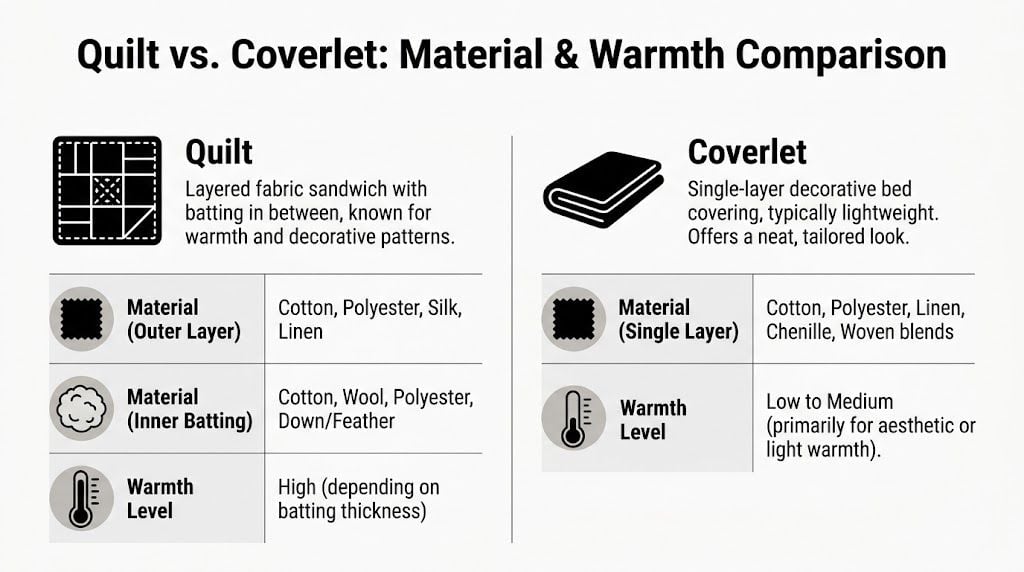
Why quilts feel warmer
The performance gap isn’t just personal preference. The build changes the thermal behavior.
According to Peacock Alley’s quilt vs coverlet comparison, quilts feature a three-layer construction with insulating batting, giving them a thermal resistance (R-value) 20-50% higher than coverlets. The same source notes that textile testing shows quilts can maintain a 15-20°F temperature differential over coverlets in a 68°F room.
That lines up with real-life experience. In a chilly bedroom, a quilt often feels ready to do the job on its own. A coverlet usually feels better as part of a layered setup.
In practical terms, quilts hold heat better because the batting creates loft, and loft traps air.
What this means in an NWI bedroom
In Northwest Indiana, bedrooms don’t feel the same all year. Winter nights can make people want bedding that feels substantial. Summer is a different story. A lot of households want something that doesn’t feel heavy but still makes the room look finished.
Here’s where each one tends to fit best:
| Need | Quilt | Coverlet |
|---|---|---|
| Cold bedroom | Strong choice | Usually needs another warm layer |
| Mild bedroom | Can work, depending on your comfort preference | Strong choice |
| Layering flexibility | Good, but can feel bulkier | Excellent |
| Lightweight feel | Less likely | More likely |
A good rule for couples
Many couples don’t sleep at the same temperature. One person runs warm. The other is always cold. In that case, a coverlet can be easier to work into a layered bed because it doesn’t add as much bulk. A quilt, on the other hand, can help when the bedroom itself stays cool and the bed needs one dependable warm layer.
If you’re thinking about the full sleep setup, not just the top layer, this guide to bedding, mattress protectors, and comforters helps connect bedding choices to overall comfort.
The common mistake
A lot of people buy based on the photo instead of the build. They choose a slim, beautifully textured coverlet, then wonder why the bed feels cold. Or they choose a thick quilt for a room that already sleeps warm, then kick it off halfway through the night.
The smarter approach is to ask two simple questions:
- Do I need this layer to provide warmth, or mostly style?
- Will I use it alone, or as part of a system with sheets, blankets, or a comforter?
Once you answer those, the right direction gets much clearer.
Mastering Bedroom Style with Sizing and Layering
Style is where the coverlet vs quilt decision gets personal. Two beds can use the same color palette, same headboard, and same sheets, but the final layer changes the mood completely.
A quilt tends to make the bed feel more relaxed, soft, and welcoming. A coverlet usually reads cleaner and more structured.
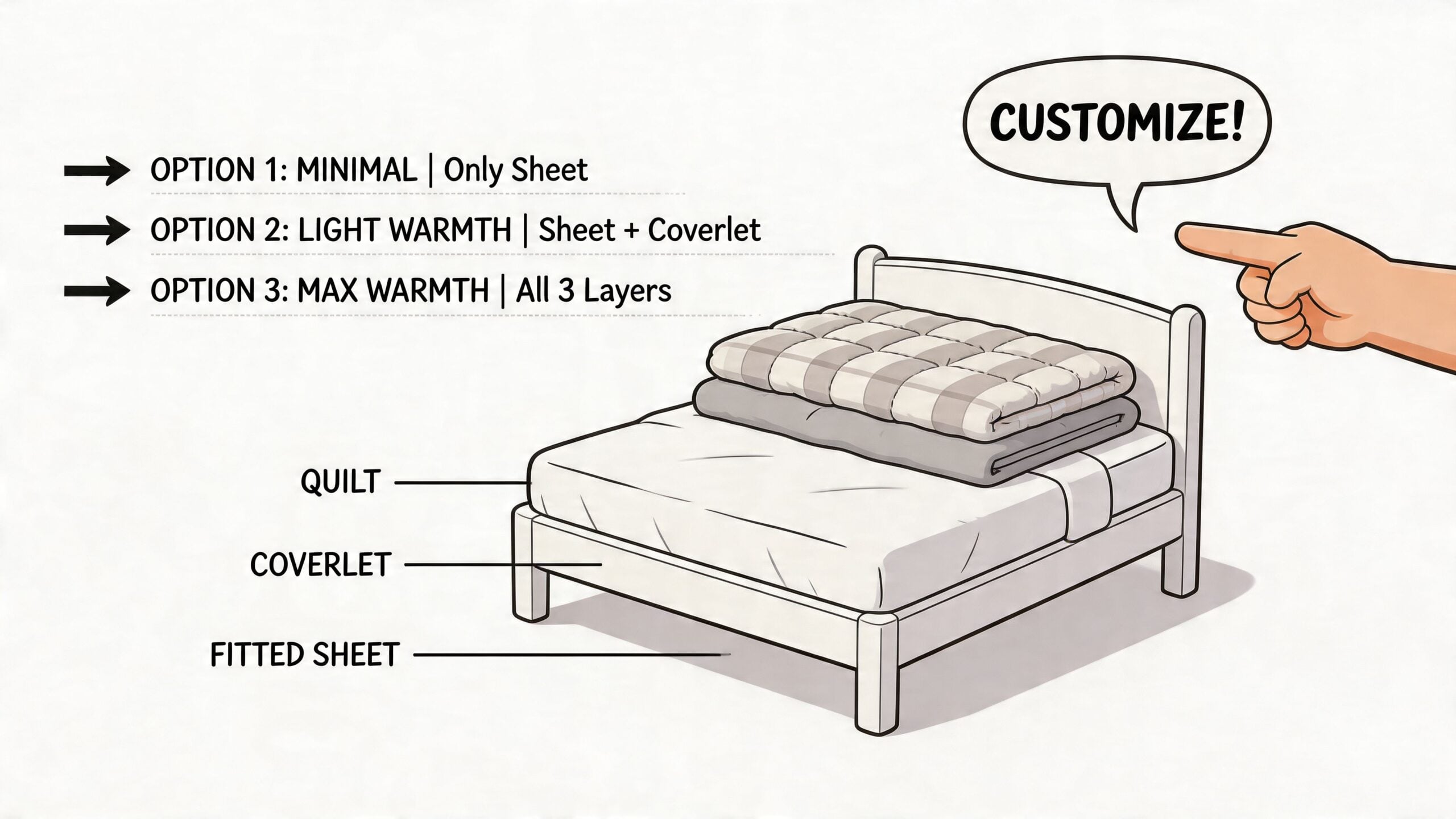
How the drape changes the look
One of the biggest visual differences is how far each piece falls.
Quilts often have a fuller drape, which can make the bed look more substantial and cocooning. Coverlets usually stop higher and sit closer to the mattress, giving the bed a tidier outline. That’s one reason coverlets are popular in bedrooms that aim for a crisp, hotel-like look.
Styling note: if you want the bed to look plush and layered, quilts usually do that more naturally. If you want the bed to look streamlined, coverlets usually get you there faster.
Three easy ways to layer them
The light summer bed
Use a fitted sheet, top sheet, and coverlet.
This setup works well for people who sleep warm or for homes that feel comfortable in summer without much extra bedding. A woven coverlet adds enough visual texture that the bed won’t look bare.
The practical year-round bed
Use your main sleep layer, then fold a coverlet at the foot.
This works well if you already have a comforter or similar top layer and want flexibility. Pull the coverlet up on cooler nights. Fold it back during warmer weather. It gives you options without rebuilding the whole bed.
The cozy winter bed
Layer sheets, a quilt, and then add accent pillows sparingly.
A quilt can carry more of the visual weight of the bed, so you often don’t need as many extras. This is a good choice if you want warmth and a bedroom that feels soft rather than sharply structured.
Choosing the right size
Sizing trips people up because they often shop by mattress size alone. Bedding doesn’t always behave like a fitted sheet. The drape, bed height, and look you want matter too.
If you need help thinking through proportions, this ultimate blanket size guide is a useful reference for understanding how blankets and top layers sit on different beds.
A few practical checks help:
- Look at bed height: a tall mattress changes how much coverage you’ll see
- Check side drop: if you want more drama, choose a layer with more hang
- Think about footboard style: a heavy footboard can hide some of the textile, while a platform bed shows more
Matching bedding to room style
Different bedrooms tend to favor different top layers.
- Traditional or cottage-inspired rooms: quilts often feel right because they bring softness and visual depth
- Minimal or transitional rooms: coverlets work beautifully because they add texture without visual heaviness
- Guest rooms: either can work, but the best choice depends on whether you want flexibility or built-in warmth
For more bedroom styling ideas, this article on accessorizing the bed of your dreams offers helpful inspiration.
The key is not to ask which one is prettier. Ask which one supports the mood you want the room to have when you walk in after a long day.
A Practical Look at Care Durability and Lifespan
For many families, the best bedding choice isn’t the one that looks best on day one. It’s the one that still looks good after laundry day, pets jumping up, kids piling in for movie night, and the normal rhythm of a busy household.
That’s where coverlets have gained attention in recent buying trends.
Why easy care matters more than ever
According to Cozy Earth’s coverlet vs quilt article, in the last 12 months, sales for sustainable, machine-washable coverlets made from bamboo or linen have surged 25%. The same source reports that woven coverlets can retain their shape up to 30% better than stitched quilts after 50 wash cycles, and it also notes that 60% of new movers in the US Midwest prioritize hypoallergenic, pet-friendly bedding.
Those numbers help explain what many households already feel. A lighter, simpler bedding layer can be easier to live with.
What daily life asks of bedding
A quilt has stitched layers, and that construction gives it comfort and character. It can also make washing and drying more demanding, depending on the fabric and batting. Some quilts do best with more careful handling, especially if you want to preserve the shape and stitching over time.
A coverlet is often more straightforward. Because it’s typically a single woven layer, it’s easier to lift, fold, store, and wash.
Here are the lifestyle questions worth asking:
- Do you wash bedding often? Coverlets can be easier to manage on a regular schedule.
- Do kids or pets use the bed? A more washable, shape-holding layer may save frustration.
- Do allergies matter in your home? Lightweight, hypoallergenic-minded bedding choices may be worth prioritizing.
- Do you rotate bedding seasonally? Coverlets store easily and come back out without much fuss.
Some buyers choose a quilt for the primary bedroom and a coverlet for guest rooms or kids’ rooms because the care routine feels simpler.
Longevity isn’t just about toughness
Durability has two sides. One is how long the item physically lasts. The other is whether it still suits your daily life a year from now.
A beautiful quilt may absolutely be worth it if you want comfort, tradition, and a richer top layer. But if your bedroom has high traffic and frequent washing, a machine-washable coverlet may deliver better long-term value because you’ll enjoy using it more often.
If you’re working to create a healthier sleep space overall, these tips for maintaining a dust- and allergen-free bedroom can help tie your bedding choices into the bigger picture.
Designing Your Dream Bedroom with Groens
A bedroom rarely comes together from one decision. Bedding, bed frame, mattress feel, wood tone, fabric texture, and room mood all need to work as a group. The best spaces feel personal because they were chosen that way, not because someone copied a display exactly.
That’s where thoughtful customization matters.

Design it your way
If you love the warmth of a quilt, the right bed frame can make that layer feel even more intentional. An Amish-made solid wood bed has the kind of presence that pairs beautifully with heirloom-style bedding, especially if you want a room that feels grounded and lasting.
If you prefer the cleaner look of a coverlet, a more refined frame or transitional bedroom set can support that lighter style. Bassett pieces often fit that polished but approachable look well, while solid wood options bring long-term character.
A personalized bedroom doesn’t have to stop at the bed. The same idea applies throughout the home. Canadel dining lets homeowners design it their way with custom combinations, and that same mindset carries naturally into the bedroom. You don’t have to settle for whatever happens to be on a floor sample.
Comfort starts under the bedding
Top layers matter, but sleep quality starts with what’s underneath. A quilt on the wrong mattress won’t fix pressure points. A coverlet won’t make up for a mattress that sleeps too hot or lacks support.
That’s why many shoppers benefit from pairing bedding choices with a mattress feel that suits how they sleep. Serta and Beautyrest are often part of that conversation because rest isn’t just about décor. It’s about whether your body settles in comfortably for sleep.
Worth remembering: bedding changes the feel of the surface. The mattress changes the quality of the sleep.
Making quality more reachable
A well-furnished bedroom is an investment, especially when you’re choosing solid wood, American-made craftsmanship, or a better mattress. Special financing, subject to credit approval, can make those decisions easier to fit into a real household budget without lowering your standards.
For homeowners who want a room that feels calm and cohesive, ideas on designing a relaxing bedroom can help shape the bigger vision before you choose the finishing layers.
Making the Right Choice for Your NWI Home
The best answer to coverlet vs quilt depends on how you live, how you sleep, and what your bedroom needs from season to season.
If your room runs cold in winter, or you want one top layer that feels more self-sufficient, a quilt often makes more sense. It gives the bed a cozier presence and usually feels more reassuring on cold nights. Many homeowners in Northwest Indiana prefer that kind of bedding when the weather turns and the room needs extra comfort.
If you want flexibility, lighter weight, and easier upkeep, a coverlet may be the smarter pick. It layers well, stores easily, and usually fits households that like to change the bed seasonally or wash bedding often.
Here’s a simple decision guide:
- Choose a quilt if warmth is the priority, you like a softer and fuller bed, or your bedroom feels chilly for part of the year.
- Choose a coverlet if you want a cleaner silhouette, lighter feel, or a practical option for busy family use.
- Choose both if you want the most adaptable setup. Many households use a coverlet during warmer months and bring in a quilt when the temperature drops.
A lot of NWI homes benefit from that third option. It isn’t indecision. It’s smart layering for a climate that changes.
The other piece is lifestyle honesty. If you love the romance of a quilt but know you need frequent washing and easy storage, a coverlet may fit better day to day. If you keep admiring neat, crisp beds but always feel cold at night, a quilt may solve your underlying problem.
Your bedroom should support rest, not create one more thing to fuss with. The right choice is the one that feels good when you pull it up at night and still works for your home in the morning.
Frequently Asked Questions About Quilts and Coverlets
Can you use a quilt and a coverlet together
Yes. Many people do. A common approach is to use one as the main sleep layer and fold the other at the foot of the bed for extra texture and flexibility. This works especially well in homes that want options across changing seasons.
What is matelassé
Matelassé is a fabric style that creates a raised, quilted-looking texture, but it isn’t the same thing as a traditional three-layer quilt. Many coverlets use matelassé because it gives visual depth without much weight.
Which is better for guest rooms
It depends on the kind of guests and the room temperature. A coverlet gives a neat, easy-care finish. A quilt can make the room feel warmer and more welcoming if the space tends to be cool.
Are quilts a good long-term investment
They can be, especially if you value craftsmanship, comfort, and a more timeless look. Heirloom-style quilts often have lasting appeal because they feel personal rather than disposable.
Do mattresses affect which one you should choose
Absolutely. A mattress that sleeps warm may pair better with a lighter top layer. A cooler-feeling mattress may make a quilt more appealing. That’s especially worth thinking about with sleep-focused brands such as Serta and Beautyrest.
Visit Groen’s Fine Furniture in Dyer or Crown Point today to explore custom options, from Amish solid wood bedroom furniture to trusted sleep solutions, and ask about special financing plans. Our family has served Northwest Indiana since 1983 with multigenerational care, white-glove delivery, and 5-star service. Let our family help you create a home you love.