How to Choose a New Mattress: A Practical Guide


A homeowner in Dyer wakes up, rolls a stiff shoulder, and notices the same dip in the middle of the bed that appeared months ago. In Crown Point, a couple sleeps better in a hotel than at home and finally admits the mattress is the problem. For families across Northwest Indiana, that moment is the start of learning how to choose a new mattress.
Why the Right Mattress Matters More Than You Think
The pattern usually builds slowly. A sleeper tosses to escape a sagging spot, wakes before the alarm, or needs a few minutes in the morning for stiffness to fade. None of those signs feels dramatic on its own. Together, they point to a bed that no longer provides steady support, even pressure relief, or the kind of rest that carries into mood, patience, and energy the next day.
Age offers one useful clue. The commonly cited replacement window is approximately 6 to 8 years under normal conditions, according to Sleep Foundation guidance on when to replace a mattress. Shoppers shouldn't treat that range as an automatic deadline. A mattress that still feels level and restorative may have useful life left, while a younger mattress with visible damage may already be finished.
Signs the Current Bed Is Working Against Sleep
- Visible sagging or damage: A dip that remains after the sleeper gets up suggests the support layers have weakened.
- Noisy springs: New squeaks and pops can signal worn components in an innerspring model.
- Recurring stiffness: Morning muscle or joint stiffness that eases after moving around deserves attention.
- Better sleep elsewhere: A guest bed or hotel mattress shouldn't consistently outperform the bed at home.
- Worsening allergies or asthma: An older, deteriorating mattress can become harder to keep clean and comfortable.
That checklist matters because a mattress purchase is also a sleep wellness purchase. Bedding care plays a supporting role, and shoppers who want a simple routine can find your sheet and pillow timeline before blaming every restless night on the mattress alone. Clean linens won't fix sagging support, but they help isolate the actual problem.
The connection extends beyond physical comfort. Readers who want the mental health angle can review the link between mattress quality, mood, and mental health for added context. The practical point is direct. A mattress shapes how a person starts every morning, so it deserves more care than a quick decision based on a label, a sale sign, or a friend's favorite model.
Groen's Fine Furniture has served NWI families since 1983 through multigenerational ownership and 5-star service. That local, family-owned perspective shapes the advice that follows. Test for the body that's going to sleep on the bed, compare materials, and confirm the choice at home instead of trusting first impressions.
Match the Mattress to Your Sleep Position and Body
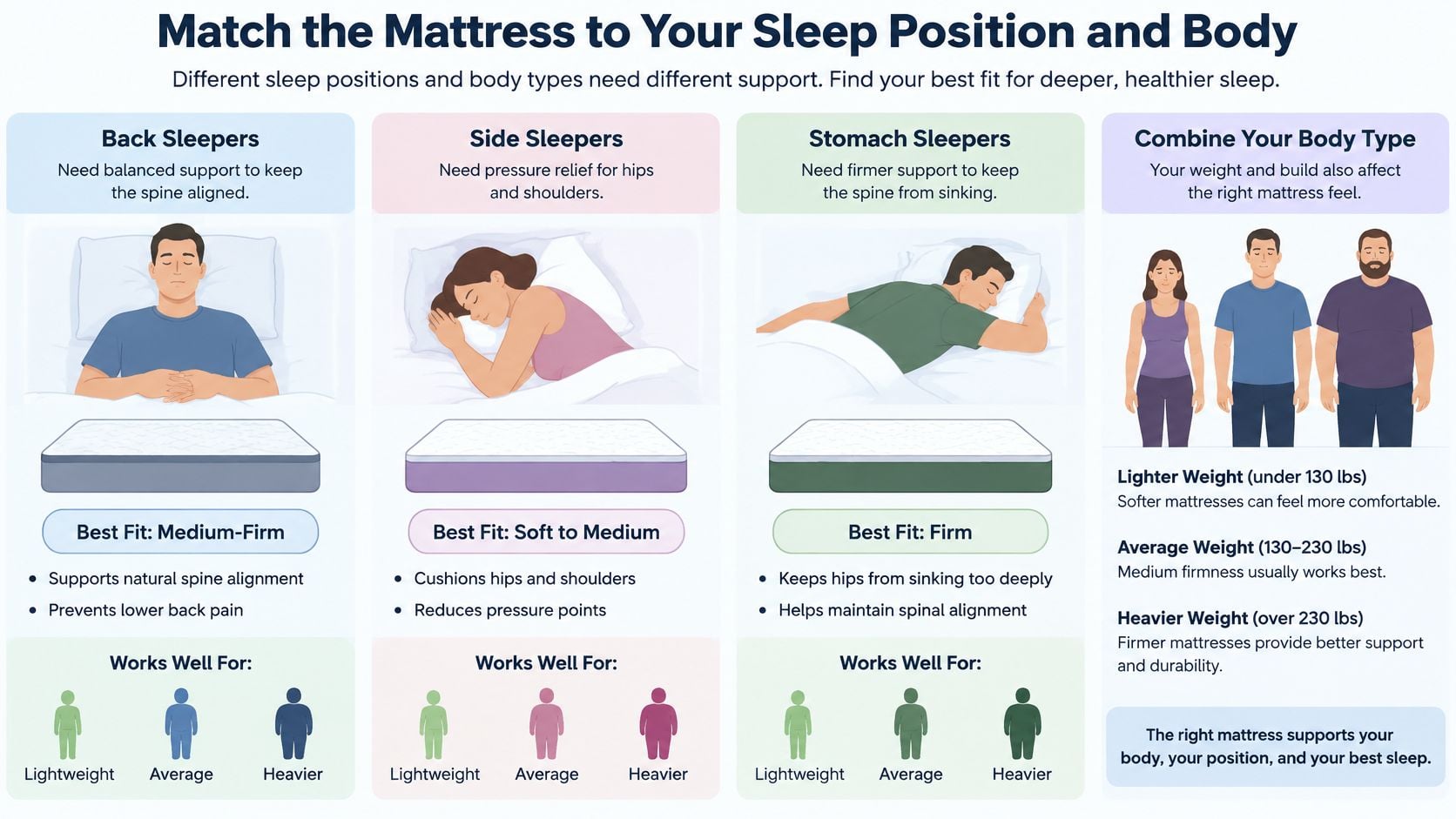
Two shoppers lie down on the same medium mattress. One calls it perfect. The other feels pressure build at the shoulder within minutes, and both are telling the truth. Firmness describes surface feel under a particular body. Support describes whether the mattress holds the spine in a reasonably neutral position for that body. Shoppers need both, and trusting the label over the body is the most common buying mistake.
A 2011 study by RTI International shows why. Researchers had 128 healthy adults sleep on seven different mattresses at home for approximately four weeks each, and firmness significantly affected 9 of 11 key measures, including sleep quality, pain, sleep duration, and next-day functioning, per RTI Press research on choosing a mattress with actigraphy and diary reports. No single firmness level won across the group. The least-firm mattress was consistently tied to greater pain, poorer sleep, and reduced daytime function.
Sleep position is the first filter:
| Sleep position | What the surface must do | The warning sign it is failing |
|---|---|---|
| Side | Cushion shoulders and hips so they settle without the waist dropping out of line | Sharp pressure at the shoulder or hip |
| Back | Give the lower back contact and lift at the same time | A gap under the lumbar curve, or a hammock sag straining it |
| Stomach | Hold the pelvis level so the lower back stays out of an arch | Low-back tightness worst on waking |
| Combination | Allow easy movement across the surface | Position changes that feel like work |
Body weight redraws that filter. A lighter sleeper compresses comfort layers less, so a mattress can feel firmer than its rating suggests. A heavier sleeper presses through those same layers and reaches the support core sooner. Couples with different builds disagree about the same bed for exactly this reason. Shoppers comparing builds can use guidance on matching a mattress to body type to narrow the field before testing in person.
Pillow height finishes the alignment picture, especially for side sleepers dealing with neck discomfort. A shopper sorting through that variable can compare options for the best pillow for neck pain, then judge the pillow and mattress as one system, since pillow loft shifts where pressure lands.
Practical rule: Choose the firmness that keeps the spine level and the shoulders and hips free of sharp pressure. If the body disagrees with the label, believe the body.
For chronic nonspecific low-back pain, the starting point is more specific. Begin with medium-firm models rather than the hardest bed on the floor. In a randomized, double-blind, multicenter study of 313 adults, medium-firm mattresses rated 5.6 produced better outcomes than firm mattresses rated 2.3 for pain while lying in bed and disability, with odds ratios of 2.36 and 2.10, as summarized in National Center for Biotechnology Information evidence on mattress firmness and low-back pain.
The position match made in a showroom is a hypothesis. The home trial is the test. Read the mornings: stiffness or pressure soreness that fades within an hour of getting up points at the mattress. Pain that persists through the day, radiates, or arrives with numbness points at a health issue that no firmness change will fix, and that deserves clinical attention rather than a return request.
Innerspring, Memory Foam, Hybrid, or Latex
Construction determines how a mattress responds the moment a sleeper lies down and how it holds up years later. Each of the four main types solves a different problem. None wins for every household, and any salesperson who claims otherwise is skipping the trade-offs. Shoppers in St. John, Schererville, and Munster face the same decision as shoppers anywhere. Match the build to sleep position, body type, and temperature preference first.
Innerspring models use a coil support core with thinner comfort layers on top. The feel is responsive and familiar, with airflow through the coil unit that many warm sleepers appreciate. Movement across the surface is easy, which suits combination sleepers. The trade-off is pressure relief. Without substantial cushioning above the coils, shoulders and hips can take more direct pressure, especially in side-sleeping positions.
Memory foam works in the opposite direction. It contours closely, spreads weight across the surface, and absorbs motion from a restless partner. Side sleepers and anyone sensitive to pressure points often gravitate toward that cradled feel. Shoppers who need deeper pressure management for medical or mobility reasons can compare specialized thinking in the DME Superstore pressure mattress guide, then translate those principles back to everyday comfort. The honest trade-off is response speed. Foam that hugs the body can feel warm and can make repositioning slower.
Where Hybrid and Latex Fit
A hybrid pairs a coil support core with foam or latex comfort layers, and that combination explains its popularity with couples. One partner gets pressure relief, the other gets lift and easier movement, and neither has to accept the extremes of a single-material design. Serta and Beautyrest both build in this category, which gives shoppers several firmness options within one construction family. Hybrids typically cost more than basic innerspring models, so the added comfort layers need to earn their place during testing.
Latex feels buoyant rather than sinking. It responds quickly, resists deep body impressions, and tends to sleep cooler than traditional memory foam. Shoppers who dislike the slow, molded sensation of foam but still want cushioning often prefer it. Latex models are frequently heavier and can carry a higher price, which makes durability part of the value calculation rather than a bonus.
Durability data supports weighing construction seriously. Reported average lifespans are 5.5 to 6.5 years for innerspring, 6 to 7 years for foam, 6.5 to 7.5 years for hybrids, 7.5 to 8.5 years for latex, and more than 8 years for airbeds when maintained, according to Sleep Foundation data on mattress lifespan by material. Those figures are averages, not guarantees. Material quality, body type, sleep position, and maintenance all shift actual service life.
Mattress Types at a Glance
| Type | Feel | Best For | Average Lifespan |
|---|---|---|---|
| Innerspring | Responsive, lifted | Back and stomach sleepers, warm sleepers | 5.5 to 6.5 years |
| Memory Foam | Contouring, cradled | Side sleepers, motion-sensitive couples | 6 to 7 years |
| Hybrid | Balanced cushion and lift | Combination sleepers, couples with different needs | 6.5 to 7.5 years |
| Latex | Buoyant, quick response | Sleepers who want cushion without sinking | 7.5 to 8.5 years |
Research on spinal positioning reinforces the bottom line. A peer-reviewed review found that medium-firm designs were associated with reduced back pain and improved sleep quality in several studies, and an experimental mattress built to preserve spinal neutrality in side sleeping produced less pain while lying down, based on peer-reviewed research on mattress design and spinal alignment. Material names matter less than the result. The right build keeps the spine neutral and pressure tolerable at every contact point.
How to Test a Mattress in the Showroom
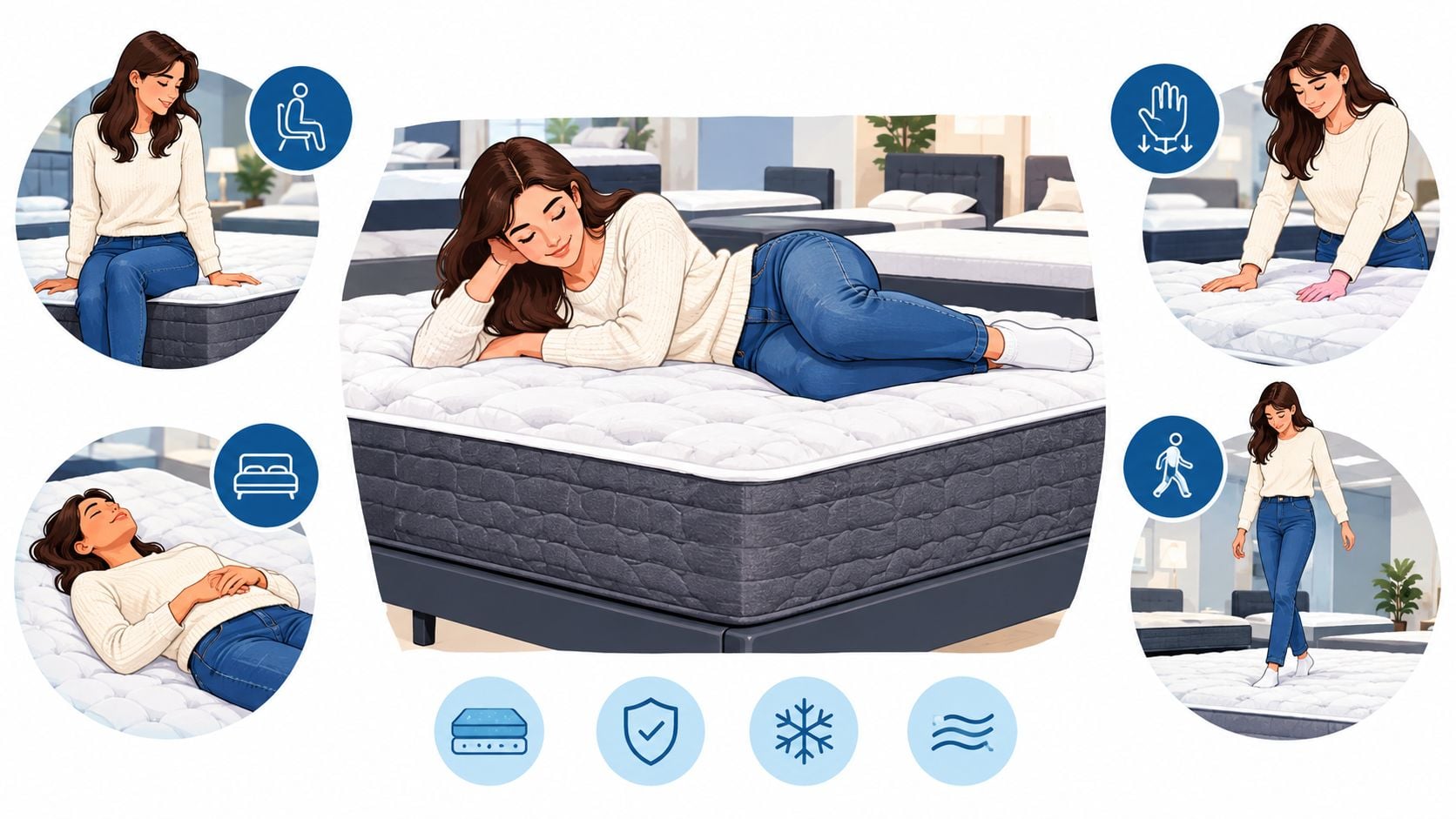
A shopper who tries a mattress only on their back may miss the pressure that shows up on their side. Wear clothes you can move in, bring a pillow similar to yours at home, and test each finalist in your usual sleep position. Groen's showrooms in Dyer and Crown Point give shoppers space to compare options without rushing.
Settle into each mattress for several minutes. Let your shoulder and hip sink, then notice whether pressure builds or your lower back feels unsupported. Ask a companion to check your side-sleeping posture: your neck and back should look reasonably aligned. Roll over and get up, too. If repositioning feels like climbing out of a hollow, keep testing.
Give the perimeter a separate check. Sit on the edge as you would to get dressed, then lie near it. If it compresses sharply, you may lose usable space or feel less secure sitting down. Groen's guide to mattress edge support and usable sleep space explains what to look for.
Couples should test together. Take turns moving while the other lies still, and compare how each mattress responds. A bed that suits one partner but transfers every movement to the other is not a good shared choice. If your comfort preferences differ, test a balanced feel before settling on a compromise.
Keep the visit focused: compare two or three leading options back to back, using the same positions and checks each time. A showroom test can narrow the choice, but it cannot replicate a full night at home. Before buying, confirm the home-trial terms and how a comfort exchange works.
Use the Home Trial to Confirm Your Choice
A mattress can feel comfortable in a showroom and still disappoint after several nights at home. Give your body time to adjust, then judge the bed by how you sleep through ordinary routines. A brief morning record can reveal patterns that a first-night impression misses.
For the first few weeks, jot down what you notice when you wake. Keep the notes short. Couples should track their experiences separately so one person's improvement doesn't mask the other's discomfort.
Record recurring pain or stiffness, how often you wake, whether you feel too warm, and whether a partner's movement disturbs you. Add a quick note about daytime energy. If discomfort fades quickly after getting up, that may mean something different from pain that lingers or worsens.
Sleep problems don't always come from the mattress. A bed that sags or creates pressure may contribute to aches, but persistent pain, numbness, loud snoring, or heavy daytime sleepiness call for advice from a medical or sleep professional. A mattress cannot diagnose or treat an underlying health issue.
Review your notes before the trial period ends, and mark the deadline on your calendar as soon as the mattress arrives. If the bed isn't working, check Groen's mattress return and comfort exchange policy early. That gives you time to understand the available steps and act within the trial window.
Budget, Financing, Warranty, and Delivery

Set your budget around the complete purchase, not just the mattress price. Include a compatible foundation and delivery, then compare the total with how long you expect to use the bed. The lowest-priced option can cost more if it needs early replacement or doesn't work with your frame.
Financing can help spread out the cost, but check the payment schedule, interest, and fees before committing. Review Groen's mattress financing options before visiting, then confirm current terms in the showroom. Choose the mattress that suits your needs first; use financing only if the payments fit your household budget.
Before signing, check the warranty terms. Find out how the company defines a defect, what conditions apply to body impressions, and which foundation the mattress requires. Keep the receipt and follow the care instructions. A warranty covers stated defects, not every change in comfort.
Measure the mattress, frame, doorways, and stairways before delivery day. Confirm who will set up the bed and whether removal of the old mattress is included. White-glove delivery can take care of carrying and setup, but the foundation still needs to meet the mattress's requirements.
Budgeting the full bedroom refresh together can help keep the mattress choice within reach, with financing as a payment tool rather than a reason to spend beyond your means.
Visit Groen's for a Comfort You Can Feel
Reading about firmness only goes so far. Shoulders, hips, and lower backs deliver the verdict, and they need real mattresses under them to do it. A visit to the Dyer or Crown Point showroom lets shoppers run the full testing routine, compare Serta and Beautyrest builds side by side, and ask direct questions about foundations, trials, and delivery before committing.
The Helpful Mattress Guide approach at Groen's keeps the focus on sleep wellness rather than pressure. Knowledgeable guidance, honest pricing, and 5-star service have defined the family business since 1983, and that legacy shows up in practical ways. Shoppers get time to test in their real sleep positions. Couples get room to disagree and work toward a shared fit. Nobody gets rushed toward the hardest bed on the floor.
The surrounding home matters too, and the same visit can cover it. Shoppers can explore Flexsteel durability for the living room, Bassett style for bedrooms, custom Canadel dining made to order, and Amish furniture craftsmanship in solid wood. Design it your way isn't a slogan at Groen's. It's the operating principle behind the custom furniture and interior design services that serve families from Schererville to Munster.
Special financing, subject to credit approval, keeps the right mattress within reach without forcing a compromise on construction. White-glove delivery then handles setup, so the trial period starts on a properly supported bed from night one. Comfortable, lasting, honest, and personal isn't just a tone. It's the standard a Northwest Indiana family business has to meet when neighbors return for the next room, and the next generation after that.
Visit Groen's Fine Furniture in Dyer or Crown Point today to explore custom options and ask about special financing plans. Let the Groen's family help create a home every member of the household loves, starting with a mattress that finally fits the way the household sleeps.
Shoppers ready to test Serta and Beautyrest mattresses in person, compare foundations, and discuss special financing subject to credit approval can visit Groen's Fine Furniture to plan a trip to the Dyer or Crown Point showroom. The Groen's team will guide the testing, explain trial and white-glove delivery details, and help turn a good shortlist into a bed that earns its place every night.