Blog
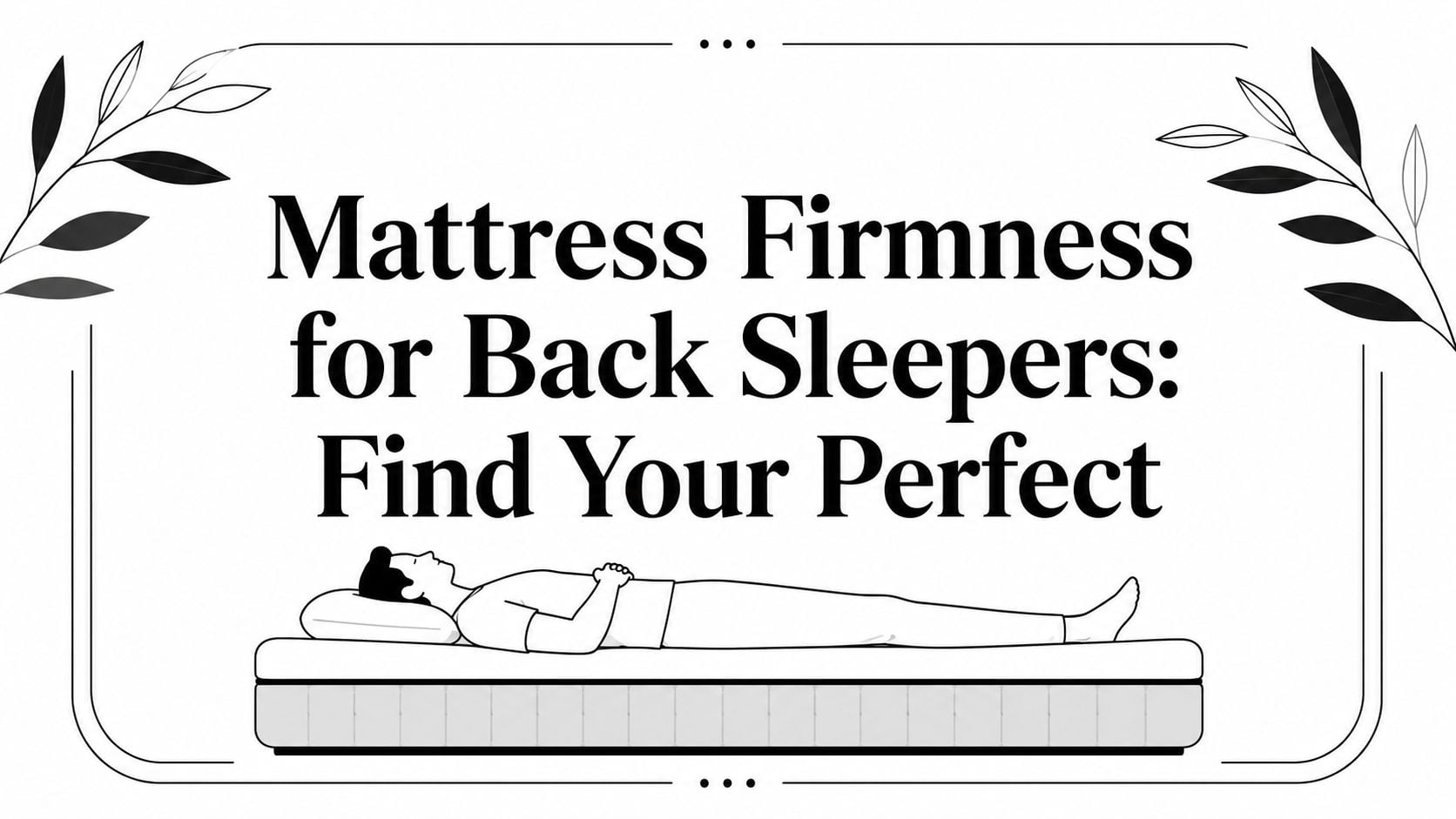
Mattress Firmness for Back Sleepers: Find Your Perfect

A lot of back sleepers across Dyer, Crown Point, St. John, Schererville, and Munster know this feeling. They wake up, swing their feet to the floor, and the lower back complains before the day even starts. The mattress looked fine in the showroom, and it may not even be very old, but sleep still feels more like recovery work than rest.
For many households in Northwest Indiana, the confusion starts with one old idea: a harder bed must be better for an aching back. That sounds sensible, but it often leads shoppers in the wrong direction. Mattress firmness for back sleepers usually works better when it starts with support and balance, not brute hardness. A bed should act like a bridge under the body. It needs enough lift to keep the middle from sagging, but enough give to follow the body's natural curves.
That's where a helpful mattress guide matters. Since 1983, Groen's Fine Furniture has served Northwest Indiana as a family-owned business focused on lasting comfort, honest pricing, and personal guidance. For shoppers trying to sort through firmness labels, foam feels, and body-weight questions, a clear explanation can save a lot of frustration.
Table of Contents
- Waking Up Sore in NWI Your Mattress Might Be the Culprit
- The Goldilocks Zone Understanding Firmness Scales
- Why Your Body Weight Changes the Firmness Equation
- How Foam Hybrid and Innerspring Mattresses Support Back Sleepers
- Our Family's Tips for Your Stress-Free Mattress Hunt
- Find Lasting Comfort at Groens Fine Furniture
Waking Up Sore in NWI Your Mattress Might Be the Culprit
A common local story goes like this. Someone in Crown Point wakes up stiff, stretches in the kitchen, and blames yard work, shoveling, or a long commute. A few mornings later, the same soreness shows up again. Then it becomes clear that the back hurts most after sleep, not after the day's activity.
That pattern matters. A mattress can push the spine out of position for hours at a time. For back sleepers, that usually happens in one of two ways. The hips sink too low and pull the lower back down, or the bed stays so rigid that it doesn't support the natural curve in the lumbar area.
The old “hard bed fixes back pain” advice doesn't hold up well. A survey of 268 people with low back pain found that those sleeping on very hard mattresses had the poorest sleep quality, according to Harvard Health's review of mattress type and low back pain.
Very firm and very soft surfaces can both create problems. Back sleepers usually do better with balanced support.
That's why mattress shopping should start with sleep wellness, not just labels on a price tag. If a mattress has lost support, developed body impressions, or stopped feeling comfortable, it may be time for a replacement. This guide to signs it's time to replace your mattress can help households sort out whether the bed itself is part of the problem.
Some readers may also be sorting through pain that goes beyond the mattress alone. For a broader look at posture, tension, and treatment options, this resource on understanding back pain relief offers useful context.
What often confuses shoppers
People hear “support” and think “hard.” Those aren't the same thing.
A supportive mattress keeps the spine in a neutral line. A hard mattress feels stiff at the surface. For a back sleeper, support should feel like the bed is holding the body evenly, especially under the hips and lower back.
- Too soft: the midsection dips and the lower back strains.
- Too hard: the mattress doesn't contour enough, so pressure builds and the lumbar curve loses contact.
- More balanced: the mattress gently fills in the body's curves while still keeping the hips from dropping.
The Goldilocks Zone Understanding Firmness Scales
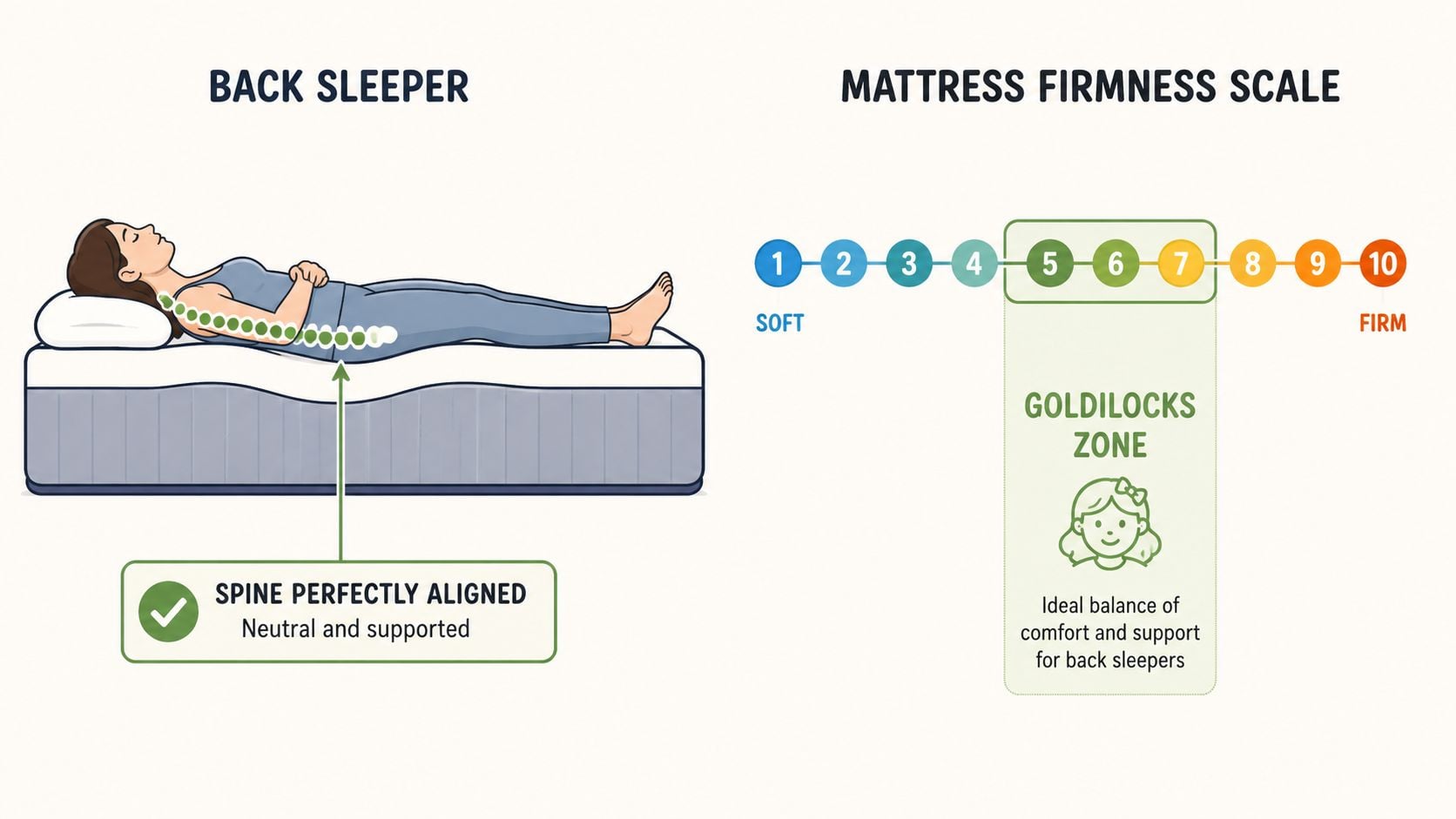
Mattress labels can be slippery. One brand's “firm” may feel like another brand's “medium-firm.” That's why the industry often uses a 1 to 10 firmness scale. Lower numbers feel softer. Higher numbers feel firmer. The useful part isn't the label. It's the relative position on that scale.
For back sleepers, the most reliable starting point sits in the middle. The optimal mattress firmness is medium-firm, typically rated between 5 and 7 on a 10-point scale, because that range helps prevent hip sagging while still contouring enough to support the lumbar area and maintain a neutral spine, as explained in this mattress firmness guide.
Why medium-firm is the usual starting point
The easiest way to picture mattress firmness for back sleepers is to think about a bridge. A strong bridge doesn't collapse in the center, but it also isn't a flat slab with no flex at all. It carries weight and distributes pressure.
A back sleeper needs that same balance. The shoulders and hips are heavier than the waist, so the mattress has to let those areas settle slightly while still keeping the spine from bending out of shape. When the bed lands in that medium-firm range, the body usually gets both lift and contouring.
Practical rule: A back sleeper should feel supported under the hips and gently filled in under the lower back, not suspended above the bed and not swallowed by it.
What the numbers feel like in real life
Here's a simple way to think about the scale:
| Firmness range | What it often feels like for back sleepers | Common result |
|---|---|---|
| Below 5 | Plush and sinky | Hips may drop too far |
| 5 to 7 | Balanced, steady, lightly cushioned | Neutral support for many people |
| Above 7 | Flatter, sturdier, less contouring | Can feel supportive, but may feel too rigid for some |
A mattress around this range often feels “just right,” which is why so many experts point shoppers there first. But “first” doesn't mean “final.” Personal comfort still depends on body shape, body weight, and the mattress build itself. Readers who want a broader overview of how these ratings work can use this mattress firmness guide.
What spinal alignment actually means
“Neutral spinal alignment” sounds technical, but the idea is simple. While lying on the back, the body shouldn't look like a hammock and shouldn't look stiffly propped up either. The neck, mid-back, and hips should rest in a natural line.
If the hips sink lower than the chest, the lower spine bends. If the hips ride too high on a too-firm surface, the mattress can flatten the body's natural curve in the wrong way. The goal is the middle path.
Why Your Body Weight Changes the Firmness Equation
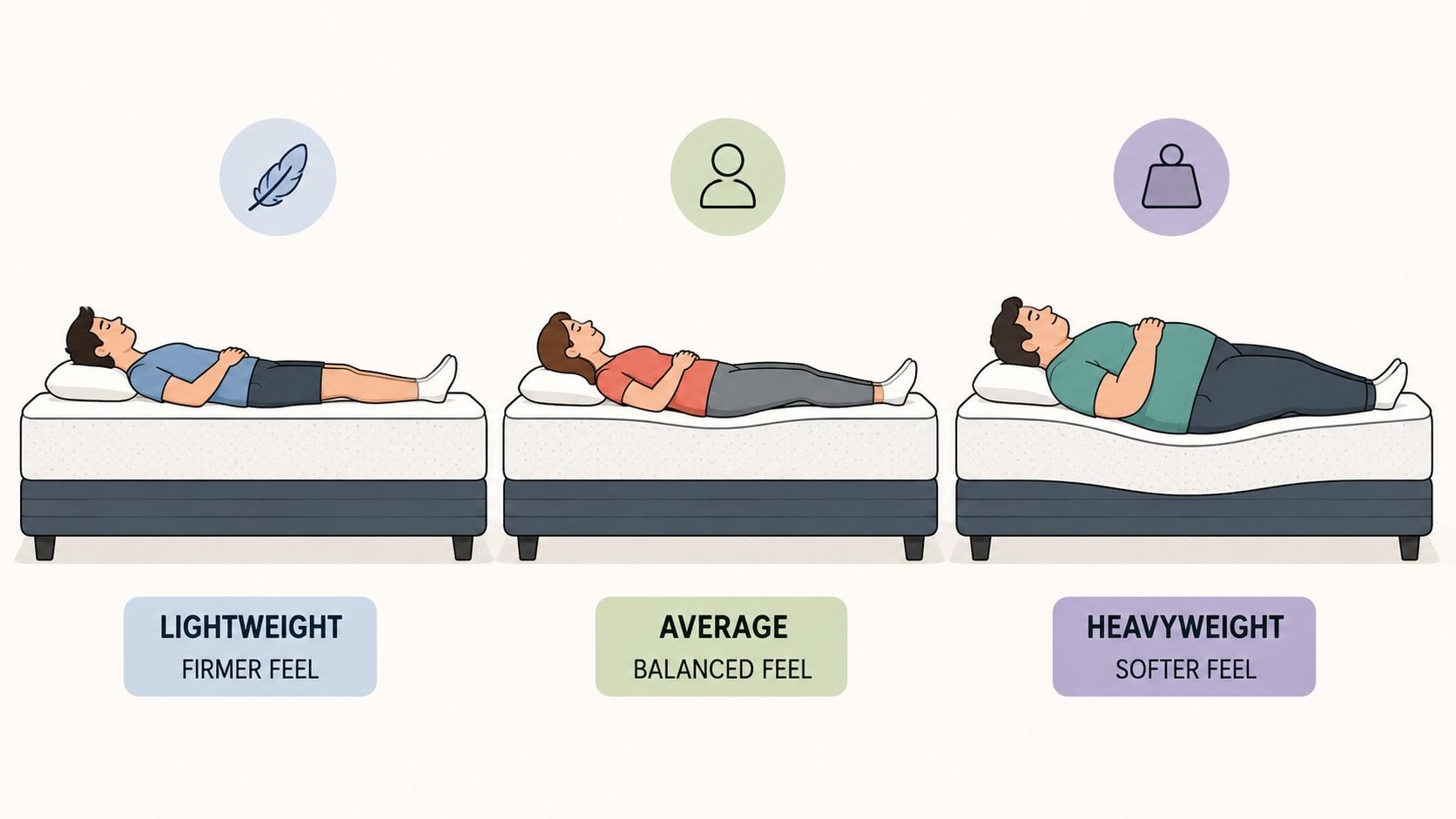
This is the part many mattress guides skip. The same mattress does not feel the same to every person. A mattress rated medium-firm may feel supportive to one sleeper and uncomfortably stiff to another. Body weight changes how far the body engages the comfort layers and support core.
That's why mattress firmness for back sleepers should always include weight. Body weight is a definitive mechanical factor in mattress selection for back sleepers, with studies indicating that individuals weighing over 230 lbs require a mattress with a firmer feel, closer to 7 or higher, and a thicker comfort layer to prevent excessive sinkage and maintain spinal alignment, whereas lighter individuals may find the standard medium-firm 6.5 rating more comfortable, according to this review of current research on spinal health and mattress selection.
Lighter back sleepers
A lighter person may lie on a firm mattress and barely settle into it. The surface can feel flat, almost like resting on top of the bed instead of in it. That often leaves a small gap at the lower back or creates pressure at the shoulders.
For that sleeper, a medium feel near the lower end of the common range may provide better contouring. The bed still needs support, but it also needs enough surface give to meet the body.
Average-weight back sleepers
Many adults land in the middle. For this group, a true medium-firm feel often works as expected. The hips settle a little, the lower back gets support, and the shoulders don't jam upward.
This is why broad guidance so often points here. It's not because everyone is identical. It's because this range tends to give a solid starting point for a large part of the population.
Heavier back sleepers
A heavier sleeper presses deeper into the same mattress. Comfort layers compress more. Support layers work harder. A bed that felt balanced in the showroom can feel softer over a full night of sleep.
For that reason, a firmer feel is often more useful. The key is not a board-like surface. The key is more pushback underneath with enough cushioning on top so the hips stay lifted without creating pressure.
A firmer mattress for a heavier sleeper can feel balanced, not harsh. A medium-firm mattress for a lighter sleeper can feel balanced too. The goal is the same feeling, even if the label changes.
The better question to ask
Instead of asking, “What firmness is best for back sleepers?” a better question is, “What firmness keeps this body level and comfortable?” That shift clears up a lot of confusion.
A helpful next step is matching body type with mattress construction and firmness together. This guide on which mattress is right for your body type can help narrow the search.
How Foam Hybrid and Innerspring Mattresses Support Back Sleepers
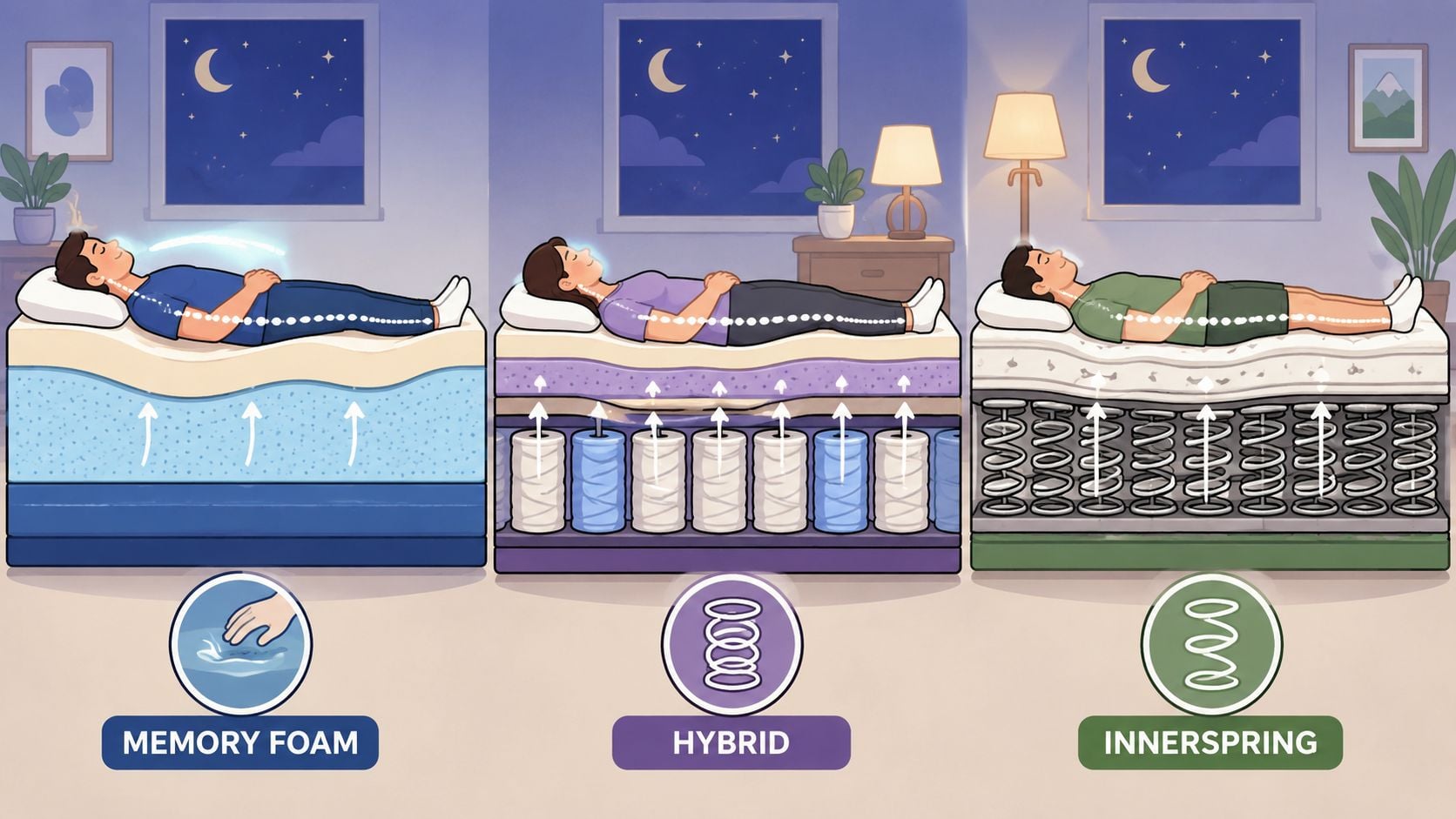
Firmness tells only part of the story. Construction changes how that firmness feels. Two mattresses can both be labeled medium-firm and still behave very differently once a back sleeper lies down.
Memory foam
Memory foam tends to contour more closely to the body. For a back sleeper, that can be helpful when the lower back needs the mattress to “fill in” the curve instead of leaving empty space. The feel is usually more cradling and quieter in response.
The tradeoff is that some people don't like the deeper hug. If the foam is too soft for the sleeper's weight, the hips may sink too much. For that reason, foam works best when the support underneath is strong enough to keep the body level.
Hybrid
A hybrid combines foam comfort layers with a coil support system. For many back sleepers, this creates a useful middle ground. The top cushions pressure points, while the coils add lift and responsiveness under the torso and hips.
This is also where zoned support can matter. Some hybrids are built to feel steadier through the center third of the bed, which can help keep the lumbar area and hips on more even footing. In a showroom, shoppers comparing constructions side by side often notice that a hybrid feels easier to move on than deep foam.
Some back sleepers don't need a firmer label. They need a mattress with better structure under the middle of the body.
Innerspring
Traditional innerspring models usually feel more buoyant and less contouring. A back sleeper who likes a lifted, classic mattress feel may prefer that response. The surface often feels easier to change positions on, and the support can feel straightforward and sturdy.
The caution is comfort at the surface. If an innerspring has too little cushioning on top, it may hold the hips up but fail to support the body's curves. That can make the bed feel flatter than comfortable.
A simple comparison
- Foam: better for sleepers who want more contouring and a closer body fit.
- Hybrid: useful for sleepers who want contouring plus stronger underlying lift.
- Innerspring: often suits sleepers who want a more traditional, buoyant feel.
Some shoppers in Northwest Indiana also want to connect this choice to what's available in-store. In practical terms, options such as Serta and Beautyrest can represent different construction feels, and some retailers, including Groen's Fine Furniture, also carry zoned support models that give back sleepers another way to personalize comfort beyond the firmness label alone. Readers comparing builds in more detail may find this hybrid vs innerspring mattress guide helpful.
Our Family's Tips for Your Stress-Free Mattress Hunt
Once the basics make sense, shopping gets easier. The goal isn't to memorize mattress jargon. The goal is to leave the store knowing how the bed feels under the lower back, hips, and shoulders after several minutes in a real resting position.
Expert testing of 360+ mattresses confirms that a firmness between 6 and 7 out of 10 is the precise threshold for maintaining spinal alignment, while systematic reviews also support intermediate firmness for sleep quality and lower back comfort in the general population, as noted in this Wirecutter review for back sleepers.
How to test a mattress in person
A quick sit on the edge won't tell much. Back sleepers need time on the mattress.
- Lie down the way sleep happens. Rest flat on the back, not propped on elbows.
- Stay there for a few minutes. The body needs a little time to settle into the surface.
- Notice the hips first. If they dip, the bed may be too soft. If they feel perched high, it may be too firm.
- Check the lower back. A small, supported curve usually feels better than a gap.
- Bring a partner if possible. Another set of eyes can sometimes spot whether the body looks level.
Don't forget size and room fit
Comfort includes space. A sleeper may find the right firmness and still end up frustrated if the bed size doesn't fit the room or the household routine. For anyone comparing dimensions before shopping, this reference on twin, full, and king bed sizes can help with planning.
Making quality affordable
Sleep is part of health. That's why budget matters, but so does buying power.
- Special Financing available: For many families, financing helps spread out the investment in a better mattress, subject to credit approval.
- Value over short-term compromise: Choosing a mattress that supports the body well can be more useful than settling for a poor fit that needs replacing too soon.
- White-Glove Delivery matters: A smoother setup can take stress out of a big bedroom purchase.
A little preparation goes a long way. This set of mattress shopping tips can help shoppers walk into the store with a clearer plan.
Find Lasting Comfort at Groens Fine Furniture
The right answer for mattress firmness for back sleepers usually starts in the same place and ends in a more personal one. Medium-firm is the common starting point because it often balances lift and contouring well. After that, body weight and mattress construction shape the final choice.
That's where personal guidance matters. A lighter sleeper may need more cushion than expected. A heavier sleeper may need more support than the label suggests. A hybrid may solve a problem that a foam bed can't, or vice versa. The winning mattress is the one that keeps the body level, supports the lumbar curve, and feels comfortable enough to sleep on night after night.
For households across Dyer, Crown Point, and the wider Northwest Indiana community, shopping local still makes a difference. Multigenerational ownership, honest pricing, and 5-star service create a very different experience from a rushed, one-size-fits-all sales floor. The same idea shows up across the home, too. Whether someone is shopping for a mattress, exploring Bassett style, looking for Flexsteel durability, or planning bespoke Canadel dining and Amish solid wood pieces, customization is often the difference between something that works for now and something that fits for years.
The best mattress for a back sleeper isn't the hardest one in the room. It's the one that keeps the spine supported and the sleeper comfortable.
Visit Groen's Fine Furniture in Dyer or Crown Point today to explore custom options, test drive mattress comfort in person, and ask about special financing plans. Let their family help create a home that feels comfortable, lasting, and personal for every room.