Blog
Your Mattress Purchase Guide: Find Your Perfect Sleep

A lot of Northwest Indiana families reach the same point the same way. Someone starts waking up stiff. A partner notices more tossing and turning. A mattress that once felt fine now feels like something to “just put up with” until one more restless night turns that delay into a Saturday shopping trip.
That trip can get confusing fast. Online listings make every bed sound perfect. Big stores stack rows of mattresses under bright lights and expect shoppers to decide in a few minutes. Shoppers don't need more jargon. They need an honest mattress purchase guide that helps them sort comfort, support, size, delivery, and long-term value without pressure.
For families in Dyer, Crown Point, St. John, Schererville, Munster, and across NWI, the local advantage is simple. A mattress is personal, and personal purchases are easier when real people can answer questions, let shoppers slow down, and encourage them to test comfort the right way.

Table of Contents
- Your Journey to Better Sleep Starts in Northwest Indiana
- Decoding Mattress Types and Materials
- How Your Sleep Position Determines Your Perfect Firmness
- The Groens Guide to Testing a Mattress In-Store
- Getting the Right Size and Enjoying White-Glove Delivery
- Investing in Sleep Custom Orders and Special Financing
- Let Our Family Help Your Family Rest Easier
Your Journey to Better Sleep Starts in Northwest Indiana
A mattress purchase usually begins long before anyone walks into a store. It starts when a family in Crown Point realizes the guest room bed feels better than the primary bedroom mattress. It starts when someone in Dyer wakes up with sore shoulders and wonders whether the problem is stress, posture, or the bed itself. It starts with small clues that add up.
That's why a helpful mattress purchase guide shouldn't begin with brand hype. It should begin with people's real sleep habits. Some sleepers curl on their side. Some stretch out flat on their back. Some run warm. Some share the bed with a partner, a child on stormy nights, or a dog that somehow claims the center spot.
For local shoppers, the process gets easier when they can compare options face to face and ask plain questions. A family-owned store can slow the process down in a way a screen can't. There's room to notice how a mattress feels under the shoulders, whether edge support matters, and whether a bed seems comfortable for ten minutes but questionable for every night after that.
Buying a mattress isn't about picking the model with the flashiest label. It's about finding the sleep surface that fits the body using it.
Families who want to start with a local overview can browse top-rated mattress stores near Northwest Indiana shoppers before stepping into a showroom. That early research helps narrow the field, but true confidence comes from trying beds in person and paying attention to how the body responds.
A local decision with long-term impact
A mattress isn't a quick impulse purchase. It becomes part of daily health, routine, and comfort. Good sleep affects patience, concentration, and how the body feels the next morning. That's why neighborly guidance matters.
Since 1983, multigenerational service has meant helping local households think beyond a quick sale. The better question isn't “What's popular?” It's “What helps this sleeper rest better night after night?”
Decoding Mattress Types and Materials
Mattress shopping gets easier when shoppers stop trying to memorize product names and focus on feel. Shoppers can sort their choices faster by asking three practical questions. Does the bed feel bouncy or contouring? Does it feel easy to move on? Does it feel balanced?
How each mattress type feels
Innerspring mattresses are the traditional choice many people recognize right away. They usually feel more responsive and easier to move across. Sleepers who don't like the “hug” of foam often start here.
Memory foam has a more contouring feel. It tends to cradle the body more closely, which many side sleepers appreciate around the shoulders and hips. Couples often like that it can soften the feeling of movement from the other side of the bed.
Hybrid mattresses combine coil support with comfort layers on top. For many shoppers, that creates a middle ground. They get some contouring without losing the underlying support and responsiveness that coils provide.
Trusted names such as Serta and Beautyrest often appear across these categories, which is helpful because shoppers can compare different feels without having to relearn the whole market each time. Anyone who wants a broader plain-language primer can also review Bedhead University's mattress types, which gives a simple overview of the main constructions.
Practical rule: If a shopper can't describe how a mattress feels in everyday words, it's too early to buy it.
Some shoppers also hear “hybrid” so often that the term starts to lose meaning. A short guide on what a hybrid mattress is can help clear that up before a showroom visit.
Mattress Type Comparison
| Mattress Type | Primary Feel | Best For Sleepers Who… | Key Benefit |
|---|---|---|---|
| Innerspring | Responsive, supportive | Prefer a more traditional surface and easier movement | Steady support with a familiar feel |
| Memory Foam | Contouring, pressure-relieving | Want more body-hugging comfort and gentler cushioning | Pressure relief and reduced motion feel |
| Hybrid | Balanced | Want support from coils with added comfort on top | Blend of support and cushioning |
Materials matter, but only after feel
Many shoppers get tripped up here. They assume more layers, fancier names, or technical wording automatically means better sleep. Usually, those details only matter after the shopper knows what general feel they prefer.
A simple example helps. One person may lie on a foam bed and say it feels calming and cushioned. Another may say it feels hard to turn over on. Neither person is wrong. They're describing how their body interacts with the material.
That's why the first goal isn't picking the “best” mattress type. It's picking the best starting point. Once that's clear, firmness, size, and budget become much easier decisions.
How Your Sleep Position Determines Your Perfect Firmness
A mattress can be made from the right material and still feel wrong if the firmness doesn't match the way someone sleeps. This is one of the biggest reasons people buy a bed that seemed fine in the showroom but disappoints later.
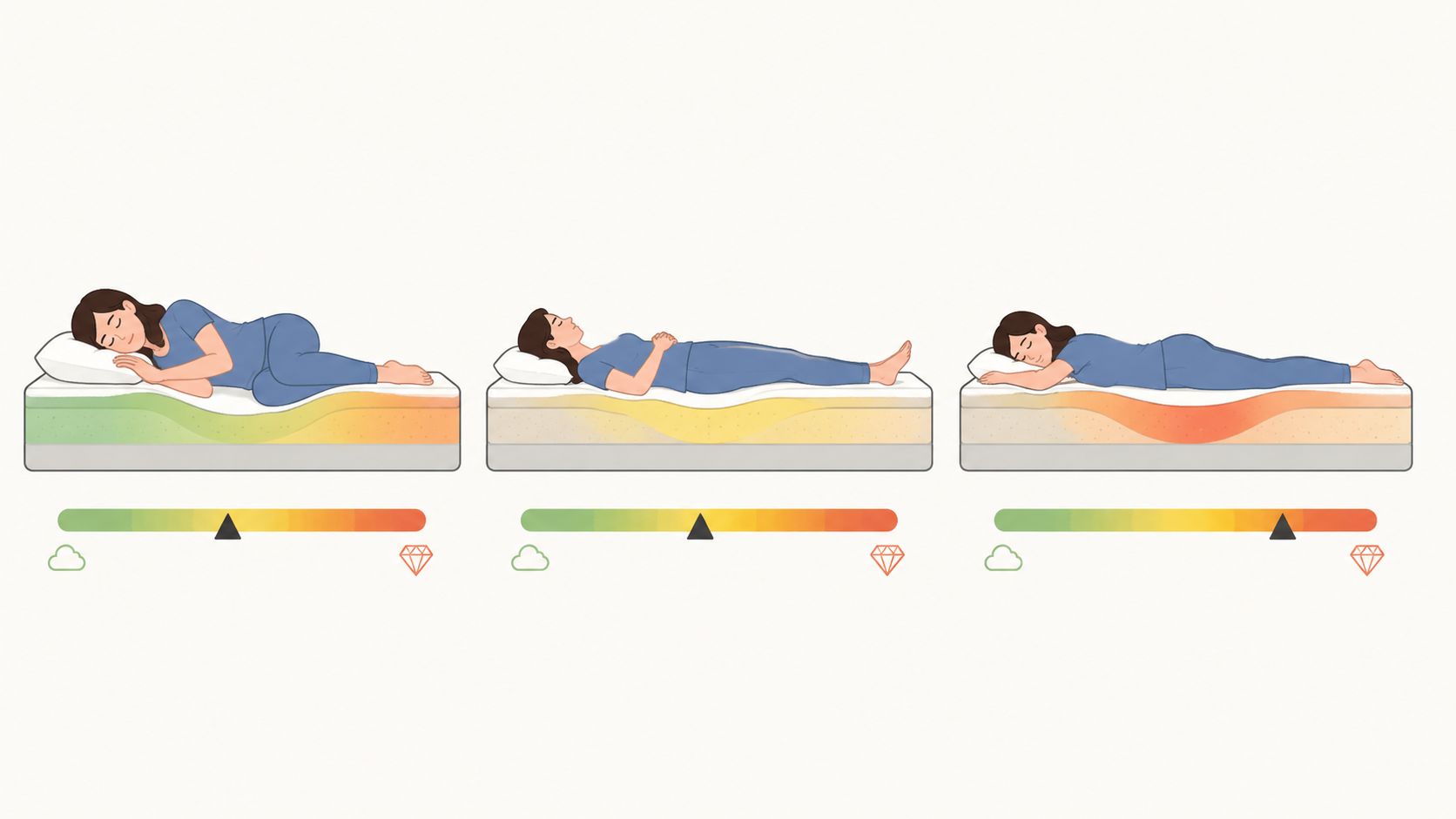
What side back and stomach sleepers usually need
Side sleepers usually need more cushioning at the shoulders and hips. If the bed feels too firm, those pressure points can build up fast. A surface with more give often helps the body settle more naturally.
Back sleepers often do well with a feel that balances comfort and support. The body usually needs enough cushioning to feel relaxed, but not so much that the midsection drops out of alignment.
Stomach sleepers often need a firmer, steadier surface. Too much sink under the middle of the body can leave the lower back feeling strained by morning.
People who move between positions can treat their most common position as the starting point. If they're all over the bed at night, a balanced feel often makes the most sense.
Why firmness is about posture not pride
Some shoppers still think “firm” means better quality or better support. That isn't how the body works. A mattress that's too firm for a side sleeper can feel as uncomfortable as one that's too soft for a stomach sleeper.
The better question is whether the mattress helps the spine rest in a more natural position. Comfort and support aren't opposites. They work together.
A useful next step is learning how different comfort levels line up with sleep habits. This guide to choosing the right mattress firmness can help shoppers narrow things down before trying beds in person.
If a mattress only feels good for one sleeping position, it may not be the right fit for someone who changes positions through the night.
A quick showroom test makes this easier to spot. A side sleeper should pay attention to the shoulder and hip. A back sleeper should notice whether the lower back feels supported. A stomach sleeper should notice whether the midsection feels level instead of bowed downward.
The Groens Guide to Testing a Mattress In-Store
In-person testing still matters because comfort can't be judged from a label, a thumbnail image, or a list of materials. According to NapLab's mattress buying guide FAQ, 86% of sleepers identify comfort as a critically important factor, and Consumer Reports recommends spending at least 10 minutes on each mattress being seriously considered. That advice lines up with what careful shoppers discover for themselves. A quick sit on the edge doesn't tell the whole story.
How to test a mattress like it is actually bedtime
A showroom visit works best when shoppers treat it less like browsing and more like a real test drive.
- Wear easy clothing: Stiff jeans, belts, bulky coats, and heavy boots can distract from what the mattress feels like.
- Lie in the usual sleep position: A side sleeper should test on the side. A back sleeper should test on the back. The body needs a little time to settle.
- Stay there long enough: Rushing creates false confidence. Pressure points and posture issues often show up only after a few minutes.
- Compare, then revisit: The first mattress that feels good may not stay the favorite after a second or third comparison.
What a good showroom visit should feel like
A calm showroom experience should never feel like a quiz or a race. It should feel like a guided process. The shopper notices. The salesperson listens. Questions get answered in plain language.
That's one major difference between trying a mattress locally and guessing from a box delivered to the porch. Online shopping can be convenient, but a bed still has to fit the person sleeping on it. Hands-on testing helps people catch details they might miss otherwise, such as whether the edge feels stable, whether turning feels easy, or whether the comfort layer feels supportive instead of slippery or overly soft.
A mattress should be tested the way it will be used. Not perched on, not patted with a hand, and not judged in sixty seconds.
Getting the Right Size and Enjoying White-Glove Delivery
Even the right mattress can become the wrong purchase if it doesn't fit the room, the bed frame, or the path into the home. Practical details matter.
Measure before anyone lifts a mattress
Before shopping, measure the bedroom and think through how the bed will live in the space. Will nightstands still fit comfortably? Is there enough walking room around the bed? Will a larger size crowd a dresser or door swing?
For reference, The Mattress Factory's buying guide notes that a queen mattress measures 60 inches by 80 inches and a king measures 76 inches by 80 inches. The same guide also reminds shoppers that manufacturer warranties typically cover defects, not comfort preferences, which is one more reason the first choice needs to be made carefully.
A room-size guide on choosing the best bed mattress size for your home can help families think through space, partner sleeping room, and layout before delivery day.
Here's a simple checklist to use before buying:
- Room fit: Make sure the mattress leaves usable floor space.
- Frame match: Confirm the current bed frame or foundation supports the new mattress properly.
- Pathway clearance: Check stairs, corners, entry doors, and hallway turns.
- Sleeping habits: Think about pets, kids, and partners who change how much room feels comfortable.
Why delivery service matters more than most people think
A mattress purchase doesn't end when the receipt prints. It ends when the bed is placed correctly, set up properly, and ready to sleep on.
White-glove delivery matters because it removes the awkward part of the process. Families don't have to wrestle a mattress through a narrow hallway, protect stair railings, or figure out setup on the fly. Professional setup also reduces the chances of damage to the product or the home.
For busy households in Munster, St. John, Schererville, Dyer, and Crown Point, that service turns a major purchase into a smoother transition instead of an all-day project.
Investing in Sleep Custom Orders and Special Financing
A mattress purchase guide should talk frankly about money. Not just price tags, but value over time. The wrong budget decision usually happens in one of two ways. A shopper buys the least expensive option and ends up replacing it sooner than expected, or pays for premium features that don't improve sleep in any meaningful way.
Where value usually lives
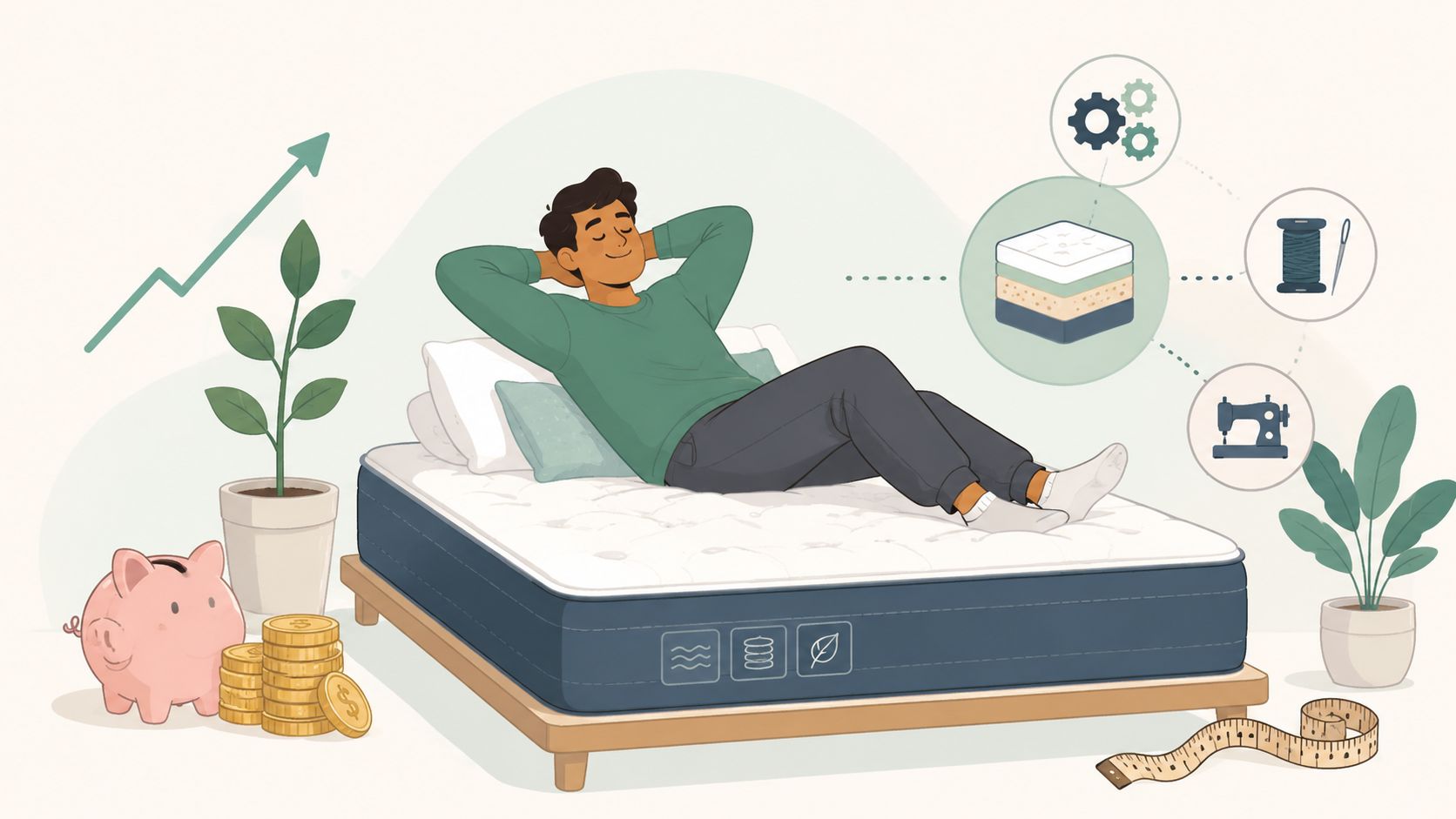
NapLab's guide on how to choose a mattress says mattresses under $1,000 often lack durability, while spending over $3,000 rarely provides additional sleep benefits. That leaves an important takeaway for families trying to buy wisely. Long-term value often lives in the middle.
That middle range is where many shoppers find a mattress with the comfort they want, the support they need, and the build quality that makes the purchase feel sensible over time.
Worth remembering: The goal isn't to spend the most. It's to avoid paying twice, once for a mattress that wears out too fast and again for the replacement.
This is also where Special Financing can help. Instead of settling for a lower-quality option because of the timing of the purchase, financing can create more buying power and let the shopper choose the mattress that fits their needs. One practical place to review options is Groen's Fine Furniture mattress financing plans, which outline payment flexibility subject to credit approval.
Design it your way without settling
A bedroom works better when the mattress and the furniture around it support the same goal. That's where custom thinking matters. A family might want a particular mattress feel but also need a bed frame at a certain height, a style that fits existing furniture, or a stronger solid-wood foundation that's made to last.
Custom order services make that possible. Shoppers don't have to settle for a one-size-fits-all bedroom setup. They can pair a new mattress with a bespoke bed, explore Amish solid wood craftsmanship, or coordinate the look with the rest of the room in a way that feels intentional.
Service matters here too. Anyone curious about how premium setup works in other industries can see the basic standard through this overview of premium medical equipment delivery. The product category is different, but the principle is familiar. Large, important items deserve careful handling, respectful setup, and a smoother handoff into daily life.
Let Our Family Help Your Family Rest Easier
The right mattress rarely reveals itself through marketing language alone. It shows up when a shopper understands the main mattress types, matches firmness to sleep position, tests comfort patiently, measures the room correctly, and thinks about value over the years ahead.
That kind of buying process is slower than clicking “add to cart,” but it's usually smarter. It respects the fact that sleep affects the whole household. Better rest can mean calmer mornings, less discomfort, and a bedroom that feels like a refuge instead of a frustration.
For families across Northwest Indiana, local service still carries real weight. Multigenerational ownership, five-star service, and honest guidance create a different kind of shopping experience. There's room for questions. There's room for second thoughts. There's room to test drive comfort without feeling rushed.
That family-first mindset matters beyond furniture too. The broader idea behind the importance of supporting families is simple. Homes work better when the people in them feel cared for, supported, and set up for daily life.
A mattress purchase guide should leave shoppers feeling clearer, not more overwhelmed. With the right guidance, they can choose a mattress that supports real sleep wellness and a bedroom setup that fits their home for years to come.
Visit Groen's Fine Furniture in Dyer or Crown Point today to test drive the comfort in person, explore custom options such as Amish solid wood bedroom pieces and other made-to-order furnishings, and ask about special financing plans. Let our family help your family create a home in Northwest Indiana that feels comfortable, lasting, and personal.