Blog
Living Room Furniture for TV: NWI Guide 2026

A lot of homeowners in Dyer, Crown Point, and across Northwest Indiana run into the same problem. A new TV comes home, the picture looks great, and then the old stand suddenly looks too small, too tall, or too flimsy for the room. The screen may fit physically, but the whole space feels off.
That mismatch usually isn't about taste alone. TV furniture has to do several jobs at once. It needs to support the screen, make viewing comfortable, manage cords and components, and still feel like part of a warm family room instead of a tech corner. For many households, that's where the search for the right living room furniture for TV starts to feel confusing.
Families also have more to balance now. Open layouts, bigger sectionals, soundbars, gaming devices, and mixed seating heights all change what works. A helpful place to start is this sofa and television placement calculator, which gives a clearer picture of how the screen and seating should relate in the room. For anyone refining sofa comfort at the same time, this expert guide to sectional comfort offers useful context about how seat depth and support affect long viewing sessions.
The room below captures that familiar moment when a TV setup is almost there, but not quite working yet.
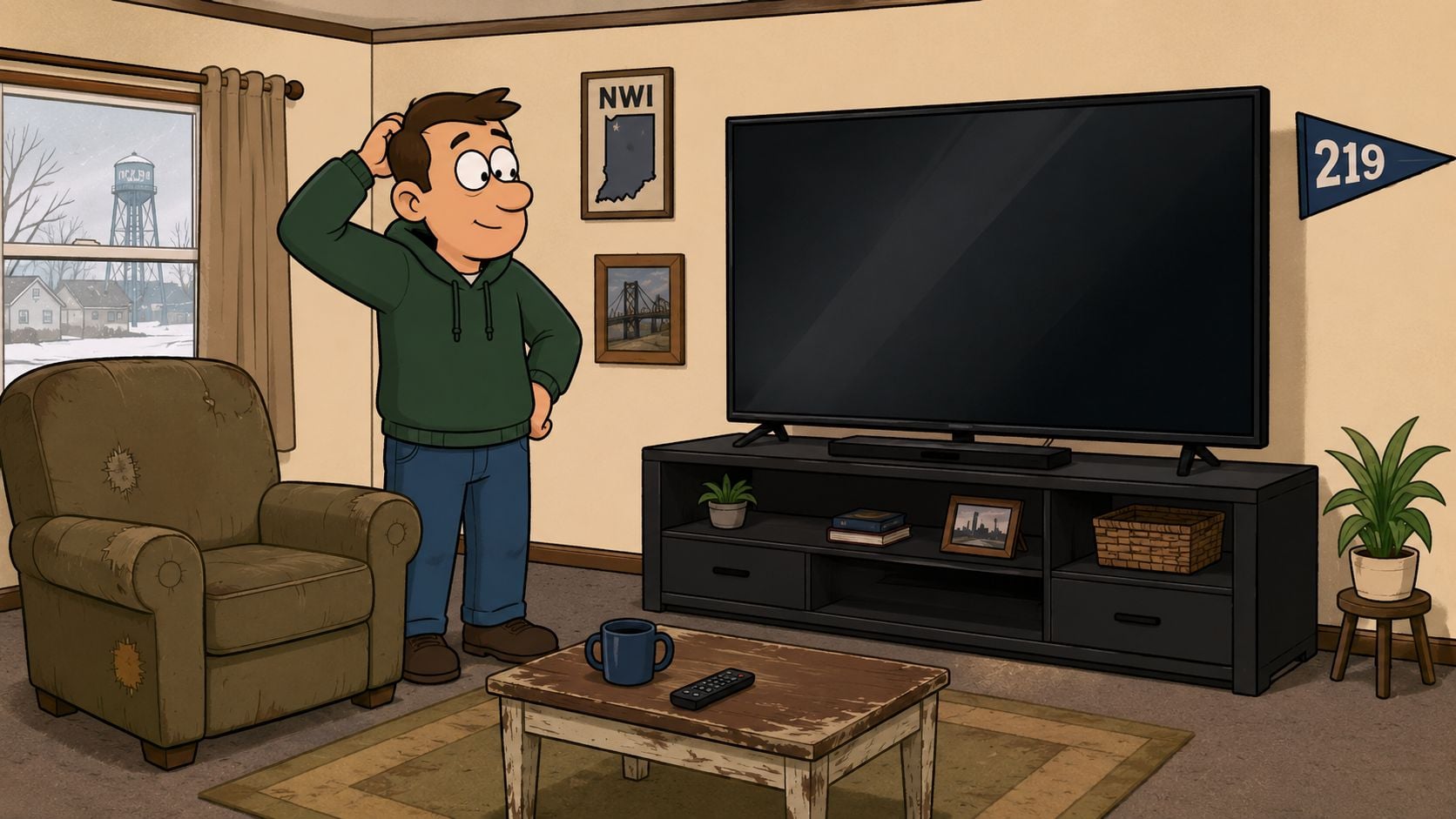
Good TV furniture isn't just decoration. It's part comfort science, part room planning, and part everyday practicality. With the right measurements and the right furniture type, a living room can feel calmer, cleaner, and much easier to live in.
Table of Contents
- Creating the Perfect TV Hub for Your NWI Home
- Getting the Measurements Right for Perfect Viewing
- Choosing Your Style Media Consoles Entertainment Centers and More
- Smart Storage and Stylish TV Placement
- Custom Furniture for a Look Thats Uniquely Yours
- Bringing Your Vision Home with Groens Fine Furniture
Creating the Perfect TV Hub for Your NWI Home
A TV area works best when it feels anchored. In many Northwest Indiana homes, that means more than sliding a screen onto the nearest cabinet. The furniture has to fit the scale of the room, work with the seating, and support how the household spends time together.
A family in Schererville might need hidden storage for remotes, game controllers, and streaming devices. A homeowner in St. John might want a lower-profile piece that keeps the wall from feeling heavy. A couple updating an older family room in Munster may discover that the furniture that held a deeper television years ago doesn't suit a thinner, wider screen today.
The TV wall often becomes the room's center of gravity
The reason this decision matters so much is simple. Once the TV goes in, the seating, side tables, lamps, and traffic paths all start to respond to it. The console or entertainment piece becomes a visual base for the entire conversation area.
A good TV setup should feel intentional even when the screen is off.
That doesn't mean every room has to look formal. It means the furniture should create order. When the console is properly scaled and the seating is arranged with comfort in mind, the whole room feels more settled.
Family rooms need both softness and structure
Television furniture sits at an interesting crossroads. It has to support technology, but it also has to live alongside softer pieces like sectionals, recliners, and accent chairs. That's why the most satisfying rooms usually combine a stable media piece with seating that suits everyday habits.
A household that watches movies together every weekend may lean toward a deep sectional and a wider console. A smaller living room may call for a compact cabinet paired with a loveseat and swivel chair. The right answer depends less on trends and more on how the room is used at night, on weekends, and when guests stop by.
A thoughtful setup usually includes these priorities:
- Comfort first: The room should support relaxed viewing without forcing anyone to crane their neck or sit awkwardly.
- Visual balance: The TV and furniture should look proportionate to each other and to the sofa.
- Real storage: Modern media areas need space for more than a screen.
- Long-term fit: The room should still work when accessories change or the household adds new components.
For families shopping for living room furniture for TV, the most helpful mindset is to treat the area as a hub, not a single purchase. Once that shift happens, better decisions come much more easily.
Getting the Measurements Right for Perfect Viewing
A common Northwest Indiana living room problem goes like this. The new TV arrives, the console looks good in the showroom, and then at home the screen feels a little too wide for the cabinet, the sofa sits closer than expected, and everyone notices stiff necks by the end of movie night. Good measurements fix that before style ever gets involved.
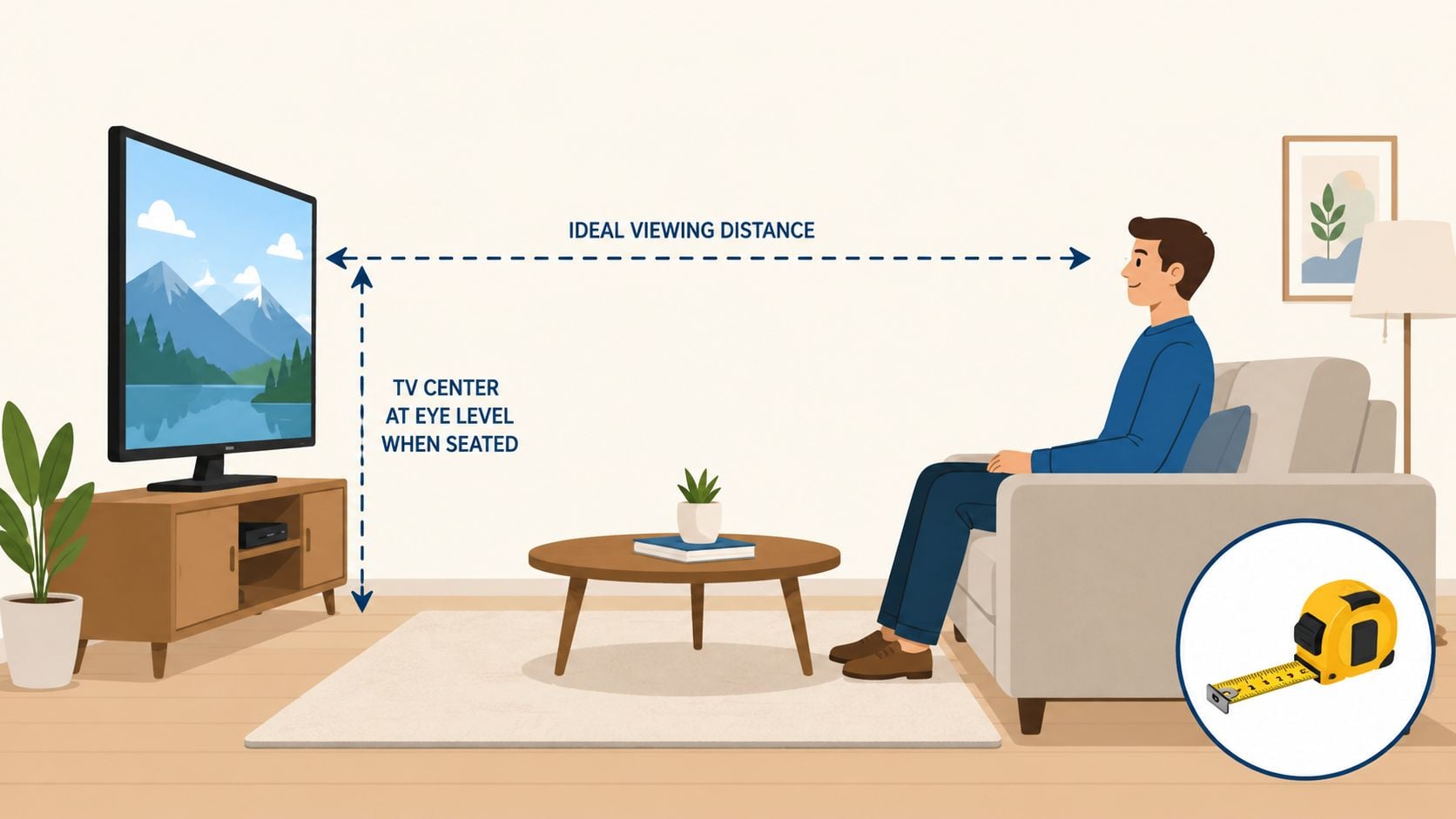
For anyone sketching a room before moving heavy pieces, a find your ideal floor plan app can help you test spacing on a screen first. It also pairs well with this practical guide on how to measure furniture for your room and doorways, especially when wall width, traffic paths, and seating depth all need to work together.
Start with the TV's Actual Width
TVs are sold by diagonal screen size, but consoles are chosen by width. That is where many shoppers get tripped up. A 65-inch TV sounds like it should fit almost anywhere labeled for a large screen, yet the cabinet still needs enough side-to-side space to look steady and feel proportionate.
A good rule is simple. Choose a stand or media console that is wider than the TV itself, with a few inches of space on both sides. The effect is similar to hanging artwork in a frame that fits properly. If the border is too tight, the whole piece feels cramped. If the console has a little breathing room, the setup looks calmer and more intentional.
That extra width helps in practical ways too:
- Better visual balance: The TV looks grounded instead of perched.
- More usable surface space: There is room for a soundbar, remotes, or a small lamp.
- Safer everyday use: The screen is less likely to sit close to the cabinet edge.
For local homeowners, this is also the point where custom sizing can save a room. If your wall is an unusual width, or you need the cabinet to fit between windows, custom-order options from lines such as Flexsteel and Bassett, along with Amish-built pieces, can solve a problem that standard sizes often leave behind.
Use viewing distance to place the sofa
After the console width makes sense, the next question is where people will sit. Viewing distance works like the spacing around a dining table. Too tight, and the experience feels cramped. Too far away, and details get lost.
General home-viewing guidance from RTINGS on TV size to distance suggests matching screen size and seating distance so the picture feels comfortable rather than overwhelming. That means the sofa should be placed with the screen in mind, not automatically pushed against the only open wall.
A few examples make this easier to picture:
| TV size example | Common viewing distance guidance |
|---|---|
| 55-inch TV | Often around 7.5 feet |
| 65-inch TV | Often around 9 feet |
| 75-inch TV | Often around 10.5 feet |
Those numbers are starting points, not rigid rules. A household that watches sports may like a slightly closer feel. A long, narrow room may call for a different arrangement. The key is to build the seating plan around comfort first, then fine-tune with side chairs, ottomans, or a sectional shape that fits the room.
This is especially helpful in NWI homes where room sizes vary a lot, from compact ranch layouts to larger family rooms with open-concept flow. If the ideal distance does not line up with an in-stock piece, a custom media cabinet or a different sofa depth can bring the room back into balance without forcing a compromise.
Choose height for neck comfort
Height is the quiet troublemaker. A setup can look centered on the wall and still feel wrong after one full evening of watching.
For ergonomics, dimensions.com's TV stand and media console reference shows why lower stand heights are so common. The center of the screen usually feels best when it lands close to seated eye level. In plain terms, your eyes should meet the middle of the picture without much upward tilt.
A simple at-home check works well:
- Sit in the seat used most often.
- Measure from the floor to your eyes.
- Estimate the center point of the TV.
- Choose a stand height that brings those two points close together.
That is why low consoles often feel better in rooms with deep sectionals, while a taller cabinet may suit more upright seating. There is no one perfect number for every home. The right height depends on the people using the room, the sofa they sit on, and the way the TV hub needs to function day after day.
If budget is part of the decision, this is also where it helps to plan the whole setup at once instead of buying piece by piece. Many families in Northwest Indiana find it easier to get the right console, seating, and storage together by using special financing, especially when a custom order will give the room a better long-term fit.
Choosing Your Style Media Consoles Entertainment Centers and More
Once the measurements are handled, the style decision gets easier. The right furniture type depends on what the household wants the room to do. Some homes need calm and simplicity. Others need storage, display space, and a stronger visual anchor.
This comparison helps narrow the choices.
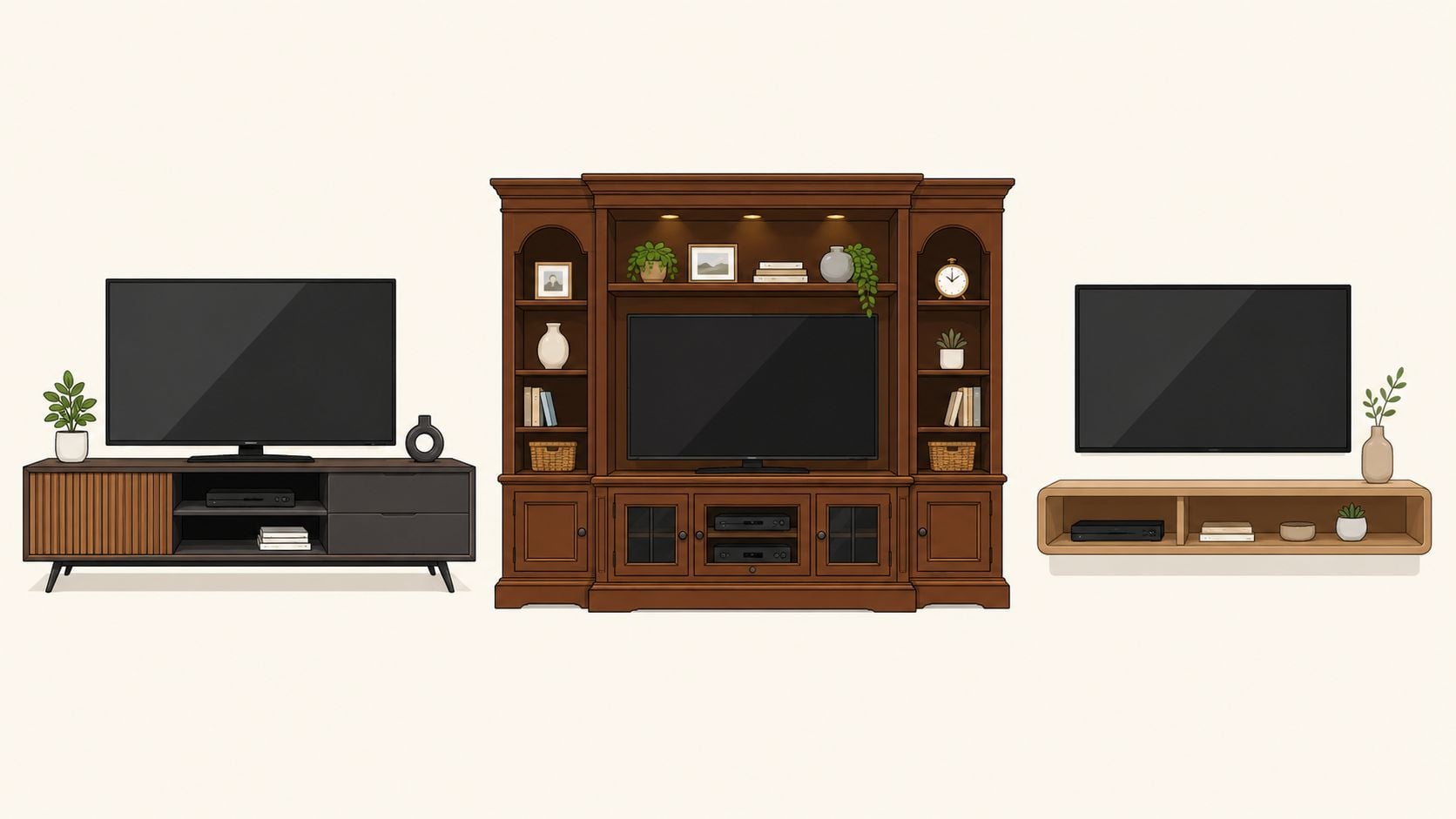
A helpful companion for this stage is this article on how to shop for TV stands, which walks through material, scale, and function in practical terms.
Low consoles for a clean modern look
A low media console suits rooms where the TV should feel integrated rather than dominant. These pieces usually create a longer horizontal line, which helps the wall feel broader and calmer. They work especially well with modern upholstery, clean-lined sectionals, and open sightlines.
Style-focused collections can make sense for households that want a refined look without a lot of visual weight. A Bassett-inspired approach, for example, often fits homeowners who want precise lines and a polished finish while keeping the room livable.
Low consoles tend to work well when the room needs:
- A lighter visual footprint: The furniture doesn't crowd the wall.
- Better screen height control: Lower pieces often support more comfortable viewing.
- A modern profile: Clean shapes help the technology blend into the room.
Storage heavy pieces for busy family rooms
Some households need the TV furniture to carry more of the workload. In those rooms, a larger entertainment center, cabinet-style console, or credenza can be the smarter answer. These pieces help contain the visual clutter that builds up around media use.
A family with children may need doors that hide devices and bins. A sports-focused household may want shelf space for speakers and components. A gamer may need ventilation and cable access more than open display shelving.
Here's a quick side-by-side comparison:
| Furniture type | Best fit | Possible tradeoff |
|---|---|---|
| Low media console | Clean look, modern rooms, lower screen placement | Less concealed storage |
| Entertainment center | Maximum storage, stronger visual anchor | Can feel heavier in smaller rooms |
| Credenza or cabinet-style piece | Hidden storage, tidy appearance | May need careful sizing for accessories |
Furniture that defines an open-plan TV zone
Open layouts create a different challenge. In many newer homes, the living room shares space with the kitchen or dining area, so the TV wall isn't the only thing people see. Existing advice often focuses on eye level and sofa spacing, yet fewer sources address how one TV works when sightlines overlap with windows and nearby zones. A useful approach is using furniture to define the TV area within the open-plan space, as noted in this living room TV placement guide.
That idea matters because not every room benefits from the biggest possible console. Sometimes a lower storage piece, paired with a sectional that subtly frames the seating area, does more for the room than a tall wall unit would.
In an open-plan home, the best TV furniture often acts like a quiet boundary instead of a hard divider.
That can mean a console with a strong horizontal presence, a rug that establishes the seating zone, or chairs angled to support conversation and viewing at the same time. For living room furniture for TV in shared spaces, the winning choice is often the one that organizes the room without closing it off.
Smart Storage and Stylish TV Placement
Good TV furniture has to earn its place every day. It isn't just there to hold a screen. It needs to solve the awkward details people notice after move-in, like where the soundbar goes, how cords disappear, and why the room still feels strained even though everything matches.
One of the most common design traps is choosing a setup that looks balanced from the doorway but feels uncomfortable from the sofa. A useful insight from current placement advice is that a visually balanced room can still be ergonomically poor if the furniture pushes the TV too high or the seating too far back. That's why the smarter purchase is often a setup built around viewing height and distance first, style second, as discussed in this TV placement challenges article.
When the fireplace wall creates problems
A fireplace wall often seems like the obvious place for a television. Sometimes it works. Often it doesn't. The challenge isn't only appearance. It's neck position.
If the TV sits too high, the room may still look symmetrical, but long viewing sessions become tiring. That's especially true in family rooms where people watch for hours at a time rather than just turning on the news for a few minutes.
A better approach may be:
- Choose a nearby wall: Let the fireplace remain one focal point and the TV area become another.
- Use lower furniture: A properly scaled console can restore more comfortable sightlines.
- Float seating if needed: The sofa doesn't always need to hug a wall to make the room work.
What the furniture should handle every day
Storage needs around a TV area are rarely glamorous, but they shape whether the room feels peaceful or chaotic. A cabinet that lacks ventilation can make electronics harder to manage. An open shelf without cord planning can make the whole setup look unfinished.
A dedicated piece such as a living room storage cabinet can help support the broader room, even if the main console stays visually simple.
A useful checklist includes:
- Cable pathways: Openings in the back or interior channels make cords easier to route cleanly.
- Ventilation room: Devices need space around them rather than being packed tightly into enclosed compartments.
- Soundbar clearance: The top and interior layout should account for audio equipment, not just the television.
- Hidden storage: Doors and drawers can calm the visual noise of remotes, accessories, and manuals.
How to make the TV feel less dominant
Some homeowners don't mind a visible screen. Others want it to fade into the room when it's off. Furniture can help with that.
Pieces with a warm wood finish soften the black rectangle effect. Lower profiles keep the wall from feeling top-heavy. Styling with lamps, books, framed art, or balanced accessories around the console can make the TV feel like one element in a larger composition instead of the only thing in the room.
The room should still feel welcoming when nobody's watching anything.
That's the ultimate test. When living room furniture for TV is doing its job well, the area works for movie night, everyday family life, and quiet afternoons when the screen stays dark.
Custom Furniture for a Look Thats Uniquely Yours
A TV area can look close to right and still feel wrong in daily use. The cabinet may be two inches too narrow for the wall, the stain may fight the floor, or the drawers may be missing where the family needs them. Custom furniture becomes a practical solution when those small mismatches keep adding up.
Made-to-order planning helps you shape the piece around the room instead of forcing the room to adapt to a stock size. It works much like tailoring a jacket. Off-the-rack can be fine, but a better fit changes how everything sits and feels.
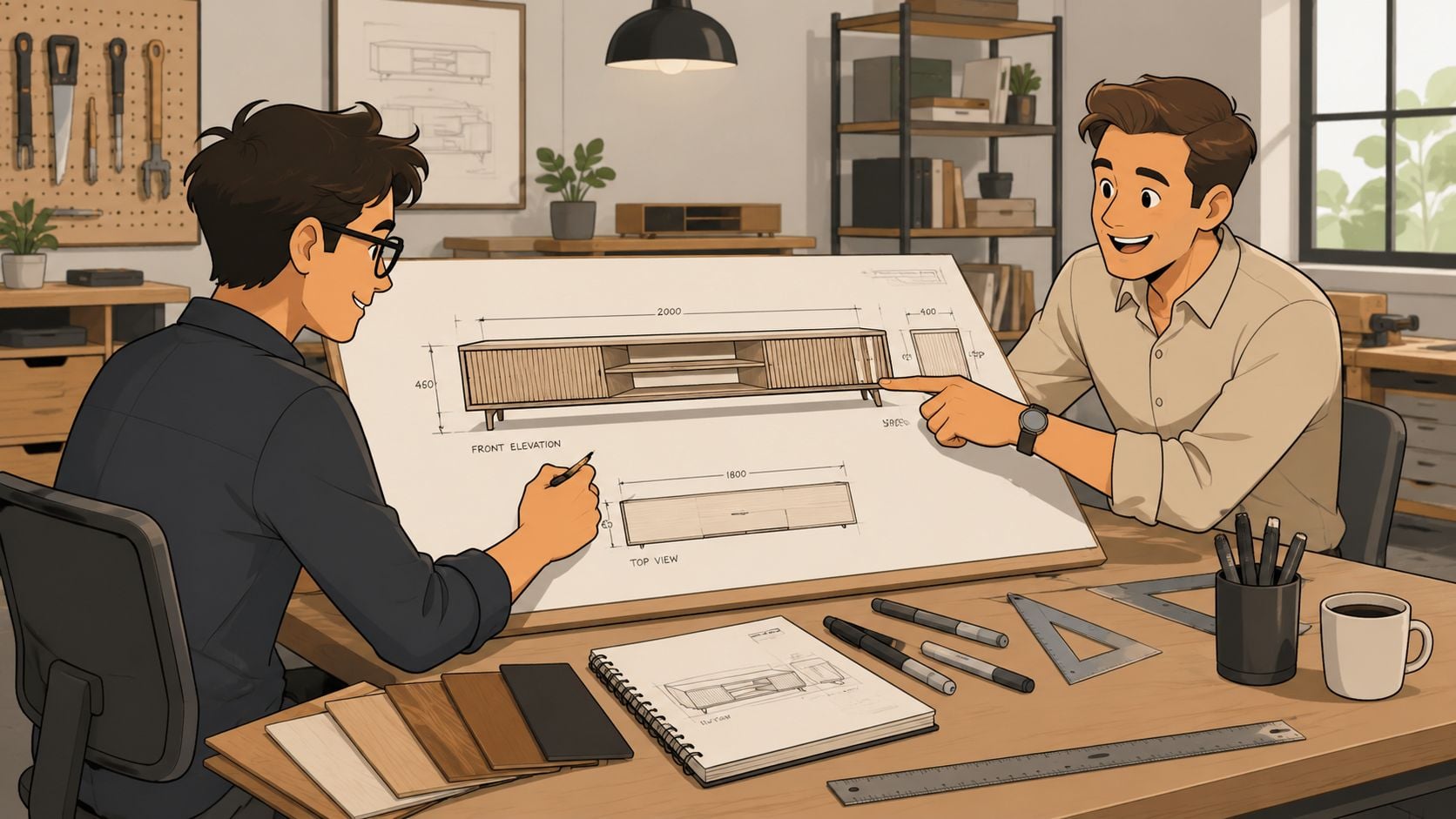
For homeowners considering that route, this overview on why choose bespoke design gives helpful context on why made-to-order decisions often create a better long-term fit than one-size-fits-all choices. A practical local next step is custom furniture made simple, especially for Northwest Indiana households narrowing down size, finish, and function.
Why made-to-order solves room-specific problems
Custom work earns its keep when a room has limits that standard furniture does not handle gracefully. A long wall may need a broader cabinet so the TV does not look stranded. A shallower room may call for reduced depth so walking paths stay comfortable. An open-concept home may need the media piece to relate to the seating group and the rest of the room, not only the screen.
That matters in real homes across NWI. A newer great room in Crown Point and a more traditional living room in Munster rarely need the exact same answer.
Common reasons homeowners choose custom include:
- Exact sizing: The piece can be built to the wall, seating layout, and screen width.
- Storage that matches daily life: Drawers, doors, open shelves, and equipment space can be planned around how the household uses the room.
- Finish coordination: Wood tone, hardware, and overall character can be selected to sit comfortably with flooring and nearby furniture.
- Construction for long-term use: A TV console often becomes an anchor piece, so material quality and joinery matter.
Solid wood and custom seating can create a more settled room
Amish solid wood furniture appeals to many Northwest Indiana homeowners for a simple reason. It gives them room to choose species, stain, hardware, and scale so the final piece feels at home instead of almost right. That is especially helpful when the goal is a warmer, more permanent look.
Custom seating can support that same plan. Groen's Fine Furniture offers access to custom order options that help households coordinate fabric, configuration, and silhouette with the media cabinet rather than treating each piece as a separate decision. The result is a room that feels considered from every seat, not pieced together one compromise at a time.
Special financing can help with that process too. For some families, it makes a better-fit room possible now instead of delaying the purchase and living with furniture that never quite suits the space.
Bespoke furniture is not only about appearance. It often solves practical problems in rooms with very specific demands.
For many households, designing the TV area their own way is less about luxury and more about comfort, fit, and staying power. A well-planned custom piece can help the room feel calmer, work harder, and age more gracefully with the home.
Bringing Your Vision Home with Groens Fine Furniture
By the time a room reaches the finishing stage, most of the right decisions come down to alignment. The screen should suit the wall. The console should suit the screen and the seating. The storage should suit the way the household lives. When those pieces line up, the room feels easier to use and easier to enjoy.
A good example is a 65-inch TV, which often pairs better with a console in the 70 to 80 inch range because diagonal size can understate the true horizontal footprint of the panel and its feet or legs. A wider base spreads load more effectively and reduces tip or impact risk, according to this TV stand features guide.
Turning measurements into a finished room
The strongest rooms don't happen because one piece looked good online. They come together because each choice supports the next one. The console width relates to the TV. The TV height respects seated comfort. The sofa and chairs support the right viewing distance. Storage keeps the area calm instead of cluttered.
That kind of planning matters whether the style leans traditional, refined, or clean and modern. It also matters whether the room is a compact living area in Dyer or a larger family space in Crown Point.
A reliable shopping mindset looks like this:
- Start with comfort: Viewing height and distance should guide the room.
- Choose furniture with a job: Every shelf, drawer, and surface should answer a real need.
- Think in groups, not singles: The TV stand, seating, and storage should support one another.
- Invest for the long haul: Materials and construction matter in a heavily used room.
Using buying power wisely
Quality furniture often asks families to think beyond the immediate need. A well-made media console or custom entertainment setup can become a lasting part of the home, especially when paired with durable upholstery and solid wood construction. Special financing, subject to credit approval, can give shoppers more buying power so they can choose furniture that fits the room properly instead of settling for a short-term fix.
That matters for growing families, first-time buyers, and homeowners refreshing a space piece by piece. It keeps the conversation focused on fit, comfort, and lasting value.
For shoppers in Northwest Indiana, seeing the furniture in person still makes a difference. Finishes look different under showroom lighting than they do on a screen. Drawer construction, door movement, scale, and seating comfort are all easier to judge when the furniture is right in front of the customer.
For homeowners in Dyer, Crown Point, and nearby Northwest Indiana communities, Groen's Fine Furniture offers a practical next step. Visit the showrooms to test drive comfort, explore custom options including Amish solid wood and made-to-order upholstery, and ask about special financing plans. Let their family help create a home that feels comfortable, lasting, and personal.