Blog
Daybed with Storage: A Buyer’s Guide for NWI Homes

A lot of homeowners in Northwest Indiana run into the same problem. A spare room isn't really spare anymore. It's the home office during the week, a guest room on holidays, a homework zone after school, and sometimes the quietest place in the house to read or take a call.
That's where a daybed with storage starts to make sense. It offers a real sleeping surface, a sofa-like look during the day, and a place to tuck away linens, blankets, or everyday clutter without adding another bulky piece of furniture. For families trying to make one room work harder, that combination can be a practical long-term choice.
This guide takes the honest route. It covers the benefits, but it also looks at the details shoppers often don't hear enough about, like drawer clearance, carpet interference, room placement, and whether the storage will be easy to use every day.
Table of Contents
- The Smart Solution for Your Northwest Indiana Home
- More Than a Bed A Versatile Furniture Piece
- Decoding Daybed Storage Types
- Quality You Can Feel Frames Materials and Mattresses
- Styling Your Daybed for Any Room in Your Home
- Design It Your Way with Groens Custom Options
- Your Pre-Purchase and Showroom Visit Checklist
The Smart Solution for Your Northwest Indiana Home
In Dyer, Crown Point, St. John, and nearby communities, many homes need furniture that can do more than one job. A guest room might also be the office. A teen bedroom might need hidden storage without feeling cramped. A finished basement might need seating most days and sleeping space only when family visits.
That's one reason interest in multifunctional furniture keeps growing. One market projection says the global day bed market could reach USD 5.00 billion by 2035, and that same report notes North America holds about 35% of the market, reflecting strong demand for these space-conscious solutions at home in this region, according to Market Research Future's day bed market report.
For a homeowner trying to decide whether a daybed fits a room, sizing is often the first sticking point. A helpful starting place is this daybed size chart, which gives a quick visual sense of how daybed dimensions compare before anyone starts moving furniture around.
Neighborly advice: A daybed works best when the room has a clear purpose during the day and a different purpose at night.
That's also why storage matters so much. When the bed itself can hold spare sheets, seasonal throws, or office overflow, the room stays more flexible. A separate dresser or storage cabinet may not be necessary. Homeowners who are trying to reduce clutter in smaller rooms can also browse these small-space storage ideas for related planning help.
For a family-owned business serving Northwest Indiana since 1983, this kind of furniture decision isn't just about fitting something into a floor plan. It's about helping a room keep up with real life for years, not just looking good the day it's delivered.
More Than a Bed A Versatile Furniture Piece
A daybed with storage does three jobs at once. It gives you a place to sit, a place to sleep, and a place to put the things that otherwise drift around the room.
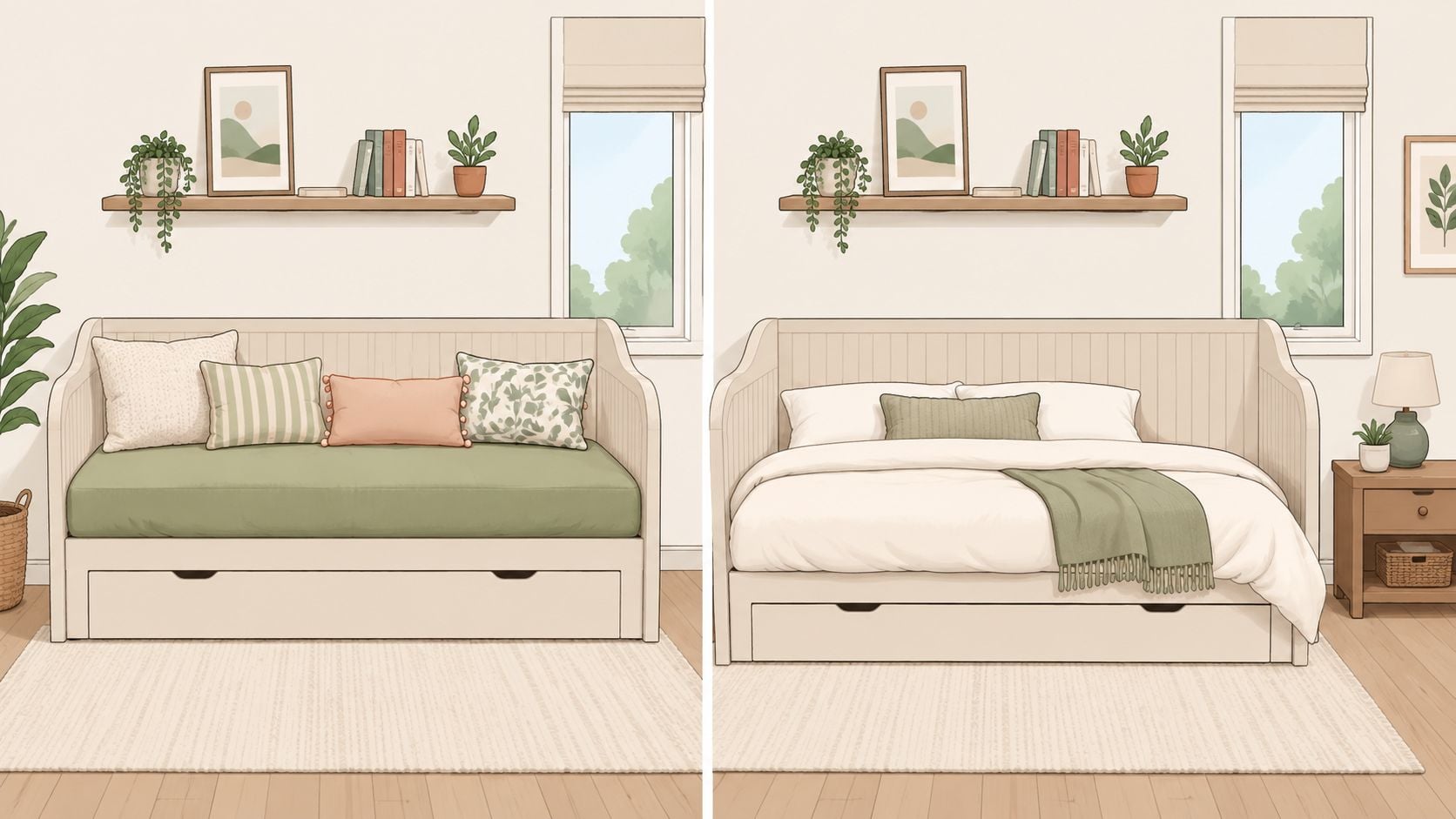
That combination is what makes it so useful in real homes. A standard bed handles sleep well, but it usually asks the rest of the room to do the storage work. A sleeper sofa can help with occasional guests, but many homeowners find the sit and sleep comfort is a compromise. A daybed sits in the middle. It keeps a real mattress ready to use, while the frame helps the room stay orderly.
The shape matters more than many shoppers expect. With a back and side panels, a daybed looks settled in a room the way a small sofa does. During the day, it can be a reading spot, a place for kids to stretch out after school, or extra seating when family visits. At night, nothing needs to be unfolded, rearranged, or wrestled into place.
Storage is where the long-term value often shows up. The space under the bed is no longer wasted. It can hold guest sheets, extra blankets, off-season pillows, toys, or even the overflow that would have required another case piece. If you want a clearer picture of which bedroom furniture storage features are useful day to day, that comparison can help before you choose a frame style.
Here is the practical way to judge whether a daybed is pulling its weight in a room:
- As seating: It should feel comfortable enough for everyday use, not just look nice with pillows stacked on it.
- As a bed: It should offer dependable mattress support for the person who will sleep there.
- As storage: It should hold the items you need nearby, in a size and layout that makes sense for how the room is used.
This is also where confusion starts.
Some homeowners hear “storage daybed” and assume every model solves the same problem. In practice, one may be better for folded linens, another for kids' toys, and another for an occasional guest setup. Some have drawers that look generous from the outside but lose usable depth because of frame parts or hardware. Others store plenty, but the contents are harder to reach than expected once the bed is placed near a wall.
That is why it helps to picture the room in daily use, not just empty on delivery day. A daybed in a home office has different demands than one in a teen room or a small guest room. Families sorting through what needs to stay in the room may also find these stress-free move decluttering tips helpful before choosing furniture built around storage.
A good daybed with storage earns its floor space. It can replace a bench, a guest bed, and part of a dresser or toy chest, while still helping the room feel calm instead of crowded.
Decoding Daybed Storage Types
Not every storage setup solves the same problem. Some are easier to access every day. Others give better sleep flexibility. Some work well in the middle of a room but become frustrating against a wall or in a corner.
A useful question isn't just “Does it have storage?” It's “Will that storage work in the room the way the household uses it?” That tradeoff matters because under-bed drawers can be limited by frame design and can become awkward if the daybed sits in a corner or against a wall, as noted in this storage daybed overview from Wayfair.
The details of frame layouts and storage features matter just as much, which is why many shoppers also review practical bedroom furniture storage features before deciding.
Drawer storage
Drawer-based storage is the most familiar option. It's usually the best fit for linens, spare bedding, folded clothing, or toys that benefit from being hidden but easy to reach.
This option tends to work well when:
- The room has open floor beside the bed: Drawers need room to pull out comfortably.
- Items are used regularly: Linens and guest bedding are easier to grab from a drawer than from deeper hidden storage.
- The household wants organization: Separate drawers naturally divide categories.
The downside is access. Thick carpet, nearby furniture, or a tight corner can turn good-looking drawers into something people avoid using.
Trundle storage
A trundle replaces some general storage potential with sleeping capacity. Instead of drawers, the base holds another mattress or pull-out sleep surface.
That makes a trundle more practical for:
- Sleepovers
- Shared rooms
- Homes that host family often
The tradeoff is simple. A trundle is excellent for extra sleeping space, but it isn't the same as having drawer storage for blankets, board games, or off-season items. For some households, that's perfect. For others, it solves the wrong problem.
Lift-up storage
A lift-up design uses the mattress platform as the lid to a hidden storage area below. It can be useful when the room doesn't allow drawer swing or pull-out clearance.
This type often suits homeowners who want to store:
- Less frequently used bedding
- Seasonal items
- Bulkier pieces that don't need daily access
The caution here is convenience. Lift-up storage can hold a lot, but it usually takes more effort to open and close than a drawer. For daily-use items, that can become a nuisance.
Daybed Storage Mechanism Comparison
| Storage Type | Best For | Considerations |
|---|---|---|
| Drawer storage | Linens, folded clothes, everyday items | Needs side clearance and smooth floor access |
| Trundle storage | Extra sleeping space for guests or kids | Offers less general storage |
| Lift-up storage | Seasonal or less frequently used items | Can be less convenient for daily access |
The right storage type depends less on the catalog photo and more on the room layout, flooring, and what the household plans to store.
A daybed with storage isn't automatically the right answer. In some rooms, a simpler bed plus separate storage furniture will be easier to live with. The best choice is the one that still feels convenient after the first month, not just the one that looks efficient on shopping day.
Quality You Can Feel Frames Materials and Mattresses
A daybed with storage does more work than a standard bed. It has to feel comfortable at night, hold up to people sitting on it during the day, and keep its storage parts working properly year after year. If the frame is weak, you usually notice it early. The side rail flexes a little, the drawers start rubbing, or the whole piece sounds louder every time someone sits down.
What frame quality looks like
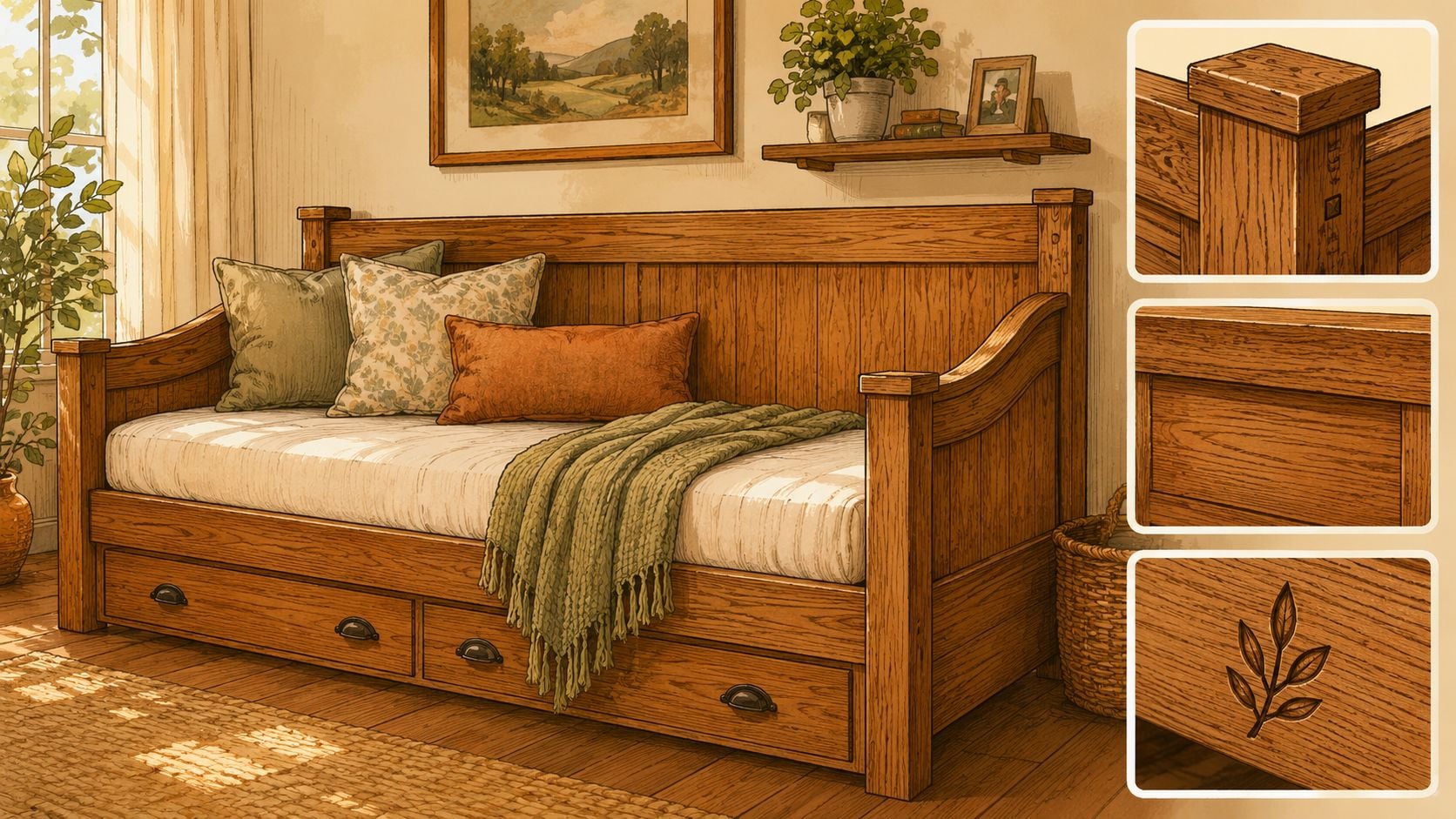
A good daybed should feel planted. Sit on the front edge, shift your weight, and the frame should stay quiet and steady. That matters more with storage because the base has more jobs to do. If the frame twists even slightly, drawer alignment can suffer over time.
Size consistency matters too. Many daybeds are built for a standard twin mattress, which makes replacement bedding much easier than hunting for a specialty size. That is one of those practical details people appreciate later, not just on shopping day.
Material choice affects how the piece ages in a real home. Solid wood often appeals to families who want durability, easier repair, and a furniture look that tends to wear in gracefully. Engineered wood can still have a place, especially in drawer boxes or support panels, but the whole piece should feel reinforced in the spots that take daily stress.
If the daybed includes a padded back or upholstered arms, fabric choice matters just as much as frame choice. Wear, cleanability, and texture all affect how the piece lives in a guest room or office. This guide to upholstery materials for everyday furniture use can help you sort through those differences.
A few signs of good construction are easy to check in person:
- Steady joinery: Push gently on the arm or side rail. Wobble usually means trouble later.
- Smooth drawer travel: Drawers should open evenly and close without scraping or dropping.
- Clean finish work: Look at corners, edges, and drawer fronts for consistency.
- Dependable support below: Slats and platform panels should feel substantial, not thin or springy.
One more practical point often gets missed. Storage that looks generous in a photo can lose usefulness if the frame hardware, drawer sides, or support rails eat into the interior space. A drawer can be wide on the outside and still disappoint once you start folding blankets into it.
A daybed that feels solid as a seat usually gives you a better starting point for long-term comfort and storage reliability.
Why the mattress matters just as much
The mattress decides whether a daybed feels inviting or merely acceptable. Since people often use it for both sitting and sleeping, the right feel is a balancing act. Too soft, and it can slump when used like a sofa. Too firm, and overnight guests may feel like they are sleeping on a spare bed that was chosen for looks first.
Height matters too. A very tall mattress can make the daybed look bulky and less like intentional seating. A thinner mattress can keep the profile cleaner, but it still needs enough support for actual sleep. That trade-off is easiest to judge in person, with someone sitting on the edge and then lying back for a few minutes.
Cleanliness is part of comfort as well, especially in guest spaces where a mattress may sit unused between visits. Regular protection and care help the bed stay fresh and ready. Families who want simple upkeep tips may find Protect-A-Bed's guide to mattress hygiene helpful.
At Groen's Fine Furniture, shoppers can compare storage beds and standard mattresses together, which helps when the goal is to build a setup that works as a real piece of furniture, not just a spare sleeping spot.
Three questions usually lead to a better choice:
- Will this be used more for sitting, sleeping, or both equally?
- Will children, adults, or both use it most often?
- Does the mattress height suit the room and the daybed's intended look?
Those answers keep the decision grounded in daily use. And that is the difference between a daybed you admire for a week and one you still enjoy living with years later.
Styling Your Daybed for Any Room in Your Home
A daybed with storage works best when it doesn't look like an afterthought. Styling changes the impression completely. The same piece can feel like a polished sofa, a welcoming guest bed, or a practical bedroom feature depending on how it's dressed.
A home office that still feels welcoming
In a home office, the goal is balance. The room should stay productive during the day but still feel ready for company. A daybed helps by softening the space. Instead of reading like a spare bed squeezed beside a desk, it can look like intentional seating.
A good setup usually includes:
- Larger back pillows: These help the bed read as a sofa.
- A fitted cover or quilt: Cleaner lines keep the room from feeling too bedroom-heavy.
- A throw in a different texture: This adds warmth without visual clutter.
The storage below can hold guest bedding, paperwork that doesn't need daily access, or extra seasonal textiles, depending on how the room functions.
A guest room that doesn't sit empty
Guest rooms often spend most of the year unused. A daybed changes that. It gives the room a daily purpose without losing overnight comfort.
Styling should stay simple. Too many pillows make the bed fussy. Too little layering makes it look unfinished. A balanced arrangement usually feels best for both everyday use and easy guest prep.
A well-styled daybed should take only a minute or two to shift from daytime seating to nighttime sleeping.
Try a mix like this:
- Sleeping pillows stored neatly when not in use
- A few decorative pillows for the daytime look
- One folded blanket within reach
- Clear surface space nearby for a guest's phone, book, or glasses
A bedroom or den that stays organized
In a child's room, teen room, or den, the biggest styling win often comes from reducing visible clutter. Storage below the bed supports that goal, but the top of the daybed has to stay disciplined too.
A few habits help:
- Use coordinated bedding: It makes the whole piece feel more furniture-like.
- Limit the number of accent pillows: Too many become clutter, not comfort.
- Choose durable fabrics and washable layers: Real life is easier when cleanup is simple.
The best styled daybeds feel calm, not crowded. They look like they belong in the room, which is exactly what a multi-use piece should do.
Design It Your Way with Groens Custom Options
A daybed with storage can be useful straight off the floor, but customization often makes the difference between “good enough” and “exactly right.” That matters in homes across Munster, Schererville, St. John, and the rest of Northwest Indiana, where room sizes, storage needs, and style preferences vary from house to house.
Customization changes the outcome
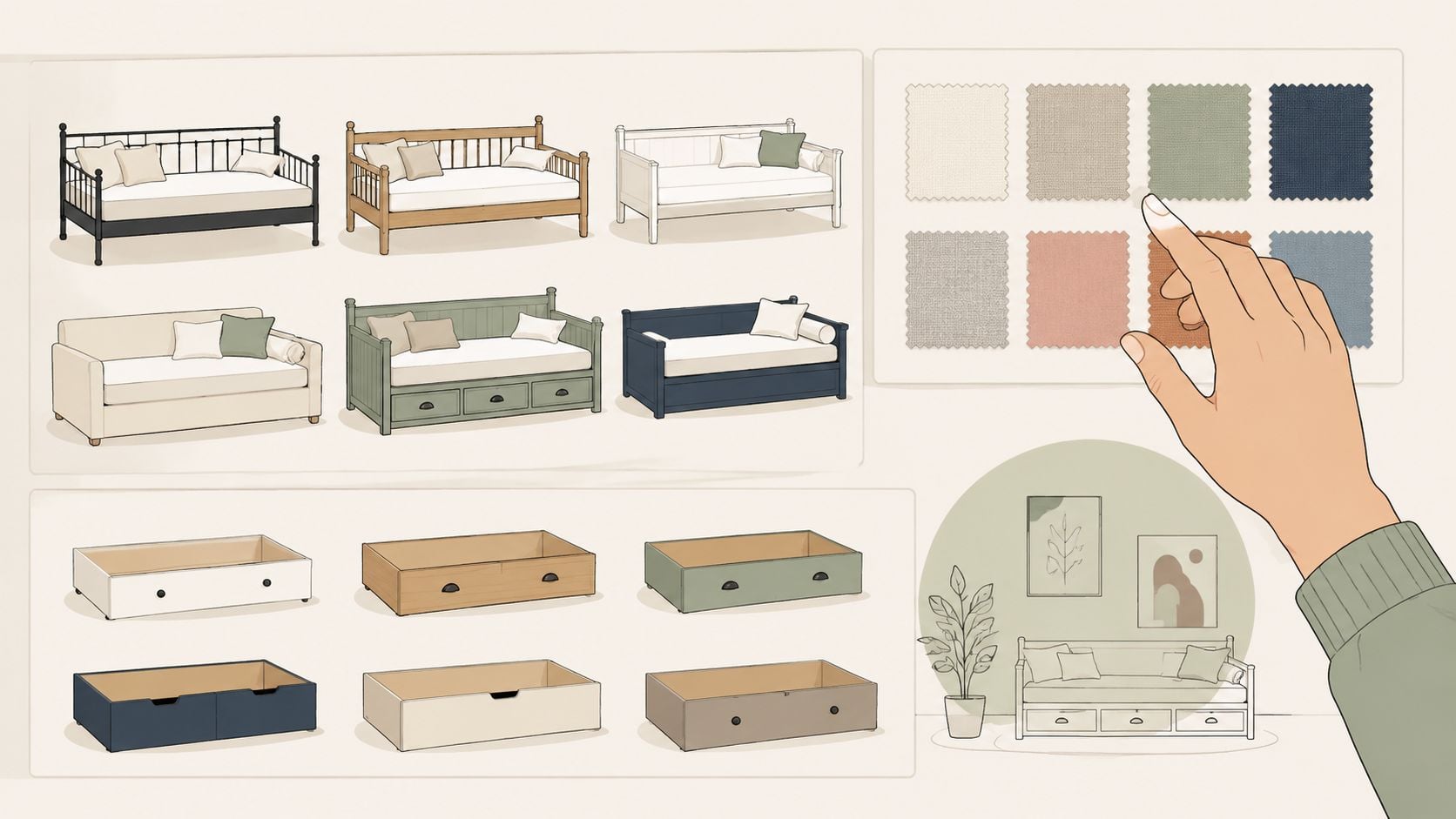
Some shoppers need a cleaner, more modern look. Others want a warmer wood tone that coordinates with existing bedroom furniture. Some need a storage setup designed around linens. Others want a piece that supports reading, charging devices, or homework in the same footprint.
That's where made-to-order thinking helps. Instead of settling for a one-size-fits-all piece, households can focus on choices that affect daily use:
- Wood species and stain: Helpful when matching other solid wood furniture
- Hardware style: Small detail, big effect on overall look
- Fabric or panel treatment: Important if the daybed doubles as visible seating
- Storage format: Better aligned with how the room is used
For shoppers exploring bespoke furniture planning, this guide to getting started with a custom order helps clarify what decisions to make before stepping into the showroom.
Northwest Indiana buyers who value craftsmanship often lean toward Amish solid wood pieces for this reason. The appeal isn't only appearance. It's the ability to tailor the furniture to the room instead of forcing the room to adapt to a preset piece.
Features that add convenience
Modern daybeds can also include more than storage. Verified product guidance for this article notes that some models can be customized with USB charging ports, bookcase headboards with power stations, and pull-out desks. Those features can reduce clutter and help the daybed serve as a reading corner, guest bed, and work zone in one place.
That can be especially useful when one room has several jobs:
- A teen room: Charging, books, and hidden storage all in one footprint
- A guest office: Bed, workspace, and organization combined
- A den or bonus room: Seating that's ready for overnight company
Customization also helps with budget planning. A higher-quality piece may be a bigger investment upfront, but special financing, subject to credit approval, can make that purchase more manageable over time. That gives buyers more flexibility to choose lasting materials and the right storage setup rather than settling for a piece that solves only half the problem.
For a family business with multigenerational ownership and a long local history, that's the stronger approach. Design it your way. Buy for the room's real needs. Live with it comfortably for years.
Your Pre-Purchase and Showroom Visit Checklist
A daybed with storage can look perfect online and still disappoint in the room if the household skips the practical checks. Many buying mistakes stem from this oversight. The piece fits the wall, but the drawer hits a rug. The frame clears the room, but the side access is awkward. The storage exists, but it's annoying to use.
One of the most overlooked issues is flooring. Verified guidance for this article notes that some DIY installs on thick carpet needed the bed raised slightly so drawers could slide more smoothly. That example is shown in this real-world daybed drawer installation video, and it's a useful reminder that room conditions affect usability.
What to measure at home
Before shopping, homeowners should take a few measurements beyond basic wall width. For this, a practical furniture measuring guide can help avoid expensive mistakes.
The checklist should include:
- Overall wall space: Measure the intended wall, but also note windows, vents, and trim.
- Drawer clearance area: Measure the open floor space where drawers would extend.
- Baseboards and outlets: These can push the bed forward more than expected.
- Door swing and traffic path: A drawer shouldn't block normal movement through the room.
- Flooring type: Plush carpet may affect drawer glide more than hard flooring.
Bring photos of the room, not just measurements. A showroom conversation goes better when the layout is visible.
What to test in person
A showroom visit should feel less like browsing and more like a fit test. A daybed with storage has moving parts, and those parts deserve attention.
In person, shoppers should check:
- How the drawer opens: Is it smooth, stable, and easy with one hand?
- How the frame feels when seated on the edge: Does it feel planted or flimsy?
- How the mattress supports sitting and lying down: A daybed has to do both well.
- How tall the setup feels: If the mattress sits too high, the daybed may lose its sofa-like look.
- How the side and back panels feel: These surfaces matter if the piece will be used as daily seating.
A useful final question is simple. Will this still be convenient on an ordinary Tuesday, not just when the room is freshly staged? That question catches many problems before they come home.
For homeowners in Dyer, Crown Point, and across Northwest Indiana, the right daybed with storage should feel practical, comfortable, and worth living with for the long haul. Visit Groen's Fine Furniture in Dyer or Crown Point today to explore custom options and ask about special financing plans. Let their family help create a home that works beautifully for everyday life.