Blog
Curved Accent Chairs: Find Your Style in Northwest Indiana


A lot of Northwest Indiana homeowners know the feeling. The sofa is in place. The rug works. The walls are painted. But the room still feels like it's missing one piece that makes it feel finished and lived in.
That missing piece is often a curved accent chair.
A curved chair can soften a room full of straight lines, create a cozy landing spot for reading or conversation, and bring a little personality without forcing a full redesign. It can also go wrong fast if the scale is off, the frame isn't built well, or the chair gets dropped into the wrong corner. That's why so many homeowners spend weeks looking online and still feel unsure when it's time to choose.
For households in Dyer, Crown Point, St. John, Schererville, Munster, and the rest of NWI, a good chair has to do more than look good in a photo. It has to fit the room, hold up to real life, and feel comfortable every day. This guide breaks that decision down into plain steps so the choice feels simpler and more confident.
Table of Contents
- Finding the Perfect Accent Chair for Your NWI Home
- Getting the Scale Right in Your Space
- Understanding Quality From the Inside Out
- Design It Your Way With Custom Orders
- Styling and Placing Your New Chair
- Making a Lasting Investment That Fits Your Budget
Finding the Perfect Accent Chair for Your NWI Home
A curved accent chair works because it does two jobs at once. It gives a room a place to sit, and it changes how the room feels. In homes around Crown Point and Dyer, that usually means taking a living room that feels a little boxy and making it feel warmer and more welcoming.
The shape is the first reason people notice it. Most living rooms already have plenty of straight edges. Sofas, sectionals, coffee tables, media consoles, windows, and rugs all tend to be rectangular. A curved chair breaks that pattern. The room feels softer before anyone even sits down.
Comfort matters just as much. Standard accent chair dimensions typically fall between 30 to 40 inches wide and 28 to 34 inches deep, with seat heights around 18 to 22 inches, which helps explain what usually feels balanced in a residential room, according to this accent chair sizing guide. That range gives homeowners a practical starting point before they fall in love with a silhouette that may not fit.
Why curved chairs keep showing up
Curved seating isn't a passing fad that appeared out of nowhere. The broader accent chair category remains a major part of home furnishing demand. The global accent chair market was valued at $8.2 billion in 2025 and is projected to reach $11.9 billion by 2034, with 5.3% CAGR over the forecast period. North America holds 62.2% of market value, while Asia Pacific is projected to grow at 9.2% CAGR, based on accent chair market data.
That doesn't tell a homeowner which chair to buy, but it does show why so many styles are available right now. There are more options, more fabrics, and more shapes than many shoppers expect.
Practical rule: A curved accent chair should feel like it belongs in the room, not like it arrived to steal the whole scene.
A helpful way to think about the choice is this:
- For a quiet corner: a tighter, more refined chair often works best.
- For a conversation area: a broader barrel-back shape can help the room feel more inviting.
- For a style refresh: the curve itself may be enough, even in a neutral fabric.
Many shoppers get stuck because they start with color. Shape and scale should come first. Once the chair fits the room and supports the way the space is used, the fabric and finish decisions become much easier.
Getting the Scale Right in Your Space
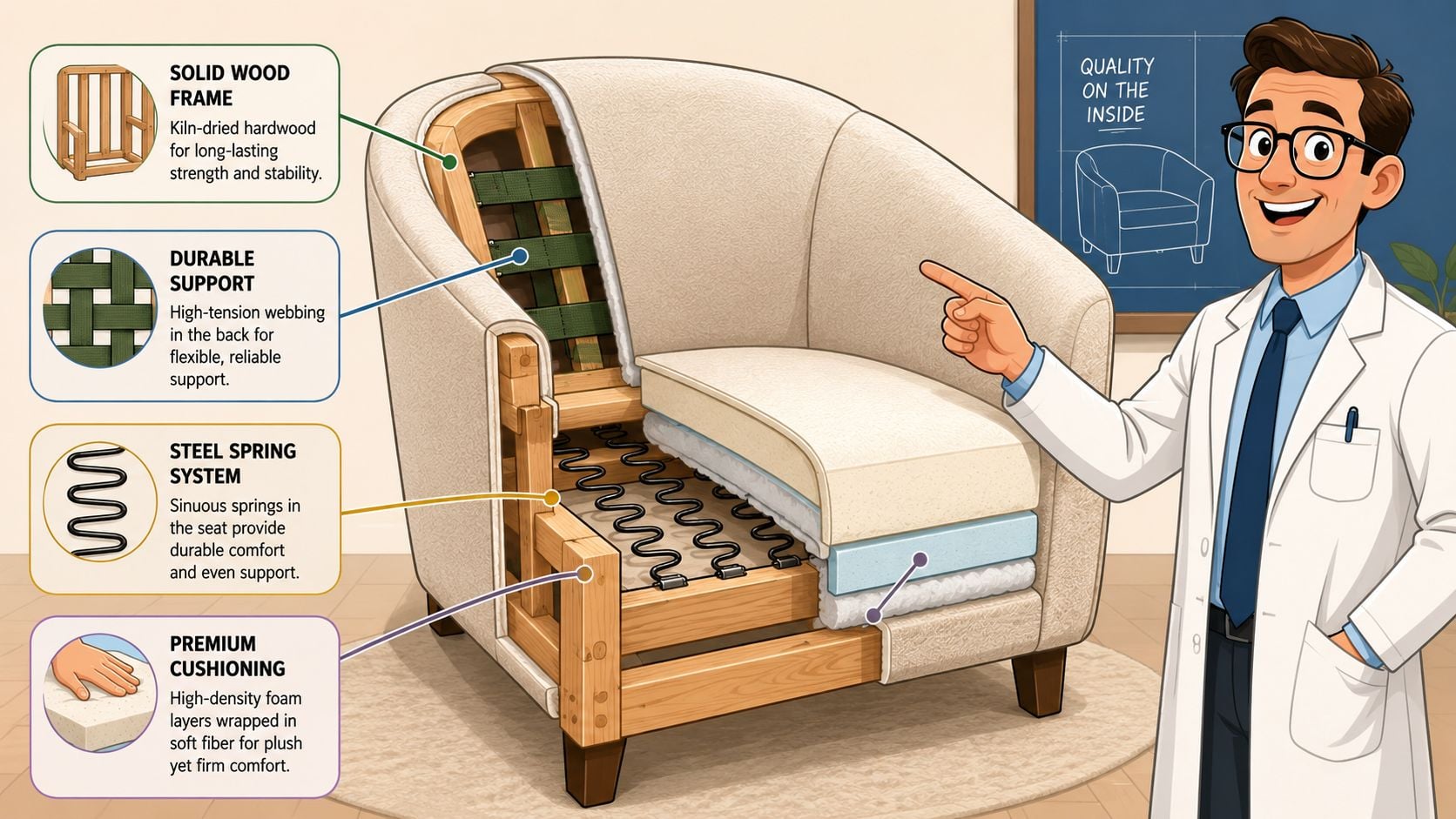
The biggest curved chair mistake usually happens before the chair even arrives. A homeowner sees a beautiful rounded silhouette, pictures it next to the sofa, and assumes it will fit because the room feels “big enough.” Then the chair shows up and suddenly the walkway is tight, the side table doesn't fit, and the room feels crowded.
Start with the footprint
A curved accent chair often looks smaller than it is because the eye reads it as soft and rounded. That's why measurement has to happen on the floor, not just in the imagination.
A simple process works well:
- Mark the chair location with painter's tape. Use the widest part of the chair, not just the seat.
- Add space for movement. A chair can fit mathematically and still feel awkward if people have to squeeze past it.
- Check nearby pieces. Side tables, floor lamps, and ottomans need room too.
- Walk through the area. If the taped outline interrupts the room's natural path, the chair is too large or in the wrong place.
For homeowners who want a more reliable measuring method, this guide to measuring furniture before buying helps translate showroom dimensions into real-room decisions.
Understand visual weight
Two chairs can have similar dimensions and feel completely different in a room. That's visual weight. It's one of the most confusing parts of shopping because it isn't always obvious on a product page.
A chair with a thick solid back, skirted base, and fully upholstered sides looks heavier. A chair with exposed legs and a more open base looks lighter, even if the seat size is close.
That matters even more in compact rooms. A 2025 Houzz survey found that 72% of homeowners in urban apartments regretted buying “statement” curved chairs due to poor proportionality, which points to a smart rule for smaller spaces: look for chairs under 26 inches wide with exposed legs when the goal is an airy, quiet look, as noted in this Houzz article on choosing the right accent chair.
In a smaller room, the best curved chair often isn't the one with the biggest personality. It's the one that gives the room breathing room.
A quick comparison helps:
| Room situation | Better curved chair choice | Why it works |
|---|---|---|
| Smaller living area | Narrower chair with exposed legs | Keeps the room feeling open |
| Large seating group | Deeper barrel style | Holds its own beside larger furniture |
| Multipurpose room | Compact swivel or armless profile | Improves flexibility and traffic flow |
For many homes, the winning choice isn't the boldest curve. It's the chair that softens the room without adding bulk. That balance is what makes a space feel calm instead of crowded.
Understanding Quality From the Inside Out
A curved silhouette can draw attention. Construction is what decides whether the chair still feels good years later.
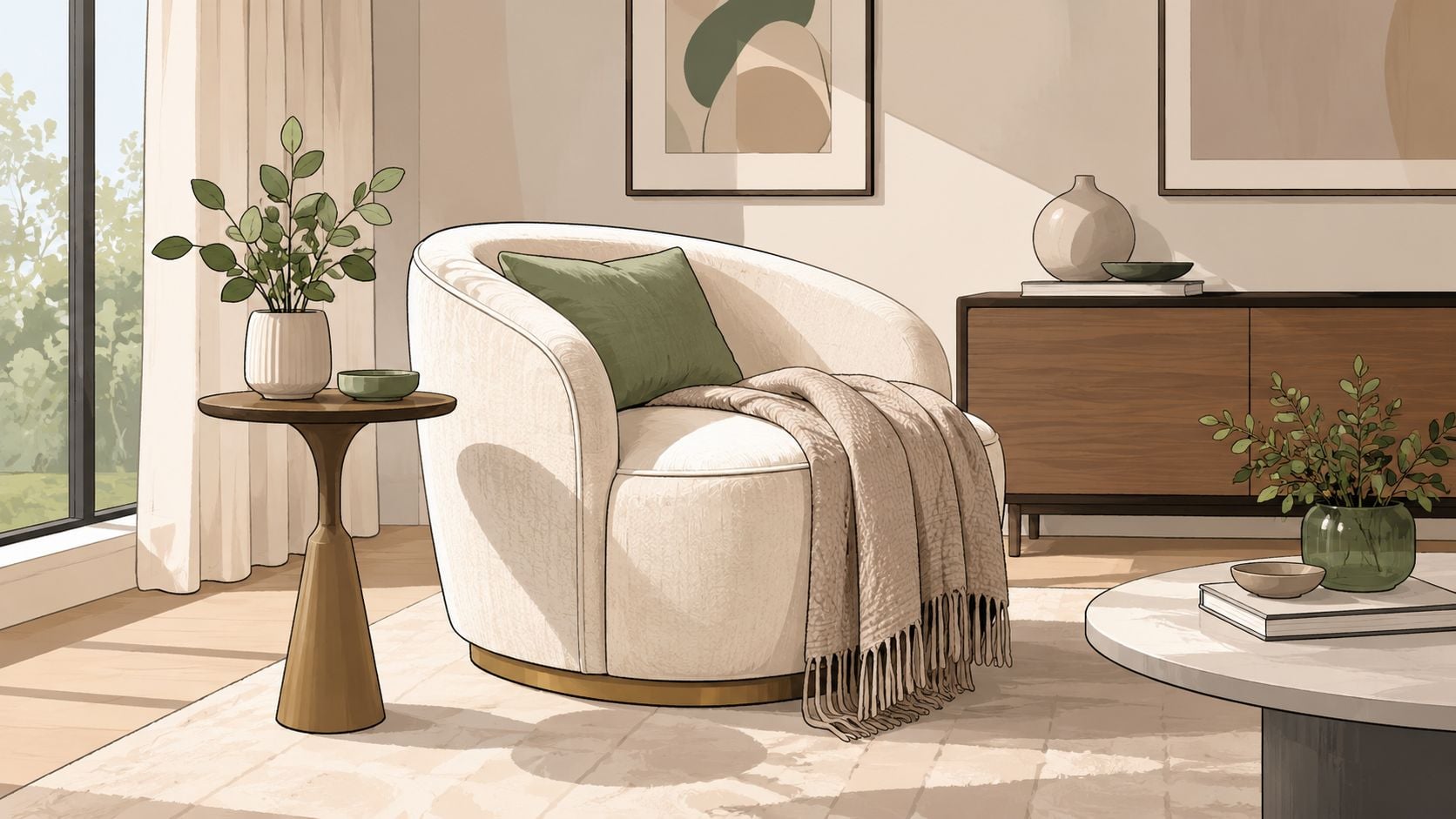
That's where many shoppers get frustrated. Photos show fabric color and shape well, but they rarely show the parts that matter most once the chair becomes part of daily life. The frame, support system, cushion build, and upholstery performance are what separate a short-term purchase from a lasting piece.
What matters under the fabric
A good chair should feel steady when someone sits down and rises from it. Wobble, excessive flex, and uneven support are warning signs.
The frame is the foundation. Solid wood remains the benchmark because it gives the chair structure and long-term stability. That's one reason solid wood and Amish craftsmanship continue to appeal to homeowners who want furniture that feels substantial rather than temporary.
Support beneath the seat matters too. In better upholstery, the seat doesn't only rely on surface padding. It has a system underneath that helps maintain comfort and shape over time. Flexsteel is a brand many shoppers recognize for durability because its Blue Steel Spring construction is designed around long-term seat support. The point isn't brand recognition by itself. The point is to look for a chair built with real internal engineering rather than just a pretty outer shell.
A beautiful chair with weak support usually tells on itself within everyday use. A well-built chair keeps its comfort longer and looks better doing it.
Materials that suit real homes
Busy households in Munster, Schererville, and throughout NWI usually need more than a nice profile. They need a chair that handles everyday living.
A few material choices make a major difference:
- Performance fabrics help when the chair sits in a high-use room where spills, pets, or frequent lounging are part of life.
- Tighter seat cushions often look cleaner longer in formal spaces.
- Softer, more relaxed fills can create a lounge feel, though they may need more fluffing and maintenance.
- Textured upholstery can add warmth to a curved form, especially in neutral rooms that need depth.
For shoppers comparing fabric options, this upholstery materials guide can make the tradeoffs clearer.
Groen's Fine Furniture has operated as a family-owned business serving Northwest Indiana from showrooms in Dyer and Crown Point for over 30 years, building a legacy on multigenerational service and a commitment to quality craftsmanship, as described on their company page. That kind of longevity reflects something practical. Furniture shoppers keep coming back to places that help them understand what's inside the piece, not just what's on the tag.
A curved accent chair should feel inviting on day one. It should also still feel supportive after movie nights, holiday gatherings, and years of regular use.
Design It Your Way With Custom Orders
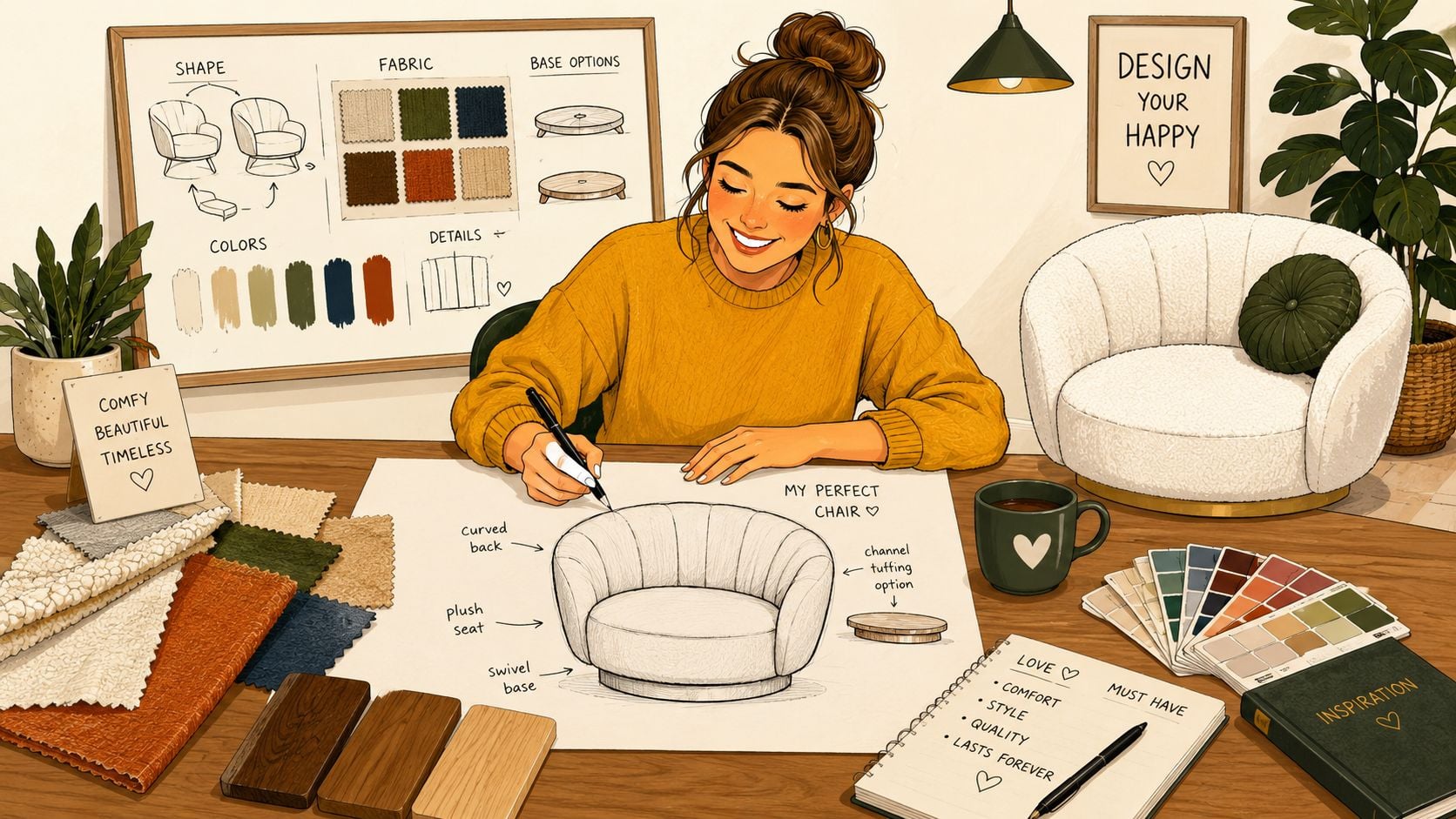
Many homeowners assume a curved accent chair is either a perfect off-the-floor find or a compromise. In reality, custom order options create a middle path that feels much more personal.
That matters because curved chairs are shape-driven pieces. Small details change the entire result. A warmer fabric can make the chair feel soft and casual. A cleaner leg finish can make the same silhouette feel sleek and modern. What looked too formal in one fabric can feel just right in another.
How a custom order feels easier than expected
The process is usually less intimidating than shoppers think. It often starts with a base chair style that already fits the room well. After that, the choices become more focused.
A homeowner might bring in a rug sample, a pillow cover, or a paint swatch. From there, the design conversation becomes practical. Should the chair disappear into the room in a quiet neutral, or should it add contrast? Should the legs echo existing wood tones, or create a lighter look?
This custom order getting-started guide is useful because it helps turn broad preferences into specific decisions.
Where bespoke choices make the biggest difference
Custom furniture works best when it solves a problem that ready-made options don't solve well.
Some of the biggest wins come from choices like these:
- Fabric selection: A family room may need performance upholstery, while a bedroom reading corner may welcome something softer and more textured.
- Leg finish: This can help a chair connect to nearby wood furniture instead of feeling unrelated.
- Scale and profile: Some custom programs allow homeowners to choose a silhouette that fits their space more precisely.
- Comfort level: The right seat can feel upright and polished or more relaxed and lounge-ready.
The value of customization becomes even clearer when looking across the home. Programs like Canadel's custom dining service provide millions of possible combinations, allowing customers to choose details such as size, shape, finish, and seating style, according to this overview of the Canadel custom order program. That same made-to-order mindset helps explain why bespoke furniture continues to appeal to homeowners who don't want cookie-cutter rooms.
The most satisfying custom pieces don't feel flashy. They feel like they were always meant for that home.
For anyone furnishing with intention, custom furniture is less about excess and more about fit. It gives people room to create something that suits their layout, their routine, and their style without settling for “close enough.”
Styling and Placing Your New Chair
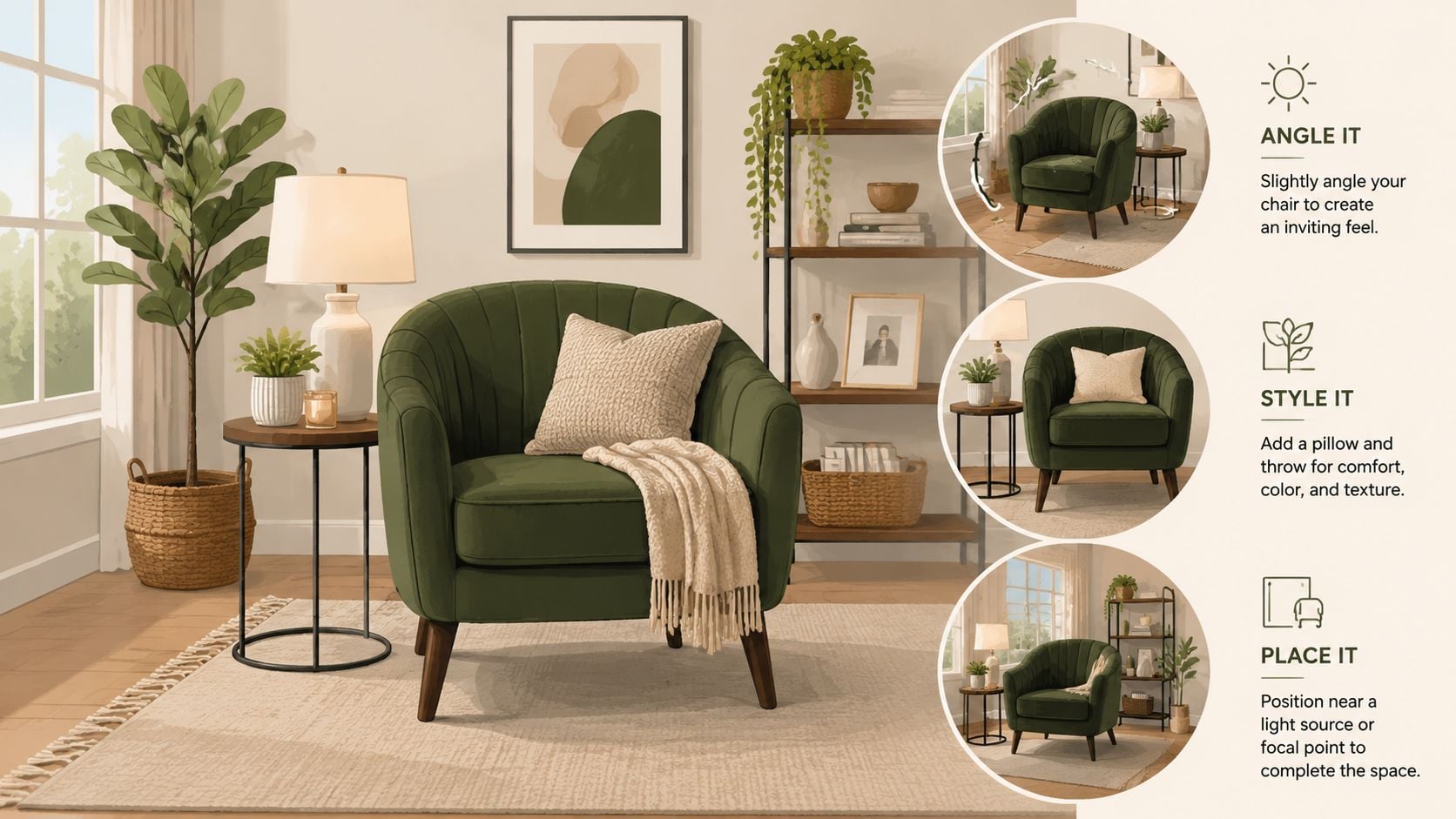
Once the right chair is chosen, placement decides whether it looks natural or awkward. A curved accent chair has more presence than many people expect, so it needs a little breathing room and a clear purpose.
Respect the traffic path
One of the most common living room mistakes happens with sectionals, especially sectionals that include a chaise. People often place a substantial accent chair directly in front of that chaise because the spot seems empty. In practice, it blocks comfort and interrupts the room's flow.
A helpful rule is simple: don't place a heavy chair directly in front of the chaise. Designers instead recommend floating a curved chair across from the chaise or angling it toward the sofa. That approach respects the chaise's function and keeps the room open. It matters because 61% of sectional owners cite chaise blocking as a top regret, according to guidance highlighted in this design video on sectional layout mistakes.
That advice can be applied in a few common ways:
- Across from the chaise: Creates balance without blocking legroom.
- Angled toward the sofa: Builds a conversational layout.
- In a nearby corner: Gives the chair its own destination if the sectional already fills the main zone.
For more placement ideas in everyday rooms, this accent chair layout guide offers useful inspiration.
Build a complete corner
A curved accent chair looks best when it belongs to a small composition, not when it's dropped into space by itself.
A finished setup often includes:
- A small side table for a drink, book, or candle
- A lamp that adds height and makes the seat useful at night
- A pillow or throw that softens the look without hiding the chair's shape
Color also plays a bigger role than many shoppers expect. A curved chair already introduces softness through shape. Color can either reinforce that mood or sharpen the contrast. Homeowners who want to transform your space with colour often find it easier to start with one accent chair than with an entire room.
A curved chair should look intentional from across the room and comfortable from up close.
These placement ideas work beyond the living room too:
| Room | Best use for a curved chair | Styling note |
|---|---|---|
| Bedroom | Reading corner | Add a floor lamp and soft throw |
| Home office | Guest seat | Choose a refined fabric with a lighter profile |
| Living room | Conversation piece | Pair with a drink table and leave open floor around it |
The most successful placement usually feels simple. The chair has room to show its shape, supports how the room is used, and connects visually to the rest of the furniture.
Making a Lasting Investment That Fits Your Budget
A curved accent chair isn't just a style purchase. It's part comfort, part function, and part daily routine. That's why it helps to think about value over time instead of focusing only on the first number attached to the piece.
A lower-quality chair can look appealing at first and still become frustrating quickly. Cushions flatten. Fabric wears poorly. The frame starts to feel loose. Replacing a chair sooner than expected usually costs more in the long run than choosing better construction from the start.
Think in years, not just today
A useful buying question is not “Is this the lowest price in the room?” The better question is “Will this chair still feel worth owning after years of use?”
That shift changes how people shop. It puts attention on comfort, structure, upholstery, and fit. It also makes it easier to choose a chair that supports the way the household lives.
Shoppers often benefit from writing down their priorities before buying:
- Daily use: Will people sit here often, or is it more occasional seating?
- Household reality: Are pets, kids, or frequent guests part of the picture?
- Design longevity: Will this fabric still feel right after other decor changes?
- Room flexibility: Can the chair move to another room later if needed?
Use flexibility without lowering standards
Quality furniture should feel attainable. Financing can help make that possible without pushing homeowners toward a rushed decision or a lesser piece.
Groen's Fine Furniture offers special financing, subject to credit approval, giving customers the flexibility to invest in their homes today and pay over time, as outlined on their furniture financing page. That kind of buying power can make the difference between settling for a chair that's only “fine” and choosing one that better fits the home.
It also supports a calmer shopping process. People can focus on what fits their room and lifestyle, not just what feels easiest in the moment.
A strong purchase usually checks three boxes:
- The chair fits the room correctly
- The construction supports long-term comfort
- The payment path fits the household budget
When those three line up, the chair stops feeling like an indulgence and starts feeling like a smart home decision.
Visit Groen's Fine Furniture in Dyer or Crown Point today to explore custom options and ask about special financing plans. Let their family help create a home Northwest Indiana homeowners will love living in.