Blog
Storage Cabinets for Living Room: An NWI Design Guide

A lot of Northwest Indiana homeowners are dealing with the same living room problem. The room is supposed to be where the family unwinds, watches a movie, reads, or catches up. Instead, it starts to collect everything that doesn't have a better home. Remotes end up on side tables, toys land under the coffee table, chargers snake across the floor, and shelves look either overcrowded or completely unfinished.
That's usually the moment when storage cabinets for living room spaces start to matter. Not as filler furniture, but as the piece that helps the whole room function better. For families in Dyer, Crown Point, St. John, and nearby Northwest Indiana communities, the right cabinet can make a busy room feel settled again.
Table of Contents
- From Clutter to Comfort in Your NWI Home
- Choosing the Right Type of Cabinet for Your Home
- Materials and Finishes That Define Quality
- Sizing and Layout Tips for NWI Living Rooms
- Creating Your Custom Cabinet with Groen's
- Styling Your Cabinet Like a Designer
- Answers to Your Top Cabinet Questions
- Let Our Family Help You Find the Perfect Fit
From Clutter to Comfort in Your NWI Home
A common scene plays out in living rooms across NWI. A sofa faces the television, a lamp glows in the corner, and the room has good bones. But one wall is doing too much work. It's handling games, blankets, cables, kids' items, mail, and the things nobody wants to leave out but everybody needs close by.

That kind of clutter changes how a room feels. Even a comfortable space can start to feel restless when every surface becomes temporary storage. Families with children feel this even more, because the living room often has to switch roles through the day. It's a play space, media room, reading area, and gathering spot all at once.
A well-chosen cabinet helps restore order without making the room feel stiff. It gives the everyday items a home, keeps visual noise down, and still leaves space for books, framed photos, and a few pieces that feel personal. Homeowners looking for more ideas for tight layouts often find help in these small-space storage solutions for everyday rooms.
A good living room cabinet doesn't just hold things. It lowers the stress level of the room.
That's why storage furniture has become such an important part of the living room, not just an afterthought tucked against the wall.
Choosing the Right Type of Cabinet for Your Home
Some cabinet mistakes happen before the shopping even starts. A homeowner knows the room needs storage, but the search stays too broad. “Cabinet” can mean a lot of different things, and each type solves a different problem.
Why cabinet styles have changed
Modern living rooms rarely need one big box that hides everything. Design guidance now points to a mix of open and closed storage, so the room can hide clutter while still displaying books and decor, as noted in this living room storage guidance from Homes & Gardens. That shift explains why so many current cabinets combine doors, drawers, shelves, and open display space in one piece.
For many homes, the question isn't “Should the cabinet be pretty or practical?” It's both.
Living Room Storage Cabinet Types at a Glance
| Cabinet Type | Primary Use | Common Size | Best For |
|---|---|---|---|
| Credenza | Broad surface storage with enclosed compartments | Low and long | Media items, serving pieces, baskets, flexible storage |
| Media console | Supports television setup and related devices | Low profile, sized to wall or TV area | Streaming devices, game systems, remotes, sound equipment |
| Accent chest | Compact storage with decorative presence | Smaller footprint | Entry-adjacent living rooms, corners, extra hidden storage |
| Display cabinet | Mix of storage and showcase space | Varies from narrow to tall | Books, collected pieces, framed items, dining-living crossover spaces |
| Corner cabinet | Uses underused angles | Narrower, shaped for corners | Smaller rooms, awkward layouts, secondary storage |
| Cabinet with drawers and doors | Organizes both small and bulky items | Medium to large | Families who need categories, not just one open cavity |
A few simple examples help clarify the choice:
- A credenza works well when the room needs broad hidden storage and a top surface for lamps or art.
- A media console makes sense when electronics drive the layout.
- An accent chest helps when the room only needs a modest amount of extra storage but still needs personality.
- A display cabinet suits homeowners who want to balance storage with books and decorative pieces.
Small details that affect daily use
The door style matters more than many shoppers expect. Door swing, hinge placement, and how wide a panel opens can affect whether a cabinet feels smooth to use or annoying in a tight room. For readers comparing hardware details, this guide to discover various types of hinges gives helpful visual context.
Another practical example is the corner setup. In a compact living room, a wider cabinet may technically fit on paper but still crowd seating or walking paths. A more custom-fit piece, such as a corner media console for tighter layouts, often solves that better than forcing a standard rectangle into an awkward spot.
Practical rule: The right cabinet type is the one that matches how the room is used on an average Tuesday, not how it looks in a staged photo.
Materials and Finishes That Define Quality
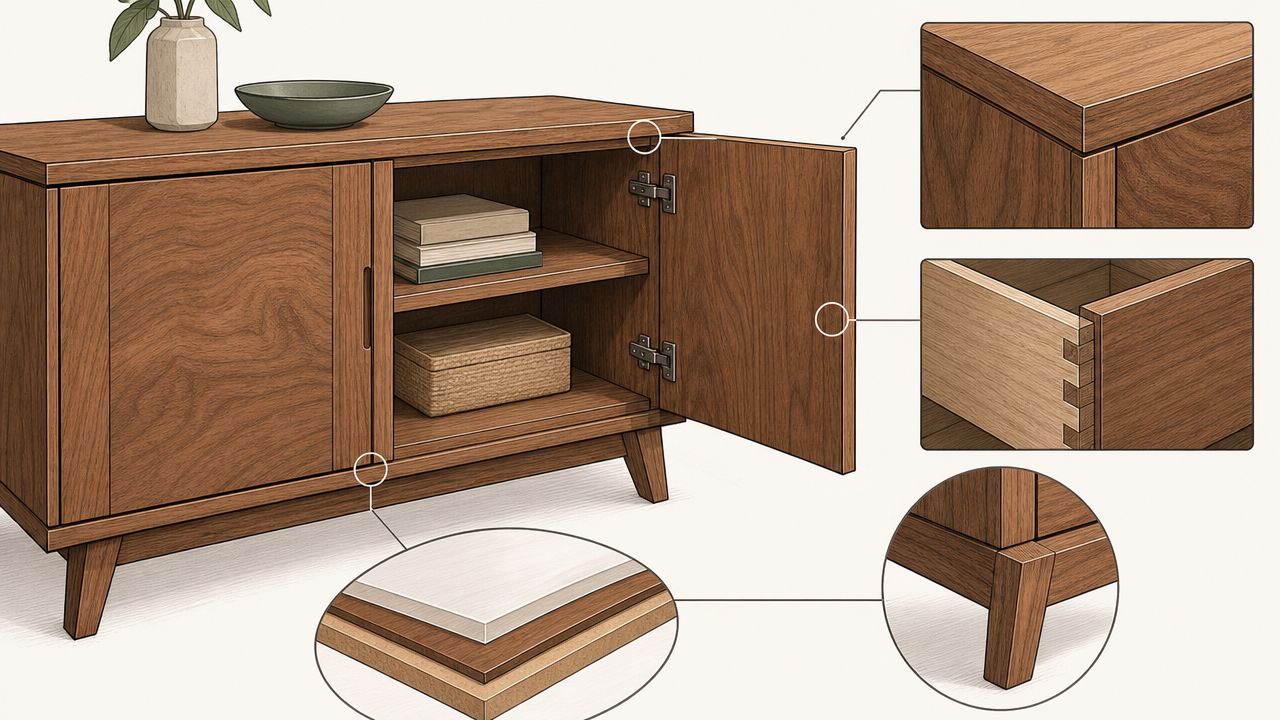
Style catches the eye first, but material determines whether a cabinet still feels solid years from now. That matters in a living room, where drawers are opened constantly, doors get bumped, and the top surface often becomes a landing spot for daily life.
What the main materials really mean
Furniture guidance identifies solid wood, engineered board, and metal as common cabinet materials, and that choice affects durability, weight, and maintenance. The same guidance notes that solid wood offers greater structural integrity and longevity, which is one reason it's often associated with heirloom-quality furniture in this category, as summarized by Dimensions.
In plain terms:
- Solid wood tends to appeal to buyers who want long-term value, warmth, and repairability.
- Engineered board can be a practical option when a lighter piece or a different price point makes sense.
- Metal usually brings a more industrial look and can work well in certain mixed-material interiors.
Many shoppers also want to understand species before choosing a finish. This overview of types of wood for cabinets is useful for learning how grain and hardness can change the look and feel of a piece.
Why finish matters as much as wood
A cabinet finish isn't only about color. It affects how the surface handles fingerprints, dust, sunlight, and day-to-day wear. A rich stain can highlight grain beautifully, while a painted finish may soften the visual weight of a larger cabinet.
That's especially important in living rooms where the cabinet is visible from several angles. A heavy-looking finish can make a compact room feel more crowded. A lighter or more natural finish may help the same silhouette feel calmer.
Homeowners comparing construction styles and wood performance often benefit from reading about how hardwood choice affects longevity and style.
For families thinking beyond short-term trends, solid wood and well-applied finishes usually make more sense than furniture that looks good for a season but doesn't age gracefully.
Sizing and Layout Tips for NWI Living Rooms
The most common cabinet regret isn't about color. It's scale. A piece can be well made and attractive, yet still feel wrong the moment it enters the room.
Start with the room, not the cabinet
Industry guidance for planning living room storage cabinets recommends measuring the room's length, width, and height, along with fixed features such as doors and windows, before choosing a cabinet. That same guidance stresses a measurement-first approach so the layout works with circulation and use, not just appearance, as explained in this cabinet planning guide.
A simple measuring checklist helps:
Wall space first
Measure the full wall, then subtract what can't be used because of trim, vents, outlets, or nearby furniture.Note fixed obstacles
Doorways, windows, radiators, and floor registers all affect cabinet placement.Check room height
Height changes how a cabinet feels, especially in smaller living rooms where tall furniture can dominate the space.Think vertically
A cabinet with varied compartments can often store more effectively than a wider piece that takes up floor space.
A simple layout check before buying
A cabinet needs to work with movement. If doors can't open comfortably, or if someone has to sidestep around the corner every day, the room won't feel settled.
Use this quick test before choosing a piece:
Walk the path
Trace the route from the main entry point to the sofa, hallway, or kitchen. The cabinet shouldn't interrupt that natural flow.Simulate door swing
Tape the cabinet footprint on the floor and imagine the doors opening outward.Compare it to nearby furniture
A cabinet should relate to the sofa, chairs, and rug. If everything else sits low and airy, a bulky piece may feel abrupt.
Some of the smartest storage choices come from restraint. A cabinet that leaves breathing room often works better than one that fills every available inch.
For anyone who wants a cleaner planning process before visiting a showroom, this guide on how to measure furniture for a room can help avoid expensive sizing mistakes.
Creating Your Custom Cabinet with Groen's
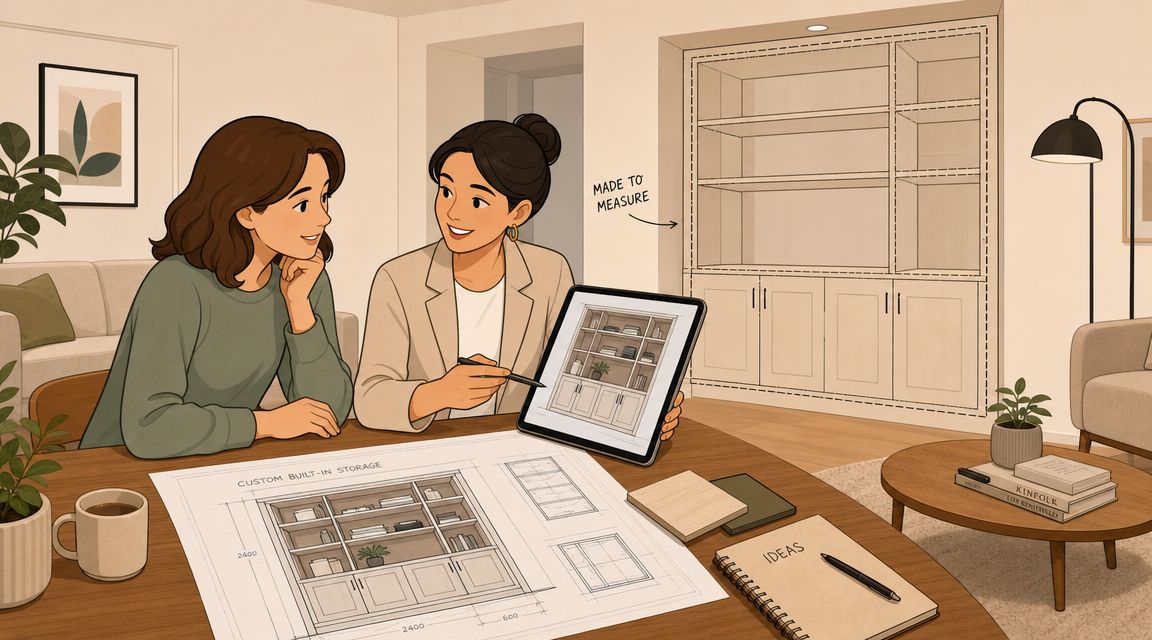
Many living rooms don't have a standard problem. They have one odd corner, one narrow wall, a window that lands in the wrong place, or a mix of storage needs that no stock cabinet handles particularly well. That's where custom ordering starts to make more sense than compromise.
Why custom often solves the real problem
A shopper may like the look of one cabinet, the finish of another, and the dimensions of neither. Off-the-floor furniture can still be the right answer in some homes, but living rooms often benefit from something more well-suited.
Custom storage cabinets for living room spaces allow better control over details such as:
- Overall size so the cabinet fits the wall instead of almost fitting it
- Interior layout for baskets, media gear, books, or board games
- Wood species and finish to match existing pieces
- Hardware choice to shift the style more traditional, modern, or transitional
- Door and drawer mix based on what needs to disappear and what should stay easy to reach
That's where Amish solid wood furniture has a special appeal. It gives homeowners a chance to create a piece around the room, not force the room to adapt to a fixed piece. The same made-to-order mindset is familiar in other categories too, including Canadel dining and customizable upholstery programs.
Design it your way
A thoughtful custom process usually starts with daily habits, not catalog pages. Questions like these matter:
- Does the room need to hide toys by evening?
- Will the cabinet hold electronics?
- Should the top surface support lamps, framed art, or both?
- Does the homeowner want one statement piece or a quieter built-in look?
One practical route is exploring custom furniture made simple so the decisions feel manageable instead of overwhelming.
Groen's Fine Furniture offers custom-order options that include Amish solid wood pieces and other made-to-order selections, giving NWI shoppers a way to choose dimensions, materials, and finishes with more control than standard floor inventory allows.
Custom doesn't have to mean extravagant. Often it just means the cabinet finally fits the room and the family using it.
There's also the budget question, and that's where many families hesitate too early. Special financing, subject to credit approval, can give homeowners more buying power and make a longer-lasting cabinet feel more achievable. For a household planning to live with the piece for years, that can be the difference between settling now and buying once with confidence.
A bespoke cabinet isn't about showing off. It's about making the room work better every day.
Styling Your Cabinet Like a Designer
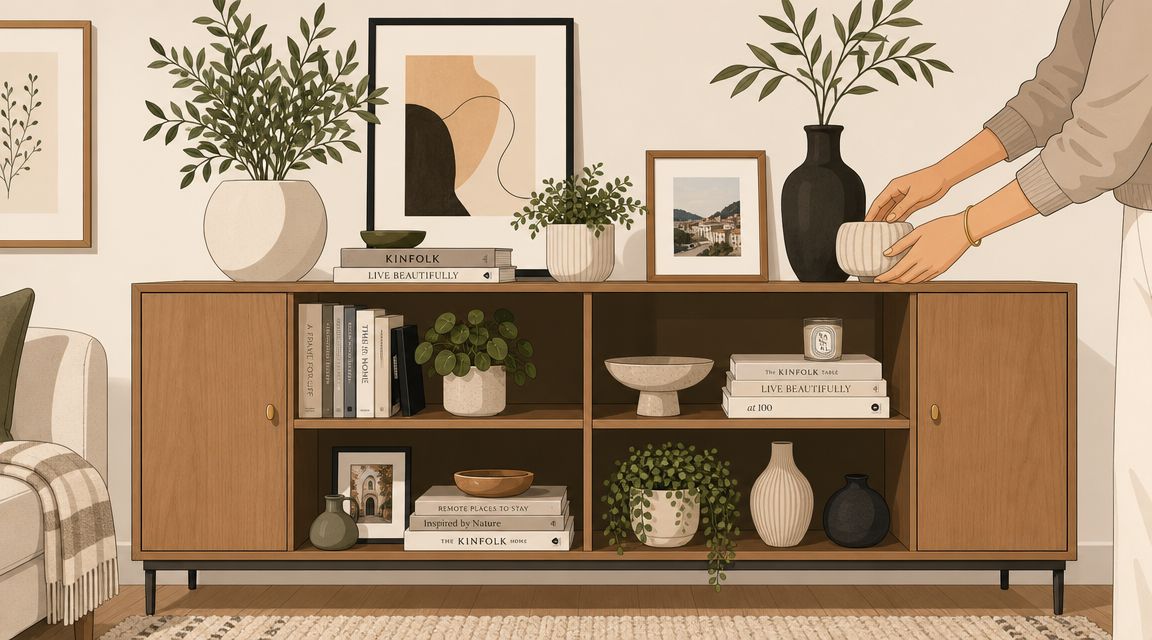
Once the cabinet is in place, many homeowners hit the next hurdle. The storage problem is solved, but the top surface looks either bare or overfilled. Good styling comes down to balance, not perfection.
Keep the top from looking flat or crowded
A simple approach works well for most cabinets:
Start with height
Add one taller object, such as a lamp, vase, or branch arrangement.Layer in the middle
A framed photo, piece of art, or medium sculpture gives the eye a place to rest.Ground the grouping
Use a stack of books or a tray to keep smaller objects from looking scattered.
The “rule of three” often helps because odd-numbered groupings tend to feel more natural. Varying texture matters too. A cabinet top looks more finished when wood, glass, ceramic, metal, or greenery are mixed rather than repeated in one note.
Readers who want more visual inspiration can browse these living room decorating ideas and apply the same principles on a smaller surface.
What belongs inside and what belongs on display
Not everything should stay visible. The most successful cabinets usually divide items into two groups.
| Keep Inside | Keep on Display |
|---|---|
| Remotes, chargers, game accessories | A few books |
| Toys and everyday clutter | Personal photos |
| Extra throws and practical items | Decorative objects with meaning |
| Paperwork and small electronics | Plants or natural elements |
A good styling test is simple. If every item on top disappeared, would the room lose personality? If the answer is yes, the display is too sparse. If the answer is relief, it's too crowded.
Answers to Your Top Cabinet Questions
Some of the most important cabinet questions aren't about style at all. They're about how furniture works in real homes with real limitations.
Living Room Cabinet FAQs
| Question | Answer |
|---|---|
| Should electronics go behind closed doors? | Sometimes, but not automatically. Closed storage creates a cleaner look, yet media devices also need practical access for cords, airflow, and day-to-day use. A hybrid cabinet with some open shelving, vented sections, or easier rear access often works better than sealing every device behind solid doors. This is especially helpful for streaming boxes, routers, game consoles, and charging hubs. |
| Can a cabinet affect remotes or signal performance? | It can. A fully enclosed cabinet may create frustration when devices need direct remote access or when placement makes Wi-Fi equipment less convenient to use. In those cases, a more open or partially open design may be easier to live with. |
| Are built-ins always the better-looking option? | Not always. Built-ins can maximize space and create a clean integrated appearance, but freestanding cabinets preserve flexibility if the room changes later. The better choice depends on whether the homeowner wants permanence or adaptability. |
| Do tall cabinets work in small living rooms? | They can, but proportion matters. Some design guidance suggests that in rooms with 8-foot ceilings, tall living room cabinets often look better when they stop around 72 to 80 inches, leaving some visual breathing room above the piece, as discussed in this tall cabinet design note. A cabinet that fits physically can still feel too heavy visually if it's too dark, too solid-fronted, or too tall for the room's scale. |
| What helps a large cabinet feel lighter? | A lighter finish, legs that show a bit of space underneath, glass or open sections, and less bulky door fronts can all reduce visual weight. Placement matters too. If the cabinet blocks natural light or crowds seating, it will feel heavier than it is. |
| What should families prioritize first? | Hidden storage. In a busy living room, closed compartments usually do the most work because they handle toys, blankets, media accessories, and daily clutter quickly. Open shelving can then be used more selectively for books and display items. |
The pattern behind these questions is simple. The right cabinet has to support modern living, not just match the wall color.
Let Our Family Help You Find the Perfect Fit
A cabinet can look good online and still feel completely different in person. Door movement, wood character, finish depth, shelf layout, and overall scale are easier to judge when the piece is right in front of the shopper.
That's why many Northwest Indiana families still prefer to visit a showroom before making a final decision. Seeing solid wood up close, opening drawers, comparing finishes, and talking through custom dimensions often brings clarity fast. It also helps narrow down whether the room needs a media console, accent cabinet, credenza, or something made to order.
For homeowners in Dyer, Crown Point, Munster, Schererville, St. John, and nearby communities, a thoughtful cabinet choice can turn the living room from a clutter catchall into a room that feels calm, useful, and lasting.
Visit Groen's Fine Furniture in Dyer or Crown Point today to explore custom options, including Amish solid wood designs, and ask about special financing plans, subject to credit approval. Let a multigenerational Northwest Indiana furniture family help create a home that fits beautifully and lives well.