Blog
Console Table Furniture: A Guide for Northwest Indiana Homes

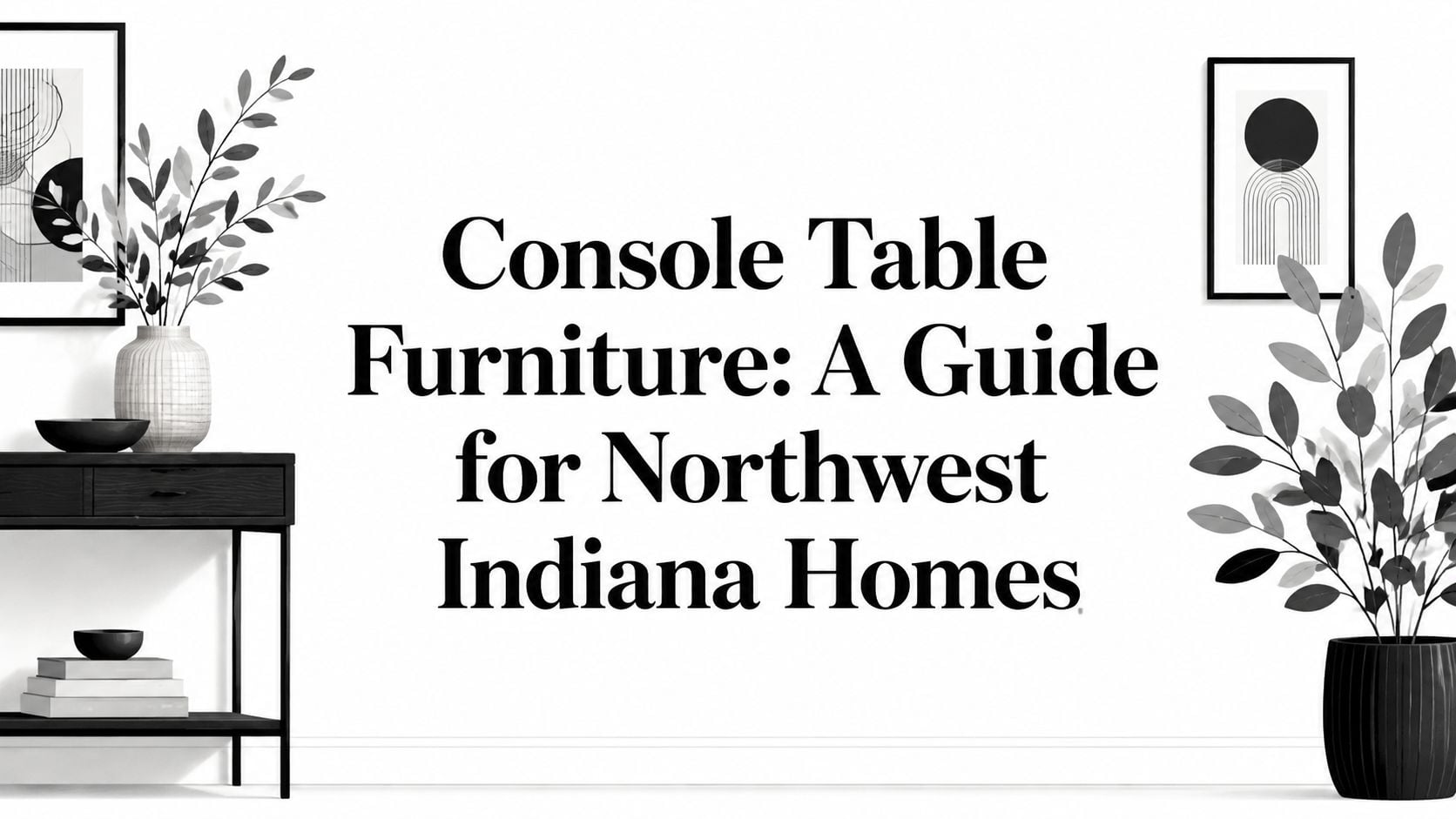
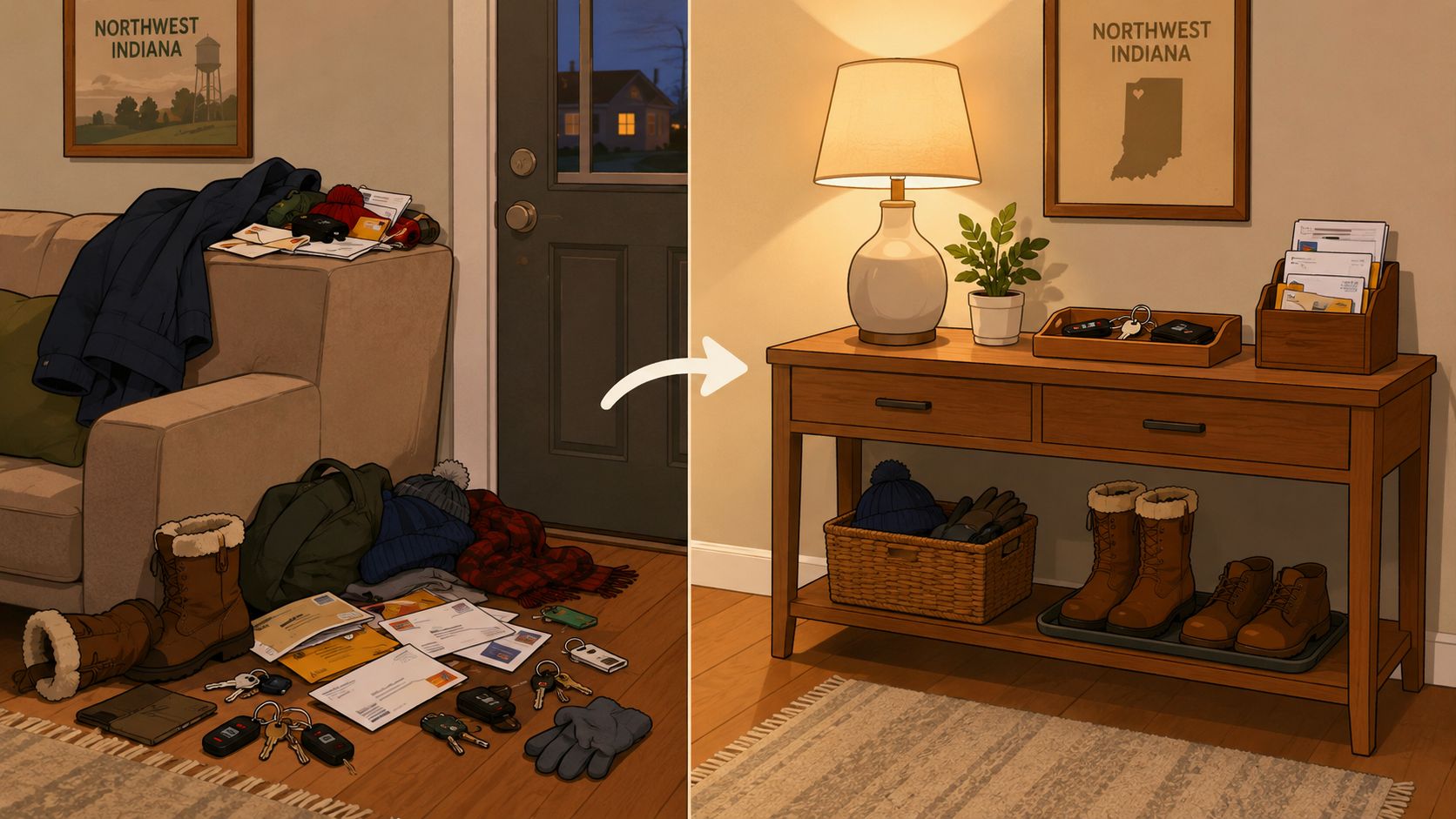
For homeowners in Dyer and Crown Point, console table furniture usually enters the conversation for a simple reason, the front door starts collecting mail, keys, gloves, and winter gear, or the sofa back keeps turning into a shelf. A good console solves that without making the room feel crowded, and that's why the piece still earns its place in Northwest Indiana homes. It gives a wall, hallway, or living room edge a clear purpose.
The tricky part is that many shoppers treat it like a styling prop first and a space-planning tool second. That's backward. Console table furniture is really a long, shallow table designed to sit against a wall or behind a sofa, with its shallow depth doing the heavy lifting by preserving walking space while still giving the room a surface for lighting, storage, and display.
That shape has a long history. Britannica traces console furniture to 17th-century France and Italy as decorative wall-mounted pieces for aristocratic interiors, and the category has since moved into everyday homes as a mainstream furnishing, not just an ornamental one (Britannica). The market reflects that shift too, with the global console table market valued at USD 4.24 billion in 2024 and projected to reach USD 5.98 billion by 2032 (Fortune Business Insights).
The core takeaway is simple. Console tables still matter because they solve a practical problem without giving up visual appeal, which is exactly why they show up in entryways, hallways, and behind sofas so often.
What Console Table Furniture Is and Why It Still Earns a Spot in Your Home
A homeowner in Munster may think a narrow table is a narrow table until the first one lands in the foyer and suddenly the backpacks, dog leash, and grocery bags have a landing zone. That's when the difference becomes obvious. Console table furniture is not just a small table, it's a piece built around wall clearance, display, and traffic flow.
The shape is the job
The classic console form is long and narrow, usually about 28 to 32 inches high with a 12 to 18 inch depth so it can sit against a wall without blocking the path (Hernest). That shallow profile is the defining feature, not a limitation. It lets the table act like furniture that belongs in a passage zone, not a bulky object that competes with it.
Britannica's history helps explain why the form still feels light and decorative today. Console pieces began as wall-adjacent furnishings, sometimes fixed to the wall and supported only at the front, which is why they often look more architectural than a side table or accent table (styylish). In other words, the category was designed to look intentional from the start.
Practical rule: if a table needs to fit in a hallway, behind a sofa, or under a mirror, the first question isn't style. It's whether the shape preserves the room's walking lane.
Why it keeps showing up in modern homes
A console can be a drop zone, a display surface, or the visual anchor that makes an empty wall feel finished. In a living room, it can stand behind the sofa and hold lamps or framed art. In an entry, it can catch the clutter that usually piles up on the floor.
The category's popularity also reflects how buyers now use furniture. A piece that began as aristocratic display furniture now serves everyday storage, lighting, and organizing needs in ordinary homes. That shift is exactly why a well-chosen console still feels relevant rather than old-fashioned.
For a deeper look at how entry pieces function at the front door, the internal guide on elements of the entry table gives useful context.
Standard Console Table Sizes and the Clearance Rules That Make Them Work
Sizing a console table works best when the room leads the decision, not the catalog photo. A narrow foyer in Schererville and a behind-the-sofa placement in a bigger family room call for different lengths, but they share the same core rule, the table has to stay visually slim and physically out of the way.
Start with height and depth
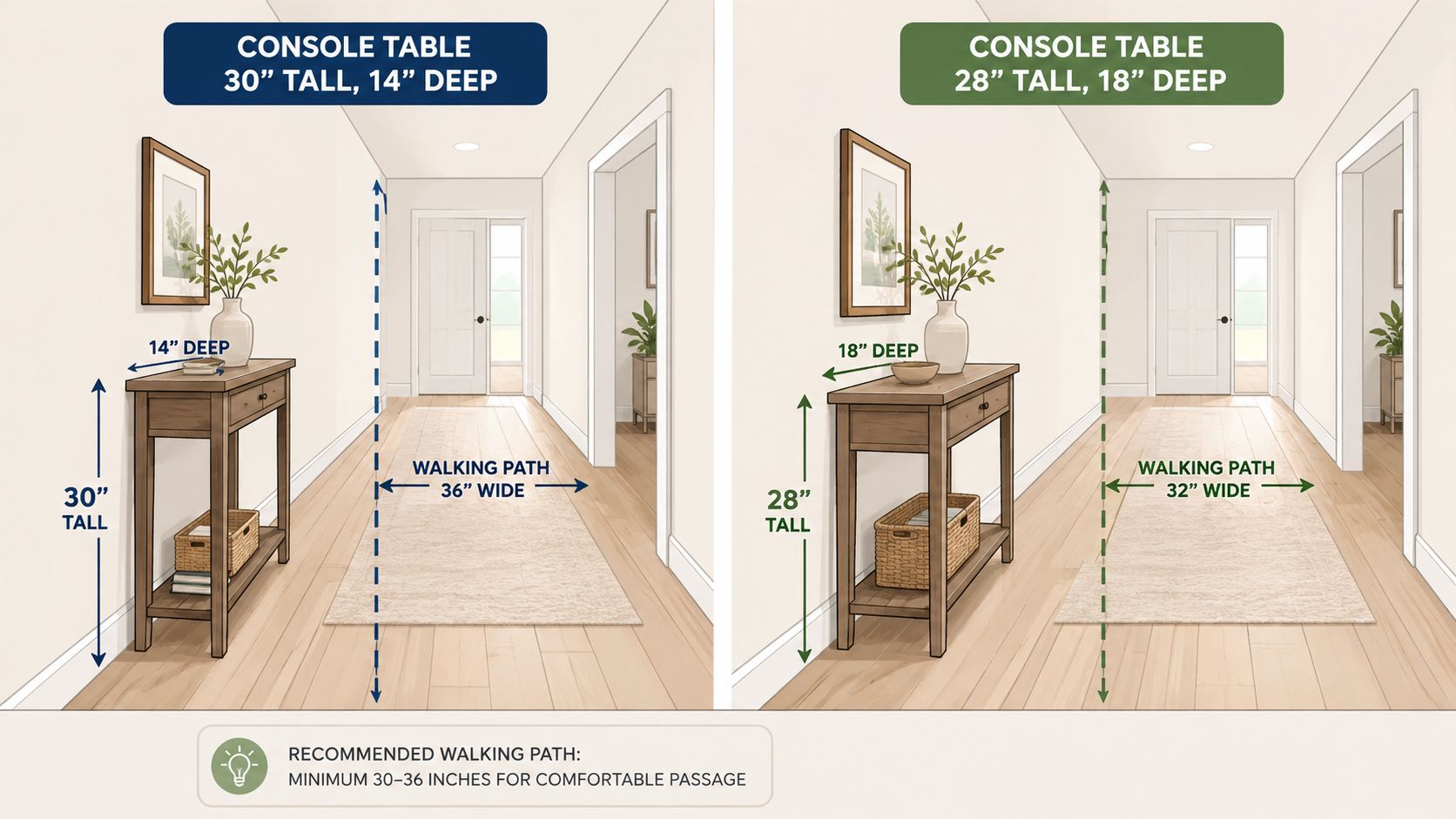
Mainstream references cluster console tables around 30 inches tall and 12 to 18 inches deep, with longer pieces extending 36 to 72 inches in width (RoomSketch3D). Those proportions are chosen to preserve circulation space, which is why the table works so well in hallways and along walls. The height also lines up comfortably with many sofa backs and entry surfaces.
A simple way to think about the depth is this. The deeper the table gets, the faster it stops behaving like a console and starts acting like a barrier. That's why the shallow end of the range matters so much in narrow rooms.
Then check length against the wall or sofa
A common proportion rule says the console should be about two-thirds the length of the wall or sofa it sits against. That keeps the piece from looking stranded or oversized. In a small entry, a shorter unit may feel balanced. Behind a long sofa, a longer console reads as part of the seating arrangement instead of a random add-on.
Leave roughly four feet of clearance for comfortable walk-through space in hallways or between furniture. If the room can't maintain that path, the table is too deep, too long, or placed in the wrong spot.
For measuring the actual wall and deciding whether the table belongs in front of it, the showroom guide on how to measure furniture is a helpful companion. A buyer who measures first usually ends up with a piece that feels calmer in the room, because there's less guesswork about whether doors, drawers, and traffic will still work.
Popular Styles and Materials for Every Room in the House
Console table furniture can look completely different from one home to the next. A painted piece in a cottage hallway, a solid wood console behind a leather sofa, and a mirrored table in a darker entry all belong to the same category, but they solve different design problems. That's why style matters, yet style only works after the room's use is clear.
Britannica's history is useful here too, because the early console was made for display as much as utility (Britannica). That background explains why finish, shape, and silhouette still carry so much weight today.
Console Table Styles at a Glance
| Style | Typical Materials | Best Placement |
|---|---|---|
| Traditional | Solid wood, carved details, brass or dark metal accents | Formal entry, living room wall, classic interiors |
| Transitional | Wood with clean lines, mixed finishes, understated hardware | Flexible family room, hallway, behind sofa |
| Modern | Glass, metal, stone, smooth lacquered surfaces | Bright entry, contemporary living area |
| Farmhouse | Painted wood, distressed finishes, simple profiles | Casual foyer, mudroom edge, informal hall |
| Rustic | Solid wood, visible grain, heavier silhouettes | Great room, lodge-inspired space, open living area |
A shopper who wants warmth and long-term character usually gravitates toward solid wood, especially in Amish-built or heirloom pieces. A homeowner who wants the room to feel lighter may prefer painted finishes or glass-and-metal construction. For a room that needs more visual openness, the right silhouette can matter as much as the material.
For readers comparing lighter mixed-material looks, this guide to a glass and metal entryway table is a useful design reference because it shows how a table can feel airy without losing definition.
The best placement depends on traffic. A chunky wood console can anchor a large living room wall. A slim painted version fits a narrow entry without feeling heavy. A mirrored surface can help a dim hallway reflect more light, though it asks for cleaner styling because every object becomes more noticeable.
Construction Details That Separate a Lasting Console From a Disposable One
A console table can look polished on the showroom floor and still be poorly built underneath. That's why buyers in St. John and Crown Point need to look past the finish first and ask how the frame is joined, what the legs are made of, and whether the piece can handle daily use without wobbling.
What to inspect first
Strong construction usually starts with the joints. Mortise-and-tenon, doweled, and corner-blocked joinery tend to hold up better than assemblies that depend mainly on staples and glue. The reason is simple, the joint is doing structural work instead of just holding pieces together until the finish looks pretty.
The frame and legs matter just as much. Solid hardwood generally gives better rigidity than hollow-core or lightweight engineered builds, especially when the table will carry lamps, books, or a heavier lamp base. A well-joined console resists racking, which is the side-to-side movement that makes a piece feel tired before its time.
A good console should feel quiet when a drawer closes and steady when someone rests a hand on the top. If it shifts, creaks, or flexes too easily, the frame is probably the weak point.
Hardware and finish tell their own story
Drawer construction can reveal quality quickly. Dovetailed joints, soft-close glides, and solid metal pulls usually point to more careful work than basic hardware with minimal adjustment. Finish quality matters too, especially in a hallway where bags, jackets, and cleaning routines touch the table often. Durable finishes like conversion varnish, catalyzed lacquer, or hand-rubbed oil are designed to stand up better to repeated use.
For anyone who wants a deeper joinery explanation, the showroom's guide on mortise and tenon joint helps show why this detail is so important in sturdy furniture.
The practical difference is easy to understand. A console built with care can become part of the home's daily rhythm for years. A lightweight piece may look fine at first, but it often feels like something that needs replacing after a few seasons of real use.
Custom Orders, Amish Craftsmanship, and How Special Financing Fits In
Some homeowners know the exact wall, exact finish, and exact function they need, but they still can't find a ready-made console that fits. That's where custom ordering changes the conversation. At Groen's Fine Furniture in Dyer and Crown Point, the buying path can include Custom Furniture, Custom Order Services, and made-to-order choices that let the room dictate the piece instead of the other way around.
A more precise fit starts with the order process
A custom dining program such as Canadel gives shoppers a wide range of size, shape, and finish combinations, which matters when a standard width just won't land right in the space. For buyers who want solid construction and a more handmade feel, Amish furniture brings a different kind of fit, one centered on solid wood, craftsmanship, and durability.
The point of custom isn't novelty. It's matching the piece to the room so the result feels settled instead of forced. That can mean choosing a finish that ties into nearby flooring, or selecting dimensions that keep hallway circulation open while still giving enough surface for practical use.
Financing and delivery can remove the friction
A quality console doesn't have to be an all-at-once decision. Special Financing available, subject to credit approval, can give families more buying power when they want the right piece now and prefer to spread payment over time. For readers who want a general overview of how a payment plan can spread the cost without interest, spread payments with no interest is a useful concept to understand before comparing options.
White-glove delivery also matters more than many shoppers expect. A console has to land at the exact wall it was measured for, and careful placement saves the hassle of moving a finished piece around corners or over rugs after delivery. That kind of service fits the practical side of furniture buying, where the goal is a clean setup, not another weekend project.
For readers who want a closer look at made-to-order craftsmanship, the internal page on Amish furniture gives a helpful overview.
What to Put Under a Console Table Without Cluttering the Room
The space under a console table often decides whether the piece feels useful or merely decorative. In an active Northwest Indiana entry, the under-table zone has to work with circulation, not against it. If the floor area gets crowded, the console stops helping and starts catching shoes, bags, and dust.
Storage has to fit the clearance
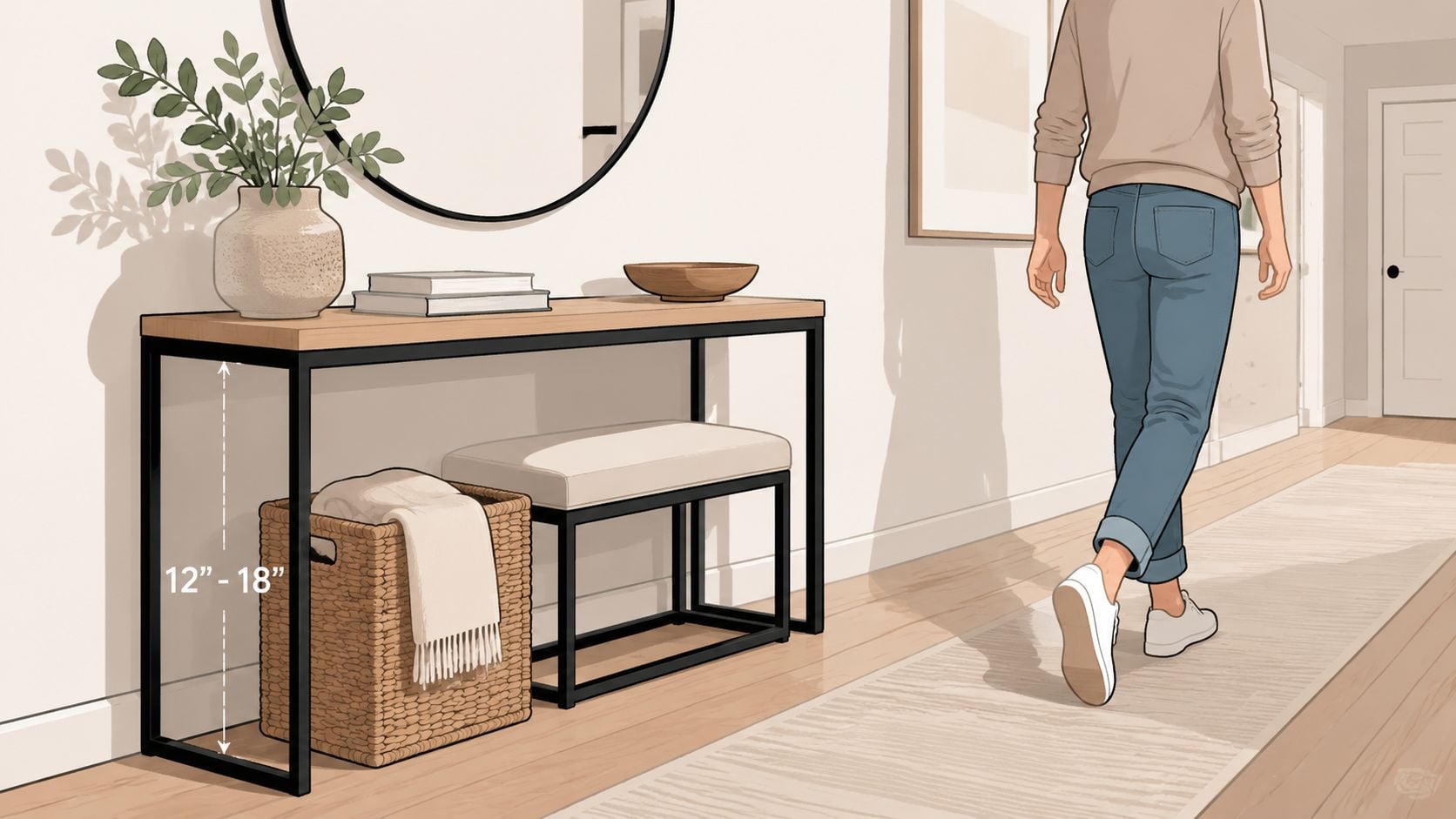
A practical storage plan starts with the table's depth and the space below the apron. Anything placed underneath needs to stay low enough to clear the frame and shallow enough not to jut into the walking lane. That's why oversized bins often create more problems than they solve.
Woven baskets work well for mail, shoes, pet gear, or winter accessories when they slide fully under the table. Low-profile storage trunks can hold blankets without making the room feel busy. A pair of slim stools can also work if they disappear neatly under the top and don't interrupt the path.
The counterpoint is worth saying plainly. Not every console needs something under it. In some homes, the cleanest and easiest-to-live-with choice is an empty floor. A clear under-table zone can make a tight entry feel calmer and easier to sweep, especially when people are constantly coming and going.
For a broader look at hidden storage options in living spaces, the internal guide on storage for living room connects well with this problem.
The best under-table setup is the one that still leaves the room easy to cross, easy to clean, and easy to live in.
That's why the under-console question is more about fit than décor. In busy homes, hidden storage often beats open styling because it reduces visual clutter without asking the room to work harder.
Room by Room Styling, Measurement, and Care
Entryway, hallway, and behind-the-sofa placements all ask for a slightly different console strategy. The same table can work in each spot, but only if the styling follows the job. A tray in the foyer, a shallow profile in a corridor, and the right sofa-back height each create a different kind of success.
Match the placement to the purpose
In an entryway or foyer, the table should handle daily drop-zone duties. A tray keeps keys and mail from scattering, a lamp adds scale, and a mirror above it helps the space feel larger. A plant can soften the arrangement too, and a guide on decorating your home with plants can help homeowners choose greenery that fits the light and the room.
In a hallway, the goal is restraint. Keep the depth at the shallow end, limit accessories, and let the table do its job without turning the passage into a display shelf. Hallways can look elegant with very little on them if the scale is right.
Behind the sofa, the table should match the back cushion top closely enough that the pieces feel connected. That placement works best when the console is long enough to anchor the seating area and keep the composition balanced. Many homeowners also call this placement a sofa table, which is one reason the height match matters so much.
Keep the finish in good shape
A few simple habits protect the piece long term. Dust it weekly with a soft cloth, rotate decor so the finish ages evenly, and use coasters under lamps or drinks. Solid wood should also stay away from heating vents, since direct heat can work against the material over time.
A well-used console doesn't need complicated care. It needs consistency.
Your Next Step Toward the Right Console Table
The smartest console purchase usually comes down to three choices. Measure the wall and clearance first, choose the style and material that match the room, then decide whether an in-stock piece or a custom order makes more sense. Those decisions get easier in person, where the finish, height, and drawer action can be checked against the actual room instead of a screen.
For Northwest Indiana homeowners, a visit to Dyer or Crown Point can turn the guesswork into a real plan. Groen's Fine Furniture offers custom options, solid wood choices, and special financing, and its team can help measure the fit before anything leaves the showroom.
Visit Groen's Fine Furniture in Dyer or Crown Point to explore console table furniture that fits your entry, hallway, or living room with less guesswork. Bring your measurements, check the finishes in person, and ask about special financing so the right piece can fit your home and your budget.