TV Stand Height: Find Your Perfect Viewing

A lot of families run into the same moment. The new television arrives, the box is open, the room is ready, and then the old console suddenly looks all wrong. The screen sits too high, or too low, or so wide that the whole setup feels off-balance. By the time movie night starts, someone is already shifting on the sofa and rubbing their neck.
For homeowners in Dyer, Crown Point, and across Northwest Indiana, that problem is more common than it should be. A comfortable living room doesn't come from guesswork. It comes from a few smart measurements, a little honesty about how the room is used, and furniture that fits real family life. That matters even more in homes with kids, grandparents, recliners, unusual wall layouts, or open-concept spaces that don't follow showroom formulas.
As a family-owned business serving NWI since 1983, Groen's Fine Furniture has seen how often one small detail changes the whole room. TV stand height is one of those details. Families browsing living room furniture for TV spaces usually aren't just shopping for a box under a screen. They're trying to create a comfortable, lasting place where everyone can gather.
Table of Contents
- The Heart of Your Home's Entertainment
- The Simple Formula for Perfect TV Height
- Stand Height Examples for Popular TV Sizes
- Beyond Height Soundbars Aesthetics and Family Needs
- Design It Your Way Custom Solutions from Groens
- Your TV Stand Measurement Checklist
- Frequently Asked Questions About TV Placement
The Heart of Your Home's Entertainment
In many Northwest Indiana homes, the living room does more than hold a television. It hosts game nights, after-school cartoons, weekend movies, and quiet evenings when everyone finally lands in the same room. That's why the stand beneath the TV matters more than people expect.
A screen that sits at the wrong height changes the whole experience. If it's too tall, viewers spend hours looking slightly upward. If it's too low, the room may feel awkward even when the measurements technically fit. The right setup disappears into the background. People stop noticing the furniture and start enjoying the space.
Why families get stuck here
The confusing part is that shopping often prioritizes TV size first and furniture style second. Height often gets decided last, almost as an afterthought. That's usually where discomfort begins.
A standard sofa, a sectional with deep seats, a recliner, and a room used by three generations won't all want the same answer. A home in St. John with an open family room may need a different solution than a cozy Munster living room with lower seating and a soundbar under the screen.
The best setup doesn't come from a generic chart alone. It comes from matching the furniture to the way the household actually watches TV.
A small change that affects comfort every day
People often focus on finish, storage, or whether the console matches the coffee table. Those things matter. But comfort comes first, because the room has to work before it can look finished.
That's especially true in homes with children or pets, where lower profiles often feel more grounded and practical, and in homes with older adults who may prefer a gentler downward view instead of a screen placed too high. Those real-world trade-offs deserve more attention than they usually get.
The Simple Formula for Perfect TV Height
A good TV setup starts with one simple target. The middle of the screen should meet your eyes when you are seated in the spot your household uses most often.
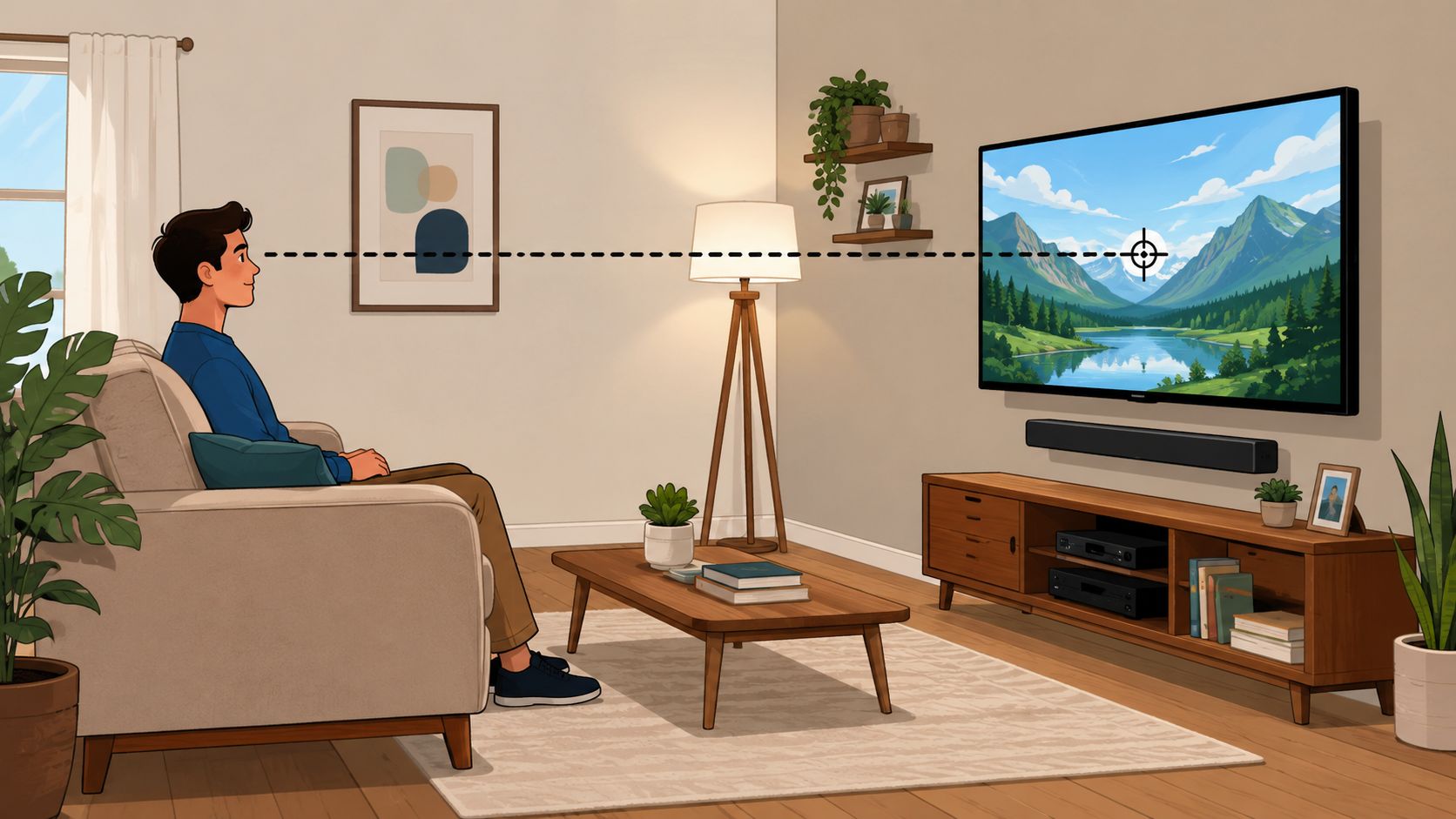
That idea sounds technical, but it is easier than it seems. Hanging a television works a lot like placing artwork over a fireplace or buffet. The overall piece may be large, yet the visual center is what makes it feel comfortable and balanced.
The formula that does the work
Use this formula:
Ideal Stand Height = Seated Eye Level ? (TV Height ÷ 2)
You only need two measurements:
- Seated eye level, measured from the floor while sitting in the main viewing seat
- TV height, measured from the top to the bottom of the screen area
Here is the reasoning. If the center of the television should meet your eyes, and half of the screen sits above that center point, then half of the screen also has to sit below it. Subtracting half the TV's height gives you the stand height that keeps the screen centered where your body wants it.
A plain-language example
Say your family's main sofa puts seated eye level at about 42 inches from the floor, and your TV screen is about 27 inches tall. Half of 27 is 13.5. Subtract 13.5 from 42, and you land at about 28.5 inches for the stand height.
That is why many living rooms feel right with a stand somewhere in the mid-to-upper 20-inch range, depending on the screen size and the seating.
Practical rule: Measure from the seat people use most often, not the chair that almost never gets used.
That small detail matters more than shoppers expect. In many Northwest Indiana homes, the "main seat" is not always a standard sofa cushion. It might be Grandpa's recliner in Dyer, a deep sectional in Crown Point, or a family room where kids sprawl on the rug while adults sit higher up. Big-box charts usually assume one average viewer and one average sofa. Real homes rarely work that neatly.
Why the formula sometimes needs adjustment
The formula gives you a strong starting point, not a rigid rule.
If your room includes a recliner that leans the viewer back, a slightly higher screen can feel more natural. If the household includes older adults who sit upright, a lower placement often feels easier on the neck. If a large soundbar needs space below the TV, the stand may need to be lower so the screen does not creep too high.
Custom furniture proves especially useful. A standard console may be too tall for a larger TV, too shallow for the room, or too low to provide the storage a busy family needs. A custom piece lets you adjust the height, width, and storage together so comfort and function stay in balance. That matters in multi-generational rooms and unusual layouts, where one-size-fits-all advice usually falls short.
Families who want the whole room to work together can use this guide on calculating the best placement for your sofa and television to fine-tune distance, layout, and viewing comfort as one connected plan.
Stand Height Examples for Popular TV Sizes
A chart helps once you have the formula, especially if you are standing in a showroom trying to decide whether a console will feel comfortable at home. For these examples, use a 42-inch seated eye level as the reference point, which fits many standard sofas.
Ideal TV Stand Height by Screen Size for 42-inch Eye Level
| TV Size | Approx. TV Height | Ideal Stand Height |
|---|---|---|
| 55-inch | 28 inches | 26 to 29 inches |
| 65-inch | 32 inches | 22 to 28 inches |
| 75-inch | Larger screen with more vertical height | Often best on a lower stand, depending on seating and room layout |
The pattern is simple. As the screen gets taller, the stand usually needs to get lower to keep the center of the picture near eye level.
That catches plenty of families off guard.
A larger TV often looks like it belongs on a larger cabinet, but comfort follows the middle of the screen, not the visual weight of the furniture. A 65-inch set has more height than a 55-inch set, so even a few extra inches in stand height can push the picture up enough to make movie night feel less relaxed. The room may still look good, but your neck notices the difference long before your eyes do.
A 75-inch TV makes that trade-off even clearer. In many Northwest Indiana homes, a lower profile stand works better because the screen itself already brings plenty of height. That is especially true in rooms where grandparents sit upright, parents use the sectional, and kids watch from the floor. One fixed number rarely serves everyone well.
How to read these examples in real life
Use the table the way you would use a sizing chart for a dining table. It gives you a helpful range, then your room makes the final decision.
Two families in Schererville can own the same 65-inch TV and need completely different stand heights. One may watch from a tall leather sofa. Another may use a deep sectional that drops everyone lower. A basement theater, bonus room, or long narrow living room can shift the best height too. Northpoint Construction's guide for homeowners shows how room type changes theater setup choices, and that same idea applies here.
If a standard size gets close but not quite right, custom furniture solves the problem in a practical way. A custom stand can be built lower for a taller screen, wider for a large wall, or designed with storage that still fits the room instead of crowding it. Families comparing sizes, proportions, and storage options can start with this guide on how to shop for TV stands and then fine-tune the height to match the people who use the room.
Beyond Height Soundbars Aesthetics and Family Needs
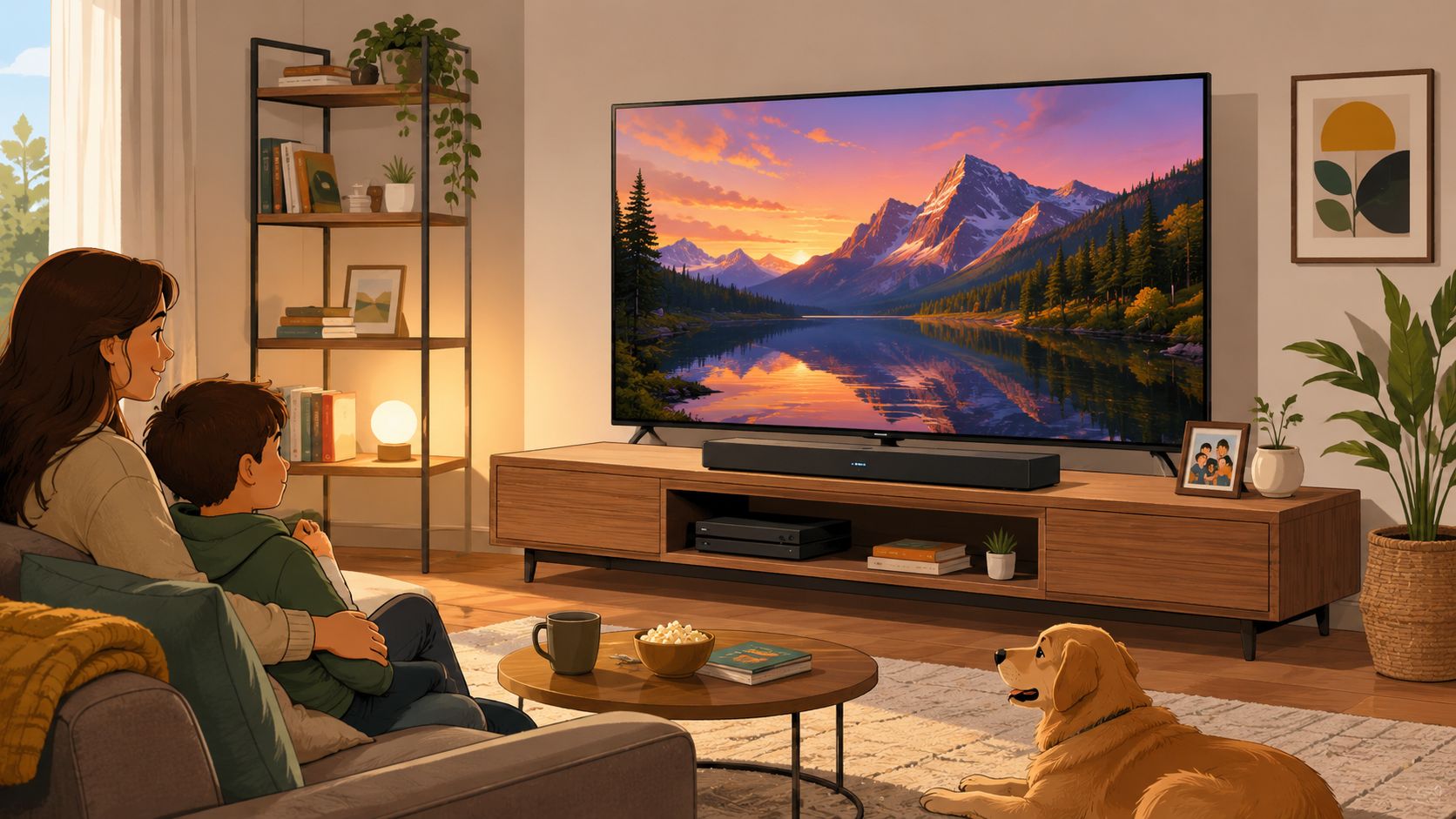
A family in Northwest Indiana can measure stand height carefully and still end up with a setup that feels off once real life moves in. The soundbar may cover part of the screen. The console may look too small under a wide TV. One person may watch from a recliner while another stretches out on a deep sectional. Good placement has to work with the room, not just the math.
Width affects both safety and appearance
Height gets most of the attention, but width does quiet work in the background. A stand that is too narrow can make a large television look top-heavy, like a tabletop that is smaller than the lamp sitting on it. A wider stand usually feels calmer and more grounded, and it also leaves room for speakers, remotes, and everyday use.
Design guides commonly recommend choosing a stand that extends past the television on both sides rather than matching the screen width exactly. That extra margin helps the arrangement look intentional instead of squeezed in. In family rooms with larger screens, this matters even more because a broad TV can visually overwhelm a short or narrow console.
Soundbars and devices change the true measurement
The usable height is never just the stand by itself. It is the stand, plus anything that sits on top of it.
A soundbar placed under the screen can raise the visual bottom edge of the setup and make the TV feel crowded. Add a cable box, game console, or center speaker, and the area can start to feel stacked instead of settled. Measuring the full arrangement before you buy helps prevent that problem, especially in basement media rooms or renovated living spaces. Households planning built-ins, basement entertainment zones, or larger media walls may also find useful layout ideas in Northpoint Construction's guide for homeowners, especially when the TV area has to work with a broader renovation plan.
Family comfort often changes the "right" answer
This is the part many big-box guides skip. The best TV setup for an NWI family is often the one that fits several generations at once.
A lower stand may suit children watching from the floor and grandparents who prefer an upright seat with less neck strain. A slightly taller stand may feel better in a room with bar-height seating or a sofa with firmer, taller cushions. In a long narrow room, the distance from the screen can also soften small height differences that would feel obvious in a compact den.
That is why one standard answer rarely holds up in real homes. The room shape, the seating depth, and the people using the space all pull on the final decision.
For families who need to hide electronics, games, blankets, or toys without turning the room into a storage wall, furniture has to do two jobs at once. It needs to support the TV at the right level and keep the space orderly enough to live in every day. Practical living room storage solutions can help you balance both, especially when a standard media console does not fit the way your family uses the room.
Design It Your Way Custom Solutions from Groens
Saturday night in Northwest Indiana can look very different from one home to the next. In one living room, kids are stretched out on the rug. In another, grandparents are sitting upright in firmer chairs. In a basement media space, the sectional may sit lower than expected, or the room may be long and narrow with a wall that never seems to fit a standard console. That is usually the moment families realize a stock TV stand was built for a showroom, not for their room.
That is where custom furniture earns its keep. The right piece lets you match the stand to the way your family watches, stores, and lives, instead of adjusting your habits to fit a preset size.
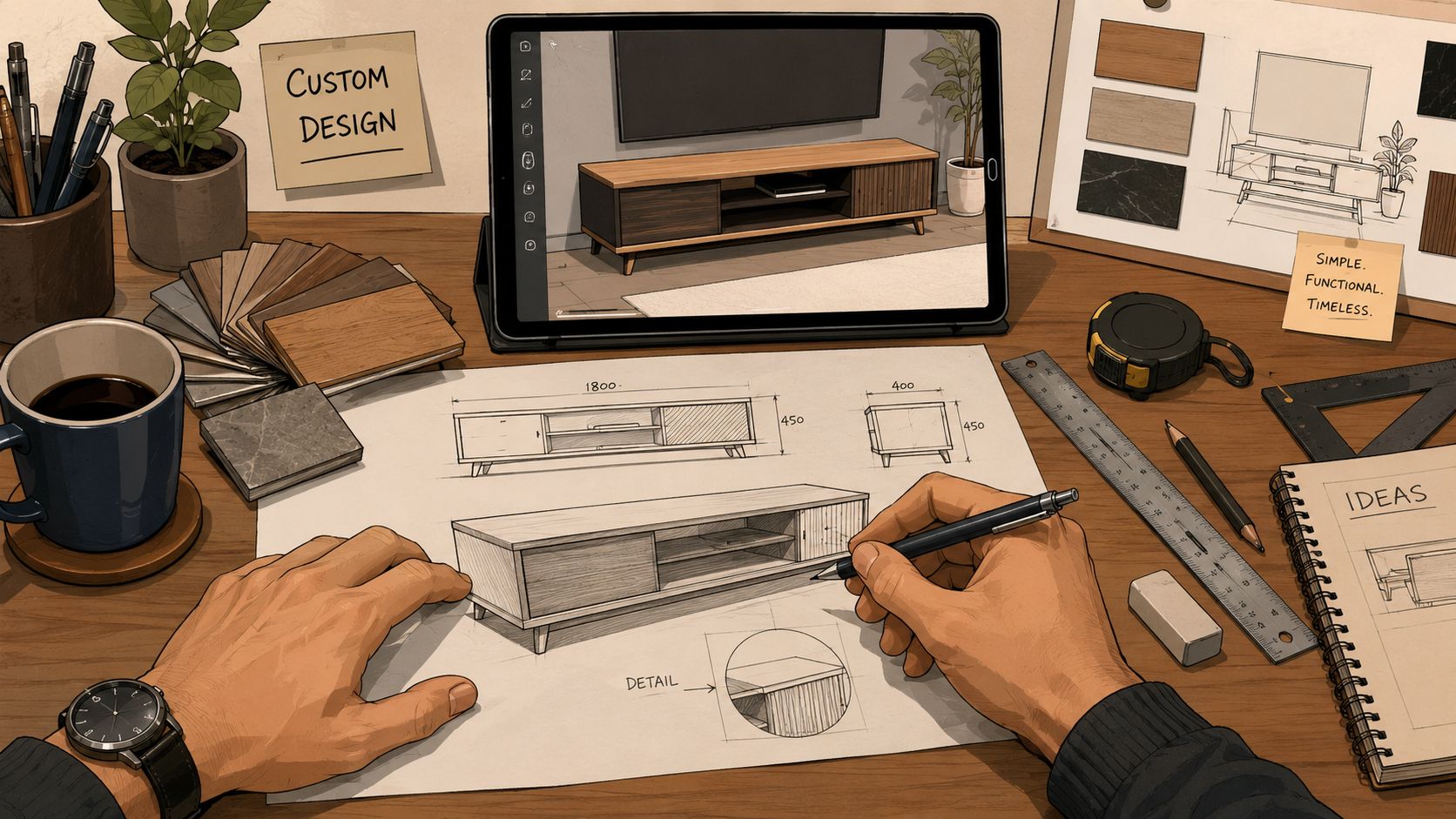
Bespoke dimensions solve real room problems
Custom sizing helps with the problems we see every week in local homes. A family may need a lower profile stand for a deep, lounge-style sectional. Another may need extra width so a large TV does not look crowded between windows. Some need closed storage for game systems and remotes, while others need shelving that leaves room for airflow and easy access to components.
It works a lot like tailoring a suit. Off-the-rack can be close, but close is not always comfortable. A made-to-order TV stand can be built to the height your seating calls for, the width your wall can handle, and the storage your household uses every day.
Custom also helps in rooms that big-box advice tends to ignore. Multi-generational homes often need a viewing setup that feels comfortable from more than one seat height. Older homes in NWI can have odd wall lengths, floor vents in awkward spots, or trim details that make standard pieces look slightly off. A custom piece gives you room to solve those small frustrations before they become daily annoyances.
Why custom is about function as much as style
A well-designed media console has to do several jobs at once. It needs to support the screen at the right level, keep the room visually balanced, and hold the things real families do not want scattered across the room.
That can include:
- the right cabinet height for your seating and screen placement
- a width that suits the TV and still looks grounded on the wall
- storage for streaming boxes, gaming gear, blankets, and board games
- wood species and finishes that hold up to everyday use
- design details that connect with the rest of the room
Even smaller construction details matter. The base changes how heavy or airy a piece feels, and it can affect cleaning access and visual height. If you want to understand one of those details better, The Cabinet Coach's toe kick guide gives a helpful overview.
A better fit for long-term homes
For many families, custom furniture makes sense because it solves a room once instead of creating a compromise you notice every evening. A couple in Crown Point may want solid wood and generous storage for a main-floor family room. A household in Dyer may need a piece built around a soundbar and a taller seating arrangement. A family in St. John may want a console that looks like it belonged in the room from the start.
That kind of planning feels much easier when you can see the process laid out clearly. Our guide to getting started with custom order furniture walks through what to bring, what to expect, and how to turn a rough idea into a piece that fits your home well for years.
Your TV Stand Measurement Checklist
A tape measure and a few notes can prevent most TV setup mistakes. Before shopping, it helps to gather the numbers that affect comfort and fit.
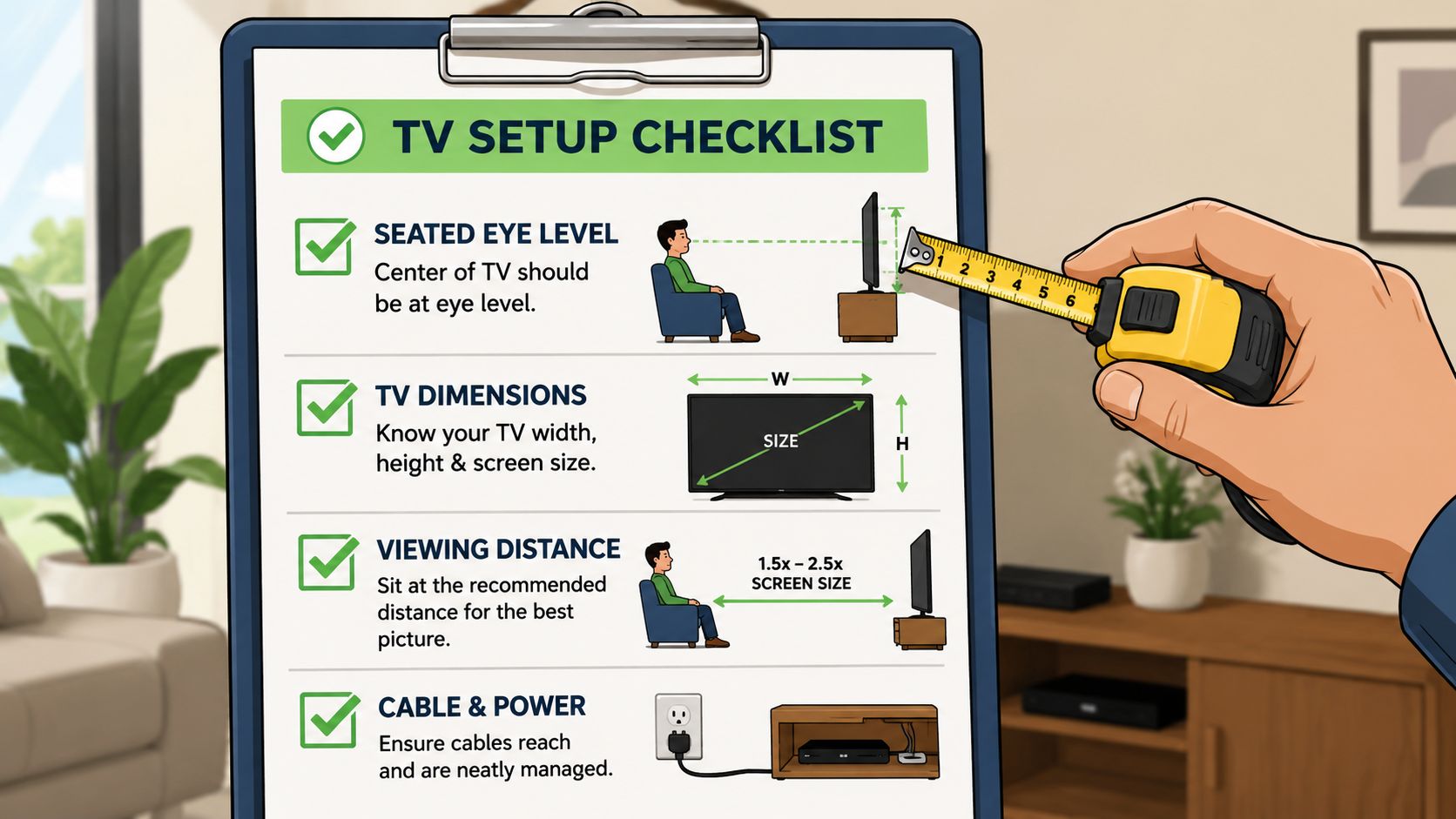
Bring these measurements before shopping
- Measure seated eye level: Sit in the main viewing seat and measure from the floor to eye level. Use the position people watch from most often.
- Check the TV's actual height: The screen's top-to-bottom measurement matters more than the diagonal size on the box.
- Calculate ideal stand height: Use the formula covered earlier and write the number down.
- Measure wall space and width needs: Include enough width for the television to sit with comfortable visual balance on both sides.
- Account for accessories: Soundbars, media boxes, and decorative pieces all affect the final setup.
- Note room details: Baseboards, floor vents, and traffic paths can all change what works best.
A detail many people overlook
Cabinet design details can matter too. Toe kicks, for example, slightly affect how a piece sits visually and functionally in a room. For readers curious about how that lower recessed area works on cabinetry and built-ins, The Cabinet Coach's toe kick guide gives a helpful design overview.
Bring the numbers with you. Shopping gets much easier when the room's limits and the family's habits are already clear.
A prepared shopper makes better decisions. That usually means fewer compromises, better proportions, and a room that feels right the first time.
Frequently Asked Questions About TV Placement
Does the same rule apply to wall-mounted TVs
Yes. The principle stays the same. The center of the screen should still align with the viewer's seated eye level or with the lower setup preferred for certain family needs. The difference is that the wall takes over the support role instead of the furniture below.
A console can still help anchor the wall visually and provide storage, even when the TV isn't sitting on it.
What's the best TV stand height for reclining seats
Measure from the reclined eye position, not from an upright posture. A recliner changes the viewing angle, so a setup that feels perfect from a sofa may feel too high from a fully relaxed seat.
This is one of the clearest examples of why standard charts should be treated as starting points, not final answers.
Are taller TV stands ever a good idea
Yes, but they're usually right for special situations rather than standard living rooms. Taller stands can work well in bedrooms, in rooms with high seating, or where people watch from a raised dining or bar-height area.
For a traditional family room with average sofa seating, taller pieces often place the screen center too high.
What if the household includes kids and older adults
That's where flexibility matters most. Some families are more comfortable with a slightly lower screen placement than standard guides suggest. A lower console can support a gentler downward view and make the room easier for multiple generations to enjoy together.
How wide should the stand be if the TV is already chosen
Use the TV's actual side-to-side width, not the diagonal screen label. A stand that extends beyond the television on each side usually looks better and feels more stable in the room.
Is custom furniture worth it for a TV area
For unusual layouts, very specific height needs, or households that want solid wood furniture built around the room, custom often makes the most sense. It removes a lot of the compromise that comes with trying to force a near-fit piece into an exact job.
For homeowners in Dyer, Crown Point, and across Northwest Indiana, Groen's Fine Furniture offers the kind of personal guidance that big-box shopping rarely delivers. Visit Groen's Fine Furniture in Dyer or Crown Point today to explore custom furniture options, ask about special financing available subject to credit approval, and experience the 5-star service that has defined this multigenerational family business since 1983. Let their family help create a home you love.