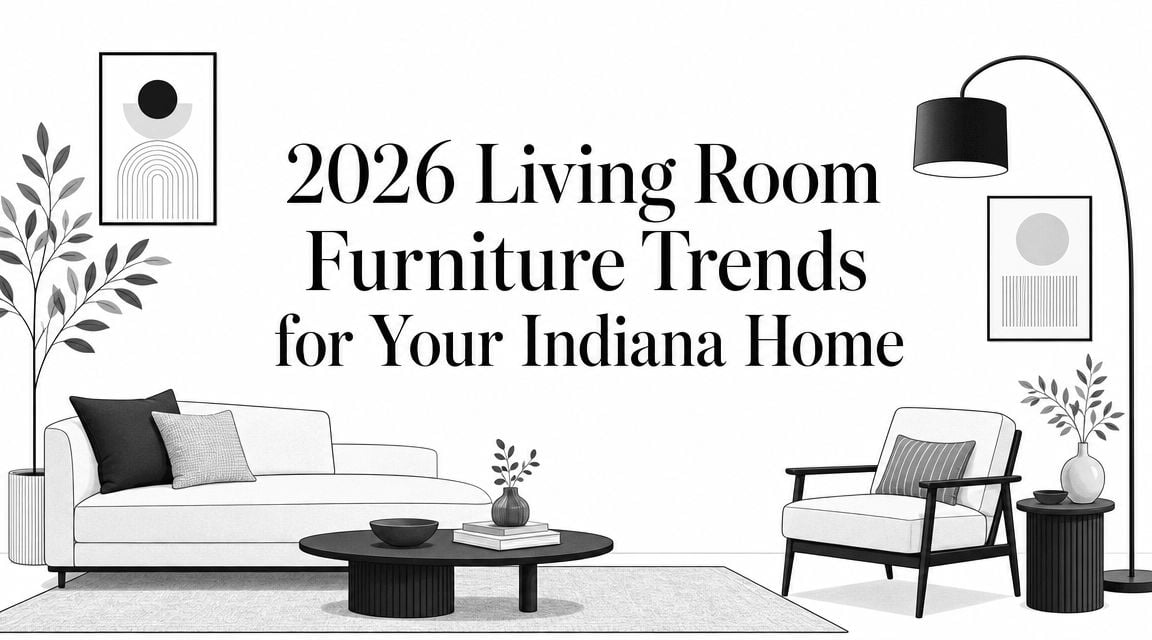
2026 Living Room Furniture Trends for Your Indiana Home

A lot of homeowners in Dyer, Crown Point, and across Northwest Indiana are standing in the same spot right now. They look at their living room and think, “This space works, but it doesn't quite feel finished anymore.” The sofa may still be comfortable. The tables may still be useful. But the room doesn't reflect how the household lives today.
That's why living room furniture trends matter when they're explained the right way. Most families aren't starting from scratch, and most don't want a room that looks copied from a showroom floor. They want a space that feels relaxed on a weeknight, welcoming when friends stop by, and durable enough for real life. For extra inspiration on layering warmth into a space without making it feel overdone, That Blanket Co on cozy interiors offers helpful ideas that pair well with furniture planning.
For local homeowners browsing furniture stores in Northwest Indiana, the biggest shift is simple. The living room isn't a formal display room anymore. It's a working, relaxing, gathering space. That change is shaping nearly every furniture decision, from sofa depth to fabric choice to whether a room should even have a sectional at all.
Table of Contents
- A Warm Welcome to Timeless Comfort in Northwest Indiana
- The Big Picture How We Live Now Defines Furniture Trends
- 2026 Trends in Detail From Curved Sofas to Smart End Tables
- Bringing Trends Home How to Choose Pieces for Your Space
- Design It Your Way with Custom Furniture and Smart Financing
- Create a Living Room You'll Love for Years to Come
A Warm Welcome to Timeless Comfort in Northwest Indiana
In many Northwest Indiana homes, the living room has become the hardest-working room in the house. Kids stretch out there after school. Guests gather there on holidays. Someone claims a corner seat for reading, another uses the coffee table for a laptop, and the dog has already chosen a favorite cushion. A room like that doesn't need to look formal. It needs to feel right.
That's part of what makes current living room furniture trends so useful. They aren't asking families to make their homes look stiff or overly designed. They're moving toward comfort, flexibility, and personality. That direction fits how people in St. John, Schererville, Munster, Dyer, and Crown Point use their homes.
A family-owned furniture business that has served the region since 1983 tends to see the same pattern across generations. First-time buyers want pieces that can adapt as life changes. Longtime homeowners want an update that feels fresh without tossing everything they already own. Both groups usually want the same end result. They want a room that looks collected, lives easily, and still feels welcoming years from now.
A lasting living room rarely comes from chasing every new idea. It comes from choosing a few good ones and making them fit the home.
That's why the most helpful approach isn't trend-watching for trend-watching's sake. It's learning which ideas improve daily life, which ones only work in large photo-ready rooms, and how to bring in new style without replacing every piece at once.
The Big Picture How We Live Now Defines Furniture Trends
The biggest change in living room design isn't a color or a fabric. It's a lifestyle shift. The room once treated as a formal sitting area is now a multi-use zone. It hosts movie nights, conversations, quiet reading, casual work, and everyday downtime. Furniture has started to reflect that reality.
Design reporting points to a major move away from matching suites and toward mix-and-match layouts built around modular and multifunctional pieces. That shift matters because it gives households more freedom to arrange seating for gatherings, quieter evenings, and smaller footprints, especially as open-plan layouts remain common in modern homes, according to Chairish on living room trends for 2025.
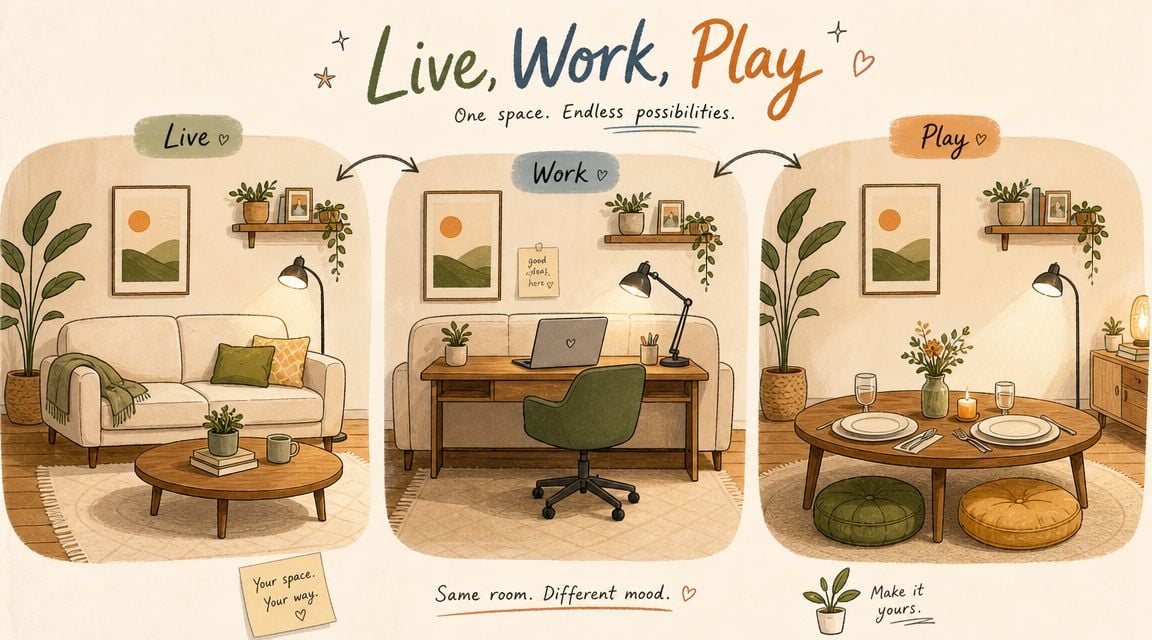
A room designed this way doesn't have to look random. It doesn't rely on every piece being part of the same rigid set. A homeowner might pair one sofa with two different accent chairs, add a movable ottoman, and choose a storage piece that can serve media, display, and everyday organization.
Why Adaptability Matters More Than Matching
The old matching-suite approach made decisions simple, but it often made rooms feel fixed. Once the sofa, loveseat, chair, and tables were locked into one look, there wasn't much room to adjust. Today's layouts tend to work better because each piece can serve a purpose beyond “filling the set.”
That matters in real homes. A family with a narrow room may need seating that can float away from the wall. A couple in a condo may want a modular sofa that can be reworked later. A first-time buyer may prefer to build the room in stages instead of buying everything at once.
For homeowners gathering ideas, style trends for the home can be easier to understand when viewed through that lens. The question isn't “What's in style?” The better question is “What kind of room is this home asking for?”
Comfort Has Become the Starting Point
Forecasts for 2026 also point to low-profile, deeper seating with rounded or softly geometric forms. Designers are prioritizing body-hugging comfort and human-centered layouts, while modular sofas, adjustable backrests, storage poufs, and movable partitions answer the growing need for flexibility in multipurpose rooms, according to Domkapa's 2026 living room forecast.
Practical rule: If a room has to support more than one kind of living, the furniture has to do more than one job.
That's the core foundation behind current living room furniture trends. They aren't arbitrary style changes. They're practical responses to the way people gather, rest, work, and move through their homes now.
2026 Trends in Detail From Curved Sofas to Smart End Tables
A lot of homeowners in Northwest Indiana are looking at trend photos and asking the same fair question. What do these ideas look like in a real living room with an older wood coffee table, a favorite recliner, and kids or guests coming through every weekend?
That is the useful way to read 2026 trends. Treat them less like rules and more like tools. The best ones help a room feel easier to live in, and they can usually be added in layers instead of all at once.
Softer Shapes That Calm a Room
One of the clearest shifts is shape. Sofas, chairs, and tables are showing more curves, softer corners, and lower profiles. House Beautiful's look at furniture trends for 2025 points to rounded forms and richer colors continuing to replace the sharper, stricter look that dominated many rooms in recent years.
Curves work like a good area rug in a room full of straight lines. They break up the boxy feeling without making the space busy. A curved sofa is the bold version of that idea, but most homes do not need to start there. A barrel chair, oval cocktail table, or end table with a softened silhouette can do the same job on a smaller scale.
That matters in many NWI homes, where living rooms often have square footprints, brick fireplaces, or strong horizontal lines from windows and trim. A few rounded pieces can make those features feel balanced instead of stiff.
Color and Material Are Getting Richer, Not Louder
The color story is warming up. Deep browns, earthy greens, berry shades, navy, and other moody tones are showing up more often, but they work best when paired with materials that keep them grounded.
Texture is a big part of why these rooms feel inviting. A smooth leather-look surface, a nubby fabric, warm wood, and a soft rug each catch light differently. That mix gives the room depth, the same way layering a bed makes it feel finished instead of flat.
A few combinations are especially easy to live with:
- Deep-colored upholstery with wood accents: This pairing feels steady and lived-in, especially in homes that already have oak, maple, or darker trim.
- Textured fabric on a simple frame: The shape stays clean, but the room still gains warmth.
- One stronger color with quieter supporting pieces: Let the sofa or chair carry the color, then keep tables, lighting, and storage simpler.
For homeowners who want the trend without a full replacement cycle, accent pieces are often the smartest entry point. A new chair, lamp table, or storage ottoman can freshen the room while working with what you already own. Homeowners browsing living room furniture accent pieces often find that these smaller choices do the heavy lifting.
Furniture Is Hiding More Function
Another 2026 shift is practical and easy to appreciate after a long day. Furniture is becoming more capable.
End tables with charging access, storage ottomans that clear visual clutter, lift-top surfaces for casual laptop use, and media pieces with better cord control all fit the way people use living rooms now. The goal is not to turn the room into an office. The goal is to keep daily tools close by without making the room look busy.
A smart end table is a good example. In a magazine photo, it looks like a tech feature. In real life, it often solves a simple household irritation: dead phones, tangled chargers, and cords draped where everyone can see them.
Custom ordering can help here too. A homeowner may like the idea of built-in function but need a narrower table for a tighter wall, a different finish to match existing case goods, or a fabric that stands up to pets and daily use. That is where a trend starts working for the home instead of asking the home to copy the trend.
| Trend Category | What's In for 2026 | Key Feeling |
|---|---|---|
| Silhouettes | Curved sofas, rounded chairs, lower profiles, deeper seats | Relaxed |
| Color | Earthy greens, deep browns, jewel tones, moody shades | Warm |
| Materials | Textured upholstery, performance fabrics, solid wood | Layered |
| Layout | Mix-and-match seating, modular pieces, flexible arrangements | Adaptable |
| Function | Charging features, hidden storage, cleaner cable control | Practical |
One helpful test is to ask whether a trend solves a daily annoyance or merely photographs well. The pieces with staying power usually do both.
That same principle shows up in staging. Many of the ideas that help a living room sell well also help it live well, especially cleaner surfaces, better flow, and furniture scaled to the room. These house staging tips for agents are a useful reminder that the most appealing rooms are often the ones that feel easy to use.
Bringing Trends Home How to Choose Pieces for Your Space
A trend can look perfect online and still be wrong for the room. That's where many homeowners get stuck. They don't need more inspiration. They need a filter for deciding what belongs in their home and what should stay on the idea board.
The most reliable filter is this. Choose for scale, movement, and real habits before choosing for drama.

Start With Traffic Flow, Not the Sofa Photo
A common mistake is choosing the biggest seating piece first and building the room around it. That often leads to a bulky layout that blocks pathways and makes the room feel smaller than it is. Recent design coverage pushes back on the idea that sectionals are always the answer, noting that oversized, boxy sectionals can hurt flow and visual balance, while smaller sofas, floating layouts, and rounded pieces often make a room feel larger and more functional, as discussed in this design video on sectional sizing and room flow.
That doesn't mean sectionals are bad. It means they need the right room.
A homeowner can ask a few simple questions before deciding:
- Where do people walk most often: If the main path cuts across the front of the seating, a deep sectional may create constant friction.
- Does the room need flexibility: Two chairs and a sofa can often be rearranged more easily than one large sectional.
- Is the room narrow or awkwardly shaped: A smaller sofa with visible legs may keep the room feeling open.
For more room-by-room guidance, how to choose living room furniture gives homeowners a useful planning starting point.
Mix New Pieces With What Already Works
Many families in NWI don't need an all-new room. They need a better version of the one they already have. That's where trend articles often fall short. They show complete makeover rooms, but most real homes improve through editing and layering.
A practical approach looks more like this:
- Keep the piece that still earns its place. A well-made sofa frame, a solid wood coffee table, or a favorite chair may still belong.
- Replace the item causing the most frustration. Sometimes that's the oversized sectional. Sometimes it's the table that's too bulky.
- Add one current element. A curved chair, a deeper sofa, or a richer fabric can shift the whole room.
- Use accessories to connect old and new. Pillows, rugs, and lighting help the room feel intentional.
A room looks collected when the pieces relate to each other, not when they all arrived on the same truck.
This is also where resale-minded homeowners can think clearly. A room that feels open, scaled well, and welcoming tends to photograph better and show better. For readers interested in presentation principles beyond furniture shopping, house staging tips for agents share helpful ideas about flow, visual calm, and editing.
One more detail matters here. The actual choice usually isn't symmetry or asymmetry. It's balance. A room can use matching architectural anchors, then loosen up with art, lighting, or side tables that feel less rigid. That hybrid look tends to feel settled rather than staged.
Design It Your Way with Custom Furniture and Smart Financing
Trends become much more useful when buyers stop treating them like fixed packages. A curved sofa may be appealing, but the standard fabric might not suit pets. A deep seat may feel wonderful, but the available width may be wrong for the wall. A media piece may need storage and charging, but the finish has to work with existing wood tones.
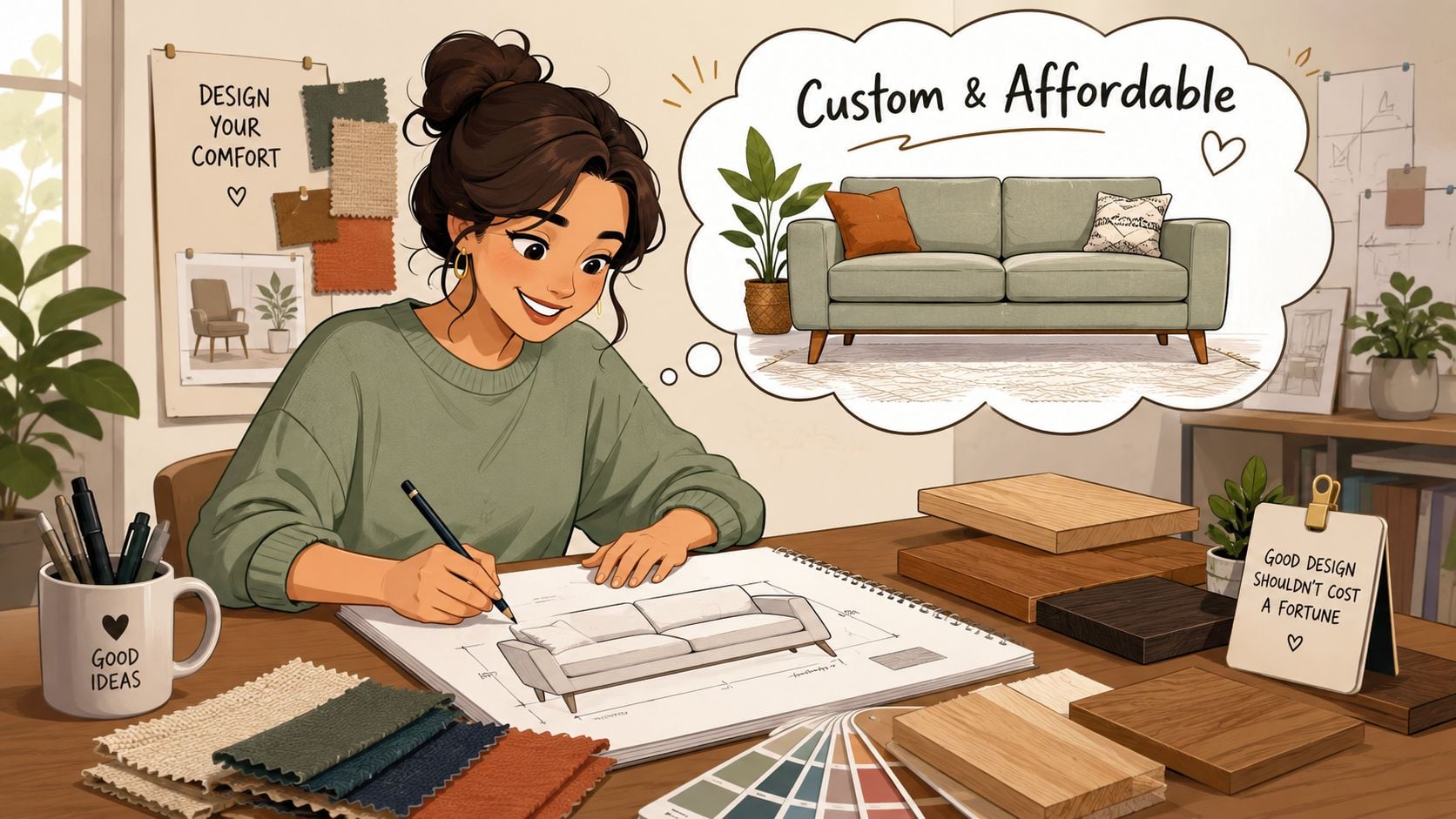
That's where custom furniture changes the conversation. Instead of settling for something close, homeowners can design it to fit the room, the household, and the way the piece will be used.
Custom Orders Solve the Almost Right Problem
The “almost right” problem is common. The shape is good, but the seat is too shallow. The size works, but the color is off. The wood is beautiful, but the storage layout doesn't match how the family uses the room.
Custom ordering solves that by letting buyers adjust the details that matter most:
- For upholstery: Choose the scale, fabric, and cushion feel that fit the room and the household.
- For solid wood pieces: Select size, finish, and storage features that work with the home's architecture.
- For mixed-use rooms: Build around real functions such as media storage, charging access, or concealed clutter control.
One practical option in Northwest Indiana is Groen's Fine Furniture financing and furniture services, which pairs custom furniture selection with special financing options for qualified buyers. That matters for families who want American-made upholstery, Amish solid wood craftsmanship, or bespoke dining through Canadel's made-to-order program without feeling pushed into a one-size-fits-all purchase.
Smart Features and Smart Budgeting
Integrated functionality has become more relevant as the living room takes on more jobs. Market data for the U.S. shows growing demand for furniture with built-in USB ports and wireless charging, a sign that buyers want pieces combining comfort, storage, and power access in one cleaner solution, according to Statista's living room furniture market outlook.
That kind of feature works best when it subtly supports the room. A charging end table beside a reading chair makes sense. Hidden cable management in a media unit makes sense. The goal isn't to make the room feel high-tech. It's to make it easier to live in.
Special financing also plays an important role in the decision. Quality furniture is a long-term purchase, and many families would rather buy one well-made piece than replace a weaker one sooner. Financing, subject to credit approval, can give buyers more room to choose durable construction, performance fabrics, and custom details that match the home instead of compromising on every point at once.
Worth remembering: Affordable luxury usually comes from buying fewer, better-suited pieces, not from filling a room quickly.
Create a Living Room You'll Love for Years to Come
The most useful living room furniture trends all point in the same direction. Homes are becoming softer, more personal, more functional, and more honest about how people live. That's good news for homeowners who want comfort without losing style.
A strong room usually comes together through a few steady choices. Pick the right seat depth for daily use. Keep pathways open. Bring in texture so the room feels warm. Let color show up in a controlled way. If a trend doesn't improve comfort, function, or fit, it probably doesn't belong.
A few maintenance habits help these choices last:
- Rotate cushions regularly: This helps seating wear more evenly, especially on favorite spots.
- Use pillows with purpose: On deeper sofas, supportive pillows can make lounging more comfortable and add color without a major commitment.
- Clean gently and consistently: For upholstered pieces, small routine care usually works better than waiting for buildup. Homeowners looking for simple fabric-refresh ideas may find these effective baking soda cleaning tips helpful when used carefully and according to the furniture's care guidance.
- Protect walkways and touch points: Arms, corners, and heavily used tables tend to show wear first, so those spots deserve extra attention.
The best room rarely feels trendy in the short-term sense. It feels settled. It supports the family, reflects their taste, and still welcomes people in without trying too hard. That's the kind of room worth building.
Visit Groen's Fine Furniture in Dyer or Crown Point today to explore custom options and ask about special financing plans. Let a multigenerational family team help create a home that feels comfortable, lasting, and personal, with white-glove delivery and thoughtful guidance for homeowners across Northwest Indiana.