Blog
Your Guide to the Perfect Living Room Sofa with Chaise


A lot of Northwest Indiana homeowners start in the same place. They want one seat that feels good at the end of a long day, but they also want the living room to look pulled together when family stops by. In older Dyer bungalows, the room may be narrower than expected. In newer Crown Point builds, the space may be open but still shaped in a way that makes furniture placement tricky.
That's where a living room sofa with chaise often enters the conversation. It gives a room a natural lounge spot without asking for the footprint of a much larger sectional. For households trying to balance comfort, traffic flow, and a polished look, that combination makes sense.
Since 1983, our family has helped homeowners across Dyer, Crown Point, St. John, Schererville, Munster, and the wider NWI area make these decisions with more confidence. The right chaise sofa isn't just about color or cushion softness. It's about how the room functions every day. For readers gathering inspiration before they shop, Joey'z Shopping's living room guide is a useful companion for thinking through the broader look and feel of the space.
Table of Contents
- Finding Comfort and Style for Your NWI Living Room
- Understanding the Sofa with Chaise
- Measure Twice Buy Once A Practical Layout Guide
- Choosing Your Sofa Style and Upholstery
- Design Your Dream Sofa with Our Custom Options
- An Investment in Comfort Financing and Delivery
- Experience the Comfort Firsthand at Groen's
Finding Comfort and Style for Your NWI Living Room
A family in Munster may want a sofa that can handle movie night, afternoon reading, and the occasional overnight guest stretched out with a blanket. A couple in Schererville may need seating that feels welcoming but doesn't crowd a fireplace wall. Those are real furniture problems, and a chaise sofa often solves them better than people expect.

The appeal is easy to understand. One side stays structured like a sofa for everyday seating. The other side invites someone to put their feet up without needing a separate ottoman. That's a practical fit for homes where every piece has to earn its place.
For many NWI homeowners, the challenge isn't finding a chaise sofa they like. It's finding one that won't overwhelm the room, block a walkway, or feel wrong six months later. Older homes around Dyer and St. John often have tighter layouts, while some newer homes in Crown Point have broad rooms that still need the furniture to create a cozy conversation area.
A chaise sofa works best when comfort and room flow are treated as one decision, not two separate ones.
That's also where local guidance matters. A showroom floor can make almost any sofa look easy to place. Real homes are different. They have entry doors, windows, radiators, coffee tables, pet paths, and family habits that shape what will feel comfortable.
Our family has seen that the households happiest with their chaise purchase usually slow down long enough to ask a few simple questions. Which side gets the heaviest foot traffic? Where does everyone naturally sit? What part of the room should stay visually open?
Those questions turn a good-looking sofa into one that is a perfect fit for the home.
Understanding the Sofa with Chaise
A living room sofa with chaise is often misunderstood. Some shoppers think it's just a standard sofa paired with an ottoman. It isn't. In most cases, it's one integrated seating piece with a sofa seat on one side and an extended lounging section on the other.
Why this shape appeals to so many households
Furniture guidance describes the sofa with chaise as a popular sectional configuration that reflects a broader shift toward flexible, comfort-first furniture. It bridges two priorities at once: the social seating of a sectional and the space efficiency of a sofa, as explained in this sectional design overview.
That middle-ground role is exactly why this silhouette keeps showing up in real homes. It gives one person a place to stretch out, while still keeping the room more open than a larger sectional often would. For households that want lounging comfort without committing to a full L-shaped or U-shaped setup, the chaise format often feels like the right compromise.
Readers who want a broader primer on sectional planning can also review this sectional buying guide from Groen's Fine Furniture.
Fixed chaise or reversible chaise
Many shoppers often find themselves stuck. The terms can sound technical, but the idea is simple.
- Fixed chaise means the lounge portion is built onto one specific side.
- Left-arm facing and right-arm facing describe which side the chaise sits on when viewed from the reference position used in furniture selling.
- Reversible chaise means the chaise can switch sides, usually because the design uses a movable ottoman rather than one permanently attached frame.
A fixed chaise usually looks more polished. The lines are cleaner, and the piece can feel more intentional in a finished room. A reversible chaise gives up a little of that built-in look, but it can be a smart answer for renters, movers, or anyone who tends to rearrange furniture.
Practical rule: If a household expects the room layout to change, flexibility matters as much as style.
The confusion usually comes from thinking the only question is left or right. It often isn't. The better question is whether the sofa needs to stay adaptable as life changes. A first apartment, a starter home, a future move, or a basement remodel can all change which configuration makes the most sense.
Measure Twice Buy Once A Practical Layout Guide
Saturday afternoon, the painter's tape is on the floor, the old sofa is half out the door, and someone realizes the new chaise would block the path to the hallway. That is the layout mistake we see most often in Northwest Indiana homes. The problem is rarely taste. The problem is skipping the room plan.
Start with the room not the sofa
A chaise changes more than the seat count. It changes the room's footprint, a little like adding a porch step where people walk every day. If that extra length lands in the wrong place, the whole room starts to feel awkward even when the sofa itself is beautiful.
That is why the first job is not choosing fabric or arm style. The first job is mapping how the room works in real life.
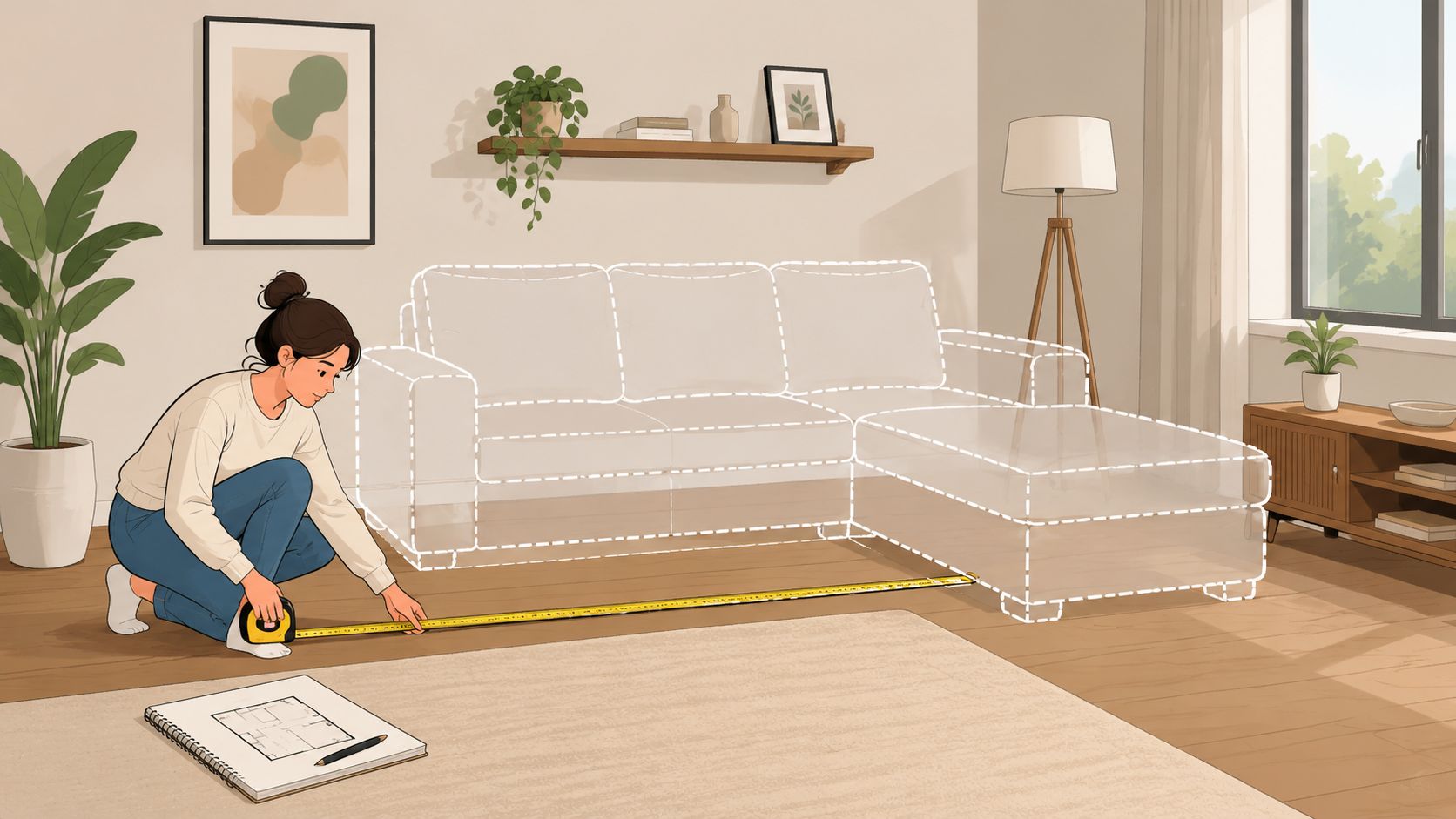
Measure these four points first:
- Wall length for the main sofa body.
- Chaise depth so the extended end does not crowd the room.
- Walking routes between the sofa and the doorways, hall, or kitchen pass-through.
- Delivery path, including entry doors, stairs, tight turns, and low ceilings.
Many chaise sofas fall into either a compact range or a full sectional range, and a room usually feels better when people can walk around the seating area comfortably instead of squeezing past it. For shoppers who want a step-by-step checklist, this furniture measuring guide from Groen's Fine Furniture is a helpful starting point.
Sofa Size and Room Fit Guide
The table below gives you a simple way to narrow the field before you shop.
| Living Room Size (Approx.) | Recommended Sofa Length |
|---|---|
| Smaller rooms | 75–85 inches often fits better for a compact chaise-style sofa |
| Medium to larger rooms | 95–115 inches is common for fuller sectional-style chaise layouts |
Those numbers are only the frame. They do not include the feeling of the room. A sofa can fit on paper and still fail in daily use if the chaise lands in the main traffic lane.
Where the chaise should go
The safest placement rule is simple. Put the chaise on the quieter side of the room.
In an older Dyer bungalow, that often means protecting the narrow route between the front entry and the rest of the house. In a newer Crown Point build, the challenge is different. The room may be wider, but the open path to the kitchen, stairs, or patio door still needs to stay clear. Bigger rooms fool people this way. More square footage does not always mean more usable layout options.
A good test is to trace your normal routine. Walk from the front door to the hallway. Walk from the sofa to the TV wall. Walk from the living room into the kitchen carrying a laundry basket or groceries in your mind. If the chaise corner keeps catching those routes, the room is telling you something.
Use this framework:
- Main pathway first. Do not place the chaise where people cross the room every day.
- Conversation and viewing second. Make sure the lounge seat still faces the fireplace or TV comfortably.
- Open side last. If one side of the room is calmer, the chaise usually belongs there.
The best chaise placement supports how the household moves, not just how the sofa looks in a photo.
A paper template helps because it turns an abstract measurement into something you can feel. Painter's tape works the same way. Mark the full outline of the sofa, including the chaise, then live with that shape for a few minutes. Walk around it. Sit in the nearby chair. Open the door. If the taped outline makes the room feel tight, the actual sofa will not improve the situation.
One more practical note. If you are considering leather, maintenance should be part of placement too, especially near sunny windows or heat sources. This guide on essential leather care for London tenants covers the basics well.
The homeowners who end up happiest with a chaise sofa usually do one thing well. They plan for movement first and furniture second. That is the difference between a room that merely fits a sofa and a room that feels easy to live in.
Choosing Your Sofa Style and Upholstery
A chaise sofa can fit on paper and still feel wrong once it is in the room. In many Northwest Indiana homes, the problem is not size anymore. It is visual weight, fabric choice, and whether the sofa suits the way the house feels day to day.
Style choices that match the home
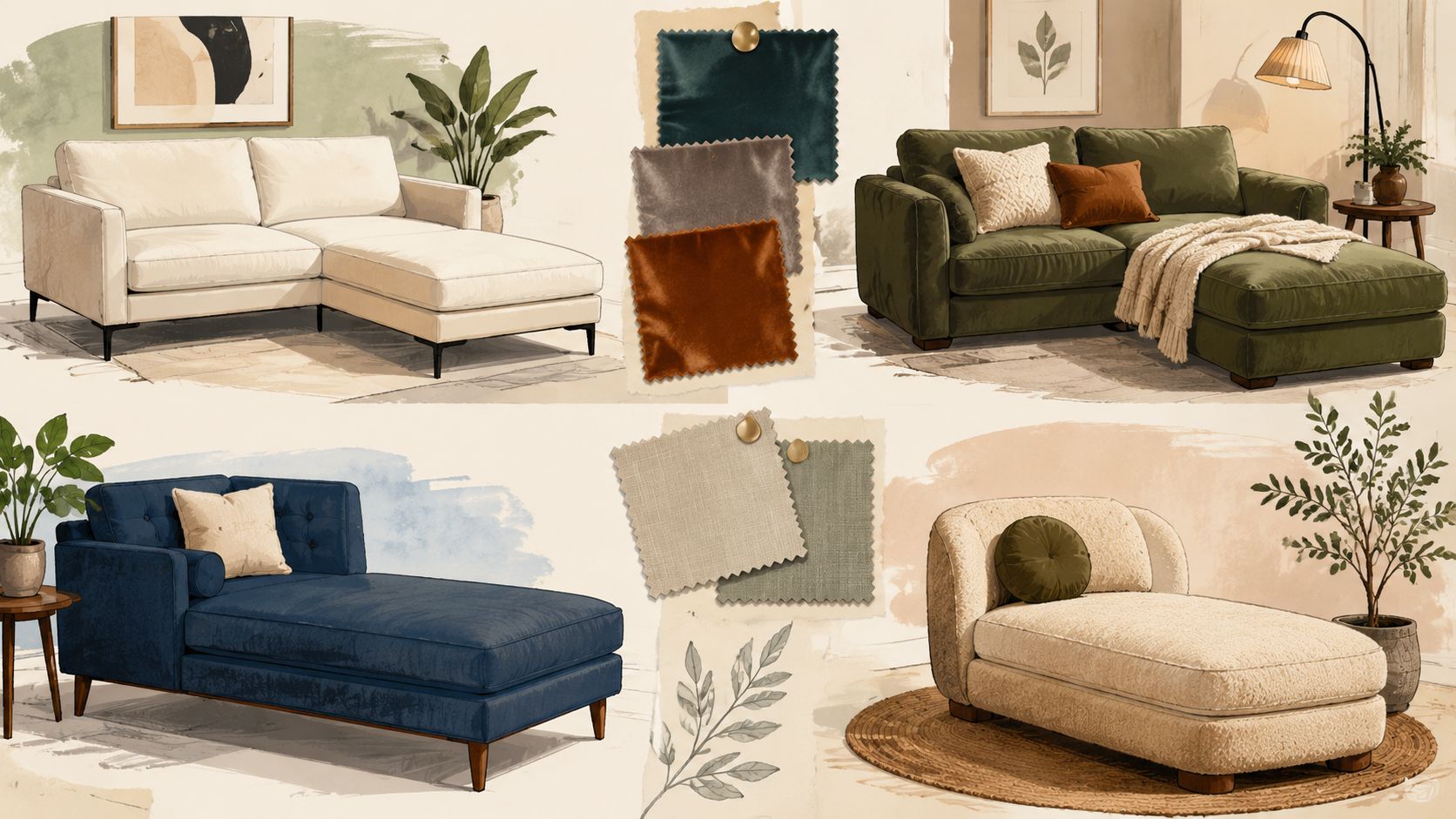
Older Dyer bungalows, Highland ranches, and newer Crown Point builds do not ask for the same sofa personality. A chaise that looks perfectly balanced in an open-concept new build can feel oversized in a home with lower ceilings, smaller windows, or more defined room boundaries. The goal is to match the sofa to the room's character so it looks settled, not dropped in.
A few style cues help:
- Clean-lined and modern fits homes with open sightlines, simpler trim, and a lighter overall feel.
- Soft transitional styling works well for many NWI living rooms because it blends familiar comfort with a fresher shape.
- Traditional details such as rolled arms, welt trim, or turned legs often belong naturally in older homes with more architectural detail.
- Low-profile silhouettes can help a room feel calmer because they leave more visual breathing room above the back cushions.
Proportion matters just as much as style.
A large arm can behave like a winter coat on a dining chair. It takes up more space than you expect. In a modest living room, chunky arms and overstuffed backs can make the whole seating area feel heavier, even if the measurements looked acceptable during planning. Slim arms often give you more usable seat width and a cleaner look without increasing the sofa's footprint.
Fabric or leather for daily life
Upholstery is where many homeowners make their second big mistake. They choose with their eyes first and their household habits second.
A good fabric choice starts with one simple question. What will happen on this sofa every week? If the answer includes kids stretching out after school, a dog claiming the chaise, or regular movie-night snacks, performance fabric usually makes practical sense. It tends to be more forgiving, and texture can help disguise everyday use. A heathered weave, for example, often hides small marks and lint better than a flat, smooth fabric.
Leather creates a different effect. It feels more refined and grounded, and it can give a chaise sofa stronger presence in the room. That can be a great match for spaces that need warmth and structure. It also asks for the right care habits, especially if the sofa sits near bright windows or heat. Readers who want a straightforward primer may find essential leather care for London tenants helpful.
Color deserves the same practical lens. Light upholstery can brighten a room with limited natural light, but it will show more of daily life. Dark upholstery can anchor a space and hide some wear, though in a smaller room it may feel visually heavier. Mid-tone fabrics often strike the easiest balance for busy households.
For a closer look at how fabric, leather, texture, and durability compare, Groen's has a helpful guide to upholstery materials for everyday living rooms.
The best upholstery choice supports the life happening in the room, not just the photo in a showroom.
Construction still matters, but the smartest question is very simple. Will this sofa age in a way your household can live with comfortably? Some families want a material that hides use. Others are happy with a surface that develops character over time. Both are reasonable choices when the style, upholstery, and room all work together.
Design Your Dream Sofa with Our Custom Options
A lot of NWI homeowners reach the same point. The room is measured, the wall color is chosen, the rug is in place, and then every chaise sofa on the floor feels close but not quite right. In older Dyer homes, the issue may be a tight walkway or a radiator wall. In newer Crown Point layouts, the challenge may be a wide open room that still needs clear zones for traffic and conversation. Custom options help solve those real layout problems instead of asking the room to adapt to a near fit.
Customizing a chaise sofa is a lot like adjusting a suit before the final hem. The basic shape matters, but the small decisions are what make it sit properly in the room and feel natural to use every day.
What can be customized
The most useful custom choices usually affect layout first, then comfort, then appearance. That order matters. A sofa that looks beautiful but blocks the main path through the room will wear on a household fast.
Common custom options may include:
- Chaise orientation so the extended seat lands on the calmer side of the room, not in the middle of daily traffic
- Fabric or leather based on pets, children, sunlight, and the kind of wear the room gets every week
- Seat feel for households that want a more supportive sit or a deeper lounge feel
- Leg style and finish to relate better to existing floors, tables, or wood trim
One choice deserves extra attention. Buyers often need to decide between a fixed chaise and a reversible chaise. A fixed chaise has a more built-in look and usually feels more polished. A reversible chaise, often paired with a movable ottoman, gives more flexibility if the room may change later. That can be helpful for households that rearrange often, move periodically, or are still learning how the room works best.
When custom is the smarter choice
Custom ordering tends to make sense when a standard floor model creates one of the mistakes we see most often in local homes. The chaise may push too far into a walkway. The arm style may feel too bulky for the room. The color may fight with nearby woodwork, especially in homes with warm trim, older floors, or mixed finishes from different updates.
It also helps when the household has a clear goal that ready-made pieces rarely balance well. Maybe you want a cleaner silhouette, but still need a fabric that can handle kids and a dog. Maybe the room needs a right-arm chaise, but only in a size that leaves enough breathing room near a window or end table.
A guided custom process slows the decision down in a good way. It helps homeowners work through the practical questions before the sofa arrives, rather than discovering them after delivery. For readers who want to explore that route, this design your own sofa guide shows how a made-to-order process works.
Groen's Fine Furniture offers custom furniture with upholstery choices and living room seating configurations that can be fitted to the room. For many households, that kind of support is what turns a chaise sofa from a nice showroom idea into a piece that fits the home well and stays comfortable to live with.
An Investment in Comfort Financing and Delivery
A chaise sofa usually becomes one of the most used pieces in the house. It is where someone stretches out after work, where family gathers for movies, and where guests often end up during long conversations. In many Northwest Indiana homes, it also becomes the anchor that sets the traffic pattern for the whole room.
That is why the purchase deserves a practical plan for both budget and delivery.
Paying for the right fit instead of settling for the fast fix
Homeowners in older Dyer bungalows and newer Crown Point homes often run into the same mistake. They focus so hard on the price tag that they rush past the questions that matter more in daily life. Will the chaise support the way the room is used? Will the comfort hold up over time? Will the piece still feel right after the first week wears off?
A sofa with chaise is a long-term furniture decision, much like choosing flooring or a dining table. The upfront number matters, but so does how well the piece works year after year. A better approach is to choose the size, comfort, and configuration that fits the room properly, then look at payment options that make that choice more manageable.
For buyers who want to spread out the cost, these furniture financing options can help make a better-planned purchase easier on the monthly budget, subject to credit approval.
Delivery is part of the layout plan
Many shoppers treat delivery as the last checkbox. With a chaise sofa, that can be a costly mistake.
One side is longer. The turning radius is wider. The piece can be awkward in stairwells, tight entries, and older homes with narrower halls. A sofa may fit beautifully on paper and still create trouble if no one has thought through how it will get from the truck to the living room.
White-glove delivery helps solve the problems that often show up on delivery day:
- Careful handling helps protect walls, trim, door frames, and the upholstery itself.
- In-room placement matters because a chaise is harder to shift around casually after it lands.
- Setup help saves homeowners from wrestling with a large piece and guessing at the best angle.
- Less day-one stress gives the room a better start and reduces the chance of hasty placement mistakes.
A good delivery team works like the last step of the design process. They do not just drop off furniture. They help the sofa start in the right spot, which matters even more in rooms where every walkway counts.
For many families, financing supports the budget and delivery supports the room. Both help the buyer choose with more confidence and fewer compromises.
Experience the Comfort Firsthand at Groen's
Online research can narrow the field. It can't tell someone how a cushion feels after ten minutes, whether an arm height is comfortable, or whether a fabric has the right texture for daily life.
A living room sofa with chaise works best when three things come together. The size needs to suit the room. The chaise needs to sit in the right place. The style and upholstery need to support the way the household lives. When those pieces line up, the room feels settled.
That's why an in-person visit still matters. Homeowners can test drive the comfort, compare silhouettes, sit in different depths, and talk through room challenges with a knowledgeable team. A first-time buyer in St. John may need help choosing between reversible and fixed. A longtime homeowner in Dyer may want to refresh a room without losing its warmth. Both situations benefit from a real conversation.
For families across Crown Point, Munster, Schererville, and the rest of Northwest Indiana, confidence usually comes from seeing the scale, touching the materials, and asking the practical questions before ordering.
Visit Groen's Fine Furniture in Dyer or Crown Point today to explore custom options and ask about special financing plans. Let our family help create a home that feels comfortable, lasting, and personal.