Living Room Furniture Trends 2026 for NWI Homes

A lot of homeowners across Dyer, Crown Point, and the rest of Northwest Indiana are in the same spot right now. The living room still works, but it doesn't quite feel current, comfortable, or personal anymore. One trend says to go curved. Another says go bold. Another says buy less, but buy better. It's easy to feel stuck between wanting a fresh look and not wanting to waste money on something that won't age well.
That's where a steady approach helps. Living room furniture trends are useful when they explain how people want to live now, not when they pressure families into replacing everything at once. A softer sofa shape, a warmer color palette, or a better layout can make a room feel more welcoming without turning the space into a short-term experiment.
For homeowners looking for practical inspiration, Groen's guide to 2025 living room trends offers a helpful starting point. The bigger goal for 2026 is simpler. Choose pieces that fit daily life in NWI homes, add personality in layers, and keep long-term comfort at the center.
Table of Contents
- Your Guide to 2026 Living Room Styles in Northwest Indiana
- The Top Living Room Furniture Trends for 2026
- Bringing Trends Home Without a Total Redo
- Choosing the Right Furniture for Your Space and Budget
- Designing It Your Way with Custom Furniture
- Create a Living Room You Love for Years to Come
Your Guide to 2026 Living Room Styles in Northwest Indiana
Living rooms in Northwest Indiana have to do a lot. They host movie nights, after-school snacks, holiday visits, quiet mornings, and the everyday traffic that comes with real family life. That's why trend advice only helps when it can be translated into practical choices about comfort, layout, and durability.
In 2026, the strongest style direction isn't about chasing something flashy. It's about making rooms feel easier to live in. Homeowners are paying closer attention to the way furniture supports conversation, movement, and relaxation. That usually means less interest in stiff, formal arrangements and more interest in pieces that look inviting the minute someone walks in.
Practical rule: A good living room trend should improve daily use first and appearance second.
That mindset matters in homes from St. John to Munster. A trend might look beautiful in a showroom photo, but it still has to fit a real floor plan, a real budget, and a real family's habits. A low-profile chair can be a great choice in one room and a poor choice in another. A curved sofa can soften a boxy layout, but only if the room has enough breathing space around it.
A wiser way to read living room furniture trends is to ask three simple questions:
- How does it change comfort: Does the piece invite people to sit longer, lounge more easily, or gather more naturally?
- How does it affect the room: Does it improve flow, lighten the visual weight, or make the room feel crowded?
- How long will it still work: Will the shape, fabric, and scale still make sense if the household changes in a few years?
That's where a local, family-run perspective helps. Since 1983, families across NWI have needed more than trend lists. They've needed honest guidance on what's stylish now and what will still feel right after the excitement wears off.
The Top Living Room Furniture Trends for 2026
Softer shapes are replacing rigid lines
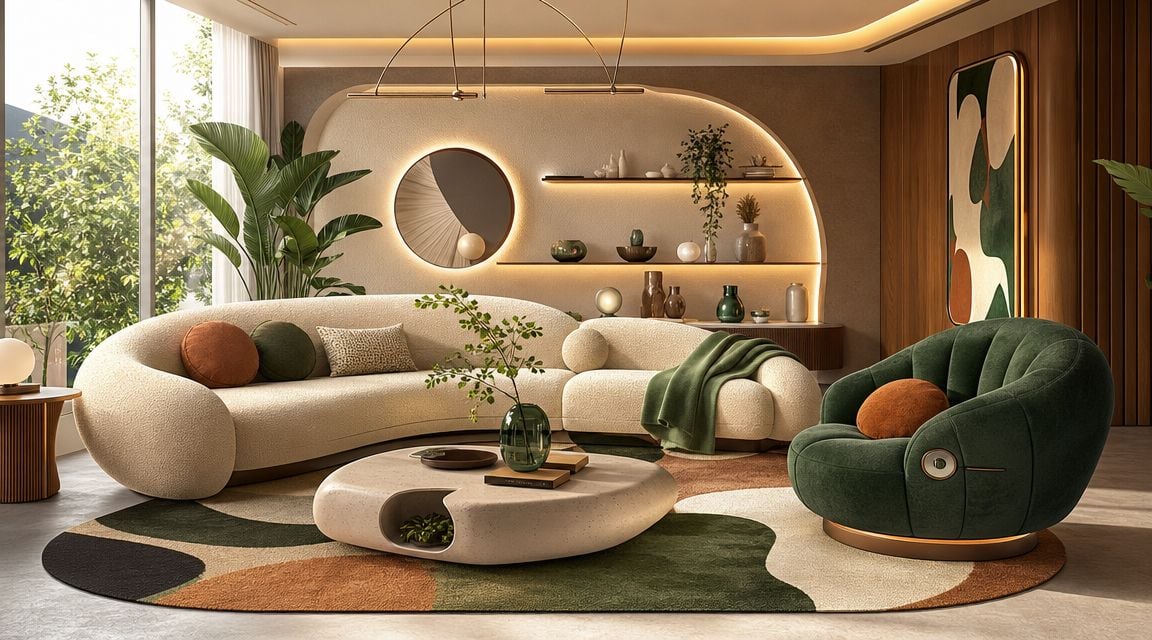
One of the clearest shifts in living room furniture trends is the move toward curved and irregular silhouettes. In recent global design polling, 47% of respondents selected curved and irregular furniture silhouettes for 2025, and 33% of designers identified maximalism as their guiding principle for the year, signaling more expressive and layered living rooms (2025 interior design trend polling at 1stDibs).
That sounds like a style headline, but it has a practical meaning. Curves visually soften a room. They break up hard corners, make seating areas feel less stiff, and often work well with how people naturally gather. A rounded armchair or subtly curved sofa can make a space feel friendlier without becoming overly dramatic.
This also helps explain why many shoppers no longer want every piece in the room to match perfectly. They're looking for a collected look instead. A sculptural chair, a rounded ottoman, and a straighter media console can live together more comfortably than a full set built from one exact profile.
Comfort is getting deeper and lower
Another strong 2026 direction is lower, deeper seating with rounded silhouettes. Designers point to modular sofas, adjustable backrests, storage ottomans, and movable partitions as practical responses to multipurpose living spaces in 2026 projections (designer guide to living room trends for 2026).
For many families, this is the easiest trend to understand because it answers a real complaint. A lot of older living rooms looked neat, but they didn't always invite people to stay. Today's seating tends to be more body-hugging, lounge-friendly, and flexible.
A few examples make the difference clear:
- A deeper sofa suits households that spend evenings reading, streaming, or gathering casually.
- A modular design makes more sense when the room also has to handle guests, kids, or changing furniture layouts.
- A storage ottoman can reduce clutter while still softening the center of the room.
Lower and deeper doesn't always mean oversized. The right version should feel welcoming without swallowing the room.
Rooms are feeling warmer and more personal
The broader mood around living room furniture has changed, too. Industry commentary in 2025 notes that homeowners are reintroducing color and moving away from the simple neutral, minimalist furnishings that dominated for roughly five years. The same coverage also reported shifts in material preferences, with ceramic and terracotta at 15% down from 28% two years earlier, and blonde wood at 9% down from 24% the year before last (2025 furniture trend coverage from House Beautiful).
For shoppers, the lesson isn't that every beige sofa is suddenly outdated. It's that people want more character than they did a few years ago. Warmer woods, richer upholstery, mixed textures, and stronger accent pieces all fit that move.
That's also why accent furniture matters so much right now. Thoughtful lamps, side tables, ottomans, and chairs often do more to modernize a room than replacing every large piece. Homeowners looking for small but meaningful updates can get useful ideas from living room accent piece inspiration.
Bringing Trends Home Without a Total Redo
A room doesn't need a complete overhaul to feel updated. In fact, most homeowners get better results when they change less and choose more carefully. That keeps the space from feeling forced and protects the budget for pieces that matter most.
Start with one anchor piece
The easiest way to apply living room furniture trends wisely is to begin with one dependable foundation. Usually that means the sofa, a pair of primary chairs, or a substantial coffee table. Once the anchor piece feels right, smaller layers can bring in freshness without creating visual chaos.
A high-quality sofa in a timeless shape still leaves plenty of room for trend expression around it. A durable frame, supportive seat, and versatile upholstery will outlast most style cycles. Then the room can shift through accent choices such as pillows, rugs, lighting, and occasional tables.
Helpful approach: Keep the biggest investment steady, then let the room evolve at the edges.
For homeowners wanting a manageable reset, summer living room refresh ideas without a full makeover can help narrow down where to start.
Use color and texture in smaller layers
Industry commentary in 2025 explicitly notes that homeowners are bringing color back and moving away from the neutral, minimalist look that dominated for roughly five years, marking a reversal from the light-wood, beige-heavy palette common in the early 2020s.
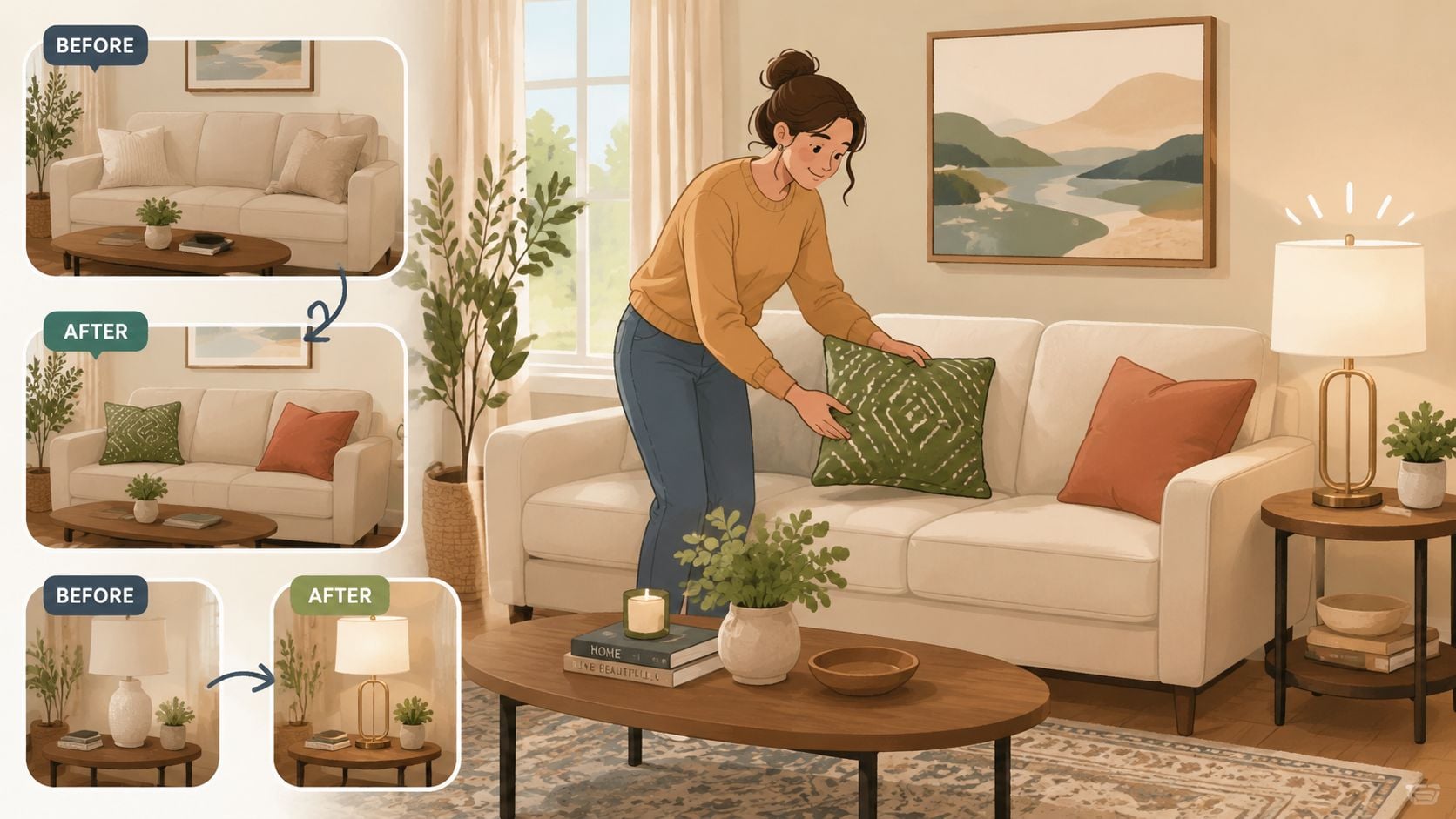
That doesn't mean a living room has to become loud. It means the room can feel more alive. One muted green chair, a rust-toned throw, a darker wood side table, or a patterned rug may be enough to break up an overly flat space.
A practical order of operations often works best:
- Change the soft goods first: Pillows, throws, and rugs shift the mood quickly.
- Add one distinct finish: A darker wood, woven surface, or ceramic lamp creates contrast.
- Introduce one shaped piece: A rounded ottoman or curved chair can modernize the room without changing everything.
- Edit before adding more: If the room already feels full, a few smarter swaps work better than extra décor.
Homeowners who enjoy hands-on updates may also find useful ideas in Quote My Wall furniture tips, especially for smaller refresh projects that add personality without replacing every item.
Sometimes the best trend move is subtraction. Remove one bulky piece, free up a walkway, or replace a heavy table with something visually lighter. The room can feel more current because it breathes better.
Choosing the Right Furniture for Your Space and Budget
A trend only succeeds when it fits the room it's going into. That sounds obvious, yet many buying mistakes happen because shoppers focus on style before scale, function, or layout.
Match the furniture to the room's real job
Some living rooms are built for conversation. Others are television-centered. Some are pass-through spaces with multiple doorways. Others are open-plan rooms that need to connect to dining or kitchen areas without looking disconnected.
For awkward or non-rectangular rooms, expert guidance emphasizes floating seating inward to define zones instead of pushing a sectional against a wall, because that decision strongly affects traffic flow and conversation areas (expert layout guidance for tricky rooms).
That single idea clears up a lot of confusion. Many people think furniture belongs around the perimeter. In reality, floating a sofa or pair of chairs even a little can create a more usable center and make the room feel intentional.
A few room-shape examples help:
- In an angled room: A curved sofa or two chairs with a round table may handle the geometry better than a large sectional.
- In an open-plan room: A modular arrangement can define the living zone without building a wall of upholstery.
- In a narrow room: Lower-profile seating and slimmer arms may preserve flow better than deep, bulky pieces.
For readers sorting through those tradeoffs, guidance on how to choose living room furniture can help connect layout, scale, and everyday use.
Balancing Trends with Timeless Investments
Some pieces are fun to update. Others are smarter to buy with staying power in mind.
| Trendy Style for 2026 | Timeless Counterpart for Lasting Value | Best For… |
|---|---|---|
| Curved statement sofa | Classic sofa with a soft profile | Homeowners who want current style without committing to an extreme silhouette |
| Low-profile lounge chair | Supportive accent chair with clean lines | Families who want comfort but still need easy everyday use |
| Bold sculptural coffee table | Simple solid wood or mixed-material table | Rooms that need durability and flexibility |
| Oversized modular sectional | Right-sized sectional with adaptable configuration | Open rooms and households that expect change over time |
| Highly trend-driven accent finish | Neutral upholstery with expressive accessories | Shoppers who like to update the room seasonally |
Natural materials also fit into this conversation, especially when used selectively. For readers exploring statement accents made from stone, curated natural history furnishings offer an example of how one distinctive piece can add character without rebuilding the room around a short-term look.
Use financing as a planning tool, not a shortcut
Budget choices matter just as much as style choices. Many households don't need the least expensive option. They need the option that holds up, fits the room correctly, and can be paid for in a manageable way.
That's where special financing available, subject to credit approval can make sense. It gives homeowners buying power to choose better construction, stronger fabrics, or a more suitable layout without feeling forced into a compromise that may not last. Used carefully, financing supports long-term value. It shouldn't be an excuse to overbuy. It should help households buy the right pieces once.
A balanced budget plan often looks like this:
- Invest more in daily-use seating: Sofas and main chairs carry the most wear.
- Save experimentation for accents: Lamps, pillows, and smaller tables are easier to change later.
- Leave room for delivery and setup: White-glove delivery often matters more than shoppers expect, especially with large or modular pieces.
Designing It Your Way with Custom Furniture
Custom furniture becomes especially valuable when standard sizes almost work, but not quite. That happens all the time in real homes. A sofa may be too long for the wall, a sectional may block a doorway, or a wood finish may clash with existing floors.
Custom solves the problems standard sizes can't
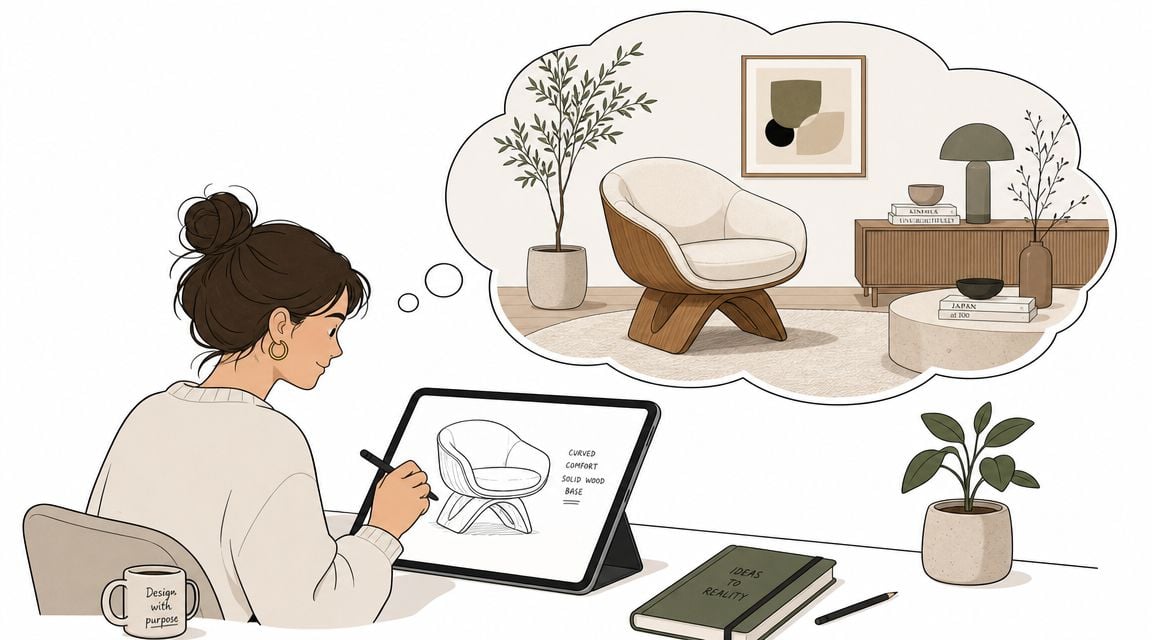
Made-to-order options earn their place. A custom piece can match the room instead of forcing the room to accommodate a near miss. That may mean choosing a different arm style, adjusting the configuration, selecting a performance fabric, or ordering a solid wood piece in a finish that works with the rest of the home.
For families in Schererville, Munster, St. John, and nearby communities, that flexibility matters because homes aren't all built the same way. A one-size-fits-all solution often leads to one of two outcomes. The room looks crowded, or it feels unfinished.
Custom ordering also supports a longer view of style. Rather than buying a very trend-heavy silhouette that may feel limiting later, shoppers can build around a durable frame and personalize the details that matter most.
- Upholstery choices help the room feel personal without locking into a short-lived trend.
- Solid wood construction supports durability and repairability over time.
- Configuration options solve layout problems that standard floor models can't.
One practical example is Groen's Fine Furniture, which offers custom furniture options, including upholstery choices and solid wood selections, for homeowners who need a better fit than off-the-floor pieces provide.
Details matter more than most shoppers expect
Smart furniture is also part of this conversation. Living room furniture increasingly includes built-in USB ports, wireless charging, and hidden cable management, features that can often be integrated into custom designs for a more integrated appearance (smart living room furniture market overview).
That matters most in rooms where clutter builds up around chargers, lamps, remotes, and media components. Hidden function keeps a room feeling calm. It also protects the design from looking outdated too quickly.
A room usually feels more luxurious when function is tucked away rather than left out in the open.
Custom thinking shouldn't stop with furniture alone. Window treatments, lighting, and surrounding finishes affect how the final room feels. Homeowners coordinating the full picture may benefit from an expert window treatment strategy session, especially when fabric, sunlight, and privacy all need to work together.
For buyers who want furniture that reflects their routines, not just a passing look, custom is often the most sensible way to design it their way.
Create a Living Room You Love for Years to Come
The strongest lesson in today's living room furniture trends is simple. Style works best when it supports real life. Soft shapes, warmer colors, flexible layouts, and hidden function all matter because they make living rooms easier to use and more enjoyable to spend time in.
The challenge, of course, is knowing what to commit to. Current trend coverage has highlighted the tension between soft, trend-driven silhouettes and the long-term need for durability and flexibility. The most reliable approach is often to choose trend-resistant core pieces first and use smaller accents to reflect a style shift (living room trend guidance for long-term flexibility).
That advice fits real households well. A dependable sofa, a well-scaled chair, a solid wood table, or a custom storage piece can carry the room for years. Pillows, lighting, artwork, and occasional accents can update the mood as tastes change. That's how a room stays current without becoming disposable.
There's also value in patience. Most of the best living rooms don't come together in one trip. They get better when scale, comfort, materials, and layout are chosen with care. Families who want to think through durability can also benefit from reading about how long furniture should last, since long-term value often starts with better expectations.
For homeowners in Northwest Indiana, that kind of thoughtful decision-making matters. A family room shouldn't just look right for one season. It should support years of gatherings, quiet evenings, and everyday routines in a way that still feels personal.
Visit Groen's Fine Furniture in Dyer or Crown Point today to explore custom options and ask about special financing plans. With multigenerational ownership, 5-star service, and a long history of helping families across Northwest Indiana furnish their homes with lasting comfort, the showroom visit gives shoppers a chance to test drive the seating, compare materials in person, and create a living room that fits both style and daily life. Let the family at Groen's help create a home to love.