Blog
Green Accent Chairs Living Room: Expert Style & Comfort

A lot of living rooms in Northwest Indiana are almost right. The sofa fits. The rug works. The walls are fine. But the room still feels flat, especially in older homes with quirky windows, narrow walkways, or that one corner that never seems finished.
That’s usually where a green accent chair earns its keep.
We’ve seen this pattern for years with homeowners in Dyer, Crown Point, St. John, and Munster. A room doesn’t need a full overhaul. It needs one piece with character, comfort, and enough contrast to wake everything up. In many homes, that piece is a green chair. It brings in color without taking over, and it softens a room that feels too beige, too gray, or too predictable.
Green also plays especially well with the natural touches many people already want in a living room. If you’re layering in wood tones, woven textures, or even large indoor potted plants, a green accent chair helps the whole space feel more grounded and lived-in instead of staged.
The Finishing Touch Your Living Room is Missing
A guest sits down, looks around, and the room finally feels finished.
That last layer is often a chair.
A green accent chair gives your living room something a sofa and coffee table rarely can. It adds a real seat people will use, and it gives the space shape, color, and confidence. In Northwest Indiana homes, that matters. We see living rooms with deep bay windows, tight corners, radiator placement, wide-open new-build layouts, and older floor plans that never seem to cooperate with standard furniture sizes. The right chair solves a problem and sharpens the whole room at the same time.
Why green earns its spot
Green has range. It feels grounded without looking dull, and it brings color into a room without shouting over everything else.
It also lasts.
A well-chosen green chair works with wood floors, brick fireplaces, cream sofas, black metal accents, and natural materials that already show up in so many local homes. If you like the look of large indoor potted plants, green upholstery ties that natural element back into the room in a way that feels intentional instead of decorative for decoration's sake. If you want help pulling those tones together, our expert guide to the perfect color palette lays out a smart starting point.
A good accent chair should look chosen, not dropped in at the end.
Where homeowners miss the mark
The common mistake is not picking green. It is picking a chair that stops at color.
A chair can have the right fabric swatch and still be wrong for the room. The arms may sit too wide for a narrow walkway. The back may block a window in a historic home. The seat may look sharp online but feel stiff after twenty minutes. That is why off-the-shelf shopping falls short so often, especially in older Northwest Indiana houses where two inches in either direction can make a room feel cramped.
Here is what I tell customers every day:
- Choose the chair for the room's real measurements, not the photo online
- Get the silhouette right before you obsess over fabric
- Buy for sitting, not just styling
- Match the chair to how your home is built, especially if you have odd dimensions or awkward corners
That last point is where custom furniture earns its keep. At Groens, we help homeowners order the right depth, arm style, cushion feel, and fabric instead of forcing a standard chair into a room that was never standard to begin with. Flexsteel gives you dependable comfort and strong construction. Amish craftsmen give you made-for-you options with lasting quality. Big-box stores sell what fits their warehouse. We help you get what fits your house.
And that is the difference people notice the minute they walk in.
Finding Your Perfect Shade of Green
A green chair can fix a room fast, or make it feel confused the minute it lands in place. The right shade brings the whole living room together. The wrong one fights your walls, your floors, and the light you live with every day.
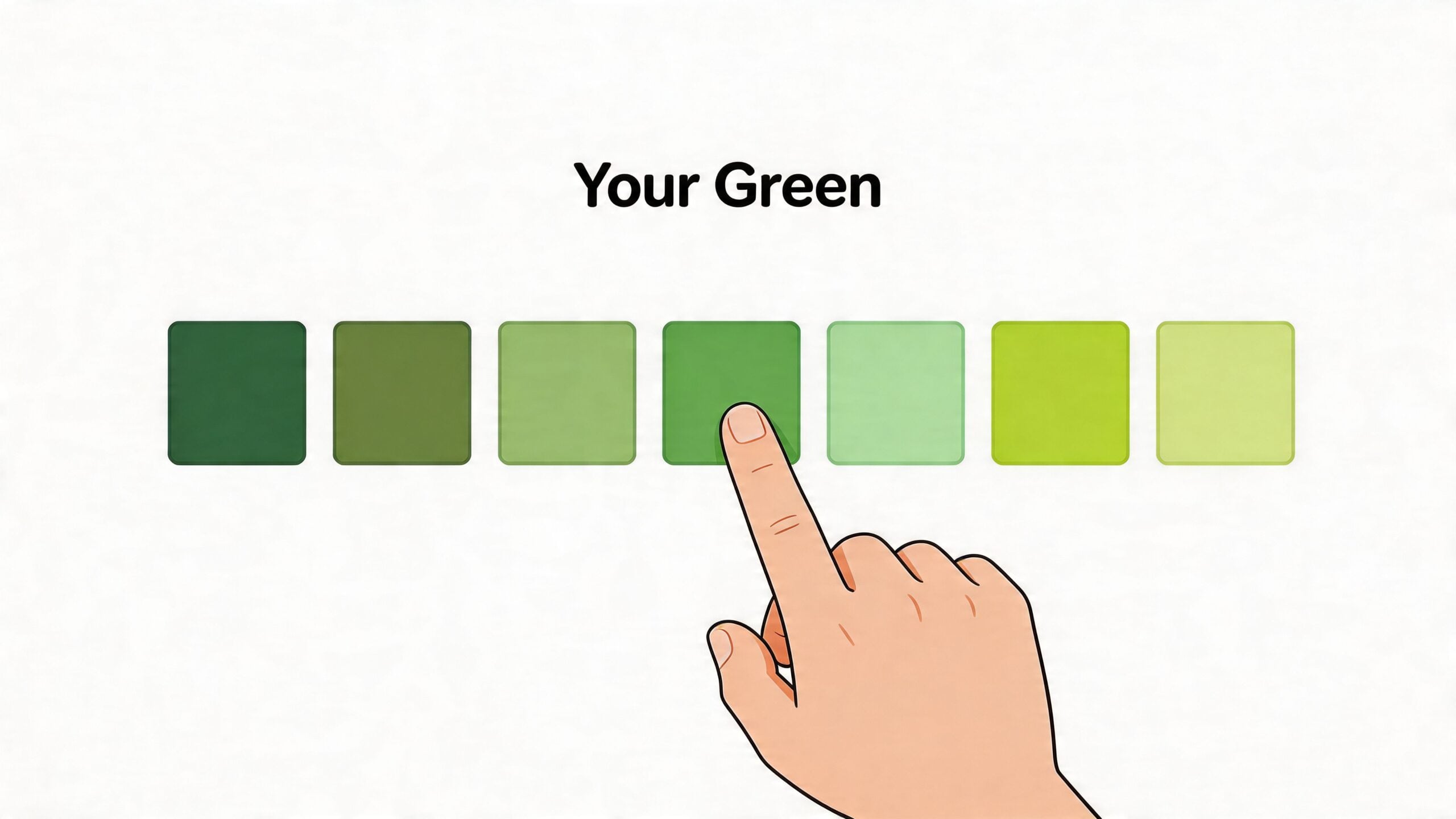
Start with the house itself. Northwest Indiana homes are rarely copy-and-paste spaces. A 1920s living room in Crown Point with dark trim and wavy old-glass windows needs a different green than a bright new build in St. John with open sightlines and pale flooring. Big-box stores sell one version of sage or olive and call it a day. That is not good enough if you want the chair to look like it belongs there for years.
Green also carries a clear emotional effect, which is why it works so well in living rooms. If you want a helpful primer on how different tones affect the feel of a space, this piece on colour psychology in interior design is worth a quick read.
Match the shade to your room, not the trend
Sage is my first recommendation for rooms that need softness. It settles down busy spaces, works well with cream, beige, and light wood, and usually feels at home in family rooms.
Olive has more backbone. Choose it if your room has medium to dark wood, brick, leather, or older architectural details that need a color with some weight.
Emerald is the bold option. It looks best when you want the chair to stand out and the rest of the room is fairly controlled.
Here is the rule I give customers in the showroom. Pick the green that corrects the room.
- Choose sage if the room feels harsh, bright, or a little restless.
- Choose olive if the room feels cold or needs warmth against wood and masonry.
- Choose emerald if the room feels flat and needs contrast.
Test the light before you choose the fabric
Swatches lie under showroom lighting. Your house tells the truth.
Check your room in the morning, late afternoon, and evening with the lamps on. North-facing rooms can make green look grayer and cooler. South-facing rooms usually pull out warmth. In older homes with deep porches, heavy trim, or smaller windows, a muted green can die quickly unless the fabric has texture or a little depth to it.
That is one reason custom ordering matters. At Groens, we help you compare shades in the actual conditions your chair will live in, then pair that color with the right texture, cushion, and frame. If a standard fabric misses the mark by just a little, Flexsteel and our Amish furniture partners give you better options than whatever happens to be boxed up in a warehouse.
Work with what you already own
Your green chair should connect to something already in the room. A rug border. The undertone in your drapes. The patina in an old coffee table. The veining in a stone fireplace.
If you want help sorting those combinations, our guide to the perfect color palette for your living room gives you a practical way to narrow it down before you place an order.
My honest advice? If you want the safest smart choice, buy a textured sage or a warm olive. They last longer stylistically, they handle everyday living better, and they give you more freedom if the rest of the room changes later. Emerald is beautiful, but it needs intention. In the right house, with the right shape and fabric, it is a knockout. In the wrong one, it looks like you bought the last chair left on the floor.
Mastering Scale and Placement in Your Room
You get the green right, love the fabric, bring the chair home, and then it sits in the room like it doesn't belong. That usually comes down to scale and placement.
A good accent chair should make the room work better. It should not pinch the walkway, crowd the sofa, or look stranded in a corner.
That problem shows up all the time in Northwest Indiana homes. Historic houses in Crown Point and Highland often have narrow front rooms, deep trim, radiators, or fireplaces that shift everything off center. Newer builds in St. John and Munster can have the opposite issue. Plenty of square footage, but no clear furniture zone. Big-box sizing advice does not solve either one.
Measure the room you actually use
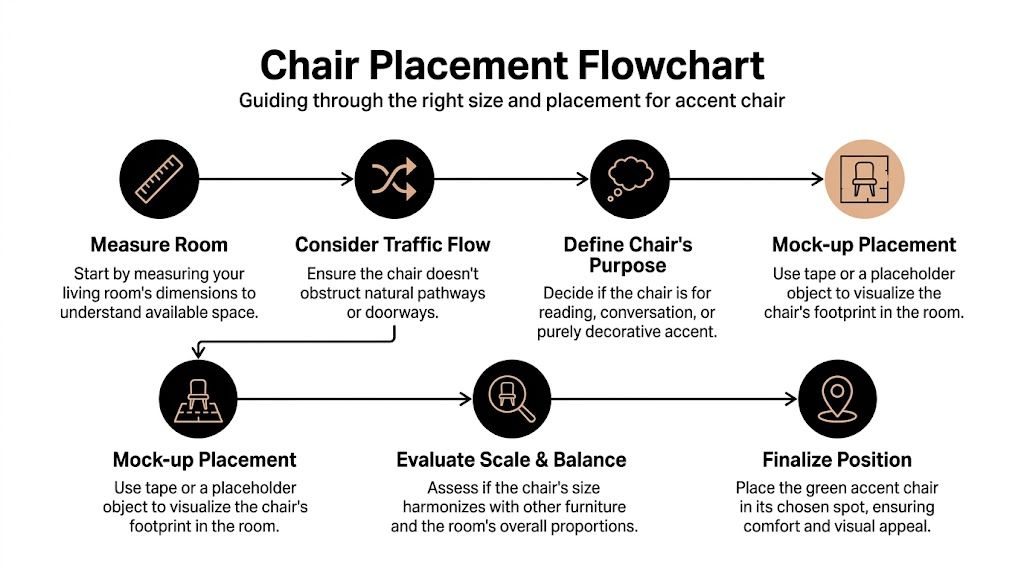
Start with the usable space, not the full room dimensions on paper.
Measure the spot where the chair will sit. Then measure the path people take around it. In older homes, that path is often the deciding factor. Bay windows, floor vents, chunky baseboards, and angled walls eat up more room than shoppers expect.
If you want a practical walkthrough before you shop, use our guide on how to measure furniture.
Here is the process I recommend in the store every week:
- Tape out the chair footprint on the floor.
- Add the space the chair needs when someone is sitting in it, not just the frame size.
- Include the side table or floor lamp if one will live next to it.
- Walk the route you use every day from sofa to hallway, doorway, or TV.
- Drop in a placeholder like a dining chair or storage tote to test how heavy the piece will feel in that spot.
Do that once and you avoid a lot of regret.
Place the chair with a job in mind
An accent chair needs a purpose. Otherwise it becomes expensive clutter.
Use it to finish a conversation area, anchor a reading corner, soften a room full of straight lines, or balance a large sectional. Once the chair has a clear job, the right location usually becomes obvious.
These placements work in real homes:
- Near a window and lamp for reading or quiet morning coffee
- Across from the sofa to strengthen conversation
- At the open end of a sectional to close the seating group
- Near a fireplace or built-in wall when the room needs structure
If nobody wants to sit in that spot for 20 minutes, the placement is wrong.
Pay attention to visual weight
Width matters, but shape matters just as much.
A chair with exposed legs, a tighter back, and a narrower arm looks lighter and fits more gracefully in compact rooms. A barrel chair or a fully upholstered club chair has more presence. That can be exactly right in a larger new-build great room, but it can feel bulky fast in a smaller living room with low windows or heavy furniture already in place.
Use this as a quick filter:
| Visual cue | What it does in the room | Best use |
|---|---|---|
| Exposed legs | Keeps the room feeling open | Smaller rooms, older homes, tighter layouts |
| High back | Adds height and presence | Rooms with tall walls or long sofas |
| Wide arms | Gives the chair more mass | Larger family rooms and open plans |
| Rounded shape | Breaks up boxy furniture | Rooms with sectionals, straight lines, and sharp corners |
Custom sizing solves the problems standard chairs create
Here, local furniture shopping beats ordering from a screen.
At Groens, we help customers fit chairs to real rooms, not idealized showroom layouts. If your living room has an odd corner, a short wall, or a traffic path that needs to stay open, we can steer you toward the right frame size and arm style instead of telling you to make a standard chair work. Flexsteel offers dependable frame options with sizes and proportions that hold up to daily use. Our Amish craftsmen can also build for difficult spaces where a stock chair always feels a little too wide, too deep, or too tall.
That kind of fit matters. A chair that is even slightly off can make the whole room feel awkward. A chair sized for your house feels settled, useful, and right for years.
Choosing Fabrics for Durability and Comfort
You notice fabric after the chair has been in your home for six months.
That is when a pretty green chair either still feels like a smart buy or starts looking tired, scratched, stained, or fussy. In real Northwest Indiana homes, that difference matters. A historic bungalow with a sunny front window, a lake-area home with dogs running in and out, or a new-build family room that gets used hard every night all ask something different from upholstery.
Start with how you live, not with the fabric sample that feels nicest for five seconds.
Performance fabrics are usually the best choice for active households because they handle spills, daily wear, and routine cleaning better than delicate upholstery. If you love the look of green but do not want to worry every time someone sits down with coffee, start there.
Match the fabric to the room's real job
A green chair in a formal sitting room can wear something softer and more refined. A chair that sits by the TV, near the back door, or across from the kids' play area needs a tougher covering and a forgiving color.
Here is the straight answer.
| Fabric Type | Durability | Feel & Comfort | Best For |
|---|---|---|---|
| Performance fabric | High | Soft, practical, easy to maintain | Busy family rooms, pets, kids |
| Velvet | Moderate to high, depending on quality | Plush, rich, inviting | Statement seating, elegant living rooms |
| Leather | High | Supportive, smooth, ages with character | Traditional spaces, easy wipe-down care |
| Linen blend | Moderate | Casual, breathable, relaxed | Light-use rooms, airy interiors |
If you want a clearer breakdown of how these materials wear, clean, and age, our guide to different upholstery materials and how they perform will help.
My honest recommendations
If pets use the chair, choose performance fabric.
If you want that deep, saturated green people love, choose a quality velvet with a tight pile. It gives you richness without making the chair feel too formal for everyday use.
Leather works well in olive, moss, and darker green tones, especially if you want easy wipe-down care. Linen blends look beautiful, but I only recommend them for lower-traffic rooms where you are not fighting crumbs, muddy paws, or constant sun.
The best fabric is the one your family can actually live with.
Comfort matters too, and plenty of chairs get this wrong. A cushion can feel soft on the showroom floor and still be uncomfortable after twenty minutes. Check the seat depth, back angle, and arm height. If the chair is for reading, you need support. If it is extra seating for guests, a cleaner, more upright sit is often the better call.
I also tell shoppers to look at the maintenance side before they fall in love with a fabric:
- Tighter weaves usually hide wear better in active homes
- Mid-tone greens are easier to live with because they do not show every speck
- Bright window exposure changes the decision so avoid delicate fabrics in strong sun
- Cleanable fabrics or removable cushions make daily life easier
This is one area where local furniture shopping helps in a real way. We can show you fabrics in person, talk through how they will wear in your specific room, and help you avoid expensive mistakes. If your home has unusual light, narrow access, or a room that gets heavier use than average, we can guide you to better choices from Flexsteel and custom options from Amish craftsmen that fit your house and your routine. Big-box stores sell what is in stock. We help you get a chair that still looks right and feels good years from now.
For most living rooms, I would choose a sage or olive performance fabric on a well-built frame. It is comfortable, practical, and far more likely to age gracefully in a real home.
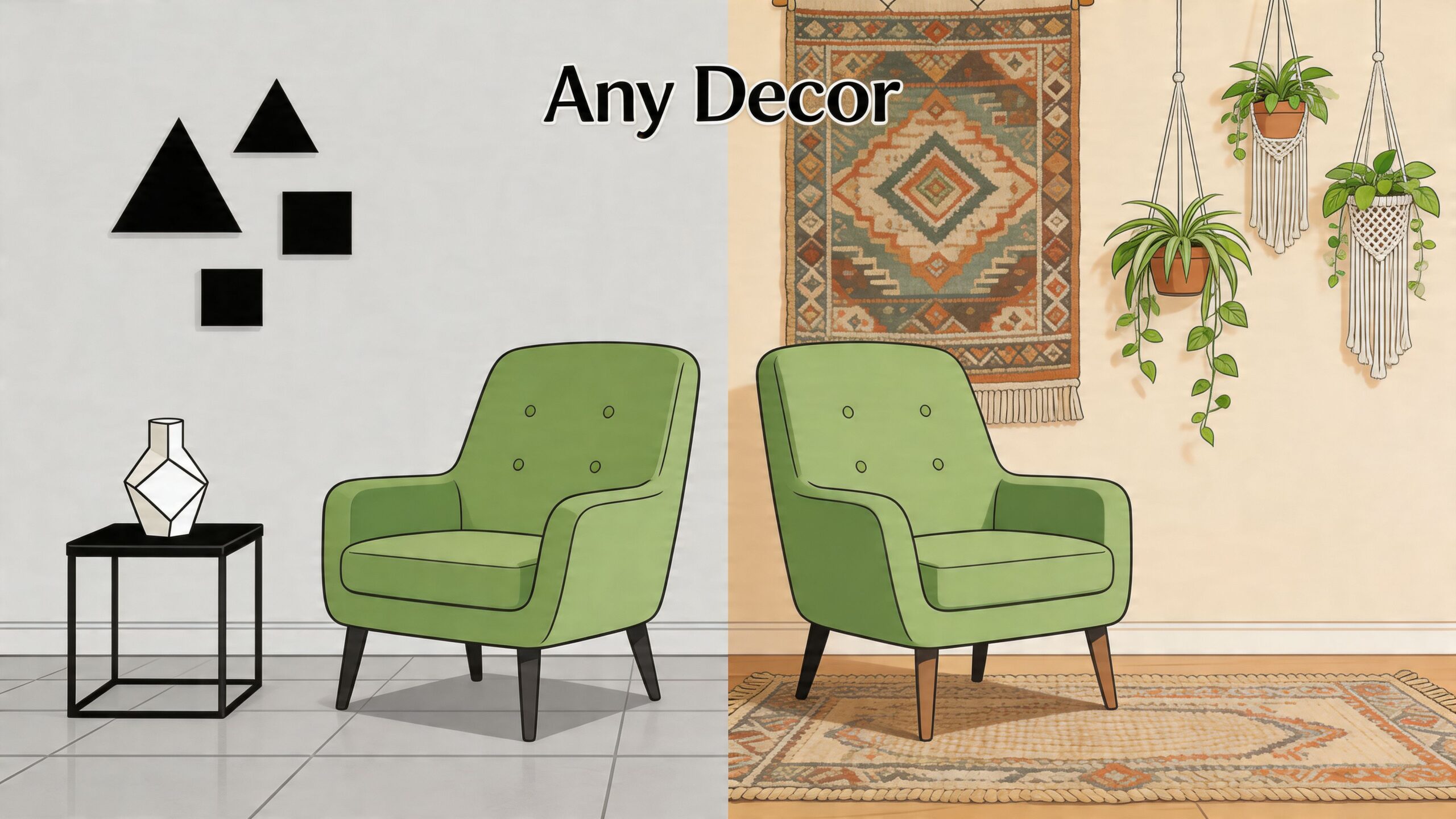
How to Style Your Green Chair in Any Decor
A green chair is flexible. That’s the good news.
The bad news is people still style it badly. They either overmatch everything around it or treat the chair like a random pop of color with no support from the rest of the room.
The fix is simple. Echo the chair somewhere else. Not with another big green piece. With texture, tone, or a small accent that makes the chair feel intentional.
Modern farmhouse
In a farmhouse room, a green chair should soften the space, not make it look themed.
Think sage or muted olive. Put it next to a wood side table with some grain and character. Add a cream throw, a striped or checked pillow, and something with a little age to it, like an antique-look lamp or a woven basket.
This style works because the chair brings freshness into all the wood, white, and black accents that modern farmhouse rooms usually have.
Mid-century modern
Deeper green particularly shines.
An emerald or olive chair with a clean frame and visible legs fits beautifully with walnut finishes, slim lighting, and graphic rugs. If your sofa is low-profile and neutral, the chair can be the visual punch the room needs.
A few supporting details do the work:
- Metal floor lamp with a simple silhouette
- Geometric pillow in a small scale pattern
- Wood coffee table with lighter visual mass than the sofa
- Artwork with warm neutrals so the room doesn’t go cold
For more visual inspiration, these accent chair ideas for living rooms can help you see how one chair shifts the whole space.
A green chair looks best when one or two other elements quietly agree with it.
Transitional contemporary
This is probably the easiest style for a green chair because it already mixes classic and current pieces.
Use a chair with a well-defined shape, modest curves, and a fabric that has some depth. Pair it with a neutral sofa, a polished wood or stone-top table, and cleaner accessories. You don’t need a lot. A single lumbar pillow, a sculptural lamp, and drapery in a soft neutral usually get the job done.
The common styling mistake
People often pile on more green after buying the chair.
Don’t.
You usually need less than you think. A green chair can stand alone if the room has enough texture around it. Wood, linen, black metal, brass, cream upholstery, and natural fibers all help green feel rooted without turning the room into a color exercise.
If the chair is beautiful, let it breathe.
Design It Your Way The Groens Custom Advantage
You find a green chair you love online. Then it shows up too wide for the front room in your Highland bungalow, too shallow for real lounging, or just wrong next to the wood tones already in the house. That happens all the time, especially in Northwest Indiana homes that were never built around standard showroom dimensions.
Custom ordering fixes that problem at the source.
At Groen's, we help you build the chair around your room instead of asking your room to tolerate a close-enough fit. That matters in older homes with tight entries, angled walls, radiators, and original trim. It matters in newer builds too, where open layouts still need a chair scaled to the actual seating area, not the square footage on paper.
Why custom beats compromise
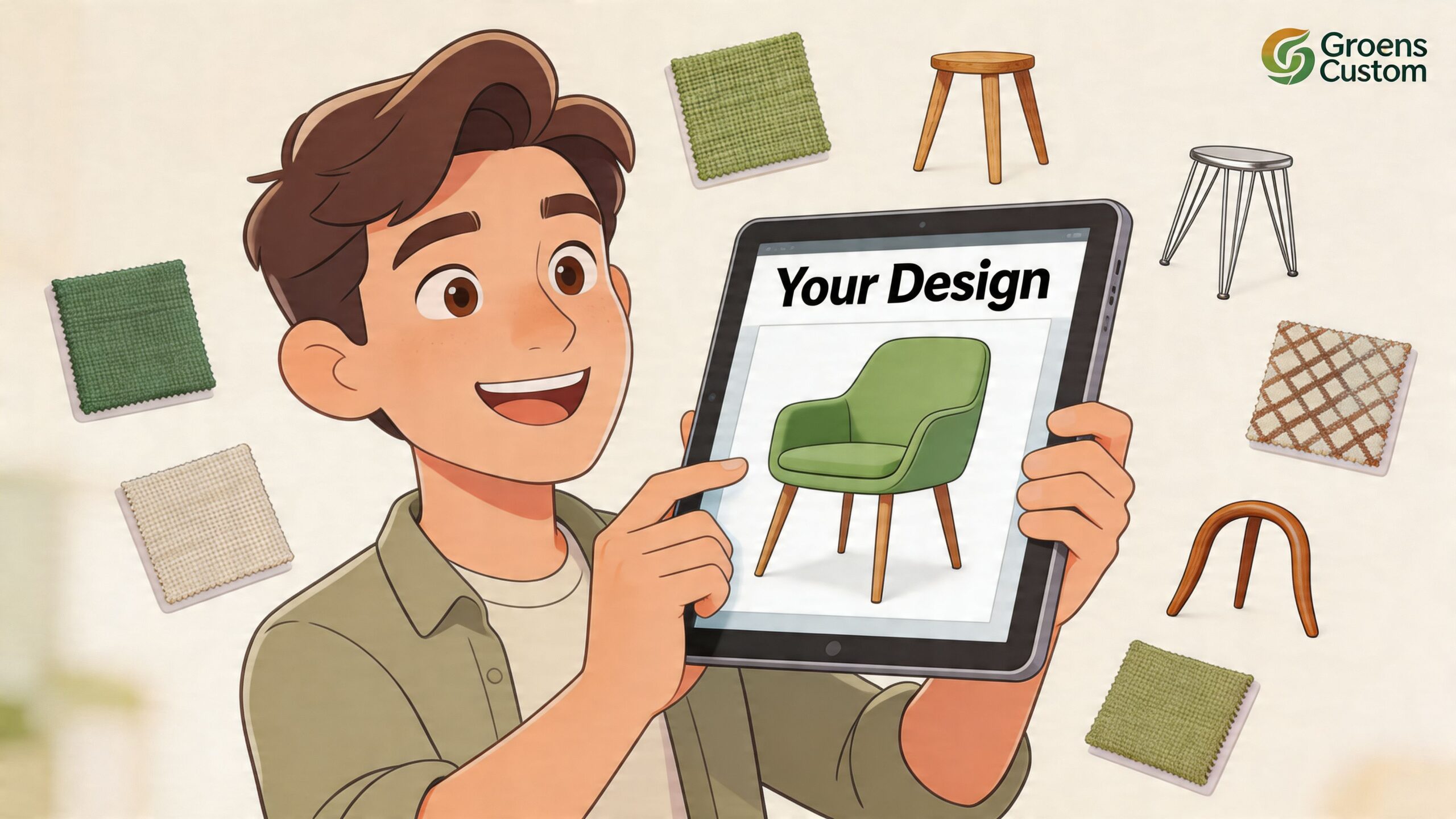
A custom chair lets you control the details that decide whether a piece feels right for ten years or annoys you after ten days.
You can adjust the size, arm style, cushion feel, fabric, wood finish, and overall silhouette. That gives you a chair that works with your traffic flow, your existing sofa, and the way you use the room. Big-box stores usually stop at color choices. We go further because real homes ask for more.
If you want a clear look at the process, our guide to custom furniture made simple explains how ordering works without the confusion.
Where custom makes the biggest difference
Custom is the right call when:
- Your living room has awkward dimensions and standard chair widths eat up too much space
- You found a shape you like but need a better fabric for pets, kids, or daily use
- You are working around existing furniture and need the new chair to relate to pieces you already own
- You want a long-term piece that feels intentional, not temporary
Flexsteel is a smart choice if comfort and durability top your list. Amish craftsmen are hard to beat when you want exacting construction, beautiful wood detail, and a piece that feels made for your home, because it is. Bassett works well when style customization matters just as much as comfort.
Custom furniture is about getting the fit right the first time.
Why local guidance matters
This is the part big websites cannot give you. We can look at your floor plan, talk through the way your family uses the room, and steer you away from mistakes before you place the order. If the chair needs a narrower arm, a warmer green, or a tougher fabric, we will say so.
That kind of advice saves money and frustration.
A custom chair also does not have to mean overspending. Ordering the right piece once is usually cheaper than replacing the wrong one later, and special financing, subject to credit approval, can make a better choice easier to bring home now.
Create a Home You Love with Groens
A green accent chair can do a lot of heavy lifting in a living room. It adds color, comfort, and personality without asking you to redo the whole space. But the chair has to be right. The right shade, the right scale, the right fabric, and in many Northwest Indiana homes, the right custom fit.
That’s why shopping in person still matters. You need to sit in the chair, study the green in real light, and compare fabrics with your actual lifestyle in mind. Good rooms don’t come from guesswork. They come from honest decisions and pieces that fit the way you live.
Visit Groen's Fine Furniture in Dyer or Crown Point today to explore custom options from trusted brands like Flexsteel, Bassett, and Amish craftsmen, and ask about special financing plans. Our family has served Northwest Indiana since 1983 with multigenerational care, white-glove delivery, and 5-star service. Let our family help you create a home you love.