Blog
Sintered Stone Table Guide: Is It the Right Choice for You?

For homeowners in Dyer and Crown Point who want a dining table that can handle real life, a sintered stone table is a dense slab made from natural minerals, compressed and fired above 1,200°C into a low-absorption surface. It's a newer premium furniture choice, and that matters because it behaves more like a high-performance ceramic than a traditional stone slab.
The practical question isn't whether it looks good. It's whether the whole table, edge, base, weight, and delivery, makes sense for Northwest Indiana households that eat, work, and gather around it every week.
What a Sintered Stone Table Actually Is
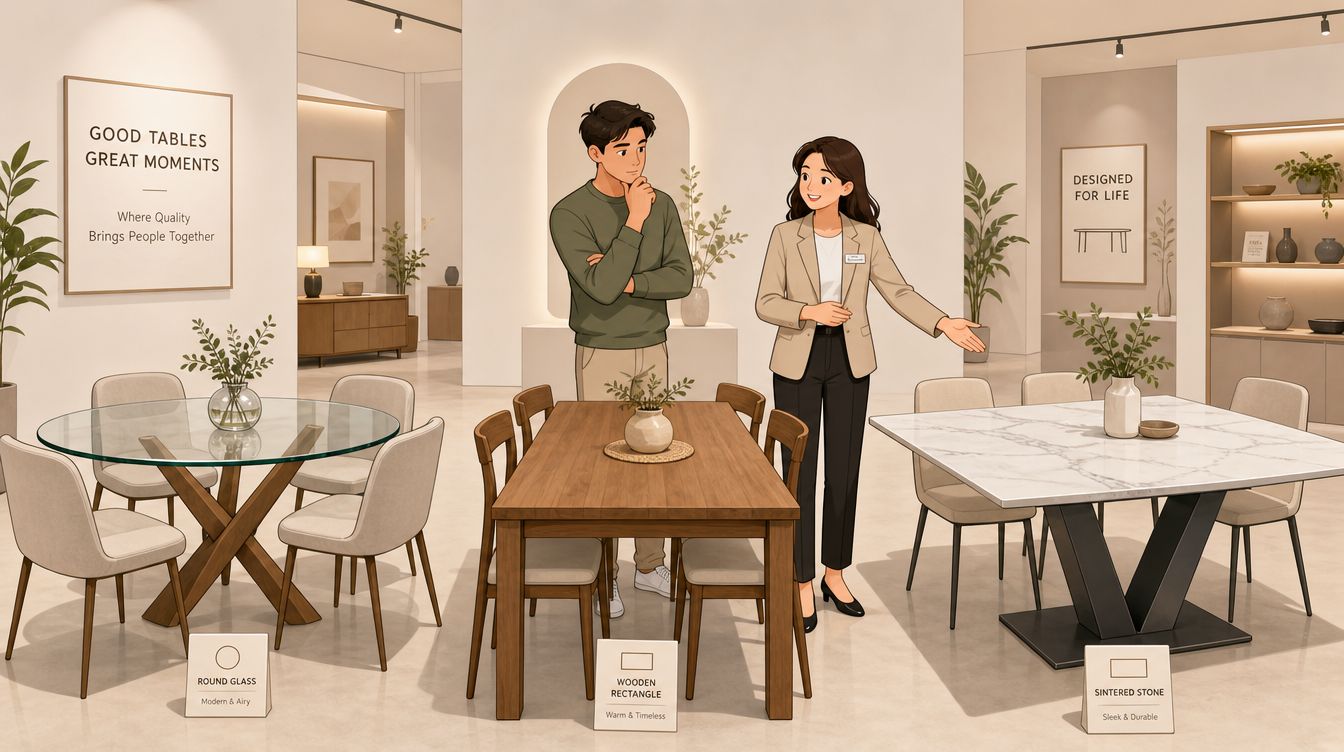
A shopper usually feels the decision right away in the showroom. One table looks warm and familiar, another feels sleek and modern, and the third has that heavy, architectural presence that says it's built to stay put. Sintered stone is the one that often surprises people, because the surface reads like marble or quartz, but the material underneath is a manufactured slab made from natural minerals compressed under extreme pressure and fired above 1,200°C.
Why the material matters
That firing process isn't a marketing flourish. It's the reason the slab behaves like a dense, engineered surface with very low water absorption, rather than a porous natural stone that needs more caution. The material was developed through industrial research before it reached furniture, with major brands beginning trials in 2006 and the first commercial products entering the market between 2010 and 2012, led by NEOLITH in Spain and Lapitec in Italy, according to the manufacturing history account in the brief. That timeline matters because it shows this is a relatively recent furniture category, not a century-old dining tradition.
The early products also came in extra-large slab formats and thicknesses from 3 mm to over 20 mm, which made them suitable for dining tables as well as countertops and wall cladding. That flexibility is why designers now treat the material as a table surface, not just a kitchen finish. For a homeowner, the takeaway is simple, the slab is manufactured for performance first, and style comes from how well the table is designed around it.
Practical rule: judge a sintered stone table as a complete piece of furniture, not just a surface.
How Sintered Stone Compares to Other Tabletop Materials
A fair comparison starts with the way a real family uses a table. Hot plates get set down fast, glasses leave rings, kids slide chairs in and out, and somebody drags a serving dish across the top. In that kind of routine, sintered stone holds its own very well, especially on porosity and heat resistance, but every material has a different personality.
For buyers who want a broader countertop and care summary, the countertop cost and maintenance tips resource is a useful companion when thinking through upkeep and long-term value.
Side-by-side material reality
| Material | Heat Resistance | Stain Resistance | Typical Weight | Best Fit |
|---|---|---|---|---|
| Sintered Stone | Very strong | Very strong | Heavy | Busy dining rooms, low-maintenance buyers |
| Granite | Strong | Strong with proper sealing habits | Heavy | Natural-stone look with classic feel |
| Quartz | Good, but less heat-tolerant than stone surfaces | Strong | Moderate to heavy | Families wanting consistency and easy care |
| Porcelain Tile or Slab | Strong | Strong | Lighter than many stone slabs | Modern rooms where slim profiles matter |
| Marble | Moderate | Softer against stains and etching | Heavy | Buyers who value beauty and natural character |
Sintered stone wins when the priority is low absorption, strong heat tolerance, and a crisp look that doesn't ask for much maintenance. Quartz often ties it on everyday stain resistance, but sintered stone usually has the edge when hot cookware is involved. Marble still has a visual charm that engineered materials can't fully duplicate, but it asks for more forgiveness from the household.
For shoppers comparing formats visually, the table styles on this glass-top dining set page show how different top materials change the feel of a room, even before anyone sits down.
What the buyer should decide first
The right material depends on habits, not just aesthetics. A couple that entertains often may lean toward sintered stone because cleanup stays easy. A family that loves the softness and character of natural stone may still prefer marble or granite, even with the extra care. A room that needs a lighter visual line may work better with porcelain.
The Real Pros and Cons of Sintered Stone
The strongest argument for a sintered stone table is simple, it takes a beating without acting fragile. Independent product and industry data describe water absorption at ≤ 0.05% to < 0.1%, flexural strength of at least 50 N/mm², and thermal resistance up to about 1,200°C in some formulations, which explains why the surface resists staining, cracking from moisture, and damage from hot cookware better than marble or many resin-bound tops. Those numbers line up with the way people use tables in real homes, where dinner cleanup needs to be quick and no one wants to baby the surface.
The upsides that matter at home
Sintered stone does the unglamorous jobs well. It shrugs off spills, handles heat, and keeps a consistent look with normal cleaning. UV stability also helps the surface hold its appearance in bright rooms, which matters in open-concept homes where the table sits near windows for much of the day.
The trade-off is that the table is only as smart as its design. An attractive slab on a weak base is still a weak table. The best pieces feel calm and solid because the structure underneath is doing its job.
A good table should feel steady when someone leans on it, not just look expensive from across the room.
The downsides nobody should skip
Edges are a real weak point. A sharp 90° profile is less forgiving in daily use, which is why common commercial edge shapes tend to be slim, beveled, eased, or mitered. Weight is the other issue. A 60-inch top can weigh 200–300 lbs, so delivery, placement, and future moving all become part of the purchase decision.
That's why shoppers should ask about support, not just surface claims. The most durable top in the world still needs the right base, the right handling, and the right edge profile if the table is going to survive family life.
Sizes, Shapes, Finishes, and Edge Profiles Worth Knowing
The order form tells the story. A shopper may start by liking the color, but the table's size, shape, finish, and edge tell you whether it'll work in the room every day. If the proportions are wrong, even the nicest surface can feel awkward or oversized.
The dining table size guide is useful for thinking through space, clearance, and how the table fits chairs without crowding the room.
Start with the room, then choose the form
Compact round tables around 48 inches can work well in smaller breakfast areas or tighter dining spaces. Longer rectangular tables, especially extended layouts at 96 inches plus, make more sense for larger rooms and households that host often. Round shapes soften a room and encourage conversation. Rectangles feel more formal and usually seat more people without wasting floor space.
Finish and edge are not cosmetic details
A polished finish gives more visual shine. A matte surface feels quieter and more contemporary. Textured finishes can reduce the glare and make the slab look more natural, which some buyers prefer for a dining room that doubles as a family room.
Edge profile matters just as much. Slim, beveled, eased, and mitered edges each change how the table looks and how safe it feels in daily use. Slab thickness and edge profile work together, and that combination decides whether the table feels refined or fragile.
For design inspiration beyond the usual showroom look, the Everti dining table inspiration page is a helpful way to study how shape and proportion can change the feel of a dining space.
Ask these questions before ordering
- Will the shape fit circulation? Chairs need room, and people need a clean path around the table.
- Does the finish match the room's light? Bright rooms can make polished surfaces feel busier than matte ones.
- Is the edge practical for kids and guests? Harsh corners are less forgiving.
- Is the slab thickness appropriate for the base? The table should feel grounded, not top-heavy.
Custom Ordering a Sintered Stone Table at Groen's
A custom table is often the smarter move, especially for families in Dyer, Crown Point, Schererville, St. John, and Munster who already know a stock piece won't fit the room right. At Groen's Fine Furniture, custom order services are the starting point, not the upgrade aisle. That matters because a dining table works best when the top, base, finish, and size all match the way the household lives.
How the custom process should unfold
First, the shopper chooses the room fit. Then the surface, edge profile, and base style get matched to that room. That's where Canadel's custom dining program helps, because the brand supports thousands of combinations of sizes, shapes, and finishes for tables and chairs. For buyers who want a more traditional build, locally crafted Amish solid-wood furniture can be built to exact specifications, which gives the table a different kind of weight and character.
Groen's also works through the practical side of the order. Special financing is available, subject to credit approval, which can make a larger custom purchase easier to fit into a real household budget. That's not about pushing a bigger sale, it's about keeping the right table within reach.
Good custom ordering starts with the room, not the catalog.
The custom order starting point page is a helpful next step for anyone who wants to see how the process is organized before coming in.
Groen's Fine Furniture highlights Canadel's custom dining program to design tables and chairs with thousands of combinations of sizes, shapes, and finishes, alongside locally crafted Amish solid-wood furniture built to exact specifications. White-glove delivery also matters here, because a heavy table deserves careful handling from people who know what they're moving, not a careless drop-off at the curb.
Care, Maintenance, and Everyday Use With Family
The right question isn't whether the table can survive a showroom demo. It's whether it can survive homework, weeknight pasta, and the casual chaos that happens after school. A sintered stone table can do that well, but the family still needs a few common-sense habits.
The practical routine is simple. Wipe the surface with a soft cloth and mild soap, skip abrasive pads, and use trivets as a habit instead of a panic response. The material resists heat and staining strongly, but no surface is indestructible, and a little discipline keeps the table looking good longer.
The small habits that pay off
Felt pads under décor keep the top from getting scratched by decorative objects that get slid around. That matters more than most shoppers expect, because everyday wear usually starts with small friction, not dramatic damage. Edge chips are the other thing to watch, especially if the table has a sharper profile or sits in a tight room where chairs bump into it often.
If a small mark appears, don't go hunting for a dramatic repair kit right away. Check whether it's residue, a surface mark, or an actual chip, then deal with the least invasive fix first. That keeps the finish intact and avoids turning a minor problem into a bigger one.
For shoppers who like a straightforward maintenance mindset, the butcher block care guide offers a useful contrast in how different surfaces reward different habits. The comparison makes one thing obvious, a strong table is still easier to live with when the care routine is simple.
A stable, reinforced base is the single biggest factor in how the table feels five years in. The surface gets the attention, but the structure underneath decides whether the table still feels trustworthy after years of use.
Price Expectations and Why Delivery Is Not the Same as Shipping
Two tables can look similar online and land at very different price points once real decisions get made. That's normal. Size, slab thickness, finish complexity, edge profile, and the base all shape the final quote, and customization changes the equation quickly.
The furniture delivery cost page is worth reading because delivery and placement are part of the ownership cost, not an afterthought. A 200–300 lb slab is not a casual weekend move, and a dining table this heavy usually calls for white-glove handling and in-home placement.
What shoppers should budget around
The table's footprint affects material use. The slab's thickness affects weight. The finish and edge profile affect fabrication. The base affects both the look and the support system. Once those choices are made, the price becomes much more honest, because it reflects the actual table instead of a generic internet photo.
Why delivery deserves attention
Shipping and delivery are not the same thing. A box dropped at the door is one thing. A heavy dining table that needs careful carrying, assembly, and placement is another. Buyers who skip that difference often discover the inconvenience after the purchase, not before it.
Groen's team can build a quote around the actual room, the actual base, and the actual finish instead of guessing from a catalog image. That's the better way to buy a table that's meant to stay in the home for years, not just get through the first dinner party.
Visit Our Showrooms in Dyer and Crown Point
Families in Dyer, Crown Point, Schererville, St. John, Munster, and across Northwest Indiana should handle a table like this in person before making a decision. Sit at it. Feel the edge. Compare polished and matte finishes under real showroom light. That's the difference between liking a photo and buying a table that fits daily life.
Our family has been serving NWI since 1983, and that multigenerational ownership still shapes the way people are helped here. The goal is straightforward, honest guidance, 5-star service, and a custom table that makes sense in a real home.
Special financing is available, subject to credit approval, and white-glove delivery helps the table arrive the right way. If the plan is to design it your way, this is the place to start.
Visit Groen's Fine Furniture in Dyer or Crown Point to explore custom dining options, sintered stone table possibilities, and the bases and finishes that fit real Northwest Indiana homes. Ask about special financing, white-glove delivery, and made-to-order dining solutions, then let our family help you build a table you'll be glad to live with every day.