Dining Room Tables Solid Wood Comparison of Species Styles

A family in Dyer may start shopping for a dining table after one too many wobbly dinners, crowded holiday meals, or scratched surfaces that never quite recover. The right dining room tables solid wood choice can become more than a place to eat. It can anchor homework, Sunday suppers, celebrations, and conversations that continue long after the plates are cleared.
For homeowners in Crown Point, St. John, Schererville, Munster, and throughout Northwest Indiana, the decision involves more than picking a finish from a showroom floor. Species, joinery, tabletop movement, room dimensions, sustainability, customization, and financing all affect whether a table feels right years from now. Groen's Fine Furniture has served NWI families since 1983, with a multigenerational approach built around comfortable guidance, honest pricing, and 5-star service.
Introduction to Solid Wood Dining Room Tables
A sturdy dining table earns its place in a home gradually. A young family may first use it for quick breakfasts and school projects, then add holiday gatherings, birthday dinners, and larger celebrations as the years pass. Solid wood suits that pattern because its natural character remains visible, and a well-built table can often be maintained or refinished rather than treated as disposable.
Wood remains the dominant material in the dining-table market. One recent industry report estimated that wood represented 39.45% of the global dining table market in 2025, while solid wood dining tables were valued at USD 2.5 billion in 2024 and projected to reach USD 3.8 billion by 2033, according to Mordor Intelligence's dining tables market analysis. Those figures place solid wood inside a substantial, growing furniture category, not a narrow specialty market.
A useful starting point: Choose a table for the way the household gathers, not only for the way it looks in a staged room.
What makes solid wood different
A solid tabletop shows the natural variation of lumber, including grain movement, knots, figuring, and subtle differences between boards. That variation gives each piece a distinct identity, although it also means a finished table won't look perfectly uniform like a printed surface or a highly controlled veneer pattern.
Solid wood also responds to the environment. Dry winter air can encourage contraction, while humid summer conditions can cause expansion. Quality construction doesn't try to eliminate that behavior. Instead, the builder designs the table so the wood can move without damaging the top, base, finish, or attachments.
A local buying perspective
Homes in Dyer and Crown Point often need furniture that can handle both everyday use and occasional full-house gatherings. A table that looks beautiful but leaves little room for chairs, traffic, or serving dishes won't feel successful for long. Groen's serves nearby households across Northwest Indiana, including St. John, Schererville, and Munster, with personal guidance rather than a one-size-fits-all approach.
Before visiting a showroom, homeowners can review this guide to picking the right dining room table and note the room's measurements, preferred seating, and design direction. That preparation makes the conversation more productive, especially when the household is considering an extendable table, a custom finish, or an Amish-made centerpiece.
Comparing Oak Maple Cherry Walnut and Hickory
Species selection changes the table's visual personality and its response to daily life. Oak tends to communicate traditional strength, maple offers a cleaner and lighter appearance, cherry brings warmth that develops over time, walnut creates a richer modern statement, and hickory introduces pronounced contrast with a more rustic feel.
North American hardwoods such as oak, cherry, maple, and walnut are commonly associated with Amish furniture, along with demanding joinery such as dovetail and mortise-and-tenon construction, as reflected by Countryside Amish Furniture. Hickory is another useful option for households that appreciate strong grain variation and a lively, less uniform appearance.
Wood Species Comparison
| Species | Janka Hardness | Durability Level | Typical Price Range |
|---|---|---|---|
| Oak | Varies by red or white oak selection | High for everyday dining | Competitive to premium |
| Maple | Varies by hard or soft maple selection | High, with a smooth surface character | Moderate to premium |
| Cherry | Moderately softer than oak or maple | Good with thoughtful care | Premium |
| Walnut | Moderately hard and comparatively stable | Good for careful everyday use | Premium |
| Hickory | Very hard with strong visual contrast | Very high for active households | Moderate to premium |
The table uses qualitative price guidance because actual cost depends on dimensions, construction, finish, extensions, and customization. A species that costs more upfront may still offer the appearance or aging qualities a homeowner values most, while a more accessible species can deliver excellent durability without feeling like a compromise.
Match the species to the household
- Oak: A practical choice for busy families, farmhouse interiors, and traditional rooms. Its grain remains visible under many finishes.
- Maple: Works well in cleaner, brighter spaces where a restrained grain and smooth appearance matter.
- Cherry: Suits homeowners who want a warm, refined table that develops a deeper visual character with time.
- Walnut: Fits contemporary rooms and interiors that benefit from a darker, more dramatic focal point.
- Hickory: Appeals to buyers who want visible contrast, rustic energy, and a table that doesn't disappear into the room.
A helpful overview of choosing the right hardwood for longevity and style can help narrow the field before a showroom consultation. The best choice balances the room's palette with the household's tolerance for visible marks, variation, and maintenance.
Construction Methods Solid Wood vs Engineered Veneer
A table can contain real wood without being made entirely from solid boards. Solid construction uses wood throughout the structural tabletop components, while an engineered panel may use a stable core covered with a real-wood veneer. Neither description alone tells the whole quality story. The important questions involve the core, the thickness of the top, the edge treatment, the base, the joinery, and the way the builder manages movement.
Solid wood dining table tops continuously exchange moisture with indoor air. They shrink in dry conditions and swell in humid conditions, which is why higher-quality tables use movement-friendly hardware and slotted fasteners, as explained in this technical guide to solid wood behavior.
Where solid wood earns its reputation
Solid wood offers visible natural variation and substantial repair potential. A surface with enough material can often be carefully sanded and refinished when appropriate, while a damaged thin veneer has less room for correction. Solid legs, aprons, and sturdy bases also contribute to the sense of permanence many families want from an heirloom table.
Joinery matters. Mortise-and-tenon connections can strengthen the relationship between rails and legs, while dovetail construction is associated with precise interlocking woodwork in suitable applications. These details don't replace good lumber preparation, but they help reveal whether the maker treated the table as a lasting piece rather than a short-term product.
Where engineered wood can work
An engineered core with a real-wood veneer can offer a more uniform appearance and may respond differently to changes in indoor conditions. It can be a sensible choice for certain rooms, especially where visual consistency, lighter weight, or a particular surface pattern matters.
The trade-off is repairability. Veneer can be difficult to sand thoroughly, and edge damage, peeling, or chipping may be more challenging to correct than wear on a substantial solid-wood surface. Shoppers comparing materials for a larger renovation can also review this resource to compare cabinet materials for remodels, since the same questions about core construction, surface durability, and moisture behavior apply.
Homeowners can read Groen's explanation of what engineered wood furniture means before deciding which construction matches the room's use. The strongest purchase isn't automatically the most expensive one. It's the table whose construction suits the expected wear, appearance, repair needs, and environmental conditions.
Customization with Amish Bespoke and Canadel Programs
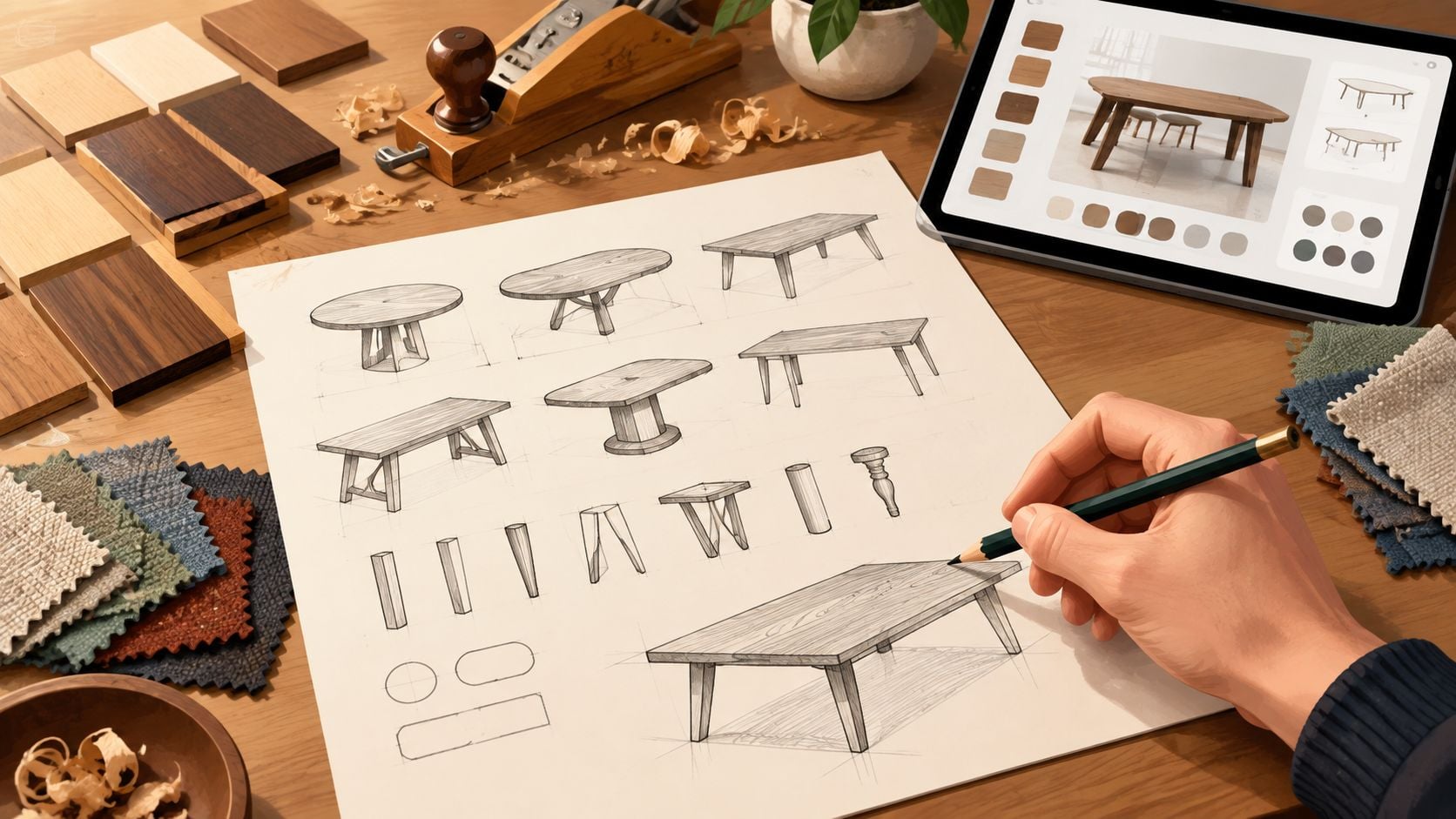
A dining room rarely follows a perfect catalog template. One home may need a narrow rectangular table for an open-concept area, while another may need a round pedestal table that improves conversation and circulation. Custom ordering lets households design it their way, instead of forcing the room to adapt to a table that almost fits.
Amish solid wood furniture appeals to buyers who value craftsmanship, substantial lumber, and traditional construction. The appeal isn't limited to a rustic look. A carefully selected Amish table can use a clean profile, contemporary stain, or refined leg design while retaining the durability and individuality associated with solid hardwood.
Design the details that affect daily life
Canadel's custom dining program gives shoppers room to adjust the elements that shape both comfort and appearance. A household can consider:
- Shape: Rectangular, round, oval, or another profile suited to the room.
- Scale: A size that supports regular meals without overwhelming the walkway.
- Finish: A tone that works with flooring, cabinetry, lighting, and existing chairs.
- Base design: Trestle, pedestal, four-leg, or a more sleek silhouette.
- Seating plan: Coordinated chairs, benches, or a combination for flexible gatherings.
The Canadel dining room set options make sense for homeowners who want coordinated choices rather than assembling unrelated pieces from different collections. Custom furniture can be bespoke without becoming impractical. The right consultation keeps the focus on proportions, comfort, care, and the household's actual routines.
A made-to-order process
A productive order usually starts with room measurements and a conversation about seating. The household then reviews species, finish, edge profile, base design, and extension needs before approving the order. Custom work requires patience because selections are built to specifications, while in-stock pieces may offer faster placement.
White-Glove Delivery adds value at the final stage. A substantial dining table needs careful handling, accurate placement, and attention to the finished room. For a Crown Point or Dyer home, that service can make the difference between a smooth installation and a stressful delivery day.
Selecting Styles and Sizes for Your Space
A beautiful table can still be the wrong table if chairs collide with walls, guests squeeze through narrow paths, or the tabletop dominates the room. Measuring first protects the investment and gives the design consultation a practical foundation.
Start with the room, not the catalog
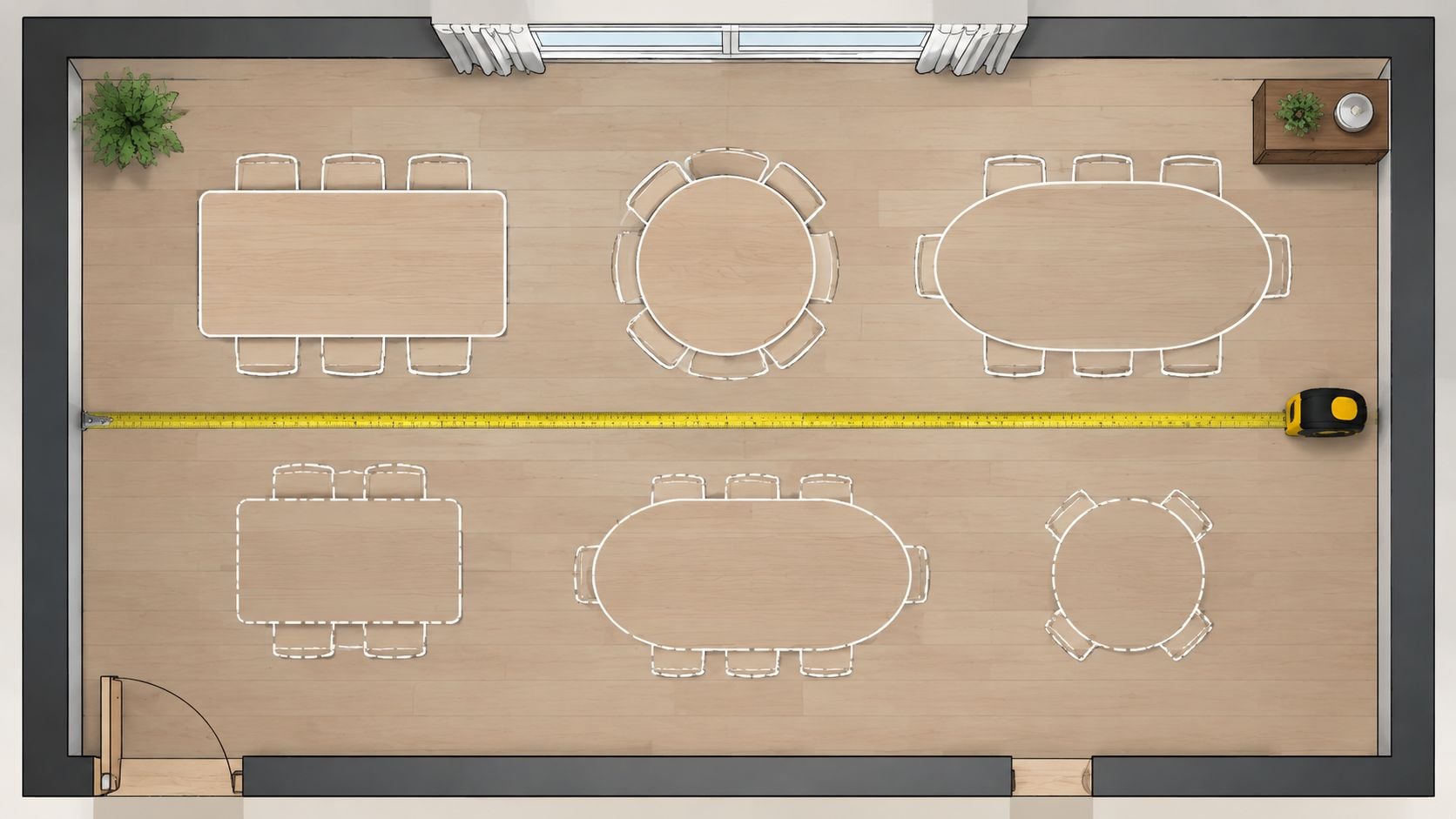
Measure the dining area's length and width, then mark doors, openings, windows, vents, and nearby furniture. Leave enough clearance between the table edge and walls for chairs to pull out and for people to walk behind seated guests. A commonly used planning target is 36 inches of clearance, but the exact requirement depends on chair depth, traffic patterns, and whether the space serves as a main passage.
Use painter's tape on the floor to outline the proposed tabletop. Walk around the shape with a chair pulled out. This simple test often exposes problems that a showroom photograph cannot show.
Choose a shape that supports the room
Rectangular tables make efficient use of long rooms and can provide generous serving space. They work especially well when one side sits near a wall or when the dining area needs to align with an open-concept kitchen.
Round tables reduce sharp corners and help conversation flow across a compact room. A pedestal base can also give diners more freedom for leg placement, although the tabletop still needs enough surrounding clearance.
Oval tables soften the visual length of a rectangular top while preserving a useful central surface. They can suit transitional rooms where a fully rectangular table feels too formal and a round table doesn't provide the desired seating arrangement.
Let the household determine flexibility
An extendable table can support everyday meals at a smaller footprint and expand for gatherings. Leaf storage, tabletop construction, and the mechanism's ease of use deserve close inspection. A family that hosts regularly should test the extension process in person rather than assuming it will be effortless.
Room style matters, but movement matters more. Bassett can serve shoppers drawn to a distinct style direction, while solid Amish or Canadel programs can help households adjust proportions and finishes. The correct table lets people sit comfortably, serve food, and move around the room without treating every meal like a furniture puzzle.
Finishes Care and Durability Tips
Finish selection affects the table's appearance, cleaning routine, and long-term maintenance. A stain changes color while allowing grain to remain visible, a natural oil can emphasize tactile character, and a protective topcoat can make everyday spills easier to manage. The finish should match the household's habits, not just the showroom lighting.
Sustainability deserves specific questions rather than broad labels. Independent sustainability scoring indicates that FSC-certified wood and low-VOC finishes perform best for health and durability, addressing a common information gap in solid wood dining table guidance through the Wood Furniture Scorecard.
Ask what the finish is designed to do
A buyer should ask whether the finish is intended for regular dining use, how it responds to moisture, and what care products the maker recommends. Warranty language also matters. Read what the warranty covers, what it excludes, and whether damage from heat, standing water, misuse, or environmental conditions falls outside the promise.
The dining room table finishes guide can help homeowners compare appearance and upkeep before placing an order. A low-emission finish may be especially appealing in a frequently used dining area, but the specific product and care instructions should come from the manufacturer or retailer.
Build a manageable care routine
- Clean promptly: Use a soft, slightly damp cloth for ordinary spills, then dry the surface.
- Protect from heat: Use trivets or pads beneath hot serving dishes.
- Control moisture exposure: Don't leave wet placemats, damp cloths, or standing liquids on the top.
- Avoid aggressive products: Abrasive cleaners and unapproved polishes can alter the finish.
- Schedule professional help: Call for refinishing advice when the surface shows widespread wear, finish failure, or damage beyond routine cleaning.
Materials deserve coordinated attention throughout a home. Homeowners choosing stone surfaces for nearby kitchens can consult Varun Marbles' stone selection guide for a separate perspective on surface care and material selection. The table and surrounding finishes should work together visually, but each material still needs its own maintenance plan.
Financing Pricing Ordering and Recommendations
A solid wood table is an investment in daily use, yet the purchase should still fit the household's broader priorities. Honest pricing means understanding what drives the total: species, dimensions, base construction, finish, extensions, custom changes, delivery, and care expectations. A lower initial price isn't meaningful if the table fails to suit the room or needs replacement sooner than expected.
Special Financing can provide additional buying power, but approval isn't automatic. Special financing is available subject to credit approval, with terms based on an applicant's credit profile and the lender's underwriting rules, as described in this furniture financing and wood-care guidance. Shoppers should review the annual percentage rate, repayment period, required payments, and all disclosed terms before accepting an offer.
Spend where the table earns it
A busy household may benefit from investing first in a durable species, sound joinery, and a finish suited to regular meals. A smaller household with a compact room may gain more from a custom shape or pedestal base than from selecting the most costly wood available.
For a practical starting point:
- Daily family use: Consider oak, maple, or hickory with a protective finish and a construction that supports movement.
- Warm traditional interiors: Cherry can provide a rich, established appearance.
- Contemporary rooms: Walnut can create contrast and visual depth.
- Flexible hosting: Prioritize an extension system that household members can operate comfortably.
- Specific room constraints: Consider made-to-order dimensions before compromising traffic flow.
Price comparisons should evaluate value, not only the ticket. A useful general resource on balancing cost with quality is this guide to pest control price and quality. The same principle applies here. Buyers should compare what the table includes, how it is built, how it will be delivered, and how the retailer handles questions after the sale.
Plan the order carefully
In-stock furniture can solve an immediate need, while custom Amish and Canadel pieces require decisions and production time. Confirm the expected timeline, finish approval process, delivery terms, and room-access requirements before placing the order. White-Glove Delivery can be particularly useful for larger tables that need careful positioning inside homes in Munster, Schererville, or nearby NWI communities.
Groen's Fine Furniture offers custom dining options, solid wood selections, special financing subject to credit approval, and delivery support through showrooms in Dyer and Crown Point. The ordering conversation should leave the household clear about the product, the commitments, the care routine, and the payment terms.
Conclusion with Call to Action
The right solid wood dining table brings several decisions together. Oak, maple, cherry, walnut, and hickory each create a different visual and practical result. Solid construction offers natural variation and repair potential, while engineered veneer can make sense when uniform appearance or another specific application matters. Good tables account for seasonal movement instead of pretending wood stays perfectly static.
Customization gives Northwest Indiana households more control over proportions, finish, shape, and seating. Amish furniture emphasizes traditional craftsmanship and solid hardwood character, while Canadel offers a broad made-to-order path for coordinated dining designs. Flexsteel and Bassett represent additional brand directions for other rooms, and Groen's wider home furnishings selection includes Serta and Beautyrest mattresses for households working on comfort throughout the home. Mattress shoppers can use a helpful mattress guide that focuses on health and rest, not only specifications.
Financing can help fit a lasting purchase into a household plan, provided buyers review the terms and remember that approval is subject to credit approval. The final decision should also include delivery, room access, maintenance, and the way the table will be used on an ordinary Tuesday.
For families in Dyer, Crown Point, St. John, Schererville, Munster, and across NWI, a showroom visit makes the choice more tangible. Sitting in the chairs, examining grain, testing an extension, and comparing finishes can reveal details that photographs miss. A multigenerational team with local knowledge can help turn a dining room into a comfortable gathering place built around real household needs.
Visit Groen's Fine Furniture in Dyer or Crown Point to explore solid wood Amish and Canadel dining options, custom finishes, and White-Glove Delivery. Bring room measurements, test-drive the chairs, and ask the family-owned team about Special Financing plans subject to credit approval.