Blog
Furniture Progressive Leasing: Your 2026 Guide

For homeowners in Dyer and Crown Point, furniture decisions usually show up at the same time life gets busy. A move lands sooner than expected, a sleeper sofa breaks, or a mattress has to be replaced before guests arrive, and the question becomes simple, how does a family bring the room home now without stretching cash too thin?
That's where furniture progressive leasing enters the conversation. At Groen's Fine Furniture, our family has walked plenty of Northwest Indiana shoppers through that choice, not as a judgment call, but as a practical checkout tool when timing matters more than wishing a purchase could wait. For families comparing room-by-room needs, a helpful outside resource on sleep and small-child transitions is the Grow With Me guide on toddler beds, because it shows how early furniture choices can shape comfort and routine.
For the people who visit our showroom, the question is rarely whether they want the piece. It's whether they want the piece tonight, whether they can fit the payment cadence around a paycheck, and whether the total cost makes sense against other ways to pay. Our team also keeps delivery logistics in view, including the practical side of furniture delivery and assembly, because the financing decision and the home setup decision usually happen together.
When a Sofa Has to Come Home Tonight
A family from Dyer walks in on a Friday afternoon with a simple problem. Their old sectional finally gave out, two relatives are coming in for the weekend, and the living room can't wait until next month's budget clears. They don't need a lecture, they need a workable path to a comfortable room.
That's the kind of moment where lease-to-own starts to make sense. It isn't about replacing planning, and it isn't a sign that a household made a bad decision. It's a checkout option that solves timing, especially when the need is real but the full cash payment isn't sitting there ready to go.
Why families use it for furniture
Furniture is different from many impulse purchases because it often serves a daily function. A sofa isn't just décor, it's where a household gathers, where guests sit, and where a tired parent finally lands after a long day. When the need is immediate, the financing structure can matter as much as the style.
Practical rule: if the room is unusable without the piece, financing may be a timing tool. If the room can wait, the household should compare every payment path with a clear head.
That's also why comfort-oriented shopping fits this topic so well. Families replacing a bedroom set or a child's bed often want the purchase to support a stage of life, not just fill a space. The best furniture decisions balance comfort, durability, and the payment method that fits the moment.
In a family-run showroom, that conversation stays human. Our team in Dyer and Crown Point talks through the room, the budget, and the delivery window together, so shoppers can decide whether they need a simple in-stock solution or a more custom path. For many local buyers, that first conversation removes the stress before the financing question even gets asked.
How Furniture Progressive Leasing Works
Progressive Leasing uses a 12-month lease-to-own structure, not a traditional loan. The store gets paid upfront, the customer makes scheduled automatic payments, and the merchandise stays in the program until the purchase option is exercised or the term ends. Progressive's retailer procedures also say the company owns the merchandise until the customer pays the lease-to-own obligation, which is why approval, payment, and delivery are tied together so closely. Progressive Leasing retailer procedures
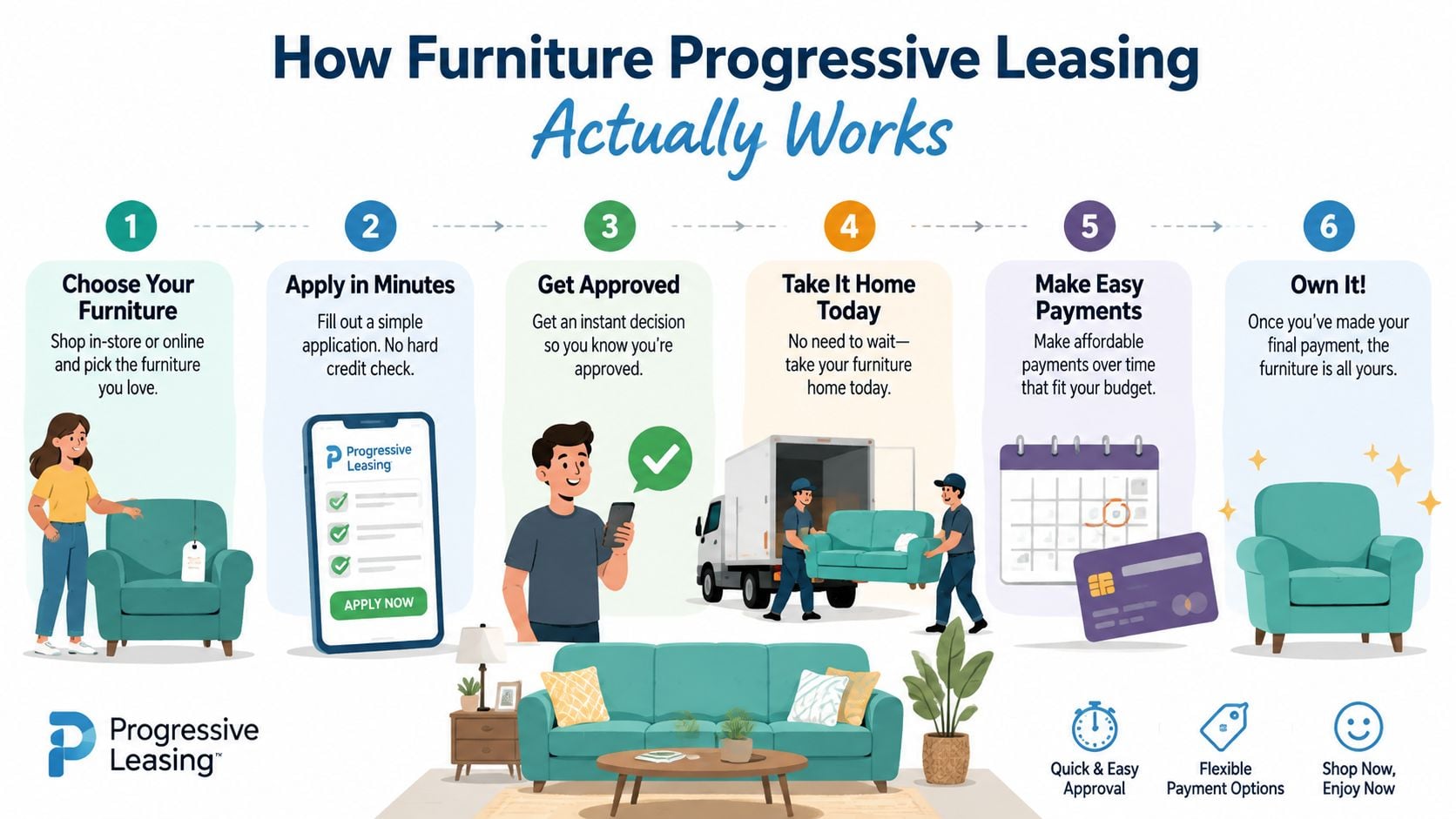
The checkout flow in plain English
A shopper applies first, then gets a decision. After approval, the customer selects the furniture, reviews the lease pricing disclosure, and sees the lease total next to the cash price. The first payment is made, delivery gets scheduled, and after the merchandise arrives, the retailer notifies Progressive that delivery happened.
That sequence matters because the program is built around possession and ownership at different stages. The customer can bring home the furniture quickly, but the legal and payment structure keeps moving until the obligation is satisfied. The disclosure has to be clear at checkout, and the cash price and lease-to-own total should sit side by side.
Groen's often sees shoppers understand the concept faster when they think of it as a delivery-backed payment path instead of a plain loan. The item can go home sooner, but the household still needs to know what happens after the first payment, after delivery, and after the early purchase option window. For shoppers comparing payment methods across a whole room, our furniture payment plans no credit check page helps frame the conversation before they sit down at the desk.
What this means at the door
The retailer cannot treat it like a casual add-on. Approval, payment, and delivery all depend on the lease being set up properly, because the merchandise is part of a rules-driven financing channel. For a customer, that is useful, because the process stays structured and predictable once the steps are explained clearly.
What Progressive Leasing Really Costs You
The biggest mistake shoppers make is focusing on the monthly payment and ignoring the total. A smaller payment can feel easier in the moment, but the question is how much the furniture ends up costing if the lease runs longer than expected. That's the part families need to compare before they sign.
Progressive's own retailer documentation requires the disclosure to show either the 12-month lease-to-own total or the warning that the arrangement could cost more than double the cash price. That makes the pricing conversation different from ordinary installment financing, because the purchase premium is part of the model rather than an afterthought. Progressive Leasing retailer shopping documentation
A simple cost lens
A shopper looking at a sectional or mattress set should ask three questions. Can the balance be retired early, what happens if the full term runs, and how does that compare with waiting and paying another way? Those are the questions that expose the actual trade-off.
| Lease-to-Own Cost Paths for a $2,000 Furniture Set | When It Happens | Approximate Total Paid | Best Fit Situation |
|---|---|---|---|
| Early purchase option | Around the early payoff window | Lower than carrying the lease for the full term | The household can clear the balance quickly |
| Midpoint payoff | Halfway through the term | In between the early and full-term paths | The shopper needs a little time, but not the full lease |
| Full 12-month path | End of the lease term | Highest of the three paths | The buyer needs maximum flexibility and accepts the premium |
The table above is the right way to think about the decision, even when the furniture price changes. The payment size matters, but the lease term matters more. If a customer is confident that the lease can be paid off early, the total cost picture looks different than if the account is carried all the way through.
For shoppers doing side-by-side comparisons, our furniture financing options page helps frame the broader money conversation before they ever commit to a checkout path. That's usually where the practical decision gets made, not on the first glance at a monthly number.
Comparing Lease-to-Own With Other Ways to Pay
Lease-to-own isn't automatically the right answer, and it isn't automatically the wrong one either. The better question is what kind of shopper is standing in the showroom that day. Some people are trying to preserve cash flow, some are disciplined savers, and some are focused on minimizing total cost above everything else.
Matching the method to the shopper
A household with strong credit and room for a promotional repayment plan may be better served by store-branded credit or special financing, especially if the balance can be paid on time. Someone who prefers to save before buying often does best with layaway or a delayed purchase, because the commitment stays simple and the total cost stays easier to control.
Lease-to-own fits a different profile. It helps when the merchandise needs to come home now, when credit profile is a barrier, or when payment timing needs to align with a paycheck. That's why this product often shows up in real life for a first apartment, a sudden replacement, or a family furnishing several rooms at once.
The right payment path is the one the household can explain to itself a month later without confusion.
Our team talks through those differences before anyone signs. In the same conversation, a shopper can compare lease-to-own with in-house special financing, then decide whether the goal is immediate delivery, lower total cost, or the cleanest long-term payment plan. For a broader look at how those paths line up, the more ways to pay page gives a useful starting point.
A quick way to choose
- Choose lease-to-own if the piece is needed now and the payment cadence needs flexibility.
- Choose special financing if the household has stronger credit and wants a more traditional credit-based path.
- Choose layaway if the buyer wants to save first and avoid carrying a payment obligation too soon.
- Choose to wait if the room can function without the purchase for a while.
That simple filter helps shoppers avoid paying for convenience they don't need. It also keeps the focus on the total household budget instead of on a single sales-floor promise.
Eligibility, Approval Limits, and Payment Timing
Progressive says approval is based on factors like income, bank account history, and employment status, not on the customer's credit score alone. That's why the decision can feel different from a standard finance application, and why some shoppers get a fast answer at the sales desk when they expected a long wait. Progressive Leasing furniture approval guide
How the approval limits usually show up
Progressive says it can approve customers for up to $5,000 on qualifying furniture purchases. That matters for households shopping for a sofa, bedroom group, mattress, or dining set, because the approval amount has to match the item they want to bring home. The number isn't a promise, but it does show that the program is built for real furniture purchases, not tiny add-on buys.
The payment cadence is built around real-life pay cycles. Progressive says the automatic payments can be weekly, biweekly, or monthly, which gives shoppers a way to match the schedule to their paycheck timing. That alignment matters if the household wants a realistic chance of paying the lease down earlier rather than letting it drift into the longest path.
What can and can't go on the lease
Progressive's help content says eligible items can include furniture, mattresses, electronics, jewelry, appliances, mobile devices, and musical instruments. It also excludes items that are prohibited by law, permanently attached to a home or vehicle, consumable or intangible items, or anything that creates an excessive risk under its rules. Progressive Leasing eligible items help article
That is why not every furniture item works automatically. A piece still has to fit the program's product rules and risk limits, even if it sounds like furniture in the everyday sense. For shoppers, the best move is simple, bring the exact item into the conversation before checkout so there are no surprises at delivery.
Smart Ways to Use Progressive Leasing on Furniture
Lease-to-own fits best when it solves one clear problem. It works well as a bridge for a specific purchase, not as a habit that spreads across the whole house. A family that uses it once for a sleeper sofa or a mattress can keep the budget steady, while a family that keeps moving it from room to room may end up paying more just for convenience.
Where it makes the most sense
A sleeper sofa can be a practical choice when guests are on the way and the living room needs to do double duty this weekend. A mattress order can also make sense when the household is in the middle of a move or renovation and sleep cannot wait. For dining, a Canadel custom order can leave a timing gap, and lease-to-own can bridge that gap when the family wants to design it your way without putting the room on hold for months.
The same idea applies to other made-to-order pieces, including Amish solid wood furniture. Custom lead times can be worth accepting for quality and fit, but the household still has to decide whether the financing should cover the waiting period or whether another payment path makes more sense. Groen's often talks through that exact question when shoppers are choosing between custom furniture, special financing, and a quick in-stock option.
Where caution matters
The trouble starts when the same household uses lease-to-own for the sectional, then the bedroom set, then the entertainment center in the same season. Each piece may feel manageable on its own, but the total premium grows quickly when multiple leases stack up. For that reason, this option should stay tied to need, not routine.
A simple rule helps here. If the piece solves a real near-term need and the lease can be paid down on schedule, it may be worth considering. If the item is more of a want than a need, or if several purchases are landing at once, pause and compare every other payment path first. If you want a clearer checklist before deciding, our guide to the do's and don'ts of furniture shopping can help you sort out the pressure points before you sign.
Shopping Progressive Leasing at Groen's Fine Furniture
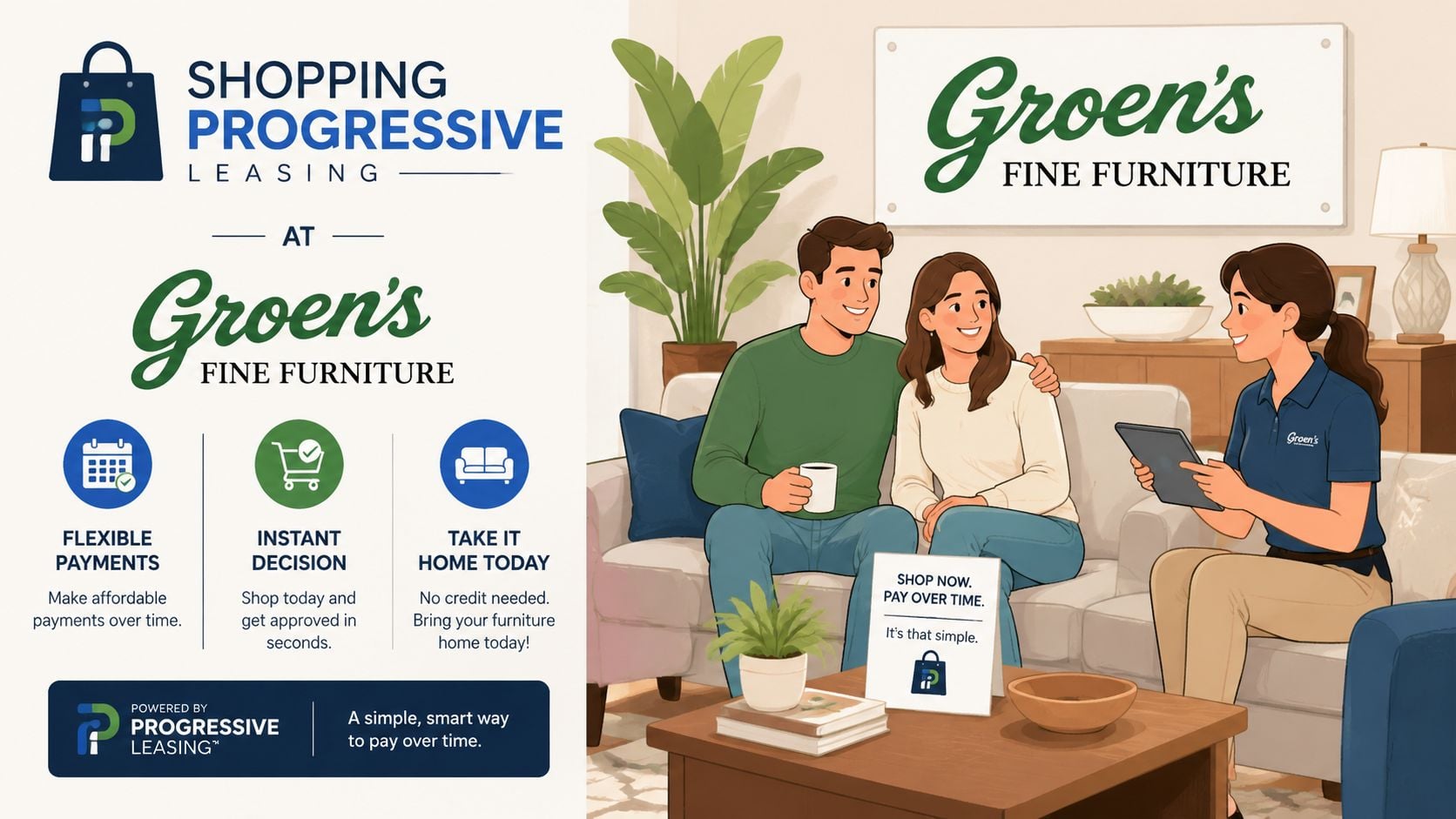
A visit to our Dyer or Crown Point showroom usually starts with the room, not the paperwork. A family might come in looking for a new sectional, then realize the dining area needs attention too, or that a mattress replacement belongs in the same budget conversation. Our team keeps the focus on what the home needs, then walks through the payment path that fits the plan.
What the showroom conversation looks like
Shoppers can look at in-stock pieces first, or they can talk through custom order services like Canadel dining and Amish Furniture. That matters because the financing decision often depends on whether the family wants something ready now or something made to order. Our team explains the difference in plain language, so the shopper understands both the style choice and the timing choice.
Then the financing desk lays the lease terms next to the cash price. That side-by-side view keeps the numbers honest and helps the customer see what the lease means before anything is signed. For some families, that comparison confirms the fit right away. For others, it pushes the decision toward a different payment plan.
Why the local relationship matters
Groen's has served Northwest Indiana since 1983, and the store is still run with the kind of multigenerational ownership that remembers customers after the sale. That shows up in the delivery follow-up, the service calls, and the fact that the same team is still there when a question comes up after the furniture arrives. Families in Dyer, Crown Point, St. John, Schererville, and Munster usually notice that difference right away.
When a store handles both the sale and the follow-up, the financing discussion feels less like a transaction and more like a plan.
That's also where 5-star service matters in practical terms. The goal isn't just to close the deal, it's to make sure the furniture, the payment, and the delivery all fit the household's routine.
Common Questions Buyers Ask Before They Sign
The first question many shoppers ask is whether lease-to-own hurts credit. The safest plain answer is that the customer should treat it as a financing agreement with rules, not as a casual purchase. Because the structure is different from a traditional loan, the shopper should ask the sales team how the account will be handled before signing, especially if the household is trying to protect future borrowing options.
Another common question is what happens if a payment gets missed. In practice, the concern is less about the missed payment itself and more about how quickly the account can move off schedule if the household stops matching the payment cadence to its paycheck. That's why our team encourages shoppers to choose weekly, biweekly, or monthly drafting in a way that feels realistic from day one.
Early payoff is the third question, and it's one of the most important. If the customer can retire the balance early, the total cost path can look a lot better than carrying the lease through the full term. That's also why shoppers who expect a bonus, tax refund, or other cash inflow often ask about the early purchase option before they commit.
Returns and exchanges come up too, especially when the customer is choosing a sectional or mattress sight unseen from a bigger selection. The key is to discuss those terms before the paperwork is signed, because lease-to-own is tied to merchandise, delivery, and ownership rules that don't behave like a regular cash sale. A good showroom conversation leaves no mystery about what happens if the household changes its mind.
If the same questions keep circling in the customer's head, that's a sign to slow down, not speed up. Our Dyer and Crown Point teams can compare lease-to-own with in-house special financing on the actual furniture a shopper has in mind, so the decision feels grounded instead of rushed.
Visit Groen's Fine Furniture in Dyer or Crown Point to explore custom options, compare furniture progressive leasing with special financing, and see what fits your home and your budget. Our family is here to help with honest guidance, white-glove delivery, and the kind of personal service Northwest Indiana families have trusted since 1983.