Blog
Dining Room Tables with Leaves Stored in Table

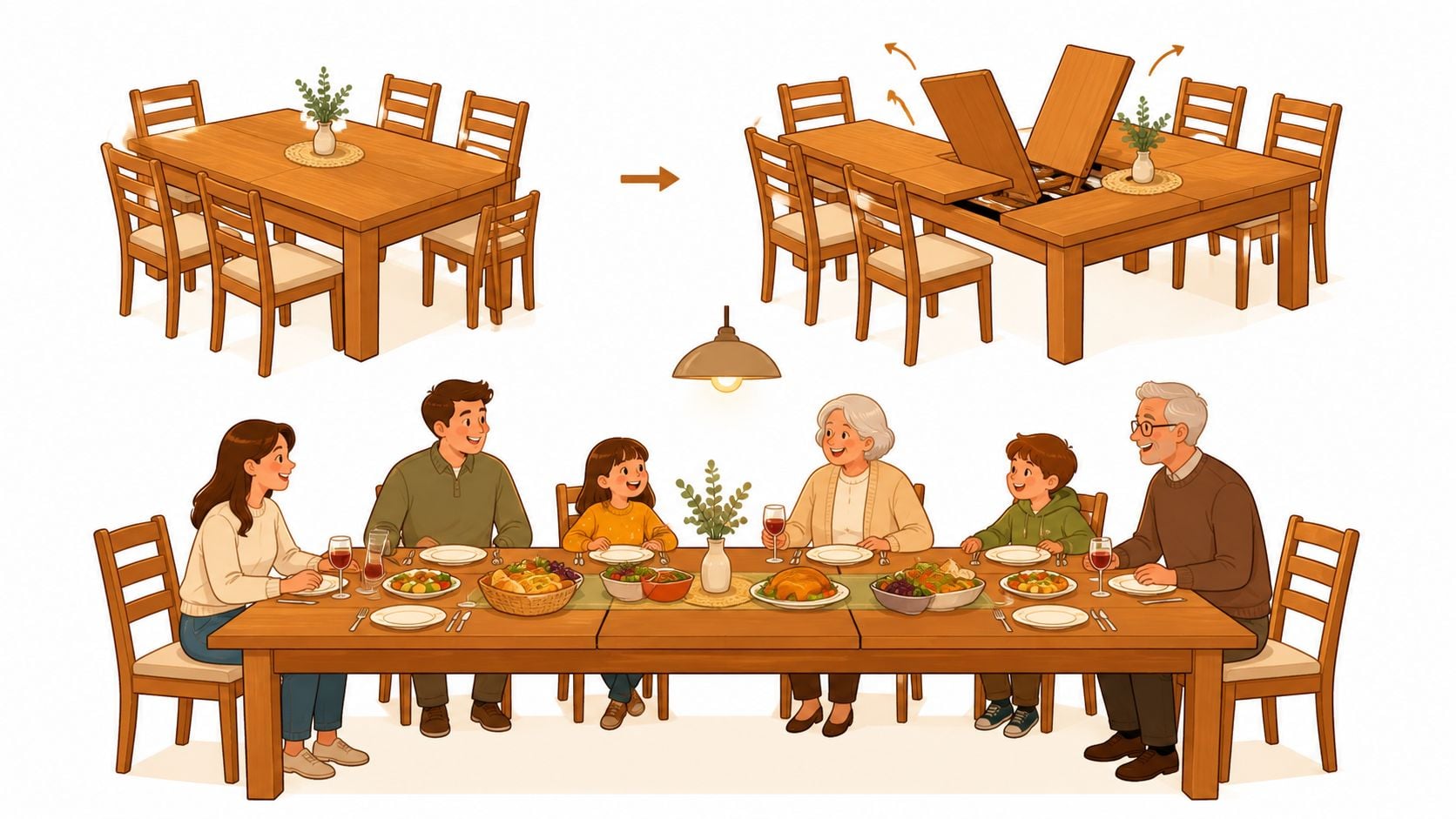
Dining room tables with leaves stored in the table have roots dating to the 16th century, or the 1500s, and today's self-storing designs still solve the same basic problem: a compact everyday table needs to become a larger gathering place without requiring a separate panel in a closet. The concept evolved from simple draw leaves into engineered butterfly and internal extension mechanisms that hide expansion panels inside the table body.
A six-seat table can feel perfect on an ordinary evening, then suddenly seem far too small when relatives arrive for a holiday meal. Homeowners in Dyer, Crown Point, and throughout Northwest Indiana often need furniture that works for daily life first, then adapts when the guest list grows. The important question isn't only whether a hidden leaf is convenient. It's whether the mechanism will remain dependable through years of family dinners, heavy serving dishes, and repeated opening and closing.
Why Self-Storing Table Leaves Solve Real Hosting Problems
A family may eat at a compact table most nights, with enough room for the people who live there and a clear walkway around the chairs. Then a birthday dinner brings extra relatives, or a Sunday gathering grows when grandparents and neighbors stop by. Without an extension system, someone has to find a separate leaf, carry it from storage, and clear enough space to install it.
Dining room tables with leaves stored in table remove that storage chore. The extension panel remains inside the table's apron or center cavity, protected from being misplaced or knocked against a wall. Depending on the design, the leaf folds, slides, or rises into the opening created when the tabletop separates.
That convenience matters in smaller NWI homes, where a basement, garage, or spare closet may already be full. It also helps households that use the dining room for more than meals. A closed table leaves more visual and physical room for homework, crafts, or everyday movement, while the expanded configuration supports a larger gathering.
A practical idea with deep roots
Furniture history places early table-leaf solutions around the 1500s, when draw leaves and drop leaves added surface area only when needed. Later self-storing and pull-out designs kept extra boards beneath the tabletop, allowing the table to expand without separate storage. The development continued through the 17th, 18th, and 19th centuries, including more advanced wind-out tables in the mid-19th century. Furniture history from A-America describes this progression from simple additions to more engineered extension systems.
That history helps explain why the format remains useful. Dedicated dining rooms weren't common household features until the 1800s, so expandable furniture gave families flexibility in rooms that served several purposes. Modern hardware is more refined, but the underlying idea remains familiar.
Better gatherings begin with better planning
A hidden leaf won't solve every hosting challenge by itself. The room still needs an arrangement that lets guests move comfortably, reach serving dishes, and approach the table without squeezing behind chairs. Households planning a buffet-style meal can also use these buffet table layout tips to keep food service from competing with dining space.
For broader holiday preparation, Groen's guide to hosting for the holidays offers another useful planning reference. The right table should reduce preparation stress, not create a new piece of furniture to manage.
Practical rule: Choose the table for everyday comfort first, then verify that its open configuration supports the gatherings the household actually hosts.
How Different Leaf Mechanisms Work Inside the Table
Self-storing tables can look similar when closed, but their internal movements differ. Understanding those movements helps a buyer identify which design fits the household's habits and which components deserve close inspection in a showroom.
Butterfly leaves fold like a book
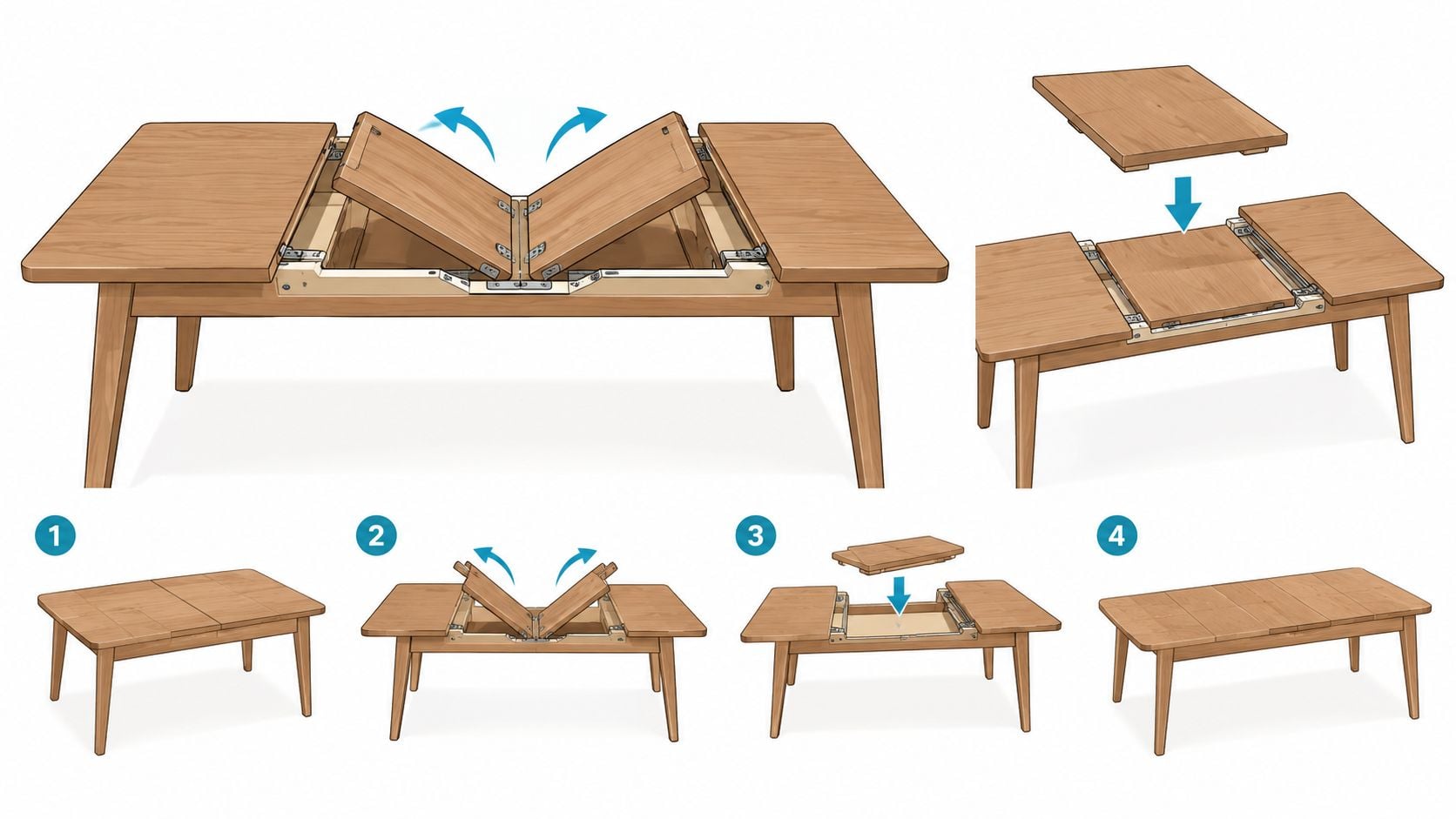
A butterfly leaf folds at its center and rests beneath the tabletop when the table is closed. When the two tabletop halves slide apart, the folded panel becomes accessible. It then unfolds, much like opening a book at its spine, and settles into the gap before the tabletop closes around it.
This design keeps the leaf attached to the table, so nobody needs to carry a separate board. The folding hinge and internal slide rails must align correctly, however. A well-built mechanism lets the halves separate evenly and allows the leaf to rest flush with the main surface.
Drop-in leaves slide into position
A drop-in or pull-out leaf is usually a separate panel stored flat inside the table. The tabletop halves move apart on internal rails, and the panel is brought into the opening. Antique draw tables used leaves stored beneath the main top, sliding them out between the tabletop and frame. That design is considered a direct ancestor of modern extension tables, as explained by Antique Trader's history of expanding tables.
The distinction is subtle but important. A drop-in panel may offer a straightforward, sturdy surface, while a butterfly design adds folding hardware and hinges. Buyers should operate both types rather than judging them from photographs.
Pedestal storage uses the base
A pedestal table may place its hidden compartment near the center of the base. The leaf remains protected beneath the top, while the pedestal supports the structure without the corner legs found on a conventional dining table. This can make chair placement more flexible, especially for households that want seating around more of the perimeter.
The internal space still imposes limits. A table needs enough length and structural depth to hold the leaf without interfering with the pedestal, runners, or locking points.
Built-in cabinets add storage structure
Some designs use a more elaborate cabinet-style cavity integrated into the table base. The panel rests in a dedicated compartment, often behind or beneath a structural apron. This approach can protect the leaf well, but it also adds more construction and hardware to inspect.
The mechanism's basic sequence stays consistent. The top separates, the stored panel moves into place, alignment points engage, and the halves lock together. A butterfly-leaf pedestal table can help shoppers visualize how the storage method and pedestal support work as one design.
Comparing Mechanism Reliability and Long-Term Trade-offs
A self-storing leaf exchanges separate storage for more moving parts. Internal rails, hinges, latches, and alignment hardware all need to work together, so the quality of those components matters more than the convenience label on the product card.
Most self-storing tables are designed around one or two leaves, because the internal cavity limits how many panels the table can hold. Many common configurations add roughly 40 to 50 cm of length per leaf, according to Elystra Living's extension-table guide. Removable-leaf tables can sometimes accommodate more expansion because the panels live outside the table, but that flexibility creates a separate storage responsibility.
| Feature | Self-Storing (Hidden) | Removable (External) |
|---|---|---|
| Storage | Leaves remain inside the table | Panels require a closet, rack, or other storage area |
| Daily setup | Fast and self-contained | Requires finding and carrying the leaf |
| Main wear points | Rails, hinges, latches, and alignment | Leaf supports, locks, and handling edges |
| Expansion capacity | Usually one or two internal leaves | Can support more panels when the design allows |
| Maintenance | Tracks and internal hardware need attention | Fewer internal parts, but stored leaves need protection |
| Serviceability | Repairs may involve concealed components | Individual panels and supports can be easier to access |
Where failures usually begin
A table that racks, twists, or leaves a visible seam may have a rail alignment problem. A latch that no longer holds firmly can make the expanded top feel unstable. Hinges can loosen, and dust or grit can interfere with smooth travel.
Fine Woodworking's butterfly expansion-table guidance emphasizes the importance of precise rail alignment, level runners, and locking hardware. These details aren't cosmetic. They determine whether the two halves separate evenly and whether the leaf reseats flush under load.
Matching complexity to household use
Frequent hosts should prioritize smooth operation, sturdy locks, and accessible service information. Families that use the extension regularly will notice weak hardware sooner than households that open the table only for occasional celebrations.
Removable leaves remain sensible when simplicity matters more than instant setup. A carefully made external panel can be durable, especially when stored flat and protected from moisture. Buyers comparing solid-wood construction can also review Amish furniture quality before deciding whether craftsmanship and repairability justify a more substantial investment.
Sizing Your Table and Room for Smooth Operation
A table can have an excellent leaf system and still fail in the room if chairs can't pull back or people can't pass behind them. Measurements should cover the closed table, the fully extended table, and the path from the delivery entrance to the dining area.
Start with the table's intended seating. Antique-table guidance notes that each leaf is usually about 50 cm wide, and each added leaf can seat about 2 additional people. Treat that as a planning reference rather than a guarantee, because chair width, table shape, leg placement, and place-setting needs all affect comfort. This dining table size guide can help households compare everyday and expanded dimensions.
A simple room checklist
- Measure the open footprint. Mark the tabletop's full length on the floor, then add the space needed for chairs and walking paths.
- Check the wall relationship. A table pushed too close to a wall may not have enough room for the tabletop halves to separate.
- Measure delivery access. Doorways, hallways, stair turns, and elevators can be more restrictive than the dining room itself.
- Test chair positions. Armchairs need more clearance than armless chairs, and pedestal bases may change where chairs can sit.
- Confirm internal storage requirements. One furniture source states that a table generally needs to be 12 inches longer than its width for a leaf to fit in the storage area beneath the table, as explained by The Amish Home's extension-table guidance.
A smaller home in St. John or Munster may benefit from a table that remains visually restrained when closed, even if it expands considerably for guests. A larger home in Schererville may have room for a wider top, additional chairs, and a serving station, but the same operating clearance still matters.
Homeowners researching durable commercial-style surfaces can also browse this overview of materials for restaurant tables. Residential dining furniture doesn't need to copy a restaurant table, but the comparison can clarify how surface choice, edge treatment, and maintenance affect daily use.
Materials, Finishes, and Maintenance for Lasting Performance
The leaf mechanism depends on the table's structure. Solid wood, stable joinery, and well-fitted hardware create a better foundation than a top that flexes whenever the halves move apart. Oak, maple, and cherry are common hardwood choices for furniture because they combine a substantial feel with the ability to accept durable finishes.
Finish quality protects more than the visible tabletop. It also helps limit the effect of spills, dust, and ordinary abrasion around the opening and closing areas. A good finish won't eliminate seasonal wood movement, but it can make daily care easier and help the table age gracefully.
A manageable care routine
Homeowners don't need a workshop to preserve an extension table. They do need to notice changes early.
- Clean the accessible tracks quarterly. Use a soft brush or dry cloth to remove grit without forcing debris deeper into the hardware.
- Inspect hinges annually. Check for looseness, unusual sounds, or resistance before applying any product recommended by the manufacturer.
- Test latch tension. The tabletop should close evenly and remain secure without excessive force.
- Protect the surface. Use placemats, trivets, and coasters, especially when serving hot dishes or liquids.
- Keep the room stable. Avoid placing solid wood furniture directly against heat sources or in persistently damp areas.
The dining room table finishes guide can help households compare surface treatments and choose care habits suited to the finish. Manufacturer instructions should take priority, particularly for lubricants and cleaning products.
Why construction matters
A hidden leaf concentrates stress in the rails, locks, and table frame. Solid wood Amish furniture can appeal to buyers who want craftsmanship, a repairable structure, and a piece that feels appropriate for multigenerational use. That doesn't make every custom table automatically maintenance-free. It means material quality and construction deserve as much attention as color and shape.
Custom Amish and Canadel Options at Groen's Fine Furniture
A table works harder when it has to serve both ordinary meals and large gatherings. Custom ordering lets a household address the actual room, seating pattern, finish preference, and mechanism rather than accepting a compromise that looks attractive but operates poorly.
Canadel custom dining gives shoppers a made-to-order path for choosing sizes, shapes, finishes, and chair combinations. That makes “design it your way” more than a slogan. A homeowner can pursue a coordinated dining group suited to an open floor plan, while another household can select a more traditional silhouette for a dedicated dining room.
Amish solid-wood furniture offers a different kind of customization. Buyers can focus on heirloom construction, wood character, stain, edge details, and proportions. For families that expect the table to remain in use through changing household needs, that craftsmanship can support a long ownership horizon.
Test the mechanism before choosing the finish
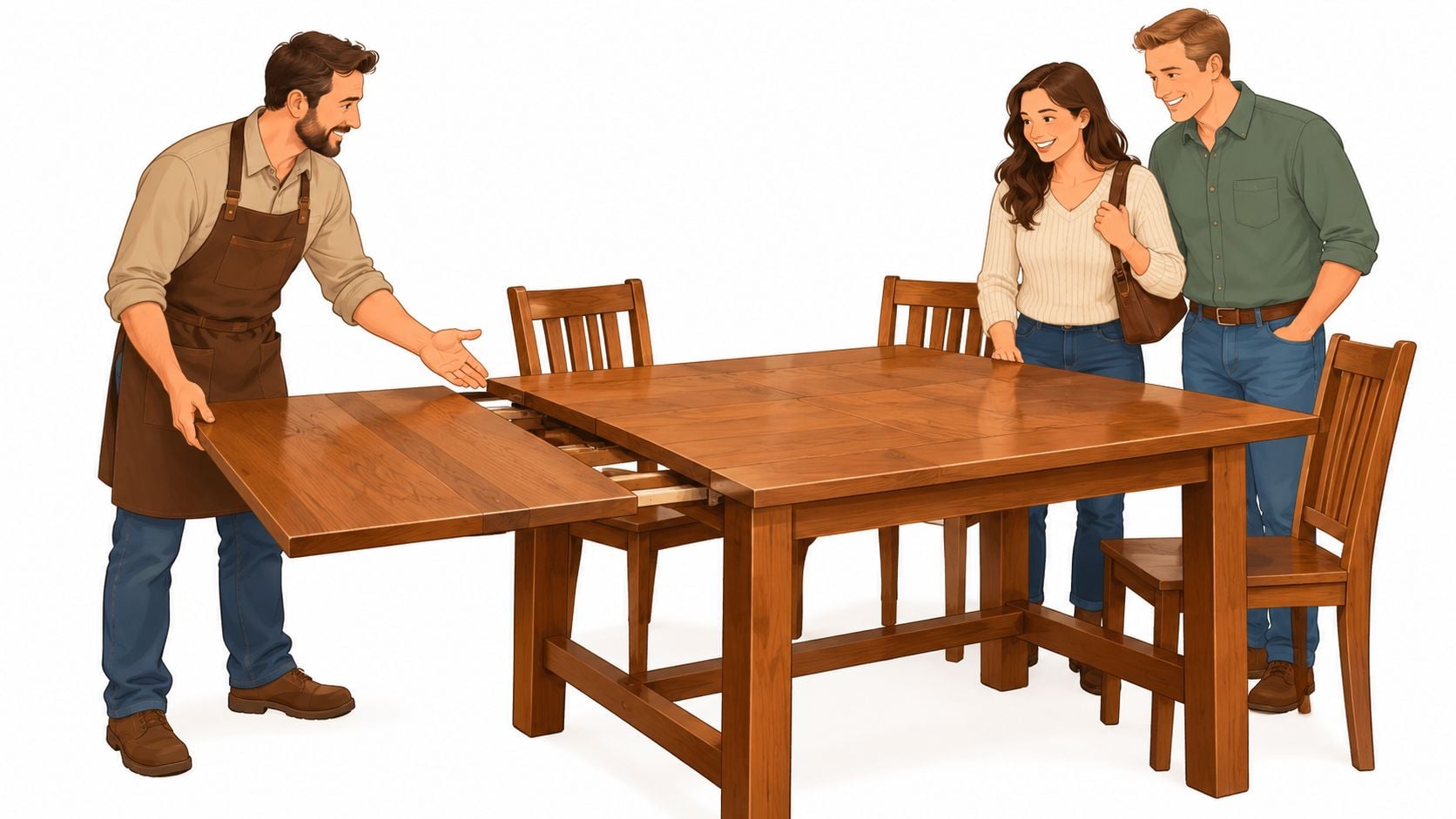
A showroom visit reveals details that online photographs can't. Shoppers can pull the tabletop apart, observe whether both sides move evenly, unfold or position the leaf, and check how the locks engage. The experience also makes it easier to judge whether chairs leave enough knee room and whether the closed table suits the room's scale.
Groen's Fine Furniture serves Northwest Indiana from showrooms in Dyer and Crown Point, with a local legacy reaching back to 1983. The family-owned business provides multigenerational service for homeowners in NWI and surrounding communities, including St. John, Schererville, and Munster.
Build value around the household
A custom dining table is an investment in how people gather, not merely a way to fill a room. Groen's offers custom furniture, solid wood Amish options, Canadel dining, White-Glove Delivery, and interior design guidance. Special Financing is available subject to credit approval, which can provide additional buying power while a household fits quality furniture into its budget.
The same showroom also carries brands such as Flexsteel and Bassett for other rooms, along with Serta and Beautyrest mattresses for shoppers evaluating sleep wellness through a helpful mattress guide. Those categories aren't substitutes for a dining table, but they reflect a broader approach to furnishing a comfortable home with durable, coordinated pieces.
Visit Groen's Fine Furniture in Dyer or Crown Point to test self-storing and removable-leaf tables, compare Canadel custom dining with Amish solid wood, and discuss dimensions for the home. The family-owned team can explain White-Glove Delivery and Special Financing, subject to credit approval, so each household can choose a dependable gathering place with honest, personal guidance.