Blog
Innerspring vs Memory Foam: A Guide for NWI Sleepers

A lot of Northwest Indiana shoppers reach the same point the same way. They get through a long day in Dyer, Crown Point, St. John, Schererville, or Munster, lie down, and realize the mattress isn't helping them recover anymore. It might feel too firm at the shoulder, too warm at night, or too shaky every time a partner turns over.
That's usually when the question shows up. Should the next bed be an innerspring or memory foam mattress?
For many households, that choice feels harder than it should. Online descriptions throw around words like support, contouring, cooling, and responsiveness, but those terms don't always explain what a person will feel at bedtime or after a full night's sleep. That's why many local shoppers start by looking for top-rated mattress stores near them instead of relying on a product page alone.
A family-owned store that has served Northwest Indiana since 1983 understands that people usually aren't shopping for “specs.” They're shopping for fewer aches, steadier sleep, and better mornings. The innerspring vs. memory foam decision matters because the wrong feel can wear on sleep wellness night after night, while the right one can support comfort for years.
Table of Contents
- Finding Your Perfect Night's Sleep in Northwest Indiana
- What's Inside Your Mattress A Look at Construction
- The Great Debate Performance and Feel
- Who Sleeps Best on Each Mattress
- Investing in Your Rest Price and Longevity
- Your In-Store Test Drive A Guide for Our Neighbors
- The Final Decision Your Groen's Checklist
Finding Your Perfect Night's Sleep in Northwest Indiana
In Northwest Indiana, sleep problems often don't begin with dramatic symptoms. They start subtly. A shoulder feels tight in the morning. A back sleeper starts waking up stiff. A couple notices that one person's movement seems to ripple across the whole bed. The mattress hasn't failed all at once, but it also isn't doing its job the way it used to.
That's where the innerspring vs. memory foam conversation becomes useful. Not because one type is universally better, but because each one solves a different kind of comfort problem. One tends to feel more lifted and familiar. The other tends to feel more conforming and still.
For households in Dyer and Crown Point, this choice is also about lifestyle. Some shoppers want the mattress they can move around on easily after a long workday. Others want a bed that eases pressure at the hips and shoulders so they can stop tossing around trying to get comfortable. Parents, retirees, shift workers, and couples all bring different needs to the same showroom floor.
The right mattress doesn't just feel good for thirty seconds. It supports the body through a full night and still feels right after the sleeper changes position.
That's one reason local guidance matters. A multigenerational furniture business with 5-star service looks at the person first, not just the category label. Sleep wellness isn't a one-size-fits-all question, and neither mattress type should be treated like a magic answer for everyone.
Why this choice confuses so many shoppers
Most confusion comes from mixed messages. A shopper might hear that innerspring is “better support” and memory foam is “better comfort,” as if support and comfort are separate purchases. They aren't. A mattress has to do both.
Another common misunderstanding is that people think they're choosing between “old” and “new.” That's not really the issue. The actual decision is feel, motion response, temperature behavior, and how the mattress matches a sleeper's habits.
What Northwest Indiana shoppers usually care about most
Different homes ask different things from a mattress, but a few concerns come up again and again:
- Aches in common pressure spots: Side sleepers often notice shoulders and hips first.
- Partner disturbance: Light sleepers want less movement traveling across the bed.
- Sleeping warm: Bedrooms without ideal cooling can make mattress temperature more noticeable.
- Long-term value: Families want comfort that holds up, not just a quick first impression.
Once those concerns are clear, the materials start to make much more sense.
What's Inside Your Mattress A Look at Construction
A mattress can look simple from the outside and still feel completely different once you lie down. That difference starts at the core. The materials under the cover decide whether you feel lifted, cushioned, hugged, or held up through the night.
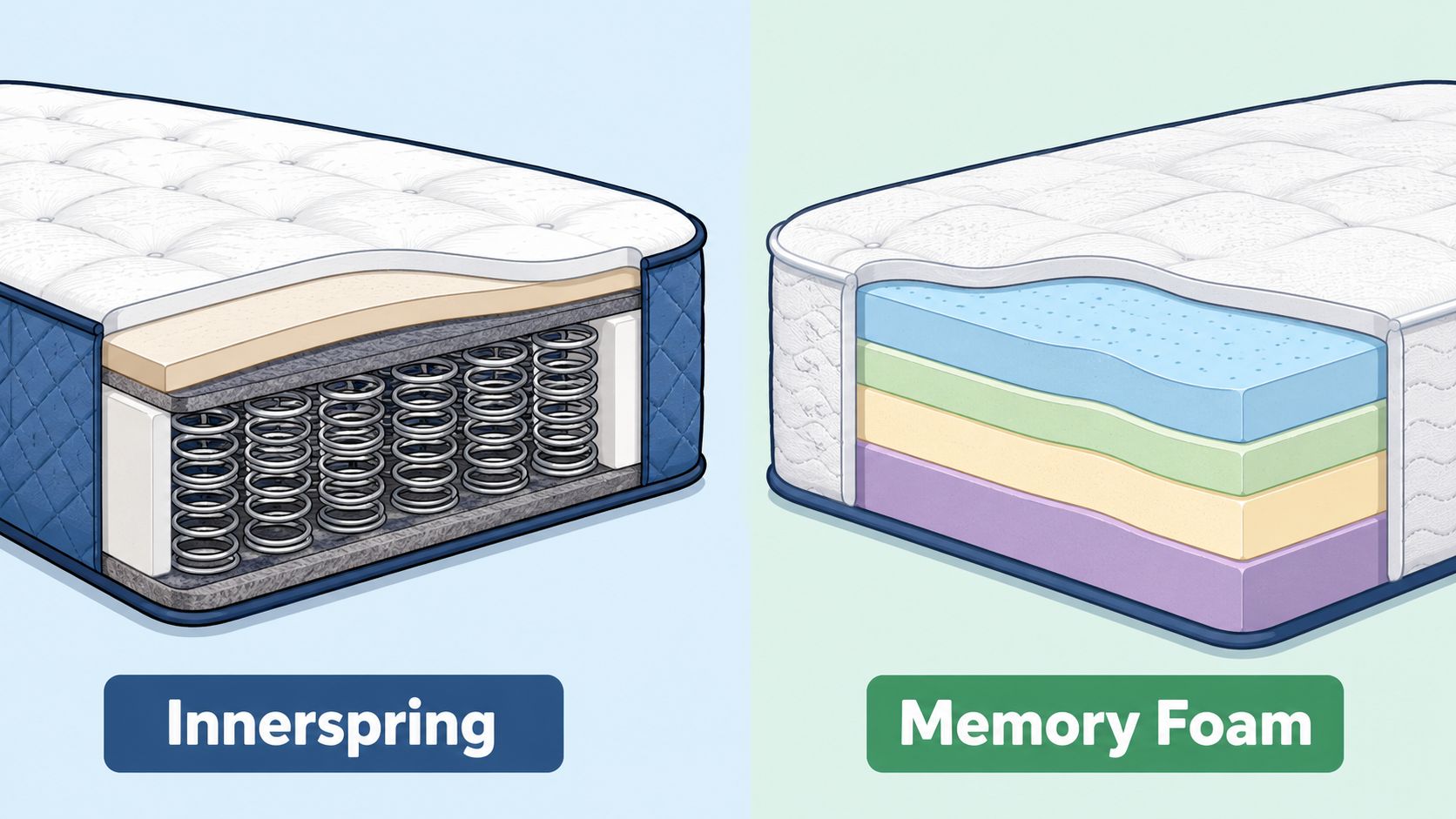
How an innerspring mattress is built
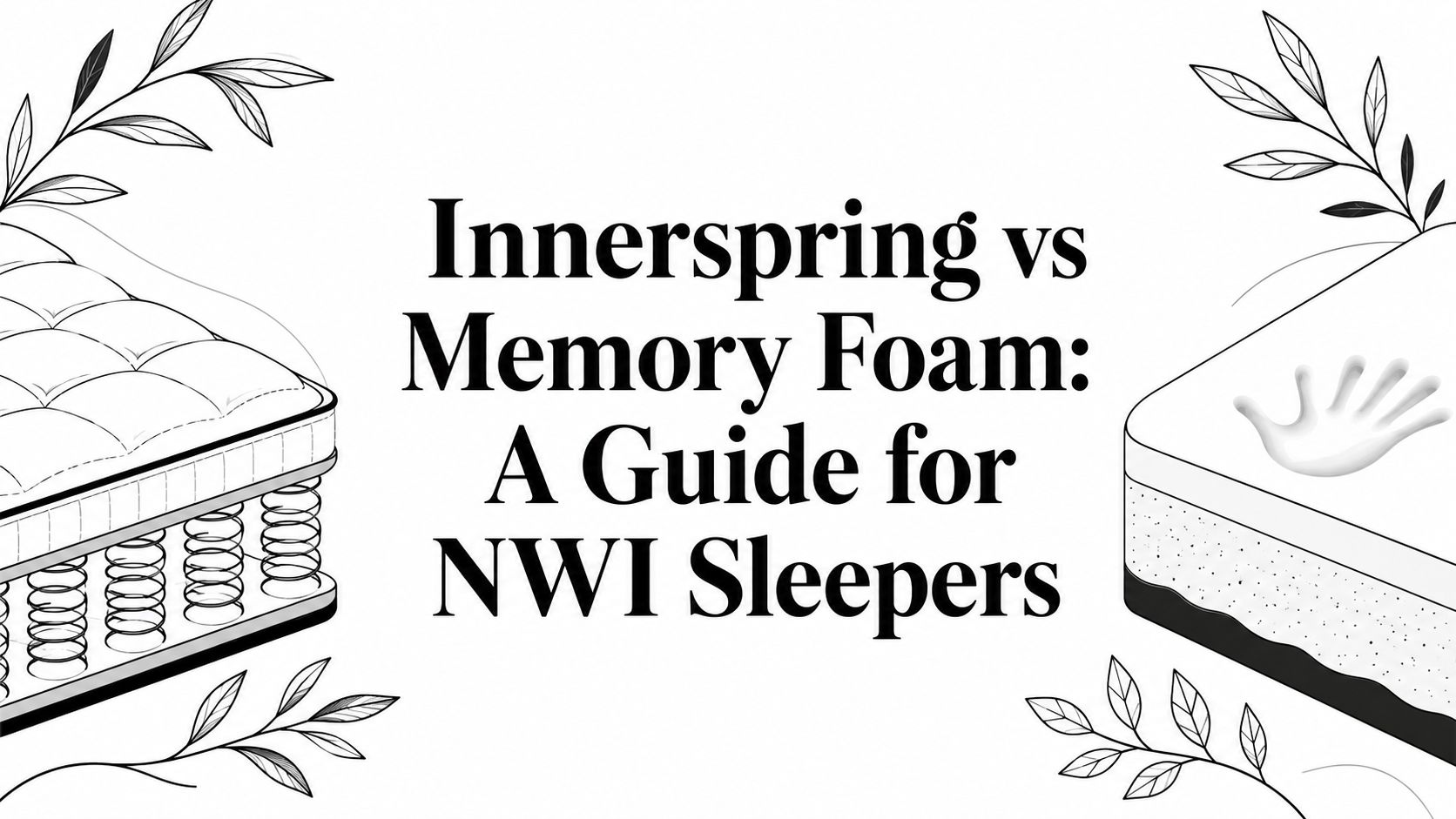
An innerspring mattress is built around steel coils. Those coils do the heavy lifting. They carry body weight, push back quickly, and create the springy feel many Northwest Indiana shoppers recognize right away in our showroom.
Above the coil unit, manufacturers add comfort layers. Those layers might be thin and firm or thicker and plusher, but the support personality of the bed still comes from the coil system underneath. That is why two mattresses with similar-looking tops can feel very different after five minutes, and even more different after a full night.
A simple comparison helps here. Coils work like the suspension in a vehicle. They compress under pressure, then rebound quickly when the pressure changes. If you roll from your back to your side, the mattress usually responds fast instead of slowly reshaping itself around you.
That quick rebound often gives sleepers the feeling of resting more on the bed than in it.
How a memory foam mattress is built
A memory foam mattress uses foam layers as the main support and comfort system instead of a coil core. The foam responds to heat and pressure, so it molds more closely around the body's curves. Shoulders, hips, and lower back usually notice that difference first.
Memory foam works more like a handprint in soft clay than a set of springs. It adjusts where pressure is strongest, then eases back after you move. That is why many shoppers describe it as a hug, a cradle, or a slow-settling comfort.
For readers who want a plain-language explanation of how this material behaves, this guide to memory foam for mattress retailers offers a useful overview.
Many people walk into a local store assuming memory foam just means "soft." That is where confusion starts. Some memory foam beds feel plush, but others feel quite firm. The bigger idea is adaptation. Foam changes shape to spread pressure in a way coils usually do not.
Why the inside changes the feel so much
Construction shapes comfort long before you get to fabric, quilting, or a pillow top. Coils create lift and faster response. Foam creates contouring and a slower, closer-to-the-body feel.
That does not mean every innerspring feels identical or every memory foam bed feels identical. Coil count, coil design, foam density, layer thickness, and top materials all play a part. Still, once you know the core material, the rest of the mattress starts to make more sense.
This matters for long-term comfort, not just the first showroom impression. A bed that feels pleasant for two minutes can become tiring if its construction does not match how you sleep every night. That is one reason families around NWI often do better testing mattresses in person, where you can notice how the support system reacts under your shoulders, hips, and lower back instead of guessing from a product page.
If you want a local explanation that connects the material to everyday sleep comfort, this guide on what a memory foam mattress is and how it feels is a helpful next read.
The Great Debate Performance and Feel
A mattress can look great in a product photo and still feel completely wrong after twenty minutes in bed. That is why this part of the innerspring vs. memory foam decision usually clicks for shoppers once they focus on what the bed does under the body through a full night of sleep.
In our Northwest Indiana showroom, this is often the moment the conversation gets easier. One mattress may feel light and springy, like it is holding you up. Another may feel closer and quieter, like it is shaping itself around you. Neither feel is automatically better. The better fit is the one that helps your body settle in, stay supported, and wake up without the small aches that build over time.
Innerspring vs. Memory Foam At a Glance
| Feature | Innerspring Mattress | Memory Foam Mattress |
|---|---|---|
| Overall feel | Lifted, springy, more traditional | Contouring, closer-hugging |
| Response | Quicker to react when moving | Slower, more adaptive feel |
| Motion | More noticeable movement across the surface | Less movement felt from a partner |
| Bounce | Higher bounce | Less bounce |
| Pressure relief | More surface-level cushioning | More body-conforming relief |
| Cooling tendency | Usually better airflow | Denser feel, though cooling features can help |
| Edge feel | Often more stable at the perimeter | Often softer at the edge |
| Best fit for many sleepers | Stomach and combination sleepers who want easier movement | Side sleepers who want more pressure relief |
Some shoppers land right between those two feels. If that sounds familiar, our guide to a hybrid vs. innerspring mattress explains how coil support and foam comfort can work together.
Support and Pressure Relief
These two ideas get mixed together all the time.
Support is what keeps your spine from dipping into an awkward position. Pressure relief is what keeps sharper contact points, usually the shoulders and hips, from taking too much force. A mattress can feel soft on top and still fail at support. It can also feel firm and still create painful pressure.
Memory foam usually stands out on pressure relief because it adapts more closely to the body's curves. For a side sleeper, that can mean less pushback at the shoulder and hip. Innerspring mattresses usually create a more lifted sensation, which many back, stomach, and combination sleepers describe as easier to settle on without feeling wrapped up by the bed.
A simple way to picture it is this. Innerspring tends to hold you more on the surface. Memory foam tends to let you sink in more around the heavier parts of the body.
Motion Isolation
This matters a lot for couples, light sleepers, and anyone sharing a bed with a restless partner, child, or pet.
Memory foam usually absorbs movement better, so one person turning over causes less ripple across the mattress. Innerspring mattresses often let more movement travel because the coil system has more bounce and rebound. If your partner gets up early for work in Valparaiso or shifts around all night, that difference can be the one you notice at 2 a.m., not just in the store.
This is one of those areas where a quick in-store test helps. Lie down while your partner changes positions or sits on the edge. You will feel the difference faster than any online description can explain it.
Temperature Regulation
Heat can change how a mattress feels over the course of the night.
Innerspring beds usually allow more airflow because there is open space around the coils. That often gives them a cooler, breezier feel, which many hot sleepers appreciate during sticky summer nights in Northwest Indiana. Memory foam has a denser structure, so it can hold more warmth close to the body.
That does not mean every memory foam mattress sleeps hot. Cover fabrics, gel infusions, comfort layers, sheets, room temperature, and even the kind of mattress protector you use can shift the result. Still, if a shopper already knows they sleep warm, an innerspring often feels more comfortable right away during testing.
Edge Support
Edge support sounds minor until you use the whole bed every night.
Some people sleep near the side. Some sit on the edge to put on socks or steady themselves before standing. In those moments, the perimeter feel matters. Innerspring mattresses often feel firmer and more secure at the edge because the coil system gives the border more structure. Memory foam edges can compress more, especially under concentrated weight.
For older adults, couples sharing a smaller size, or anyone who wants the mattress to feel steady from center to edge, this is worth checking in person. At Groen's, we often encourage shoppers to sit, lie near the perimeter, and notice whether the bed still feels supportive there. That hands-on test says a lot about long-term comfort and day-to-day confidence.
Who Sleeps Best on Each Mattress
A mattress can feel wonderful to one sleeper and completely wrong to another. The better way to choose between innerspring and memory foam is to match the bed to how your body rests at night, how easily you warm up, and whether you sleep alone or share the mattress.
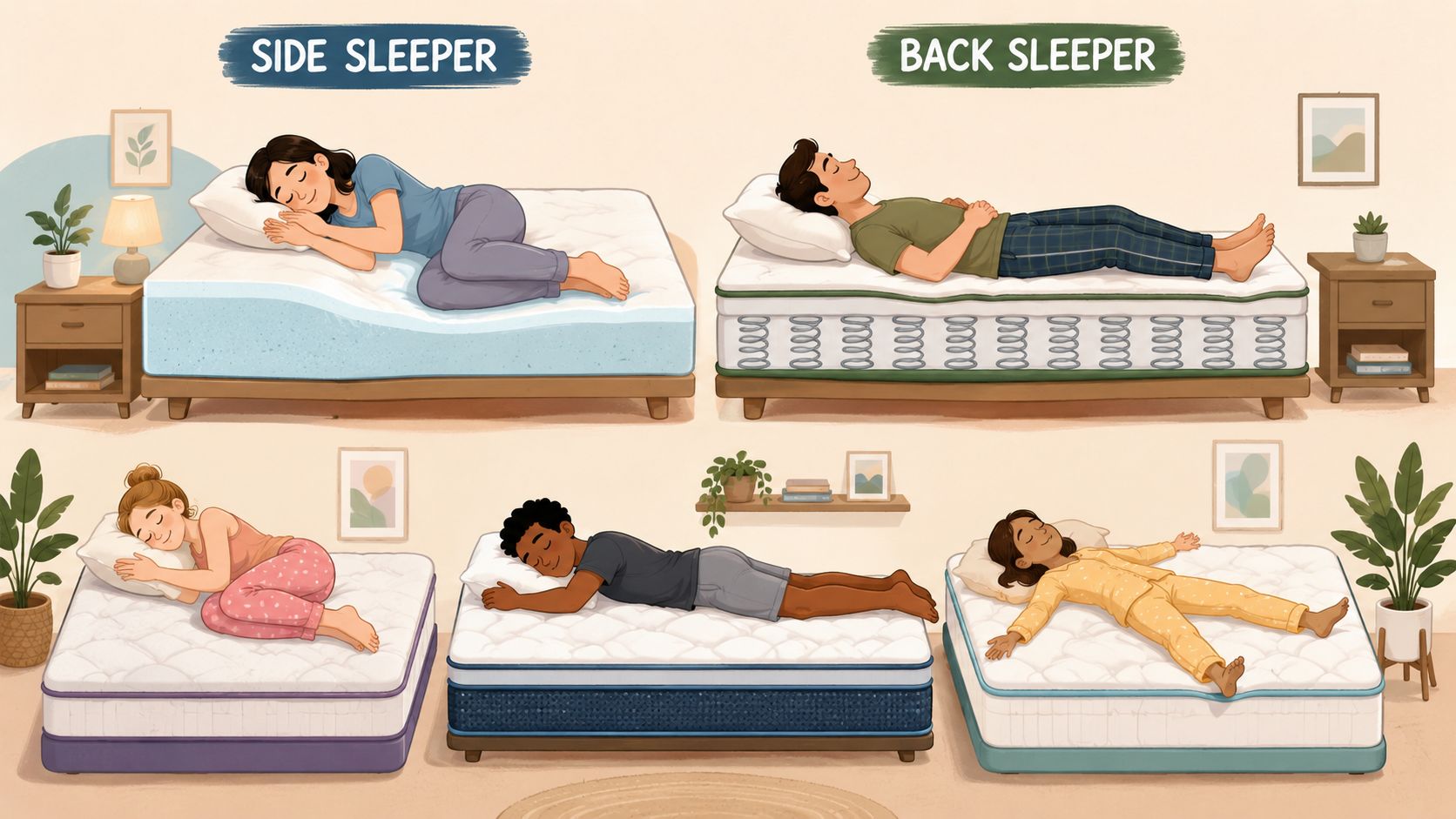
The Side Sleeper
Side sleepers usually carry more pressure at the shoulder and hip. If the mattress feels too firm in those spots, the body can spend the night adjusting instead of settling.
Memory foam often works well here because it cushions those sharper pressure points more closely. It works a bit like dough pressing around the shape of a hand. The material gives where the body presses hardest, which can create a gentler feel through the curves of the shoulder and hip. For many side sleepers in our store, that softer contouring feel is what makes the difference between just lying down and truly relaxing.
That said, firmness still matters. A side sleeper on foam that is too soft can sink farther than expected, while one on a very firm innerspring may feel pressure build up too quickly. Our guide on how to choose the right mattress firmness can help connect sleep position to the feel that supports you best.
The Back and Stomach Sleeper
Back and stomach sleepers often need the bed to hold the midsection up more evenly. If the hips drop too far, the spine can fall out of a more comfortable line.
That is why innerspring mattresses often appeal to these sleepers. The surface usually feels more buoyant and easier to move across. Instead of a deep hug, the sleeper gets more of an on-the-bed feel. Many people describe that as simpler to turn on and simpler to get out of in the morning.
Combination sleepers often land here too. If you roll from your back to your side and then toward your stomach, a quicker-responding surface can feel less restrictive over the course of the night.
The Hot Sleeper
Hot sleepers often prefer innerspring first, especially if they already know trapped warmth interrupts sleep. The open coil design usually creates a breezier feel, which can matter during humid Northwest Indiana nights.
Memory foam is still worth trying in person. Many newer foam mattresses use breathable covers and cooling-focused comfort materials that help reduce heat buildup. The key is to judge the whole mattress, not just the category name. A bed with foam can feel comfortable to a warm sleeper if the top layers, cover, and protector all work together.
In the showroom, this is one of the easiest differences to test. Lie still for several minutes and notice what happens as your body settles.
The Couple
Couples usually notice motion first. If one person changes position often or gets up before sunrise, the other person may feel every shift on a springier bed.
Memory foam often helps here because it absorbs more movement at the surface. If innerspring feels like a connected set of springs, foam feels more like movement staying in its own lane. That calmer surface can lead to fewer nighttime disruptions, which matters for light sleepers and for partners on different schedules.
Still, couples do not all want the same thing. Some want less motion transfer but dislike the slower feel of traditional foam. Others want easier movement, stronger edge stability, or a mattress that feels balanced for two different body types. That is where an in-store test becomes more useful than a product page. At Groen's Fine Furniture, shoppers can lie down together, switch positions, sit near the edge, and compare the feel side by side. That hands-on test often answers questions faster than any online description because you can feel how the mattress responds to your actual sleep habits.
Investing in Your Rest Price and Longevity
A mattress purchase often starts with a price tag and ends with a question about how you want to feel six months, three years, or eight years from now. For many Northwest Indiana families, that is the real comparison. The better value is the mattress that still feels supportive after night upon night of use.
Looking at Upfront Cost
In general, innerspring mattresses usually come in at a lower starting price, while memory foam models often cost more because of the extra comfort materials and denser construction. A simple way to picture it is this. One option tends to buy you a more familiar, spring-driven feel at a lower entry point. The other often asks for more upfront in exchange for a more cushioned, body-hugging surface.
That price gap does not mean one choice is always smarter.
Some shoppers sleep wonderfully on an innerspring and would gain nothing from paying more for foam. Others know their hips, shoulders, or lower back feel better on a mattress that contours more closely. In a family furniture store, we see this every day. The best fit depends on what your body responds to, not just what a category usually costs.
Thinking in Years, Not Just Today
Mattress value works a lot like buying good work boots. A lower price can be the right call if the fit, support, and expected use all line up. But if something wears out too fast or never feels quite right, the lower number at checkout stops looking like a bargain.
Memory foam is often chosen by shoppers who want pressure relief and a comfort feel that stays more consistent over time. Innerspring often appeals to households looking for a lower upfront cost, a buoyant feel, and easier movement across the bed. Both can be worthwhile purchases if the construction is solid and the comfort matches the sleeper.
Daily comfort matters here because poor support has a way of showing up in the morning. Sore shoulders, a stiff lower back, or restless sleep can turn a cheaper mattress into a costly compromise. Shoppers weighing that tradeoff may want to read more about why investing in a high-quality mattress is essential for long-term health.
Buying Power Without Settling
Affordable luxury matters in this situation. If you have found the feel your body responds to, financing options can make it easier to choose the better long-term fit instead of rushing into a mattress that only works for the budget on that particular day, subject to credit approval.
That can help with full-room updates, guest room replacements, or a main bedroom upgrade that needs to last. Around Northwest Indiana, many neighbors want the same three things. Fair pricing, comfort that holds up, and guidance from someone who will talk through the differences in person. That local, hands-on advice is often what helps a shopper separate a short-term deal from a mattress they will still be happy to sleep on years from now.
Your In-Store Test Drive A Guide for Our Neighbors
Buying a mattress online often turns a comfort decision into a guessing game. A showroom visit changes that. The body can tell the difference between “sounds good” and “feels right” within a few minutes, especially when comparing innerspring vs. memory foam side by side.
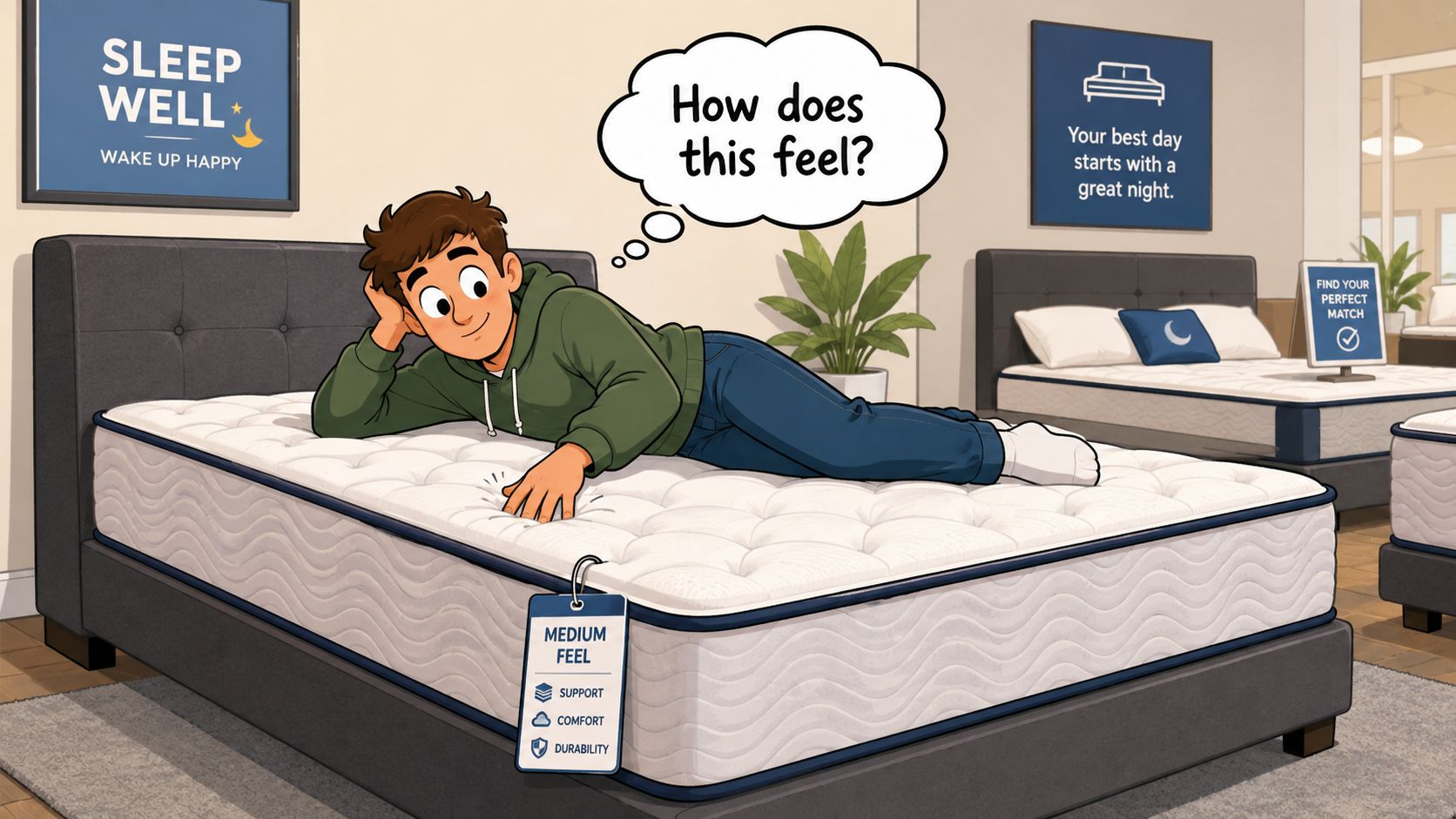
How to test the feel properly
A quick sit on the corner won't tell much. A real mattress test should look more like this:
- Wear comfortable clothing: Restrictive clothes can change how a mattress feels, especially around the shoulders and hips.
- Lie down in the actual sleep position: Side sleepers should test on their side. Back sleepers should test on their back. The body needs to feel the mattress the way it will be used.
- Stay there for several minutes: Many mattresses feel fine for a few seconds. Pressure points and support issues usually show up after a little time.
- Roll and reposition: Combination sleepers should turn naturally to see whether the bed feels easy or resistant.
- Sit on the edge: This is the fastest way to notice perimeter stability.
What to notice while lying down
Shoppers don't need technical language to evaluate a mattress. A few simple questions work better than product jargon:
- Does the body feel lifted or hugged?
- Does one shoulder or hip seem to press too hard?
- Is it easy to turn over?
- Does the edge feel secure?
- Would a partner's movement likely feel noticeable?
A shopper who can answer those questions usually gets much closer to the right decision than someone who compares marketing phrases alone.
If a mattress feels questionable in the showroom, it usually won't feel better at 2 a.m.
An in-person visit also gives local shoppers something online buying can't replicate. They can compare several feels in one trip, ask practical questions, and slow down long enough to notice what their body prefers.
The Final Decision Your Groen's Checklist
After all the mattress terms are stripped away, the innerspring vs. memory foam decision comes down to matching a sleep surface to a real person's habits. The best final step is a simple self-check.
A simple decision checklist
Before choosing, a shopper should ask:
- What position comes first most nights? Side sleepers often want more contouring. Back, stomach, and combination sleepers often want easier movement.
- Is the bed shared? If partner motion is a major annoyance, less movement transfer may matter more than bounce.
- Does the sleeper run hot? Airflow and cooling materials should move higher on the priority list.
- Is edge stability important? Some sleepers like to use the full width of the bed or want a firmer perimeter when sitting.
- Is the goal lower upfront cost or longer wear? Budget and lifespan both matter, and neither should be ignored.
A shopper who answers those questions accurately usually narrows the field quickly.
Thinking beyond the mattress
Many bedroom updates don't stop with the bed itself. Once people improve sleep, they often start looking at the room as a whole. That may mean a better-fitting bed frame, a dresser with more practical storage, or a complete refresh with solid wood pieces designed to last.
For homeowners who want more than an off-the-floor set, custom order options matter. Design it your way is more than a slogan when a bedroom has unusual dimensions, a specific style direction, or a need for heirloom-level craftsmanship. Bespoke choices, including Amish solid wood furniture and other made-to-order selections, give shoppers a way to build a room around how they live rather than settling for a generic package.
A local, multigenerational furniture store can help connect those pieces without turning the process into a hard sell. The goal is a bedroom that feels comfortable, functions well, and supports rest for the long term.
Visit Groen's Fine Furniture in Dyer or Crown Point today to compare innerspring, memory foam, and hybrid options in person, explore custom bedroom solutions, and ask about special financing plans, subject to credit approval. Let a family-owned Northwest Indiana team help create a home, and a bedroom, that feels personal, lasting, and comfortable.