Elevate Your Home with Brushed Nickel Interior Door Handles

A lot of homeowners in Crown Point, Dyer, and the surrounding Northwest Indiana communities reach the same point in a room refresh. The sofa looks right. The rug is in. The lamps finally feel balanced. But something still feels unfinished when the old brass knob or builder-grade handle catches the eye every time the door opens.
That small detail matters more than one might initially realize. Interior door hardware works a lot like jewelry for a room. It doesn't carry the whole design, but it sharpens everything around it. A handsome dining set, a solid wood console, or a carefully chosen bedroom suite can lose some of its impact when the doors nearby feel like an afterthought.
That's why brushed nickel interior door handles deserve a closer look. They aren't just a replacement part. They help tie together furniture, lighting, wood tones, and wall color in a way that feels calm and intentional. Homeowners who've spent time choosing the right pieces for their home often notice that hardware is the last step that makes the space feel complete.
For anyone fine-tuning an entry hall, hallway, or family room, the same thinking behind entry table styling and flow applies to hardware too. The finish on a handle helps set the tone before anyone even reaches the main living space.
The Finishing Touch for Your Northwest Indiana Home
A homeowner in Dyer might repaint a hallway, add a new runner, and swap in a cleaner-lined console table, only to realize the old shiny knobs suddenly look louder than everything else. Another family in Crown Point may update to warmer wood furniture and softer wall colors, then struggle to find a handle finish that doesn't look either too glossy or too dark.
Brushed nickel often solves that problem because it feels balanced. It has enough presence to look finished, but it doesn't demand attention from every corner of the room. In a home with kids, guests, pets, and constant movement between bedrooms, baths, laundry rooms, and offices, that quiet flexibility matters.
Why small hardware changes feel so big
Door handles sit at hand level. People touch them constantly. They also appear beside trim, paint, flooring, and furniture, which means they participate in the room's design whether anyone planned for it or not.
A thoughtful handle choice can help a space feel:
- More cohesive because the metal finish relates to lamps, frames, or cabinet pulls
- More current because dated knobs often age a room faster than larger furniture pieces
- More welcoming because the details feel considered, not pieced together
- More practical because daily wear doesn't show as quickly on the right finish
Hardware doesn't need to steal the show. It needs to make everything else look more intentional.
That's especially true in Northwest Indiana homes where one house may blend classic trim with newer furnishings, while another mixes farmhouse wood tones with more refined upholstery. A finish that can bridge styles without looking forced gives homeowners breathing room.
The Enduring Appeal of Brushed Nickel Hardware
Brushed nickel has staying power because it solves two problems at once. It looks refined, and it lives well in real homes. That combination is harder to find than people think.
What the finish actually is
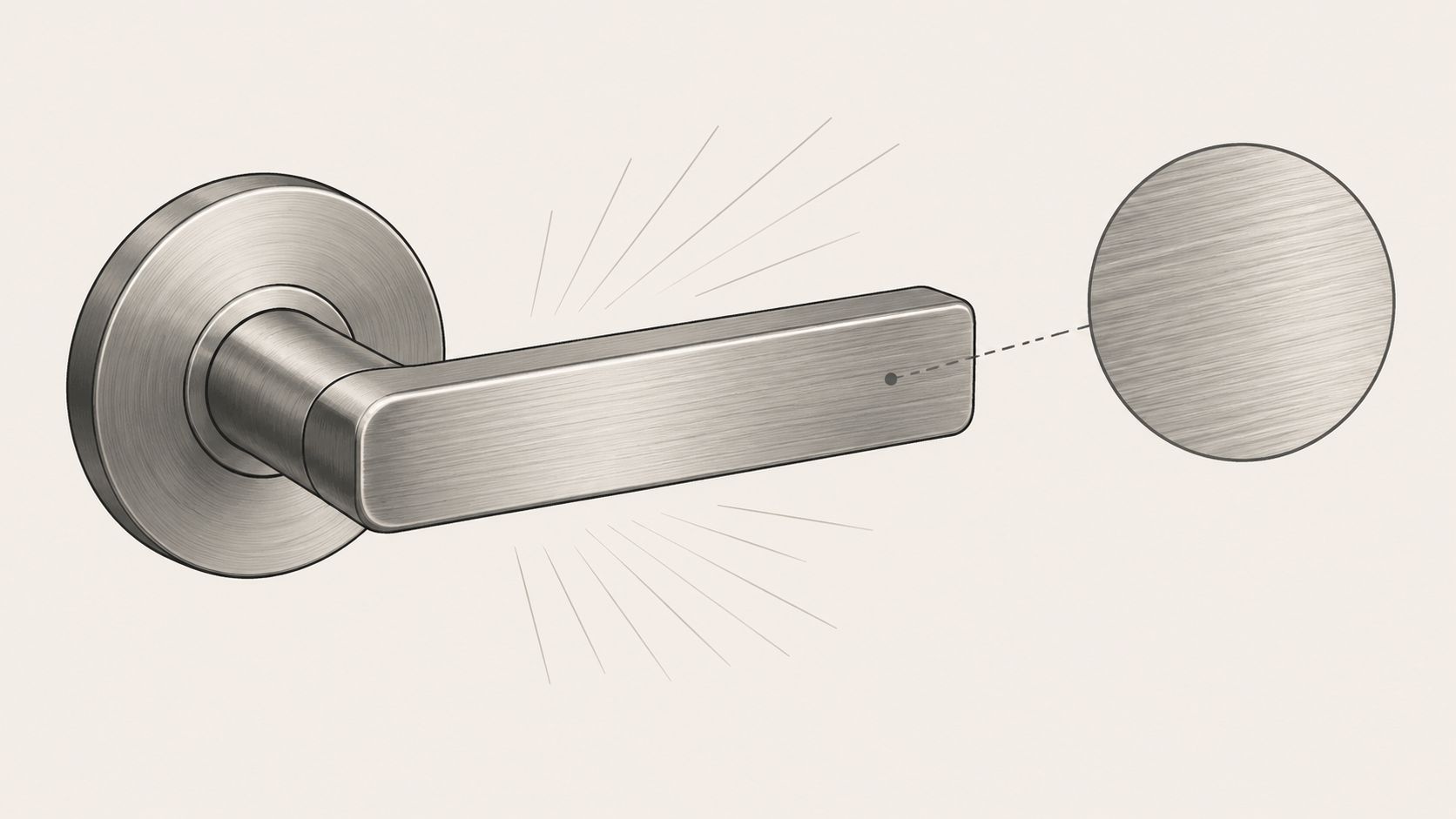
Many buyers hear “brushed nickel” and picture a color. It's more accurate to think of it as a surface treatment and visual texture.
Brushed nickel interior door handles have a satin finish with a micro-roughness of typically 0.4–0.8 µm, created by directional abrasive brushing that scatters light to reduce glare and helps conceal minor surface imperfections compared to polished nickel, according to this brushed nickel handle product reference. That directional brushing is what gives the finish its soft, linear character instead of a mirror-like shine.
In plain language, the surface diffuses light. Instead of reflecting every fingerprint, smudge, or scratch the way a high-polish finish can, it softens the look of daily use.
Why it works in busy households
A hallway bathroom door, a pantry door near the kitchen, and a bedroom used by children all get handled differently. Some finishes show every touch immediately. Brushed nickel is more forgiving.
Homeowners tend to appreciate it for a few practical reasons:
- Lower glare makes it easier on the eye in bright rooms
- Minor wear blends in because the finish already has visible texture
- Warm-cool versatility helps it work with painted trim, natural wood, or mixed metals
- A calmer appearance keeps it from looking too formal or too industrial
One point often confuses shoppers. Brushed nickel and satin nickel are frequently used as interchangeable names, and many listings don't clearly explain whether there's any real texture or coating difference. This naming overlap can make matching an existing handle frustrating without seeing the item in person, as discussed in this overview of brushed nickel and satin nickel terminology.
Practical rule: If replacing only one or two handles instead of the whole house, compare the actual surface texture and undertone, not just the product name.
That's one reason finish education matters. Labels can sound precise while still leaving room for mismatch.
For homeowners who want a broader sense of how metal details affect a room, metal accents in interior spaces offer a useful starting point. Door hardware belongs in that same conversation.
Brushed Nickel vs Chrome Bronze and Black Finishes
Choosing a finish gets easier when the decision is framed around lifestyle, not just color. The true question isn't which finish looks best on a sample card. It's which one makes sense beside the furniture, trim, lighting, and daily traffic in the home.
Brushed nickel usually lands in the middle of the spectrum. Chrome reads brighter and sharper. Bronze feels deeper and more traditional. Black creates stronger contrast. None of those are wrong. They create different moods and ask for different levels of upkeep.
A side-by-side look
Brushed nickel lever handles designed for interior doors are benchmarked to meet a minimum static load capacity of 250 lbs (113 kg) and 100,000+ open and close operations per ANSI A156.18 standards, supporting long-term reliability in active households, as noted in this brushed nickel lever handle specification.
| Finish | Primary Style | Durability & Maintenance | Best For |
|---|---|---|---|
| Brushed nickel | Transitional, soft modern, updated traditional | Forgiving surface appearance, practical for frequent handling, steady everyday look | Homes mixing wood furniture, neutral walls, and layered finishes |
| Polished chrome | Crisp modern, sleek, bright | Reflective surface can make marks and smudges more visible | Contemporary rooms with clean lines and cooler palettes |
| Oil-rubbed bronze | Traditional, rustic, farmhouse | Darker finish can add warmth, but it creates a stronger visual statement | Rooms with deeper wood tones and classic detailing |
| Matte black | Modern, industrial, farmhouse contrast | Bold and graphic, often chosen for visual impact over subtle blending | Light walls, simplified interiors, strong metal accents |
Where homeowners often get stuck
A common mistake is choosing hardware in isolation. A black lever can look excellent on a showroom board and still feel too stark once it sits next to a warm oak dresser and soft-toned wall paint. Chrome can feel fresh in a bathroom yet too bright in a hallway with traditional trim.
Brushed nickel tends to earn its place when a homeowner wants continuity without perfect matching. It plays well with both cool and warm surroundings, which is helpful in homes that have evolved room by room over the years.
For readers who want a quick primer on nickel hardware finishes, that resource can help decode naming language before ordering. The key is to treat the finish as part of the whole room, not as a standalone hardware decision.
A finish should support the room's character. If it becomes the loudest thing in the doorway, it's probably the wrong choice.
Lighting matters too. In a north-facing room, black can feel heavier. In a bright upstairs hall, chrome may bounce more light than expected. Brushed nickel usually settles into the middle ground, which is why it so often works in Northwest Indiana homes that blend old and new.
That same balancing act shows up in decor accents. The relationship between hardware and copper table lamps in layered interiors is a good reminder that metal finishes don't have to match perfectly. They do need to feel like they belong in the same conversation.
Selecting the Perfect Handle Style and Function
After the finish comes the part that affects daily use most. Shape and function. Regarding these aspects, homeowners often realize there's a difference between what looks good on the door and what feels good in the hand.
Lever or knob
Knobs have a familiar, classic look. They can suit older homes, traditional bedrooms, and spaces where a rounded shape feels right with the trim and furnishings. They also ask for a grasp-and-twist motion, which some people don't mind at all.
Levers are easier for many people to use. A hand, wrist, or even an elbow can press them down. That makes them a practical choice for busy laundry rooms, bathrooms, and family bedrooms. They also tend to look cleaner in transitional and contemporary interiors.
A simple way to choose:
- Pick a knob when the room leans classic, formal, or cottage-inspired
- Pick a lever when ease of use matters or the home has cleaner, more tailored lines
- Stay consistent within sightlines, especially along one hallway or open upper landing
Passage, privacy, and dummy
These terms sound technical, but they're straightforward once tied to real rooms.
Passage handles
Passage sets don't lock. They're made for places where simple opening and closing is enough, such as a hallway closet, pantry, or between-room door.
Privacy handles
Privacy sets include a locking function on the inside and are commonly used for bedrooms and bathrooms. They provide seclusion without turning the door into a security barrier.
Dummy handles
Dummy hardware doesn't operate a latch. It's mainly decorative or used on doors that only need a pull, such as one side of a double door or a shallow closet door.
The easiest way to avoid ordering mistakes is to think room by room, not product by product.
That approach keeps homeowners from buying a full carton of matching handles only to realize the linen closet didn't need a latch, or the guest bath needed privacy hardware instead of passage.
Matching style to function
A good handle choice doesn't force one room to behave like another. A brushed nickel lever on a bathroom door, a passage version on a hall closet, and a dummy set on a decorative pair of doors can still look coordinated while doing different jobs.
That's the sweet spot. The house feels unified, but each door works the way it should.
A Practical Guide to Door Handle Measurements
Measurements are where many do-it-yourself projects go sideways. The good news is that the key dimensions are simple once they're tied to the actual holes in the door.
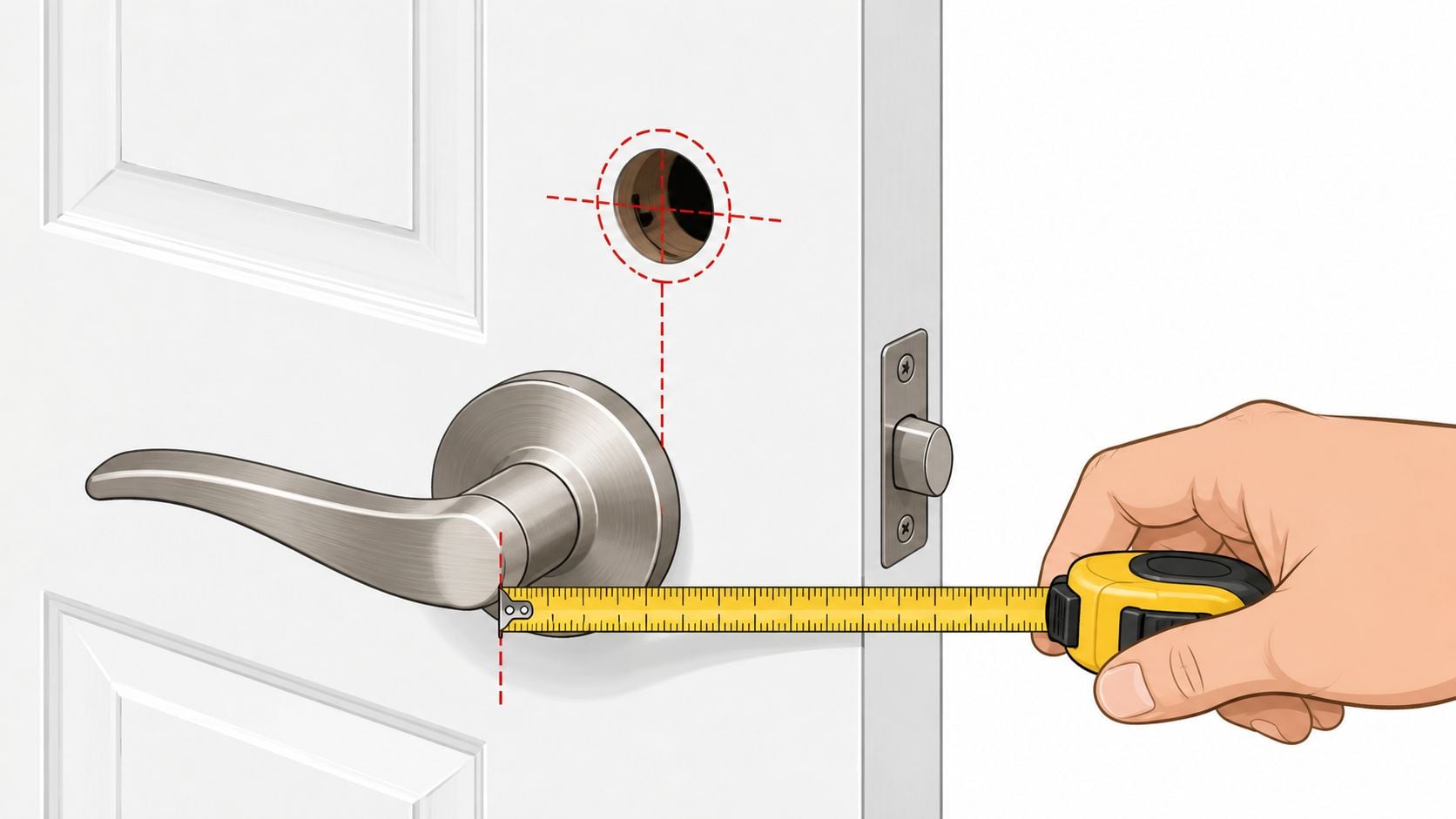
The three measurements that matter most
Start with the existing door before shopping.
Backset
This is the distance from the edge of the door to the center of the large bore hole. Think of it as how far the handle sits from the door's edge.Cross bore
This is the large round hole drilled through the face of the door where the knob or lever assembly fits.Door thickness
This is exactly what it sounds like. Measure the thickness from one face of the door to the other.
If the old hardware fit well, those dimensions usually provide the roadmap for replacement.
Handing confuses people more than measuring
Some lever handles are universal, and some are handed. “Handing” refers to which side the hinges are on and which direction the door swings.
A practical way to check is to stand on the side where the door opens toward the person measuring. If the hinges are on the left, it's one hand. If they're on the right, it's the other. Product listings may word this differently, which is why shoppers sometimes second-guess themselves.
- Check the swing before ordering a shaped or directional lever
- Photograph the existing door open and closed for reference
- Measure twice if replacing several doors in an older home where prior updates may not match perfectly
Older homes in St. John and Munster often have small surprises. One bedroom door may match the hall, while another was replaced years later and drilled differently.
That's why it helps to treat measuring like furniture placement. The process is more dependable when each dimension is taken calmly and written down before buying. Homeowners who've already used a room-planning mindset for measuring furniture correctly usually find door hardware measurements much less intimidating than expected.
Harmonizing Handles with Your Furniture and Decor
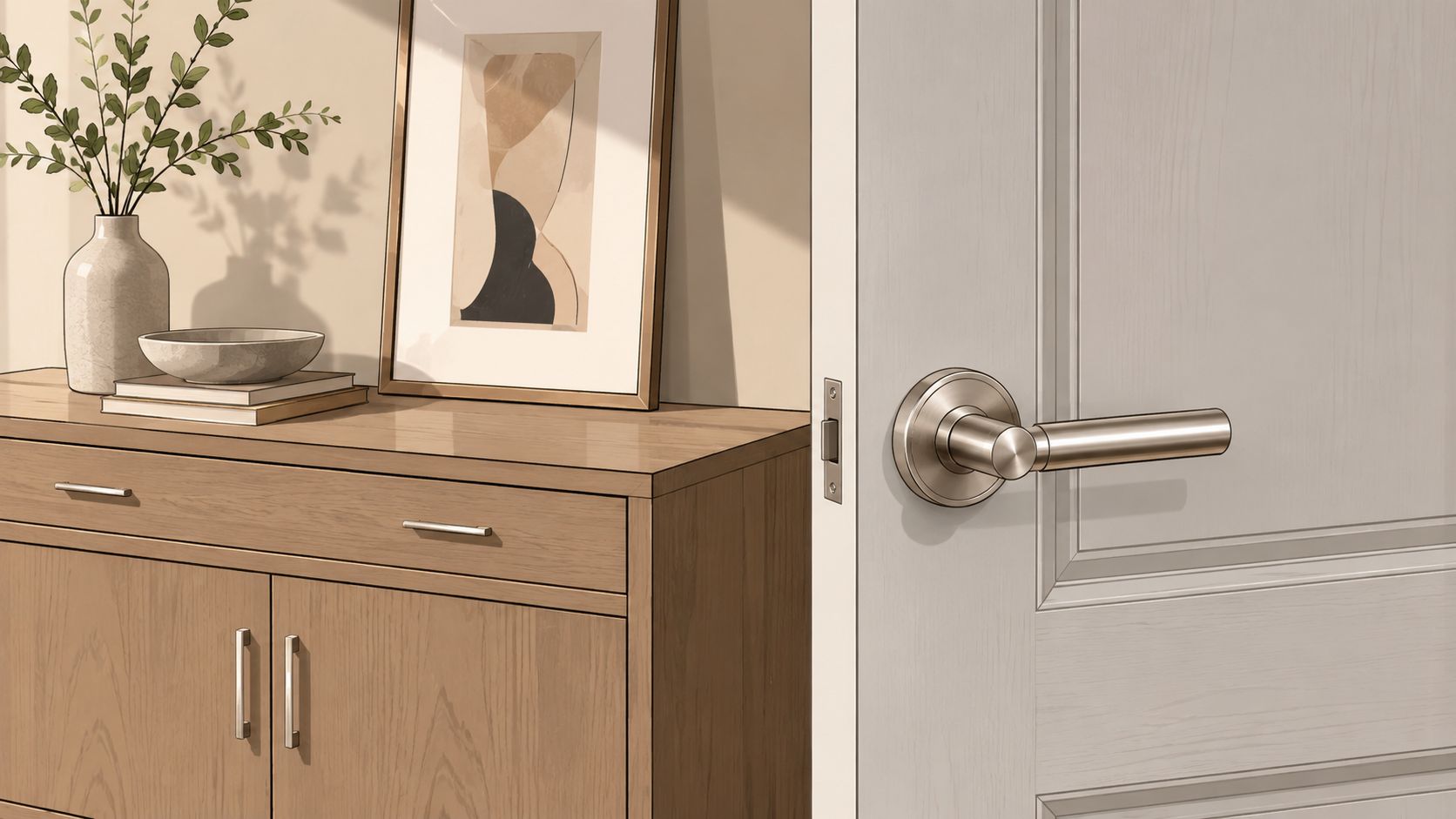
Brushed nickel interior door handles stop being just hardware and start acting like part of the room's design language. A handle may be small, but it sits near wood grain, upholstery, art, mirrors, lamps, and flooring. It needs to speak the same visual language as the rest of the home.
Pairing brushed nickel with common furniture looks
Brushed nickel tends to work especially well with solid wood furniture because it doesn't overpower natural grain. On oak, maple, cherry, or painted wood pieces, the finish adds polish without looking flashy.
It also fits comfortably with:
- Amish furniture craftsmanship because the finish respects texture and material honesty
- Bassett-style transitional rooms where soft lines and refined shapes need a metal that feels equally balanced
- Flexsteel durability-focused spaces where practical choices still need visual cohesion
- American-Made interiors that blend comfort, usefulness, and timeless detail
In a room with warm medium wood tones, brushed nickel can cool the palette just enough to keep it from feeling heavy. In a room with painted furniture and lighter fabrics, it adds depth without the sharpness of chrome.
Custom rooms need finishing details that keep up
A made-to-order room deserves more than generic finishing touches. The Canadel dining program offers “thousands of combinations of sizes, shapes, and finishes” and aligns with a UDesign approach that lets customers customize an ideal dining room, as described on Canadel custom dining options. That kind of bespoke flexibility makes nearby hardware choices even more important.
When a homeowner designs it their way, the door hardware around that dining space should support the same intention. A brushed nickel lever near a custom dining area often feels right because it's polished but understated. It doesn't fight with wood finish, chair fabric, or statement lighting.
For homeowners gathering inspiration, these top interior design trends for 2026 can be a useful visual reference for how texture, natural materials, and quieter finishes are shaping future interiors. The lesson isn't to chase trends blindly. It's to notice how often the strongest rooms use restraint.
A well-designed room rarely depends on one dramatic detail. It comes together because every small decision supports the others.
Color plays a role too. Brushed nickel often looks best when the surrounding palette has some softness. Warm whites, greiges, muted greens, soft charcoals, and natural woods give it room to look settled and intentional. Homeowners refining those combinations may find help in building a balanced interior color palette.
Installation Care and Creating Your Dream Home
Brushed nickel is forgiving, but it still benefits from the right care. Because the matte texture can trap fine dust and oily residue from frequent handling, it can develop a dirty-looking line before the finish is damaged, as noted in this discussion of door hardware maintenance and residue buildup. Gentle, routine cleaning works better than waiting until buildup becomes visible.
Keeping the finish looking clean
A simple maintenance rhythm usually does the job well:
- Wipe with a soft cloth to remove everyday dust
- Clean around grip points where fingers leave residue most often
- Skip harsh abrasives that can interfere with the brushed texture
- Check nearby hinges and strike plates so the whole doorway feels consistent
Installation is where honesty matters. Some homeowners are comfortable swapping a like-for-like handle on an existing pre-bored door. Others are dealing with handing issues, older latch cutouts, or a whole-home update where consistency matters across many doors. In those cases, reviewing professional installation solutions for door hardware can help clarify whether the job is better handled with outside support.
Making updates fit the household budget
A whole-home refresh often includes more than door hardware. It may involve dining furniture, bedroom pieces, lighting, wall color, and decor changes happening together. That's why budget flexibility matters.
Special Financing (subject to credit approval) can make customization more approachable. Groen's describes its financing as a “dedicated plan” that allows families in Munster and Schererville to design “made to order” pieces like custom Canadel sets without depleting savings, as explained in Groen's financing options. That kind of buying power helps homeowners pace thoughtful updates instead of settling.
For families who value multigenerational ownership, 5-star service, and honest guidance in Northwest Indiana, a room should feel comfortable, personal, and lasting from the furniture down to the handles on the doors.
Visit Groen's Fine Furniture in Dyer or Crown Point today to explore custom options and ask about special financing plans. Let their family help create a home you love with bespoke choices, white-glove delivery, and lasting comfort designed to fit the way Northwest Indiana families really live.