Blog
Dark Oak Dresser Guide for Northwest Indiana Homes


For homeowners in Dyer and Crown Point, a dark oak dresser usually enters the conversation at a practical moment. A bedroom feels crowded, a lighter piece no longer carries enough storage, or the room just needs a stronger anchor that still feels warm. We've seen that same choice come up across Northwest Indiana, from St. John and Schererville to Munster, and the smartest buyers want more than a pretty finish. They want a dresser that fits the room, holds up, and still looks right years from now.
That's where a working guide helps. Dark oak can mean real age, a factory finish, a naturally darkened surface, or a style that only looks old from across the room. It can also be a strong investment when the construction is sound, because oak's dark character often comes from both the wood itself and the way it has aged. If the rest of the bedroom needs refreshing too, a useful place to start is apartment owners bedroom refresh tips, especially when the goal is to balance furniture, wall color, and lighting without making the room feel smaller.
For families who want a bedroom that feels calm and lasting, the key question isn't whether dark oak is attractive. It's whether the piece is built well, sized correctly, and styled in a way that works with the rest of the home. That's the kind of decision our family has helped people make since 1983, and it's why we keep steering shoppers toward honest construction cues instead of quick guesses. For a related look at bedroom tone and comfort, see our guide on designing a relaxing bedroom.
Why a Dark Oak Dresser Belongs in Your Bedroom
A dark oak dresser makes sense when the bedroom needs weight without feeling cold. In a Dyer or Crown Point home, that usually means one of three things, the room needs more storage, the existing furniture feels mismatched, or the buyer wants a piece that looks settled instead of trendy. Dark oak often solves all three because it brings a grounded look, and that matters in bedrooms where people want calm more than flash.
The bigger benefit is flexibility. A dark dresser can act as the visual anchor in a mixed-wood room, or it can blend into an existing set without forcing every other piece to match exactly. That matters for homeowners who've collected furniture over time, because bedrooms rarely arrive as perfect sets. A dark oak finish can make those older pieces feel intentional rather than accidental.
Practical rule: a dresser should support the room, not compete with it. If the room already has a dark bed frame, the dresser can either echo that tone or provide contrast through lighter bedding, rugs, or walls.
That idea matters in long-lived homes across Northwest Indiana, where bedroom updates often happen in stages. A dark dresser can pair well with a fresh wall color or a lighter headboard, and it's smart to compare the piece with the rest of the room before the purchase feels final. A helpful parallel is the way a bedroom refresh works best when furniture and color choices are planned together, not handled one at a time.
There's also a practical shopping reason to start here. A room can look good online and still feel heavy in person if the scale, tone, and storage needs aren't lined up. That's why shoppers do better when they treat the dresser as a long-term bedroom investment, not just a style choice. For families who like a personal showroom conversation, Groen's Fine Furniture gives local shoppers another path to explore custom options, delivery help, and a room-by-room approach instead of a one-size-fits-all floor set.
What Dark Oak Really Means
Wood, stain, and age are not the same thing
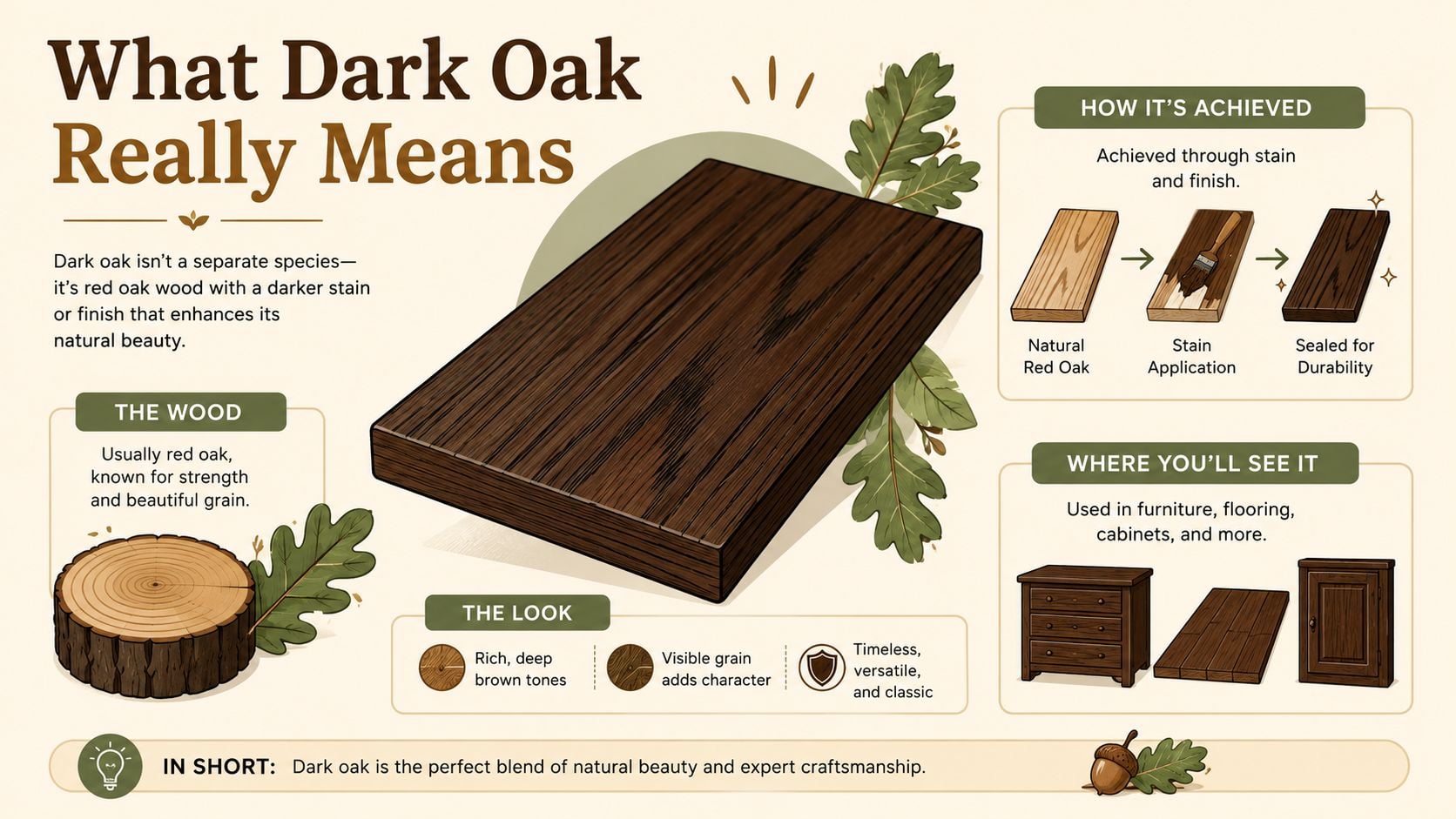
The phrase dark oak gets used loosely, and that's where many shoppers get confused. The oak itself is just the wood species, while the dark color may come from stain, dye, long-term aging, or a fumed finish. Antique-furniture guidance treats a piece as antique once it is at least 100 years old, while pieces aged 20 to 99 years are usually considered vintage, so a dark oak dresser can sit in more than one collecting category depending on age and construction. America's Antique Mall guidance on antique dressers makes that age distinction useful for shoppers who want to read the piece instead of just the label.
The wood itself can also deepen naturally. Oak's high tannin content can react with iron to form iron tannate, a permanent black compound that darkens grain lines and creates the shadowy look found in older pieces. That's one reason a real old dresser can look uneven in a good way, especially around fasteners, edges, and grain openings. Uneven darkening is not always a flaw, it can be a sign that the finish has aged naturally.
Fumed oak and smoked oak tell a story
Another clue shows up in wording. Terms like fumed oak, smoked oak, and Jacobean finish point toward a darker, historically inspired appearance. In antique-oak references, builders and restorers have long used ammonia fumes to intentionally deepen oak's color, a process known as fumed oak or smoked oak. That treatment works with the wood's tannin chemistry, not against it, which is why the tone can look richer and more integrated than a simple surface stain.
A buyer who understands the vocabulary can tell the difference between age, finish, and imitation much faster.
A quick mental checklist helps. Look for grain that darkens naturally in the pores, not just on top of the surface. Watch for blackening around iron hardware, and pay attention to wear patterns that make sense for decades of use. If the finish looks perfectly even and the grain looks printed instead of alive, the piece may be newer than it appears.
Construction Details That Decide Whether It Lasts
Start with the parts you can't see
A dresser can look substantial and still be flimsy inside. The first thing to sort out is whether the piece uses solid wood, veneer, or engineered panels in the right places. Oak is a ring-porous hardwood that can move with humidity swings, so stable construction usually benefits from a kiln-dried solid frame, engineered panels where full solid wood isn't necessary, and a back panel that can move without cracking the cabinet. That matters in homes where heating and air conditioning can pull indoor humidity down and then let it rise again with the seasons. Built by Bec's discussion of dresser construction and humidity movement gives a good technical reminder that furniture has to be built for movement, not against it.
Joinery tells part of the story too. Hand-cut dovetails usually suggest older work or more labor-intensive craftsmanship, while machine-cut dovetails became common after the 1860s, which gives appraisers a useful dating marker. That doesn't mean machine-cut dovetails are bad. It means the drawer fronts, the symmetry, and the fit all need to be judged in context, not by a single feature.
Check the hardware and the fit
Drawer performance matters every day. Quality slide clearance helps drawers open smoothly without rubbing the case, and accurate drawer-box alignment keeps the gaps even so the fronts don't look twisted. On a dresser that will hold sweaters, sleepwear, or linens, those little tolerances decide whether the piece feels refined or frustrating after a year of use.
Useful habit: open every drawer fully, then close it slowly. If the motion binds, tilts, or scrapes, the construction may be fighting itself.
A quick authenticity check helps separate real oak from an imitation finish. A solid oak chest should feel heavy enough that it doesn't slide easily with a single finger, and the grain should continue logically across the top and sides instead of repeating like a sticker pattern. That weight and grain continuity test is one of the fastest ways to read quality in person, especially when a finish is dark enough to hide shortcuts.
For readers comparing build quality in the showroom, it's worth looking at the same principles described in our five things to look for when buying chests, dressers, and cabinets. The point is simple, strong construction should feel consistent from drawer face to back panel.
Groen's carries furniture built around that same idea of long-term value, including Flexsteel for durability, Bassett for style, and Amish solid-wood craftsmanship for shoppers who want heirloom-level construction.
Quick construction read
- Solid wood frame: Best for long-term repairability and a more substantial feel.
- Veneer over stable core: Useful when it's built well, especially for smooth panels that need to resist movement.
- Joinery quality: Dovetails, tight corners, and square drawers matter more than a glossy finish.
- Back and base: Reinforced but flexible construction usually ages better than a rigid, stressed cabinet.
The same attention to detail shows up in other craft-driven projects too, which is why a good reference on thread weight selection can be surprisingly helpful for understanding why fine workmanship depends on the right material choice for the job. Furniture is no different, the visible finish only works when the underlying build is matched to the material.
Sizing, Storage, and Room Fit
Match the dresser to the room first
A dark oak dresser should solve a storage problem, not create a traffic problem. In a compact bedroom, a lower, wider dresser can preserve wall height and keep the room from feeling crowded. In a primary suite, a taller dresser can anchor a wall and give the room more vertical presence without taking up extra floor space. That's why the first measurement should be the wall, the walking path, and the swing of the drawers, not just the dresser's style.
Drawer use matters too. Shallow drawers work well for folded tees and sleepwear, while deeper drawers handle sweaters, bulkier knits, or linens better. If the dresser is going in a room where top space is needed for lamps or a mirror, the height has to work with those items, not against them. A top that sits too high can turn a dresser into a visual barrier instead of a usable surface.
A good fit leaves enough room to open every drawer fully without bumping the bed, door, or nightstand.
| Common Dark Oak Dresser Sizes and Best Uses | Typical Width | Best Room Fit |
|---|---|---|
| Two-drawer chest | Narrower footprint | Small guest room or tight corner |
| Six-drawer dresser | Mid-range width | Standard bedroom storage |
| Tall dresser | More vertical than wide | Compact room needing maximum storage |
| Wide dresser with multiple drawers | Broadest presence | Primary suite wall anchor |
The safest way to choose is to measure the bedroom twice, then imagine daily use rather than just placement. A dresser that technically fits can still feel wrong if the drawers can't open cleanly or if the top leaves no room for a lamp and mirror. For a simple measuring refresher, the showroom guide on how to measure furniture is a practical place to start.
In many Northwest Indiana homes, the best choice depends on whether the dresser is replacing a smaller starter-bedroom piece or finishing a larger suite that already has a bed and nightstands. A compact room usually rewards a cleaner silhouette, while a larger room can handle more mass and still feel balanced. The point is to let the storage solve the layout, not force the layout around the dresser.
Styling a Dark Oak Dresser Without Darkening the Room
A dark dresser doesn't have to make a bedroom feel heavy. The trick is deciding which tone leads the room and letting the other finishes support it. In mixed-wood bedrooms, that usually means choosing one dominant wood tone, then using the dresser as either the anchor or the accent instead of trying to make every piece match exactly.
Use contrast on purpose
The most effective rooms usually keep dark and light in balance rather than stacking dark pieces together. A dark oak dresser works best when lighter bedding, a lighter rug, or a softer wall color gives the eye somewhere to rest. Even a bright lampshade or a lighter framed mirror can keep the dresser from swallowing the room visually.
Matching can help, but only when the bed frame and dresser share a similar depth of color and style. If the bed is already heavy and dark, another dark case piece can feel dense unless the room has enough natural light or pale textiles to break it up. In a room with one darker anchor, the other pieces can stay quieter and still look intentional.
Design rule: the room needs a clear lead tone, not a perfect wood clone of every object in it.
That idea matters in older NWI homes where furniture often arrives from different eras. A bedroom can hold a dark dresser, a lighter bed, and a neutral rug without looking mismatched, as long as the tones connect through repetition and balance. If the room needs a visual bridge, fabrics usually do that job better than forcing a new furniture set.
The best practical test is to look at the room from the doorway. If the dresser is the heaviest object in sight, the surrounding pieces need to lighten the composition. If it disappears completely, then the dresser may be too close in tone to the walls or floor. More styling ideas are covered in the guide to dark bedroom furniture, which is useful for anyone trying to keep depth without losing openness.
Custom, Stock, and Amish Options at Groen's
Some shoppers want a dresser they can bring home right away. Others want to design it their way and wait for the right finish, wood, or size. Both approaches are valid, and the right choice usually comes down to how specific the bedroom needs are and how long the buyer wants to plan ahead.
Three different paths to the same goal
Stock pieces are the fastest path when the room needs an update now. They work well if the measurements are straightforward and the style already fits the bedroom. Custom Order Services open the door to more flexibility, especially when a shopper wants a piece that feels personally crafted rather than borrowed from a floor display. That philosophy fits Canadel's custom dining and case goods approach, where the buyer can design it their way instead of settling for a nearly-right option.
Amish solid-wood pieces are the clearest choice for shoppers who want a dresser built to exact specifications. The appeal is simple, solid wood, careful construction, and a finish that can be part of a bedroom set meant to last. For families thinking in terms of heirloom value, that can be the right long game.
| Option | Best For | What It Gives the Buyer |
|---|---|---|
| Stock dresser | Fast room updates | Immediate selection and simple shopping |
| Custom order | Specific size or finish needs | More control over design details |
| Amish solid wood | Long-term bedroom investment | Heirloom-style build and tailored construction |
For shoppers who want to understand what makes that last path different, the explainer on what Amish furniture is is a helpful companion. It puts the craftsmanship question in plain language.
No one has to settle for whatever is on the floor. The main advantage is being able to match the dresser to the room, the timeline, and the way the home is used.
Care, Maintenance, and Lifespan
A dark oak dresser can age well, but it needs steady care, not complicated routines. In a busy household, dusting with a soft cloth and avoiding harsh cleaners usually does more good than anything fancy. Seasonal humidity changes in NWI also matter, so a dresser that stays stable through winter heating and summer moisture is easier to live with than one that shifts constantly.
A common repair story starts after years of family use. A bottom panel loosens, a drawer front gets out of square, or the base takes a knock from vacuuming and moving day. Those fixes are often more manageable in solid-wood pieces because the parts can be reinforced, reattached, or replaced instead of discarded. Common repairs include replacing a dresser bottom, reinforcing a damaged base, and re-aligning drawer fronts so the gaps look even again.
Long-view advice: furniture that can be repaired usually keeps its place in the home longer.
That's why solid-wood construction changes the value conversation. A dresser is not just a style buy when it can be maintained and restored over time. It becomes part of the home's working life, and that's where better materials earn their keep. Families who want something lasting usually appreciate that more after a few years of use, not on the day of purchase.
Financing, Delivery, and Your Next Step
A quality dresser doesn't have to feel out of reach. Special Financing is available subject to credit approval, which can help fit a better-made piece into a real household budget without rushing the decision. That matters when the goal is buying power with less compromise, not choosing a cheaper piece that needs replacing sooner.
White-glove delivery also makes the process easier for busy families. It keeps the handoff simple, especially for heavier solid-wood furniture that's awkward to move alone. Our family's job is to help shoppers compare options, ask the right questions, and leave with a piece that makes sense for the room and the long term.
Visit Groen's Fine Furniture in Dyer or Crown Point today to explore custom options and ask about our special financing plans. Let our family help you create a home you love.
A CTA for Groen's Fine Furniture. Visit Groen's Fine Furniture in Dyer or Crown Point today to explore our custom options and ask about our special financing plans. Let our family help you create a home you love.