Blog
Mattress Edge Support: A Practical Buyer’s Guide for 2026

For homeowners in Dyer, Crown Point, and across Northwest Indiana, mattress shopping usually starts with a simple moment that tells the truth fast. Someone sits on the edge of the bed to pull on socks, help a child, or steady a parent, and the mattress either feels planted or it feels like the side is giving way.
That feeling is mattress edge support, and it matters more than most shoppers think. It affects how easy the bed is to use, how much of the surface feels usable, and whether the mattress still feels dependable after everyday wear from couples, kids, and multigenerational households.
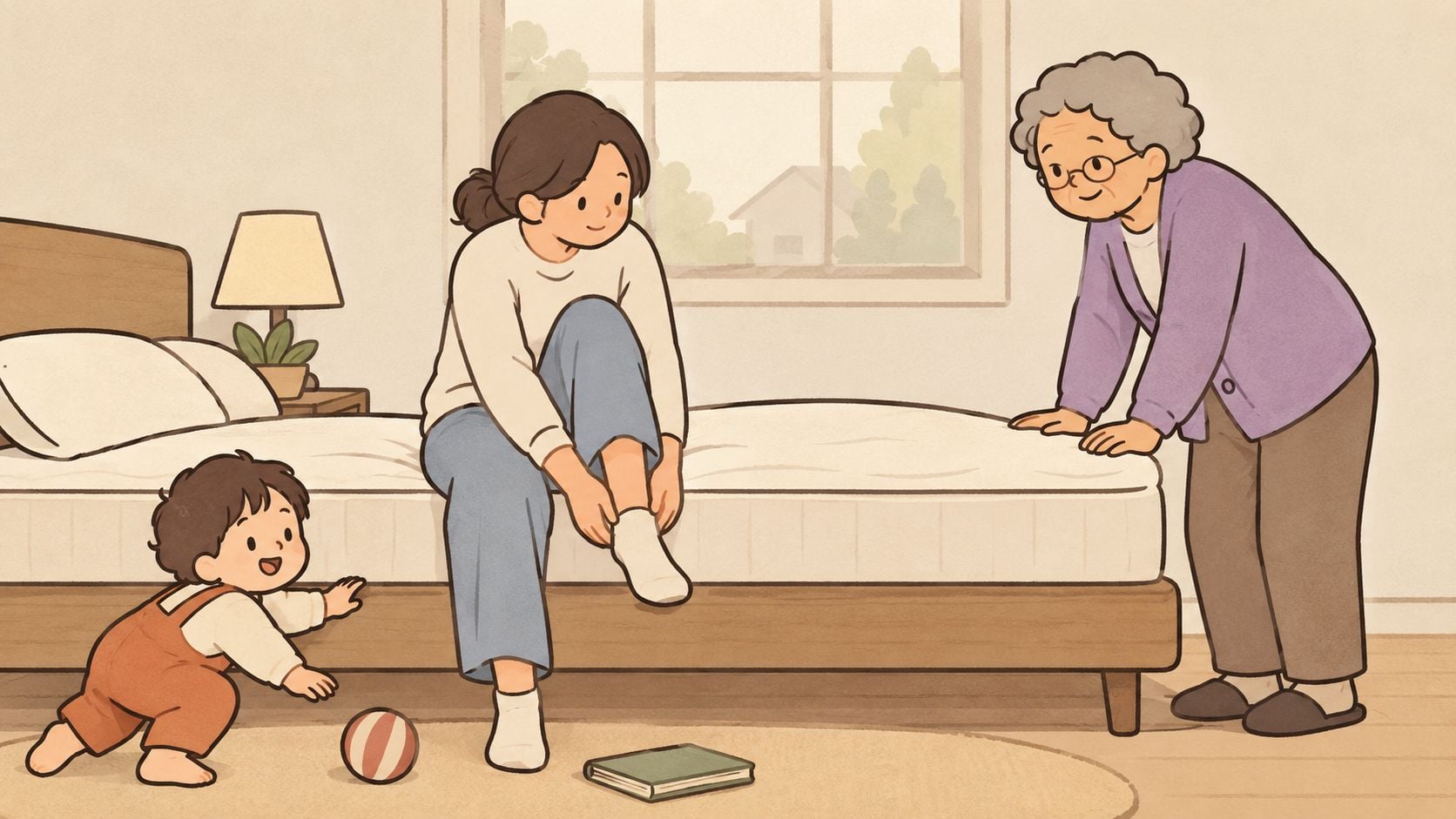
A weak perimeter doesn't just feel sloppy. It can make a queen bed behave smaller at the edges, and it can make getting in and out of bed feel less secure than the middle of the mattress suggests. That's why a good showroom conversation has to look at the edge as part of the whole sleep system, not as a decorative extra.
Families often notice the issue only after the bed is already in the room. One person rolls to the side, another sits there each morning, and the mattress starts to feel tired long before the center looks worn. In a home with grandparents visiting, kids climbing on the bed, or a couple sharing one side of the mattress for years, that border gets tested constantly.
Groen's Fine Furniture has spent decades helping local families sort out those details with calm, practical guidance. Since 1983, our family has served the area with multigenerational ownership, 5-star service, and a focus on comfort that lasts, whether the conversation is about sleep, dining, or custom furniture for a home that needs to work harder.
Why the Edge of Your Mattress Matters More Than You Think
A mattress edge gets used in more ways than many shoppers expect. In a Dyer or Crown Point bedroom, it's where someone sits to dress, where a partner scoots over after midnight, and where a child lands for a quick bounce before heading downstairs. When that border feels soft or unstable, the whole bed starts to feel smaller and less dependable.
That is why the edge is more than a comfort detail. It affects usable sleep surface, morning routines, and the confidence people feel when they get up or lie down near the perimeter. A larger bed can still feel cramped at the sides if the border gives too much under everyday use.
A border people notice before they name it
Most households do not talk about edge support until the side starts to sag. They notice it first as a feeling, the mattress gives a little too much when someone sits down, or the body drifts inward when lying near the edge. That is the part that matters in real life, because daily use happens at the perimeter as often as it happens in the middle.
Practical rule: if the edge makes standing up, sitting down, or sleeping near the side feel uncertain, it is already affecting how the whole mattress performs.
The edge also shapes how long a bed feels fresh. With better materials and construction, the perimeter tends to hold its shape longer, while weaker borders often show wear before the center does. That does not mean the rest of the mattress fails at the same time, only that the outside edge often tells the truth first.
The useful way to think about it is simple. A mattress can still feel fine in the center while the edge starts to fail the everyday test, morning routines, late-night sitting, and sleeping close to the side. The mattress and the base work together here, so a well-built bed on an unsuitable foundation can still feel disappointing at the perimeter. That is why this topic deserves a closer look before anyone decides a bed is either great or worn out.
What Mattress Edge Support Actually Means
Mattress edge support has two meanings, and shoppers often mix them up. It can mean the sturdiness of the mattress perimeter itself, and it can also mean the reinforcing component built into that perimeter. The Sleep Foundation uses the term in this performance sense, while also recognizing that it can refer to a structural feature inside the bed (Sleep Foundation methodology).
A useful way to read product claims is to ask which meaning the brand is using. If the description talks only about a “firmer feel,” that points to comfort. If it talks about rails, coils, or border reinforcement, that points to construction. The strongest mattresses connect both, because a perimeter that feels steady usually comes from what is built under the cover, not from the cover itself.
A showroom test makes the difference easy to feel. Sit near the side, then lie close to it and notice whether your body stays level or tips inward. A mattress can sound well made on paper and still feel uncertain at the edge if the support system underneath does not match the layers on top.
The two-test standard buyers can actually understand
Independent mattress testing often splits edge support into two parts, 50% sitting on the edge and 50% lying near the edge (NapLab methodology). That matters because a mattress can feel okay when someone sits down but still lose stability when someone sleeps close to the side, or the other way around.
One practical way to read those results is to compare how the edge behaves under a seated load and under body weight spread out while lying down. The seated test shows whether the border holds up when you get dressed, tie your shoes, or stand up from the side. The lying test shows whether the mattress keeps you from rolling toward the center during sleep.
A second technical benchmark uses a 180-lb seated load for 15 minutes, where under 2 inches of compression is considered good and under 1 inch is considered excellent (MattressNut testing guide). That same guide notes that a well-constructed edge often has an ILD at the perimeter that is 15–25% higher than the center comfort layer, which is another way of saying the border should feel firmer than the middle.
Those details matter because they turn a vague showroom impression into something a shopper can compare. A mattress with a strong perimeter should feel steady enough to sit on without giving up its shape, but still comfortable enough that the edge does not feel like a hard frame under the cover. The best way to judge it is with your own body, because the right level of support depends on whether the mattress is paired with a solid base, a flexible foundation, or a setup that lets the edge sink more than it should. That system view is also why construction details matter, including modern hybrids and how they are built in relation to the base, as discussed in our guide to hybrid vs innerspring mattress construction and in this overview of mattress technology from The Sleep Consultant.
A strong perimeter should feel firm enough to trust, but not so rigid that it feels like a hard frame under the cover.
Once a shopper understands those basics, product pages read differently. The question stops being “Does this bed have edge support?” and becomes “How is the perimeter built, and how does it feel when someone uses it?”
How Different Mattress Constructions Deliver Edge Support
The construction under the cover is what decides whether the border stays firm or softens early. Sleep-industry explanations consistently point to perimeter construction as the main driver of edge support, with the most common solutions being lower-gauge steel coils at the border and high-density foam rails around the core (Leesa article). Lower-gauge coils are thicker and firmer, so they resist compression better than the lighter coils used in the center.
That same idea helps explain why two mattresses can feel completely different at the edge even when they look similar from the outside. A mattress with a reinforced perimeter is built to carry weight near the side, not just absorb it. The comfort layers still matter, but they don't create border stability by themselves.
Innerspring, encased coils, foam rails, and hybrids
Traditional innerspring mattresses often use firmer border coils and sometimes a border rod, which helps the edge feel structured and stable. That's why these beds often give a clear seated platform, especially when the coil system is designed with a stronger perimeter.
Encased coil designs usually reinforce the outer edge with either a denser row of coils or a separate foam rail. The benefit is targeted stability where bodies load the mattress most, while the wrapped coils still let the center respond more softly.
Foam rail constructions rely on a high-density border wrapped around an all-foam core. These can feel supportive at first, but foam rails tend to soften faster than steel-based borders, especially with repeated sitting in the same spot.
Hybrid mattresses combine a coil core with foam or latex comfort layers. In that setup, the core usually does most of the border work, while the comfort layers decide how much of that support a sleeper feels. For shoppers comparing bed types, a helpful overview of how hybrid and innerspring builds differ is available in Groen's mattress guide on hybrid vs. innerspring construction.
For readers who want a broader view of how new sleep systems are evolving, mattress technology from The Sleep Consultant offers another lens on how construction choices affect feel.
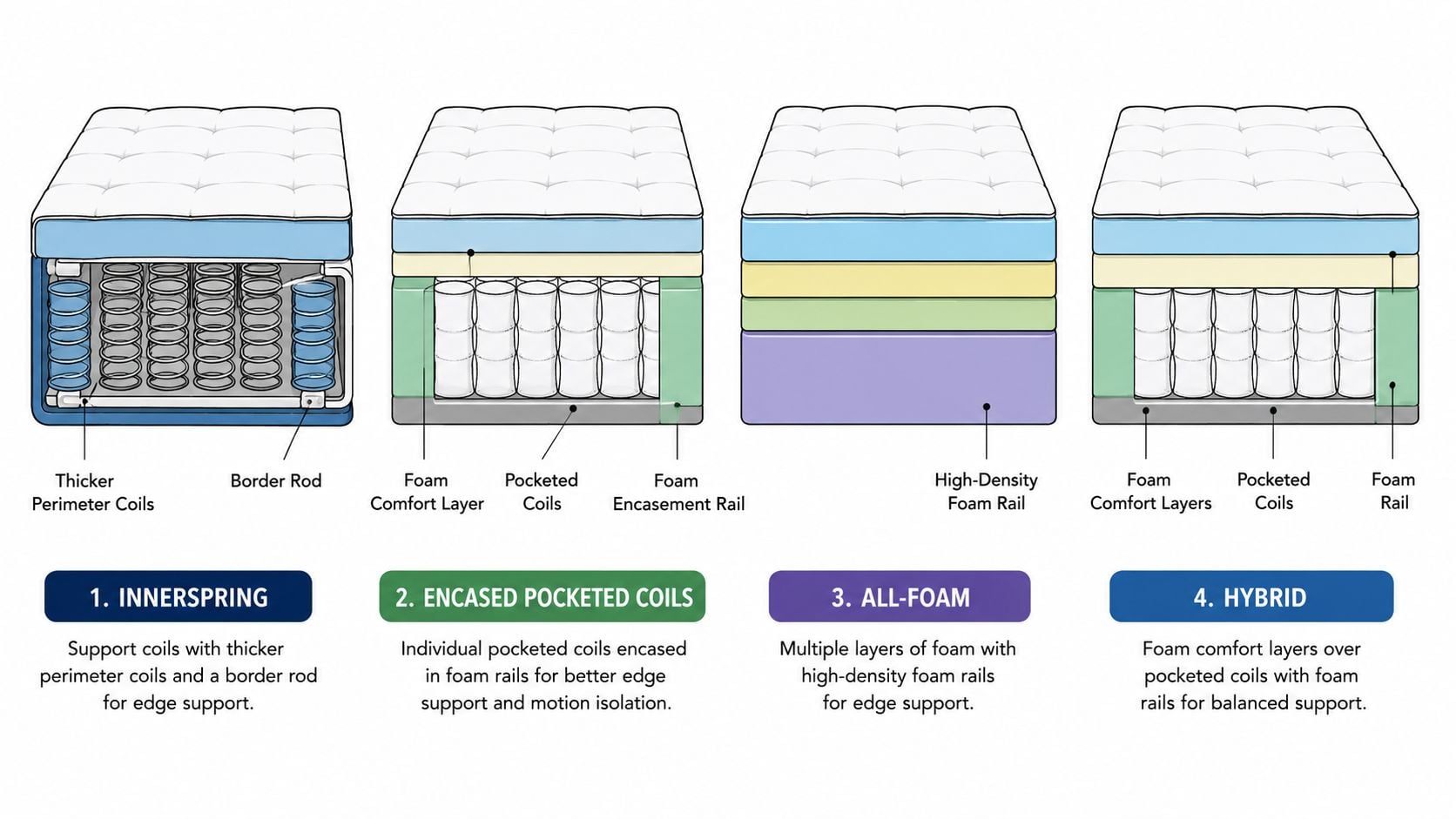
The basic pattern is easy to remember. Coil-based borders tend to hold their shape better, foam borders depend more on material quality, and hybrids sit in the middle depending on how much support the core and perimeter bring to the bed. That's the difference a shopper can feel when the mattress is set up in a bedroom, not just described on a tag.
Testing Edge Support in the Showroom and at Home
The simplest showroom test is one many shoppers already do without realizing it. Sit on the side of the mattress as if putting on socks, then pay attention to how deep the edge sinks, whether the body feels level or pitched outward, and how controlled it feels to stand back up. Independent guides describe that sit test as a practical way to judge whether the perimeter is stable enough for daily use.
That test works because the edge is a loaded part of the bed, not a decorative strip. A mattress that compresses too much when someone sits there will usually feel less secure when someone lies near it too. The body tells the truth quickly.
A simple way to compare two beds
A showroom floor makes comparison easier when the shopper repeats the same motion on different constructions. A hybrid next to an all-foam model usually shows the contrast fast, one side feels planted, the other gives more. That doesn't make one universally right, but it does reveal which mattress will support daily edge use more confidently.
The same test should happen in more than one spot. Corners often behave differently from the middle of a side, and a mattress that feels solid at one point can feel weaker a few inches away. Lying near the edge adds another layer, because a sleeper can notice whether the hips stay level or tilt outward when weight shifts close to the side.
Showroom habit: test the edge the way it will be used, not the way it looks under the lights.
At home, a quick check can add a rough number to the feeling. A household scale and a straight edge can help show how much the perimeter compresses when weight is placed there, which gives a practical sense of whether the mattress is holding shape or folding too easily. That's especially useful when a family is deciding whether a bed is worn or just showing ordinary softness.
When moving a mattress, edge damage can also come from poor handling, not just daily use. For households protecting new furniture during a move, protect furniture from damage in storage is a useful reminder that pressure, stacking, and support matter long before the bed gets into the bedroom.
Our own showroom conversations often reveal this difference fast. A shopper sits, lies, and gets up again, and the issue becomes obvious without any jargon. For families who want a little more guidance on what to ask and compare on the floor, Groen's mattress shopping tips can help frame the conversation.
When Weak Edges Are Fixable and When They Are Not
A soft perimeter does not always mean the mattress is done. In many bedrooms, the edge feels weak because the mattress and base are working against each other, or because a topper is too soft for the job. The practical first move is simple, rotate the mattress, check the foundation or bed frame, then consider a firmer topper, and replace the mattress only if those steps do not solve the problem. MattressClarity testing method
That order matters because edge support is a system issue, not a mattress-only issue. A supportive bed on an old base can feel weak. A decent mattress on an incompatible frame can also feel uneven at the border.
What to try before buying a new bed
Rotation comes first because repeated loading can wear one side faster than the rest. If the edge feels softer after years of use, turning the mattress may spread the pressure more evenly and make the sleep surface feel more consistent.
The next check is the foundation. A worn box spring, bent support, or mismatched slatted frame can make the perimeter dip more than it should. That is a setup problem you can often correct, and it can save a household from replacing a mattress that still has useful life left.
A firmer topper can help some beds feel steadier, but only if the core underneath still has enough support to work with. If the border is already collapsed, a topper may improve the feel on top without bringing back usable edge performance. For shoppers comparing topper options, Groen's guide on choosing a mattress topper is a useful place to start when the goal is to change feel without replacing the whole bed.
Materials and build quality also matter over time. A well-made mattress can hold consistent edge performance for years before the perimeter starts to soften in a noticeable way, but age alone does not tell the whole story. A mattress that sits on the wrong base may fail early, while a newer bed with the right support can still feel dependable.
The clearest test is practical. Sit near the edge, lie close to it, and get up the same way you do every day. If the frame is sound, the mattress is not badly broken down, and the edge still feels usable, a repair or adjustment may be enough. If the perimeter keeps folding away under normal use, the problem has moved past a simple fix.
Matching Construction to Sleep Style and Body Type
The right edge support depends on how the mattress gets used. A side sleeper who stays near the perimeter has different needs than a couple who spreads out, and someone with mobility concerns needs more trustworthy support than a guest room that gets occasional use. That's why construction choice should follow the sleeper, not the other way around.
A simple way to narrow the field is to match the edge to the body's demands. Foam-encased edges can work well for lighter sleepers who want a softer overall feel. Reinforced coil perimeters usually suit combination sleepers and couples better because they keep the side steadier when weight shifts. Plus-size sleepers and anyone who wants more help getting in and out of bed often need the firmest border available, which is usually a hybrid with a thicker coil edge and a foam rail.
Quick comparison for showroom decisions
| Mattress Construction Types and Edge Support Compared | Perimeter Firmness | Edge Longevity | Edge Motion Transfer | Typical Price Tier |
|---|---|---|---|---|
| Innerspring | Strong | Good | Moderate | Moderate |
| Encased Coil | Strong to moderate | Good | Moderate | Moderate to higher |
| All-Foam | Moderate to softer | Varies more | Lower | Lower to moderate |
| Hybrid | Strong | Good | Moderate to lower | Moderate to higher |
That table is a starting point, not a verdict. A well-made all-foam mattress can still feel steady enough for some households, and a hybrid can feel disappointing if the perimeter isn't properly reinforced. The point is to use the category to narrow choices before testing in person.
Shoppers who want to match support to their body type can also use Groen's guide on choosing a mattress by body type. It's a practical way to avoid wasting time on beds that feel fine in theory but wrong in the shoulders, hips, or border.
Smart Buying Questions to Ask in Our Showrooms
A good showroom conversation is direct. Ask what the perimeter coils are made of, whether the edge uses a foam rail, and whether the mattress is designed for a specific foundation type. Those questions get to the part of the mattress that controls the border instead of stopping at comfort buzzwords.
Warranty language matters too. Some warranties talk clearly about sagging, while others leave too much room for confusion about whether perimeter wear is treated the same as center wear. If the edge is a major part of how the bed will be used, the paperwork should reflect that.
Questions worth bringing to the floor
- What supports the edge? If the answer is coils, foam rails, or both, the shopper gets a useful construction answer instead of a sales phrase.
- What base does it need? A mattress that expects a specific foundation should be matched correctly from the start.
- How is the perimeter covered by warranty? The wording should make sense before the mattress goes home.
- Can it be ordered to fit a nonstandard need? A household with an adjustable base, split firmness request, or unusual size may need a special-order solution.
That's where custom order capability matters. Our team can help families design around real-life needs, and special-order options through Serta and Beautyrest can often solve fit problems that a floor model can't. Groen's Fine Furniture also offers special financing, subject to credit approval, so a household can focus on the right construction instead of settling for whatever looks easiest on the first pass.
For shoppers sorting through store policies, Groen's mattress return policy page is worth reviewing before a final decision. The best purchase is the one that fits both the body and the budget.
Bringing It All Together for Better Sleep
Edge support is not a side note. It's a system feature, and the mattress, foundation, and sleeper all affect how it performs in daily use. The construction under the cover matters just as much as the comfort layer on top, and the only honest way to judge a specific bed is to test the edge in person.
That's especially true in homes across Dyer, Crown Point, St. John, Schererville, and Munster, where beds often support more than one person and more than one routine. A strong perimeter makes those daily motions easier, from sitting to standing to sleeping close to the edge without feeling pitched outward.
Three things to remember
- Treat the edge as part of the whole bed.
- Read construction, not just comfort labels.
- Sit on it, lie near it, and test it in real life.
When those three pieces line up, mattress shopping gets simpler. Families can focus on comfort that lasts, not just a first impression that fades after a few months.
Visit Groen's Fine Furniture in Dyer or Crown Point to test mattress edge support for yourself, compare constructions, and ask about custom options that fit the way your household sleeps. Our family can also walk you through special financing plans, subject to credit approval, so you can bring home the right bed with confidence.