Blog
Mattress Firmness for Back Pain: Your 2026 Guide

Many homeowners in Dyer, Crown Point, and across Northwest Indiana know the pattern. They fall asleep tired, wake up stiff, and spend the first part of the morning trying to loosen a back that never quite feels rested. By bedtime, they're wondering whether the mattress is helping at all.
That question matters because back pain at night is rarely just about comfort. It affects sleep quality, energy, mood, and how the body feels the next day. Since 1983, a family-run furniture store serving NWI has heard the same concern from parents, retirees, shift workers, and young couples setting up a first home. Most of them aren't looking for a trendy sleep surface. They want honest guidance and lasting comfort.
Online advice often makes the search harder. One article says firmer is better. Another says softer is better. A third says everyone needs the same thing. A more useful starting point is a practical mattress guide that treats mattress firmness for back pain as a personal fit question, not a one-size-fits-all rule. For readers who are also exploring care beyond the bedroom, this overview of Boston physical therapy for back pain offers helpful context on how movement, treatment, and daily habits can all play a role.
For additional local mattress guidance, readers can also explore help for back pain with the right mattress.
Table of Contents
- Finding Back Pain Relief Starts in Your Bedroom
- Why the Firmest Mattress Is Not Always the Answer
- The Goal Is a Neutral Spine Not a Hard Surface
- Your Guide to Firmness by Sleep Position and Body Type
- How to Test and Choose Your Next Mattress at Groens
- Your Mattress Buying Checklist for Lasting Comfort
Finding Back Pain Relief Starts in Your Bedroom
A sore back in the morning often gets blamed on age, stress, or “sleeping wrong.” Sometimes that's true. But many people are lying on a mattress that no longer supports them the way it once did, or never fit their body in the first place.
That's where the bedroom becomes part of the solution. A mattress doesn't treat every cause of pain, but it does influence how the spine, hips, and shoulders rest for hours at a time. When the surface is fighting the body all night, the body usually reports that problem every morning.
A mattress should help the body settle into rest, not force muscles to brace through the night.
For families in Northwest Indiana, this matters because sleep wellness isn't a luxury purchase. It's part of daily health. The right fit can make getting out of bed feel less like recovery and more like a normal start to the day.
Readers usually get tripped up by one idea. They assume mattress firmness for back pain has a simple answer, usually “buy the hardest bed available.” That belief has been around for years, but it leaves out how different bodies sleep. A side sleeper with shoulder pressure and a stomach sleeper with low-back strain usually won't need the same feel.
A better approach starts with a few honest questions:
- Where does the pain show up most often. Lower back, upper back, hips, or shoulders can each point to a different support issue.
- How does the sleeper sleep. Position matters more than many people expect.
- How old does the current mattress feel. Even a once-comfortable bed can lose the support it used to provide.
That kind of step-by-step thinking keeps the search grounded. It also makes the next question much easier to answer.
Why the Firmest Mattress Is Not Always the Answer
Many shoppers still walk into a mattress search believing that harder means healthier. That sounds logical at first. If the back needs support, a rock-hard surface should fix the problem. In practice, it often doesn't.
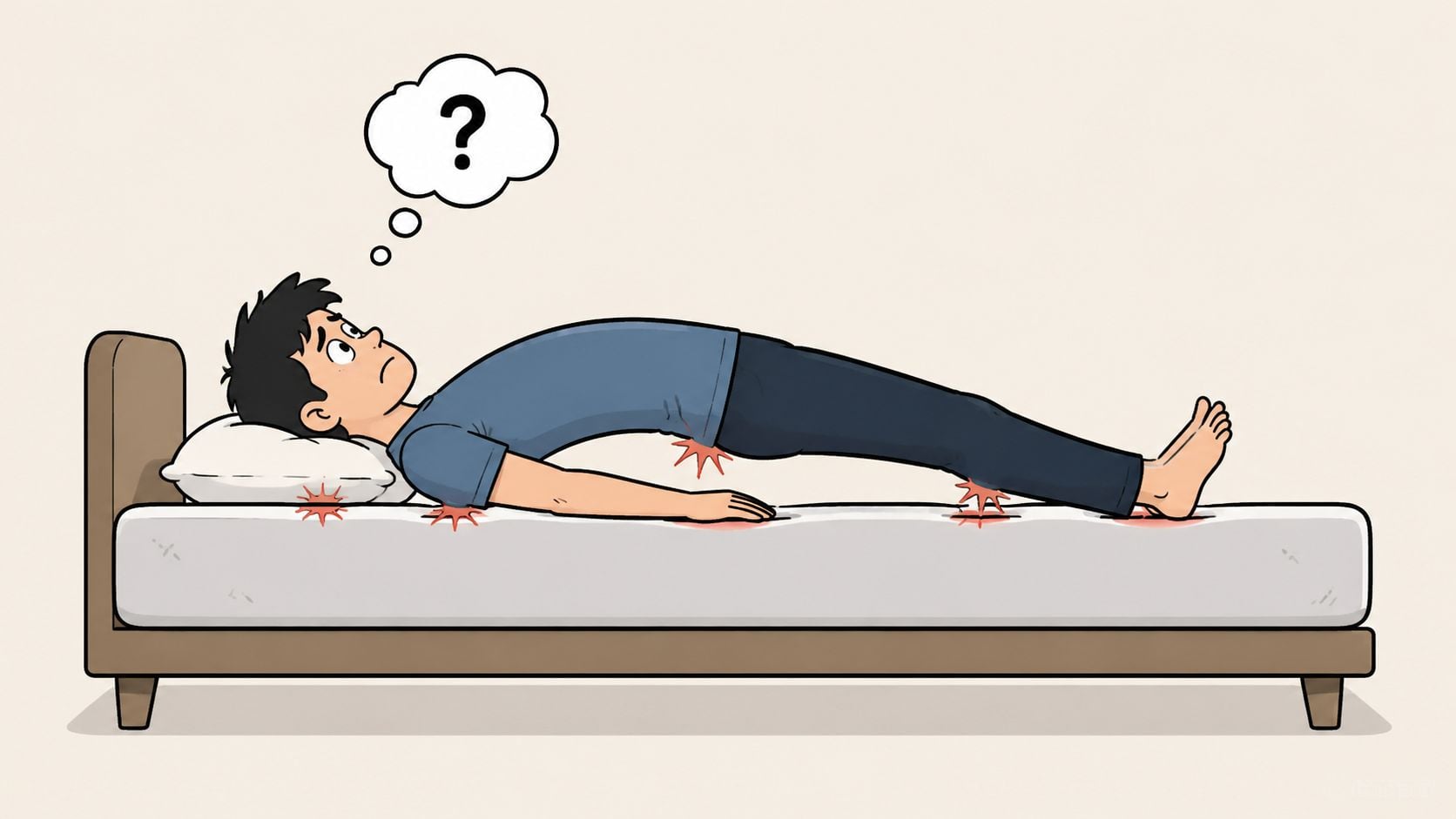
A mattress can be too hard to let the body settle naturally. When that happens, the shoulders, hips, or lower back take on extra pressure. The sleeper may feel “supported,” but not in a restful way. Muscles stay tense because the body is still trying to find a comfortable position.
The evidence points in that direction too. A Harvard-referenced survey of 268 people with low back pain found that very hard mattresses had the poorest sleep quality, while medium-firm and firm beds did not differ in sleep quality, suggesting that pushing firmness too far can work against sleep instead of helping it (Harvard Health).
Support and hardness are not the same thing
Readers often get confused about this distinction. Firmness is how a mattress feels at the surface. Support is whether it helps keep the body in a healthy position during the night. Those aren't identical.
A mattress can feel cushioned on top and still support the spine well. Another can feel hard immediately and still create pressure in the wrong places. The goal isn't maximum resistance. The goal is useful support.
Practical rule: If a mattress feels so hard that the sleeper keeps shifting to escape pressure, that surface probably isn't helping the back relax.
Why the myth sticks around
The “firmest is best” message survives because it contains one small truth. Sagging, overly soft mattresses can absolutely create problems. But moving from one extreme to the other doesn't solve everything. It just trades one kind of mismatch for another.
That's why mattress firmness for back pain is better framed as a balance question. The right fit should hold the heavier parts of the body up while still giving enough at the shoulders, hips, and curves of the spine.
The Goal Is a Neutral Spine Not a Hard Surface
A more useful way to think about a mattress is this. The bed should help the spine rest in a neutral position. That means the back keeps its natural shape instead of being bent upward, sagging downward, or twisted to one side.
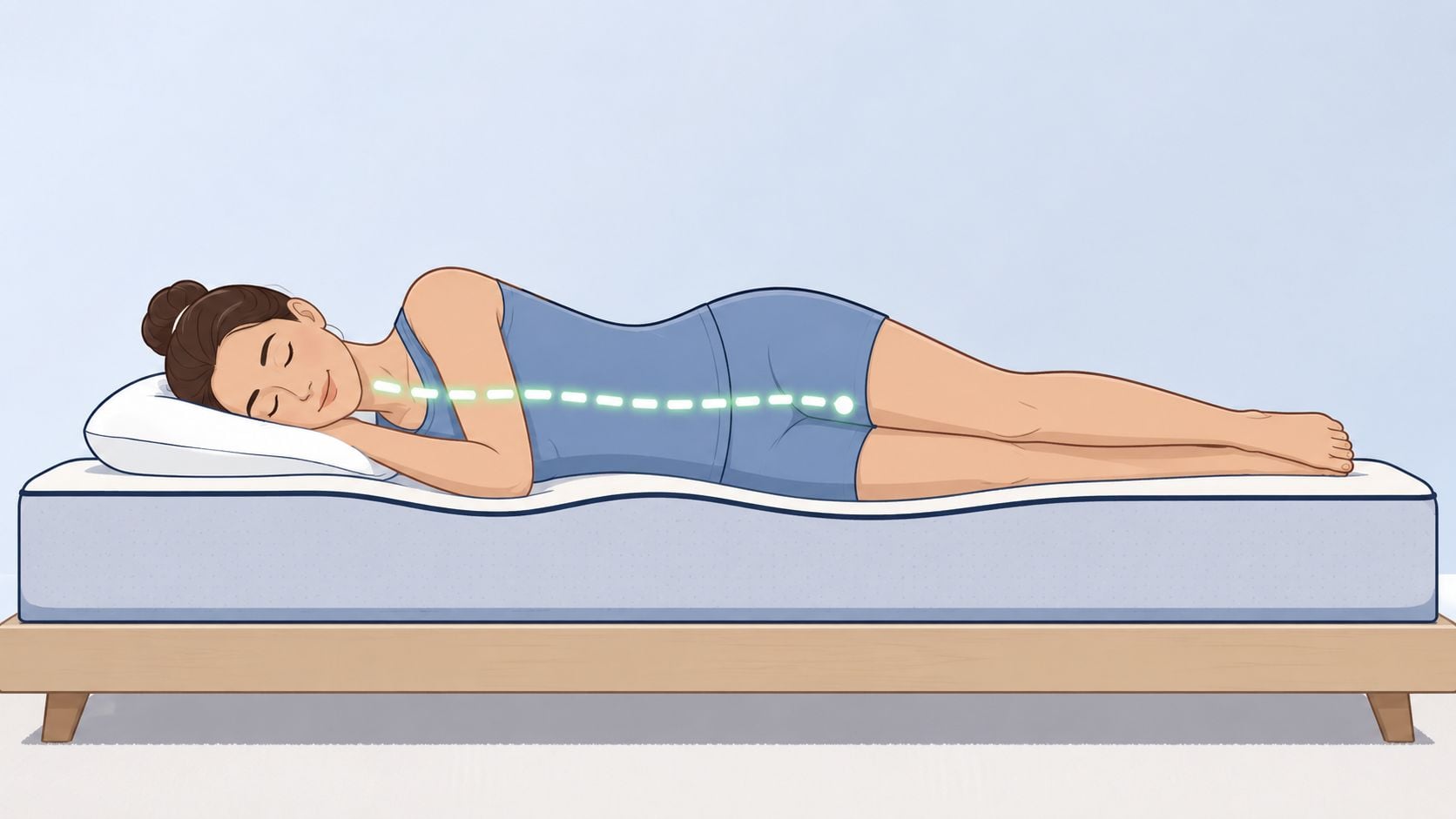
What neutral spine really means
A simple example helps. If a side sleeper's mattress is too firm, the shoulder may not sink in enough. That can tilt the upper body and push the spine out of line. If the mattress is too soft, the hips may sink too far, and the middle of the body drops lower than the rest. Both situations can leave the back irritated by morning.
Back sleepers face a similar issue. The lower back needs support, but the body also needs enough pressure relief to stay comfortable. Stomach sleepers usually need a firmer feel so the midsection doesn't dip too much and pull the lower back into an uncomfortable arch.
This is one reason adjustable positioning can matter for some people. Readers interested in bed setup beyond firmness can review how adjustable bases can help alleviate health concerns.
Why medium-firm works for many sleepers
Research has moved away from the old “harder is better” assumption. A major controlled trial cited in BMJ's evidence-based medicine literature found that more than 70% of participants improved after getting a new mattress, but the medium-firm option performed better than the firm one for reducing disability from chronic low back pain (BMJ Evidence-Based Medicine).
That finding matters because it supports a simple idea many shoppers can use right away. The body usually responds best to a mattress that combines two things at once:
- Steady support so the hips and torso don't collapse out of alignment
- Gentle contouring so pressure doesn't build at the shoulders, lower back, or pelvis
A good mattress doesn't pin the body on top of the bed. It lets the body settle in without losing shape.
For many adults, that balance lands in the medium-firm range. Not always. But often enough that it makes a smart starting point. Once shoppers understand that the target is spinal alignment, not brute firmness, the search becomes much less confusing.
Your Guide to Firmness by Sleep Position and Body Type
The most useful mattress advice becomes much clearer when it's tied to how a person sleeps. A side sleeper usually won't need the same feel as a stomach sleeper. A lighter sleeper and a heavier sleeper can also experience the same mattress very differently.
The basic pattern is well established. Side sleepers generally need more pressure relief, stomach sleepers need firmer support, and some conditions such as herniated discs may benefit more from zoned support than from increasing firmness alone.
How sleep position changes the feel
A side sleeper puts more direct pressure on the shoulders and hips. If the mattress is too hard, those areas get compressed and the spine can tilt. That's why many side sleepers feel better on something that has a little more give on top.
Back sleepers often do well in the middle. They usually need enough support to keep the pelvis from sinking too far, but not so much firmness that the lower back feels pushed up or unsupported.
Stomach sleepers tend to need a firmer feel under the torso. Too much sink through the midsection can create strain in the lower back. That doesn't mean the bed has to feel like a board. It means the center of the body usually needs stronger hold-up.
For readers dealing with neck tension along with back discomfort, these strategies for alleviating neck pain can be a useful companion to mattress shopping.
Mattress Firmness Recommendations by Sleep Style & Weight
The table below offers a practical starting point. It's a guide, not a rulebook.
| Body Weight | Side Sleeper | Back Sleeper | Stomach Sleeper |
|---|---|---|---|
| Lighter body type | Soft to medium feel for pressure relief | Medium feel for gentle contouring and support | Medium-firm feel to limit midsection dip |
| Average body type | Medium to medium-firm feel | Medium-firm feel | Firm feel with enough surface comfort |
| Heavier body type | Medium-firm feel to avoid too much sink | Medium-firm to firm feel | Firm feel with strong support through the center |
A few practical notes help make this table easier to use:
- If the sleeper changes positions often, a medium-firm feel is often the safest starting point because it can serve more than one posture reasonably well.
- If shoulder and hip pressure show up first, the surface may be too firm, especially for side sleeping.
- If the lower back feels dipped or hammocked, the mattress may be too soft for that body type or sleep position.
- If the body needs more targeted help, zoned support can matter more than the label on the showroom tag.
Readers can compare these guidelines with mattress choices by body type, which helps translate general firmness advice into a more personal fit.
How to Test and Choose Your Next Mattress at Groens
Charts help. Research helps. But the final decision still happens when a real person lies down and notices what the body does after a few minutes, not a few seconds.
Material changes firmness feel
This is one of the biggest reasons mattress firmness for back pain can feel confusing. Two mattresses can both be labeled medium-firm and still feel very different. One may contour more closely. Another may feel more buoyant and responsive. A hybrid and a foam design may support the same sleeper in different ways.
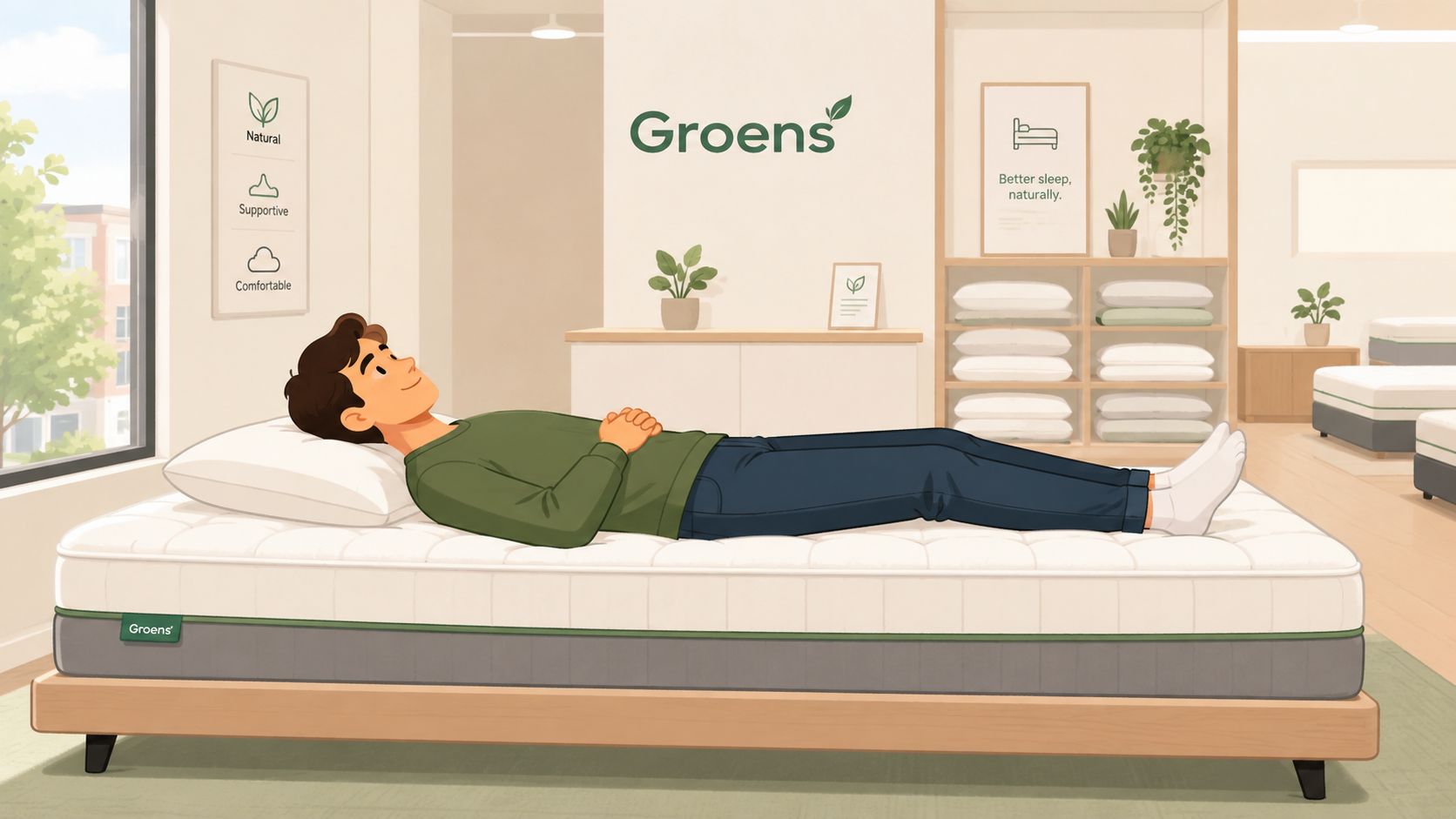
That's why in-person testing matters. A mattress should be judged by how it supports the body in an actual sleep position, not by a quick hand press at the edge. Groen's Fine Furniture in Dyer and Crown Point gives local shoppers a place to compare feels directly across collections such as Serta and Beautyrest, which is especially useful when two medium-firm models behave differently under the shoulders and hips.
A 2015 systematic review in Sleep Science found that medium-firm mattresses were associated with a 48% reduction in back pain, and another study in that review found that older mattresses were significantly associated with worse low back pain severity, which supports looking at both firmness and mattress age when pain has become a pattern (Sleep Science review).
How to test a mattress in person
A quick sit on the side of the bed won't tell much. The body needs time to settle into the mattress.
- Lie down in the usual sleep position. Side sleepers should test on the side. Back sleepers should stay on the back long enough to notice whether the lower spine feels supported.
- Stay there for several minutes. Pressure points often don't show up instantly.
- Notice the shoulders, hips, and low back. These areas usually reveal mismatch first.
- Bring a partner if the bed is shared. Two sleepers can change how a mattress feels and functions.
- Ask about budget options early. Special financing, subject to credit approval, can make a higher-quality mattress more manageable without forcing a rushed compromise.
If a mattress feels “fine” for one minute but irritating after several minutes, that reaction is worth trusting.
A helpful next step is reviewing practical mattress shopping tips before heading into a showroom. That gives shoppers a simple checklist so the visit feels more like a fitting and less like guesswork.
Your Mattress Buying Checklist for Lasting Comfort
By the time shoppers narrow the choices, the most important lesson is usually this. The right mattress isn't the hardest one or the softest one. It's the one that keeps the body in better alignment while easing pressure where the body needs it most.
That idea lines up with broader research too. In controlled reviews of 39 studies, medium-firm mattresses consistently performed better than very soft or very firm surfaces for pain and disability outcomes by helping keep the spine in a more neutral alignment while limiting pressure points (review of 39 studies).
A simple checklist before buying
- Identify the main sleep position. Side, back, stomach, or combination sleeping changes what “supportive” really means.
- Consider body type. The same mattress can feel softer to one person and firmer to another.
- Think about pressure points. Hips, shoulders, and lower back usually tell the truth quickly.
- Check the age and condition of the current bed. If the mattress is worn, replacing it may matter as much as changing firmness.
- Test in person long enough to notice alignment. A mattress should feel supportive after several minutes, not just pleasant on first touch.
- Look beyond the firmness label. Construction, materials, and zoned support all affect comfort.
- Know when to call a doctor. Persistent or worsening pain, numbness, or nerve-like symptoms deserves medical guidance.
- Review replacement timing. These signs it's time to replace a mattress can help confirm whether the bed itself may be part of the problem.
A mattress purchase is really a health decision that happens to live in the bedroom. When shoppers treat it that way, they usually make calmer, smarter choices and end up with comfort that lasts longer.
Visit Groen's Fine Furniture in Dyer or Crown Point today to explore custom options, test supportive mattress feels in person, and ask about special financing plans. Families from Schererville, Munster, St. John, and across Northwest Indiana can use that showroom visit to make mattress firmness for back pain a personal discovery instead of a guessing game. Let this family help create a home that feels better, sleeps better, and supports lasting comfort.