Solid Wood Dining Set: A Buyer’s Guide for NWI

A family in Dyer outgrows a dining table in quiet stages. First, the chairs start bumping into the wall. Then homework spreads onto the countertop because there isn't enough elbow room. Holiday dinners feel crowded, and morning coffee happens standing up because the table no longer fits the way the home is used. That's usually when the search for a better solution begins.
For many households in Crown Point, St. John, Schererville, Munster, and across Northwest Indiana, a dining set isn't just another purchase. It's the place where weeknights happen, guests gather, and daily routines repeat often enough that every size, shape, and finish choice matters. A good one should feel comfortable now and still make sense years from now.
That's why solid wood keeps coming up in serious furniture conversations. It offers substance, repairability, and a kind of visual warmth that lighter, temporary materials often can't match. Families who want something lasting also want clarity. They want to know what constitutes solid wood, what size really fits, how much upkeep is realistic, and whether custom options can work with a real household budget.
Helpful guidance matters here. A multigenerational family business that has served Northwest Indiana since 1983 understands that people don't want jargon. They want honest answers, personal fit, and confidence that they're buying something that will age well in a busy home. That's especially true when custom furniture, Amish furniture, white-glove delivery, and special financing all enter the conversation.
A helpful starting point for planning the room itself is this guide to designing a dining room from the ground up.

Table of Contents
- Your Home's New Heartbeat The Search for a Lasting Dining Set
- Understanding True Solid Wood Construction
- Choosing the Right Wood Species for Your Family
- Perfecting the Fit Style Size and Shape
- Design It Your Way with Custom and Amish Options
- Caring for Your Heirlooom Quality Furniture
- Budgeting Bringing Your Vision Home with Confidence
Your Home's New Heartbeat The Search for a Lasting Dining Set
The dining room often changes jobs throughout the day. Breakfast spot. Laptop station. School project table. Birthday cake stage. That kind of daily use asks a lot from furniture, and it explains why many families in NWI start looking for something sturdier than a quick-fix table.
A solid wood dining set answers a practical problem first. It needs to stand up to movement, repeated use, and changing needs without looking worn out too soon. It also needs to feel right for the people using it. A retired couple in Munster may need a compact table for two that can still host family dinners. A growing family in Schererville may need more seating, easier traffic flow, and a surface that can handle real life.
A table does more than fill space
People often shop by appearance first, then discover later that the room feels tight or the surface doesn't behave the way they expected. The better path starts with lifestyle. How many people sit there most days. How often guests come over. Whether the room is formal, casual, or somewhere in between.
A dining set earns its place when it works on ordinary Tuesdays, not just holidays.
The long-term value of solid wood shows up in quieter ways too. It can suit a farmhouse home, a more traditional setting, or a cleaner transitional look without feeling disposable. That's part of the appeal for buyers who want comfortable, lasting furniture instead of something that needs replacing after a short stretch of use.
Why more families keep coming back to solid wood
This isn't just a style preference. It reflects what buyers are choosing broadly in the furniture market. The global solid wood table and chair set market was valued at approximately USD 10 billion in 2023 and is projected to reach USD 15.5 billion by 2032, while the solid wood segment held 42.3% of the total wooden furniture market share in North America in 2024.
That kind of demand lines up with what many local households already know by feel. People want furniture that looks grounded, performs well over time, and still feels personal. They also want choices. Design it your way. Choose a bespoke size. Pick a finish that fits the home. Keep the purchase within reach through honest pricing and special financing when needed.
Understanding True Solid Wood Construction
Many shoppers think they can identify solid wood by looking at a photo. That's where confusion starts. Online listings often use language loosely, and even in person, a handsome finish can hide a very different build underneath.
Why buyers get confused online
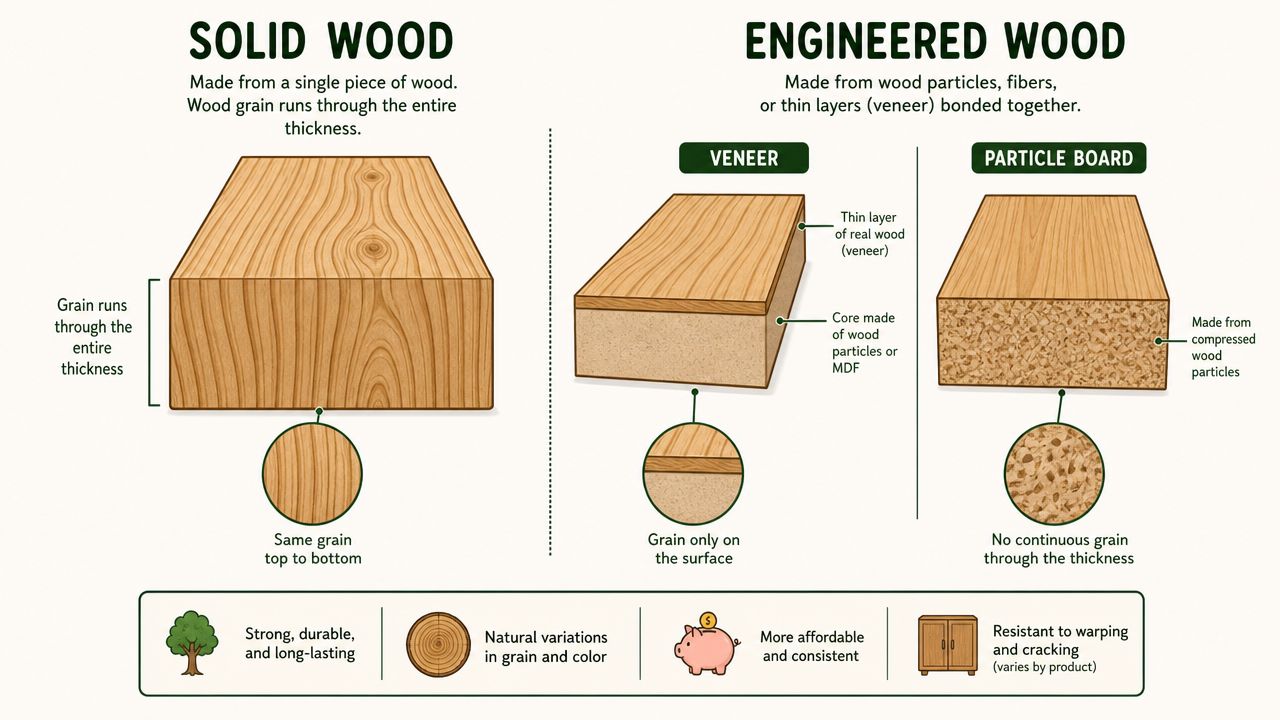
A useful reality check comes from the resale market. A 2025 resale analysis found that 60% of “solid wood” dining tables sold in online marketplaces are veneer-core, which helps explain why so many buyers feel misled when a table arrives or when they inspect it more closely.
True solid wood means the main structural parts are made from lumber rather than a thin decorative wood layer over a manufactured core. A veneer uses real wood on the surface, but the core underneath may be particleboard or another engineered material. That doesn't automatically make veneer wrong. It means the buyer should know what's being purchased and price it accordingly.
For anyone comparing broader wood construction ideas in kitchens and dining areas, MapleKing wood kitchen cabinets offer a helpful visual reference for how real wood species and construction choices affect appearance and durability.
Simple ways to check construction
A buyer doesn't need shop training to ask good questions. A few practical checks go a long way.
- Look at the edges: If the top pattern repeats in a suspiciously uniform way or the edge band looks separate from the surface, that can signal veneer construction.
- Check underneath: The underside often tells the truth faster than the top. Manufactured cores usually look flatter and more uniform than lumber.
- Inspect joints and corners: Solid wood pieces often show more honest joinery and more material depth where parts meet.
- Notice weight in proportion to size: A very large table that feels surprisingly light may deserve closer inspection.
Practical rule: If the seller avoids close-up photos of edges, undersides, and joinery, the buyer should slow down.
Joinery also matters because it says a lot about how the piece was built to handle daily stress. Anyone who wants a simple explanation of one of the strongest traditional furniture joints can review this overview of the mortise and tenon joint.
Solid wood isn't about bragging rights. It's about knowing what's under the finish and deciding whether the construction matches the expectation of heirloom quality, repair potential, and long-term use.
Choosing the Right Wood Species for Your Family
Once the construction is clear, the next question is simpler and more personal. Which wood feels right for the home and the people using it every day. The answer usually has less to do with trend and more to do with household rhythm.
How oak maple and cherry feel in daily life
Oak tends to appeal to busy homes that want visible character. Its grain pattern is more noticeable, which many families appreciate because everyday wear tends to blend into that natural movement. In a household with kids, frequent dinners, or regular guests, oak often feels forgiving and grounded.
Maple usually suits people who want a smoother, cleaner visual effect. Its grain is subtler, so it works well in spaces that lean contemporary, transitional, or structured yet understated. It can make a room feel lighter and more refined without looking fragile.
Cherry often draws buyers who want warmth and a more formal sense of depth. It has a richer, more classic personality. In the right setting, cherry can make a dining room feel established and welcoming at the same time.
A deeper look at species, grain, and long-term fit is available in this guide to choosing the right hardwood for longevity and style.
A quick comparison by household style
| Wood species | Often suits | Why families choose it |
|---|---|---|
| Oak | Active family dining rooms | Strong visual grain and everyday practicality |
| Maple | Clean-lined kitchens and modern spaces | Smoother appearance and a tailored look |
| Cherry | Traditional or dressier rooms | Warm color and classic presence |
No single species is the “best” for everyone. The better question is what kind of life the table will support. A homework-and-snack household may choose differently than a home that hosts Sunday dinners and seasonal gatherings.
Some buyers fall in love with a stain color first. It's smarter to fall in love with the wood's personality and let the finish support it.
That practical thinking also helps explain the continued market strength of solid wood as a category. Buyers keep returning to it because the material offers both performance and visual identity, which is rare in furniture that has to work hard every day.
Perfecting the Fit Style Size and Shape
Even a beautiful dining set can feel wrong if the fit is off. Most sizing mistakes happen because shoppers measure the table they want instead of the room they have. The room has to lead.
Start with the room not the table
The clearest rule is also the most useful. Industry guidelines recommend at least 36 inches of open space on all sides of a dining table. That clearance gives people room to pull out chairs, walk around seated guests, and move through the space without turning every meal into a shuffle.
That guideline matters in older homes, open-concept layouts, and eat-in kitchens where every inch counts. A table that looks fine in a showroom can feel oversized once walls, doorways, islands, and traffic paths enter the picture. That's why exact measurements matter so much more than guesswork.
A practical planning tool for this step is this dining table size guide.
How shape changes the way a room works
Shape changes mood and movement.
- Rectangular tables usually make sense in longer rooms and for households that host more people at once.
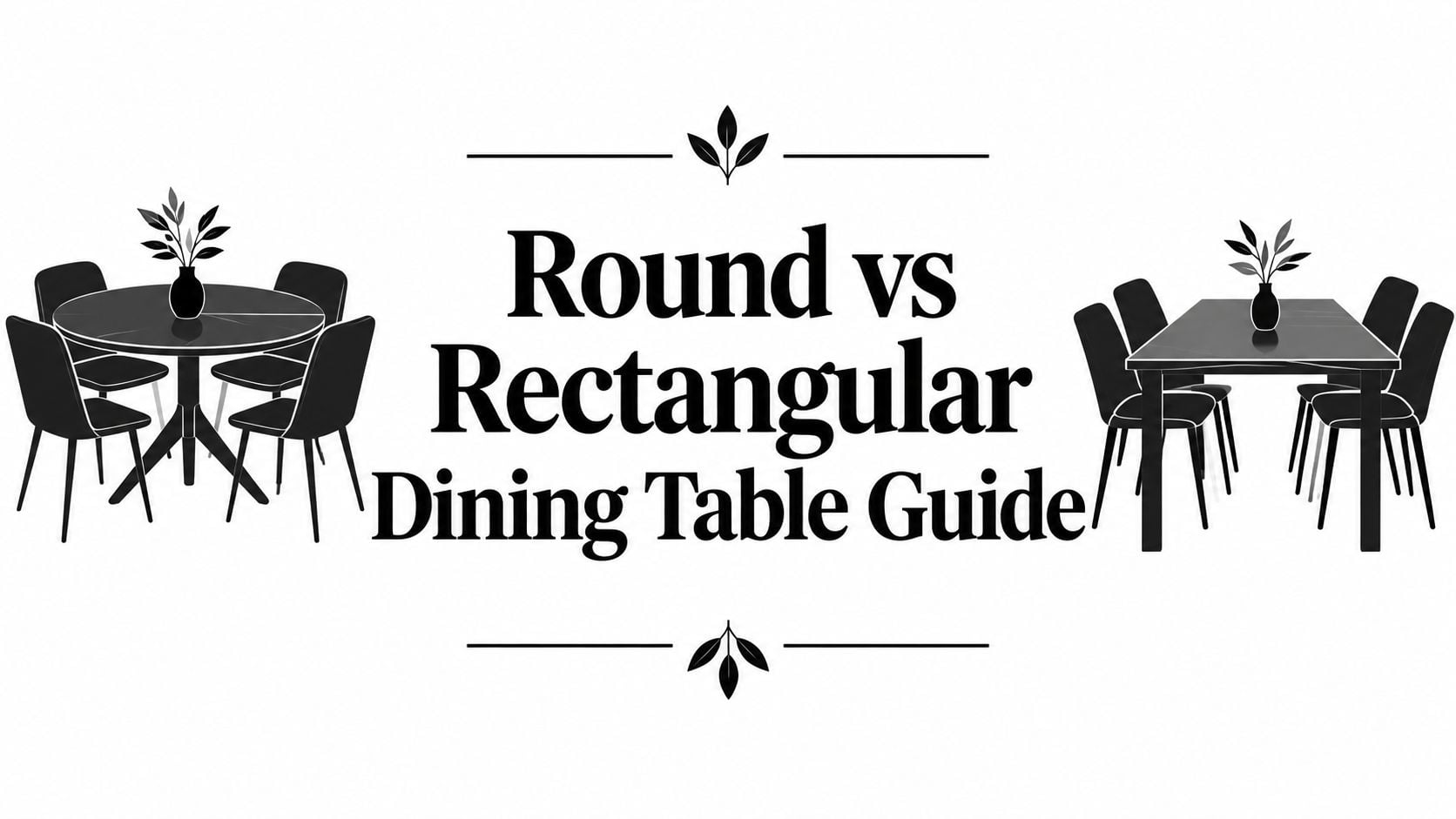
- Round tables soften the room and help conversation flow, especially in tighter spaces.
- Oval tables offer some of the openness of a round shape with more seating flexibility.
- Square tables can feel balanced in square rooms, especially for smaller gatherings.
Style deserves equal attention. A rustic farmhouse table can bring comfort and texture. A cleaner-lined silhouette may suit a contemporary kitchen better. A more refined traditional design can support a formal dining room without feeling stiff. Brands known for style variety, such as Bassett, often help shoppers visualize how these personalities differ even before finishes and fabrics are chosen.
A good fit doesn't just prevent crowding. It makes the room easier to live in. People sit longer, move more naturally, and use the dining area more often when the scale feels calm instead of cramped.
Design It Your Way with Custom and Amish Options
Standard sizes work for some homes. They don't work for all of them. A narrow dining room in St. John, a wide open plan in Crown Point, or a breakfast nook that needs a very particular footprint often calls for something more precise than “close enough.”
When standard sizes fall short
Custom furniture changes the conversation. Instead of settling for what happens to be stocked, buyers can shape the piece around the room and the routines it needs to support. That could mean a smaller table for two that expands for holidays, a banquette for an awkward wall, or a chair style that feels comfortable for longer meals.
For many families, custom doesn't mean extravagant. It means practical. The room may need a table one inch shorter, a narrower profile, a different base style, or a finish that better matches existing cabinetry and flooring. Those details can be the difference between a dining set that merely fits and one that feels built for the home.
Two strong paths to a bespoke dining set
One path is a structured custom program. Canadel's UDesign program allows buyers to personalize dining tables, chairs, and banquettes with specific fabric choices, back styles, and dimensions, resulting in made-to-order dining sets with millions of possible combinations. That level of flexibility is especially useful for households trying to coordinate size, finish, seating comfort, and overall style without compromise.
Another path is Amish furniture, which appeals to buyers who care about craftsmanship, American-made construction, and heirloom quality. It often suits those who want honest materials, traditional building methods, and a piece that feels substantial in every sense. Because it's made to order, the buyer isn't forced into standard dimensions or generic details.
A helpful overview of the craftsmanship tradition behind these pieces can be found in this guide to what Amish furniture is and why it stands apart.
Custom also helps solve everyday design problems that mass-produced furniture rarely handles well:
- Tight circulation: A slightly narrower table can preserve walking space without sacrificing comfort.
- Mixed-use rooms: Bench seating, banquettes, or carefully chosen chair profiles can make one room handle several roles.
- Existing finishes: Matching undertones matters when wood furniture sits near cabinets, flooring, or trim.
- Family-specific comfort: Some households need taller backs, upholstered seats, or wipeable fabrics that support regular use.
The best dining set usually isn't the one with the most features. It's the one that fits the room, the routine, and the people.
That's the compelling reason for designing it your way. Bespoke doesn't have to mean flashy. Often it means thoughtful.
Caring for Your Heirlooom Quality Furniture
Solid wood still carries an old reputation. Many people assume it needs constant polishing, special rituals, and a level of attention that busy households can't give. That belief turns some buyers away before they ever learn what modern finishes are like.
The maintenance myth deserves to go
The everyday reality is far less fussy. According to 2025 maintenance guidance on finished wood dining furniture, properly finished solid wood dining sets show minimal finish degradation in under 3 years of daily family use, and standard cleaning with pH-neutral soap is sufficient for 95% of households.
That should reassure families who want a durable dining set, not a new chore chart. Modern finishes are built for normal living. Meals happen. Spills happen. Elbows, backpacks, homework folders, and serving dishes all make contact with the surface. A well-finished table is expected to handle that.
Simple habits that protect the finish
Care works best when it stays simple.
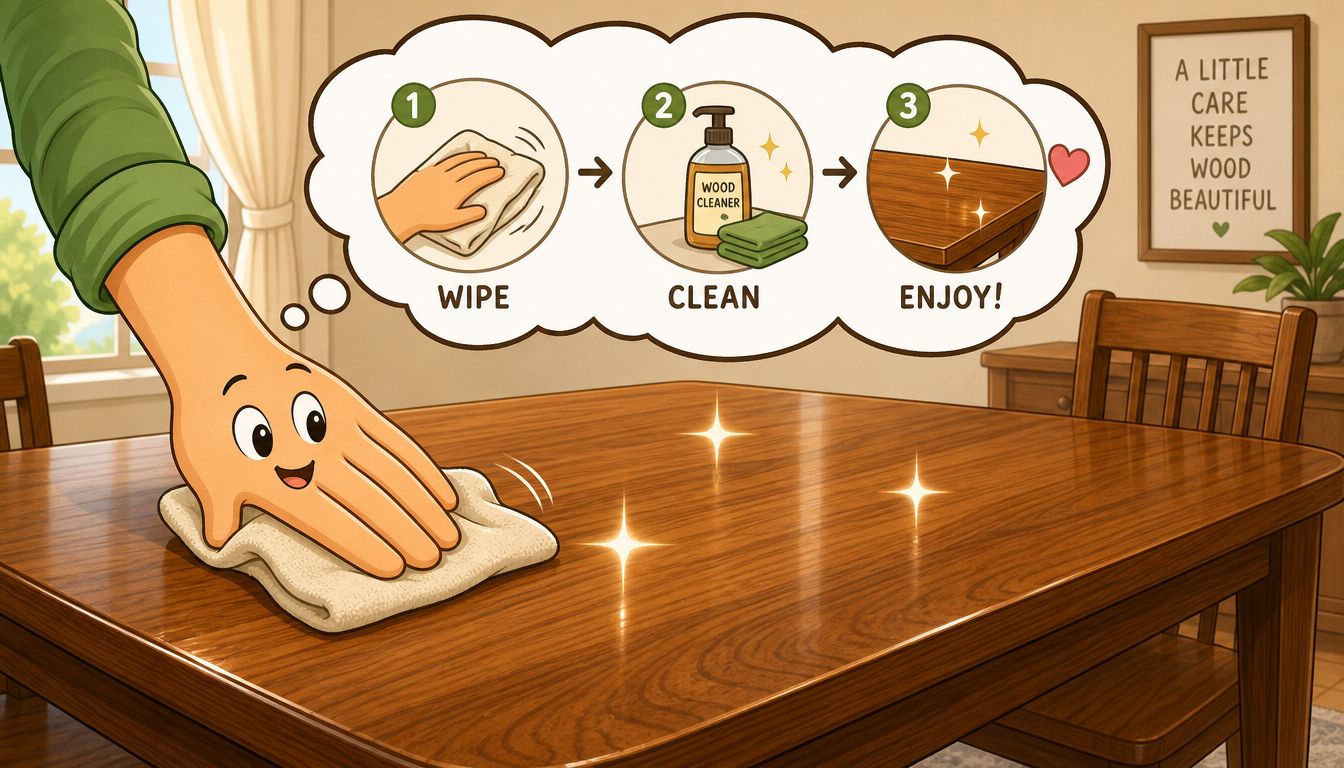
- Wipe spills promptly: Not with panic, just without letting moisture sit longer than necessary.
- Use a soft cloth: Everyday dusting and cleanup don't require harsh scrubbers.
- Choose mild cleaners: pH-neutral soap is enough for most homes.
- Skip heavy product buildup: Overusing waxes, oily polishes, or aggressive sprays can create more trouble than help.
- Add basic protection: Placemats, trivets, and felt pads support the finish without making the table feel untouchable.
A solid wood dining set should serve the household. The household shouldn't have to serve the table.
For families who already own older wood pieces and want to understand how traditional refinishing differs from routine care, this resource on restoring antique furniture gives useful context. It's especially helpful for distinguishing between simple maintenance and the deeper work sometimes needed on antiques.
The right mindset is this. Respect the piece, use it confidently, and follow a few sensible habits. That's usually enough.
Budgeting Bringing Your Vision Home with Confidence
A dining set is a meaningful purchase, and most families don't make the decision on style alone. They're balancing quality, timing, household needs, and what feels manageable in the budget. That's normal. It's also why long-term value matters more than chasing the lowest upfront number.
Think in years of use not one day of cost
A solid wood dining set often makes sense when buyers view it through daily use. This is furniture that may host breakfast before school, projects after dinner, guests on weekends, and holidays for years. In that context, better construction and better fit can justify themselves through steadier performance and fewer compromises over time.
That's also where custom sizing can be surprisingly practical. A table that fits the room correctly is less likely to create frustration, underuse, or a second purchase later. The same applies to seating comfort, extension options, and finish choices. A well-chosen piece supports the home more completely.
Support services that make the purchase easier
Several services can make a quality purchase more approachable and less stressful.
- Special financing: Subject to credit approval, this can give households more buying power and help them choose lasting quality without straining the monthly budget all at once.
- White-glove delivery: Delivery matters with large, solid wood furniture. Professional placement and setup help protect both the piece and the home.
- Interior design guidance: A second opinion can help with size, wood tone, chair pairing, and room balance.
- Custom ordering: Instead of compromising on dimensions or materials, families can align the purchase with the space they already have.
For many households in Northwest Indiana, this combination matters as much as the furniture itself. Honest pricing, made-to-order options, and careful delivery remove much of the friction from buying a larger piece. The result feels more personal and much less transactional.
A good buying experience should leave the family feeling settled, not uncertain. The dining set should arrive with the sense that it belongs there.
Visit Groen's Fine Furniture in Dyer or Crown Point today to explore custom furniture options, including Canadel dining and Amish solid wood pieces, and ask about special financing plans. With multigenerational ownership, 5-star service, white-glove delivery, and a long history of serving Northwest Indiana since 1983, Groen's Fine Furniture helps families in Dyer, Crown Point, St. John, Schererville, and Munster create a home they love with lasting, personal comfort.