Butcher Block Coffee Table a NWI Buyer’s Guide

A lot of Northwest Indiana living rooms ask one piece of furniture to do almost everything. It holds coffee in the morning, board games at night, a stack of mail nobody has sorted yet, and sometimes a tired pair of feet after a long day. That's why so many homeowners in Dyer, Crown Point, St. John, Schererville, and Munster spend more time choosing a coffee table than they expected.
A butcher block coffee table often ends that search. It feels warm without being delicate, solid without looking heavy-handed, and practical in a way that fits real family life. For homeowners who want a centerpiece that looks good now and still feels right years from now, the details matter far beyond color and shape.
The Enduring Appeal of Butcher Block in NWI Homes
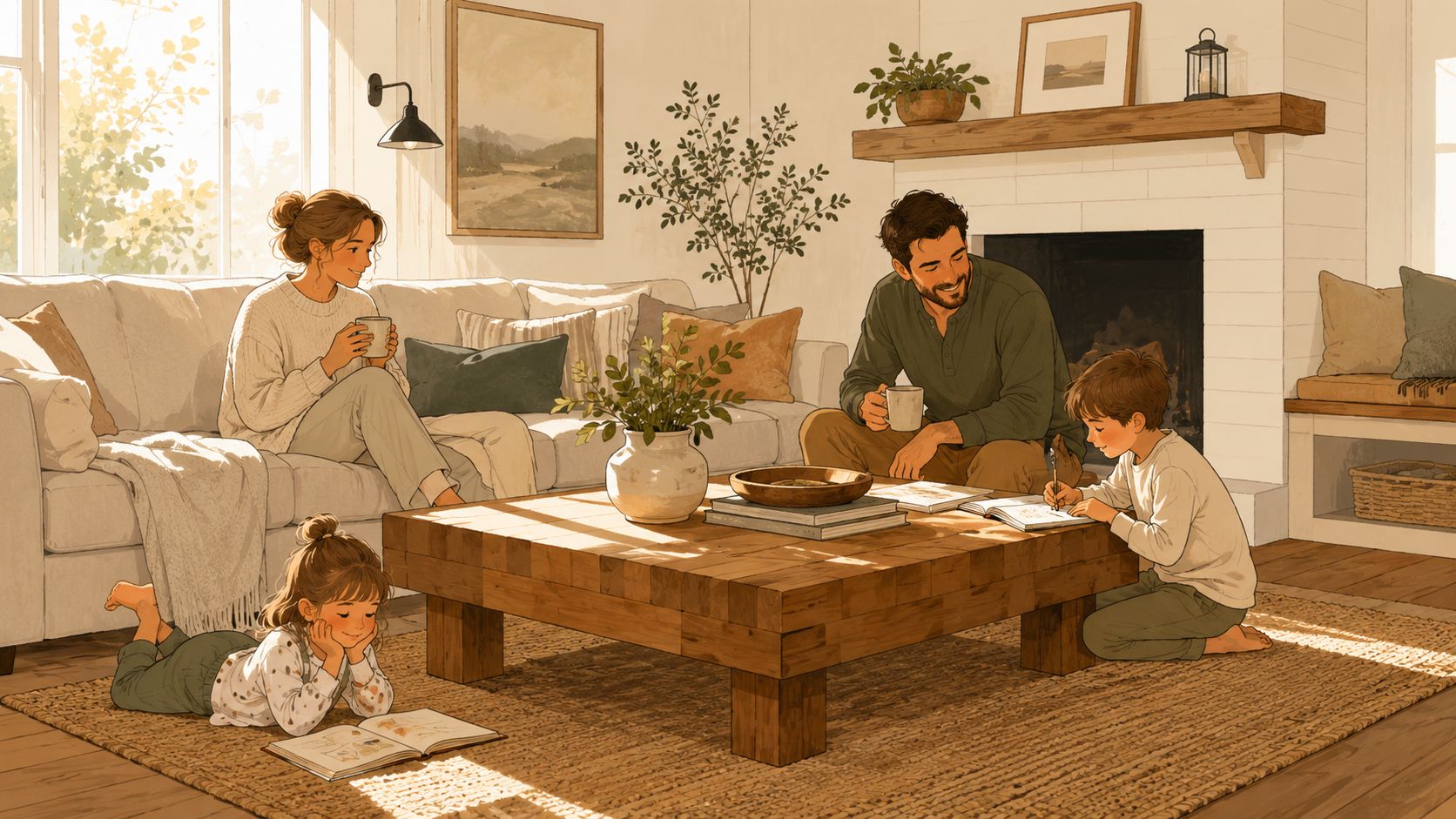
On a winter afternoon in Northwest Indiana, the living room becomes command central. Kids spread out homework on the table. Someone sets down a mug without thinking. Guests gather around the sofa during a game night, and the coffee table becomes the surface that keeps up with all of it.
That's exactly why butcher block keeps showing up in well-loved homes. It has presence, but it doesn't feel fussy. The top looks natural and grounded, and it brings the kind of warmth that helps a room feel settled.
Why homeowners keep coming back to it
Butcher block isn't just having a style moment. Butcher block has become a dominant material choice in home design, with a 2024 Houzz study showing 68% of renovating homeowners choosing it over other wood-top options for its blend of functionality and beauty, according to the Houzz butcher block study coverage.
That matters because trends in kitchens often tell a bigger story about how people want their homes to work. Homeowners are leaning toward materials that look inviting but also earn their keep. A butcher block coffee table fits that thinking better than many surfaces that either scratch too easily or feel cold in a family room.
Practical rule: The best coffee table doesn't just match the sofa. It supports the way the room is actually used.
Why it works so well in NWI
Northwest Indiana homes see every season clearly. Winter heat dries the air. Summer humidity rolls in. Through all of it, a solid wood piece adds comfort that painted particleboard or thin veneer rarely matches.
A butcher block coffee table also bridges styles better than people expect. It works in a farmhouse setting, a tidy transitional room, or a softer modern space. The reason is simple. The material has enough character to stand on its own, but it doesn't demand a theme.
For families who want one anchor piece instead of something temporary, butcher block keeps making sense.
What Exactly Is a Butcher Block Coffee Table
Many shoppers hear the term and assume butcher block is a species of wood. It isn't. Butcher block describes how the top is built, not which tree it came from.
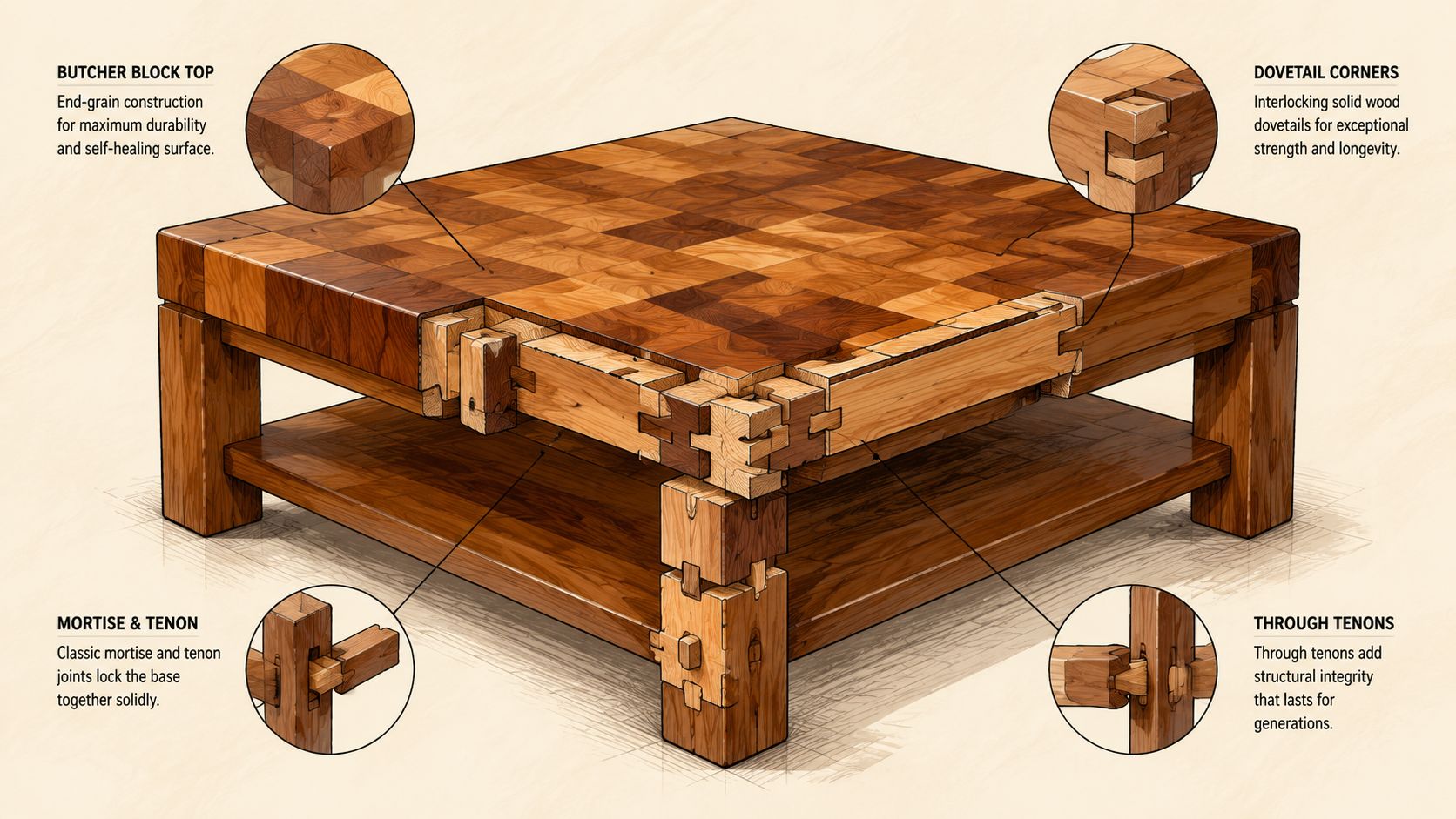
A butcher block coffee table uses multiple pieces of solid wood that are joined together into a thick slab. That construction creates a strong surface with visible character, and it often handles daily wear better than a top made from a single wide board or a printed imitation.
The two styles people see most often
Most butcher block tops fall into two visual families.
- Edge grain uses long wood strips laid side by side. The result looks linear, clean, and organized.
- End grain shows the cut ends of the wood, often in a block-like or checkerboard pattern. It has a more textured, traditional look.
For a living room, edge grain is the more common choice because it feels a little calmer and easier to fit into different decorating styles. End grain can be striking, but it usually reads bolder and more rustic.
Why construction matters more than the label
A true butcher block coffee table stands out because the surface isn't just decorative. It's substantial. If a child drags a toy across it or a guest leaves behind a light scratch, solid wood gives the owner options later. A quality top can often be refreshed, cleaned up, or refinished instead of being replaced.
That's a big difference from furniture that only looks like wood on the surface.
For homeowners trying to understand how species affect appearance and longevity, this guide on choosing the right hardwood for longevity and style gives helpful background.
A butcher block top should feel intentional from every angle. The seams should look clean, the surface should sit flat, and the wood should feel like the real story, not a printed shortcut.
What makes it a smart family-room choice
A butcher block coffee table works well in busy homes for a few simple reasons:
- It's durable enough for regular use.
- It's repairable in ways many manufactured tops aren't.
- It ages with character instead of looking worn out at the first sign of use.
That combination is what confuses some shoppers at first. They expect something this practical to feel plain. Instead, butcher block usually adds depth and warmth to the room.
Choosing the Right Wood for Your Butcher Block Table
Once the construction makes sense, the next decision is the wood itself. This is where the personality of the table really starts to show. Two butcher block coffee tables can have the same shape and still feel completely different because the species changes the color, grain, and overall mood.
In many homes across Munster, Crown Point, and the rest of Northwest Indiana, the right wood choice comes down to two questions. Does it fit the room visually, and will it suit the household's day-to-day use?
The woods homeowners ask about most
Maple is often the quietest-looking option. It usually has a smoother, lighter appearance that works well in cleaner casual rooms, especially if the goal is a brighter look without a lot of visual busyness.
Oak has a more visible grain and a traditional feel. It tends to look sturdy even before anyone touches it. In family rooms with texture, baskets, darker upholstery, or farmhouse notes, oak often feels right at home.
Walnut brings depth. It's richer, darker, and more formal-looking than maple or oak. A walnut butcher block coffee table can become the strongest visual anchor in the room, especially when the seating and rug are more understated.
Cherry deserves attention too. It has warmth and a classic furniture character that many homeowners love, especially in homes with other established wood tones.
For readers comparing solid wood furniture across rooms, this look at a solid wood dining set can help show how species choice changes the feel of a piece.
Comparison of Common Butcher Block Woods
| Wood Type | Hardness & Durability | Color & Grain | Best For Style |
|---|---|---|---|
| Maple | Hard and dependable for everyday use | Light tone, finer and smoother-looking grain | Modern, transitional, bright casual spaces |
| Oak | Tough and well-suited to active homes | Warm tone with prominent grain | Farmhouse, traditional, family-friendly rooms |
| Walnut | Durable with a more refined appearance | Rich dark color with elegant grain | Sophisticated, moodier, tailored spaces |
| Cherry | Solid and long-lasting for home furniture | Warm wood that develops deeper character over time | Classic interiors, collected traditional rooms |
How to make the choice easier
A simple way to choose is to look at what the table needs to do in the room.
- For a busy family room, oak or maple often feels natural because both look honest and hard-working.
- For a calmer, more refined space, walnut can add richness without extra decoration.
- For a classic home with established wood furniture, cherry often blends beautifully.
The best choice usually isn't the fanciest one. It's the one that makes the room feel complete and still looks good when real life is happening on top of it.
The Unseen Details of Heirloom Quality Construction
Most shoppers can spot a wood color they like. Fewer know what to look for underneath. That's where the biggest difference lives between a table that lasts a few seasons and one that stays strong for generations.
A butcher block coffee table can look impressive in a photo and still be built in a way that causes trouble later. The real test is in the joinery, the glue-up, and how the top attaches to the base.
How a good butcher block top is built
A solid top doesn't come from tossing boards together and hoping they stay flat. A professional build requires edge-gluing solid wood planks with a high-strength adhesive, then clamping them carefully in stages so pressure stays even across the seams, as shown in this butcher block coffee table build guide.
That even pressure matters. If clamping is rushed or uneven, gaps can form, boards can shift, and the finished top may not stay as true as it should. Skilled builders often work in smaller grouped sections first, then join those sections into the full top to help maintain flatness.
The detail many buyers never hear about
The most overlooked construction point is how the top meets the base. Wood moves. It expands and contracts with changes in humidity. That isn't a flaw. That's the nature of solid wood.
Expert woodworkers emphasize “floating” a butcher block top with cleats or table clips to allow for natural wood movement with humidity changes, an essential detail often omitted by mass retailers which can lead to cracking or warping over time, according to this wood movement discussion from Fine Woodworking.
For homeowners in Northwest Indiana, this isn't a small technical note. Seasonal indoor conditions can shift noticeably between furnace season and humid summer weather. If a top is screwed down rigidly, the wood may eventually protest.
Wood should be allowed to move a little. A table that doesn't account for that movement may eventually crack, cup, or pull against its own base.
What heirloom construction looks like in practice
A better-built table usually shows itself in quieter ways:
- Clean glue lines that don't call attention to themselves
- A top that sits flat instead of rocking or dipping
- Joinery that feels stable when the table is pushed or lifted
- Attachment methods that allow movement instead of locking the wood in place
Homeowners who enjoy learning the language of traditional craftsmanship may appreciate this explanation of a mortise and tenon joint, since those old-school methods still tell a lot about how furniture is built to last.
Why this matters more than surface styling
A stain color can be changed. A base style can be trendy or timeless. But poor construction tends to reveal itself after the return window has long passed.
That's why a butcher block coffee table should be judged with the same seriousness as a dining table or bed frame. It may sit lower in the room, but it works hard, gets touched constantly, and needs to hold up through years of changing seasons and daily use.
Finishing and Caring for Your Living Room Centerpiece
One of the biggest points of confusion with butcher block furniture is the finish. People hear “butcher block” and immediately think of cutting boards, kitchen counters, or food-prep surfaces. That leads many homeowners toward the wrong care routine for a coffee table.
The living room asks for something different. A coffee table needs protection from cups, snack bowls, dust, fingerprints, and the occasional spill. It also needs to feel clean and easy to maintain.
Why mineral oil is usually the wrong answer
A common mistake is treating a butcher block coffee table like a kitchen counter; food-grade mineral oil attracts dust and requires monthly reapplication, whereas a proper furniture sealant offers durable protection without the sticky residue, a critical distinction for living room use, as explained in this guide to butcher block care mistakes.
That catches a lot of people off guard. Mineral oil sounds safe and natural, so it feels like the responsible choice. But on a coffee table, it can leave the surface feeling less clean, not more. It also doesn't offer the kind of resistance most homeowners want against water rings.
What works better in a family room
A furniture-grade sealant is usually the smarter fit for a butcher block coffee table. The exact finish can vary, but the goal stays the same. The wood needs a protective layer that dries properly, wipes clean, and stands up to ordinary use.
A well-finished living room table should be easy to care for with habits like these:
- Use coasters regularly to reduce moisture marks
- Wipe spills promptly so liquid doesn't linger
- Dust with a soft cloth rather than anything abrasive
- Clean gently instead of soaking the surface
For homeowners who also think about the room as a whole, especially upholstery and nearby textiles, this article from Rubber Ducky Rug Cleaning Birmingham offers a useful reminder that living rooms stay fresher when every surface gets the right kind of care.
A simple care mindset
The goal isn't to keep a wood table looking untouched. It's to keep normal wear from turning into damage. A few light marks over time can add character. Standing water, sticky residue, and neglected spills are what usually create avoidable problems.
Care note: A coffee table finish should support living room life, not turn routine cleaning into a monthly project.
Anyone who wants a broader overview of wood-top maintenance can read more about caring for butcher block countertops. The same basic lesson applies, even though a living room table needs a different finish approach than a food-prep surface.
Design Your Perfect Table at Groens Fine Furniture
Once shoppers understand the wood, the construction, and the finish, the last question is usually the most personal one. What should the table look like in the room?
That's where custom work becomes so valuable. A butcher block coffee table is simple enough to feel timeless, but flexible enough to suit very different homes. One family may need a broad rectangle to anchor a sectional. Another may need a smaller scale piece with a lighter wood tone for a tighter seating area.
Why customization matters so much
A standard floor model can be a starting point, but it doesn't always fulfill individual design preferences. Many homeowners want a different size, a better wood match, or a base that feels more in line with their home's style.
That's why made-to-order furniture stands apart. It allows a piece to fit the room instead of forcing the room to work around a preset design. For buyers who value Custom Furniture, Solid Wood, and American-Made craftsmanship, that flexibility often matters as much as the material itself.
This is especially true with Amish Furniture and other bespoke programs where homeowners can design it their way. The appeal isn't only visual. It's practical. A table built for the room tends to look more settled and function better from day one.
Understanding the value range
There's a wide spread in this category. The market for butcher block tables ranges from under $300 for mass-market options to over $2,500 for artisan commissions, demonstrating a strong consumer demand for customization and heirloom quality that commands a premium, based on this North American rustic coffee table market analysis.
That range helps explain why shoppers can feel confused at first. Two tables may look similar online, yet the construction, wood selection, finish quality, and long-term durability can be very different.
Making heirloom quality fit real budgets
A custom solid wood piece doesn't have to feel out of reach. For many families, Special Financing available, subject to credit approval creates more buying power and makes it easier to choose lasting quality over a short-term substitute.
A strong furniture store also adds value beyond the table itself:
- White-Glove Delivery helps protect a heavy solid wood piece during setup
- Interior Design guidance helps match wood tone, scale, and style to the room
- Multigenerational ownership often brings a more personal, honest buying experience
Shoppers who want to explore bespoke options can learn more about getting started with custom order.
For homeowners in Dyer, Crown Point, and across Northwest Indiana, that combination matters. A butcher block coffee table isn't just another accent. It's a hard-working centerpiece, and it's worth choosing with care.
Visit Groen's Fine Furniture in Dyer or Crown Point today to explore custom options, including Amish solid wood and Canadel programs that let homeowners design it their way. Since 1983, this family-owned business has served Northwest Indiana with multigenerational ownership, 5-star service, honest pricing, White-Glove Delivery, and trusted brands like Flexsteel and Bassett. Ask about Special Financing available, subject to credit approval, and let the team help create a home that feels comfortable, lasting, and personal.