Blog
Amish Dining Table Chairs: A Buyer’s Guide for NWI Homes


A lot of Northwest Indiana families reach the same point at the dining table. The old chairs still work, technically, but holiday meals run long, backs get sore, someone always ends up on the least comfortable seat, and the whole set no longer feels like it matches the life happening around it.
That's where Amish dining table chairs tend to enter the conversation. Not just because they look warm and substantial, but because families in Dyer, Crown Point, St. John, Schererville, and Munster often want furniture that feels settled, personal, and built for real use. A dining chair has to do more than photograph well. It has to support weeknight dinners, school projects, coffee with neighbors, and the kind of long conversations that make a house feel like home.
Table of Contents
- Creating a Gathering Place for Generations in Your NWI Home
- The Enduring Appeal of Amish Craftsmanship
- Choosing Your Solid Wood and Finish
- Finding a Style That Tells Your Family's Story
- Sizing and Ergonomics for Lasting Comfort
- Designing Your Custom Amish Chairs at Groen's
- Caring for Your Heirloom Furniture
- Experience the Difference in Person
Creating a Gathering Place for Generations in Your NWI Home
In many NWI homes, the dining room pulls more weight than almost any other space. It hosts rushed breakfasts before school, quiet dinners after work, birthday cakes, card games, and the extra folding chair that appears when more family stops by than expected. That's why chair shopping can feel bigger than it sounds. Families aren't only choosing seats. They're choosing the setting for years of ordinary and important moments.

A couple updating a dining room in Crown Point may start with one simple thought: the next set should last. A growing family in Dyer may want chairs that can handle daily use without feeling bulky or formal. Someone in Munster may already love solid wood furniture and just wants chairs that finally feel right for long meals. Amish dining table chairs fit that search because they combine permanence with personal choice.
The room around the chairs matters too. Once the seating feels grounded, many homeowners start thinking about what belongs on the walls so the whole space feels finished. For anyone looking to find art for your dining space, it helps to choose pieces that support the warmth of wood instead of fighting it.
A good dining chair should feel inviting on a regular Tuesday, not only on a holiday.
That practical point gets missed all the time. Families often focus on table size, stain color, or whether the chairs “match,” but the chairs are what people spend their time in. The best choice usually comes from balancing craftsmanship, comfort, and a style that still feels right years from now.
The Enduring Appeal of Amish Craftsmanship
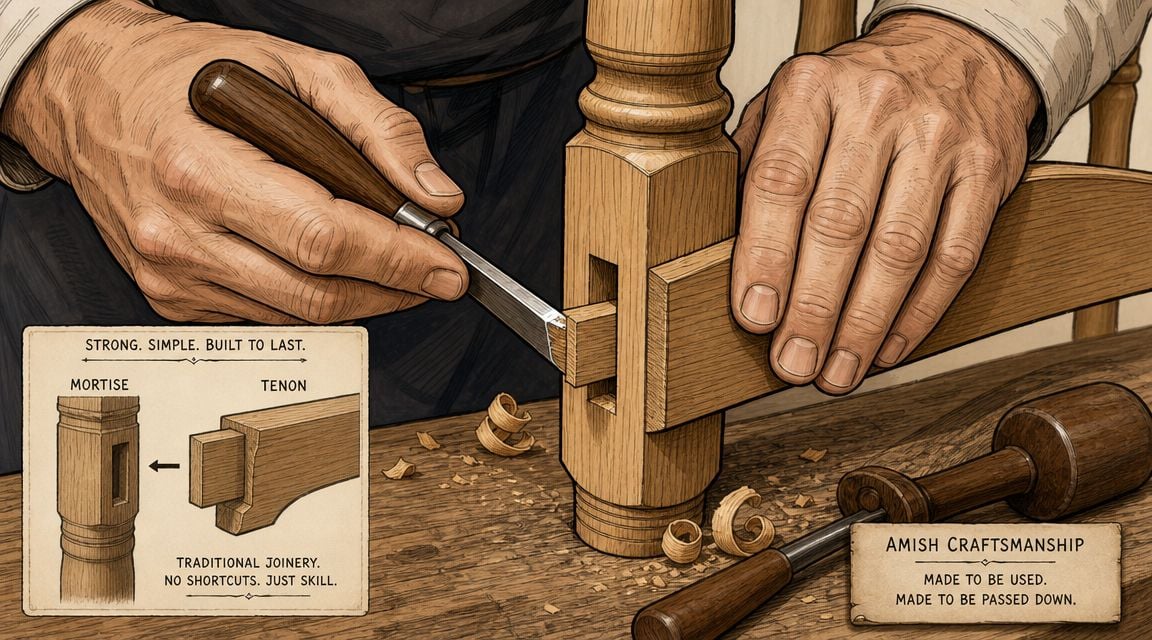
Amish dining table chairs have a reputation for lasting, but that reputation didn't appear overnight. Amish furniture traditions date to the 18th century as communities settled in Pennsylvania, Ohio, and other parts of the American interior. This workshop tradition predates modern industrial furniture by more than three centuries, which helps explain why solid-wood construction and hand joinery still matter in this category, as noted in this history of Amish furniture.
Why the tradition still matters
The easiest way to understand that tradition is to think of a family recipe. The value isn't only in the ingredients. It comes from the method being handed down, repeated carefully, and protected because it works. Amish chair building follows that same logic. The methods were shaped around durability, repairability, and daily household use.
That's why buyers often notice details that feel different from mass-market seating.
- Solid structure: The chair feels substantial when it's lifted or moved.
- Joinery that has a job: Connections are made to hold under repeated everyday use.
- Made-to-order thinking: The chair is often built for a home and a family, not pulled from a generic one-size-fits-all run.
For homeowners curious about the broader category, what Amish furniture is and how it's built gives helpful background before narrowing down chair styles.
What buyers can feel right away
A well-made Amish chair often gives itself away in small moments. It doesn't wobble when someone shifts their weight. The back doesn't feel flimsy. The seat and frame move like one piece instead of several separate parts trying to cooperate.
Another clue is the joinery language that comes up in woodworking. Chairs and cabinets use different construction details, but the same principle applies: strong joints matter because weak ones become the first failure point. For readers who want a simple companion explanation from the cabinet side of the craft, this overview of dovetail drawers for kitchen remodeling is useful because it shows why joinery is more than decoration.
Practical rule: Lasting furniture usually reveals its quality at the joints, not in the showroom lighting.
That's a big reason Amish dining table chairs are often described as heirloom pieces. The value doesn't come from trendiness. It comes from a building philosophy centered on staying power.
Choosing Your Solid Wood and Finish
One of the first surprises for many shoppers is that “Amish” doesn't describe a single look. It describes a way of building. Amish dining table chairs are typically made from solid wood throughout, rather than particleboard or MDF, and commonly use traditional joinery such as mortise-and-tenon or dovetail joints, as explained in this guide on how to tell if furniture is Amish. That construction gives buyers a different starting point. From there, wood choice and finish shape the personality of the chair.
How wood choice changes the look
Oak usually appeals to families who want visible grain and a classic, grounded feel. It has presence. In a dining room, oak often works well when the goal is warmth, familiarity, and a look that won't feel dated quickly.
Cherry tends to feel richer and more formal. It often suits homeowners who want a smoother, deeper appearance and a dining room that leans a little more refined. Maple is a good fit when the room calls for a cleaner, quieter surface and a lighter visual weight.
A finish changes the impression just as much as the species. The same chair design can read traditional, farmhouse, transitional, or more refined depending on stain depth, sheen, and whether the seat stays wood or becomes upholstered. For a closer look at how different hardwoods affect longevity and style, this guide on choosing the right hardwood for longevity and style can help narrow the field.
Common Amish Hardwoods at a Glance
| Wood Type | Grain & Texture | Best For | Durability |
|---|---|---|---|
| Oak | Noticeable grain, classic texture | Traditional rooms, everyday family dining | Strong choice for frequent use |
| Cherry | Smoother look, warmer appearance | Formal or elevated dining spaces | Long-lasting with proper care |
| Maple | Fine, clean grain | Simpler, lighter, more updated interiors | Reliable for active households |
A useful way to choose is to look at the other wood tones already in the room.
- If the home has mixed woods: Maple often blends quietly.
- If the dining room needs character: Oak can add visual depth.
- If the goal is a dressier setting: Cherry often brings more richness.
Buyers sometimes freeze here because every sample looks good under showroom lights. The better question isn't which wood is “best.” It's which wood still feels right when the table is covered with school papers, serving dishes, and the everyday rhythm of family life.
Finding a Style That Tells Your Family's Story
Style is where Amish dining table chairs become personal. Two chairs may share the same level of craftsmanship and still create completely different moods in a room. One says relaxed and practical. Another says refined and formal. Neither is wrong. The right one is the one that feels like it belongs in the home already.
A few styles families ask for most
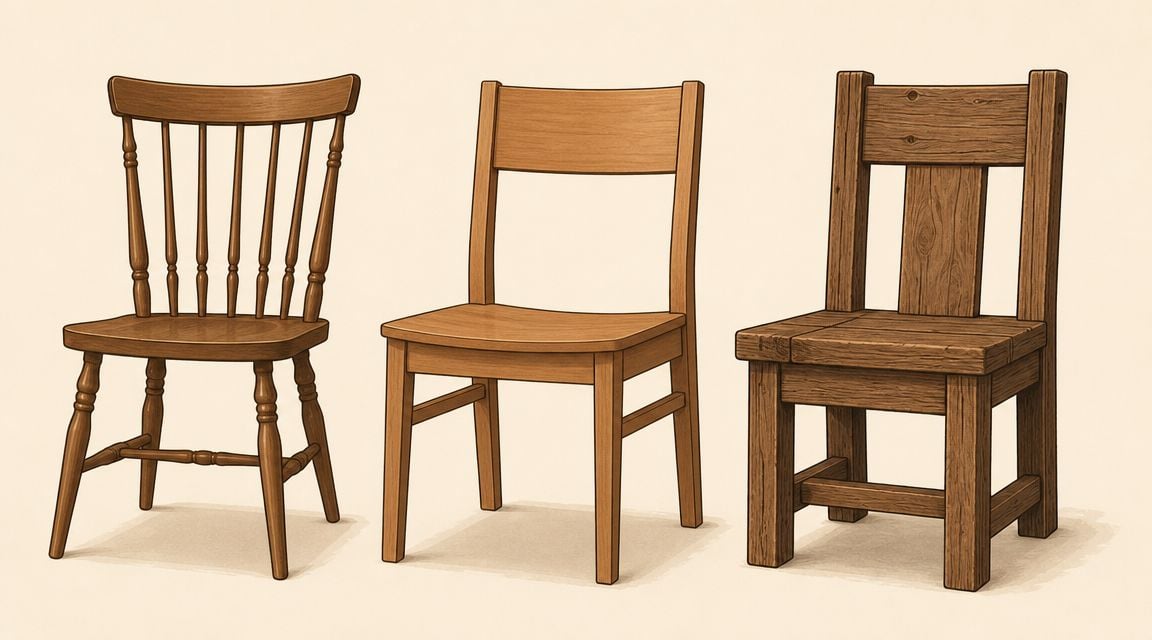
Shaker chairs are often the quiet achievers of the showroom. They have clean lines, restrained detail, and an easy honesty that suits everything from older houses in St. John to newer homes with a simpler interior style. They don't ask for attention, which is exactly why many families keep coming back to them.
Mission chairs have stronger vertical lines and a more architectural feel. They tend to look especially at home with visible grain woods and rooms that favor structure over ornament. Families who want the chairs to make a clear visual statement often respond to Mission designs.
Queen Anne styles bring in more softness. Curves in the legs or back can make the whole dining room feel a touch more graceful. They often suit rooms where the table is part of a more polished, traditional setting.
Then there are upholstered or Parsons-inspired looks. These usually appeal to buyers who want wood craftsmanship paired with a gentler visual profile and a softer seat. They can make a larger dining room feel less rigid.
Some families choose one style because it matches the room. Others choose it because it matches how the room should feel when everyone sits down.
For shoppers comparing silhouettes side by side, different dining chair styles can help translate showroom impressions into a clearer decision. The important thing is remembering that “Amish” isn't a single design language. It's a quality standard that can show up in many forms.
Sizing and Ergonomics for Lasting Comfort
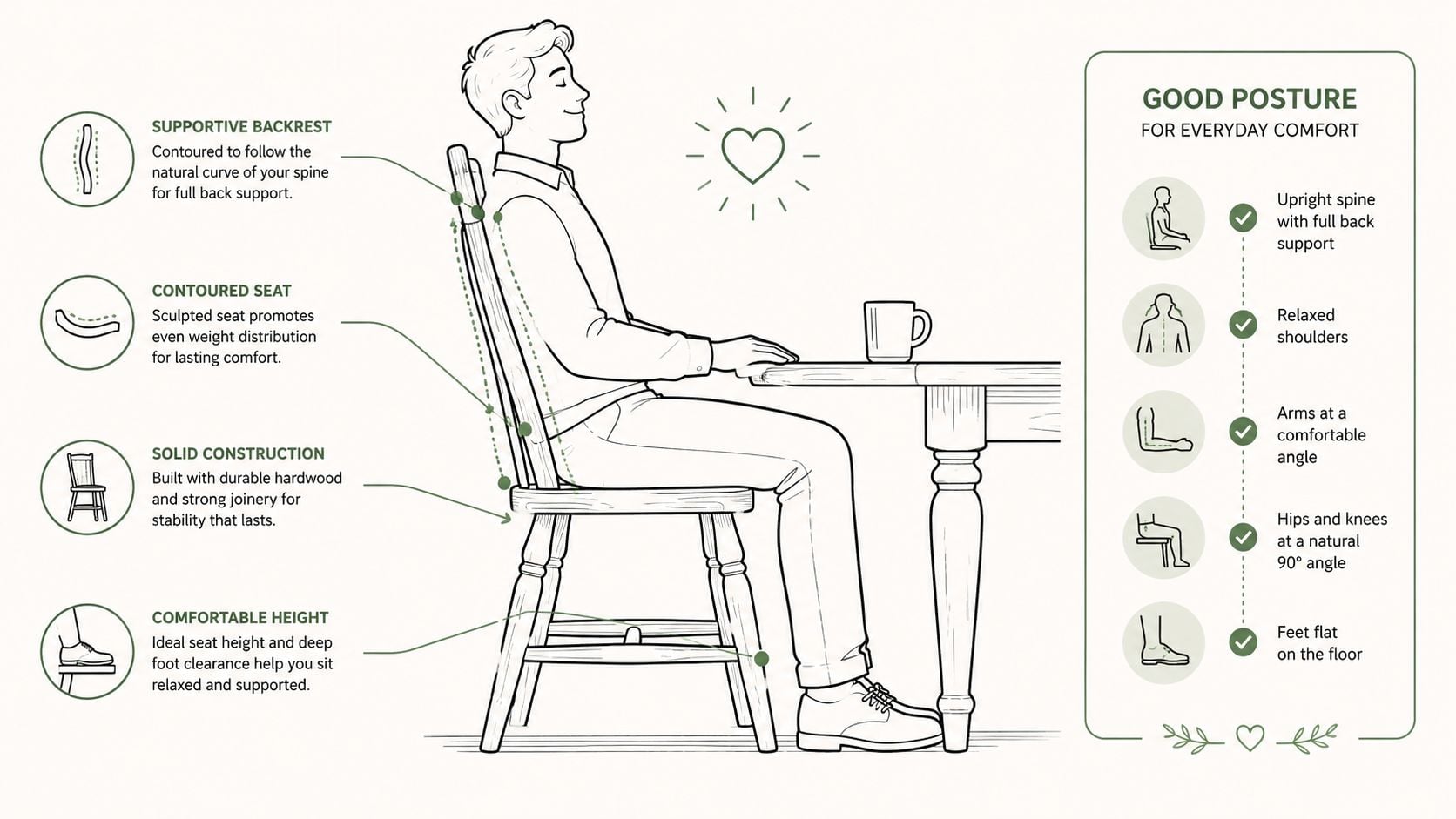
Comfort is paramount in many chair purchases. A chair can be beautiful, solid, and well-finished, then still leave people shifting in their seats before dessert. True heirloom value includes comfort. If a family doesn't want to sit in the chair for a long meal, the craftsmanship won't save it.
A widely used comfort guideline for dining seating is an 18-inch seat height for 30-inch-high tables, with 18 to 20 inch seat width and 16 to 18 inch seat depth forming a comfortable range for most adults, according to this sizing guidance for Amish dining chairs. Those measurements matter because they affect thigh support, knee angle, and how easily someone can sit down and stand up.
The measurements that matter most
Seat height is the first checkpoint. If the seat sits too high for the table, legs can feel cramped and arms may ride too high while eating. If the seat sits too low, the table edge can feel awkward and the whole posture becomes less natural.
Seat depth matters just as much, especially for longer dinners. A seat that's too deep can press behind the knees or force a shorter sitter to perch forward without using the backrest. A seat that's too shallow may feel fine for a quick meal but less supportive when the conversation keeps going.
Width affects more than elbow room. It changes how easy the chair feels to enter and exit, how roomy it feels in use, and whether it makes the dining area feel open or crowded.
How to test comfort before ordering
The smartest shoppers don't only look. They sit with intention.
- Check table fit: Sit close enough to eat naturally, then notice whether thighs have enough space under the apron.
- Lean back fully: The backrest should meet the body in a supportive way instead of touching in one hard spot.
- Notice the seat edge: If the front edge presses the legs right away, the chair may become tiring during longer meals.
- Try the get-up test: Older adults and anyone with knee or hip concerns should see whether standing feels smooth or effortful.
- Compare side chairs and arm chairs: Arm chairs can feel more relaxed, but they need enough clearance to slide under the table comfortably.
A slat back and an upholstered back won't feel the same over time. Wood slats often give firmer support and a more open visual look. Upholstered options can feel softer and warmer, but the shape still needs to support the back well. Some families even mix types, using arm chairs at the ends and side chairs along the sides.
Comfort isn't a luxury detail. It's the part of the chair the family will notice every single day.
When measuring a dining room or checking whether a chair will work with an existing table, this guide on how to measure furniture is a useful next step. It helps answer the practical questions that usually show up after a family falls in love with a chair.
Designing Your Custom Amish Chairs at Groen's
Custom ordering makes the biggest difference when a family knows what isn't working in the current setup. Maybe the seats are too hard. Maybe the backs are too straight. Maybe the table is staying, but the chairs need a new shape, wood tone, or footprint. That's where made-to-order Amish dining table chairs become especially useful.
Many Amish chair designs use solid American hardwood, and some include details such as steam-bent slats or curved legs that affect both stiffness and back support, as shown in these examples of Amish dining and kitchen furniture. Those details aren't just decorative. They change how a chair feels in daily use.
The choices that shape the final chair
A custom process usually starts with the broad decisions, then narrows into the comfort details.
- Style first: Pick the silhouette that suits the room.
- Wood next: Choose the species that matches the home's tone and maintenance preferences.
- Finish after that: Light, medium, and dark stains can shift the same design in very different directions.
- Seat construction last: Wood seats, fabric seats, and other comfort options change the day-to-day experience more than many buyers expect.
Some families need a formal set for a dedicated dining room. Others want bespoke chairs that can stand up to daily homework, frequent company, and constant use. A custom order process helps avoid settling for “close enough.”
For buyers who want to understand how that process typically works, getting started with custom order lays out the early decisions clearly. Groen's Fine Furniture offers custom furniture options that can help shoppers in Dyer, Crown Point, and surrounding NWI communities sort through wood species, finishes, and seating choices in a more guided way.
Special Financing is also available, subject to credit approval. That matters because heirloom-quality dining seating is often a considered purchase, and buying power can make it easier to choose the chair that fits the home and the family instead of backing into a compromise.
Caring for Your Heirloom Furniture
Solid wood chairs don't need fussy treatment, but they do benefit from steady habits. Most families do best with a simple care routine they'll keep. The goal isn't perfection. The goal is preserving a chair's finish and structure through normal use.
A simple care routine
Start with regular dusting using a soft, dry cloth. For everyday cleanup, a lightly damp cloth usually handles fingerprints or meal-time residue well, followed by drying the surface so moisture doesn't linger.
It also helps to pay attention to placement.
- Keep chairs out of harsh direct sun: Strong sunlight can change how the finish looks over time.
- Avoid prolonged dampness: Wood handles everyday life well, but standing moisture is hard on any finish.
- Lift instead of drag: This protects both the chair joints and the floor.
- Handle small scratches early: Minor marks are easier to manage before they become part of the overall wear pattern.
A wood chair is meant to be used, not treated like a museum piece. Families should expect character to develop with time. The good news is that solid wood furniture usually rewards sensible care with a long, handsome life.
Experience the Difference in Person
Reading about Amish dining table chairs helps narrow the options. Sitting in them provides the true test. That's when buyers can feel the seat height, notice the back support, compare wood tones in person, and decide whether a chair suits quick weeknight meals, long holiday dinners, or both.
For families who also think carefully about what they keep and pass down, this practical advice from Colorado Art Services is a useful reminder that heirloom-minded homes are built through many small choices, not one big purchase.
A showroom visit gives those choices context. Chair weight, finish color, seat feel, and scale are much easier to judge in person than on a screen. That hands-on step often prevents the mistakes people regret later.
Visit Groen's Fine Furniture in Dyer or Crown Point today to explore custom options and ask about Special Financing plans. Let a family-owned team serving Northwest Indiana since 1983 help create a dining space that feels comfortable, lasting, and made for real life.