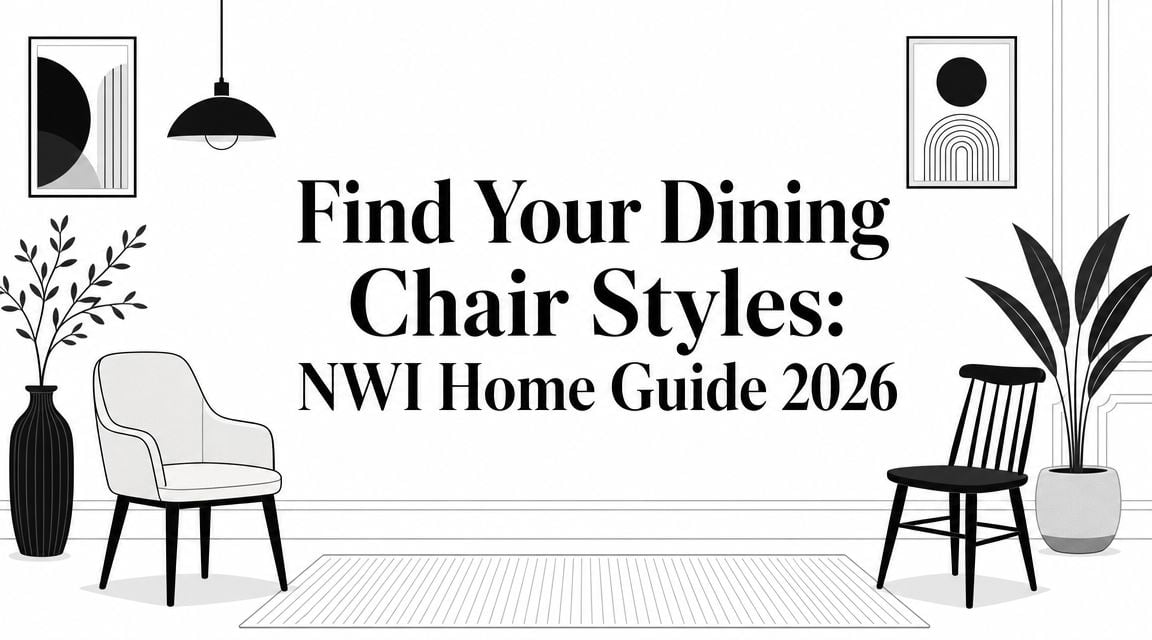
Find Your Dining Chair Styles: NWI Home Guide 2026

A lot of Northwest Indiana homeowners reach the same point at the same time. The table still works, the room has good bones, but the dining chairs no longer feel right. Maybe they look too heavy, too formal, too dated, or not comfortable enough for weeknight dinners that turn into long conversations.
That's where the confusion usually starts. One chair is called modern, another is Scandinavian, another is open-back, and suddenly a simple update feels more complicated than it should. One industry guide puts it plainly. There is “no single most popular dining chair style” because shoppers are choosing for personal fit rather than one universal look, with modern, Scandinavian, upholstered, and open-back chairs often highlighted as popular choices in that shift toward personalization in this dining chair style guide.
For families in Dyer, Crown Point, St. John, Schererville, Munster, and across NWI, that's good news. It means the right answer usually isn't chasing a trend. It's choosing seating that fits the table, the room, and the way the household gathers. Readers who are also working through layout questions may find this guide to maximizing dining space with the right table shape and seating arrangement useful alongside chair selection.
Table of Contents
- Finding the Perfect Seat for Your Family Gatherings
- A Visual Glossary of Popular Dining Chair Styles
- Understanding the Language of Dining Chairs
- How to Pair Dining Chairs with Your Table and Room
- Beyond Looks Comfort Durability and Maintenance
- Design It Your Way with Groens Custom Options
- Making Your Dream Dining Set an Affordable Reality
- Create a Home You Love with Help from Our Family
Finding the Perfect Seat for Your Family Gatherings
A dining chair does more than fill space around a table. It helps set the mood for holidays, school-night dinners, coffee with neighbors, and the kind of everyday meals that make a house feel lived in.
That's why choosing among dining chair styles can feel surprisingly personal. A family in Crown Point might want a room that feels neat and polished. A homeowner in Dyer might want a softer, relaxed look that still holds up to regular use. Another household in St. John may need chairs that feel welcoming to grandparents and kids at the same table.
A good dining chair should look right when no one is sitting in it and feel right when everyone is.
The most useful way to shop is to stop asking, “What style is everyone buying?” and start asking better questions.
- What feeling should the room have: Formal, casual, airy, grounded, cozy, or crisp?
- How long do people sit there: Quick meals call for one kind of comfort. Long gatherings call for another.
- Who uses the space most: Adults only, young children, mixed ages, frequent guests, or all of the above?
- How much room is available: A chair can be beautiful and still be wrong for a tighter dining area.
Some readers come in thinking they need a matched set because that feels safer. Others assume mixing styles is too risky. In practice, both can work. The better choice depends on how the room functions and how confident the shopper feels about balancing shape, finish, and comfort.
That's why a little vocabulary goes a long way. Once a shopper can recognize the visual signals of each style, the whole process gets easier.
A Visual Glossary of Popular Dining Chair Styles
Some style names sound more technical than they really are. Most dining chair styles can be recognized by just one or two visual cues.
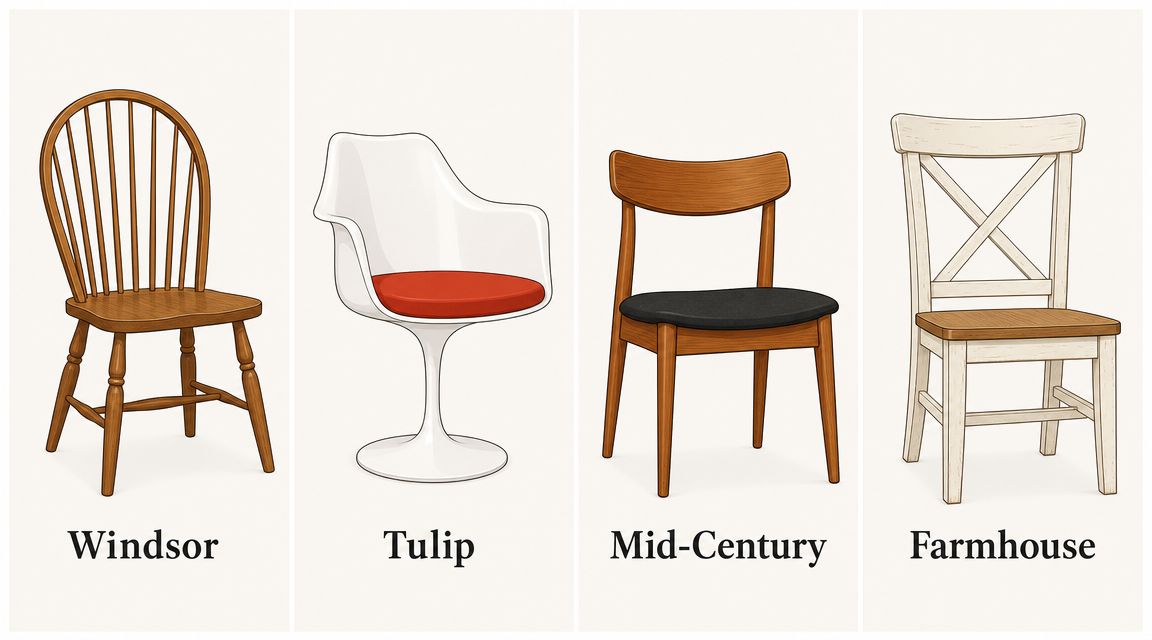
Readers who want a broader room-by-room view of how these looks fit into real homes may also enjoy this overview of seven dining room styles for different homes.
Parsons
A Parsons chair is usually simple, straight, and clean. It often has an upholstered seat and back with very little ornament.
This is the chair people often choose when they want flexibility. It can lean formal with a refined fabric, or casual with a softer texture and lighter finish.
Windsor
A Windsor chair is known for its spindle back. That back creates a classic silhouette that feels rooted, familiar, and full of character.
It works especially well in rooms that want warmth and visible wood grain. Many homeowners are drawn to it because it feels timeless without feeling stiff.
Ladderback
A ladderback chair has horizontal slats across the back. The look is straightforward and sturdy, which is part of its charm.
This style often feels comfortable in farmhouse, cottage, or traditional spaces. It's a dependable choice for households that want something approachable and unfussy.
Cross-back
A cross-back chair, sometimes called an X-back, has back supports that form a clear X shape. That detail gives it a welcoming, slightly rustic personality.
It pairs easily with tables that have natural texture or a casual gathering feel. Homeowners often choose it when they want a room to feel relaxed rather than formal.
Practical rule: If the back design is the first thing the eye notices, that chair will have a bigger influence on the room's personality.
Mid-Century Modern
Mid-century modern chairs usually feature clean lines, gentle curves, and a lighter visual footprint. Legs may taper, and the whole chair often looks sleek.
This style suits homes that want the room to feel open and uncluttered. It's a strong option when the table already has visual weight and the chairs need to balance it.
Tufted and Upholstered
These chairs bring softness into the dining room. Upholstery can make the space feel warmer, while tufting adds a more dressed-up, refined note.
They're often chosen for comfort first, but they also help soften rooms with a lot of hard surfaces like wood floors, stone tops, or large windows.
Bentwood
Bentwood chairs have graceful curves and a lighter, café-inspired look. The rounded forms make them feel easygoing and visually open.
This style can be a smart answer for smaller rooms because it often keeps the space from feeling crowded. The shape reads light even when the chair is sturdy.
Industrial
Industrial dining chairs usually combine simpler forms with a stronger utilitarian attitude. Metal details, darker finishes, or mixed materials often define the look.
These chairs can work beautifully in loft-like spaces, but they can also add contrast in a softer room. A heavy farmhouse table, for example, may benefit from chairs with a cleaner industrial edge.
Understanding the Language of Dining Chairs
Most shoppers start with what they can see. That makes sense. But the better they understand the language behind dining chair styles, the easier it becomes to tell whether a chair belongs in a room or just caught the eye for a moment.
Why style families exist
Dining chairs didn't start as everyday objects. Research on chair history traces the earliest known seating object to 3200 BCE at Skara Brae in Scotland, where chairs were associated with honor and status, and by the 20th century design had moved toward cleaner lines, function, and natural materials, with a notable construction milestone in 1965 when Joe Colombo created a stacking chair in nylon and polypropylene in this historical study of chair evolution.
That long history explains why style families still make sense today. Traditional chairs tend to show more visible shaping, classic references, or decorative detail. Modern chairs usually reduce visual clutter. Transitional chairs sit in the middle, borrowing the calm of modern design without giving up all the warmth of traditional forms.
A shopper doesn't need to memorize design history to use it. The helpful part is knowing that these labels point to different visual habits.
| Style family | What it usually feels like |
|---|---|
| Traditional | More classic, formal, detailed |
| Transitional | Balanced, versatile, familiar |
| Contemporary | Current, simplified, shape-driven |
| Modern | Clean-lined, functional, restrained |
The details that change how a chair feels
Two chairs can belong to the same style family and still feel very different in a room. That usually comes down to construction and materials.
- Solid wood: Often chosen for warmth, repairability, and visible craftsmanship.
- Metal accents or frames: Helpful when a room needs contrast or a slimmer visual line.
- Upholstered seats and backs: Add softness, absorb some visual hardness, and change the comfort experience.
- Open backs: Keep a room looking lighter and less crowded.
- High backs: Bring more presence and often feel more formal.
Side chairs and armchairs also create different impressions. Side chairs tend to disappear more easily into the overall arrangement. Armchairs frame the table and give the ends of the table extra importance.
That's where many readers get stuck. They think “style” means decoration alone. In reality, style also affects weight, posture, ease of movement, and how formal a room feels before dinner even starts.
How to Pair Dining Chairs with Your Table and Room
The safest way to pair chairs with a table is to start with size, then move to shape, then decide how much contrast the room can handle.

Start with scale before style
A chair can be the right look and still be the wrong fit. Side chairs are typically 16.5–22 inches wide, and guidance for dining layouts recommends about 24 inches of table space per person plus about 6 inches between chairs for easier seating and movement in these dining chair dimension guidelines.
That matters in real rooms across Schererville and Munster, where dining areas often need to do more than one job. A compact room may benefit from slimmer side chairs. A larger room can usually handle broader silhouettes or end chairs with arms.
Before falling in love with a chair, measure the room in use, not just the room at rest. Doors swing. People push back. Guests walk around the table.
For readers trying to visualize proportion, this guide to proper dining table dimensions can help connect chair choices to overall table size. It's especially useful when a family is replacing only the chairs and keeping the table.
A related local planning resource is this article on how to pick the right dining room table, which helps narrow down table shape before final chair selection.
When mixing chairs works beautifully
Matching chairs aren't the only path to a polished room. Mixing works well when there's at least one shared element holding the look together.
Some easy ways to create that connection:
- Repeat the finish: Different chair shapes can still feel related if the wood tone is consistent.
- Repeat the shape language: Curved chairs often pair best with other chairs that have some softness in the silhouette.
- Use armchairs as accents: End chairs can be slightly different without making the whole set feel random.
- Keep the visual weight balanced: If the table is thick and substantial, chairs should have enough presence to stand beside it.
A common mistake is mixing styles that fight each other. Another is choosing chairs that all have strong personalities. Usually, one statement element is enough.
Beyond Looks Comfort Durability and Maintenance
A dining chair that looks beautiful for five minutes and feels uncomfortable by dessert usually won't earn its place for long. Comfort, durability, and easy upkeep are what turn a good-looking room into a room people want to use.
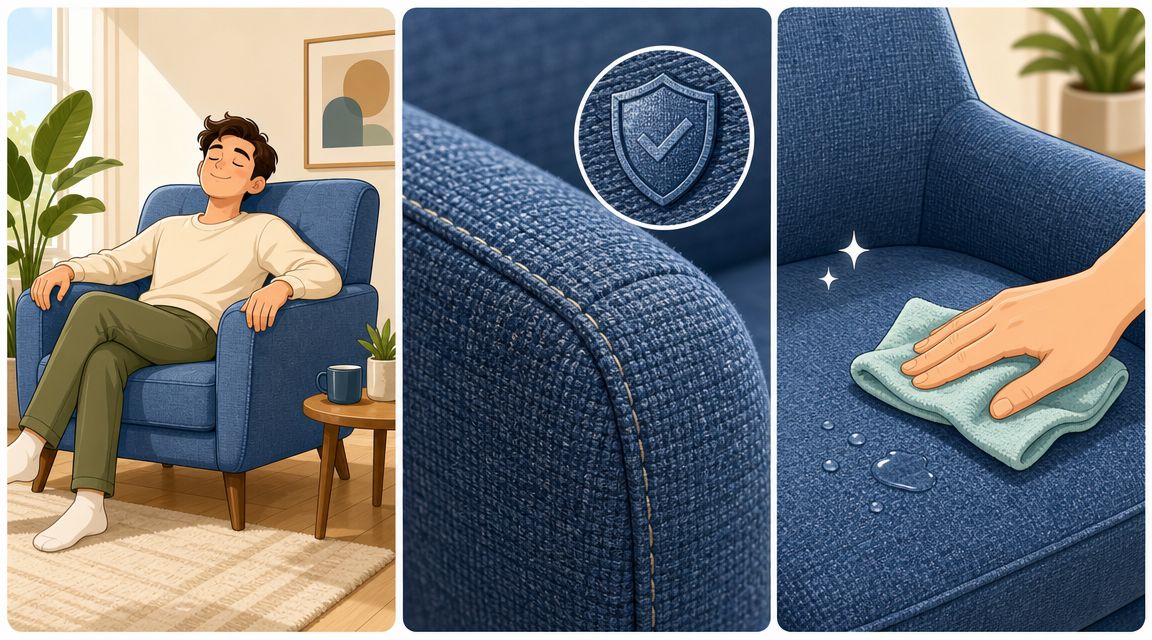
Comfort comes from fit
Published buying guidance places standard dining chair seat height at 17–20 inches with 10–12 inches between the seat and tabletop, because that spacing helps with posture, thigh clearance, and easier dining comfort in this dining chair ergonomics guide.
That's the technical part. The everyday part is simpler. If a chair is too tall, people tend to hunch. If it's too low, knees rise too much and sitting gets tiring.
Comfort also depends on who's using the chair. Households with older adults often appreciate a chair that feels steady and easy to get in and out of. Mixed-age homes may prefer firmer seats over overly soft cushions, since very plush upholstery can change the seated height.
Some chairs feel comfortable in the showroom for two minutes. The better test is whether they still feel supportive during a full meal and conversation afterward.
Durability matters in real homes
Material choice should match household habits. Solid wood is often the go-to when families want a surface that can age gracefully and stay part of the home for years. Upholstery adds softness, but the fabric choice matters, especially in homes with kids, pets, or frequent guests.
A few practical considerations help:
- For busy family use: Textured or performance-minded fabrics often hide day-to-day wear better than delicate weaves.
- For visible wood chairs: Finish tone can affect how easily small signs of use show over time.
- For flooring protection: Chair glides matter just as much as chair legs.
- For maintenance: A simple care routine beats occasional heavy cleaning.
Floor protection is often overlooked until the first scrape appears. Households thinking broadly about wear may also find Buff & Coat's scratch-resistant flooring advice useful when pairing dining furniture with busy walkways.
Readers comparing fabric options can also use this guide on upholstery materials and how they perform to decide what makes sense for daily life.
Design It Your Way with Groens Custom Options
Families often arrive with a clear picture in their heads. They may love a clean ladder-back chair, a warmer oak finish, or a seat that feels softer during long Sunday dinners. The hard part is finding all of that in one ready-made set.
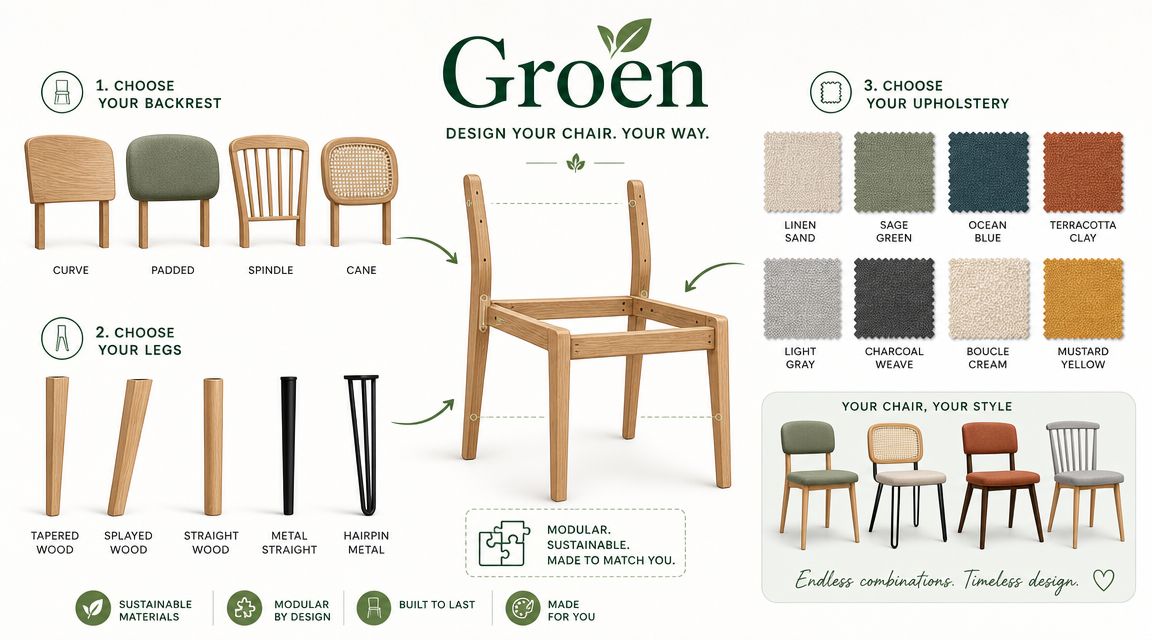
Customization solves the close-enough problem
A showroom floor is useful for identifying direction. It helps you spot the chair profile, wood character, and overall mood that feel right for your home. But many families in Northwest Indiana discover that the sample in front of them is only part of the answer.
The frame may be right while the stain feels too heavy for the room. The table shape may fit, but the seat material may not suit busy weeknight use. In these situations, made-to-order dining becomes a practical solution. It lets you adjust the details the same way a good recipe gets adjusted for the people sitting at the table.
That process usually comes down to a few choices that work together:
- Finish selection: a lighter, medium, or deeper tone that fits your floors, trim, and natural light
- Chair silhouette: open and casual, more traditional, or more supportive through the back
- Seat construction: solid wood, upholstered seat, or fuller upholstery based on comfort and cleanup needs
- Overall look: a matched set or a mixed combination that still feels settled and intentional
Two strong paths for made-to-order dining
At Groen's, many shoppers start with two custom paths. Canadel is a good fit for families who want to choose from many combinations of size, shape, finish, and seating style. Amish solid wood dining appeals to homeowners who want a more handcrafted feel, visible wood character, and a build that often feels rooted and lasting.
Seeing both in person makes style less abstract. A chair style guide might tell you that one back design feels more formal and another feels more relaxed. Sitting in those options, comparing wood samples, and viewing them beside table shapes makes the difference much easier to understand.
Groen's Fine Furniture offers both in Dyer and Crown Point, so local shoppers can compare Canadel custom dining and Amish solid wood options face to face. That matters because custom furniture is easier to choose when someone can walk you through the tradeoffs, answer questions about daily use, and help narrow the options without rushing the process.
A finished dining set should feel like it belongs in the room. The stain should make sense with the floor. The chair scale should look right with the table. The materials should suit the way your family gathers.
If you want a clearer picture of how selections, timelines, and ordering work, Groen's explains the process in this guide to custom furniture made simple.
Making Your Dream Dining Set an Affordable Reality
Quality dining furniture is an investment, and most families feel that immediately. They're not only choosing a look. They're choosing something they hope will handle daily use, holidays, guests, and changing seasons of family life.
That's why budget conversations should be honest and practical. Special financing, subject to credit approval, can give shoppers more buying power when they've found the solid wood construction, upholstery, or custom details they really want. Instead of compromising too quickly, families can consider the version that better fits their home and how they plan to use it.
A helpful way to think about financing is as a planning tool.
- It supports better fit: A household may be able to choose the right chairs now instead of replacing temporary ones later.
- It helps with customization: Made-to-order choices often become easier to manage when the purchase is structured thoughtfully.
- It protects the bigger goal: The room can come together as a whole rather than in mismatched stages.
For many homeowners in Northwest Indiana, that flexibility is what turns a wish list into a realistic plan.
Create a Home You Love with Help from Our Family
The right dining chair style does more than complete a table. It shapes how the room feels when relatives gather, when homework lands at the table, and when an ordinary meal stretches into something memorable.
That's why confidence matters. Once a homeowner understands the visual language of chairs, the role of scale, and the importance of comfort, the decision gets much clearer. The chair doesn't have to follow one universal trend. It has to fit the home and the people who use it.
Northwest Indiana families often want the same things. Honest guidance. Lasting quality. Personal service from people who understand local homes and local lifestyles. That's where multigenerational ownership and thoughtful, 5-star service still matter.
Readers thinking beyond furniture alone may also enjoy these ways to make a space feel more inviting, especially when finishing a dining room with soft, welcoming touches.
Visit Groen's Fine Furniture in Dyer or Crown Point today to explore custom options and ask about special financing plans. Let our family help create a home that feels comfortable, lasting, and personal for every gathering ahead.