Custom Bedroom Furniture: Design Your Dream Space

A lot of homeowners around Dyer, Crown Point, and the surrounding Northwest Indiana towns start in the same place. They've found a bed they like, a dresser that's close, and a nightstand that might work if the lamp is small enough. But once everything gets into the room, the bedroom still feels off. The headboard crowds the window, the drawers open into the walking path, or the space looks pieced together instead of calm and finished.
That's usually the moment when custom starts to make sense.
A bedroom is personal in a way few other rooms are. It has to support rest, storage, routine, and comfort every single day. When standard furniture almost fits, almost matches, and almost solves the problem, it often leaves homeowners settling for a room that never feels fully right. Custom bedroom furniture gives that process a different starting point. Instead of forcing the room to adapt to the furniture, the furniture is planned around the room and the people who use it.
Table of Contents
- Your Dream Bedroom Starts Here in Northwest Indiana
- What Does Custom Bedroom Furniture Really Mean
- Choosing Your Materials and Style
- Planning Your Perfect Space Before You Visit
- The Groens Custom Order Journey Explained
- Budgeting for Lasting Quality and Our Financing Options
- From Our Showroom to Your Home Delivery and Care
Your Dream Bedroom Starts Here in Northwest Indiana
A homeowner in Crown Point might walk into a bedroom and see the problem immediately. The room isn't tiny, but it has one awkward wall, a window that sits lower than expected, and a closet door that swings wider than it should. A standard bedroom set can look fine on a showroom floor and still create headaches at home once every inch starts to matter.
That's where many local families begin looking for a better answer. They don't want a room that feels improvised. They want one that looks settled, works smoothly, and reflects how they live.
For shoppers around Dyer, St. John, Schererville, and Munster, custom bedroom furniture often starts as a practical solution before it ever feels like a design upgrade. A taller dresser may fit the storage need better than a wider one. A bed may need a different headboard height so it doesn't block trim or a window line. Nightstands may need a narrower footprint so the room can breathe.
A bedroom usually feels better when furniture size, storage, and walking space are planned together instead of chosen one piece at a time.
That's one reason local, family-run guidance matters. In a neighborhood furniture conversation, the focus isn't just on what looks good in a catalog. It's on what fits the room, what fits daily routines, and what will still feel right years from now. A family business with multigenerational ownership tends to approach that process with more patience and less pressure.
Many shoppers start by browsing Northwest Indiana furniture store locations and realizing they don't have to solve the whole room alone. That shift matters. Instead of guessing from product photos, they can bring in room dimensions, style ideas, and questions about storage, finish, and layout.
A better way than settling
Custom doesn't mean complicated. It means the room gets respected.
That's especially helpful in bedrooms, where one wrong choice affects everything around it. If the bed is too deep, the bench doesn't fit. If the dresser is too long, the mirror placement becomes awkward. If the nightstands are oversized, the room loses the calm feeling people want from a sleep space.
For many Northwest Indiana households, the dream bedroom doesn't start with a trend. It starts with relief. Relief that the room can finally work the way it should.
What Does Custom Bedroom Furniture Really Mean
Custom bedroom furniture gets described a lot, but many shoppers still aren't sure what the word includes. Some assume it only means picking a stain. Others think it means a completely one-of-a-kind piece drawn from scratch. In most real-world furniture projects, it sits comfortably between those two extremes.
More than a different stain color
The easiest way to think about custom is to compare it to clothing. Off-the-rack furniture is like buying a coat in a standard size and hoping it works well enough. Custom is more like tailoring. The overall style may be familiar, but the fit, proportions, and details are adjusted to the person and the space.
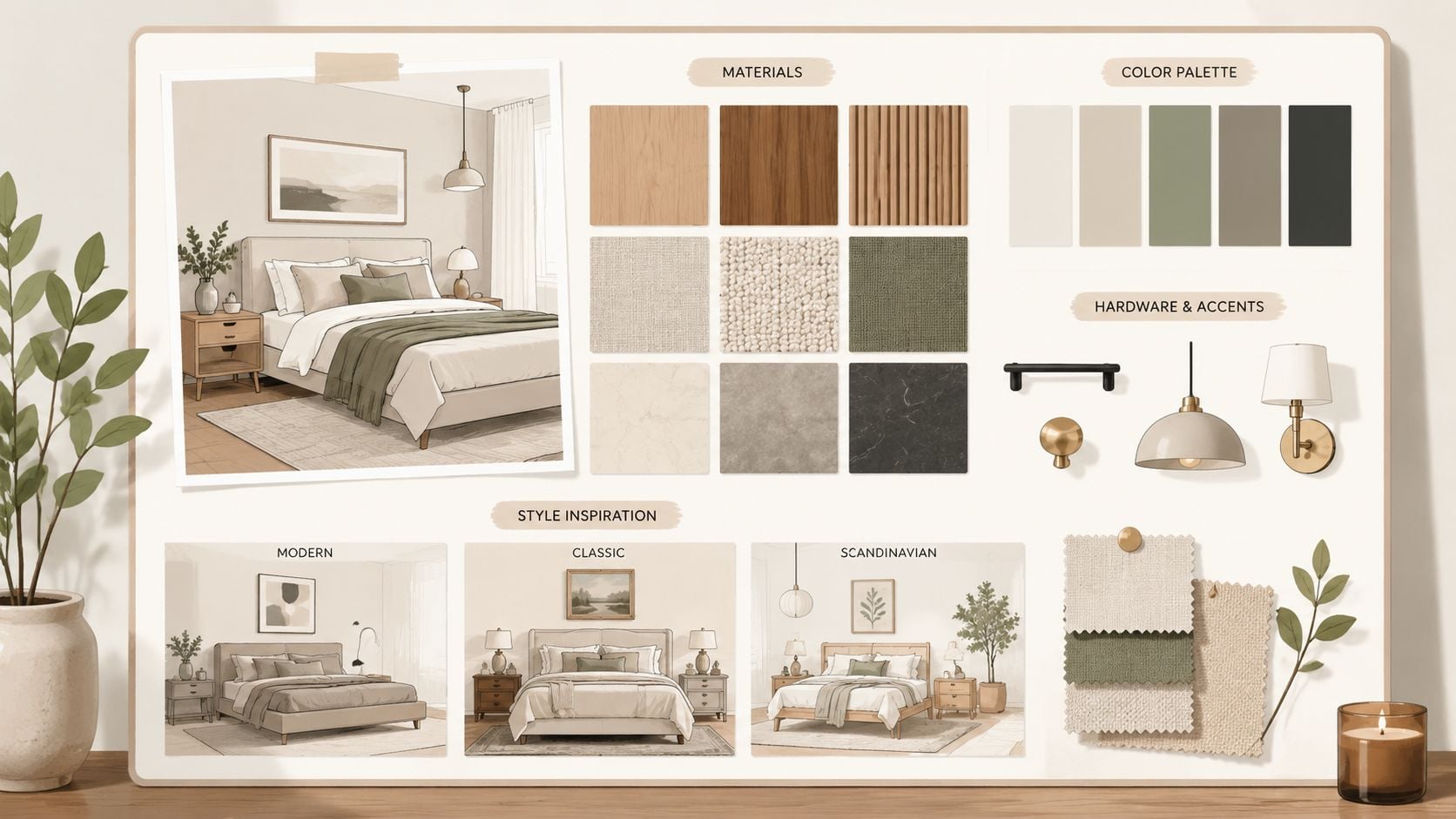
That can include choices such as:
- Dimensions that fit the room: A dresser can be built wider, narrower, taller, or shallower depending on the wall and traffic flow.
- Material selection: Homeowners may choose solid wood, upholstery, hardware, and finish options that match the look they want.
- Function changes: Storage can be tuned to what the room needs, whether that means deeper drawers, different case proportions, or a bed designed around the layout.
A helpful explanation of bespoke furniture options often starts here. The value isn't only in appearance. It's in getting furniture that behaves better in the room.
Why custom solves practical problems
One of the strongest technical advantages of custom bedroom furniture is that beds, headboards, dressers, wardrobes, and nightstands are often made to order, which gives the maker control over dimensions, material choices, storage volume, and how the piece works within a specific layout rather than relying on fixed stock sizing, as described in this made-to-order bedroom furniture overview.
That matters more than many people expect.
A standard piece might fit on paper but still fail in daily use. Drawers may open into a doorway. A tall headboard may compete with a window. A wardrobe may look balanced in a catalog but feel bulky once it lands in a room with a sloped ceiling or narrow circulation path.
Practical rule: If a room has quirks, custom should answer the quirks first and the style second.
Custom bedroom furniture also helps avoid a common mistake. People often shop by mattress size or by the outside dimensions of a single piece. Bedrooms don't work that way. They function as a set of relationships between the bed, storage pieces, windows, doors, and walking paths. Custom planning acknowledges that the room is a system, not just a collection of products.
For some families, that means a clean-lined wood bed with matching storage. For others, it means an upholstered headboard paired with solid wood case goods and personalized hardware. Either way, custom means the furniture is chosen with intention, not compromise.
Choosing Your Materials and Style
Material and style decisions shape how a bedroom feels long before anyone notices the finer details. Some rooms need warmth. Others need visual lightness. Some need solid wood that can carry a sense of permanence. Others need a softer mix of textures so the room feels restful instead of heavy.
Why wood still leads the category
In the bedroom furniture category, wood held 39.45% of market share in 2025, and residential buyers accounted for 60.25% of total demand, according to bedroom furniture market analysis from Mordor Intelligence. Those figures help explain why so many homeowners still gravitate toward wood for bedrooms. It brings warmth, familiarity, and a lasting look that works across many home styles.
Solid wood is especially appealing for custom bedroom furniture because it offers visual depth and a sense of craftsmanship that tends to age gracefully. That's one reason Amish solid wood pieces continue to stand out for families who want furniture that feels grounded and substantial.
A few common directions include:
| Material choice | What it tends to offer in a bedroom |
|---|---|
| Oak | A classic grain pattern and a sturdy, timeless presence |
| Maple | A smoother, cleaner look that suits both simple and transitional rooms |
| Cherry | Richer color character and a more formal, refined feel |
| Upholstered accents | Softness around the bed and a quieter visual profile |
| Custom hardware | A small detail that can shift the room from rustic to tailored to contemporary |
For shoppers trying to sort through hardwoods, this guide to choosing the right hardwood for longevity and style helps connect species, finish, and long-term use.
How style choices come together
Style usually comes together faster when homeowners stop asking, “What's popular?” and start asking, “What feeling should the room have?”
A calm bedroom often benefits from consistency. That might mean matching wood tones across the bed, dresser, and nightstands. It can also mean using one dominant material and then softening it with fabric, area rugs, and lighting. Bedrooms don't need dramatic contrast to feel finished. They need balance.
Well-known collections such as Bassett can also give shoppers a middle ground between fully built-from-scratch furniture and standard stock pieces. That's useful for homeowners who want trusted design language with room to personalize finish, scale, or detail choices.
Wood often works best in bedrooms because it adds warmth without demanding attention.
A simple way to narrow the options
When families feel overwhelmed by too many combinations, it helps to decide in this order:
- Start with the bed: It's the visual anchor of the room, so its style should lead the rest.
- Choose the storage tone next: Dressers and nightstands should support the bed rather than compete with it.
- Add softness carefully: Upholstered headboards, benches, and textiles can soften the room without making it feel cluttered.
- Finish with hardware and accents: These details matter, but they're easier choices once the larger materials are settled.
“Design it your way” becomes practical. A bedroom doesn't have to follow a showroom formula. It can lean traditional, cleaner-lined, rustic, transitional, or somewhere in between. The best custom rooms usually aren't the most dramatic. They're the ones where every choice feels like it belongs.
Planning Your Perfect Space Before You Visit
A customer walks into our showroom with a photo of a beautiful bed they love. Then we ask a few simple questions. How wide is the wall? Where does the bedroom door swing? Will the dresser drawers clear the walkway? That is usually the moment custom furniture starts to feel less mysterious, because good planning turns a style decision into a room decision.

Before you visit Groen's, it helps to treat your bedroom like a map. The furniture is only part of the picture. The walls, windows, vents, door swings, and walking paths all shape what will feel comfortable once the room is in daily use.
What to measure before shopping
The goal is not a perfect architectural drawing. A clear set of notes will do the job.
Start with the wall where the bed will go, then measure the rest of the room. After that, mark the features that cannot move. Doors, windows, baseboard heaters, floor vents, returns, outlets, and low ceiling areas matter because they affect what can sit where. If you are unsure how detailed to get, this guide on how to measure furniture for real rooms gives a practical format you can bring into the store.
A helpful checklist includes:
- Wall lengths: Measure each wall, especially if the room is not a simple rectangle.
- Door location and swing: Note where the door opens and how much space it uses.
- Window size and height: Include trim and sill height so taller pieces do not crowd the opening.
- Ceiling changes: Record slopes, soffits, or other low spots.
- Fixed mechanical features: Mark vents, returns, switches, and outlets.
- Walking room: Leave enough space to pass the bed comfortably and open drawers without blocking the path.
One measurement mistake causes trouble more often than people expect. Shoppers measure where a piece will sit, but not how it will function. A dresser may fit against the wall and still feel wrong if the drawers stop traffic every morning.
A room works best when furniture fits both the footprint and the routine.
Photos help too. A few phone pictures from the doorway, each corner, and the bed wall give our team context that a tape measure cannot. We can often spot things that deserve a second look, such as tight entry points, radiators, or a window centered a little differently than expected.
How to handle awkward or angled rooms
Odd-shaped bedrooms are where custom planning starts to shine. An angled wall, a niche, or an off-center window can make standard sizes feel close, but not quite right. It works a lot like tailoring a jacket. The basic shape may be correct, but the final fit depends on small adjustments.
For these rooms, keep the planning simple:
- Draw a rough sketch of the room on paper.
- Label every fixed feature first.
- Mark the wall that should carry the visual weight, usually the bed wall.
- Decide where custom sizing would help most, such as a narrower dresser or a lower chest.
- Bring the sketch and photos with you to the showroom.
That preparation helps a local store like Groen's guide the conversation in a practical way. Instead of guessing from memory, we can look at your room together and sort out what needs to happen first, what can stay flexible, and where custom choices will improve the way the bedroom feels.
Room planning also affects comfort. Layout, light, texture, and visual calm all shape how restful a bedroom feels, which is why some homeowners also like reading expert advice for restorative sleep while they plan colors, fabrics, and furniture placement.
A good plan makes the showroom visit easier. More important, it helps the finished room feel right when you live in it every day.
The Groens Custom Order Journey Explained
You walk into the showroom with a few room photos on your phone, a sketch with handwritten measurements, and one clear problem. The bedroom is close to working, but not quite. Maybe the dresser is too deep, the bed feels too tall, or the storage never seems to match the way you live. That is usually where a good custom order begins at Groen's. Not with pressure, and not with a hundred design decisions at once.
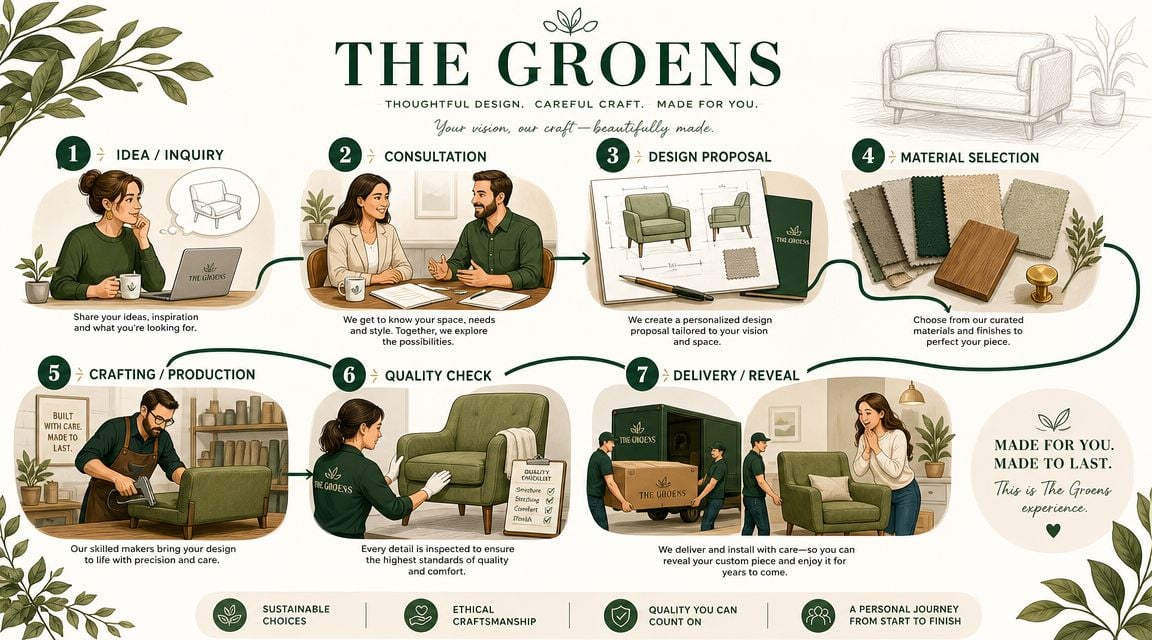
What happens in the showroom
The first part feels a lot like sitting down with someone to plan a kitchen recipe before cooking. We start with the room, the way you use it, and the parts that frustrate you now. Style matters, of course, but function usually comes first because it keeps the project tied to real daily habits.
A family-owned store can make that conversation more personal. Instead of treating "custom" like a luxury label, Groen's treats it like a fitting process. We look at your measurements, photos, and priorities together and help sort out which choices affect comfort, storage, and traffic flow, and which ones are finishing touches.
That often leads to practical questions such as these:
- How do you use the room each day? Reading in bed, extra blanket storage, easier nightstand reach, or better drawer space can all shape the design.
- Which piece needs the custom attention most? Sometimes it is the bed. Sometimes a narrow chest or shallower dresser solves more.
- What style details match the rest of your home? Wood tone, fabric, panel shape, and hardware should feel connected, not random.
- Are there delivery limits to plan for early? Stairways, hall turns, and doorway width matter before anything is ordered.
If you want a clearer picture of what to bring, Groen's shares the basics in this guide to getting started with a custom furniture order.
From selections to delivery day
Once the direction is clear, the process becomes more specific, not more confusing. You review dimensions, materials, finish choices, and any details that affect how the furniture will look and function in your room. Good custom work usually comes from a handful of well-chosen decisions, each tied to a purpose.
One customer may choose a lower footboard so the room feels more open. Another may switch from a wide dresser to a taller chest to preserve walking space. Small changes like that are where custom starts to make sense. They are not dramatic on paper, but they change how the room works every day.
A written quote helps keep everything plain and visible. You can see what is being ordered, how the piece is being built, and what the expected timeline looks like. For many households, that clarity matters just as much as the furniture itself, especially when the purchase needs to fit alongside other home expenses. Some shoppers even review EHF Mortgages' expert affordability tips while planning larger home purchases, to keep the numbers in perspective.
The last step is the one many people worry about least, but remember most. Delivery. At Groen's, that means planning for the home, the path in, and the final placement in the bedroom so the piece arrives where it belongs. By then, custom no longer feels mysterious. It feels organized, personal, and fully doable.
Budgeting for Lasting Quality and Our Financing Options
Budget conversations around custom bedroom furniture are often framed the wrong way. People compare a made-to-order piece to a temporary piece as if both are solving the same problem. In many cases, they aren't. One may fill space. The other may fit the room properly, carry better materials, and hold its place in the home much longer.
Why custom is often an investment decision
The broader direction of the market supports that mindset. The global custom furniture market was valued at USD 44.76 billion in 2026 and is projected to reach USD 115 billion by 2035, reflecting a projected 11.2% CAGR, according to custom furniture market projections from Business Research Insights. That projected growth suggests strong ongoing demand for personalized, made-to-order furniture rather than one-size-fits-all buying.
For a homeowner, the practical takeaway is simple. A bedroom is used every day. If the furniture fits better, stores better, and feels more aligned with the room, the value isn't only visual. It shows up in daily comfort and in how long the room continues to function well.
Custom furniture can also reduce the hidden cost of compromise:
- Replacing “almost right” pieces later
- Living with poor storage that never gets fixed
- Buying fillers or extra items to work around sizing mistakes
- Settling for a style that doesn't age well in the home
That's why many families treat custom as a lasting-quality purchase rather than an impulse buy.
How financing can make the plan easier
A thoughtful budget still matters. Homeowners don't need vague encouragement. They need a plan that feels responsible.
Special Financing, subject to credit approval, can give households more buying power and help them choose the furniture they want instead of backing into a compromise they'll regret. That's especially useful when furnishing a full primary bedroom or coordinating several pieces at once.
Some families also like to look at household affordability more broadly before making a major home purchase. Resources such as EHF Mortgages' expert affordability tips can be useful for thinking through monthly comfort levels and spending priorities in a practical way.
The best budget for custom bedroom furniture is one that balances three things. Quality, fit, and peace of mind. When those are aligned, the purchase tends to feel steadier and easier to live with over time.
From Our Showroom to Your Home Delivery and Care
The final stage matters just as much as the planning. A carefully chosen bedroom set can still turn into a stressful experience if delivery is careless or incomplete. That's why white-glove service makes such a difference for families throughout Northwest Indiana.
What white-glove delivery means
White-glove delivery means the furniture isn't left boxed at the curb or dropped in a garage for the homeowner to figure out later. The delivery team brings pieces into the room, assembles them as needed, and places them where they belong. For homes in Dyer, Crown Point, St. John, Schererville, and Munster, that kind of handling helps protect both the furniture and the room it's going into.
It also gives the project a proper finish. A custom bedroom should arrive like a completed plan, not a pile of tasks.
Simple care for long-term beauty
Once the furniture is in place, simple habits help preserve it:
- Dust gently: Use a soft cloth and keep grit from building up on wood surfaces.
- Protect the finish: Avoid leaving damp items or harsh cleaners on solid wood.
- Watch the environment: Bedrooms with stable indoor conditions tend to be kinder to natural materials.
- Use pieces as intended: Don't force drawers, overload them, or drag furniture during rearranging.
A well-made custom piece doesn't need fussy treatment. It needs steady, sensible care.
For homeowners ready to stop settling for “almost right,” Groen's Fine Furniture offers a local place to explore custom options in Dyer or Crown Point. Visit the showroom to test drive styles, compare materials, and ask about Special Financing, subject to credit approval. Let a multigenerational family business help create a bedroom that fits the home, the routine, and the people living in it.