Blog
Dining Room Table Finishes: How to Choose the Right One

For homeowners in Dyer and Crown Point, the dining table usually ends up doing more than anyone planned. It handles homework, birthday cake, weeknight pasta, card games, and the occasional formal dinner when the good dishes come out. That's why dining room table finishes matter so much, they decide whether the table ages with grace or starts looking tired after a few rough years.
Our family has helped Northwest Indiana households choose tables since 1983, and the same debate comes up again and again, do you want the most natural look, or do you want the toughest surface? Around here, the honest answer depends on how your family lives. A finish should match the way you eat, entertain, clean, and gather, not just the color you fell in love with on the showroom floor.
Why Your Dining Table Finish Matters More Than You Think
A dining table doesn't sit in the corner. It becomes the drop zone for backpacks, the serving station for holidays, and the place where a kid will absolutely set down a dripping glass if nobody catches it first. That's why the finish isn't a decorative afterthought, it's the surface that stands between daily life and the wood underneath.
Dining tables have always carried that double role, practical and symbolic. The separate dining room became common in the more settled and prosperous 18th century, and many familiar dining customs didn't really take hold until the 1860s and 1870s with service à la Russe. Before that, meals were often eaten in bedrooms or shared halls, and many households used à la Français service, with every dish set out at once. That history matters because the finish has always done two jobs at once, protect the table and present it well in formal domestic life. History of dining tables and changing service styles
For a family in Schererville or Munster, that same old tradeoff still shows up in modern form. A finish that looks beautifully raw and natural may show wear faster. A harder finish may give up a little warmth, but it buys you peace of mind when somebody bumps a fork, spills sauce, or leaves a ring behind.
Practical rule: If the table is used every day, protection comes first. If it mostly shows up for holidays, appearance can carry a little more weight.
That's the decision. Not “What finish is prettiest?” but “What finish will still look good after use?” If the answer has to survive kids, guests, and ordinary messes, the right choice starts with durability and ends with how much repair work you're willing to live with later.
The Two Main Categories of Wood Finishes
Wood finishes fall into two big groups, and knowing the difference keeps the rest of the shopping process from getting muddy. Film-forming finishes sit on top of the wood and build a protective layer. Penetrating finishes soak into the wood fibers and cure within the wood itself. That distinction drives everything else, from the feel of the table to how a scratch gets fixed.
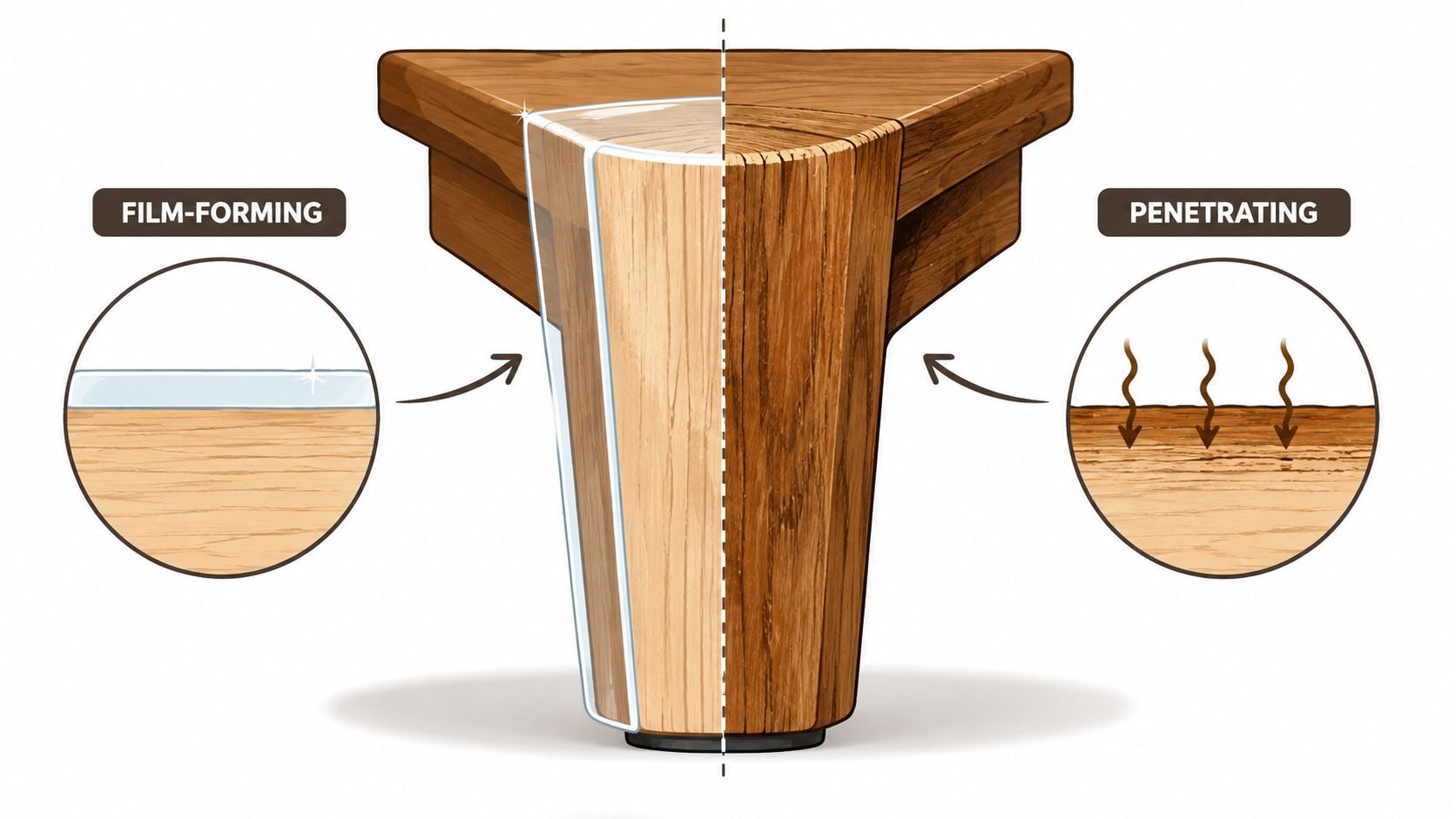
Think of a film finish like a raincoat. It keeps liquid and abrasion on the outside where they belong. Think of a penetrating finish like moisturizer. It lives inside the material and keeps the wood feeling more open and tactile.
Film-forming finishes
Polyurethane, lacquer, and varnish all create a surface barrier instead of sinking in. That makes them the better pick when spill resistance, scratch resistance, and long-term household protection matter most. For dining tables, that barrier helps block liquids and everyday abrasion better than an oil that sits deeper in the grain. How film-forming finishes protect the surface
Penetrating finishes
Oils, hardwax oils, and Danish oil work differently. They soak into the wood, which gives the table a softer, more natural feel. The upside is repairability, because spot repairs are usually less obvious. The tradeoff is that they generally give up some barrier protection against moisture, heat, and chemicals. Penetrating and film-forming finish differences
A film finish protects harder. A penetrating finish repairs easier. That's the whole equation in plain English.
For shoppers looking at a custom or made-to-order table, this isn't a small detail. It's a design choice with daily consequences. A table that feels silky and natural under your hands may need a gentler lifestyle. A tougher coated surface may feel less “raw,” but it can be the smarter fit for a busy family room that doubles as a dining space.
Comparing the Most Popular Dining Table Finishes
The finish aisle gets confusing fast because every label promises something useful. The smart move is to compare them by how they behave in a home, not by the sales pitch. In plain terms, the question is whether you want the most protection, the easiest touch-up, or the best balance of both.
Quick Comparison of Common Dining Table Finishes
| Finish Type | Durability | Repairability | Best For |
|---|---|---|---|
| Polyurethane | High, strong surface barrier | Lower, spot fixes are harder to blend | Busy families, spill-prone tables |
| Lacquer | High, fast-drying protective coat | Moderate, depends on the damage | Frequent use and polished looks |
| Hardwax Oil | Good balance of protection and touch-up ease | High, local repairs are simpler | Family dining and natural wood feel |
| Traditional Varnish | Durable, protective film finish | Moderate to low | Everyday dining and long wear |
Polyurethane is the blunt instrument here, in a good way. It's commonly described as highly resistant to water, stains, scratches, and daily wear, which is exactly why people choose it for tables that get hammered by real life. Water-based versions dry faster and usually have less odor, while oil-based versions can yellow over time. Polyurethane as a durable dining-table finish Water-based and oil-based polyurethane behavior
Lacquer is the cleaner, quicker option. It's repeatedly described as fast-drying and durable, and it's often treated as a strong choice for high-traffic surfaces. Another practical advantage is resistance to heat and stains, which makes it appealing for households that entertain often. Lacquer for dining tables
Hardwax oil sits in the middle and earns its keep there. It keeps more of the wood's natural look and feel, and it's easier to repair locally than a hard film finish. For families who want solid wood to feel like solid wood, that balance is hard to beat. Varnish belongs in the same broad family as film-formers, with the same basic strength, but it's usually chosen when durability matters more than a completely raw surface feel. Hardwax oil and repairability tradeoffs
For readers comparing surfaces the way they'd compare stone countertops, the finish decision works a lot like choosing between Carrera marble versus Calacatta. Both can be beautiful, but the look, maintenance, and daily tolerance aren't the same.
If the table is part of a bigger custom project, a sintered stone table surface gives a different kind of durability conversation altogether. For solid wood, though, finish choice still stays front and center because it changes how the table looks, feels, and wears.
Matching the Finish to Your Household Lifestyle
The right finish for a quiet formal dining room can be the wrong finish for a household with kids, pets, and constant use. That's not a flaw in the finish, it's just a mismatch. A good buyer looks at the way the table gets used on a normal Tuesday, not just on Thanksgiving.
Families with young children usually need the most forgiving surface they can get. A hard film finish gives better resistance to spills and scratches, and a specialized hardwax oil can make sense if the family wants easier local touch-ups without giving up all protection. That's why many households lean toward finishes that can take abuse and still clean up well. For homes with pets in the mix, the same logic applies, a surface that tolerates paw traffic, food drops, and routine cleaning saves a lot of frustration. Furniture choices for pet owners
The household profile test
- Busy family with young kids: Choose a tougher film-forming finish. It's the safer bet when spills and abrasion happen daily.
- Frequent entertainer: Pick strong stain and moisture resistance. Hot dishes, wine glasses, and serving platters should not be a problem.
- Formal dining room only: A more natural matte or oiled look can work if the room sees lighter use.
- Hands-on wood lover: Go with a penetrating or hardwax finish if the tactile feel matters more than maximum barrier protection.
Frequent hosts should think about cleanup first. Dining tables that handle guests well need to shrug off moisture, heat, and the occasional spill without leaving a lasting mark. That points straight toward a coated surface that will hold up well, especially if the table serves as both serving piece and conversation piece during larger gatherings.
Best-fit rule: The more often the table is used for messy, real-world life, the more sense it makes to prioritize barrier protection over a raw wood feel.
Retired couples or households that use the dining room mostly for holidays can afford to favor touch and appearance. A softer finish can show the grain more naturally and keep the room from feeling overly sealed. The tradeoff is simple, the gentler the finish, the more careful the household has to be. That's not a problem if the room stays formal.
For buyers in Northwest Indiana who want one piece to fit the home instead of forcing the home to fit the piece, custom ordering earns its keep. Design it your way, and make the finish match the way the table will live.
Design Details and Custom Finish Options
Gloss level changes the whole mood of a dining room. High-gloss finishes bounce a lot more light, which can look dramatic but also create glare under chandeliers and pendant lights. Satin and matte finishes calm the reflection down and usually feel easier on the eyes in everyday dining spaces.
A recent design guide recommends keeping sheen at or below satin under 3000 to 3500K lighting to reduce glare. That's a useful rule because most dining rooms aren't lit like photo studios. They're lit for conversation, serving, and long sits after dinner, and overly shiny surfaces can become distracting fast. Guidance on sheen and glare under dining lighting
Custom finish choices that matter
Custom dining lets the buyer make better decisions than a factory preset usually allows. Canadel's custom dining program gives a wide range of sizes, shapes, and finishes, which makes it easier to design a table around the room instead of forcing the room to adapt. Amish solid wood furniture adds another layer of appeal through hand-rubbed finishes and the look that comes from old-school craftsmanship rather than mass production. Custom solid wood dining table guidance
That's where a showroom conversation becomes useful. A finish chip on a screen never tells the full story, because lighting changes everything. The same surface can look crisp and modern in one room, soft and warm in another, and too shiny in a third.
Groen's Fine Furniture also carries custom order dining options, including made-to-order pieces that help buyers design the table around the room, the chairs, and the finish they want. That matters for families who don't want to settle for a generic look. It's a practical way to get closer to the exact balance of color, sheen, and wood character you had in mind.
A matte or satin finish usually feels calmer and more forgiving. A glossier finish can look dressier, but it asks more of the room's lighting and cleaning routine. If the dining area is part of an open-concept home, that difference becomes even more noticeable because the table has to work with the rest of the living space, not against it.
Daily Care and Long-Term Maintenance
A durable finish still needs basic care. That doesn't mean babying the table, it means protecting the finish from the things that wear it down faster than normal use. Placemats, coasters, and trivets are the easy wins here, because hot dishes, moisture, and cutlery abrasion are the usual culprits behind tired-looking tabletops. Wood dining table care basics
Simple habits that save the finish
- Use placemats and coasters: They keep moisture rings and heat marks from reaching the surface.
- Set down hot dishes on trivets: Heat is one of the quickest ways to stress a finish.
- Wipe with a soft damp cloth: Keep it slightly damp, not wet, then dry immediately.
- Follow the grain: That helps avoid streaking and keeps the surface looking clean.
A daily wipe-down should stay gentle. A soft slightly damp cloth is usually enough, and the table should be dried right away along the grain so water doesn't sit on the finish. Harsh cleaners and rough scrubbing are the fastest way to make a good finish look tired before its time.
Long-term maintenance depends on the finish type. A polyurethane table can hold up for a long stretch and may eventually need a full refinish if the topcoat gets worn or damaged. An oiled table usually asks for more frequent touch-ups, but those repairs are simpler and more local. That's the tradeoff buyers should accept upfront, less maintenance drama later, or more frequent small care earlier.
Keep the cleaning routine boring. That's usually what protects a good finish the longest.
A table that lives in a busy family room doesn't need a complicated maintenance plan. It needs consistency, the right protective habits, and a finish that matches the level of wear it will face. That's the difference between a table that just survives and one that still looks proud years later.
Find Your Perfect Table at Groen's Fine Furniture
Choosing among dining room table finishes gets easier when you can see the sheen, feel the surface, and compare real wood in real light. That's why our team always encourages shoppers in Dyer, Crown Point, and across Northwest Indiana to visit the showroom, ask questions, and test drive the look and feel before deciding. Our family has served this area since 1983 with multigenerational ownership and 5-star service, and we're happy to help with custom dining, Amish solid wood, and special financing subject to credit approval.
Visit Groen's Fine Furniture in Dyer or Crown Point today to compare dining room table finishes in person and talk through custom options that fit your home. Our family can help you find the right balance of durability, repairability, and style, then walk you through special financing plans so your dining room works for your life.