Blog
Mattress Firmness for Side Sleepers Made Simple

A side sleeper in Dyer or Crown Point may start the morning with a familiar complaint: a numb shoulder, a tender hip, or a lower back that feels stiff before the day begins. The mattress may look perfectly comfortable, yet the wrong firmness can place too much pressure on the body's widest points or allow the middle of the body to sink too far.
For homeowners across Northwest Indiana, including St. John, Schererville, and Munster, mattress firmness for side sleepers is less about choosing “soft” or “firm” and more about finding a careful balance. A useful starting point is medium-soft to medium-firm, then the feel should be adjusted for body weight, shape, sleep position, materials, and personal comfort.
Introduction for Northwest Indiana Side Sleepers
A side sleeper who wakes with shoulder soreness may assume the mattress needs to be softer. Someone with hip pain may reach the same conclusion. That instinct makes sense because the shoulder and hip press more directly into the sleep surface, but softness alone doesn't solve every comfort problem. An overly soft mattress can allow the midsection to dip, while an overly firm surface can leave pressure concentrated at the shoulder and hip.
Groen's Fine Furniture has served Northwest Indiana since 1983 as a family-owned business with multigenerational ownership, showrooms in Dyer and Crown Point, and a commitment to personal, 5-star service. Its Helpful Mattress Guide for local shoppers treats a mattress as part of Sleep Wellness, not merely another bedroom purchase. Better rest begins with a surface that supports the body comfortably through the night.
A practical example helps. Consider a lighter side sleeper with narrow hips who feels pressure at the shoulder on a firm mattress. That person may need more conforming comfort near the top of the bed. A heavier sleeper with broad shoulders and pronounced hips may also need contouring, but a very soft build could permit excessive sinkage. The ideal solution may be firmer underneath with enough cushioning above.
The local advantage of trying before buying
Online firmness labels can narrow the search, but they can't fully reproduce the way a mattress feels under a particular body. Two mattresses with similar labels may respond differently because their comfort layers, support cores, and surface materials are constructed differently.
A showroom visit gives shoppers the chance to compare pressure relief, support, pillow height, and ease of movement in one place. Groen's team can help shoppers translate a firmness number into a real comfort experience, whether the desired feel is gently cushioned, conforming, or more buoyant and responsive.
The most dependable process starts with the side-sleeper range, then fine-tunes it by weight and body shape. The sections ahead explain how that range works, why materials matter, and how shoppers can test comfort instead of guessing from a label.
Understanding Mattress Firmness and Why Side Sleepers Need Something Different
Firmness describes how a mattress feels when the body lies on it. Most consumer guidance uses a 1-to-10 scale, with lower numbers feeling softer and higher numbers feeling firmer. The scale isn't a universal measurement, so a “medium” mattress from one manufacturer may feel somewhat different from a medium mattress from another.
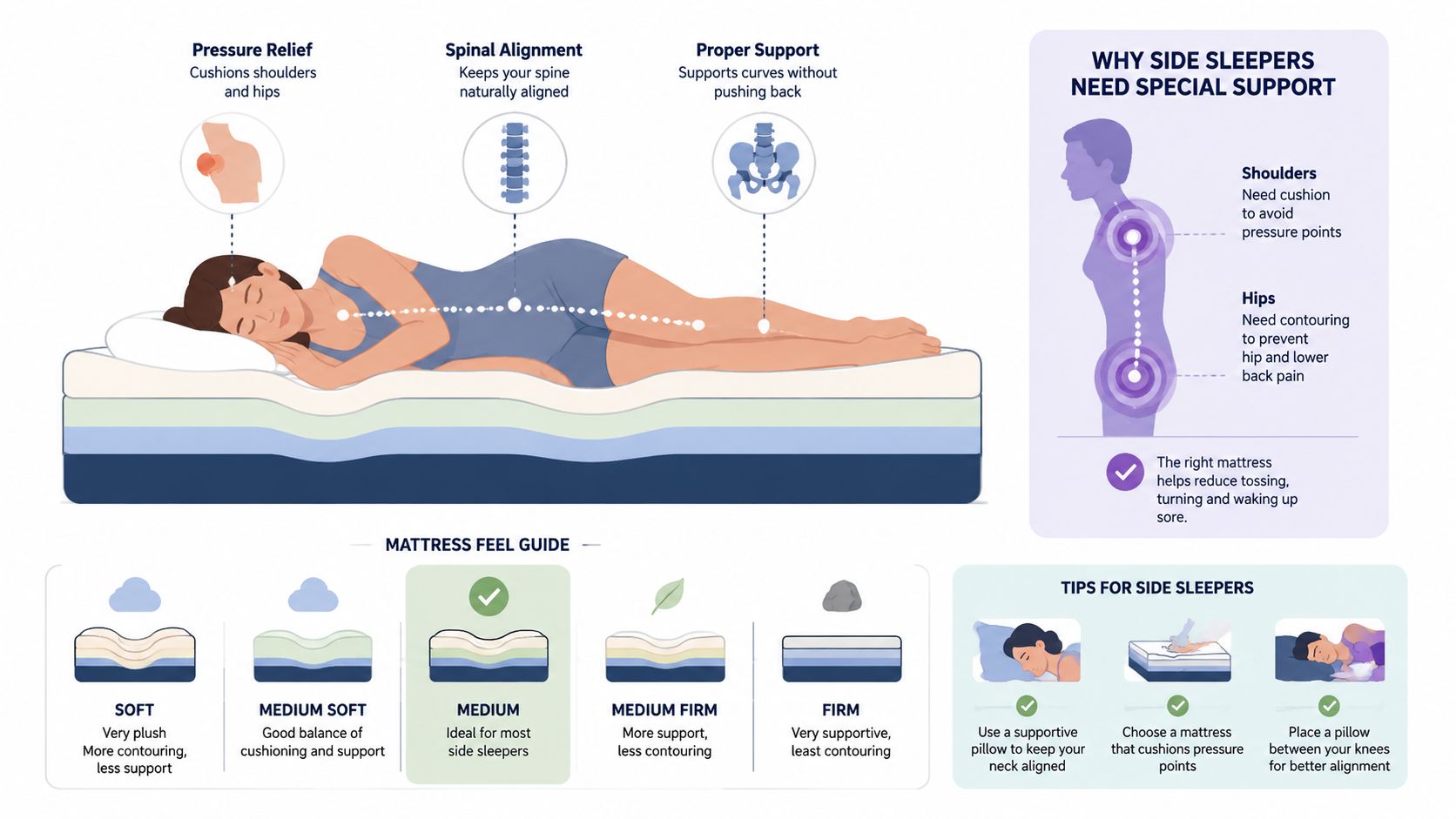
A simple analogy helps. A very firm mattress can feel closer to resting on a hard floor, while a softer mattress offers the sensation of a supportive hug. Side sleepers need enough of that “hug” for the shoulder and hip to settle into the surface, but they still need resistance underneath to keep the spine from curving downward.
Why shoulders and hips change the equation
Back sleepers distribute weight across a broader area. Side sleepers create more concentrated contact at the shoulder and hip, which makes surface comfort especially important. If those areas can't compress into the mattress, the sleeper may feel pressure or wake with soreness.
If the mattress allows too much compression, the spine may lose a near-neutral position. That can create a different kind of discomfort, particularly around the waist and lower back. The right surface cushions the shoulder and hip while keeping the trunk supported.
The mattress firmness guide from Groen's Fine Furniture provides a useful starting point for shoppers who want to understand the difference between plush comfort and underlying support. The key is to separate the feel of the top layers from the stability of the mattress beneath them.
Core idea: Side sleepers need pressure relief at the shoulder and hip without sacrificing support under the waist and torso.
Finding the practical starting range
A widely cited 2026 expert consensus places most side sleepers around 4 to 6.5 on a 10-point firmness scale, within the medium-soft to medium-firm range, because that span balances contouring with spinal support. The recommendation is supported by guidance from Sleep Foundation's side-sleeper mattress overview.
That range shouldn't be treated as a strict prescription. Body weight changes how a person sinks into the same mattress, and a person who alternates between side and back sleeping may prefer a more adaptable feel. Firmness is a starting language, not a guarantee.
The two extremes explain why. A very firm surface may resist the shoulder and hip before they settle comfortably. A very soft surface may feel pleasant at first but make movement more difficult and allow the spine to bend out of alignment. Medium or medium-firm is often the sensible place to begin, then personal testing completes the decision.
How to Choose the Right Firmness by Body Type and Weight
Body weight changes the way a mattress feels because it affects compression. A lighter sleeper may remain closer to the top of the comfort layer and need a softer surface to create enough contouring. A heavier sleeper may sink more and require stronger resistance beneath the cushioning.
For side sleepers, the useful ranges are calibrated rather than universal. Guidance commonly places sleepers under 130 pounds around firmness 3 to 5, many adults in the 4 to 6.5 range, and people over 230 pounds around 7 to 8 to limit excessive sinkage. These ranges come from Sleep Foundation's side-sleeper recommendations, which also explains why body mass and sleep position must be considered together.
| Body Weight | Recommended Firmness | Why It Works for Side Sleepers |
|---|---|---|
| Under 130 pounds | 3 to 5 | A softer surface can provide enough sinkage at the shoulder and hip without feeling excessively hard beneath a lighter body. |
| Around the middle range | 4 to 6.5 | This range offers a practical balance between contouring and support for many adult side sleepers. |
| Over 230 pounds | 7 to 8 | A firmer build can resist excessive sinkage and help preserve a more stable sleep posture. |
Shape matters alongside weight
Weight ranges are helpful, but body shape also influences pressure. Broad shoulders may need additional room to compress into the upper comfort layer. Fuller or curvier hips may require similar cushioning, while a straighter body profile may not need as much surface give.
The answer isn't automatically a softer mattress. A thicker, conforming top layer over a supportive core may provide more useful cushioning than an entire mattress that feels soft from top to bottom. Sleep Foundation's pressure-relief methodology explains that side-sleeper comfort systems generally need enough thickness and conformity for shoulders and hips to compress without bottoming out.
Account for combination sleeping
A person who sleeps on the side but spends part of the night on the back may need a more versatile feel. A mattress that feels wonderful on the side could permit too much sinking when the sleeper turns onto the back. Conversely, a very firm mattress chosen for back support may create uncomfortable pressure during side sleeping.
The best starting point is the position used most often, followed by an in-store check of the alternate position. Readers who want a more personalized framework can use this body-type mattress guide to organize the decision around weight, shape, and sleeping habits.
Better alignment isn't an abstract technical benefit. It can mean less searching for a comfortable position, fewer pressure-related interruptions, and a more refreshed morning. The final choice should feel supportive without forcing the body to fight the mattress.
Pressure Relief and Spinal Alignment for Healthier Sleep
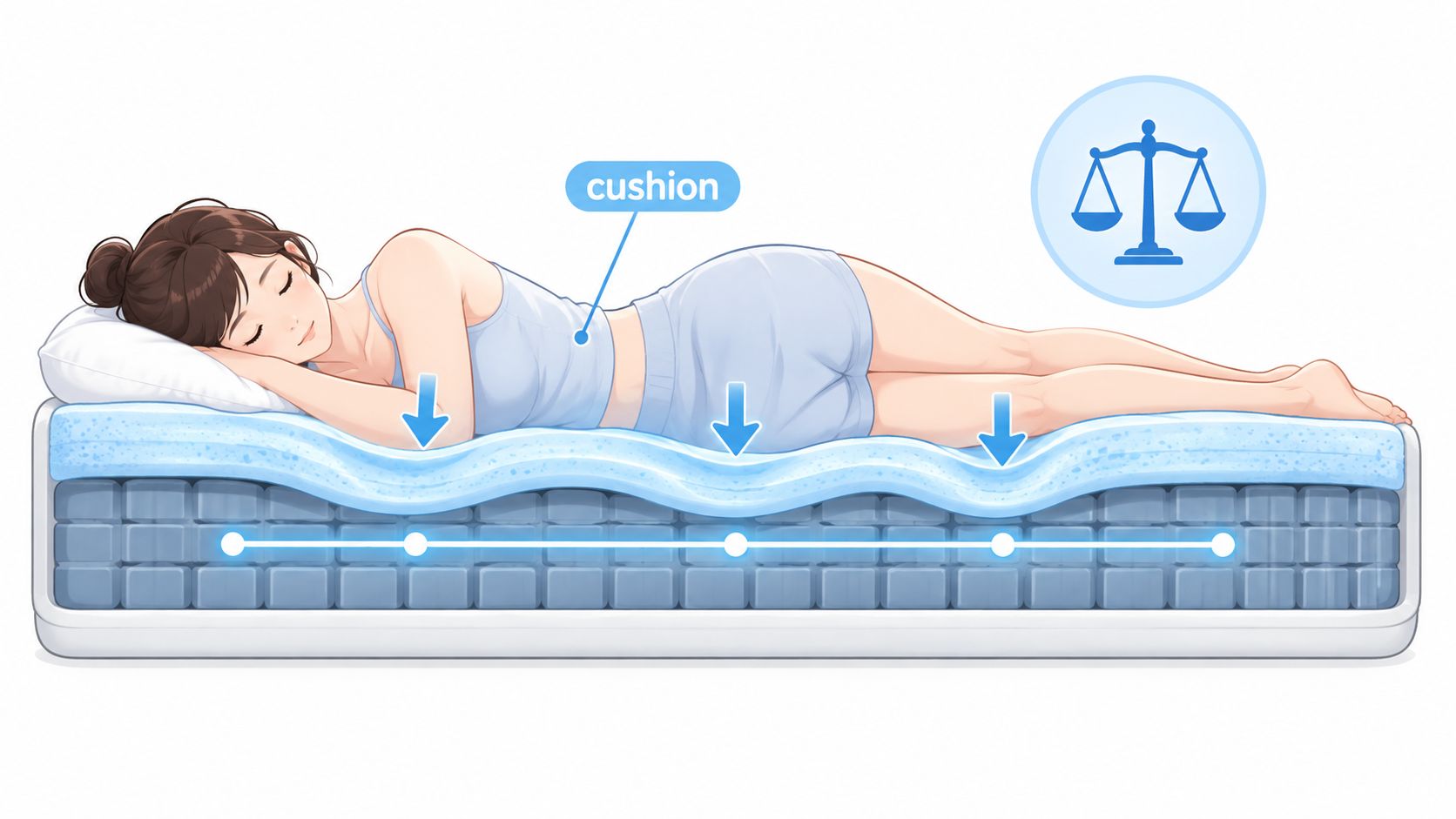
A side-sleeper mattress has two jobs that must work together. It should cushion the shoulder and hip, and it should support the torso closely enough to keep the spine near neutral. Focusing on only one job creates problems.
A thick, conforming comfort layer allows the body's widest points to settle into the surface without pressing against the support core. When the layer is too thin or too rigid, the shoulder and hip may absorb too much pressure. When the layer compresses too much, the waist and midsection may sink farther than the rest of the body.
What the sleep measurements suggest
Recent research has moved mattress advice beyond comfort preference alone. A 2025 study available through PubMed Central found that medium-firm mattresses produced better sleep quality than softer or firmer alternatives, with a narrower range in sleep duration, efficiency, and sleep latency, along with increased sleep spindle activity. The findings appear in the PubMed Central mattress-firmness study.
Practical testing summarized in 2026 expert content reported average sleep latency of about 7.7 minutes on a medium-firm mattress, compared with 12.4 minutes on a soft mattress and 11.5 minutes on a firm mattress. Sleep efficiency was about 84% on the medium mattress, compared with roughly 76% to 77% on the soft and firm options. Those figures are presented in the same research discussion of mattress firmness and sleep outcomes.
These results don't mean every side sleeper should choose one identical model. They do support medium-firm as a repeatable compromise between comfort and support, particularly when a mattress includes enough cushioning for the shoulder and hip.
Practical rule: Softer isn't automatically healthier. The useful question is whether the mattress cushions pressure points while keeping the body supported.
Why numbness can point in either direction
Shoulder numbness may indicate that the surface is too firm, especially if the shoulder can't settle into the comfort layer. Hip pain may have a similar pressure-related cause. Yet a softer mattress may not solve the issue if the body sinks enough to strain alignment or make turning difficult.
People who are unsure about related sleep-surface effects can also review this resource on air bed effects on your spine, particularly when comparing adjustable or unusually flexible sleep surfaces. The same basic principle remains useful: support should follow the body without allowing the trunk to collapse.
The mattress guidance for back pain offers another way to frame the decision. Comfort at the shoulder and hip matters, but the mattress also needs to maintain a stable foundation under the midsection. Side sleepers should judge the whole posture, not just the first few minutes of softness.
Materials That Help Side Sleepers Contour and Stay Supported
The material name on a mattress doesn't tell the whole story. Construction, layer thickness, surface quilting, and the support core all affect how a side sleeper settles and how easily the body moves. Two mattresses made with similar broad categories may still feel quite different.
Memory foam for close cushioning
Memory foam typically offers a close, body-hugging feel. It can spread pressure across the shoulder and hip rather than pushing back immediately, which appeals to side sleepers who prefer a settled, enveloping surface.
That deep contouring has a tradeoff. Some sleepers may find it harder to change positions, especially when the upper layers permit substantial sinkage. A well-designed comfort system should provide enough cushioning to relieve pressure without allowing the sleeper to feel trapped or unsupported.
Hybrids for cushioning with a stronger pushback
Hybrid construction pairs foam or another conforming comfort layer with an innerspring support system. For side sleepers, that combination can provide cushioning where the body needs it while preserving a more responsive foundation beneath the torso.
The feel may suit someone who wants pressure relief but doesn't enjoy the slow, enveloping sensation associated with some all-foam designs. Coils can also contribute to airflow and make position changes feel more natural, although the actual experience depends on the specific build.
Latex and responsive specialty foams
Latex and responsive foams generally offer more buoyant support. Instead of allowing the body to sink slowly into the mattress, they tend to provide lift that helps a sleeper change positions more easily.
That response can work well for combination sleepers or heavier side sleepers who want cushioning without a settled feel. A thicker comfort system remains important, regardless of material, because the shoulder and hip still need room to compress while the spine stays straight.
Groen's Fine Furniture carries sleep solutions from Serta and Beautyrest, allowing shoppers to compare different constructions rather than relying on a marketing label. The broader store collection also includes Flexsteel for durability, Bassett for style, and furniture choices that connect bedroom comfort with the rest of the home. The right mattress material should be selected by the desired benefit, such as deep pressure relief, responsive lift, or a balanced middle feel.
Test Drive Your Comfort and Design It Your Way at Groens
A showroom mattress test works best when it resembles a real night of sleep. Shoppers should arrive in comfortable clothing, bring the pillow height they normally use if possible, and lie in the usual side-sleeping position rather than sitting on the edge.
A practical in-store test
Begin with a medium-soft to medium-firm option, then compare a softer and firmer feel. The goal isn't to identify the softest surface. The goal is to notice whether the shoulder and hip can settle without pressure while the waist and torso remain supported.
A useful test includes these checks:
- Stay on the side: Spend 10 to 15 minutes in the normal sleeping position before judging comfort. This gives pressure points time to become noticeable.
- Check the pillow relationship: A pillow that is too low or too high can change the angle of the neck and make a mattress feel wrong.
- Notice shoulder and hip pressure: Tingling, numbness, or a sharp pressure sensation suggests the surface may not be conforming enough.
- Watch the middle of the body: A companion or sales professional can look at whether the spine appears reasonably straight.
- Turn once or twice: Excessive effort when changing positions may indicate that the comfort layers feel too enveloping.
Groen's Fine Furniture in Dyer and Crown Point provides an in-person setting for comparing Serta and Beautyrest mattress feels with guidance from a local team. Its mattress return policy information should be reviewed before purchase so shoppers understand the applicable terms.
Custom comfort and broader home design
Customization is central to the way Groen's approaches furniture. Shoppers can design it their way through made-to-order and bespoke options, including Canadel dining designs with selectable sizes, shapes, and finishes. Amish solid wood furniture adds craftsmanship and a lasting, heirloom-oriented option for other rooms.
That same preference for personal fit carries into mattress shopping. The goal is to match firmness, material, support, and bedroom needs rather than force every sleeper into one standard choice. American-made and solid wood options can also help families create a cohesive home that feels personal and durable.
Special Financing is available subject to credit approval, giving shoppers additional buying power when fitting a quality mattress or custom furniture into a household budget. Honest pricing, Interior Design support, and White-Glove Delivery add practical help from selection through installation, with the same neighborly attention associated with the store's 5-star service.
Bring Lasting Comfort Home With Groen's Family
The most reliable starting point for side sleepers is medium-soft to medium-firm, generally around 4 to 6.5 on a 10-point scale, then adjusted for body weight, shape, and preferred materials. Lighter sleepers may need more softness for contouring, while heavier sleepers may need firmer support to prevent excessive sinkage. Combination sleepers should test both the side and back positions before deciding.
The central test is simple. The shoulder and hip should feel cushioned, the waist should feel supported, and the spine should remain close to neutral. A mattress that feels soft for a few moments but causes the body to sag may not deliver lasting comfort, while a firm mattress that creates pressure at the shoulder may interrupt rest.
Sleep Wellness deserves more attention than a quick online comparison. In addition to choosing a new mattress, property managers and hospitality teams handling older inventory may need specialized services such as bulk mattress pickup for hotels. For local families, however, the more immediate step is personal testing with knowledgeable guidance.
Groen's Fine Furniture has served NWI communities through multigenerational ownership since 1983, with showrooms in Dyer and Crown Point and service extending to St. John, Schererville, Munster, and surrounding Northwest Indiana neighborhoods. The family's approach combines mattress education with Custom Furniture, Amish craftsmanship, Canadel made-to-order dining, Special Financing subject to credit approval, Interior Design help, and White-Glove Delivery.
Visit Groen's Fine Furniture in Dyer or Crown Point today to explore custom options and ask about special financing plans. Let the family help create a home that supports comfortable, lasting rest.
Visit Groen's Fine Furniture in Dyer or Crown Point to test-drive mattress firmness for side sleepers and compare Serta and Beautyrest comfort options in person. Ask the team about Custom Furniture, made-to-order Canadel and Amish solid wood pieces, Special Financing subject to credit approval, and White-Glove Delivery, then let this local family help create a home you love.