Blog
Amish Made Solid Wood Furniture: A Complete Guide

A dining room can look finished until the first family gathering exposes the problem. The table is too short for holiday meals, the chairs feel temporary, and the finish doesn't quite work with the rest of the home. For homeowners in Dyer, Crown Point, St. John, Schererville, Munster, and throughout Northwest Indiana, Amish made solid wood furniture offers a more thoughtful alternative: pieces designed around real rooms, real routines, and years of use.
The appeal isn't limited to traditional styling. Authentic construction, repairable materials, seasonal stability, and made-to-order dimensions give families a practical way to buy less often and live more comfortably. The right piece should feel personal from the first day and still belong in the home long after decorating trends change.
Why Northwest Indiana Homeowners Choose Amish Craftsmanship
A Crown Point homeowner may begin with a straightforward need: replace a dining table before the family outgrows it. Once the room, walking paths, Sunday dinners, homework, and holiday gatherings enter the conversation, the purchase becomes more than a choice of wood tone. The table must work hard without making the room feel crowded or dated.
Amish made solid wood furniture answers that need by bringing traditional workmanship into a modern home. A family can select a table, bed, dresser, or cabinet that suits the room's proportions, storage needs, and daily use. Carefully fitted joints, substantial hardwood, and a finish chosen for the surrounding design create furniture with a lasting presence.
Furniture with a local sense of permanence
Northwest Indiana homeowners often want rooms that feel comfortable and personal, not staged. A strong wood table can anchor an open dining area, while a solid wood bed can add warmth without excess decoration. Amish craftsmanship also fits more than one decorating tradition. Clean lines can work with farmhouse, Craftsman, transitional, or contemporary interiors.
Customization makes that flexibility practical. Local NWI retailers connect homeowners with heritage builders while helping them make informed choices about style, finish, scale, and function. Shoppers can see materials in person, compare details, and ask direct questions before placing an order. That relationship matters to families who value how partners locally support one another, a principle also reflected in this resource from Fillaree: how partners locally.
Practical rule: Choose furniture to solve the room's daily needs first, then use style to refine the result.
A better alternative to temporary furniture
Mass-produced furniture can serve a short-term purpose, yet it often requires homeowners to accept awkward proportions, thin materials, or a finish that almost matches. A custom Amish order starts with the home instead. That approach gives families more control over how a piece supports meals, sleep, storage, or entertaining.
Begin by reviewing the Amish furniture collection and identifying the room's real demands. Measure the available space, note how people move through it, and decide which details matter most. Then work with a nearby retailer such as Groen's Fine Furniture to connect those priorities with traditional Amish construction and a design that belongs in your home.
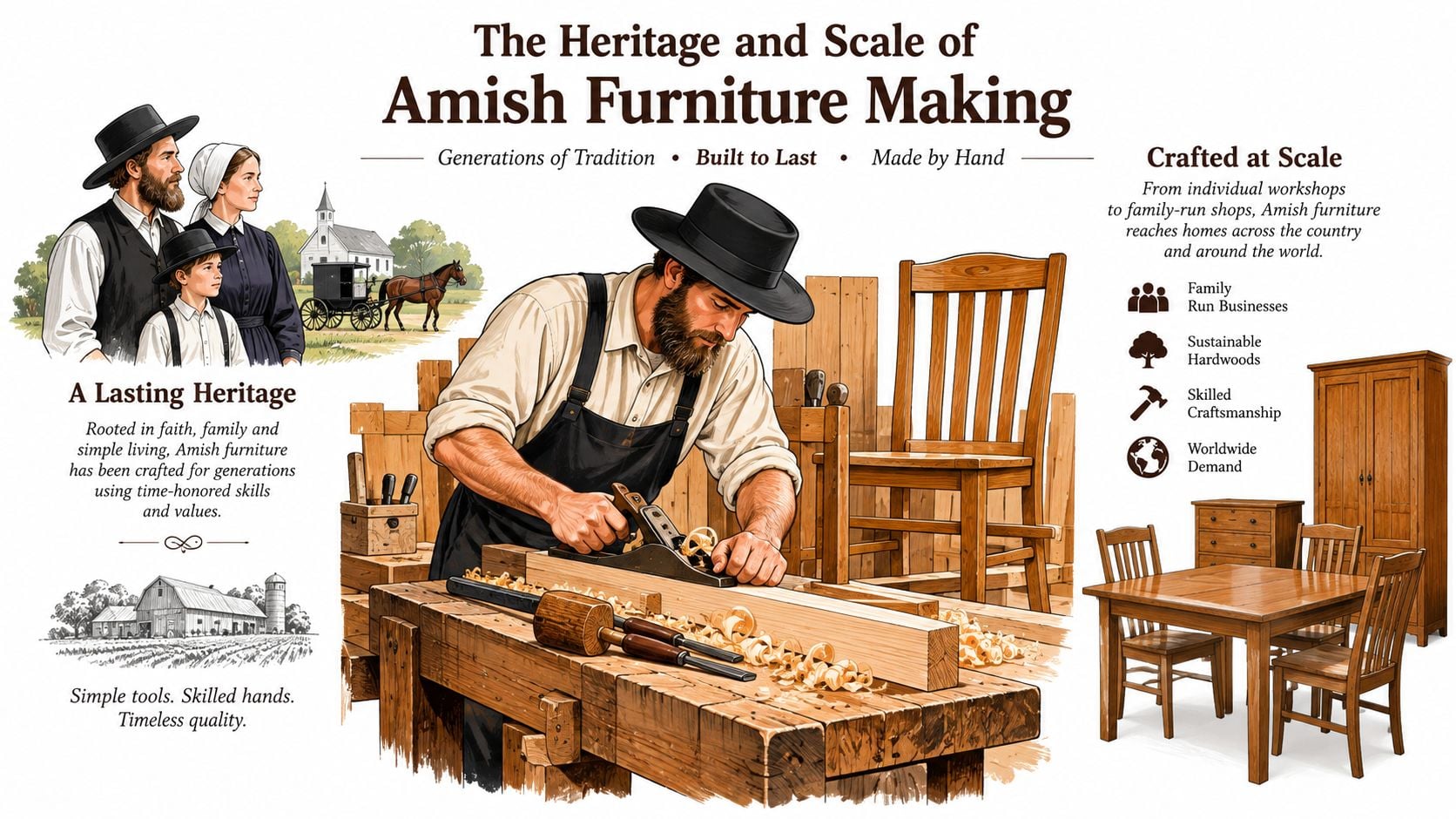
The Heritage and Scale of Amish Furniture Making
A dining table may need to serve weeknight meals, holiday gatherings, and years of changing family life. Its value comes from more than an old-fashioned appearance. Amish furniture developed from a working tradition that still gives homeowners a practical alternative to disposable, standardized pieces.
Its documented roots reach back to late-18th-century Pennsylvania, while broader recognition grew during the early 20th-century Arts and Crafts movement. By the 1920s, historians and dealers valued these pieces for their restrained design, careful workmanship, and use of solid wood instead of mass-produced materials, as summarized in this history of Amish tables and chairs.
That history places Amish furniture within a larger response to disposable production. Visible joinery, honest materials, and useful forms were part of the appeal. Those qualities still matter to homeowners who want a table, bedroom set, or case piece to feel connected to the home rather than interchangeable with everything in a showroom.
A substantial regional manufacturing economy
The familiar image of one craftsperson working alone in a small shop misses the scale of the industry. The Ohio Amish furniture cluster uses a significant volume of regional hardwood and supports thousands of jobs, according to a U.S. Forest Service study. Amish-made solid wood furniture therefore represents an established manufacturing economy, not merely a niche craft.
That scale helps explain how traditional methods can support modern variety. Builders can produce furniture for dining rooms, bedrooms, offices, and living spaces while offering different wood species, finishes, dimensions, and silhouettes. Heritage construction does not require homeowners to accept a fixed historical style.
Local Northwest Indiana retailers help make that distinction clear. A knowledgeable showroom can connect homeowners with builders who preserve traditional methods while helping them select proportions and finishes suited to a contemporary home. The retailer's role is practical: explain what can be customized, clarify which details affect daily use, and keep the purchase grounded in the room's actual needs.
Tradition without a museum feeling
The strongest Amish pieces do not require a historical interior. Mission-inspired lines can work beside modern lighting, natural oak can soften a clean contemporary room, and walnut can add depth to a more curated space. Upholstered dining chairs and updated hardware can improve comfort without concealing the underlying woodwork.
For a broader explanation of the category, its construction traditions, and its design purpose, see what Amish furniture means. The heritage deserves respect, but the better buying test is straightforward: the furniture should fit the household, suit the room, and earn daily use.
What Solid Wood Really Means for Your Furniture
A solid wood dining table should feel substantial when you pull out a chair, but the label alone does not tell you how it was made. Solid wood describes the primary structural material, not every part hidden inside the piece. Amish-made furniture commonly uses North American hardwoods such as oak, cherry, brown maple, and walnut, with major components built from solid lumber rather than particle board or MDF. Homeowners can compare cabinet wood by hardness before discussing the best practical choice with a furniture professional.
Wood species affect both appearance and daily experience. Oak has a pronounced grain and suits rooms where visible texture matters. Cherry develops a warm, refined look. Brown maple has a smoother, more adaptable appearance, while walnut brings a deeper tone and stronger visual presence. Choose based on the room, finish, level of use, and how comfortable you are with visible marks developing over time.
Construction determines longevity
Wood species does not determine durability by itself. Mortise-and-tenon frames connect structural members across a broad surface, while dovetailed drawers help keep drawer parts secure through regular opening and closing. These methods distribute load and reduce joint failure under repeated use.
Inspect the whole piece, not only the tabletop or cabinet front. Drawer movement, corner connections, leg attachment, underside construction, and finished edges reveal how carefully the furniture was built. A quality piece should feel stable, purposeful, and proportionate in the room.
Where plywood can make sense
Solid wood furniture may include plywood in selected areas, including drawer boxes, bookshelf components, or cabinet backs. That choice can provide stability where a broad panel needs to resist movement and hold its shape. Plywood in a supporting role does not automatically disqualify a piece from being solid wood.
Ask which parts are solid hardwood, which use plywood, and why. The answer matters more than an “all wood” label that leaves the construction undefined.
Local Northwest Indiana retailers can make this distinction easier to understand. They connect traditional Amish builders with homeowners who need current dimensions, coordinated finishes, upholstered seating, or performance fabrics. That guidance lets heritage construction serve a contemporary home without forcing the room into a historical style.
Classic hardwoods also work with modern customization. A solid wood table can carry a two-tone finish, updated proportions, or a simpler silhouette while retaining traditional construction. For a closer look at choosing hardwood for longevity and style, focus on the relationship between species, durability, finish, and the way you plan to use the furniture.
Evaluating the True Sustainability of Solid Wood
An Amish label does not automatically make furniture sustainable. Sustainability depends on sourcing, finishing, service life, and repairability. A solid wood piece earns a stronger sustainability case when its hardwood is responsibly sourced, its construction is built for long use, and its finish avoids unnecessary exposure to harmful emissions. Poor sourcing or careless finishing weakens that case.
Evaluate the furniture across its entire life, not only by where the lumber came from or how far it traveled. Ask whether the wood was responsibly managed, whether the finish is low in volatile organic compounds, and whether the piece can be repaired after years of use. A durable frame matters only if the furniture remains useful instead of being discarded after a minor failure. This discussion of furniture's carbon footprint makes the same distinction between marketing language and long-term impact.
Longevity is only one part of the equation
Durability can reduce replacement demand, but longevity depends on more than a strong frame. The piece must remain attractive, comfortable, functional, and serviceable as the household changes. Traditional joinery helps, especially when a professional can repair a worn joint, damaged surface, or tired finish instead of replacing the entire item.
Solid wood also responds to seasonal humidity. It expands and contracts as conditions change, so construction must accommodate that movement. Better builders use tongue-and-groove panels and precision joinery to reduce cracking, warping, and loosening over time. The construction approach described in timeless solid wood design shows why well-made furniture can remain serviceable for decades or longer.
Northwest Indiana retailers help homeowners connect that heritage craftsmanship with current design needs. Ask them to explain how the builder's materials, finish, repair options, and intended use affect the piece's long-term impact. For more guidance, read our guide to sustainable wood furniture.
A better buyer's sustainability checklist
Use these questions before placing an order:
- Wood sourcing: Can the retailer explain the hardwood species and sourcing practices?
- Finish selection: Are lower-VOC options available, and will the finish suit the room?
- Repair potential: Can damaged surfaces, hardware, or joints be serviced?
- Construction clarity: Which components are solid hardwood, and where are plywood or other supporting materials used?
- Actual use: Will the furniture meet the household's daily needs well enough to remain useful?
The right conclusion is not that every Amish piece has the same environmental footprint. Durable, repairable furniture with responsible sourcing and considered finishing offers a more credible sustainability case than disposable furniture designed around replacement.
Designing It Your Way with Custom Amish Orders
A dining room in Munster may be narrow, a Crown Point great room may need a longer table, or a bedroom may have limited door clearance. In each case, furniture that almost fits creates daily frustration. Made-to-order Amish furniture lets homeowners set the dimensions around the room while keeping the character of traditional craftsmanship.
Many Amish furniture programs describe their work as “bench-built,” with each piece made after the order is placed. That process can support detailed choices, such as table dimensions specified to the quarter-inch and more than 75 hand-rubbed finishes, depending on the collection. Review the custom options information and confirm which dimensions, woods, and finishes are available for the specific piece you want.
Customization should serve the room
Start with how the room functions. A household that hosts large family meals needs different proportions from a couple seeking a compact breakfast table. Existing trim may call for a close stain match, while contrasting tones can make the table a deliberate focal point.
Groen's Fine Furniture offers custom order services for Amish solid wood pieces and Canadel dining designs, giving Northwest Indiana shoppers a local place to discuss dimensions, wood, finish, seating, and delivery. A made-to-order dining plan can include:
- Scale: Set the table length, width, and proportion to suit the room.
- Wood species: Choose a species for its grain, color, and overall character.
- Finish: Coordinate with flooring, cabinetry, trim, or upholstery.
- Seating: Pair wood chairs with upholstered seats or performance fabrics when comfort and maintenance matter.
- Style details: Select leg profiles, edges, hardware, and other features that define the finished piece.
Bring measurements, photos, and a clear description of how the room is used. A local retailer can then help translate a traditional builder's capabilities into a design that works in a current home.
Traditional materials, current interiors
Custom ordering does not require ornate detailing. Clean profiles, two-tone finishes, and upholstered seating can place Amish craftsmanship comfortably in a contemporary interior. Rustic cherry, brown maple, and white oak remain practical choices because their color and grain can support both traditional and updated rooms.
Custom dining programs may also offer broad choices beyond standard catalog pieces. Some provide more than 3,000 custom color combinations and 10 species of American hardwood, illustrating the range available for a personalized design through custom dining furniture options. Confirm the available choices for your selected collection rather than assuming every option applies to every table.
For a focused starting point, review these custom solid wood dining table options and bring your room measurements to the consultation. The right order respects Amish building traditions while giving your home the proportions, finish, and comfort it needs.
Caring for Your Investment and Navigating the Purchase
A family ordering a solid wood table should leave the showroom knowing exactly what will arrive, how it will fit, and how it should be cared for. Start with the room and household routine. Bring measurements for doorways, stairways, walk paths, nearby furniture, and the clearance required to use chairs or drawers comfortably.
Use the showroom conversation to settle the practical details: dimensions, wood species, finish, construction, and comfort. A knowledgeable local team can compare joinery, explain finish samples, and recommend materials suited to children, pets, frequent hosting, or everyday meals. This guidance helps connect traditional Amish building methods with the demands of a current home.
Before approving the order, confirm every specification, delivery expectation, care instruction, and financing term in writing. Clear details prevent surprises later.
Protecting solid wood at home
Solid wood responds to changes in its surroundings. Keep furniture away from strong heat sources, protect surfaces from standing moisture, and use products recommended for the chosen finish. Abrasive cleaners, harsh solvents, and excess water can damage the finish even when the wood and joinery are sound.
A practical care routine includes:
- Use coasters and pads: Protect dining surfaces from moisture, heat, and scratches.
- Clean gently: Remove dust with a soft cloth and follow the finish manufacturer's guidance.
- Manage seasonal changes: Keep indoor conditions reasonably consistent to limit unnecessary wood movement.
- Address damage promptly: Ask a qualified furniture professional about repairs before a small defect spreads.
- Move carefully: Lift pieces when possible and protect joints from twisting stress.
Long-term advice: The finish shields the surface, while sensible daily habits protect the investment.
Financing and delivery without pressure
Special Financing can help a family purchase durable furniture while managing cash flow. Retail financing commonly applies only to qualifying purchases, requires credit approval, and may require minimum monthly payments. Review the complete terms before accepting an offer, as described on this special financing information page.
Ask direct questions about the payment schedule and any conditions. A trustworthy retailer should explain the offer plainly, without rushing the decision.
White-Glove Delivery provides practical help with large solid wood pieces. A professional team can bring furniture into the correct room, position it carefully, and reduce the chance of damage during installation. The service is particularly useful for heavy dining tables, bedroom furniture, and rooms with tight paths or complex arrangements.
Start Your Custom Furniture Journey with Groen's
You have measured the dining room, chosen a color palette, and still cannot find a table that fits both the space and your family's routines. Amish made solid wood furniture gives you a better starting point. Substantial materials, proven joinery, and customization let you choose the wood species, finish, and dimensions instead of accepting a warehouse default.
Custom work also connects traditional craftsmanship with current home design. Pair a solid wood table with upholstered chairs, choose a cleaner profile for a bedroom, or use a two-tone finish for a fresher look. Amish furniture does not have to feel formal or old-fashioned. The right specifications make it intentional, comfortable, and suited to the way your household lives.
A local relationship matters
Groen's Fine Furniture is a family-owned Northwest Indiana retailer serving the community since 1983, with showrooms in Dyer and Crown Point. Its multigenerational ownership, five-star service, custom-order guidance, Special Financing subject to credit approval, and White-Glove Delivery give local homeowners a practical way to inspect quality before committing.
A local showroom also helps you compare Amish construction with the rest of your furnishing needs. You can consider upholstery, custom dining options, and mattresses in the same conversation, while keeping comfort, room function, and long-term use in view. That matters when a home needs coordinated choices rather than one isolated purchase.
Bring room measurements, photos, finish questions, and a clear description of daily use to your visit. Sit in the chairs, open drawers, feel the wood, and test the comfort. Ask how each piece will perform in your home over time. A good furniture advisor should explain the choices plainly and give you room to decide without pressure.
Groen's Fine Furniture offers custom Amish solid wood furniture, custom dining, upholstery, mattresses, Special Financing subject to credit approval, and White-Glove Delivery for Northwest Indiana homes. Visit Groen's Fine Furniture in Dyer or Crown Point to explore custom options and work with a multigenerational local family.