Blog
Sofa vs Sectional for NWI Homes Made Simple


For homeowners in Dyer and Crown Point trying to make a living room feel finished without making it feel cramped, the sofa vs sectional decision usually comes down to how the room is used. A family room that hosts movie nights, a basement that needs flexible seating, or a smaller front room that still has to breathe all call for different answers, and the wrong choice shows up every day in blocked walkways and awkward corners.
Groen's Fine Furniture has been serving Northwest Indiana since 1983, so this isn't a theory exercise for our family, it's the kind of layout problem people bring into the showroom every week. A good fit starts with comfort you can test in person, then moves to size, traffic flow, and how long the layout will still make sense when life changes.
| Criteria | Sofa | Sectional |
|---|---|---|
| Footprint | Easier to place in tighter rooms | Needs more room to breathe |
| Seating | Usually 2 to 4 people | Usually 4 to 8+ people |
| Layout style | More open and flexible | More anchored and lounge-focused |
| Long-term use | Easier to rearrange with chairs | Better for fixed family-room zones |
| Best fit | Smaller rooms, formal rooms, mixed traffic | Open plans, basements, TV rooms |
Finding the Right Fit for Your Northwest Indiana Living Room
A Crown Point family might walk into a living room that has a fireplace on one wall, a TV on another, and a path to the kitchen cutting right through the middle. That's not a sectional-first room unless the footprint is planned carefully. A Dyer condo or a St. John front room can have the opposite problem, where a sofa feels almost too small visually, but a sectional turns the whole room into a traffic jam.
That's why the first question isn't style, it's how the room lives. An open-plan family room in Schererville usually rewards a different setup than a narrower Munster sitting room, and a basement that's used for sports, games, or guests needs a different answer again. A sofa can keep things lighter and easier to move around, while a sectional can turn one corner into the center of the house.
For homeowners who are also thinking about other built-ins or layout decisions, a solid built in wardrobe design guide can be useful because the same basic rule applies, fit the room first, then choose the furniture. That mindset matters in living rooms too, especially when the goal is comfort that doesn't fight the floor plan.
Practical rule: if people have to squeeze around the seating, the piece is too big, no matter how good it looks.
Groen's Fine Furniture sees this all the time in Northwest Indiana, where one home wants a clean conversation area and the next wants a big lounging zone. A smart first move is to compare your room's traffic pattern, not just the wall space, then decide whether you need a fixed footprint or something more adaptable. The useful part is simple, a sofa gives more breathing room, while a sectional gives more built-in gathering space.
If the room is still in the planning stage, their living room furniture guide is a practical place to start before the measuring tape comes out.
What Sets a Sofa Apart From a Sectional
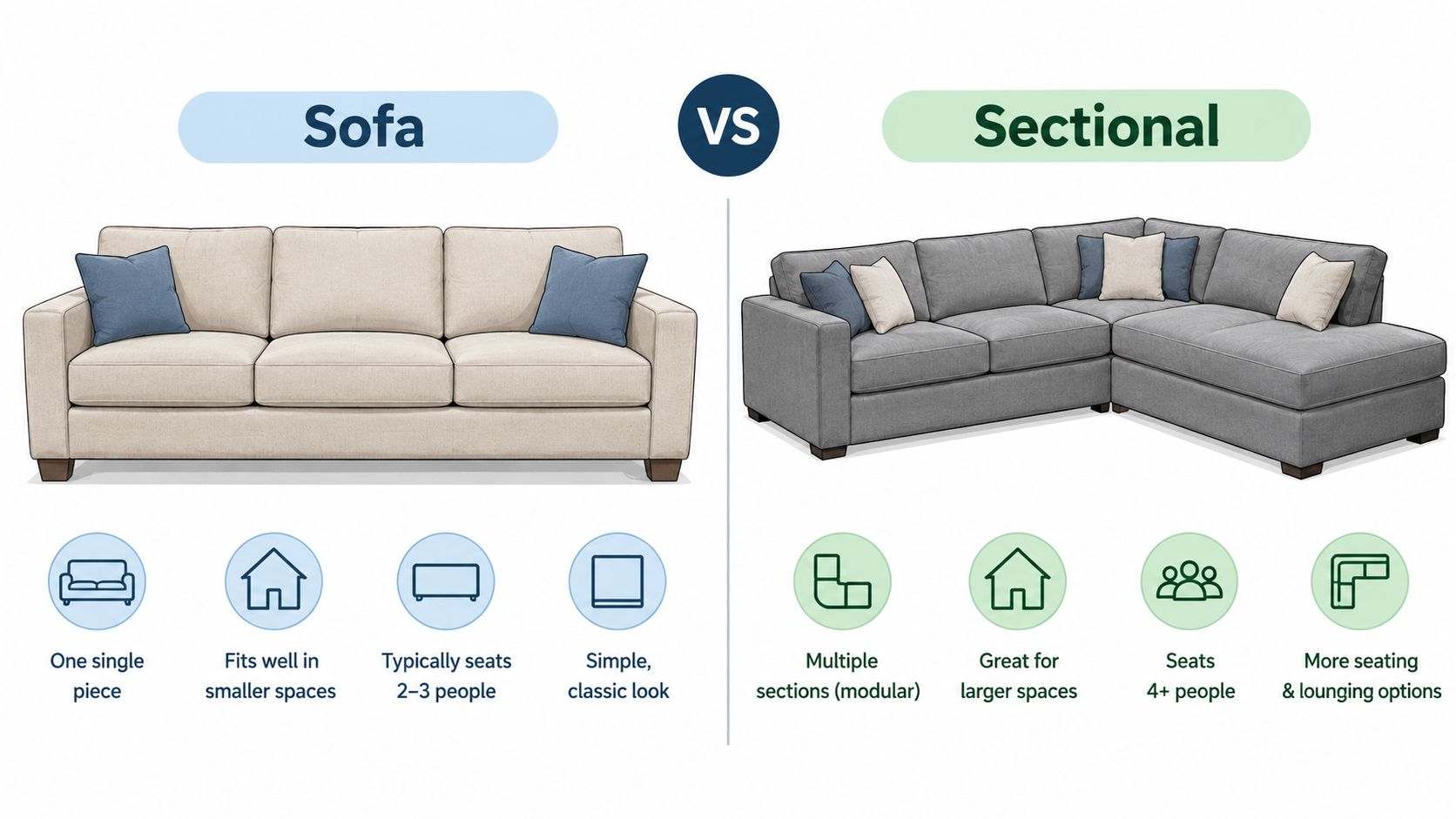
A sofa uses one continuous frame and keeps seating in a straight line. That makes it easier to combine with accent chairs, an ottoman, or side tables, especially in a Northwest Indiana living room where doors, windows, and walkways compete for space. A sectional joins multiple pieces, commonly in an L-shape or U-shape, so it wraps around a corner and creates a more defined lounging area.
The difference goes beyond appearance. The sectional concept dates back to the early 1800s, while its modern form developed more quickly during the 1930s and 1940s as home and apartment layouts changed. Sectionals now represent the largest single sofa type in the global sofa market, with 27.3% of revenue in 2025 in one market estimate. Another estimate places the dedicated sectional-sofa market at $23.4 billion in 2025, with a projected $38.7 billion by 2034 and a 5.8% CAGR during that period. The category has lasting appeal because it gives households a generous place to lounge and gather. Sectional history and market-share overview
Fixed frame versus modular adaptability
A traditional sectional generally stays in one configuration. A modular sectional gives you more control because its pieces can be separated and rearranged, including L-shaped, U-shaped, and straight-line layouts. That flexibility helps when a family room becomes a playroom, guest area, or different entertainment space later.
A sofa offers a simpler advantage. Its open, clean footprint leaves more room for separate seating and makes the overall arrangement easier to refresh. Choose it when you want the furniture to support the room without defining every corner. Choose a sectional when the room's main job is lounging, gathering, and stretching out together.
Sectionals also use corner space efficiently, so they generally seat more people than sofas. Standard sectionals often measure around 90 to 109 inches wide, while a sofa accommodates fewer people. Sectional sizing and seating guidance
For a long-term NWI purchase, check whether the configuration can fit through your entry, hallway, stairway, and final room before ordering. Groen's Fine Furniture can help you compare a fixed sofa, a traditional sectional, or a modular custom-order arrangement based on how your household uses the space. A sofa is the better choice for flexibility and visual breathing room. A sectional earns its place when built-in gathering space matters more.
How Size and Layout Shape Your Decision
A sofa can fit a Northwest Indiana living room where a sectional would crowd the walkway. A standard sofa is typically about 70 to 96 inches wide and seats roughly 2 to 4 people. Sectionals often run about 100 to 140+ inches, depending on configuration, and can seat 4 to 8+. That added seating is useful, but it demands a larger floor area and a more deliberate layout.
The space rules that keep a room comfortable
Plan for 30 to 36 inches of walking clearance around seating and 14 to 18 inches between the couch and coffee table. Those measurements protect the paths people use every day. In a smaller ranch, split-level, or open-concept NWI room, a sofa usually leaves more options for chairs, tables, and door swings.
A sectional earns its space when it supports the room's main purpose. If the family gathers around the television, hosts guests, or needs one shared lounging zone, the extra seating can justify the larger footprint.
A sectional is not too large because it looks substantial. It is too large when it interrupts the path people actually use.
Room dimensions provide another useful check. A compact L-sectional can work in a room around 10×12 feet when the footprint is planned carefully. Many standard L- and U-shaped sectionals need about 12×14 feet or larger to preserve circulation, and sectionals generally work best when the room is at least 12 feet wide.
| Sofa vs Sectional Size and Space at a Glance | Sofa | Sectional |
|---|---|---|
| Typical width | About 70 to 96 inches | About 100 to 140+ inches |
| Typical seating | About 2 to 4 people | About 4 to 8+ people |
| Walkway needs | Easier to keep clear | Needs more perimeter clearance |
| Best room fit | Smaller rooms, mixed-use rooms | Larger rooms, open plans |
| Layout risk | Usually lower | Can block traffic if oversized |
Before ordering, measure the room, doorway, hallway, stairway, and intended wall. Record ceiling height, door width, trim depth, vents, windows, and the direction each door opens. Then compare those measurements with a practical sofa size guide. Groen's Fine Furniture can also help you evaluate a sofa, fixed sectional, or custom configuration when a standard size does not suit your NWI home.
Flexibility Style and Everyday Living Compared
A sofa gives a room more freedom. It pairs cleanly with accent chairs, swivels, ottomans, or a lamp table, and it does not force the rest of the room into one direction. That makes it a strong choice for households that rearrange often, host in different ways through the year, or want the room to feel lighter.
A sectional goes the other direction. It anchors the space, uses corners well, and creates a clearer lounging zone for family rooms, media rooms, and open layouts. In a lot of NWI homes, that kind of definition helps a room feel settled instead of pieced together.
The long-term flexibility question
The test is not how the piece looks on delivery day. It is how it works after a move, a remodel, or a change in family size. Modular sectionals can be reconfigured, which helps when a room changes shape or seating needs shift. Traditional sofas stay fixed, and that fixed footprint can make future changes simpler.
Long-term advantage: the more often a room changes function, the more useful a flexible seating plan becomes.
Sectionals also make smart use of corner space, and buying guides often estimate they provide about 20 to 25 percent more seating than a comparable sofa setup. That matters in homes where guests gather often or where the TV room doubles as the main hangout zone.
For homes that want easier upkeep, look at fabric and daily wear at the same time as shape. A performance upholstery guide helps you match the cover to real family use, and for upkeep between professional visits, see this guide to deep clean furniture in Birmingham for fabric-care steps that pair well with performance upholstery.
A sofa usually wins when the room needs to stay airy, flexible, and easy to refresh later. A sectional usually wins when one area needs to do more work without adding extra chairs. Both make sense, but they fit different kinds of everyday living.
Cost Delivery and Installation What to Expect
A sectional usually carries more moving parts, more fabric, and more shipping complexity than a sofa, so it often lands at a higher investment level. A sofa can be the more approachable entry point, especially when the budget is tight or the room only needs one clean seating anchor. That difference is why value should be judged by fit and lifespan, not by the size of the price tag alone.
Groen's Fine Furniture offers Special Financing, subject to credit approval, which helps some shoppers fit either option into the home without forcing a rushed compromise. That matters in a market where a family may want better materials, better comfort, and a layout that lasts.
Delivery details matter more than most shoppers think
Before anything gets ordered, the homeowner should measure doorways, hallways, stair turns, and elevator access. A sectional can fit a room perfectly and still be a delivery headache if a turn is too tight or the path into the house is awkward. White-Glove Delivery helps because the move from showroom decision to installation is handled as one process instead of a series of separate problems.
For buyers focused on long-term value, American-made and solid wood options deserve attention, especially when paired with durable upholstery and a frame that can handle daily use. Brands like Flexsteel and Amish craftsmanship fit that mindset well, because they're chosen for staying power rather than short-lived trend appeal. That's the kind of furniture that makes sense when the room is expected to work hard for years.
A helpful furniture delivery and assembly guide can make the logistics easier to think through before ordering. The smartest buyers don't just ask, “Will it fit?” They ask, “Will it fit through the house, into the room, and into the budget without creating regret?”
Choosing the Best Option for Common NWI Home Layouts
An open-concept family room in Crown Point usually leans sectional. The room already has room to spread out, and a sectional can define the seating area without needing a lot of extra pieces. If the TV, fireplace, and conversation zone all live together, that built-in shape usually helps.
A compact living room in Dyer often leans sofa. Smaller rooms need easier movement, and a sofa gives the homeowner more room to breathe around a coffee table, side chair, or floor lamp. That same logic helps in many condos and tighter front rooms across Northwest Indiana.
Matching the piece to the room's job
Finished basements are usually sectional territory when the room is meant for movies, sports, games, or casual hangouts. The seating can turn toward a screen and still leave room for people to gather. Formal living rooms, though, often do better with a sofa because the room may need a cleaner look and the option to add separate chairs for conversation.
If a room has one clear social center, a sectional can work hard. If the room has several uses, a sofa usually stays easier to live with.
That's where Custom Furniture and Interior Design support make the decision easier. Groen's team can help a homeowner design around the room instead of forcing the room around the furniture, including Canadel bespoke dining coordination, Bassett style options, and other custom-order pieces that fit a broader home plan. Their multigenerational ownership and 5-star service are part of why local shoppers keep coming back for rooms that need to feel personal, not generic.
A room that might move in a few years or change with a growing family often benefits from the lighter commitment of a sofa. A room that's meant to be the main gathering spot usually benefits from the stronger presence of a sectional. Both can work in NWI homes, but the winner depends on how the room will be used, not how it looks on a showroom floor.
Your Measurement Checklist and Custom Order Path at Groens
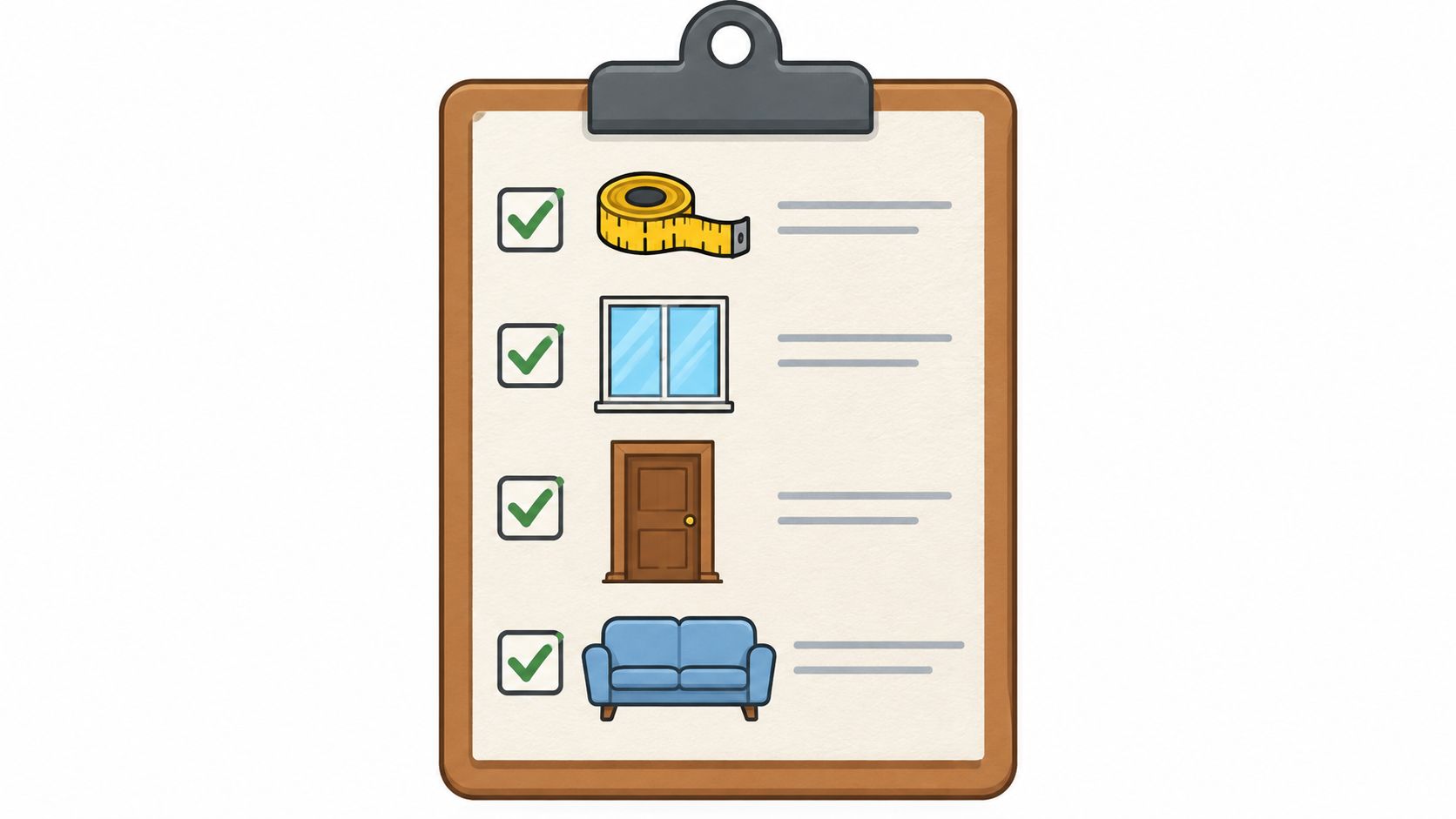
Start with the wall length, then measure every doorway, hallway, and stair turn the piece has to pass through. Add the walkway zones around the seating, then check the space between the sofa or sectional and the coffee table. If the room is tight, tape the footprint on the floor and walk around it before ordering.
For a deeper measuring walk-through, the guide on how to measure a luxury sectional correctly is a smart companion piece, especially for larger L-shapes and U-shapes. That kind of prep prevents the most common mistake, buying for the wall and forgetting the circulation around it.
Use the measurements to build the right order
At Groen's, Design it your way really means choosing pieces that match the home, not forcing the home to match the catalog. Custom Order Services can include Flexsteel upholstery options, Canadel dining customization, and Amish solid wood heirloom pieces for households that want something personalized and lasting. Their custom order start point gives shoppers a direct path from idea to finished room.
A sofa is the cleaner choice when the measurements say the room needs flexibility. A sectional is the smarter choice when the footprint can handle it and the household wants more seating in one organized zone. Either way, Special Financing and White-Glove Delivery make the process easier to manage from decision to installation.
Visit Groen's Fine Furniture in Dyer or Crown Point today to test drive the comfort in person and compare sofa and sectional layouts the practical way. Our family can help with custom options, special financing plans, and the kind of straight talk that makes furnishing a home feel simple. Visit Groen's Fine Furniture and let our family help you create a home you love.