Blog
Queen Gel Memory Foam Mattress: A Smart Buyer Guide

A couple in Northwest Indiana can spend weeks waking up hot, stiff, and irritated before finally admitting the mattress is the problem. The search usually starts online, then moves to a showroom in Dyer or Crown Point, where every bed promises cooling, support, and pressure relief. The difficult part isn't finding a queen gel memory foam mattress. It's identifying one that will still support two sleepers after the novelty wears off.
A queen mattress gives couples a practical shared surface without the room requirements of a king. The standard U.S. footprint is 60 inches by 80 inches, or 6,400 square inches, according to this queen mattress sizing reference. That space makes edge support, motion isolation, layer quality, and frame compatibility important decisions, not minor specifications.
For families in NWI, mattress shopping should be treated as a sleep-wellness decision rather than a quick furniture purchase. Groen's helpful mattress guide and an in-person comfort test can reveal whether a bed suits a sleeper's shoulders, hips, back, temperature, and sleeping habits. More guidance on the health value of the decision is available in this guide to investing in a high-quality mattress.
Why a Queen Gel Memory Foam Mattress Deserves a Closer Look
On a sticky summer evening in Northwest Indiana, a couple may arrive at a showroom with the same complaint: one partner wants the familiar cushion of memory foam, while the other can't stand waking up overheated. They aren't looking for a mattress that feels like a board, and they don't want to feel every turn, rise, or late-night trip across the bed. They need pressure relief without the trapped, warm sensation associated with some traditional foam beds.
That tension explains why gel memory foam became a meaningful mattress category. Traditional memory foam contours closely around the body, which can ease pressure at the shoulders, hips, and lower back. Gel infusion modifies that foam with a temperature-management feature intended to pull heat away from the immediate sleep surface. The goal is straightforward, preserve contouring comfort while reducing one of foam's most familiar complaints.
The category has grown beyond a novelty. One market report valued the global gel memory foam mattress market at USD 3.5 billion in 2024 and projected USD 6.2 billion by 2033, with a 7.2% projected CAGR from 2026 to 2033. The same report placed the broader global memory foam mattress market at about USD 9.76 billion in 2021, with a projected rise to USD 15.55 billion by 2028, showing that gel-infused foam sits inside a large mattress category rather than a tiny specialty niche. Those figures come from the gel memory foam mattress market report.
Why queen changes the decision
A twin gives one sleeper more room to avoid a weak edge or a warm spot. A queen has to serve two people across one shared surface. That makes motion transfer, temperature behavior, edge integrity, and firmness balance especially important.
Queen is also a dominant residential format in many major markets, so foam innovations are commonly introduced and compared in queen before spreading across other sizes. A 2026 statistics roundup reported that 56% preferred queen-size foam mattresses in 2023 sales data, reinforcing queen's role as a core format for foam innovation. The market and consumer overview provides that context.
The practical lesson is simple. Gel memory foam isn't a brand-new concept, and the gel label alone doesn't settle the purchase. The right mattress must match the sleepers' bodies, bedroom climate, preferred feel, support needs, and bed frame.
What Gel Memory Foam Actually Is and How It Differs
A gel memory foam mattress starts with the same basic material used in traditional memory foam, a viscoelastic polyurethane foam that responds to pressure and body heat. As the sleeper settles in, the foam softens beneath heavier areas and creates a close contour. That contour can reduce pressure, but dense foam can also restrict internal airflow and hold warmth.
Manufacturers introduce gel in several ways. Some mix beads or particles through the foam. Others create swirls or a dedicated gel layer above or within the comfort material. A third approach uses a gel memory foam comfort layer over a denser foam base. These constructions don't feel identical, so shoppers should ask to see the full layer diagram rather than relying on the word “gel.”
What gel changes, and what it doesn't
Gel changes the mattress's heat profile, not its fundamental identity. The foam still provides the familiar cradling feel and motion isolation. Density, firmness, layer thickness, and the support core still determine how much a sleeper sinks, how quickly the surface responds, and how well the mattress resists impressions.
Latex takes a different path. Its rubber-based structure feels more buoyant and responsive, allowing easier position changes and generally stronger airflow. An innerspring mattress relies on coils, which create bounce and open space for ventilation. Gel memory foam stays closer to the body and usually limits movement more effectively, but it doesn't deliver the lively lift of coils or latex.
| Material | Feel | Cooling | Motion Isolation | Typical Price |
|---|---|---|---|---|
| Gel memory foam | Contouring, close, cushioned | Better at the surface than traditional memory foam, design-dependent over time | Strong | Varies by construction and quality |
| Traditional memory foam | Deep contouring, slower response | More prone to heat retention | Strong | Varies by construction and quality |
| Latex | Responsive, buoyant, lightly contouring | Naturally breathable structure | Moderate | Varies by construction and quality |
| Innerspring | Bouncy, lifted, familiar | Strong airflow through coil space | Lower than dense foam | Varies by construction and quality |
A shopper who wants the classic body-hugging sensation but dislikes excessive warmth may prefer gel foam. Someone who wants effortless movement or a springy surface may prefer latex or coils. A plain-language explanation of the base material appears in this memory foam mattress guide.
Showroom rule: Gel should be treated as one layer in a comfort system, not as a substitute for a well-built mattress.
Cooling, Pressure Relief, and the Trade-Offs No One Talks About
Gel can create a noticeable cool sensation when a sleeper first lies down. Gel particles or phase-change materials can absorb and disperse some heat at contact, which is why a queen gel memory foam mattress may feel more inviting than conventional foam during the first part of the night. Independent testing notes that the effect commonly fades after 30 to 90 minutes, as the gel approaches body temperature. See the independent explanation of gel cooling behavior.
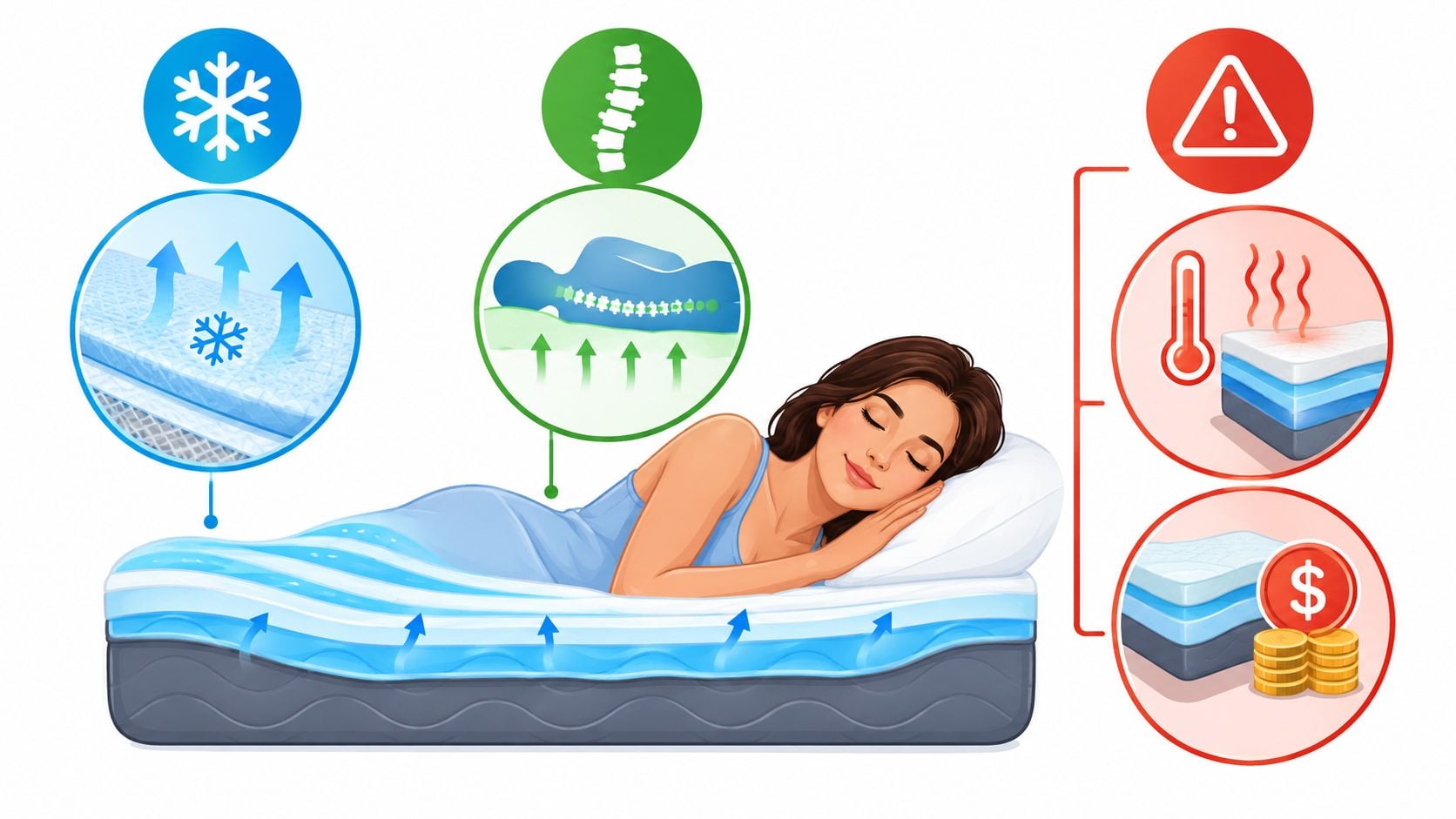
That doesn't make gel useless. It means the shopper needs to separate initial surface cooling from all-night temperature regulation. After the first phase, the cover fabric, open-cell structure, ventilation channels, bedding, room conditions, and foam density carry more responsibility. A thick, dense mattress can still sleep warm even when its label highlights gel.
Why pressure relief remains the strong suit
Gel memory foam preserves the central benefit of memory foam, close contouring. Side sleepers often appreciate the way the surface cushions the shoulder and hip, while back sleepers may prefer the way the foam fills the lower-back gap without creating a springy pressure point. Couples also benefit from the material's ability to limit movement across the queen surface.
The trade-off sits underneath the comfort layer. Higher-density foam generally lasts longer and resists compression, but its tighter structure can reduce airflow. Lower-density foam may feel softer and cooler initially, yet it can lose support sooner under nightly pressure. New foam can also release an odor during the break-in period, so ventilation and the manufacturer's care instructions matter.
Quality memory foam is commonly cited in the 3 to 5 lb/ft³ density range, with 4 lb/ft³ or higher generally viewed as more durable for regular use. The durability and heat trade-off is explained in this mattress longevity guide. The most useful buying question isn't “How much gel does it have?” It's “Where is the density, and how is airflow handled?”
For a broader look at cooling construction, shoppers can review this guide to cooling gel mattresses.
Matching the Mattress to the Sleeper
A mattress that feels supportive to a lighter side sleeper may feel unstable beneath a heavier couple. Weight, sleep position, and heat sensitivity must be considered together, because each variable changes how the foam compresses and how much warmth the sleeper experiences.
| Sleeper Profile | Recommended Firmness | Suggested Depth | Density Target |
|---|---|---|---|
| Under 130 pounds | Softer surface | 8 to 10 inches | Around 3 to 4 lb gel foam |
| 130 to 230 pounds | Medium or balanced medium-firm | Moderate layered profile | 4 to 5 lb transition foam |
| Above 230 pounds | Medium-firm to firm, with stronger support | 12 to 14 inches | 5 lb or higher support-focused construction |
| Couples with different needs | Split firmness or carefully tested medium feel | Chosen around the heavier sleeper | Dense core with stable edges |
These ranges are practical starting points, not a replacement for lying on the mattress. A sleeper under 130 pounds may need a softer, more responsive top layer to avoid feeling suspended above the comfort material. A sleeper between 130 and 230 pounds usually needs enough contouring to relieve pressure without allowing the pelvis to sink too far.
For sleepers above 230 pounds, density becomes the first screening tool. Independent guidance notes that memory foam can perform notably worse for people over 250 pounds, because heat and pressure accelerate softening, while lower-density foam can develop visible impressions and support loss in about 3 to 5 years. This discussion of memory foam advantages and limitations explains why heavier sleepers should prioritize the core, edge reinforcement, and overall construction over a plush showroom feel.
Position still controls surface firmness
Side sleepers need enough give at the shoulder and hip. Back sleepers generally need a medium cradle that supports the lumbar area without folding the pelvis downward. Stomach sleepers need a flatter, firmer surface to maintain spinal alignment.
Hot sleepers should look for breathable covers, open-cell foam, and well-designed airflow rather than accepting “gel” as a complete answer. Couples should test movement together and pay attention to edge support, especially when their weights or preferred firmness levels differ substantially. This body-type mattress guide offers another useful framework for narrowing the options.
Decoding Queen Size, Depth, and Layer Construction
A queen gel memory foam mattress should be read from the top down. The cover affects first-touch comfort and surface heat. The comfort layer controls pressure relief. The transition layer keeps the body from sinking abruptly into the base, and the support core determines whether the mattress remains stable under repeated use.
The four layers that matter
Top cover: Knit, breathable, or phase-change fabric can help move warmth away from the skin. A quilted cover may add softness, but extra padding can also alter the feel of the foam beneath it.
Comfort layer: This is commonly the gel-infused memory foam section, where contouring begins. Density in the 3 to 5 lb/ft³ range is a useful specification reference, but the layer's thickness and firmness still determine whether the bed feels plush or restrained.
Transition layer: Poly foam or zoned latex can prevent the sleeper from dropping through the comfort layer. This layer is often missing from simpler constructions, leaving the support core to do too much work.
Support core: A high-density base foam stabilizes the mattress and helps resist sagging. A base density of 1.8 lb/ft³ or higher is commonly used as a screening point in product specifications, but the full construction and warranty terms should also be checked.
Queen depth affects the whole bedroom
The standard queen footprint is 60 by 80 inches, but finished dimensions can vary slightly by manufacturer. Queen mattress depth isn't fixed either. Industry guides place common queen thicknesses at approximately 9 to 16 inches, which affects sheet fit, frame height, and how easy it is to sit down or get up. See this queen bed dimensions guide.
Before ordering, measure the foundation and confirm the slat design. The shopper should ask whether the frame supports the mattress and whether a deeper profile requires deep-pocket sheets. A bedroom can have a beautifully comfortable mattress that feels wrong because the frame creates too much flex or places the sleep surface too high.
For coordinated bedding, this 2024 blanket sizing guide helps clarify how a blanket should cover the queen footprint without interfering with the mattress's depth.

Frame check: A mattress doesn't perform independently of its foundation. Confirm support, slat spacing, height, and sheet fit before delivery.
Warranty, Trials, Certifications, and Smart Financing
A mattress policy deserves the same attention as the comfort test. Warranty length alone doesn't tell the full story. The useful details are the definition of a defect, the depth of a covered impression, the customer's responsibilities, and the cost of a replacement or return.
A practical checklist should include:
- Sag coverage: Look for written protection against a visible body impression greater than three-quarters of an inch, rather than coverage limited to manufacturing defects.
- Non-prorated terms: Determine whether the warranty remains non-prorated through the early ownership period. A prorated clause can shift replacement costs back to the owner.
- Trial requirements: A sleep trial of 90 nights or longer gives the body time to adjust, but the return policy may require a protector, charge a pickup fee, or impose a restocking condition.
- Certification paperwork: CertiPUR-US provides a formal content and emissions standard for flexible polyurethane foam used in furniture and bedding. The CertiPUR-US technical guidelines are the right place to review what the certification addresses.
- Financing terms: Check the total cost, promotional-period rules, deferred-interest language, and any early-payoff conditions.
The financing conversation should focus on buying power, not the lowest monthly figure. Special Financing may be available subject to credit approval, but the shopper should understand the complete obligation before signing. Delivery, setup, removal of the old mattress, and protection products can change the value equation when they're priced separately.
Groen's Fine Furniture can discuss mattress options, service details, and special financing subject to credit approval, while the mattress return policy should be reviewed before purchase. A clear policy protects both sides and prevents a comfortable showroom experience from becoming a frustrating delivery problem.
Testing in the Showroom and Caring for the Mattress at Home
A showroom test works best when it resembles actual sleep. The shopper should bring the pillow used at home, remove bulky outerwear, and lie down in the normal sleeping position instead of sitting briefly on the edge. A few minutes may reveal initial comfort, but a longer, quiet test reveals whether the shoulders, hips, and lower back remain relaxed.
A focused test routine
Lie down normally. Test the preferred position and allow the foam to respond. Side sleepers should check shoulder and hip pressure. Back sleepers should notice whether the lumbar area feels supported. Stomach sleepers should confirm that the hips don't drop too low.
Bring the partner into the test. One person should change positions while the other stays still. Couples should also sit near the edge and lie close to the perimeter to evaluate stability.
Check the foundation. Ask whether the existing platform, adjustable base, or frame is compatible. The correct queen footprint won't compensate for a weak or unsuitable support system.
Inspect the care and delivery plan. Confirm setup, protection, removal, and the instructions for expansion or initial ventilation when applicable.
At home, use a supportive base and follow the manufacturer's spacing requirements. Rotate the mattress head-to-foot every three to six months during the first year, use a breathable protector instead of vinyl, vacuum the surface quarterly, and spot-clean with mild detergent only. Jumping or standing on the mattress can damage the foam layers and should be avoided.
For additional maintenance ideas, homeowners can review expert tips from Eco Clean Solutions. A service call may be appropriate when a visible impression becomes deeper than one and a half inches, firmness differs sharply across zones, or a new odor continues beyond the expected break-in period. Document the condition with photographs and keep the purchase and warranty records accessible.
Bringing It All Together at Groen's Fine Furniture
The right queen gel memory foam mattress is difficult to choose from a screen because comfort depends on body shape, sleep position, partner movement, and the interaction between mattress depth and foundation. An in-person visit lets shoppers compare gel memory foam, hybrid, and traditional memory foam feels on the same floor instead of guessing from descriptions.
Groen's Fine Furniture has served Northwest Indiana since 1983, with showrooms in Dyer and Crown Point and a multigenerational ownership model. The local service area includes St. John, Schererville, Munster, and surrounding NWI communities. That local connection matters when a buyer needs guidance on an adjustable base, platform frame, existing bedroom furniture, delivery access, or post-purchase questions.
What to bring to the showroom
- Bedroom measurements: Include the frame, doorway, stairway, and current mattress depth.
- The regular pillow: Familiar head and neck support makes the test more useful.
- The partner: Two sleepers should test motion transfer, edge stability, and firmness together.
- A realistic amount of time: Setting aside approximately 45 minutes allows several mattresses to be tested without rushing.
The store's mattress assortment includes Serta and Beautyrest options, along with sleep solutions that can be matched to an adjustable base or existing bed. White-Glove Delivery can simplify in-home setup and may include old mattress removal depending on the selected service. Special Financing, subject to credit approval, can provide buying power while the household evaluates the full value of the mattress, delivery, setup, and long-term support.
Groen's broader furniture offering also supports the rest of the room. Flexsteel represents a durability-focused furniture option, Bassett adds style flexibility, and custom Canadel dining or Amish solid wood furniture allows homeowners to design pieces their way. Those services aren't substitutes for mattress testing, but they reflect the same local approach, honest pricing, personal guidance, and furniture selected to last.
Visit Groen's Fine Furniture in Dyer or Crown Point to test a queen gel memory foam mattress alongside hybrid and traditional options, compare foundation compatibility, and ask about White-Glove Delivery and Special Financing subject to credit approval. Bring the partner, the bedroom measurements, and the usual pillow, then let the Groen's family help create a more comfortable home.