Blog
Hybrid Mattress What Is It and Why Choose One

A hybrid mattress combines a supportive innerspring coil core with plush foam or latex comfort layers, giving sleepers both responsive bounce and pressure-relieving contouring. Many true hybrids also use a 6- to 8-inch pocketed-coil core, about 2 to 4 inches of foam comfort layers, and a transition layer, according to Sleep Foundation's hybrid mattress guide.
A sore back, a numb shoulder, or waking up overheated can make the search for a new mattress feel more urgent than expected. For homeowners in Dyer, Crown Point, and communities across Northwest Indiana, understanding the construction can make that decision much less confusing. A hybrid isn't a mattress with springs and foam placed together. It's a coordinated sleep system designed to provide a stable foundation beneath the body while cushioning the places that need relief.
Understanding the Hybrid Mattress Concept
After a long day, you may want a mattress that feels cushioned when you lie down but still supports you as you turn. A hybrid mattress addresses both needs by combining an innerspring coil support core with comfort materials such as memory foam or latex. Its design balances bounce, support, pressure relief, and durability, giving different materials distinct jobs. Industry guidance on hybrid mattresses describes hybrids as a blend of traditional spring support and specialty foams.
A well-built home offers a useful comparison. The coil system works like the foundation. It supports the structure, distributes weight, and allows air to move through the mattress interior. Foam or latex forms the comfortable living space above that foundation, shaping the surface, cushioning pressure points, and influencing the way the bed feels when you first lie down.
The foundation and the comfort above it
An all-foam mattress uses foam for both deeper support and surface cushioning, while a traditional spring mattress depends more heavily on its coil system. A hybrid divides those responsibilities. Coils provide lift and responsive movement, and the upper comfort materials soften the contact between your body and the support core.
That division suits sleepers who want support without a rigid sensation. Someone who changes positions may value the spring response. Someone with sensitive shoulders or hips may prefer the contouring feel of foam or latex. Your sleeping position, body shape, and preferred surface feel all affect which balance feels comfortable.
The category developed as manufacturers paired coil springs with foam layers to combine the contouring associated with foam beds and the responsive feel of springs. The design later became a familiar mattress category in retail and consumer discussions, rather than remaining a specialty construction.
Practical rule: A hybrid should feel like two systems working together, not like a thin foam topping placed over ordinary springs.
The best way to judge that balance is to lie on the mattress yourself. In a local family-owned showroom, you can compare surfaces, notice how easily you move, and pay attention to pressure around your shoulders and hips before committing to an online checkout. That hands-on experience connects construction with your actual comfort.
Sleep wellness also includes the way your mattress may affect your body and next-morning energy. This resource on how a mattress affects mood and mental health offers useful context for shoppers replacing a bed after months of restless nights.
The Anatomy of a Hybrid Sleep System
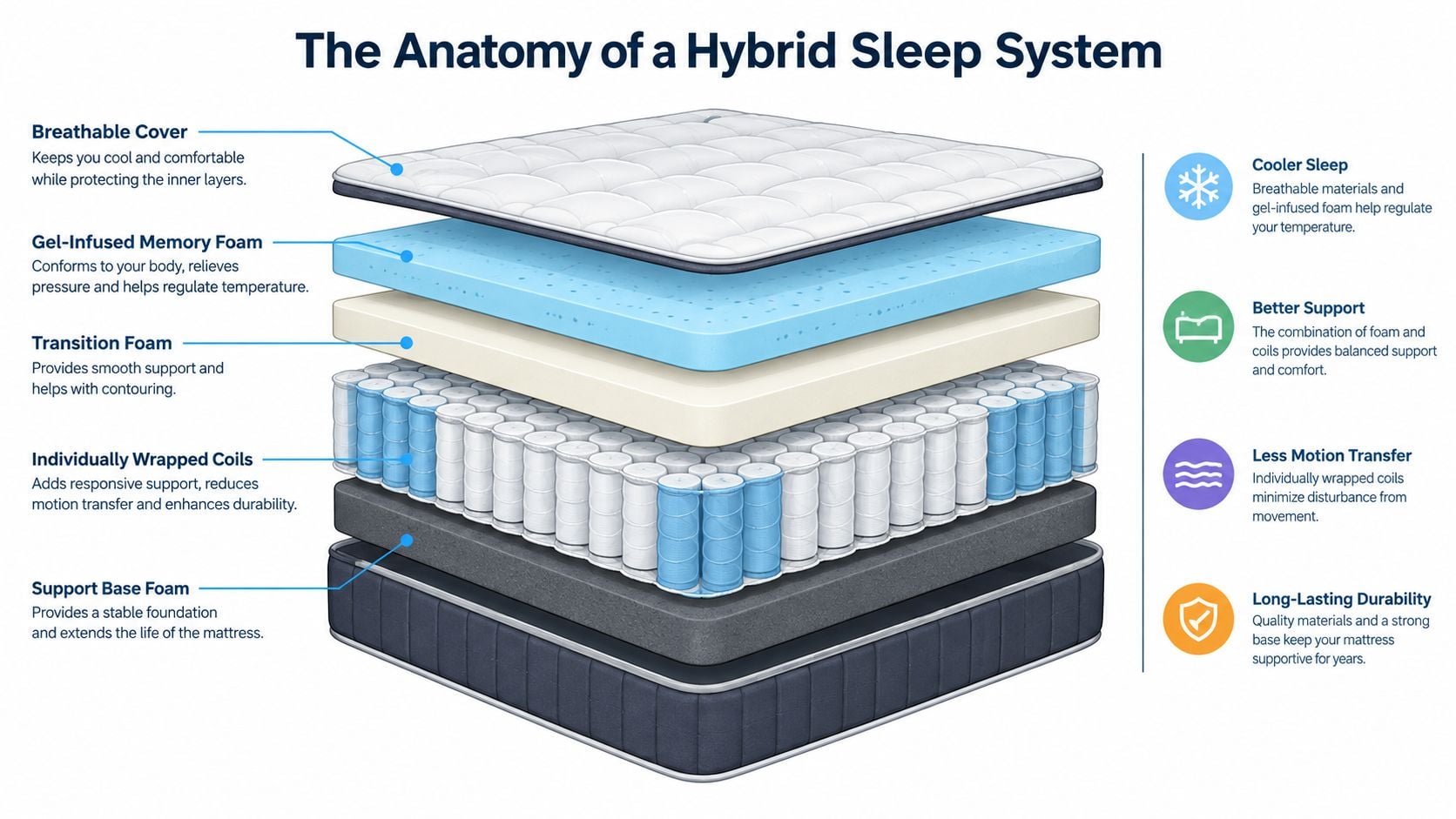
A hybrid mattress works like a well-built home. The surface welcomes you, the middle distributes weight, and the foundation carries the load. Examining those layers from top to bottom makes the construction easier to understand.
The comfort layer
The top zone is the first part your body feels. It may use memory foam, latex, or other cushioning foams to soften contact and cradle pressure-sensitive areas such as the shoulders, hips, and lower back.
This layer gives the mattress much of its surface character. Contouring materials can create a gently hugging sensation, while latex and responsive foams may feel springier and make turning easier. Neither feel is automatically better. Body shape, sleeping position, and your preference for a held or lifted sensation determine which surface feels right.
Many construction guides describe three functional zones: a comfort layer on top, a transition layer in the middle, and a pocketed-coil support layer below. This explanation of the three-zone hybrid structure shows how the zones work together to balance cushioning, spinal support, and motion response.
The transition layer
The middle layer acts as a buffer between your body and the springs. It distributes pressure from the comfort materials into the support core, helping you settle gradually rather than feeling the coil unit abruptly beneath softer foam.
It also helps the mattress maintain a more even feel across different sleeping positions. A side sleeper may need room for the shoulder and hip, while a back sleeper may look for steadier support through the center of the body. The transition zone connects those needs, much like a floor system that spreads weight between a room and its foundation.
Material choice changes the experience. Readers comparing options can review what a memory foam mattress is before choosing between a memory-foam-forward hybrid and a more buoyant design.
The pocketed-coil support core
The bottom layer is the support engine. In a true hybrid, it generally uses individually wrapped pocketed coils. Each coil compresses on its own, so movement does not travel across the surface as broadly as it can through older interconnected spring designs.
That independent action lets the mattress respond more closely to the body, limit whole-bed sinkage, and preserve a responsive feel while helping separate movement between sleepers. Construction guidance commonly describes a 6- to 8-inch pocketed-coil core, approximately 2 to 4 inches of foam comfort material, and an additional transition layer as a practical quality target. Sleep Foundation's construction guidance explains how these components function as one system.
A showroom test completes the picture. At a local family-owned mattress showroom, you can lie on several constructions, notice how the layers respond beneath your shoulders and hips, and compare movement before choosing a bed. That experience connects the blueprint to your actual night of sleep.
Comparing Hybrids to All-Foam and Innerspring Beds
Choosing a mattress becomes easier when the trade-offs are visible. An all-foam bed, a traditional innerspring, and a hybrid can all feel comfortable in a showroom, but they respond differently during a full night of sleep.
All-foam beds often provide a close, molded feel. Dense foam can absorb movement effectively, which may appeal to couples who don't want to feel every turn. The same dense construction can retain more warmth and may provide less edge reinforcement, depending on the design.
Traditional innerspring beds usually offer a familiar bounce and an airy feel. Their limitations can appear when the surface doesn't provide enough cushioning for shoulders, hips, or other pressure-sensitive areas. A hybrid adds foam or latex above the coil system to address that gap.
A practical side-by-side view
| Feature | Hybrid Mattress | All-Foam Mattress | Traditional Innerspring |
|---|---|---|---|
| Temperature regulation | The open coil base creates airflow channels through the interior, which can help the mattress sleep cooler than many all-foam designs. | Denser foam can hold more warmth, depending on its structure and materials. | The spring structure can feel airy, although surface cushioning varies. |
| Pressure relief | Foam or latex comfort layers cushion the body over the coil support core. | Foam provides close contouring and a more enveloping feel. | Pressure relief depends heavily on the amount and quality of padding above the springs. |
| Edge support | The responsive support system often creates a stable perimeter, though construction varies. | Edge stability depends on the foam density and reinforcement used. | Spring edges can feel supportive, but the surface may offer less contouring. |
| Responsiveness | Coils provide rebound, making position changes easier for many sleepers. | Foam may respond more slowly, particularly when it has a deep, embracing feel. | Springs offer noticeable bounce and quick response. |
| Motion isolation | Individually wrapped coils can limit movement transfer, but the spring layer may still feel more active than dense foam. | Dense foam commonly absorbs movement strongly. | Connected spring systems may transmit more movement across the surface. |
| Overall feel | A middle ground between buoyancy and contouring. | Close, cushioned, and pressure-relieving. | Buoyant, traditional, and spring-forward. |
The cooling difference has a straightforward mechanical explanation. Hybrid mattress construction guidance explains that the open coil base permits passive airflow between the wrapped coils and through the mattress base. That open structure can reduce trapped air compared with a dense all-foam interior.
A hybrid isn't automatically the right answer for every sleeper. Someone who prioritizes maximum motion isolation may prefer a dense foam feel, while someone who wants pronounced bounce may enjoy a traditional innerspring. Shoppers who want both pressure relief and an active surface often find the hybrid category worth testing. A detailed hybrid versus innerspring mattress comparison can help clarify those differences before a showroom visit.
Who Benefits Most from a Hybrid Design
A hybrid mattress may suit a sleeper who wants cushioning without feeling held in place. Consider someone who starts the night on their side, rolls onto their back, and changes position again after waking with stiffness. The comfort layers cushion the body, while the support system helps the surface respond as movement begins.
Combination sleepers and active sleepers
Combination sleepers often need a bed that makes turning feel manageable. Foam can soften pressure, yet excessive sink may make repositioning feel like climbing out of a low chair. Responsive coils beneath the comfort layers provide lift, so the surface can follow a sleeper who moves through several positions.
Some people prefer sleeping “on” a mattress, with a steadier, more buoyant feel. Others relax more fully when the comfort layers surround them. Neither preference is universal. Lying on a mattress in a showroom can reveal the difference more clearly than a product description.
Couples with different preferences
Partners may need different things from the same sleep surface. One person might sleep on their side and look for cushioning at the shoulder and hip, while the other sleeps on their back and wants a steadier base. The layered structure can offer both types of comfort within one mattress.
Individually wrapped coils may reduce movement transfer compared with older connected spring systems. A hybrid can still feel more responsive than dense foam, but that liveliness may appeal to couples who want less disturbance without giving up an easier, springier feel.
People who feel warm at night
A sleeper who likes foam cushioning but tends to feel warm may appreciate the open space around a coil support layer. Air can move through that structure, while the cover and comfort materials also affect how the mattress feels overnight. Room temperature, bedding, and personal sensitivity matter as well, so no hybrid feels equally cool to every person.
Sleepers seeking pressure relief and stable support
A hybrid combines a structured support base with cushioning materials above it. The result works much like a well-built home: the upper layers provide comfort, while the foundation helps keep the body from settling unevenly. The construction suits sleepers who want pressure relief and a more stable feel in the same bed.
People with joint sensitivity may appreciate cushioning around pressure points, especially at the shoulder and hip. Side sleepers often notice this balance quickly. A surface that feels too firm can create pressure, while excessive sagging may leave the body out of alignment. Body shape, sleep position, and personal comfort all influence the right choice. The mattress guide for different body types offers a useful way to think through those fit questions before visiting a local showroom.
Finding Your Perfect Hybrid at Groen's Fine Furniture
Online specifications can explain construction, but they can't fully describe how a mattress feels under a particular body. Firmness, cushioning, rebound, and pressure relief interact differently for every sleeper. A person shopping in Northwest Indiana benefits from lying on several options, changing positions, and noticing whether the hips and shoulders feel supported rather than reading a label.
Hybrid mattresses have become a significant part of the broader mattress category. A BedTimes Magazine report on hybrids states that hybrids reached 20% of current mattress types, reflecting consumer interest in beds that combine support and pressure relief.
A more personal way to shop
Groen's Fine Furniture offers mattress choices from Serta and Beautyrest, giving local shoppers an opportunity to compare construction and comfort in person. The team can help a shopper think through sleeping position, body comfort, temperature preferences, partner disturbance, and the desired balance between soft cushioning and stable support.
That conversation matters because a mattress can sound ideal on paper and still feel wrong after several minutes of testing. A practical showroom visit may include:
- Position changes: Testing side, back, and combination-sleeping positions rather than staying still.
- Pressure awareness: Noticing whether the shoulder and hip feel cushioned without allowing the middle of the body to sag.
- Movement checks: Rolling over and sitting near the edge to evaluate response and stability.
- Partner considerations: Testing how movement feels when two people lie on the same surface.
The buying process should also remain comfortable financially. Special Financing is available, subject to credit approval, which can provide additional buying power for households fitting a quality mattress into an existing budget. Honest guidance should include both comfort and affordability, without promising a particular rate or payment arrangement.
Groen's has served Northwest Indiana since 1983, with showrooms in Dyer and Crown Point and a multigenerational ownership approach. The store's broader furniture offering includes Flexsteel for durability, Bassett for style, Canadel custom dining, and Amish solid wood furniture for buyers seeking craftsmanship and made-to-order details. For mattress shoppers, the mattress return policy is another important part of reviewing the purchase before making a decision.
Your Next Steps Toward Better Sleep Wellness
The answer to “hybrid mattress what is it” becomes simple once the layers are understood. A hybrid combines a responsive coil foundation with cushioning foam or latex above it, creating a sleep surface that can feel supportive, pressure-relieving, breathable, and easier to move across.
The best match still depends on the sleeper. A side sleeper may focus on shoulder and hip cushioning. A back sleeper may pay closer attention to midsection support. A couple may prioritize edge stability, motion control, and a comfort compromise that works for both people.
The right mattress should make the body feel supported before the sleeper has to think about support.
Residents throughout NWI can visit Groen's Fine Furniture in Dyer or Crown Point to test hybrid mattresses in person. The surrounding service area includes St. John, Schererville, and Munster, making a local showroom visit practical for families who want guidance rather than a faceless online checkout.
Groen's team provides 5-star service, personal mattress guidance, and White-Glove Delivery designed to carry the purchase through delivery and setup. That personal attention matters when a mattress supports nightly rest, household routines, and long-term sleep wellness.
Visit Groen's Fine Furniture in Dyer or Crown Point to compare hybrid mattresses from trusted brands, test the comfort in person, and ask about Special Financing, subject to credit approval. The family-owned team can help Northwest Indiana households find a sleep system that fits their bodies, their homes, and their budgets.