Find Your Perfect 3 Piece Sectional in NW Indiana


A lot of Northwest Indiana homeowners start the same way. The old sofa no longer fits the way the room gets used. Family movie nights feel crowded, guests end up pulling in dining chairs, and the living room never quite feels finished.
That's where a 3 Piece Sectional often changes everything. It gives a room shape, adds generous seating, and helps daily life feel easier without looking stiff or overplanned. For homes in Dyer, Crown Point, St. John, Schererville, and Munster, that matters because living rooms often do double duty. They host quiet evenings, game days, holiday gatherings, and everything in between.
Finding Your Perfect Living Room Anchor in NWI
A common local scenario goes like this. A family moves into a home in Crown Point or updates a longtime house in Dyer. They want seating that feels welcoming, but they don't want the room swallowed up by furniture. A loveseat feels too small. A standard sofa leaves empty corners. Individual chairs look nice, but they don't always create that easy, gathered feeling people want.
A 3 piece sectional solves that problem in a practical way. It creates one connected seating zone, but because it's built from separate units, it can feel more flexible than many shoppers expect. That's one reason sectional sofas became such a strong choice worldwide. Sectional sofas captured a 28.76% market share in 2025, making them the largest product type by consumer preference, according to Mordor Intelligence's sofa market research.
For homeowners trying to make a room feel complete, the sectional often becomes the visual anchor first and the seating solution second. It tells everyone where to gather. It also helps define what belongs around it, from end tables to lamps to artwork. For anyone finishing a room after choosing the sofa, these inspiring large wall art ideas can help with the wall behind the sectional without making the space feel busy.
A living room usually feels easier to decorate once the main seating piece is right. The sectional sets the tone for comfort, scale, and traffic flow.
North American households have leaned into sectionals because flexibility matters. Some families want one corner reserved for reading. Others want a chaise for stretching out after work. Others need enough seating that no one ends up perched on the edge of an accent chair during gatherings.
For a lot of homes across NWI, a 3 piece sectional lands in the sweet spot. It feels substantial, but it can still be fitted to the room instead of forcing the room to work around it.
What Exactly Is a 3 Piece Sectional
A 3 piece sectional is one sofa made from three connected furniture pieces. In everyday terms, it works like a room-sized puzzle. Each section has its own shape and purpose, and together they create one finished seating area that feels built for the space.
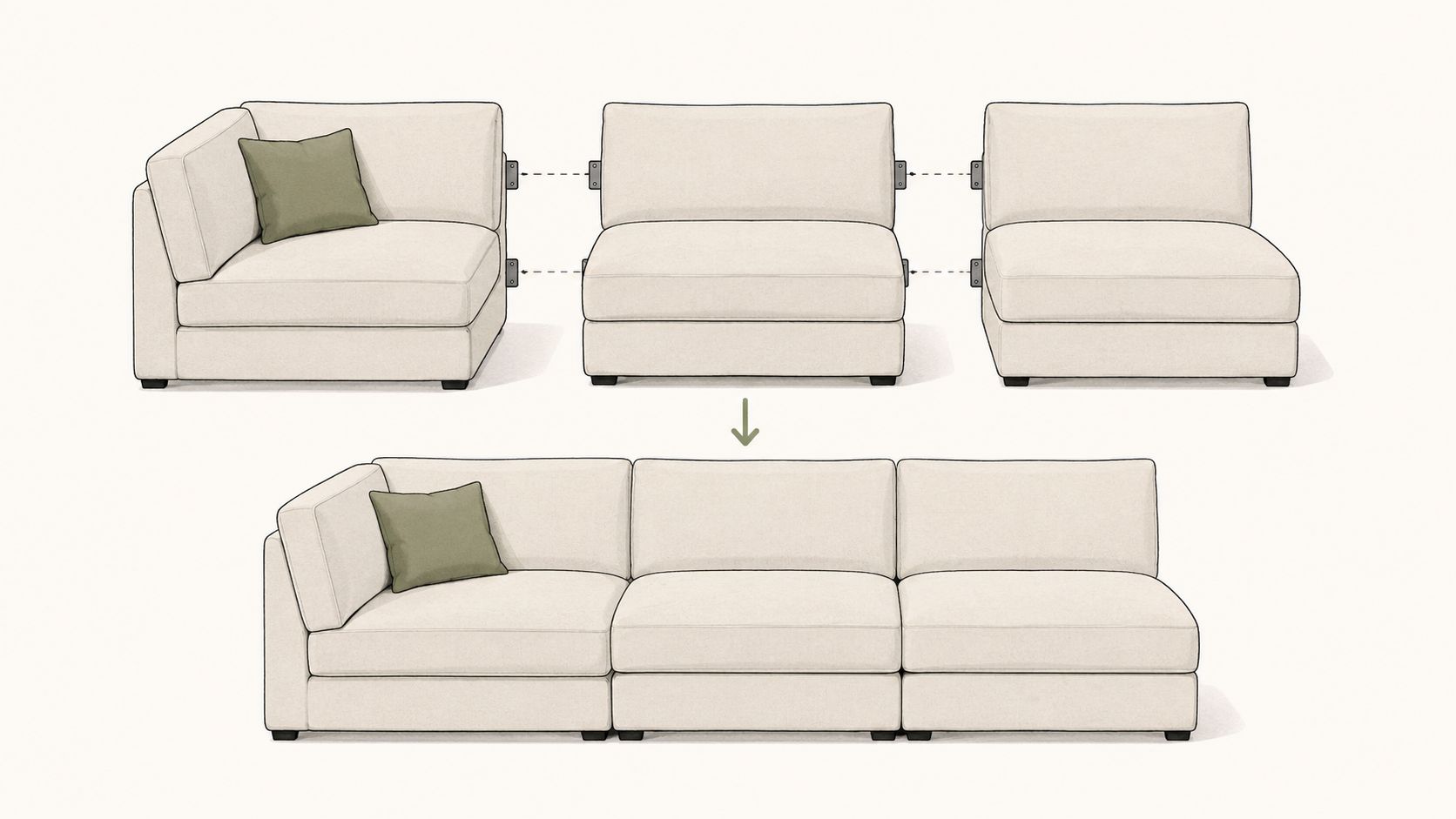
That separate-piece design is a big reason shoppers in NWI often choose this style. A sectional can look large on the sales floor but still come into the house in manageable sections. The catch is that delivery success depends on the largest single piece, not just the final size once everything is connected. That is the delivery dimension trap, and it surprises people more often than it should.
The three pieces you'll usually see
A 3 piece sectional usually includes some version of these parts:
- Left-arm facing piece (LAF). The arm is on the left when you stand facing the sectional.
- Corner or wedge piece. This is the turning point that connects the layout.
- Right-arm facing piece (RAF). The arm is on the right when you stand facing the sectional.
Some models replace one end with a chaise. The structure still follows the same basic idea. Three distinct sections join together to create one larger seating arrangement.
LAF and RAF trip up plenty of shoppers because the terms describe the piece from the viewer's perspective, not from the seat. If a photo online makes the layout feel backward, that is usually the reason.
What the construction terms actually mean
The language used in a sectional description can sound more complicated than it needs to be. Here is the plain-English version.
- Modular units means the sectional arrives in separate sections that attach together.
- Corner-blocked frame means the frame has added reinforcement where stress builds over time, especially around joints and turns.
- Supportive seat foundation means the seats are built to hold their shape better with regular use.
Each of those details affects how the sectional feels after months of movie nights, naps, and family gatherings. A reinforced frame helps the corner stay steady. Better seat support helps cushions feel more even from one spot to the next. Separate units can also make placement simpler in homes with tight entryways, stair turns, or older floor plans.
That last point deserves extra attention. A 3 piece sectional may be easier to bring inside than a one-piece sofa of similar size, but only if the biggest section can clear your doorway, hallway, and any sharp turns. For many NWI homes, that check is every bit as important as measuring the living room itself.
Helpful rule: Ask for the dimensions of the largest single sectional piece before you buy, then measure every path it must travel through your home.
If you want a clear explanation of sectional terms, layouts, and shopping basics before choosing a model, Groen's sectional buying guide is a helpful place to start.
A 3 piece sectional gives you the presence of a large sofa with the flexibility of separate sections. That balance is what makes it such a practical fit for homes that need comfort, function, and a realistic path from the front door to the living room.
Common Configurations and Their Dimensions
A 3 piece sectional can look similar in a photo and behave very differently in a real room. One layout keeps everyone facing each other for conversation. Another gives one seat that feels made for stretching out after work. A third helps define the living area in an open floor plan without making the room feel boxed in.
That is why configuration comes first. Size matters, but shape changes how people live with the sectional.
Common 3 Piece Sectional Configurations
| Configuration Type | Typical Dimensions | Best For |
|---|---|---|
| Sofa + wedge + sofa | Often a wide, balanced layout with a broad overall footprint | Conversation-focused living rooms and balanced seating |
| Sofa + corner + chaise | Usually longer on one side because of the chaise extension | Movie nights, stretching out, and casual family rooms |
| Loveseat-style end + corner + sofa | Often a bit more compact, depending on arm style and cushion width | Smaller households that still want a sectional feel |
| Symmetrical modular layout | Depends on the size of each unit and how the pieces connect | Open-concept rooms that need a centered seating zone |
The sofa + wedge + sofa arrangement is the classic choice. It works like a large gathering table for the living room. People can spread out, but the seating still feels shared. This shape often looks right at home facing a fireplace, TV, or big picture window because the layout feels centered and even.
A sofa + corner + chaise setup creates a different kind of comfort. It gives the room a clear lounging side, which many families love for reading, movie nights, or afternoon naps. If your household tends to settle in rather than sit upright and chat, this layout often feels more natural day to day.
The loveseat-end version can help if you want sectional seating without giving every wall to one piece of furniture. In the right room, it offers the comfort of a sectional while keeping the footprint a little easier to manage visually.
How dimensions affect the feel of the room
The easiest mistake is to look only at overall width. Width tells you how much wall or floor space the sectional claims. It does not tell you whether the piece will feel light, bulky, deep, upright, or lounge-like once it is in the room.
A few details shape that feeling:
- Arm style changes visual weight. Wide, padded arms make a sectional feel fuller and more substantial. Slimmer arms usually give you a cleaner look and sometimes a little more sitting room.
- Seat depth affects posture. A deeper seat often feels more relaxed, while a shallower seat can be easier for formal sitting or shorter family members.
- Seat height changes comfort in a quiet way. A seat that is too low can feel hard to get out of. A seat that is too high may feel less cozy.
- Visible legs create breathing room. When you can see space under the sectional, the whole piece often looks lighter.
Those measurements work together, much like the proportions of a dining chair. Two chairs can be the same width, but one feels airy and the other feels heavy because of the arms, base, and seat depth. Sectionals work the same way.
One more point matters here, especially for Northwest Indiana homes. The layout that looks best on a floor plan is not always the layout that is easiest to get into the house. A chaise section or long sofa section may be the largest single piece, and that piece is the one that has to clear the front door, hallway, stair turn, or basement entry. That is the delivery dimension trap many size charts miss.
For room-planning inspiration, these sectional sofa layout ideas can help you match the configuration to the way your household uses the room.
The best configuration supports conversation, comfort, and clear walking space. It also has to make sense for the path from your doorway to your living room.
A good sectional should anchor the room, not crowd it. Leave space for side tables, lamps, and the everyday paths people use without thinking. That is usually what makes a room feel comfortable long after delivery day.
How to Measure for a Flawless Fit
Most sectional advice stops at one sentence. Measure the room. That's good advice, but it's incomplete, and it's the reason many buyers run into trouble after they've already committed to a piece.
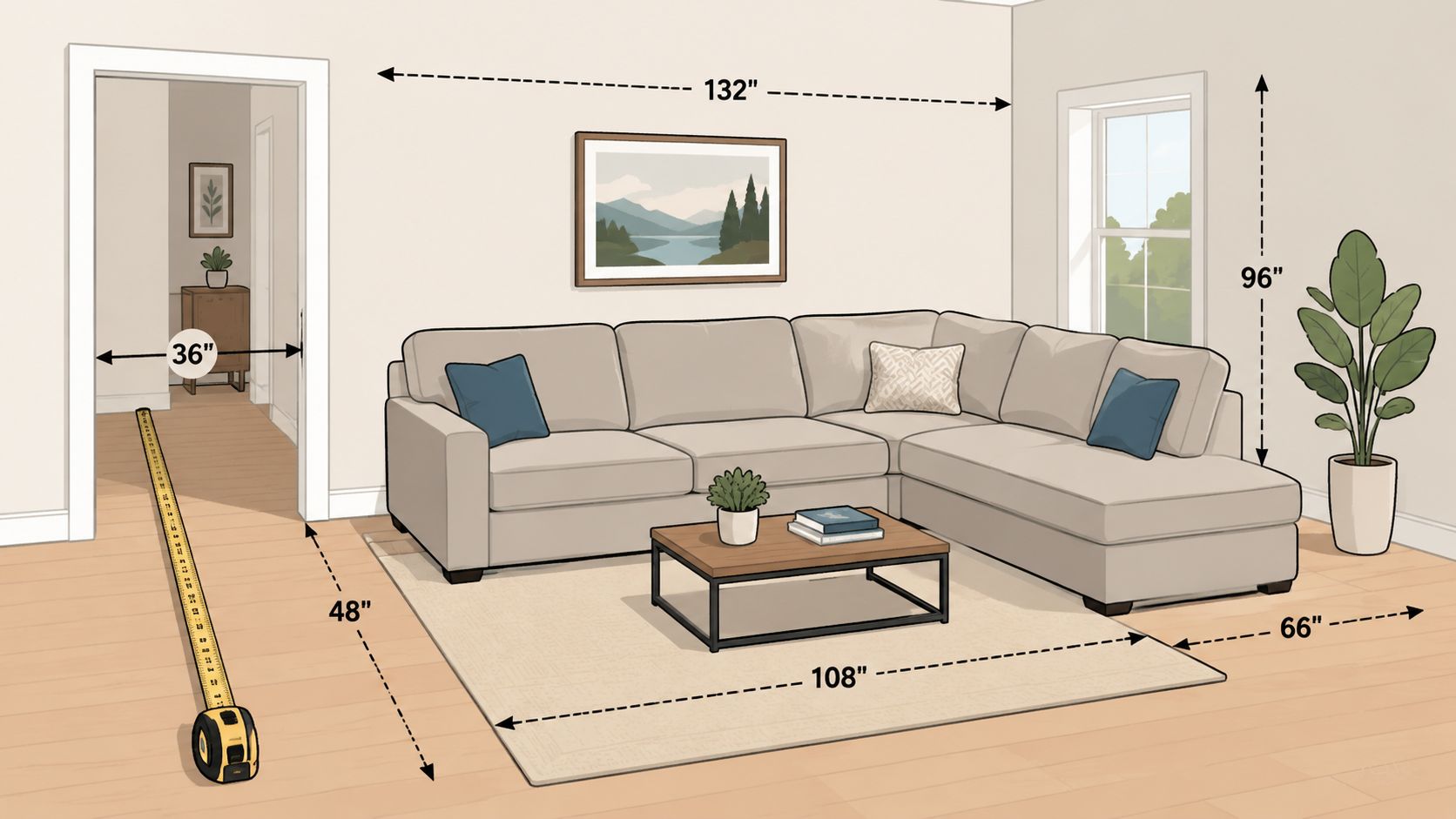
The core issue is the delivery dimension trap. A sectional can fit beautifully once it's inside the living room and still fail at the front door, stair landing, hallway turn, or basement steps. This matters in Northwest Indiana, where homes vary widely in age, entry layout, and room access.
The measurement most guides miss
According to Joybird's social FAQ post about modular sectionals, the largest single piece of a 3 piece sectional can be 94 to 115 inches long, while many apartment and older home doorways are under 32 inches wide, which can lead to delivery failures.
That one fact changes how people should shop.
It's not enough to know the full sectional width. The buyer needs the dimensions of the largest individual piece, then needs to compare that piece against every part of the delivery path.
A simple measuring routine
Use this order so nothing gets missed:
Measure the room footprint
Mark the area where the sectional will sit. Include nearby end tables, coffee table space, and walking room.Measure every entry point
Check the front door, side door, garage entry, apartment hallway, stairwell turns, and interior doorways.Check the tightest turn
A sectional piece may pass through a doorway but still get stuck pivoting into a hall or up a staircase.Ask for the largest piece dimensions
This is the key step. For many sectionals, the longest or deepest unit causes the problem.Account for railings, light fixtures, and low ceilings
These details create headaches more often than people expect.
For anyone preparing for a delivery or a room reset, these tips for moving furniture in Boston offer a useful outside perspective on disassembly and pathway planning that also applies to sectional deliveries in local homes.
What to write down before buying
A quick written checklist keeps the process calm:
- Door width and height
- Hallway width
- Distance between tight turns
- Stair width and ceiling clearance
- Largest sectional piece length and depth
- Final room placement dimensions
Measure the path first, then the room again. Most delivery problems happen before the sectional ever reaches the space where it's supposed to live.
For a practical walkthrough, this furniture measuring guide helps shoppers think through fit from both the room side and the delivery side.
Many people feel frustrated when they hear this because they've already measured the wall and thought they were done. But this extra step saves time, stress, and the disappointment of finding out a carefully chosen sectional can't make the final turn into the house.
Designing Your Sectional From Frame to Fabric
Once the fit is handled, the fun part starts. A 3 piece sectional then shifts from a floorplan choice to a personal one. Shape may bring the piece into the room, but materials decide how it lives there for years.
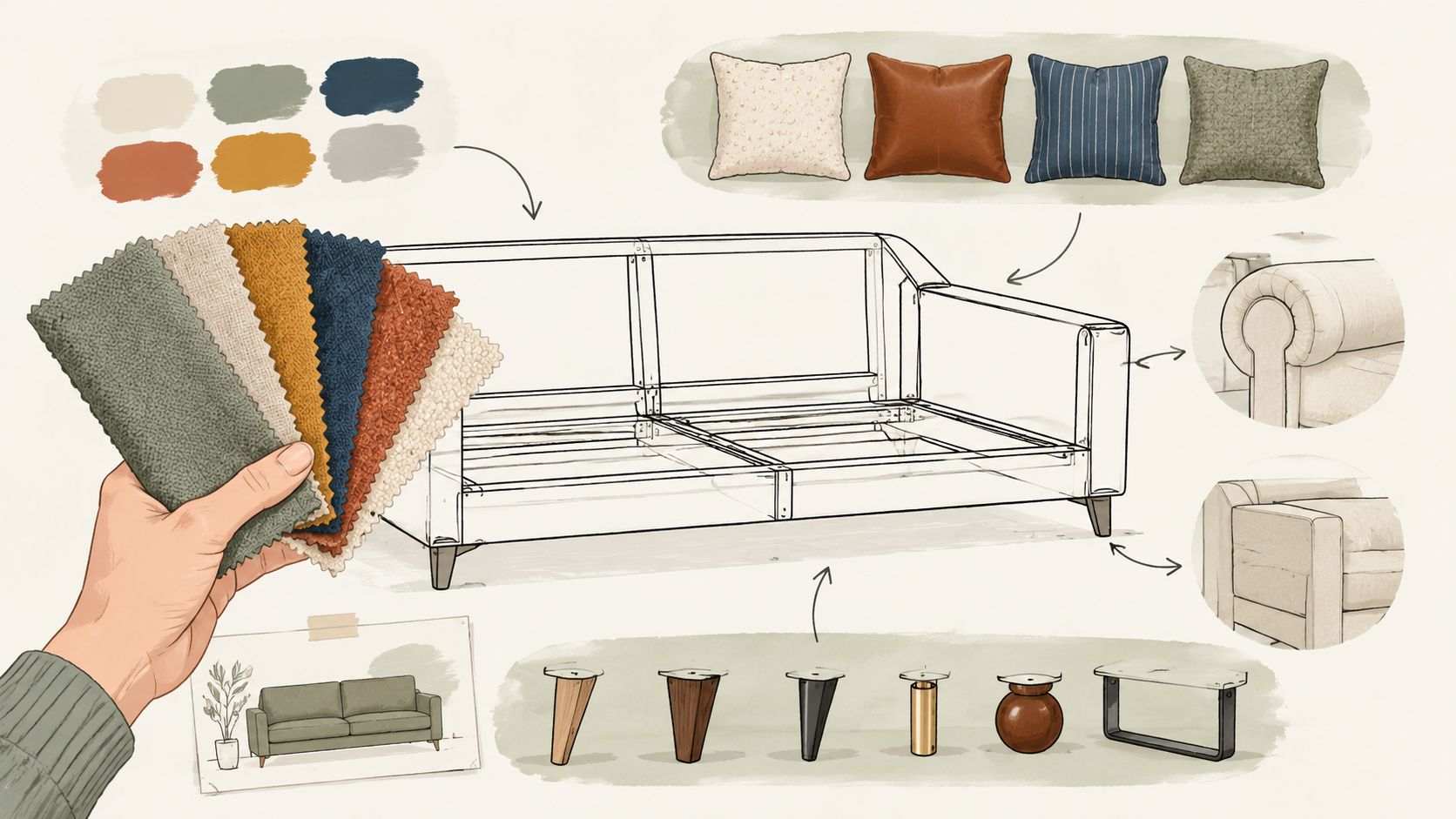
That starts with the frame. A strong frame helps a sectional keep its structure through daily sitting, stretching, climbing kids, and long weekends at home. Construction details such as reinforced corners and stable support matter because comfort isn't only about softness. It's also about whether the sectional still feels even and solid after real-life use.
Start with what the household needs
A good design conversation usually begins with lifestyle, not color.
- Busy family room. Performance fabrics often make sense because they're easier to live with when snacks, pets, and everyday messes are part of the picture.
- Dressier living space. A refined woven fabric or leather look can create a more polished feel.
- All-purpose gathering room. Medium-tone fabrics often hide daily wear better than very light or very dark extremes.
Flexsteel is often associated with durability, while Bassett is known for style flexibility. Both matter when the goal is long-term comfort instead of a short-lived trend piece. Shoppers looking at custom furniture usually find the best results when they choose a frame and cushion feel first, then narrow fabric from there.
Design it your way
Custom order services transform the experience. Instead of settling for a sectional that's almost right, a shopper can often choose arm style, body fabric, cushion feel, orientation, and sometimes leg finish. That bespoke approach feels much more natural in homes that already have a distinct style.
For example, dining customers often appreciate the flexibility of Canadel because it offers millions of possible combinations for custom dining sets, including table shapes, sizes, finishes, seating styles, and coordinating storage pieces, as described in this Canadel custom order guide. The same mindset helps with living room furniture. Design it your way, rather than forcing the room to match a limited floor sample.
One product example in this category is the Cameron 3 Piece Sectional listed by Groen's Fine Furniture, which is presented as a 3 piece sectional option with plush back cushions.
Don't forget the floor and surrounding finishes
A sectional doesn't live by itself. Fabric color, leg style, rug choice, and flooring tone all interact. Before finalizing upholstery, it helps to compare the sectional against the room's permanent finishes. For homeowners updating flooring at the same time, these tips on how to measure for new floors can help line up the bigger room plan.
For upholstery guidance, this fabric selection article is a useful next step.
A sectional lasts longer in style when the buyer chooses for daily life first and trend second. Rooms feel calmer when the piece fits the household, not just the photo inspiration.
The best custom decisions usually aren't flashy. They're the ones that make the sectional easier to enjoy every day, year after year.
Custom Orders and Financing at Groen's
Some shoppers assume custom means complicated. It doesn't have to. A well-run custom order process gives the buyer more control over the details that affect comfort, scale, and long-term satisfaction.
That's one reason customization matters so much in a sectional purchase. A household may need a specific orientation because of a fireplace wall, traffic pattern, or open doorway. Another may need a fabric that stands up better to pets. Another may want a cleaner arm style to suit a more transitional room. Bespoke furniture choices remove the pressure to settle for something that only works halfway.
Custom furniture without guesswork
The strongest custom-order experience usually follows a simple rhythm:
- Choose the layout that fits the room and household habits.
- Select the feel of the seating, including cushion support and depth.
- Refine the look through fabric, leather, leg finish, and silhouette.
- Coordinate the room with complementary pieces, whether that means a Bassett living room style, Amish solid wood accents, or a Canadel dining plan in a nearby space.
For shoppers who want a clearer picture of that process, this custom order starting guide lays it out in a straightforward way.
Affordable luxury and buying power
Quality furniture is an investment, and the right financing option can make better furniture more realistic for more households. Groen's Fine Furniture offers special financing subject to credit approval to help customers purchase quality furniture today while paying over time, which provides financial flexibility for a stress-free shopping experience, as noted on Groen's custom order page.
That kind of buying power matters when a shopper wants a sectional that will hold up, coordinate with the home, and still fit the budget plan. It also helps customers think in terms of value rather than compromise.
A complete experience also includes practical support after the order is placed. White-glove delivery matters because sectionals are large, modular, and often part of a bigger room refresh. When planning is handled well from order through installation, the home comes together with much less friction.
Your 3 Piece Sectional FAQs
A lot of families reach this point after they have chosen a style they love, then pause and ask the practical questions that decide whether that sectional will feel easy to live with for years. That is a smart place to slow down.
Here are the answers shoppers ask for most often.
What does LAF and RAF mean
LAF means left-arm facing. RAF means right-arm facing.
The key is the viewing position. You determine the side while standing in front of the sectional and looking at it, not while sitting on it. If the arm is on your left as you face the sofa, it is left-arm facing.
That one detail causes a lot of ordering mistakes, especially when a room can only fit one layout.
How many people can a 3 piece sectional seat
A 3 piece sectional often seats a full household comfortably, plus a guest or two, but the exact number depends on the design.
Here is why that answer varies. Wide track arms take up more space than slim arms. A chaise gives one person room to stretch out, but it does not always add the same seated capacity as a full sofa section. Deep seats can feel wonderfully relaxed, though they may fit fewer people in an upright seating position.
The simplest way to judge capacity is to look at usable seat width, not just the outside dimensions.
Can the pieces ever be used separately
Sometimes, yes.
A 3 piece sectional is built from separate units that connect together, but not every model is meant to look finished when split apart. Some pieces are fully upholstered on the sides and back, so they can stand alone in a pinch. Others are designed to work as one connected arrangement.
Ask whether each piece is finished on all exposed sides and whether the manufacturer recommends separate use. That answer matters if you rearrange often, move to a new home, or want flexibility for holidays and guests.
How long does assembly take
Many sectionals are fairly straightforward to set up. In many cases, the job is more like lining up puzzle pieces than building furniture from scratch.
Even so, careful placement matters. The sections need to sit level, the connectors need to lock in correctly, and the corners should meet cleanly so the sectional feels solid when people sit down. Delivery teams usually make this much easier, especially with larger layouts.
What size doorway is usually needed
There is no single doorway number that guarantees success.
Many shoppers encounter a common challenge with this. A sectional can fit the room and still fail the delivery path. The part that matters most is the largest single piece, because that is the piece that has to clear the front door, hallway turns, stair landings, and basement or loft entries.
For many Northwest Indiana homes, that is the true measuring test. Older homes, split-level layouts, tighter foyers, and sharp stair turns can all change what fits. A good rule is to measure every point along the path, then compare those numbers to the largest individual sectional piece, not just the overall dimensions shown online.
Room fit matters. Delivery fit decides whether the sectional can get inside.
How should a sectional be maintained
Good maintenance is simple and consistent.
- Vacuum regularly to remove dust, crumbs, and grit from seams and under cushions.
- Rotate reversible cushions, if your model allows it, so everyday wear stays more even.
- Blot spills quickly with a clean cloth instead of rubbing them into the fabric.
- Check connectors from time to time so the sections stay aligned.
- Watch direct sunlight, especially in bright rooms, because some fabrics and leathers can fade over time.
Small habits protect comfort. They also help the sectional keep its shape and appearance longer.
How should shoppers compare price levels
Start with value, not just the ticket price.
A lower-priced sectional may look appealing at first, but the better long-term comparison includes the frame, cushion support, upholstery durability, and how well the configuration fits your household. A sectional used every evening for movie nights, naps, and weekend guests needs different staying power than one in a formal room that sees light use.
Delivery planning belongs in that comparison too. A well-made sectional that fits your room but cannot clear the entry is not a bargain. That is why measuring the pathway and the largest single piece is just as important as comparing fabrics or seat depth.
A good purchase feels comfortable on day one and still feels like the right decision years later.
Let Our Family Help You Create a Home You Love
A good 3 piece sectional does more than fill a corner. It creates the place where people land after a long day, gather with family, host friends, and settle into the routines that make a house feel like home.
For Northwest Indiana shoppers, local guidance matters because every room and every delivery path is different. Groen's Fine Furniture has been serving Northwest Indiana as a family-owned business for over 30 years, with showrooms in Dyer and Crown Point, establishing a multigenerational legacy of 5-star service, according to its Houzz profile. That kind of local legacy matters when the goal is lasting comfort, honest pricing, and personal help rather than guesswork.
The right sectional should suit the room, the pathway, the household, and the style of the home. When those pieces come together, the living room feels settled in the best possible way.
Visit Groen's Fine Furniture in Dyer or Crown Point today to explore custom options and ask about special financing plans. Let their family help create a home you love, and test drive the comfort in person with guidance suited for Northwest Indiana homes.