Solid Wood Frame Sofas: A Guide to Lasting Quality

A lot of Northwest Indiana families start sofa shopping the same way. The old couch still looks decent from across the room, but every evening tells the truth. One seat sinks lower than the others, the arm gives a little when someone leans on it, and a quiet creak shows up during movie night.
That kind of wear frustrates people because it doesn't usually start with the fabric. It starts underneath. The frame decides whether a sofa stays supportive for years or turns into a piece the family tolerates until it's replaced.
Your Search for a Sofa That Truly Lasts
For homeowners in Dyer, Crown Point, St. John, Schererville, Munster, and across Northwest Indiana, the living room often does the hardest work in the house. It handles guests, naps, homework, holiday gatherings, and long winter weekends. A sofa in that room can't just look nice on delivery day. It has to keep doing its job.
Many shoppers have already been through the cycle. They bought a sofa that felt comfortable in the store, only to find that a few years later the seat looked tired, the back felt loose, and the whole piece seemed older than it should. That's usually when people start paying attention to something they couldn't see the first time around. The frame.
A solid wood frame sofa changes the conversation from short-term comfort to long-term value. Instead of shopping for a cushion that feels soft for ten minutes, families start shopping for a structure that can carry daily life well.
The broader market points in the same direction. In the North American wooden furniture market, the solid wood segment was the largest category, holding 42.3% of total market share in 2024, according to North American wooden furniture market data. That says something simple and important. A large share of buyers still wants durability and heirloom quality, not just a good first impression.
A sofa's style catches the eye, but the frame determines whether that style still feels good years later.
Families trying to shop smarter often benefit from practical basics before they ever visit a showroom. A helpful starting point is five things to look for in a new sofa or chair, especially for anyone comparing construction instead of just color and price.
A good sofa should feel like part of the home, not a temporary fix. That's why solid wood frame sofas matter so much in NWI homes. They're built around the part that carries the weight, absorbs movement, and protects comfort over time.
What a Solid Wood Frame Really Means
The word “wood” causes a lot of confusion in furniture shopping. A tag might say “wood frame,” and that sounds reassuring, but it doesn't always mean the frame is made from solid lumber. Shoppers need a more exact definition.
Real lumber versus built-up board
A solid wood frame uses actual pieces of wood for the structural parts of the sofa. Think rails, arms, supports, and base sections made from cut lumber rather than compressed scraps. That matters because the frame has to handle repeated pressure from people sitting down, shifting, and getting back up.
By contrast, some lower-grade frames rely heavily on particleboard, MDF, or other engineered materials. Those products can have a place in some furniture applications, but they don't behave like solid lumber when used in a high-stress seating frame. They're more like a formed board than a sturdy branch of the tree.
A simple way to think about it is this:
- Solid wood: individual pieces with natural grain and strength
- Engineered board: wood fibers, particles, or layers bonded together
- Metal framing: a different system altogether, often lighter in feel and different in sound
Why hardwood wording matters
Not all solid wood is equal. A second layer of quality appears in the phrase solid hardwood. Hardwoods such as oak, maple, or ash are commonly associated with stronger furniture construction because they're better suited to repeated daily use.
That's why exact wording matters so much in product information. “Wood frame” is vague. “Solid hardwood frame” is much clearer.
Practical rule: If a product description sounds broad, shoppers should ask for the actual frame material, not assume the best.
Readers who want a broader grounding in species and durability can get extra context from choosing the right hardwood for longevity and style.
The phrase that often gets overlooked
One of the most important details is whether the wood is kiln-dried. That term belongs right alongside “solid hardwood” because it speaks to how the lumber has been prepared before it ever becomes a sofa frame.
Without that detail, “solid wood” can sound better than it performs. Some shoppers stop at the first reassuring phrase and miss the difference between a frame that stays stable and one that may twist, warp, or loosen over time.
A well-built frame isn't just wood. It's the right wood, prepared the right way, and assembled with methods that respect how a sofa gets used every day.
The Foundation of Family Comfort and Durability
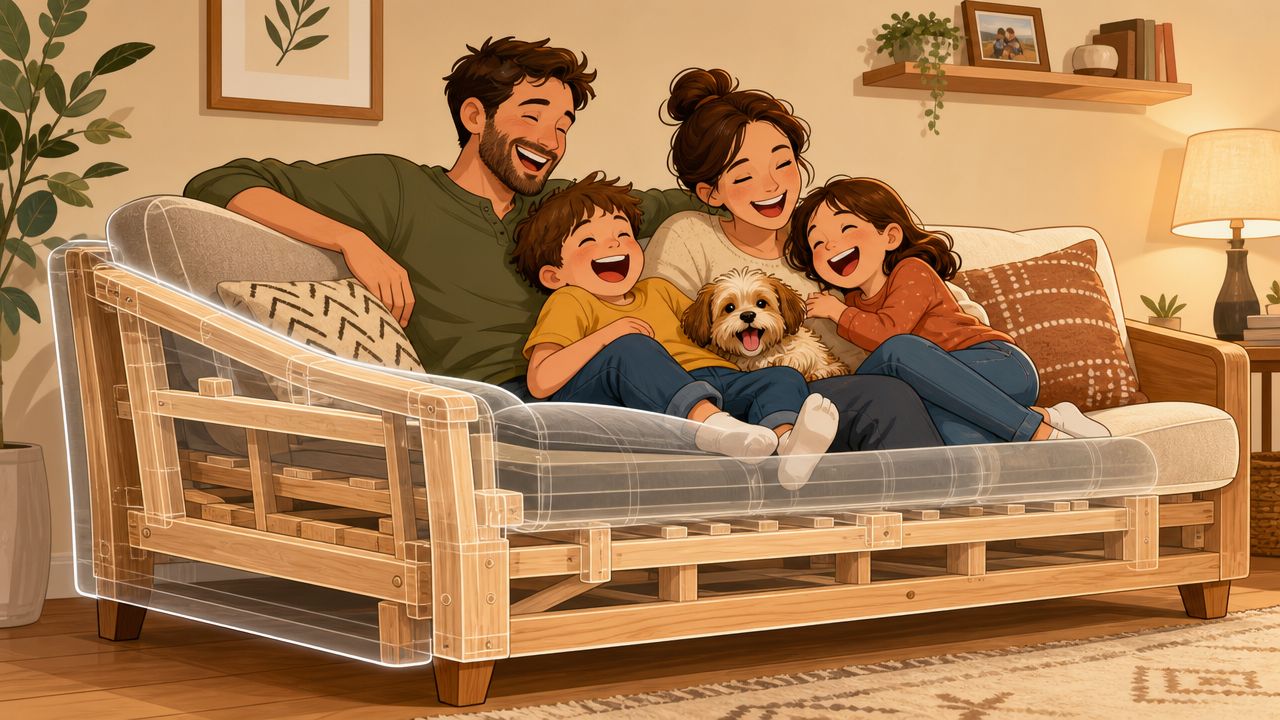
A strong sofa frame doesn't call attention to itself. That's the point. When the frame is doing its job, the family notices comfort, support, and quiet stability instead of sagging seats and shifting arms.
The biggest benefit of solid wood frame sofas is how they hold shape under regular use. Children climb onto them. Guests settle into the corners. Someone always chooses the same favorite spot. Day after day, the frame absorbs those forces and transfers them through the structure.
According to this explanation of solid wood frame stability, solid wood frames, especially those made from kiln-dried hardwoods, offer superior dimensional stability. Continuous wood members resist the flexing and twisting that happen during daily seating use, which helps prevent fabric from stretching or sagging and helps maintain seat depth and support.
Why families feel the difference
That technical point leads to a very practical outcome. A stable frame helps the whole sofa stay honest. Cushions sit where they should. The seat doesn't feel like it's slowly sliding forward. The upholstery isn't being pulled out of shape by a frame underneath that keeps shifting.
For a household, that means comfort lasts in a more predictable way.
- Seat support stays steadier: the sofa keeps its intended feel longer
- Fabric wears more evenly: the cover isn't fighting a twisting base
- The room stays quieter: less movement in the frame usually means less noise in use
Comfort is a structural issue
People often blame cushions when a sofa feels worn out. Cushions matter, but the frame is the platform beneath everything else. If that platform flexes too much, the seat loses its balanced feel even before the upholstery looks old.
A sofa that stays square and steady usually feels comfortable longer, because the frame keeps the rest of the construction working the way it was designed to work.
Solid wood frames make long-term value readily apparent. A better frame doesn't just survive longer. It protects the comfort people use every day. For families who want a living room anchor instead of another replacement project, that's one of the clearest reasons to choose solid wood frame sofas.
How to Identify a Truly High-Quality Frame
A showroom visit gets easier when shoppers know what to inspect. The frame may be hidden, but quality still leaves clues. A careful buyer can learn a lot by asking a few direct questions and paying attention to how the sofa feels in motion.
Start with the wood itself
The most important phrase to look for is kiln-dried hardwood. That detail says the wood has been dried in a controlled process to reduce the moisture problems that lead to warping and cracking later.
The difference is significant. According to this guide on sofa frame lifespan and kiln-dried hardwood, kiln-dried hardwood frames can last 10–20 years, while non-kiln-dried solid wood frames often fail within 5 years due to warping and cracking. That's why “solid wood” alone isn't enough. The drying process matters.
When a shopper asks about the frame, these are the best follow-up questions:
- What kind of wood is used: broad claims are less helpful than a specific answer
- Is it kiln-dried: this should be easy for a knowledgeable salesperson to confirm
- Are the structural rails and supports solid hardwood: this gets past decorative wording
Look at how the frame is joined
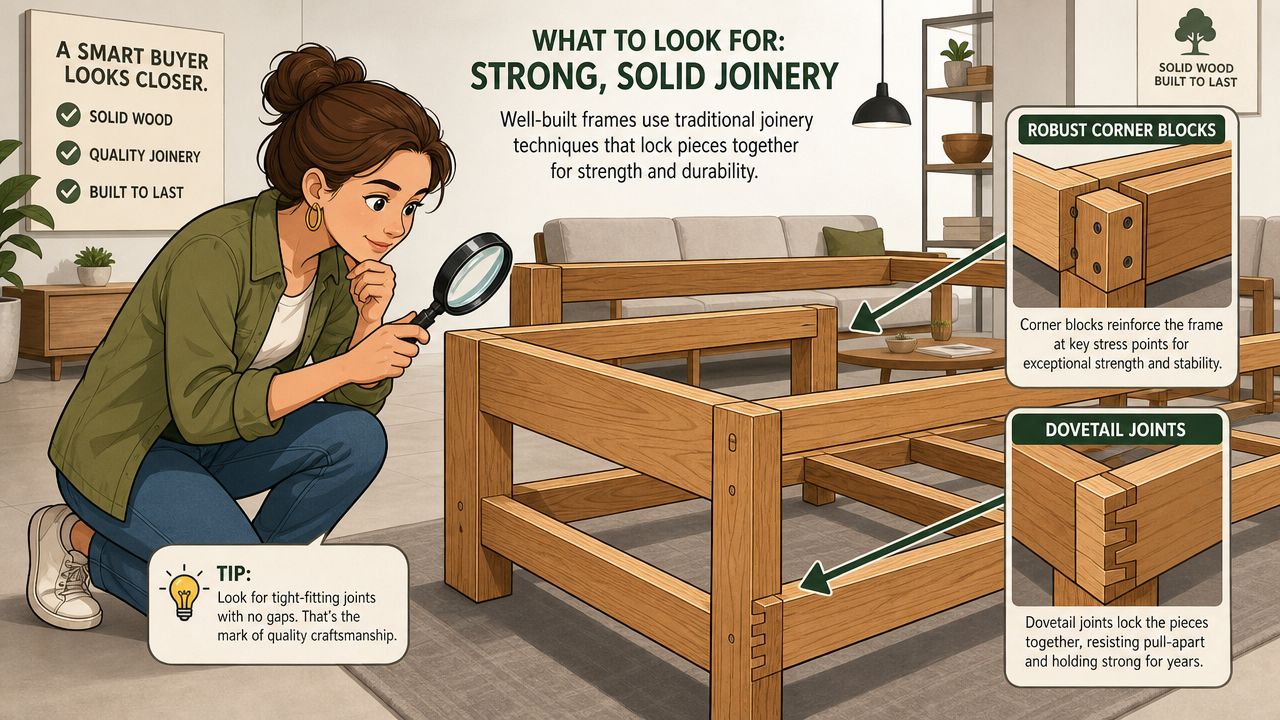
Joinery is where many quality differences show up. A sturdy sofa frame should rely on mechanical strength, not shortcuts. Reinforced corner blocks, dowels, and screws are good signs because they help the frame resist racking and loosening under motion.
Staples and thin connector pieces may save time in manufacturing, but they don't inspire the same confidence for daily family use.
A shopper doesn't need to be a woodworker to understand this. It's the same principle as a well-built staircase. The stronger the joints, the better the structure handles repeated stress.
Readers who want to understand one classic furniture construction method in plain language can review what mortise and tenon joinery means.
Showroom advice: Gently rock the sofa side to side. A quality frame should feel grounded, not twisty.
Don't ignore the suspension system
The frame and the suspension work together. A strong frame gives the suspension a stable base. If the frame is weak, even a decent seat support system has a harder time doing its job well over time.
Some sofas use hand-tied systems. Others use sinuous springs. The exact approach can vary by maker and style, but shoppers should still ask how the seat is supported and how that support is attached to the frame. The question isn't just “What springs are inside?” It's “How does the whole structure work together?”
A simple three-part inspection
For a practical showroom check, this sequence works well:
Read the construction tag
Look for clear language such as solid hardwood and kiln-dried.Test the motion
Sit, shift, lean on an arm, and notice whether the sofa stays quiet and stable.Ask about the joints and warranty
A good frame should come with construction details that are easy to explain.
A well-made sofa usually feels confident before anyone says a word about it. The structure feels settled, balanced, and ready for everyday use.
Comparing Sofa Frame Materials
When shoppers compare frame materials side by side, the trade-offs become much clearer. Some options may look similar on the sales floor, but they behave very differently over the years.
Sofa Frame Material Comparison
| Frame Material | Typical Lifespan | Durability | Repairability | Long-Term Value |
|---|---|---|---|---|
| Solid hardwood | Often long-lasting, especially when kiln-dried and well-joined | Strong and stable for repeated daily seating | Usually more repairable and easier to refinish or rebuild around | Often the best fit for shoppers focused on lasting value |
| Engineered wood | Varies widely by construction quality | Can be less dependable in high-stress frame applications | Often harder to repair once structural failure starts | Can work for shorter-term needs, but may offer less peace of mind |
| Metal | Varies by design and build quality | Can provide strength, but feels different in use | Repair depends on how the frame is built and finished | Can suit some designs, though many shoppers prefer wood for warmth and quiet |
Solid hardwood usually stands out for families who want a sofa to stay in the home for years, possibly through multiple room updates. It offers a blend of strength, quieter performance, and repair potential that many homeowners appreciate.
Engineered wood tends to be the category shoppers misunderstand most. The name sounds technical and solid, but it doesn't automatically mean the frame will perform like hardwood under years of seating stress. Anyone comparing categories can benefit from a plain-language look at what engineered wood furniture means.
The best value doesn't always come from the lowest upfront cost. It often comes from buying a frame that won't need replacing nearly as soon.
Metal frames deserve a fair look, especially in certain modern styles. Still, many families prefer the feel of wood because it tends to feel warmer, more grounded, and more at home in a traditional living space.
This comparison often helps people clarify their priorities. If the goal is a temporary solution, several materials may do the job. If the goal is a dependable long-term investment, solid hardwood usually leads the list.
Finding Your Perfect Sofa at Groens Fine Furniture
Northwest Indiana shoppers often want two things at once. They want lasting construction, and they want the freedom to make the piece fit their home instead of settling for a close enough option. That's where custom furniture becomes especially valuable.
Custom options for a personal fit
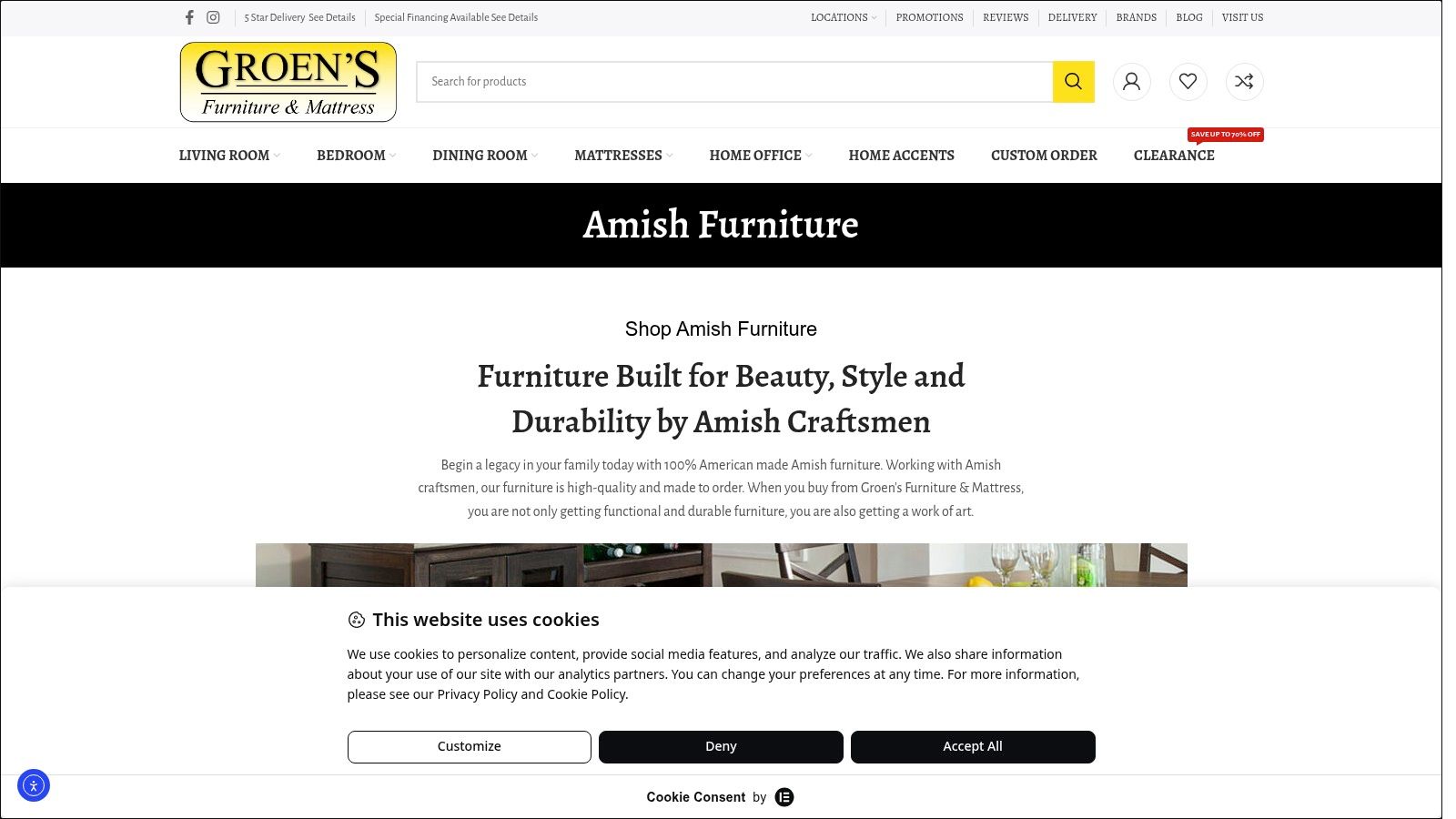
For shoppers drawn to American-made craftsmanship, custom Amish furniture is one of the clearest paths to a sofa or living room piece built around material integrity and personal choice. According to Groen's Amish furniture page, every piece of Amish furniture from Groen's Fine Furniture is a custom order, handmade to the customer's exact specifications for size, stain color, and wood type. Customers can even bring in a sketch so skilled craftsmen can help bring that vision to life.
That matters because good furniture shopping isn't only about avoiding weak construction. It's also about choosing dimensions, wood tones, and design details that make sense for the family's space.
- Design it your way: custom sizing and finish options help a piece fit the room and the household
- Bespoke craftsmanship: handmade construction aligns with buyers who value solid wood and honest materials
- American-made appeal: many Northwest Indiana families like knowing where and how the furniture is built
Quality and budget can work together
A long-lasting sofa is an investment, but that doesn't mean families have to abandon the idea because of timing. Special financing, subject to credit approval, can give buyers more buying power when they're choosing higher-quality construction instead of replacing furniture repeatedly.
That same made-to-order thinking shows up in dining as well. Canadel is a family-owned North American brand that handcrafts wood furniture and supports custom design through its UDesign platform, according to Canadel's company overview. The Canadel approach also includes thousands of custom combinations of sizes, shapes, and finishes through the U-Design program, as described in this overview of designing a Canadel dining set.
For shoppers furnishing more than one room, that consistency matters. They can choose a sofa with durability in mind, then carry the same thoughtful approach into dining, accent pieces, or other solid wood furnishings.
Groen's Fine Furniture also serves Northwest Indiana through showrooms in Dyer and Crown Point, with local business details confirmed on its Houzz business profile. That local legacy matters to families who prefer multigenerational ownership, 5-star service, white-glove delivery, and a more personal buying experience than a big-box chain can usually offer.
Your Buying Checklist and Long-Term Care Tips
A good buying decision gets easier when the shopper brings a short checklist instead of relying on memory in the showroom. The strongest solid wood frame sofas usually reveal themselves through clear specifications, steady feel, and honest construction details.
What to check before buying
According to this guide to spotting authentic solid wood sofa frames, authentic solid wood sofa frames use continuous wood members joined with reinforced corner blocks, dowels, and screws, often supported by a 5–10 year frame-specific warranty. That same guidance recommends checking for minimal creaking when rocking the sofa and confirming that the product specs say solid hardwood.
A practical checklist looks like this:
- Ask about kiln-dried hardwood: that wording matters more than a vague “wood frame”
- Check the product specs: look for solid hardwood, not broad material language
- Rock the sofa gently: listen for minimal creaking and feel for steadiness
- Ask how the corners are reinforced: corner blocks, dowels, and screws are stronger signs than shortcuts
- Review the frame warranty: a frame-specific warranty shows the maker is willing to stand behind the structure
How to help the sofa age well
Care matters too. A quality frame gives the sofa a strong start, but daily habits help protect that investment.
- Rotate use when possible: don't let one seat carry all the traffic forever
- Keep it away from harsh heat and sun: wood and fabric both benefit from a more stable environment
- Maintain the wood properly: how to care for wood furniture offers useful guidance for preserving finish and appearance
- Protect the upholstery: families also may appreciate The Sofa Cover Crafter's insights on how sofa covers can contribute to furniture longevity
A lasting sofa usually comes from two good decisions. Buying a strong frame first, and caring for it like a piece meant to stay.
For families in Dyer, Crown Point, and across Northwest Indiana looking for custom furniture, solid wood craftsmanship, and honest guidance, Groen's Fine Furniture offers a personal place to start. Visit Groen's Fine Furniture in Dyer or Crown Point today to explore custom options, test drive the comfort, and ask about special financing plans. Let their family help create a home that feels comfortable, lasting, and personal.