Blog
Mattress Brands Comparison: Serta vs. Beautyrest 2026

A lot of Northwest Indiana mattress shoppers start in the same place. They're sitting on the edge of a bed that no longer feels right, scrolling through page after page of online reviews, and wondering why every mattress brand claims to be the best.
That confusion gets worse when every box on the internet promises luxury sleep, easy returns, and miracle comfort. A useful mattress brands comparison should do the opposite. It should narrow the field, explain what matters, and help families in Dyer, Crown Point, St. John, Schererville, and Munster focus on sleep wellness, long-term value, and real-world comfort they can test in person.
Table of Contents
- Finding Your Perfect Mattress in Northwest Indiana
- A Guide to Mattress Types and Technology
- Serta vs Beautyrest A Detailed Comparison
- Our Expert Criteria for Choosing a Mattress
- Our Top Mattress Picks for NWI Families
- Why Buying Local Matters for a Major Purchase
- Visit Our Showroom for a Better Night's Sleep
Finding Your Perfect Mattress in Northwest Indiana
A homeowner in Crown Point might start with a simple goal. Replace an old mattress that sags, sleeps hot, and leaves both partners waking up tired. By the time that shopper has compared dozens of online brands, read conflicting reviews, and tried to decode trial-period fine print, the process feels harder than it should.
That's why local mattress shopping still matters. Families want clear answers, not marketing noise. They want to know whether a mattress supports a side sleeper, whether the edge holds up, whether cooling materials feel different, and whether the bed still makes sense years from now.
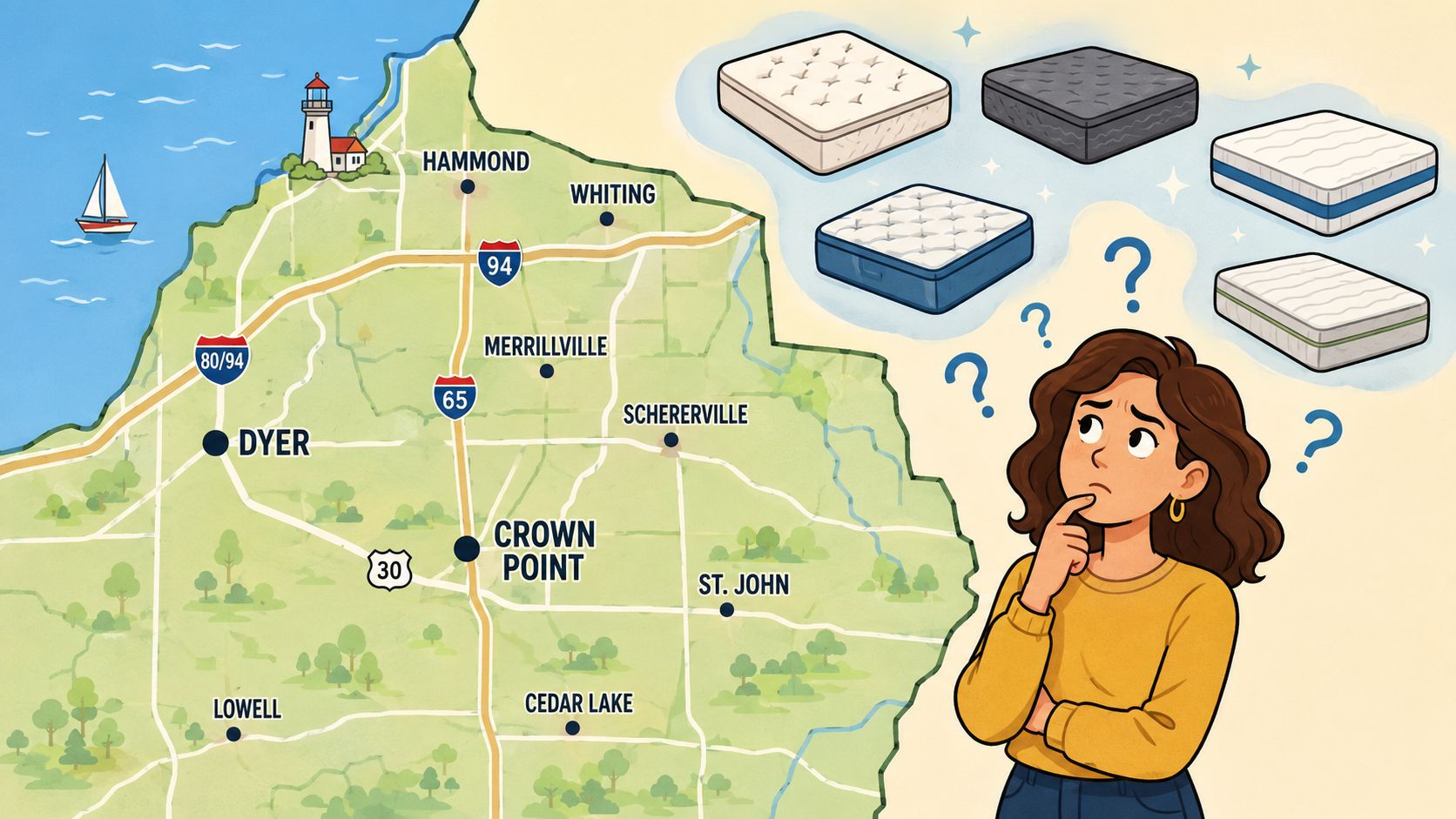
Families in multigenerational communities often trust local retailers for good reason. Northwest Indiana local retailer performance metrics report that family-owned furniture retailers serving the region show 92% customer retention rates and 5.0-star average service ratings, compared with 68% retention and 3.8-star ratings for big-box chain competitors.
That gap shows up in the mattress category fast. A neighbor who shops locally gets guidance, not guesswork. A shopper replacing an old bed also usually needs practical help after the sale, including expert mattress disposal coordination when it's time to remove the one that's reached the end of its useful life.
Local advantage: A mattress isn't a casual buy. It's a health decision, a comfort decision, and a value decision all at once.
For readers who are still sorting through local options, a helpful starting point is this guide to top-rated mattress stores near them. It cuts through the clutter and points the search back to what matters most. Comfort that can be felt, support that can be tested, and advice that fits life in Northwest Indiana.
A Guide to Mattress Types and Technology
Mattress shopping gets simpler once the construction makes sense. Most shoppers don't need jargon. They need to know how each type feels at home at midnight, not just how it sounds on a product card.
One reason this category feels crowded is that it keeps changing. The projected global mattress market growth shows the market rising from $60.69 billion in 2026 to $108.19 billion by 2034, with a 7.49% CAGR. More growth means more materials, more model names, and more reasons to learn the basics before comparing brands.
Innerspring feels familiar for a reason
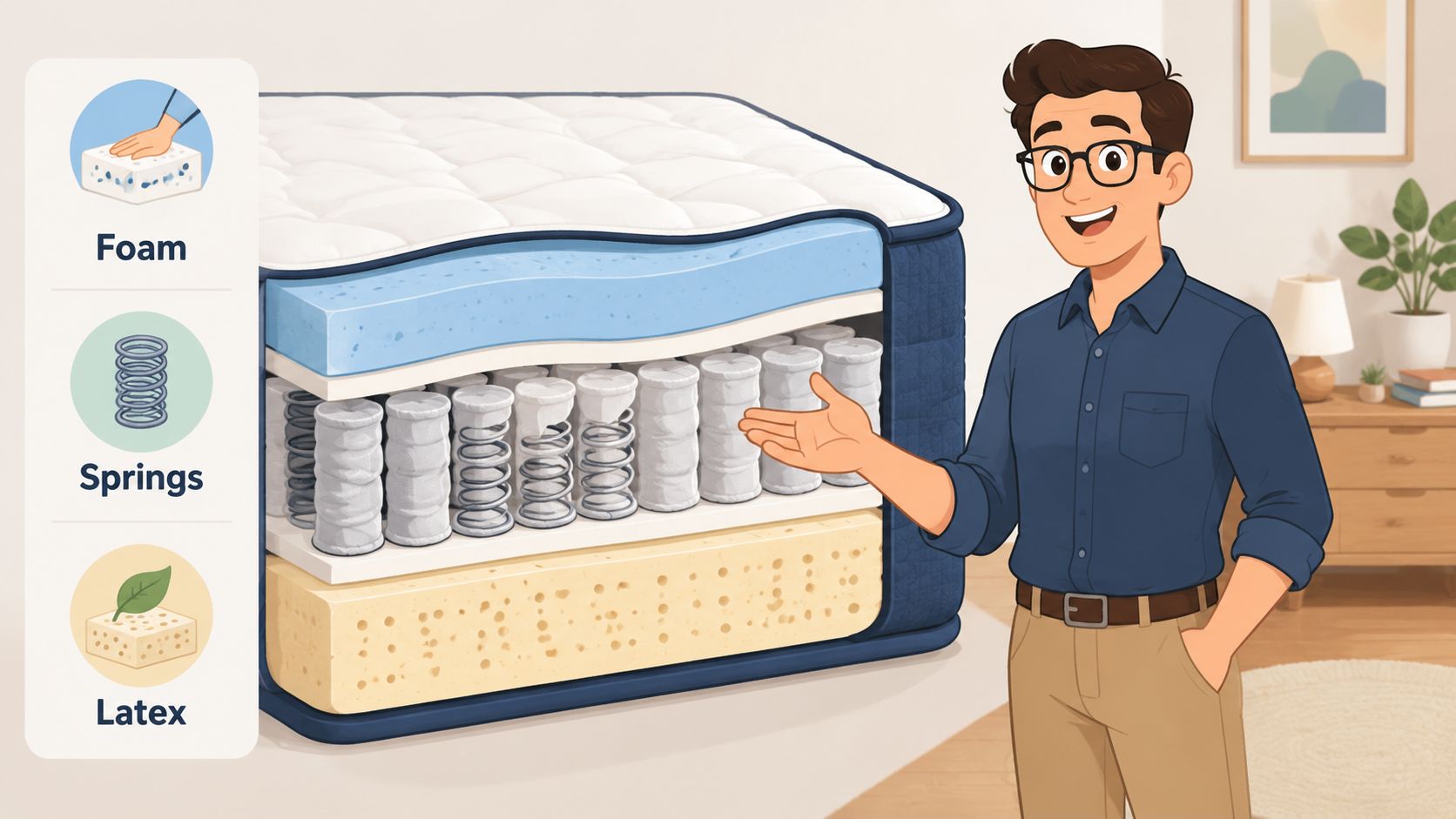
An innerspring mattress is the traditional bed familiar from childhood. It uses coils for support and usually has comfort material on top. The feel is more lifted than hugged.
That style works well for sleepers who like easy movement and a bit of bounce. It often appeals to back sleepers and anyone who doesn't want to sink much into the bed. The drawback is that entry-level innerspring models can feel less pressure-relieving at the shoulders and hips.
Foam works best for pressure relief
Foam mattresses, especially memory foam designs, tend to contour more closely to the body. That can be a big advantage for side sleepers or anyone with pressure points. The mattress absorbs more movement, which many couples appreciate.
The tradeoff is feel. Some sleepers love the cradled sensation. Others feel stuck, especially if they prefer a surface with more pushback. Foam can also feel warmer depending on the materials used.
A shopper who says, “I want the bed to cushion me,” is usually describing foam comfort. A shopper who says, “I don't want to feel trapped,” usually prefers coils or a hybrid.
Hybrid combines the strengths that matter most
A hybrid uses both foam and coils. For many households, that's the sweet spot. It offers enough contouring for comfort and enough structure for support, easier movement, and stronger edge performance.
The best hybrids don't just throw foam on top of springs. They balance layers carefully. That's why many shoppers start their research with a guide on what a hybrid mattress is. Once that construction is understood, a lot of mattress brands comparison questions become easier to answer.
Here's the simple breakdown:
- Innerspring: Best for shoppers who want bounce, easier repositioning, and a more traditional feel.
- Foam: Best for sleepers who want pressure relief, closer contouring, and reduced motion transfer.
- Hybrid: Best for families who want a balanced feel without choosing between softness and support.
Technology matters when it solves a real problem
Cooling materials, transition foams, and coil design all matter, but only when they improve actual sleep. Marketing names come and go. What lasts is construction quality, how the mattress supports the body, and whether the sleeper wakes up rested.
That's the frame every shopper should bring into the next step. Compare the bed by feel, support, and fit. Don't get distracted by flashy language.
Serta vs Beautyrest A Detailed Comparison
For shoppers who want trusted names instead of endless internet startups, Serta and Beautyrest are two of the most practical brands to compare. Both are established. Both offer a range of feels. Both are familiar to families who want real support and long-term comfort, not just clever packaging.
The key difference is their overall personality. Serta often appeals to shoppers who want a more comfort-forward feel, especially those who like a cushioned surface and pressure relief. Beautyrest usually stands out for shoppers who want a more balanced hybrid sensation with a stronger sense of lift and structure.
Serta vs Beautyrest Performance At-a-Glance
| Performance Metric | Serta Approach | Beautyrest Approach | Best For |
|---|---|---|---|
| Overall feel | More cushioning and body-conforming comfort in many models | More buoyant, balanced support feel in many models | Depends on whether the sleeper wants a softer cradle or a more lifted surface |
| Pressure relief | Often a strong fit for side sleepers who want more contouring | Often a strong fit for sleepers who want contouring without too much sink | Side sleepers versus combination sleepers |
| Motion isolation | Usually a smart choice for couples who dislike partner movement | Generally good, especially in hybrid builds with pocketed support systems | Couples who want less disturbance overnight |
| Edge support | Varies by model, strongest in better hybrid builds | Commonly a standout area, especially for those who sit or sleep near the edge | Couples, older adults, and anyone using the full mattress surface |
| Cooling | Often attractive for shoppers focused on cooler sleep surfaces | Often attractive for those who want airflow plus support from coil-based construction | Hot sleepers |
| Ease of movement | Can feel more cushioned and slightly slower depending on model | Usually easier to reposition on due to a more responsive feel | Back sleepers and combination sleepers |
Support starts from the middle of the mattress
The strongest support doesn't come from the quilted top. It comes from the relationship between the comfort layers and the coil system underneath. That's where quality hybrids separate themselves from entry-level beds.
According to hybrid mattress construction benchmarks from NapLab, top-tier hybrid brands use a 1.5 to 2.0 density foam transition layer over a 14-15.5 gauge coil system, reaching 8.5/10 edge support, while budget builds with 1.0 density foam and 16+ gauge coils come in closer to 6.0/10.
That matters in this comparison. A shopper choosing between Serta and Beautyrest should spend less time on model names and more time asking whether the mattress has the kind of hybrid build that supports the perimeter, keeps the body aligned, and holds up under repeated use.
Practical rule: If edge support matters, sit on the side, lie near the perimeter, and roll toward the border. A mattress should feel stable, not collapsed.
Which brand fits which sleeper
Serta tends to make more sense for these shoppers:
- Pressure-sensitive side sleepers: The surface often feels more cushioning at the shoulder and hip.
- Couples who want less bounce: A softer, more absorbing top can reduce awareness of movement.
- Shoppers moving from an older plush mattress: The transition usually feels easier.
Beautyrest usually makes more sense for these shoppers:
- Combination sleepers: Repositioning tends to feel easier on a more responsive surface.
- Shoppers who need stronger perimeter support: A sturdier edge helps with sitting, getting in and out of bed, and using the full width of the mattress.
- People who want balanced comfort: It often lands between deep hug and firm pushback.
Cooling and motion are where the details matter
A hot sleeper shouldn't buy on branding alone. Cooling claims vary too much from model to model. In general, beds with better airflow and stronger hybrid structure tend to feel more temperature-neutral than dense all-foam designs.
Motion isolation is similar. Couples often assume softer means better, but that's not always true. The right combination of comfort layers and support can control partner disturbance without making the mattress feel sluggish.
The strongest advice is simple. If the household wants a more cushioned, pressure-relieving feel, Serta often has the edge. If the household wants a more supportive, lifted, and edge-stable hybrid feel, Beautyrest is often the better call.
Our Expert Criteria for Choosing a Mattress
Brand names help narrow the field, but they shouldn't make the final decision. The smartest mattress brands comparison always starts with the sleeper, not the label on the corner.
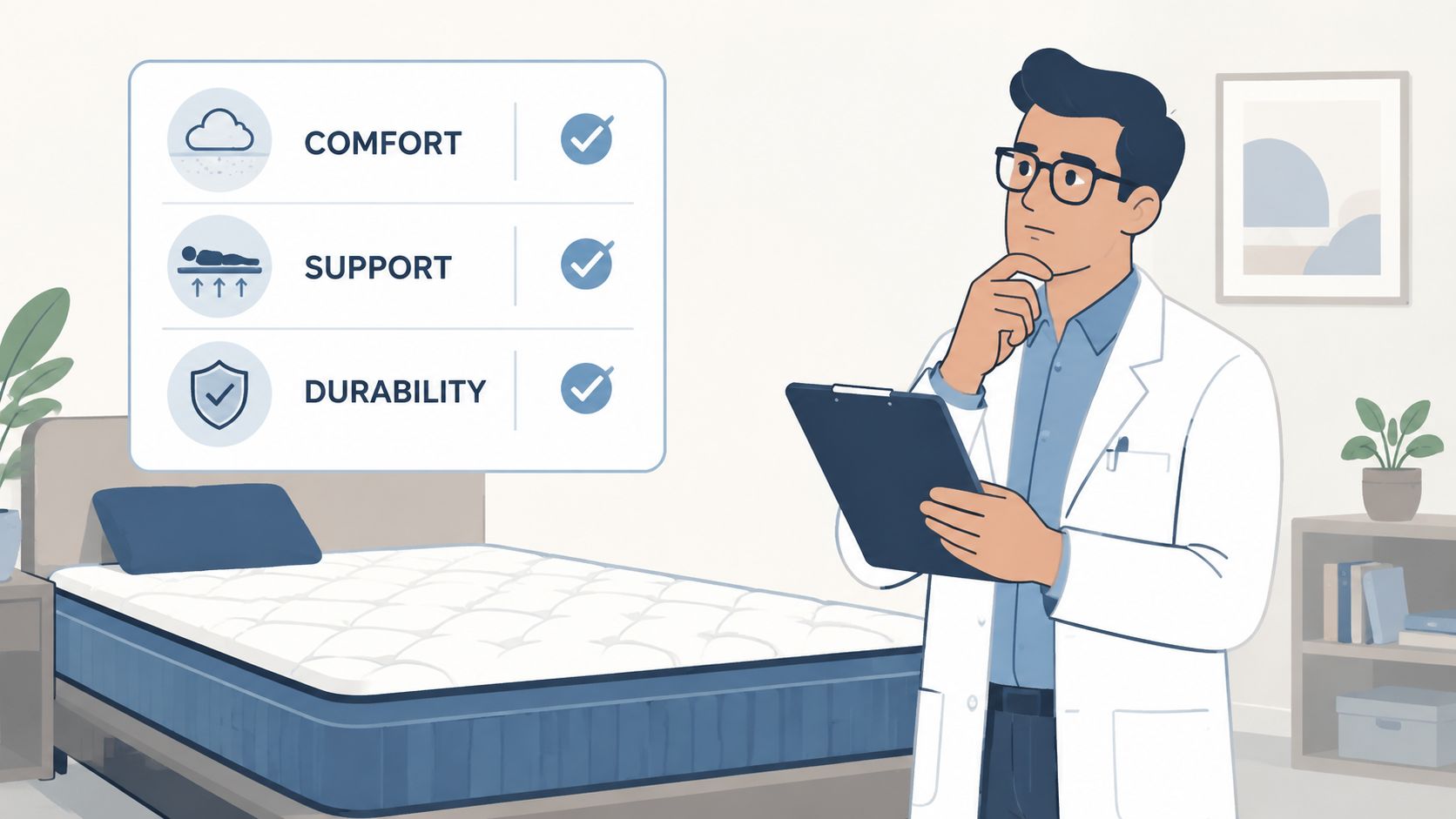
That matters even more because many “different” mattresses share the same industry roots. Mattress industry concentration data shows that Tempur-Sealy International, Inc. and Serta Simmons Holdings LLC collectively represent 45.4% of all mattress sales, which means shoppers are often comparing products with overlapping design philosophies and underlying technologies.
Sleep position is the first filter
A side sleeper usually needs more pressure relief. A back sleeper often does best on a mattress that keeps the midsection supported without feeling harsh. A stomach sleeper typically needs firmer support to avoid too much dip through the hips.
That's why firmness labels alone aren't enough. “Medium” can feel very different depending on the build. A better starting point is this practical guide on how to choose the right mattress firmness, because firmness only matters when it matches sleeping posture.
Body type and mobility change the right answer
Two people can lie on the same mattress and have completely different experiences. One may feel supported. The other may feel pressure or sag. Body weight, shoulder width, hip pressure, and how easily a sleeper moves all affect the outcome.
A shopper who sits on the edge often needs stronger perimeter support. A restless sleeper often prefers more responsiveness. Someone with aches often wants contouring, but not so much softness that alignment gets lost.
Here's a practical checklist:
- Primary sleep position: Side, back, stomach, or combination.
- Temperature tendency: Sleeps hot, neutral, or cool.
- Movement needs: Wants easy repositioning or prefers a deeper cradle.
- Edge use: Sits on the bed often, sleeps near the side, or shares the bed with a partner.
- Comfort goal: Plush relief, balanced support, or firmer stability.
The right mattress should keep the spine from fighting the bed. If the body has to compensate all night, sleep quality slips fast.
Wellness includes the full sleep environment
A mattress does heavy lifting, but it isn't the whole system. Pillow support, breathable bedding, and mattress care all affect the result. Households that want stronger sleep habits often benefit from reviewing optimal bedding changes for sleep quality, especially when a new mattress is part of a wider bedroom reset.
One more point deserves attention. Durable sleep comfort mirrors the same thinking that works elsewhere in the home. Custom furniture, solid wood craftsmanship, and made-to-order choices matter because fit matters. That same mindset applies to sleep. The best mattress isn't the loudest one. It's the one that fits the sleeper's body, routine, and long-term wellness goals.
Our Top Mattress Picks for NWI Families
A strong recommendation should solve a real sleeping problem. That's where this mattress brands comparison becomes useful. Most households aren't asking for a “best mattress.” They're asking for the best fit.
Best pick for couples
For couples, motion control and edge support should lead the conversation. One partner shouldn't feel every turn, and both sleepers should be able to use the whole mattress surface comfortably.
A hybrid with strong perimeter support is usually the safest recommendation. In practical terms, Beautyrest often earns the first look here because the more responsive support profile tends to help couples who share space closely and use the full width of the bed.
Best pick for side sleepers
A side sleeper needs pressure relief first. Shoulders and hips take the brunt of bad mattress choices, and that discomfort usually shows up quickly.
A plusher comfort-forward mattress is often the better answer. Serta usually makes the shortlist for this reason. It often suits sleepers who want more cushioning and less pressure at the contact points.
A mattress can feel soft in the showroom and still be wrong. The real test is whether the hips and shoulders settle comfortably while the spine stays level.
Best pick for hot sleepers
Hot sleepers should focus on breathable construction and balanced support, not buzzwords. Foam-heavy beds can work for some households, but many hot sleepers do better when coils and airflow are part of the design.
A cooling-focused hybrid is the clear recommendation. In this category, either brand can work depending on the model, but the shopper should lean toward the bed that feels less heat-retentive during a longer in-store test, not just the one with the flashiest cooling story.
Best pick for back support and daily comfort
People with recurring morning stiffness usually need a mattress that holds the torso steady while still giving enough comfort at the pressure points. Too soft is a problem. Too hard is also a problem.
A medium to medium-firm hybrid or supportive innerspring feel is often the best route. Beautyrest frequently appeals to this shopper because the support profile tends to feel more stable through the middle of the bed. Serta can still be the better choice if the sleeper also needs more cushioning through the shoulders.
Best pick for long-term value
Long-term value doesn't mean buying the lowest opening price. It means buying the mattress that fits from the start and keeps doing its job. That's why trusted brands with proven support systems deserve more attention than trendy boxed alternatives.
For many NWI families, the best value sits in the middle of the line. Not the bare-bones model. Not the most elaborate one. A well-built hybrid from an established brand usually gives the strongest mix of support, comfort, and durability.
That same buy-once, buy-well mindset is why families often prefer American-Made, Solid Wood, and Custom Furniture in the rest of the home, whether they're considering a durable Flexsteel seating piece, Bassett style options, or bespoke dining through Canadel. Design it your way tends to age better than settling for whatever happens to be in a shipping box.
Why Buying Local Matters for a Major Purchase
A mattress is too personal for blind buying. A screen can describe plushness, support, and cooling. It can't tell a shopper how the bed feels under the shoulders after ten minutes, whether the edge buckles when sitting, or whether one firmness level clearly outperforms another.
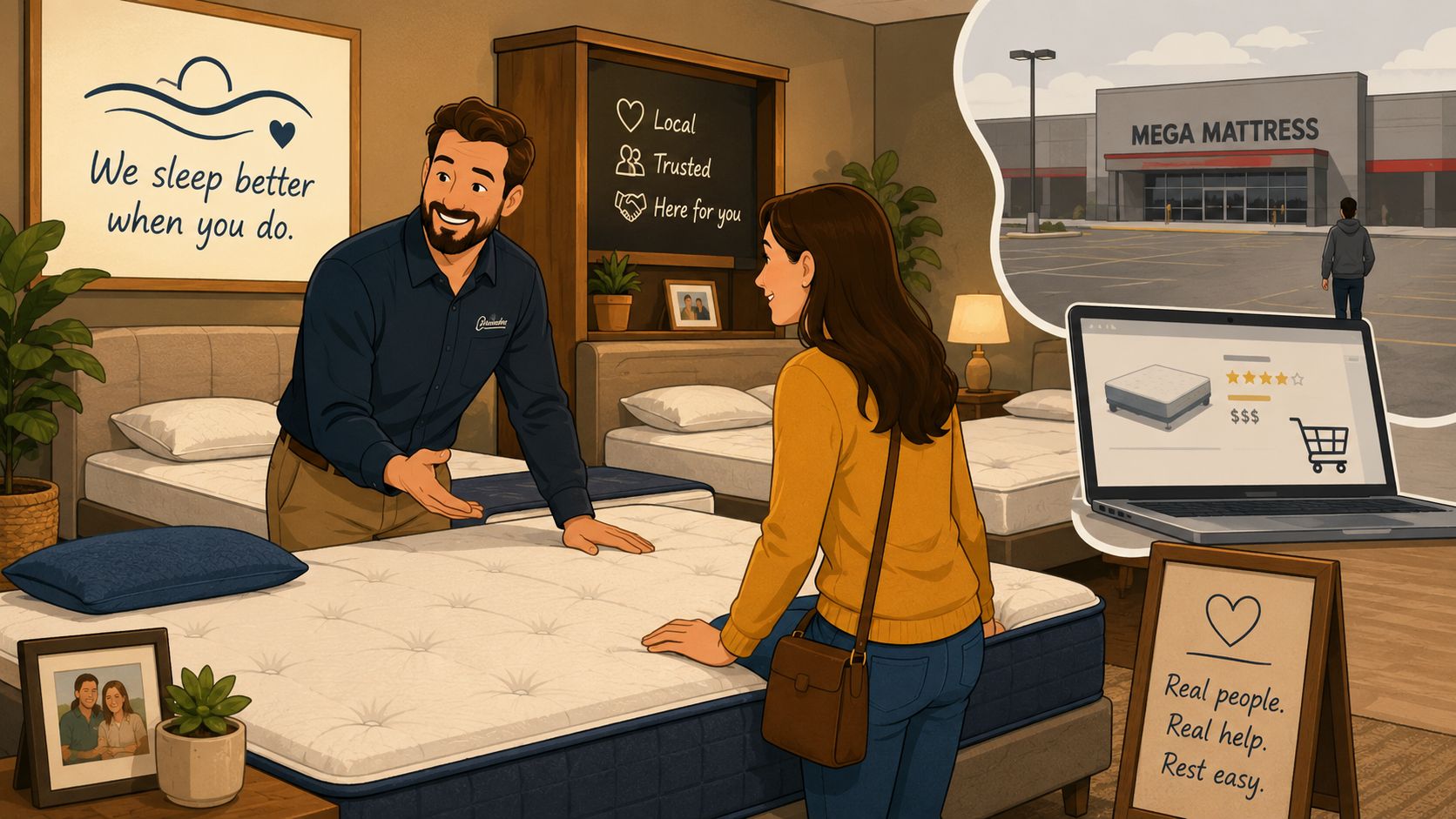
That's where local shopping wins. A 2025 report on hidden online mattress trial costs found that 68% of consumers misunderstand the true cost of extended online trial periods, including return shipping fees of $200–$400. In-store evaluation removes that particular gamble because the mattress can be tested before the purchase decision.
In-person testing beats return-policy roulette
A mattress should be tried in the position the sleeper uses. Side sleepers should lie on their side. Couples should test together. Anyone who relies on the edge should sit there more than once.
That hands-on process also makes delivery conversations clearer. Some shoppers researching modern retail operations may also find it useful to understand essential tech for curbside fulfillment, but a major home purchase still benefits from White-Glove Delivery, setup coordination, and real people answering practical questions.
Financing turns quality into buying power
Quality sleep shouldn't be forced into a rushed compromise. Special Financing, subject to credit approval, gives families more room to choose for fit and long-term wellness rather than settling too quickly for the lowest immediate out-of-pocket option.
A helpful place to review that side of the process is this page on mattress financing options. It's especially relevant for households balancing a mattress purchase with a wider bedroom refresh, an upcoming move, or a full home update.
Honest pricing matters. So does buying power. The right mattress should fit the body and the budget at the same time.
For many Northwest Indiana families, buying local also aligns with the way they furnish the rest of the house. They want multigenerational ownership, 5-star service, Interior Design help when needed, and custom order options that don't force a one-size-fits-all answer. That's true in sleep, and it's true in dining, upholstery, and Amish Furniture built to last.
Visit Our Showroom for a Better Night's Sleep
The right mattress should make life easier the moment a sleeper lies down. It should support the body, reduce the nightly annoyances that interrupt rest, and feel worth the investment years later. That decision gets clearer when the mattress can be tested instead of guessed at.
Shoppers who have done their research online already know the hard part. Too many options sound the same. The better move is to narrow the field, compare trusted brands side by side, and pay attention to support, pressure relief, cooling, and edge stability in person.
Questions about comfort windows and post-purchase details matter too. This guide to the mattress return policy helps set clear expectations before the final decision.
A better night's sleep usually doesn't come from buying the loudest brand. It comes from choosing the right construction, the right feel, and the right level of guidance. That's the difference between shopping for a mattress and choosing one well.
Visit Groen's Fine Furniture in Dyer or Crown Point today to explore trusted mattress options, custom choices for the home, and ask about Special Financing available, subject to credit approval. Let their family help create a home that feels comfortable, lasting, and personal.